REVIEW · 3-HOUR EXPERIENCES
Rome Highlights Bike Tour 3 Hour City Cycling Experience
Book on Viator →Operated by Bici&Baci srl · Bookable on Viator
Rome feels huge. This tour helps you steer it.
A 3-hour bike loop is a smart way to get your bearings fast without spending the day stuck in slow streets. I like that you glide past major landmarks like Trevi Fountain and Piazza Navona, while the guide ties the stops together with clear history you can actually keep in your head. You also get an easy 10km route that suits a wide range of riders, so this works as a first-day introduction.
The one catch to plan for is the human factor: the center of Rome can be crowded, and that can make cycling feel tighter than the route length suggests. One mixed note also flagged that an ice-cream add-on mentioned for some departures didn’t happen, so it’s worth tempering expectations about extras and focusing on the sightseeing.
In This Review
- Key takeaways before you book
- Why this 3-hour bike loop fits a first visit to Rome
- Meeting on Via Cavour: what the start day feels like
- The ride itself: an easy 10km overview with real-world street time
- Stop 1: Foro Romano and the layers of ancient Rome
- Stop 2: Mercati di Traiano and the imperial “office” idea
- Trevi Fountain: famous, yes—still worth the stop time
- Piazza di Spagna: the 136-step stairway moment
- Piazza del Popolo and nearby public life
- Palazzo di Montecitorio: Parliament in a baroque shell
- Piazza Navona: ancient stadium bones under a grand fountain
- Pantheon: the one stop with an extra decision
- How the guide and small group size shape the experience
- What you actually get for the price: $60.34 and the real value
- Practical tips so you feel comfortable on day one
- Who should book this Rome bike tour (and who might not)
- Should you book? My take on the best use of this tour
- FAQ
- How long is the Rome Highlights Bike Tour?
- Where does the tour start and end?
- Is the bike tour distance difficult?
- Is the Pantheon included?
- What’s included in the ticket price?
- What sights will I see during the ride?
Key takeaways before you book
- A paced 3-hour loop that covers big icons without long walking marathons
- A simple 10km ride designed for most ages and abilities
- Multiple “wow” stops in one go: Trevi, Spanish Steps, Navona, Pantheon area
- Bike + helmet included, plus a local guide for context on what you’re seeing
- Small group size (max 15) helps you stay together and feel safer on the road
- Pantheon entry is not included, so plan for that if you want to go inside
Why this 3-hour bike loop fits a first visit to Rome
Rome punishes you with distance. Even when you pick a “best of” list, you still end up walking more than you planned, then you’re too tired to enjoy the last sights. This tour is built as a compact overview: you cover a lot of ground in about three hours, and the pace stays steady enough for newcomers.
You’ll also appreciate the order of the route. The itinerary mixes ancient Rome anchors with high-recognition landmarks, so your brain doesn’t jump from era to era with no thread. Instead, you get repeated reminders of what each place was for—politics, religion, public life—then you hit the famous modern photo spots.
One more practical win: most stops are quick. That might sound basic, but it’s exactly what makes the tour work. A short stop lets you see, orient, and move on, rather than burning the whole morning waiting for your feet to recover.
You can also read our reviews of more cycling tours in Rome
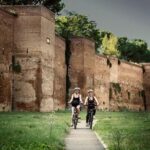
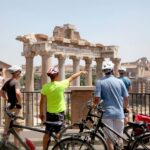
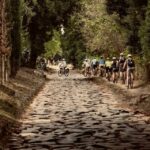
Meeting on Via Cavour: what the start day feels like
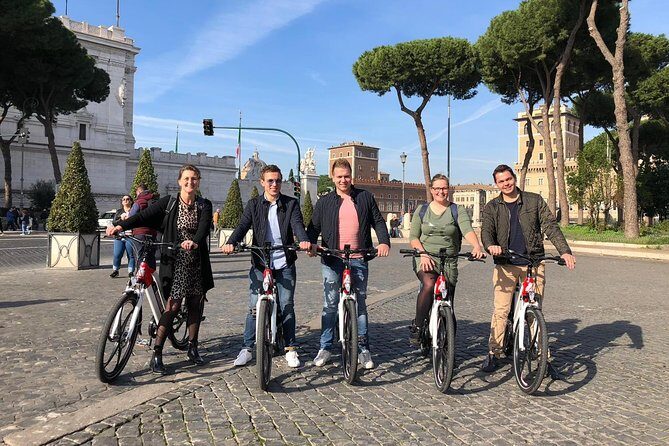
Your tour meets at Via Cavour, 302, 00184 Roma RM, and it loops back to the same meeting point. Starting at 9:30 am is a big deal in Rome: morning crowds are lighter, and your ride tends to feel more relaxed than later in the day.
Dress code is smart casual, and you’ll have helmet use included. That matters because you’re not just sightseeing—you’re actually moving through streets. If you’re used to “museum time,” treat this as active city time: comfortable shoes, sun protection, and light layers if it’s breezy.
The tour uses a mobile ticket, and confirmation happens at booking time. Plan to have your phone ready at check-in, because this is one of those small details that can either be smooth or mildly stressful.
Finally, group size matters. This experience caps at 15 people, which helps keep the ride manageable on tight streets and around bottlenecks near major sights.
The ride itself: an easy 10km overview with real-world street time
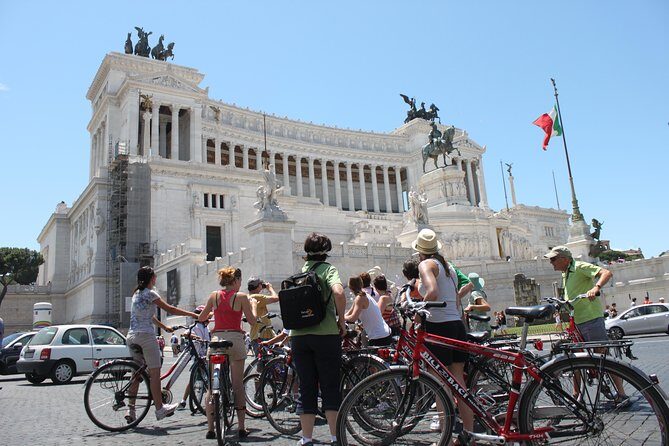
The route is described as 10km and easy, suitable for most ages and abilities. That’s a great match for travelers who want the benefits of biking—covering distance and skipping endless sidewalks—without tackling an intense training ride.
Still, “easy” doesn’t mean “effortless.” You’re spending time in traffic flow, stopping and starting, and weaving around pedestrians. Rome isn’t designed for cyclists, so you’ll feel the differences: short stretches where you can breathe, then slower sections where you’re basically riding the rhythm of foot traffic.
A key safety point comes from what people liked most: guides stay attentive and help you feel secure. One standout comment praised the guide for watching out constantly, which is exactly what you want from a city-cycling guide—especially when the streets get crowded.
If you’re sensitive to tight spaces, keep this in mind. One person noted that cycling can be harder when there are lots of visitors, especially around where you need to slow down. The route is manageable, but timing affects comfort.
Stop 1: Foro Romano and the layers of ancient Rome
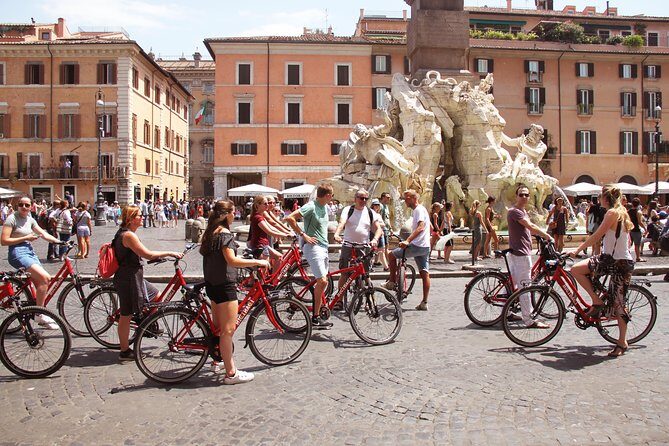
You’ll start at Foro Romano (10 minutes), and the focus here is big-picture understanding. You’re looking at layers of remnants—building stays from different periods stacked on top of each other. That’s one of the best things Rome does: you don’t just see ruins, you see how the city changed its mind over centuries.
I like this stop because it turns confusion into orientation. If you’ve ever stared at ancient stones and thought, I have no idea what I’m looking at, this kind of explanation helps. The guide frames what this space meant: the political, legal, religious, and economic center of Rome for much of its ancient life.
What to do with your short time: don’t try to memorize every detail. Instead, look for the shapes that hint at public life—open areas, leftover structure lines, and where paths likely moved people through the city. With only about ten minutes, your goal is recognition, not perfection.
A minor consideration: because this is an early major site, you’ll likely see crowds. It’s Rome—so keep your expectations realistic and use the time to learn the story thread.
Stop 2: Mercati di Traiano and the imperial “office” idea
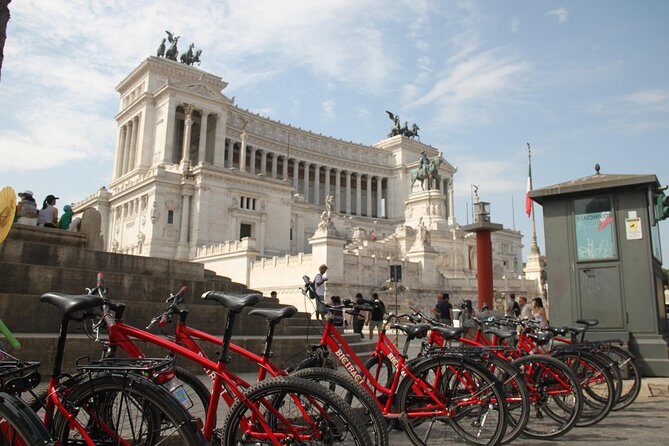
Next up is Mercati di Traiano – Museo dei Fori Imperiali (10 minutes). This stop is fascinating because it reframes what you think you know about the imperial forums. The building is described as administrative space connected to the Imperial Forums, so it’s not just temples and spectacle. It’s where the system ran.
This is a good pause for your brain. You’ve just started at the political heart (Foro Romano), and now you get the angle of governance and administration. Even if you don’t go deep into museum details, the guide’s framing helps you see the forums as a working machine.
Admission here is free. That’s a nice bonus, and it keeps the tour from feeling like you’re paying extra just to participate fully.
If you like architecture and “how a city worked,” this is one of the better stops. It gives you a different kind of payoff than a pure photo moment.
You can also read our reviews of more city tours in Rome

Trevi Fountain: famous, yes—still worth the stop time
Then you move to Trevi Fountain (10 minutes). Trevi is famous for a reason, and even when it’s crowded, it’s still one of Rome’s strongest visual landmarks. This short stop gives you the moment without demanding a half-hour of patience.
What makes Trevi work on a bike tour is that you’re not locked into slow sightseeing logistics. You roll in, you see it, you get a bit of context, and then you’re moving again. That keeps the day from grinding down.
The tour also avoids turning Trevi into a full-on attraction marathon. If your goal is first-day orientation—this fits. If your goal is deep immersion at one site, you’ll probably want to return on your own later for longer time.
A practical tip for Trevi time: keep your phone ready, but also keep your eyes up. It’s easy to film everything and miss what makes the fountain look so dramatic—the scale and the way it sits in the street setting.
Piazza di Spagna: the 136-step stairway moment
At Piazza di Spagna (10 minutes), you’re dealing with a “postcard classic”: the monumental stairway with 136 steps. This is one of those places where the surroundings matter almost as much as the monument itself.
The guide helps you place it in context, and the short stop format means you get a feel for the layout quickly. You’ll see why this area became a magnet for foot traffic—Rome’s “walkable spectacle” zones always have that effect.
It’s also a useful transition stop. From here, the tour keeps flowing toward shopping streets and public squares rather than getting trapped in one tiny area.
Piazza del Popolo and nearby public life
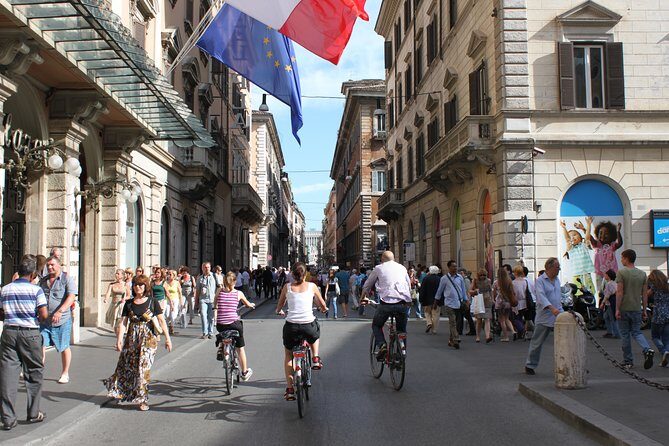
Next is Piazza del Popolo (10 minutes), a square where the shopping street Via del Corso begins. That connection is helpful because it shows how a city’s major routes grow out of public spaces.
You’ll also see something less touristy at first glance: a funerary monument still present in the city center. This is a cool reminder that Rome’s layers aren’t just in “old Rome” zones—they’re woven into the modern walking map.
A short stop here is about more than photos. It’s about learning how Romans move through the city: squares act like hubs, streets like arteries. Once you understand that, your self-guided walks later feel easier.
Palazzo di Montecitorio: Parliament in a baroque shell
Then you’ll arrive at Palazzo di Montecitorio (10 minutes), a baroque building once tied to the Ludovisi family. Today it houses the Italian Parliament, so you get a direct link between architecture and current civic life.
This stop is valuable because it breaks the pattern of “ancient ruins only.” Rome is living government city, not a museum you wheel through. Even if you only get a brief glance, you start spotting how official power uses historic buildings.
The downside of quick stops is that you can’t go deep. If you’re the type who loves political architecture, you might want to pair this day with a longer visit to relevant interiors later. But for a 3-hour overview, this works.
Piazza Navona: ancient stadium bones under a grand fountain
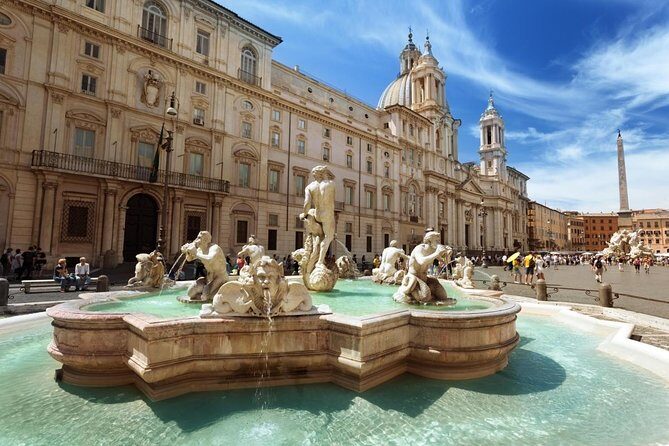
At Piazza Navona (10 minutes), you’ll learn the square sits on the remains of an ancient Roman stadium. That’s one of those facts that turns the whole place on in your mind. Suddenly you’re not just seeing a lively square; you’re seeing how the city keeps reusing land.
The square is also known for one of the most beautiful fountains designed by Bernini. With only ten minutes, the goal is simple: get the visual impact and understand why it feels so important.
If you’re visiting on a day with activity, this plaza often has a lively street atmosphere. The bike tour keeps it moving, so you get a taste without losing half the day.
Pantheon: the one stop with an extra decision
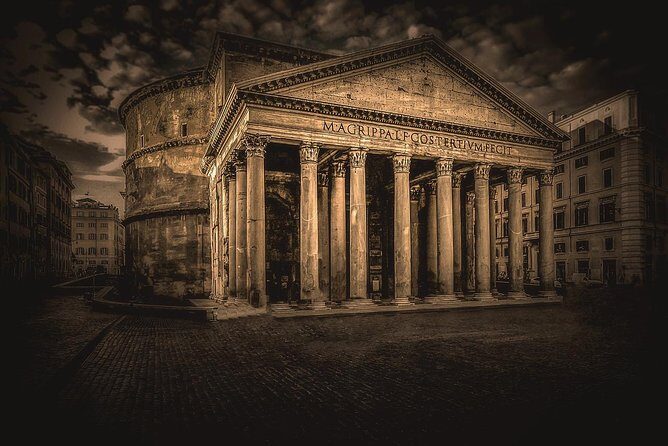
Finally, you reach the Pantheon (10 minutes). In Roman times it was dedicated to all gods, and today it functions as a basilica where mass is regularly celebrated. The building is also noted as the only temple still existing from the Roman period.
This stop is special for obvious reasons. Even if you’ve seen photos, the Pantheon’s scale tends to hit you more in person than online. Also, the guide context helps you read the structure instead of just admiring it.
One important practical note: Pantheon admission is not included. If you want to go inside, you’ll need to pay separately. The tour’s time window is short, so decide ahead of time whether inside time is your priority.
If you’re okay with seeing it from the outside, you may still enjoy the architecture story—just manage your time tightly so you don’t feel rushed at the end.
How the guide and small group size shape the experience
A strong guide can turn a bike tour into a real learning day. In the best cases, the guide is practical with pacing and alert about safety. One highlight praised a guide who was constantly watching the group and kept the ride calm, so no one felt pushed or rushed.
You might also encounter guides with standout communication. One person mentioned Romina leading the tour and doing a great job showing the sites. That kind of experience is exactly what you want: someone who can connect landmarks to simple ideas you can remember later.
Because the group is capped at 15, you’re not fighting for space. That matters on crowded streets near major landmarks, where the difference between a calm ride and a stressful one is often just how quickly the group forms and reform around stops.
Still, be realistic. Some streets can be tight and the bikes used may feel different if you’re expecting a standard style. One note mentioned that the ladies bikes can feel harder to maneuver when tourist crowds press in. It didn’t ruin the day, but it’s a good reminder to expect some friction in the city center.
What you actually get for the price: $60.34 and the real value
At $60.34 per person for about 3 hours, this is positioned as an efficient introduction to Rome. For that price, you get bike use, helmet use, and a local guide, plus taxes and fees are included.
That matters because bike + helmet + guide time can add up quickly if you book each piece separately. Also, many major stops here have free admission listed for the time on site. So you’re mostly paying for guided time, transportation, and the route structure—not for ticket math.
The exception is the Pantheon, where admission is not included. If you want the full indoor experience there, budget extra for the ticket.
Food and drinks are not included. That means the “value” part depends on your plan. Bring water or plan to buy something nearby after the ride. A bike tour can make you hungrier than expected because you’re moving steadily for the full morning.
When a tour feels worth it, it’s usually because you save time and you leave with a map in your head. This one aims to do exactly that by combining famous sights with short, guided explanations that build context fast.
Practical tips so you feel comfortable on day one
Here are the few things that will make the biggest difference for your comfort:
- Wear shoes you can walk in after the ride. Even with bikes, you’ll still step off at stops.
- Plan for crowds around icons. You’re seeing Trevi, Spanish Steps, Navona, and the Pantheon in a tight time window.
- Bring water. Food and drinks aren’t included, and mornings can still feel warm.
- Set your expectations about add-ons. One mixed note mentioned an ice-cream inclusion that didn’t happen. That doesn’t define the whole experience, but it’s smart to treat extras as optional.
- If you want deep Pantheon time, do it separately. The tour stop is short and admission isn’t included.
Also, the dress code is smart casual. That’s not a problem for most people, but it does mean avoid anything overly formal or slippery.
Who should book this Rome bike tour (and who might not)
This is best for you if:
- You’re in Rome for a short stay and want a quick overview.
- You’re okay with a paced format, where each stop is brief but meaningful.
- You want to cover big landmarks without spending the day walking.
- You’d rather learn with a guide than wander in guesswork mode.
You might skip it if:
- You hate the idea of mixing bikes with city traffic and pedestrian crowds.
- You want very long, slow visits at only one or two attractions.
- You’re expecting every “extra” mentioned in marketing to be guaranteed.
It also works for families as long as children are accompanied by an adult. Children must have an adult with them, and most people can participate.
The route is easy by design, and the small group size helps keep the experience calmer than a big-bus style day.
Should you book? My take on the best use of this tour
If you’re trying to orient yourself on your first day in Rome, this bike tour is a smart buy. It bundles the kind of sights that anchor most Rome plans—Trevi Fountain, Piazza di Spagna, Piazza Navona, and the Pantheon—into a ride that keeps your feet from burning out.
The value is strongest when you want an overview with guided context, not when you want a long, ticket-heavy museum day. Plan to handle Pantheon admission separately if you care about going inside, and plan your snacks since food isn’t included.
If crowds make you uneasy, go in with flexibility. The guide experience seems to matter a lot here, and good guidance is what turns the tight moments into a smooth ride.
For most first-time Rome visitors, this is a practical way to see the highlights and set yourself up for better self-guided days right after.
FAQ
How long is the Rome Highlights Bike Tour?
It runs for about 3 hours.
Where does the tour start and end?
It starts at Via Cavour, 302, 00184 Roma RM, Italy at 9:30 am, and it ends back at the same meeting point.
Is the bike tour distance difficult?
The route is listed as an easy 10km experience suitable for all ages and abilities.
Is the Pantheon included?
Pantheon admission is not included. The tour description notes the Pantheon stop, but entry cost is separate.
What’s included in the ticket price?
Included are the local guide, bicycle use, helmet use, and all taxes, fees, and handling charges.
What sights will I see during the ride?
You’ll pass by and stop near major landmarks including Campo de’ Fiori, Piazza Navona, and the Pantheon, with key stops at Foro Romano, Mercati di Traiano – Museo dei Fori Imperiali, Trevi Fountain, Piazza di Spagna, Piazza del Popolo, Palazzo di Montecitorio, Piazza Navona, and the Pantheon.