REVIEW · COOKING CLASSES
Rome: Gourmet Pizza Cooking Class (SHARED)
Book on GetYourGuide →Operated by Walks Inside Rome · Bookable on GetYourGuide
Pizza skills start with one good dough.
This Rome gourmet pizza cooking class is built around doing the work, not just watching it. You’ll shape Roman-style dough, learn why Rome’s pizza can be thinner and crunchier than Naples, and then build your pie with fresh, seasonal toppings. It’s the kind of hands-on food lesson that makes you understand what you’re eating, slice by slice.
Two things I especially like: you get a true dough-from-scratch experience (not store-bought dough theater), and the session is relaxed but guided by an English-speaking, local chef—so you can pick up practical techniques fast. One consideration: it’s only 1.5 hours, so if you’re hoping for a slow, leisurely multi-course cooking day, this is more of a focused sprint than a full evening meal.
In This Review
- Quick reasons to book this Rome pizza class
- Where you meet and how the class starts in Rome
- Aperitivo warm-up: the part that makes the class feel like Rome
- Dough from scratch: how you learn the Roman crust at real speed
- Roman pizza vs Neapolitan: what actually changes (and why you care)
- Toppings and choices: from pizza rosso to bianca
- Oven time and the moment you taste your own pizza with wine
- Price and value: does $93 for 1.5 hours make sense?
- Who this class is perfect for (and who should skip it)
- Tips to get the most out of your pizza lesson
- Should you book this Rome pizza class?
- FAQ
- How long is the Rome gourmet pizza cooking class?
- Where is the meeting point?
- Is the instructor available in English?
- Does the class include making the dough from scratch?
- What’s included in the price?
- Is hotel pickup or drop-off included?
- Can I reserve now and pay later?
- Is cancellation free?
- Is this activity suitable for people with mobility impairments?
- What’s the focus on Roman vs Neapolitan pizza?
Quick reasons to book this Rome pizza class
- Aperitivo-style start with welcome drinks and snacks before you even touch the dough
- Dough from scratch, giving you the foundation for a Roman-style crust
- Roman vs Neapolitan comparison, so you know what changes and why
- Seasonal topping choices, including options like mozzarella, prosciutto, zucchini flowers, and black olives
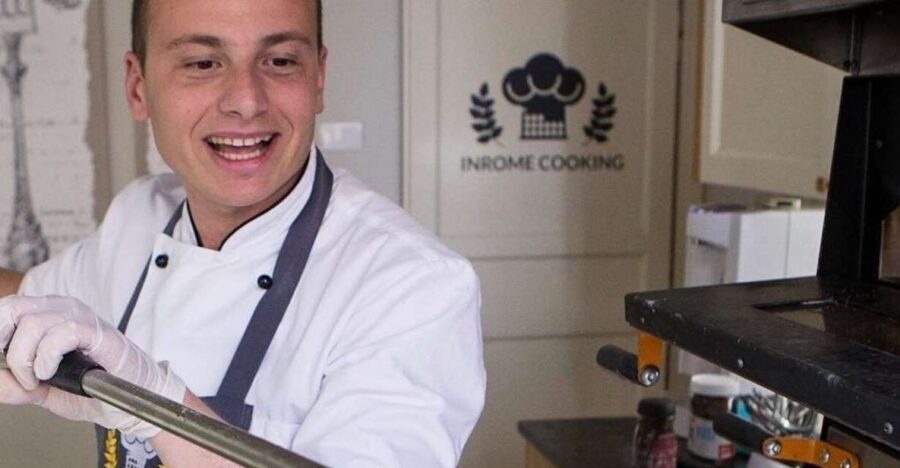
- Chef coaching in English, including tips shared by chefs like Marco in prior sessions
- Your pizza plus wine at the end, turning the class into a real taste-and-learn experience
Where you meet and how the class starts in Rome
You’ll meet at Corso del Rinascimento 65, and you ring the doorbell for InRome Cooking. That location is in central Rome, which matters because you can plan the rest of your day around it without adding a bunch of transit time.
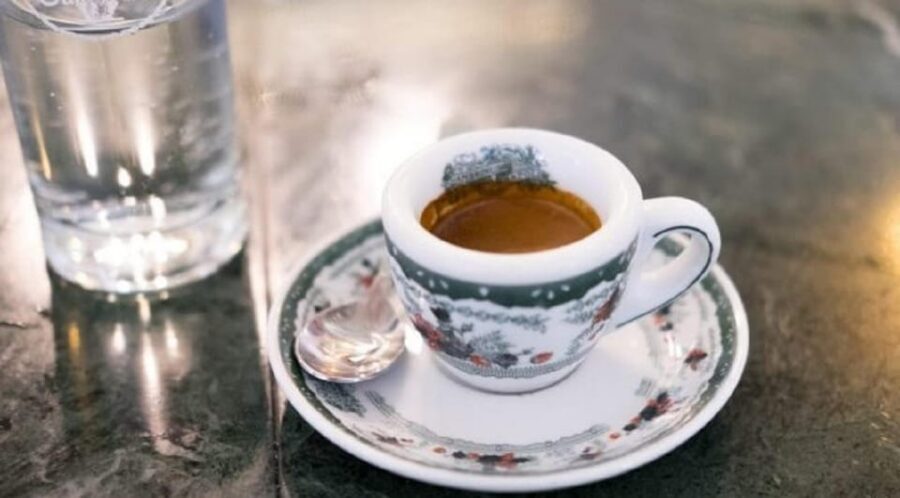
The class begins with welcome drinks and snacks—very much in the spirit of an Italian aperitivo. It’s a smart way to start: you get a small food and drink buffer, then you’re ready to focus when the dough part begins. This isn’t a formal lecture hall vibe. The tone tends to feel familiär and easy going, which helps if your cooking skills are more YouTube than Italian grandmother.
One more practical note: the activity doesn’t include hotel pickup and drop-off. If you’re staying near the Pantheon or Piazza Navona areas, that’s convenient. If you’re farther out, give yourself extra time to reach the meeting spot on foot or by taxi/public transport.
You can also read our reviews of more cooking classes in Rome

Aperitivo warm-up: the part that makes the class feel like Rome
Before you cook, you settle into the pace of the room. You’ll get welcome drinks and snacks, and it sets expectations: this is not just a cooking workshop; it’s also a social food experience.
From a value standpoint, this matters. A lot of “food tours” start with a quick bite and then rush you to the next stop. Here, the aperitivo-style start helps you slow down for 10–15 minutes, get comfortable with the setting, and then jump into hands-on cooking with better energy.
It also means you’re eating Italian flavors early, not waiting until the very end. You’ll be better able to taste the difference between what you make and what you previously thought “pizza” meant.
Dough from scratch: how you learn the Roman crust at real speed
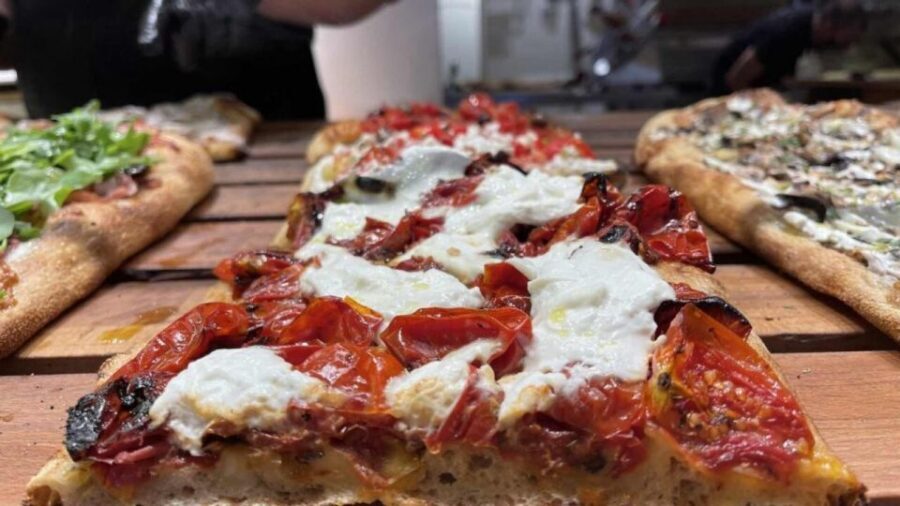
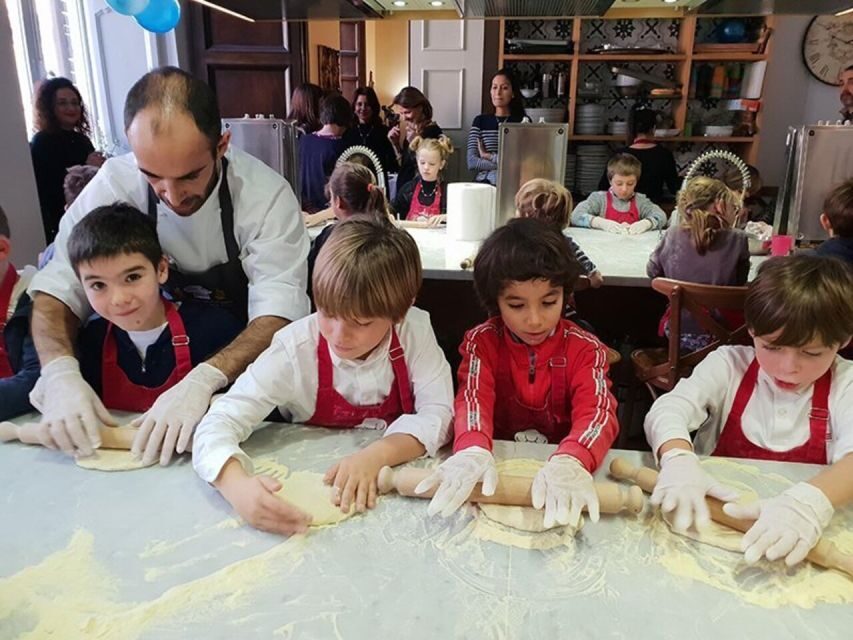
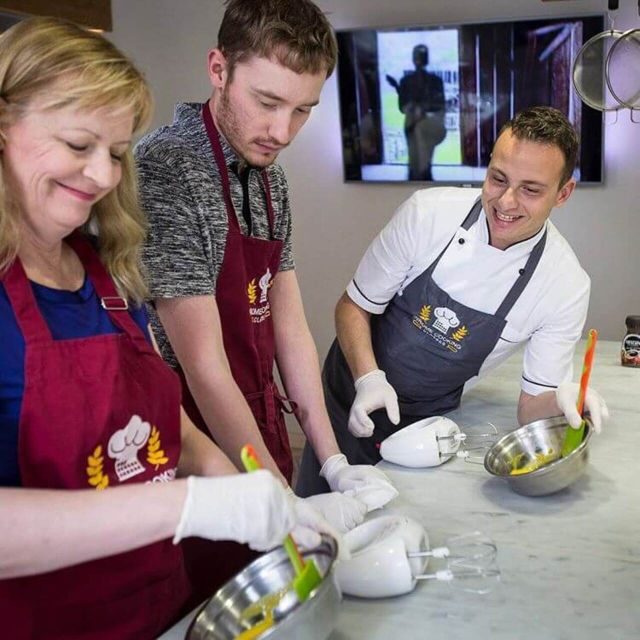
The main event is creating your dough from scratch. That’s where most pizza classes either shine or disappoint. Here, you’re not just assembling toppings. You’re practicing the base—because everything that makes a pizza good starts long before the oven.
In a short 1.5-hour format, the chef’s job is to help you avoid the common beginner mistakes:
- how dough should feel while working it
- how to handle it without overworking it
- how to aim for a shape that bakes well
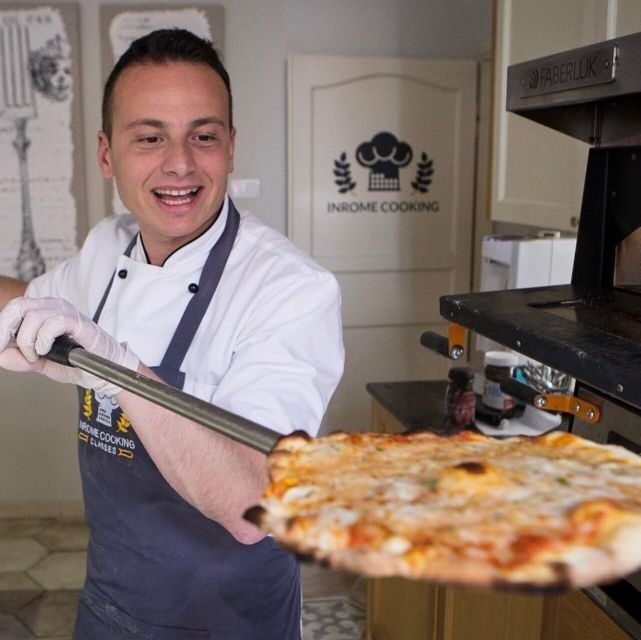
You’ll also roll and shape your own base, guided by the chef. The lesson is practical: you learn how to get a crust with the right balance—enough structure to hold toppings, but thin enough to match the Roman vibe.
If you’re a “watch once, do once” learner, you should feel comfortable here. The class is designed to keep you moving, and the coaching in English makes it easier to understand what to correct immediately rather than later.
Roman pizza vs Neapolitan: what actually changes (and why you care)
One of the most useful parts of the class is that you’ll learn the difference between pizza from Rome and pizza from Naples. This isn’t just trivia. It affects texture, thickness, and overall eating experience.
The Roman style is taught as being thinner and crunchier than its Neapolitan cousin. That matters because people often say they like one style but can’t explain why. After you build dough and shape a base, you start to notice how crust thickness and handling change the final bite.
Even if you’re not a food nerd, this is the kind of knowledge that helps you order better pizza in Rome. You’ll know what to look for when someone offers you a “thin Roman” pie versus a softer, more Neapolitan-style one—and you won’t feel like you’re guessing.
Toppings and choices: from pizza rosso to bianca
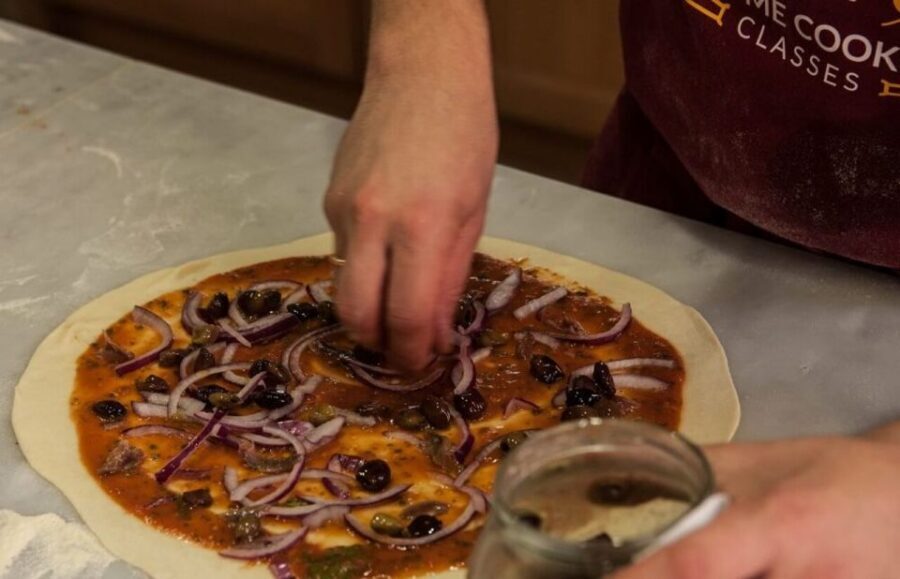
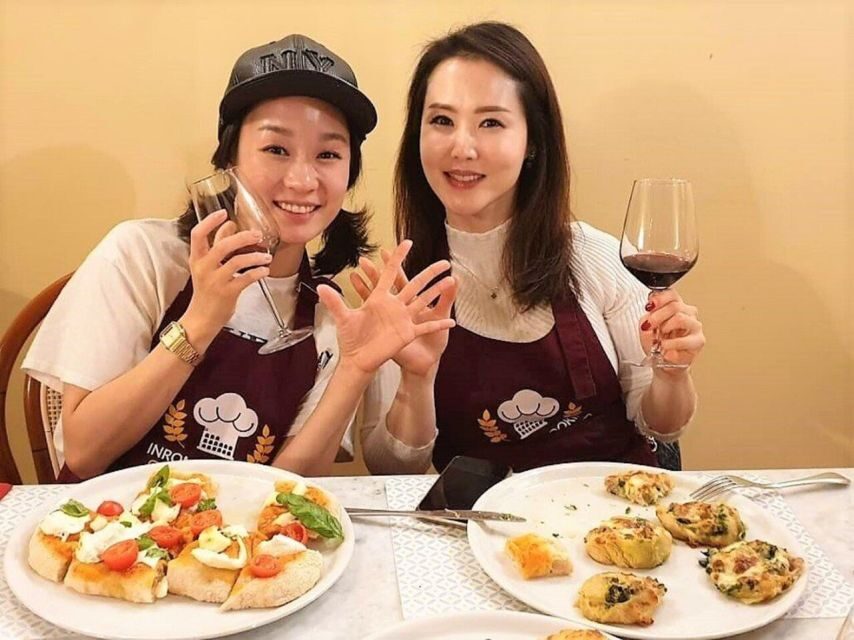
Once your dough is ready, you move into the fun part: toppings. You’ll explore options like pizza rosso (with tomato sauce) and pizza bianca (without tomato sauce), then add ingredients like mozzarella and other seasonal choices.
The toppings you’ll see can include:
- mozzarella balls
- prosciutto
- zucchini flowers
- black olives
Because ingredients vary by season, the class stays tied to what’s fresh rather than always being the exact same ingredient lineup. For you, that’s a plus. It means your final pizza tastes more like what’s actually being used in Rome right now.
This is also where the chef tips become practical. You’ll learn how toppings behave once heat hits—how much sauce matters, how cheeses melt, and what combinations work without overwhelming the crust.
In a group setting, it’s easy to think you’ll end up with whatever is easiest. But the way this class is set up is more like a guided menu: you make choices, and the chef steers you toward combinations that bake well.
You can also read our reviews of more tours and experiences in Rome

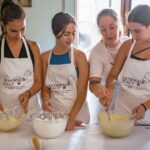
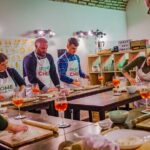
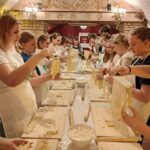
Oven time and the moment you taste your own pizza with wine
The final phase is about seeing how your work turns into a real pizza. The class emphasizes crafting the balance of dough, sauce, and toppings so the slice comes out right.
And yes, you’ll get to taste what you make. One of the best-rated moments in past sessions is that the self-made pizza is enjoyed at the end with wine. That’s a big deal for motivation. You’re not just practicing technique for no payoff.
From a learner’s perspective, this ending matters too. Tasting immediately while the process is fresh in your mind is how you actually internalize what you did right or wrong. Then next time you’re eating pizza in Rome, you’ll recognize the cues.
Price and value: does $93 for 1.5 hours make sense?
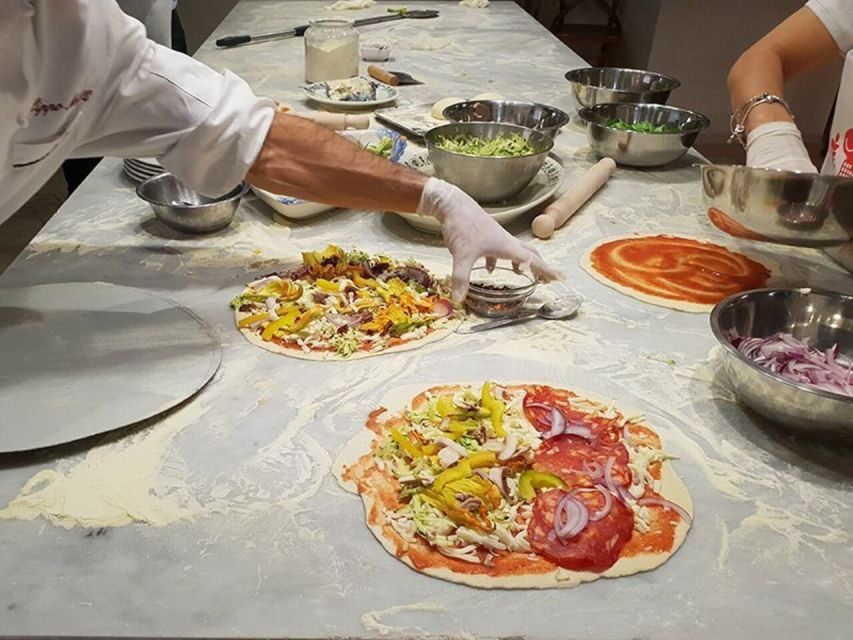
At $93 per person for about 1.5 hours, this class isn’t the cheapest thing you can do in Rome. But it also isn’t trying to be. You’re paying for real instruction, ingredients, and the hands-on experience of making dough from scratch with chef guidance.
Here’s where the value comes from:
- You make the dough yourself, which is the hardest part to learn from casual observation
- You get chef coaching in English, so you can ask questions and correct technique
- Your topping choices are built around fresh ingredients, and the class covers how to assemble well
- You also get welcome drinks and snacks, plus a wine pairing at the end
If your alternative is buying ingredients and trying to teach yourself at home, the comparison is lopsided. Cooking a good Roman-style pizza is more technique than recipe. This class gives you that technique—compressed into a short time window—without you having to figure out timing, consistency, or assembly on your own.
If you only want to eat pizza and don’t care about technique, then the price might feel steep. But if you like learning, the class offers a solid return on what you spend.
Who this class is perfect for (and who should skip it)
This works best if you’re the kind of traveler who:
- likes hands-on food experiences
- wants to understand what makes Roman pizza different
- enjoys asking questions and getting quick feedback from a chef
- wants a central, easy-to-slot activity that doesn’t require a whole day
It’s also a good match for couples or friends who want something social but not noisy. The vibe described in past sessions leans toward a friendly, family-like kitchen atmosphere rather than stiff formality.
Who might want to skip it:
- If you’re traveling with mobility constraints, note that it isn’t suitable for people with mobility impairments.
- If you’re looking for a long, deep multi-course meal and a big sit-down dinner, the 1.5-hour format may feel short.
Tips to get the most out of your pizza lesson
You’ll get better results if you come in ready to work, not just watch. A few practical ideas:
- Arrive a little early so you can relax with the welcome drinks and snacks.
- Wear something you can move in. Dough work is physical even when it’s fun.
- If you’re undecided on toppings, let the chef help you choose. In a short class, good choices reduce mistakes.
- When you taste at the end, pay attention to crust texture and sauce balance. That’s the learning moment that sticks.
If you want one souvenir that isn’t edible, it’s the confidence to order the style of pizza you actually like.
Should you book this Rome pizza class?
I’d book it if you want a focused, high-reward cooking experience in Rome—one where you make the dough, shape the base, and learn the Roman vs Neapolitan difference in a way that changes how you eat pizza after. The combination of aperitivo-style start, dough-from-scratch coaching, and tasting your own pizza with wine makes it feel like more than a ticketed activity.
Skip it if you only want casual pizza eating and don’t care about technique, or if the class format doesn’t fit your needs (especially mobility-related needs).
If you’re on the fence, think of it this way: Rome is full of places that serve pizza. This is one of the fewer options that helps you understand how to make it.
FAQ
How long is the Rome gourmet pizza cooking class?
The class runs for about 1.5 hours.
Where is the meeting point?
You’ll meet at Corso del Rinascimento 65. Ring the doorbell for InRome Cooking.
Is the instructor available in English?
Yes. The instruction is in English.
Does the class include making the dough from scratch?
Yes. You’ll create your dough from scratch as part of the cooking class.
What’s included in the price?
Included items are welcome drinks and snacks, top tips from professional local chefs, creating your dough from scratch, and various fresh and seasonal toppings.
Is hotel pickup or drop-off included?
No, hotel pickup and drop-off are not included.
Can I reserve now and pay later?
Yes. You can reserve now and pay later.
Is cancellation free?
You can cancel up to 24 hours in advance for a full refund.
Is this activity suitable for people with mobility impairments?
No, it is not suitable for people with mobility impairments.
What’s the focus on Roman vs Neapolitan pizza?
You’ll learn the difference between Roman pizza and Neapolitan pizza, including that Roman-style pizza is taught as being thinner and crunchier than its Neapolitan cousin.