REVIEW · HISTORICAL TOURS
Rome: Golf Cart Tour Timelapse through History
Book on GetYourGuide →Operated by NotBoringTours · Bookable on GetYourGuide
Rome clicks into place fast.
This 3-hour golf cart tour turns the city into a timed slideshow, with a guide who walks you through Rome’s story phase by phase—from the legends of Romulus and Remus to the Baroque era. I really like the way the route links big eras to real landmarks, so the monuments don’t feel random.
My other favorite part is how much ground you cover without paying the usual tax of sore feet. You’ll hit major headliners like the Colosseum area and the Pantheon while still getting photo stops and short guided moments, plus a couple of longer viewpoint breaks.
One key consideration: the tour doesn’t include entrance tickets, and some stops are photo-and-story style rather than a full sit-down visit. Also, the itinerary skips the Trevi Fountain because it’s just too crowded for this format—so plan on seeing Trevi another day.
In This Review
- Key things you’ll notice right away
- 3 Hours of Rome in a Golf Cart Timeline
- Value Check: What $64.01 Really Covers
- Meet on Via Santamaura (or the Bar Next Door)
- First Glimpses of St. Peter’s and Castel Sant’Angelo
- Largo di Torre Argentina: a photo stop with real weight
- Piazza Venezia, Trajan’s Market, and Rione Monti
- Colosseum Area: photo stop, guided time, and big-picture context
- Arch of Constantine and Palatine Hill Views
- Pincio Terrace and the Orange Garden viewpoints
- San Pietro in Vincoli: Moses (time permitting) plus church details
- Santa Maria Sopra Minerva: Gothic detail without the overload
- Pantheon: the temple-to-church transformation made visible
- Campo de’ Fiori: daily-life Rome at the end of the timeline
- Who this tour fits best (and who might want a different plan)
- Practical tips to get the most out of your 3 hours
- Book It or Skip It: My verdict
Key things you’ll notice right away
- Salvo’s storytelling: more fun than a facts-only lecture, with room for questions and a lively pace
- Golf cart comfort: you see Rome’s top sights with far less walking time
- Hop-on style stops: a few longer breaks (like Pincio Terrace and San Pietro in Vincoli) for photos and lingering
- A clear timeline: legends → Kingdom → Republic → Empire → Renaissance/Baroque
- Big landmarks in one loop: Colosseum, Pantheon, Campo de’ Fiori, plus several major “pass-by with context” stops
3 Hours of Rome in a Golf Cart Timeline
Think of this as Rome, but organized. The tour is built like a “timelapse” movie: each part of the ride comes with a story hook, then you move to the next era and match that story to what you’re seeing outside.
The big win is that you’re not just ticking off places. You’re learning why they mattered—first in the mythical beginnings of Rome, then as the city grows into a political machine, then as power concentrates under the Roman Empire. Later, you get the harder-to-place chapters too: the Dark Ages and the later resurgence through the Renaissance and Baroque periods.
And yes, the cart really helps. Rome’s streets can be uneven and tiring, and this tour keeps you in motion without turning your day into a long endurance test. Even if you’re not trying to “study” history, the guide’s narrative gives you a mental map you can keep using after the ride ends.
You can also read our reviews of more historical tours in Rome

Value Check: What $64.01 Really Covers
At $64.01 per person for about three hours, you’re paying for three things: transportation (the cart), a live English/Italian guide, and a guided route that stitches landmarks together.
What you don’t get: entry tickets. So if you’re hoping this will replace everything else—like booking a full-ticket, all-day site plan—it won’t. But for many people, that’s exactly why it’s good value. You’re getting the city’s framework in a single morning or afternoon, then you can decide what deserves your paid entry later.
If your goal is to see a lot without losing half a day to slow wandering, this price makes sense. You’re basically buying time and context at the same time.
Also worth noting: Trevi isn’t part of the plan. That’s not a loss if you already know you’ll come back for Trevi when the crowds calm down, but it’s a deal-breaker for some people—so check your expectations.
Meet on Via Santamaura (or the Bar Next Door)
The meeting point is at the office on Villa Santa Marta 12 / Via Santamaura 12. If the office is closed on your day, you meet next door at a bar called Expresso.
The tour ends based on the day’s plan. The activity info says it returns to the meeting point, while the route details list Campo de’ Fiori as the finish. Since that can matter for your next stop or dinner reservation, I’d treat your booking confirmation as the source of truth.
First Glimpses of St. Peter’s and Castel Sant’Angelo
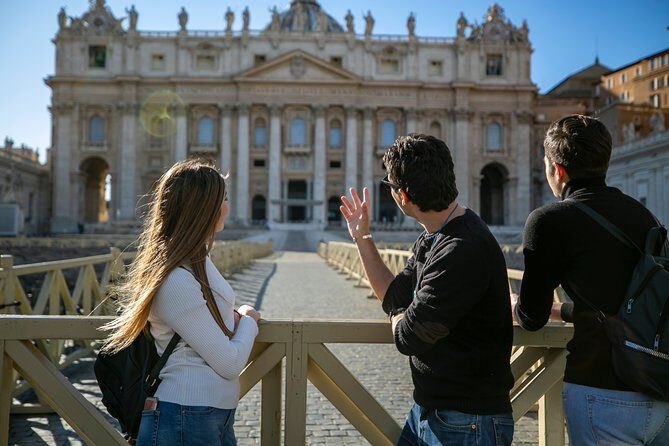
You start with the city’s “openers,” with a scenic drive that gives you orientation before you’re asked to pay attention to details. You pass by St. Peter’s Basilica early on, which is a smart move. It lets you see the scale of the area without committing to the inside.
Then you reach Castel Sant’Angelo. You get a guided tour there, plus driving/passing moments that connect it to what comes next. This stop works because it helps you start thinking in layers: Rome isn’t one era. It’s an ongoing rebuild, with old structures constantly shaping the new ones.
Largo di Torre Argentina: a photo stop with real weight
Next is Largo di Torre Argentina. It’s short, but not casual. You get a photo stop and a guided moment, and it’s the kind of place where the ground-level view can feel like a puzzle until someone tells you what you’re looking at.
This is one of those stops where the tour format helps: you don’t have to “figure it out” while other people squeeze around you. A guide gives you a reference point so you can actually remember what you saw when you’re walking somewhere else later.






Piazza Venezia, Trajan’s Market, and Rione Monti
From here, the tour keeps tightening the story. Piazza Venezia comes with a guided moment plus pass-by time and scenic viewing as you move through the area.
Then you pass by Trajan’s Market and drive through Rione Monti. These are the types of places that can feel vague if you only know them by name. In this tour, the guide’s timeline keeps them connected to the era you’re in, so the route becomes more than a scenic loop.
I like this segment because it’s practical. You get the feeling of how Rome is stitched together—grand public moments, then smaller urban fabric—without needing you to be a navigation wizard.
Colosseum Area: photo stop, guided time, and big-picture context
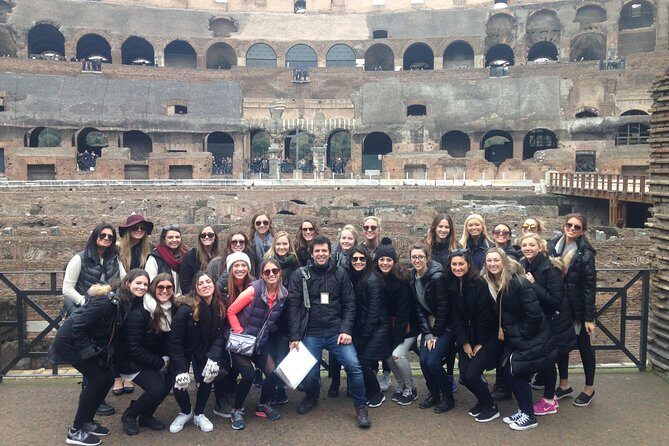
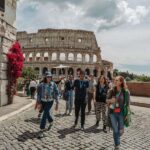
The Colosseum is the headline for a reason. On this tour, you get a photo stop and also a guided moment right by the complex, plus a hop-on style segment.
The key isn’t just seeing the monument. It’s what your guide ties to it: the engineering scale of the Roman Empire and how that empire translated power into architecture you can still read today.
A bonus of the golf cart format: you’re not stuck in the middle of long lines or trapped in a slow-moving crowd the entire time. You get the impact, then move on while the story stays coherent.
Arch of Constantine and Palatine Hill Views
After the Colosseum, the route leans into perspective. You get scenic views on the way to the Arch of Constantine and along the stretch toward Palatine Hill.
These aren’t always “must-see for the photo” spots for everyone, but they matter because they help you understand position—where power sat, and how the city’s layout supports the old story.
If you like panoramic awareness, this is the part to pay attention. The guide’s explanation is what makes the angles worth it.
Pincio Terrace and the Orange Garden viewpoints
Rome needs a few breathers. You get one at Pincio Terrace with photo time, guided context, and a hop-on break of about 15 minutes. That’s enough time to get photos, then relax a bit without feeling like you’re wasting your day.
The tour also includes a viewpoint on Aventine Hill’s Orange Garden. This is a great match for the “timeline” idea: once you see the city spread out below you, the idea of Rome changing over centuries stops being abstract. You can literally look at the urban layers and connect the story you’ve been hearing.
If you’re traveling in warmer months, bring your hat and water. Even with the cart, you’ll still spend some time outside at these viewpoints.
San Pietro in Vincoli: Moses (time permitting) plus church details
San Pietro in Vincoli is one of the more rewarding stops for people who think they’re only coming for the ancient stuff. You get a photo moment, guided time, and a hop-on break of about 15 minutes.
The standout here is that the church is home to Michelangelo’s Moses, and whether you can see it depends on timing. Even if you don’t get the Moses moment, the stop works because the guide helps you connect Renaissance art choices to what Rome was trying to say about itself during that revival period.
This is where I think the tour format pays off again. Churches can be confusing if you don’t know where to look. With a guide, you don’t just stand there—you understand what to focus on.
Santa Maria Sopra Minerva: Gothic detail without the overload
Next comes Santa Maria Sopra Minerva, with photo stop plus guided time and another hop-on style break. This is a good “second church” stop because it balances out the experience. You’re not repeating the same visual rhythm.
The tour keeps it manageable: you get the key elements pointed out, you get time for photos, and you don’t end up with church fatigue. If you’re the type who likes art and architecture, this stop can turn into one of your favorite memories from the day.
Pantheon: the temple-to-church transformation made visible
Then you arrive at the Pantheon, with a photo stop, guided explanation, and a hop-on break. Even if you’ve seen pictures, being there changes the scale.
What matters most on this tour is the message behind the building. The Pantheon represents a major shift in Rome’s story—how earlier forms and beliefs don’t just disappear; they get repurposed, reinterpreted, and used again. The guide ties this to the broader timeline you’ve been following, so it doesn’t feel like a random stop in the middle of your itinerary.
This is also one of the best places to ask a question. If you’re curious about symbolism, materials, or why this building survived when others didn’t, your guide has enough context from the earlier stops to keep the answers focused.
Campo de’ Fiori: daily-life Rome at the end of the timeline
You finish at Campo de’ Fiori, with a photo stop and guided visit plus about a 10-minute hop-on window.
This part feels different on purpose. After ancient ruins, imperial power, Renaissance revivals, and grand architecture, Campo de’ Fiori brings you back to street-level Rome—where the city’s story isn’t frozen in museums.
It also helps that the tour ends here. You can keep your momentum and turn that last stop into a meal plan. Just know you may want to do Trevi separately, since this tour doesn’t route there.
Who this tour fits best (and who might want a different plan)
This is a strong choice for:
- People who want major Rome landmarks but don’t want to spend the day walking uphill and across cobblestones
- First-timers who need a storyline to understand what they’re seeing
- History-friendly folks who still want it fun, not lecture-only
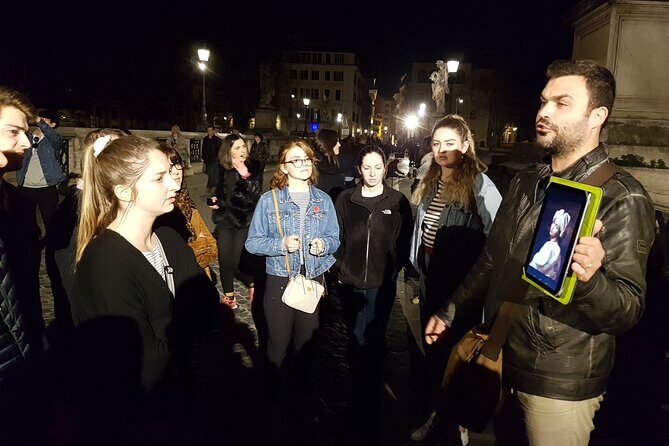
From what I’ve gathered about how the guide works, the tone is a big part of the value. Salvo is highlighted for being highly engaging—serious knowledge, but presented in a way that stays lively. You may also run into Mike as part of the team, which can add an extra layer of energy to the narration.
It might be less ideal if:
- You want long inside visits with ticketed time at multiple major sites
- You’re specifically chasing Trevi Fountain that day
- You need fully step-by-step wheelchair access on the cart itself
Wheelchair note: wheelchairs are allowed, but they can’t be brought onto the cart due to limited space and must be left at the office. If you rely fully on a wheelchair, you’ll need to stay on the cart throughout the tour.
Practical tips to get the most out of your 3 hours
- Wear comfortable shoes anyway. You’ll still walk short distances, especially at hop-on stops.
- Bring water, sunscreen, and a hat. Viewpoints are time-limited but sun still adds up.
- Use photo stops on purpose. For example, Pincio Terrace and the Orange Garden moments are your best chance to capture the “Rome spread out” view.
- Ask questions during the guided moments. This is the kind of tour where one good question can connect two eras.
And if your travel day is weather-sensitive, the golf cart format helps you keep the plan moving without turning it into a slippery slog.
Book It or Skip It: My verdict
Book this tour if you want a smart, story-driven way to see Rome’s greatest hits in a short window, with a live guide who makes the timeline stick. The value comes from the pairing of transport + narrative, not from long ticketed time inside sites.
Skip it (or pair it differently) if you’re chasing a very “inside every place” day, or if Trevi is your must-see for this trip segment. In that case, you’ll likely want a more ticket-heavy plan for the sites you care about most.
If you’re trying to get your bearings fast and then build your own itinerary for the rest of your Rome days, this is an excellent starting move.