REVIEW · FOOD & DRINK
Rome: Fountains and Squares with Tasting, Semi-Private Tour
Book on Viator →Operated by Welcome Italy · Bookable on Viator
Rome has a way of feeling too big at first. This semi-private morning tour gives you a tight, great-value route through the Baroque squares and fountains, then hands you real food and wine afterward. You’ll move with a professional guide across the city’s 17th- and 18th-century highlights, with key photo-and-stroll moments at spots like the Spanish Steps, Piazza di Spagna, Trevi Fountain, and Piazza Navona.
I especially like two things about this experience. First, the route is built around the must-sees you’d otherwise bounce between all day, with Pantheon as the anchor so the architecture feels worth your time. Second, you don’t finish with snacks—you get a proper lunch + wine tasting at a dedicated winery bistro (Cantina del Duca), so you can slow down after all that walking. One drawback to factor in: it’s still a walking tour and it may not suit people with limited mobility, plus lunch quality is the one area that can vary.
In This Review
- Key things I’d bank on
- A Baroque morning route that actually helps you enjoy Rome
- Starting at Hotel Hassler Roma and why 10:00 am matters
- Spanish Steps and Piazza di Spagna: your first Rome “wow,” with context
- Trevi Fountain at a walking pace: Oceanus, coins, and crowd strategy
- Pantheon in 20 minutes: the dome trick you should spot fast
- Piazza Navona: the stadium shape under the Baroque glamour
- Cantina del Duca lunch and wine tasting: where the day slows down
- Price and logistics: does $171.33 make sense?
- Who this tour is best for (and who should pick something else)
- What to do before you go, so the day runs smooth
- Should you book this Rome fountains and squares tour?
- FAQ
- How long is the tour?
- What is included in the price?
- Where does the tour start and end?
- What time does the tour begin?
- Are admissions included for the major sights?
- Is the tour walking-heavy?
- What is the group size limit?
- Is a mobile ticket provided?
- Is there an option to make it private?
- What is the cancellation window?
Key things I’d bank on
- Baroque highlights in a single morning: Spanish Steps, Piazza di Spagna, Trevi Fountain, Pantheon, Piazza Navona
- A real pause for food and wine at Cantina del Duca, not just a quick stop
- Short, focused time blocks per sight so you keep moving without feeling rushed
- Guide quality is a big theme, with names like Katherine, Claudio, Roberto, and Nadia showing up in guide praise
- Small-group feel with a maximum of 24 people, plus a private upgrade option
A Baroque morning route that actually helps you enjoy Rome
Rome’s famous for being visually loud. That’s the challenge: you can see a lot, but it can blur together. This tour is designed to keep things readable by grouping the sights that share a Baroque feel and a walkable flow, then finishing with lunch and wine so your day doesn’t just end in crowds.
You’ll spend your mornings at places you probably already have on your list, but the value here is the way the guide ties the details to what you see in front of you. You get the stories behind the steps, fountains, and squares, not just a photo checklist. And because it’s paced for a morning block, you’re more likely to enjoy the space instead of only surviving it.
You can also read our reviews of more food & drink experiences in Rome
Starting at Hotel Hassler Roma and why 10:00 am matters
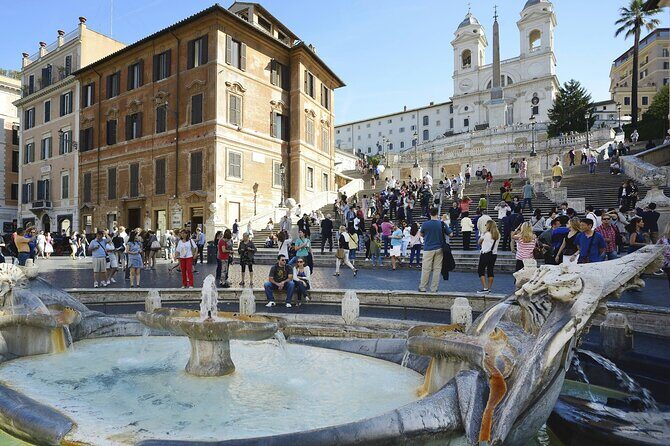
You meet in front of Hotel Hassler Roma at Piazza della Trinità dei Monti, with a 10:00 am start. From there, the tour moves through central Rome and ends at Piazza Navona.
That starting point is useful because it sets you up for the downhill sight sequence that makes sense on foot. It also gives you a better shot at beating the densest crush at major landmarks, especially at the Spanish Steps area and Piazza di Spagna. The tour format is also clear: the included guide time is listed as about 2.5 hours, with the rest of your experience focused on the food and wine portion.
One practical note: there’s a walking component throughout, and the company specifies it’s not recommended for limited mobility. Wear shoes you trust, and plan to do real city walking even though the sightseeing blocks are short.
Spanish Steps and Piazza di Spagna: your first Rome “wow,” with context
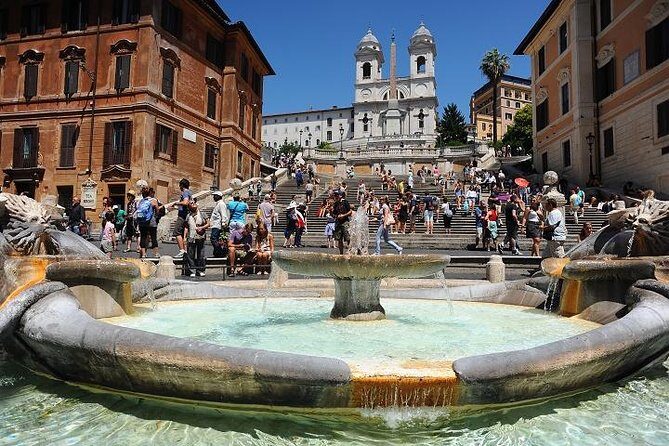
The tour begins with the Spanish Steps (Trinità dei Monti). You’ll see the staircase that connects the Pincio hill to Piazza di Spagna below, built between 1723 and 1726 and associated with Cardinal Pierre Guérin de Tencin. The design detail that’s worth noticing is how it’s not one straight climb: it’s made up of 11 flights, and each flight is further divided into steps that shift direction as you go.
That design matters because it changes how you experience the slope. You get natural pause points, and the ramps with balustrades give you places to stop, look up, and look around without feeling like you’re always working. Even in 20 minutes, this is the stop where you start to understand why Rome’s Baroque style wasn’t just about decoration—it was about movement, staging, and sightlines.
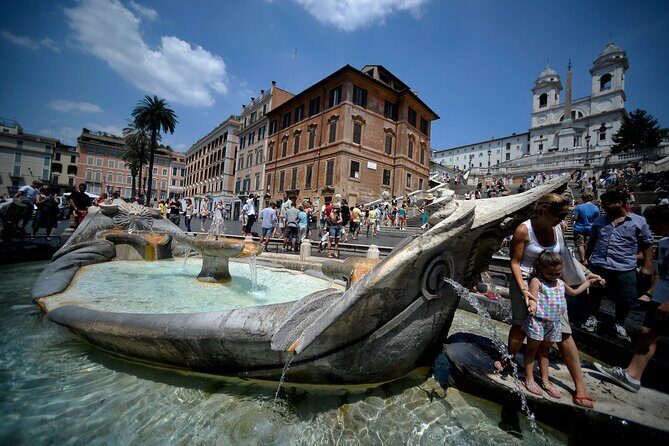
Next comes Piazza di Spagna, and specifically the Barcaccia Fountain in Baroque style by Pietro and Gian Lorenzo Bernini. This square is famous for its butterfly-like shape and its position as a meeting point with palaces, designer streets, and landmark hotels nearby. For you, that means it’s both scenic and practical: it’s the kind of place where you can orient yourself for later exploring.
Trevi Fountain at a walking pace: Oceanus, coins, and crowd strategy
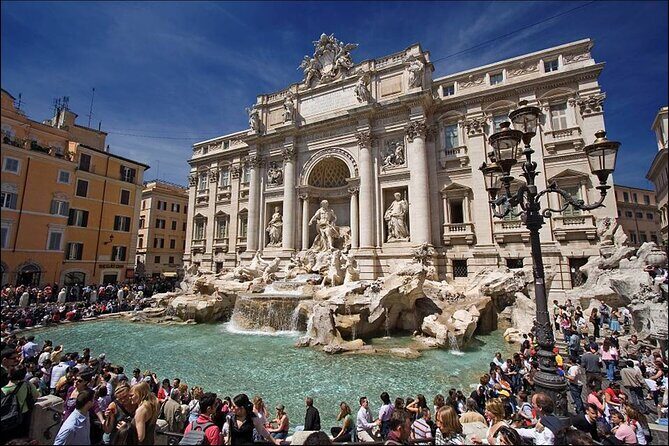
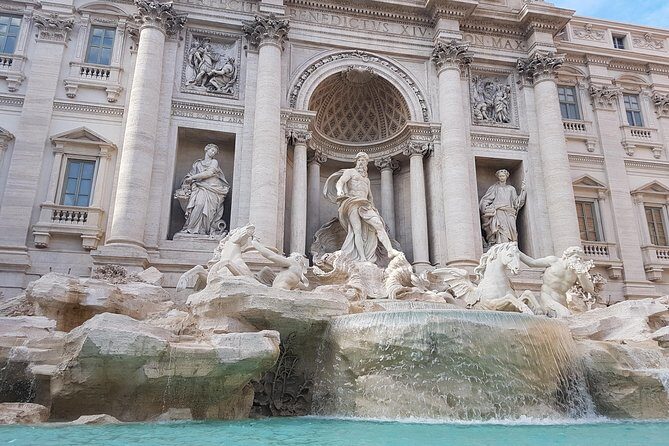
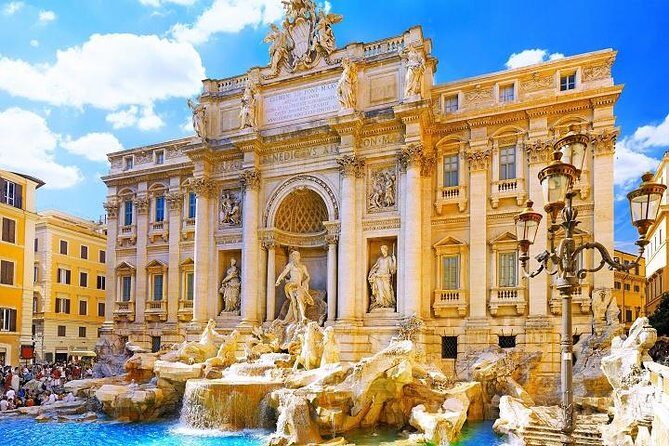
Then you’ll reach Fontana di Trevi, the one fountain everyone recognizes and somehow still catches you off guard in person. The tour framing gives you a clean way to look at it: you’ll learn the basic origin logic behind the name, and you’ll focus on the center figure—Oceanus driving a shell-shaped chariot pulled by horses and tritons.
Here’s what I think is the real win: the tour time is long enough to enjoy the fountain without turning it into a sprint. You’ll have a 30-minute block at Trevi, which matters because Trevi is famous for crowd noise and photo chaos. With a guide, you’re less likely to waste time wandering into the densest standing spots.
And yes, the coin tradition is part of the experience: toss one coin as the saying goes for a return to Rome. If you want the more playful version, it’s described as a romantic extra coin or two. I’d treat that as a fun ritual, not a plan, but it’s still one of those Rome moments that makes your morning feel complete.
Pantheon in 20 minutes: the dome trick you should spot fast
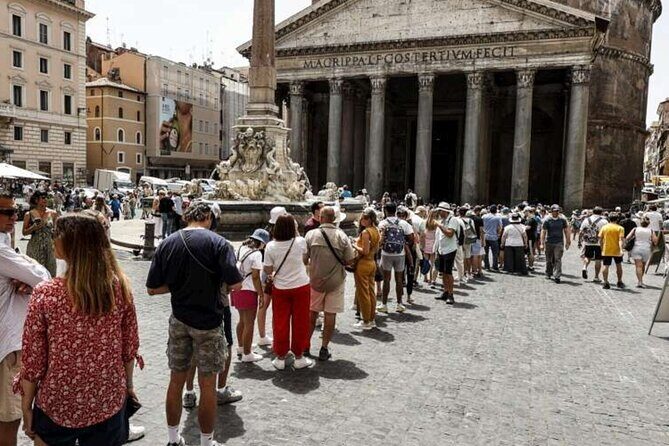
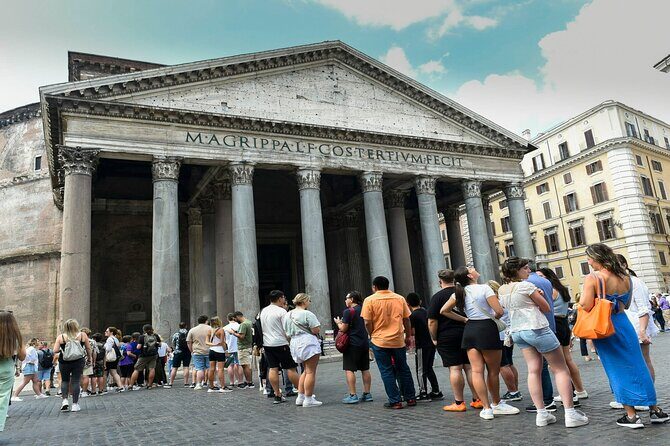
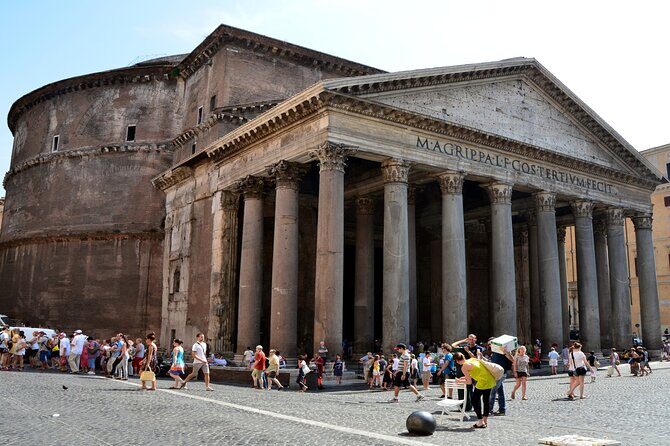
The Pantheon is the big architecture flex of the day, and the tour gives it a straightforward time window. You’ll enter the area with around 20 minutes, and the admission note matters: Pantheon admission is not included.
In that short time, you don’t need to absorb everything. You need to see the key things that make the Pantheon unforgettable. The guide-led approach works here because the building is one huge lesson in proportions. The dome is famous for its size, and it’s supported by thick masonry walls and structural elements around the circular interior space.
If you’re looking for your own quick mental checklist, focus on how the space feels inside versus outside. Then look up and notice the way the dome reads as one bold form. Even if you’ve seen photos, seeing it in person is still a shock.
Also remember: because admission is separate, you should plan for that cost and any ticket lines on the day. If you hate surprises, check in advance how you’ll handle Pantheon entry.
You can also read our reviews of more private tours in Rome

Piazza Navona: the stadium shape under the Baroque glamour
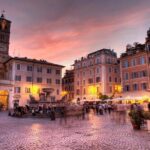
From there, the tour shifts to Piazza Navona, often considered one of Rome’s most dramatic urban squares. You’ll get time to see how the square’s current shape traces back to the ancient Stadium of Domitian, where the perimeter matches the old racing and athletics layout.
That’s the clever part: the Baroque look sits on top of an older skeleton. You’ll also spend time near the major church presence in the square, Sant’Agnese in Agone, begun by Carlo and Girolamo Rainaldi and later modified by Borromini. It’s the kind of church that feels less like a building and more like a sculptural stage set.
If you like Baroque art that’s meant to move your eyes, this is the stop. The facades and the church front create “where to look next” energy, and you’ll have enough time to enjoy the space rather than only pass through.
Cantina del Duca lunch and wine tasting: where the day slows down
The last big block is at Cantina del Duca, near the Vatican Museums area. This is where you shift from walking to sitting, with about 1 hour set aside for the tasting experience.
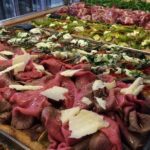
The experience is described as a combination of Roman cuisine and Italian wines, tied directly to a famous cellar and bistro setting. The transfer to the restaurant at the end of the tour is included, so you’re not scrambling across Rome after the sightseeing portion.
This is also the part where I’d manage expectations. One downside showed up in the provided feedback: lunch quality and service can disappoint when it’s not running smoothly. That doesn’t mean it will be bad for you, but it does mean you should treat the food stop as important and still be ready for the reality that bistro-style service can vary by day and staff.
If you’re the kind of traveler who gets cranky when meals are late or rushed, the good news is the format is built for a relaxed finish. You’re not trying to squeeze in dinner later—you’re getting the “refuel and reset” part on schedule.
Price and logistics: does $171.33 make sense?
At $171.33 per person, this tour sits in the “value if the timing fits you” category. You’re paying for three things that add up in Rome: a professional guide, access to a guided route through multiple major landmarks, and an included lunch + wine tasting.
If you were to do this on your own, the costs and effort stack fast: you’d still want guided interpretation for the Pantheon and the Baroque design logic, and you’d still need to plan a meal that doesn’t derail the day. Here, the included tasting at Cantina del Duca plus the guided pacing is what turns the price into something closer to “paid time saved.”
Group size is another factor: it’s capped at 24 travelers, so you get a small-group feel even though it’s not private by default. There’s also an upgrade option to a private experience if you want more personal attention.
One logistical consideration that matters: pickup depends on correct accommodation details. The tour info says you should provide the correct address and phone number, and it even asks you to call the day before to confirm pickup. If you’re staying in a place with unclear signage or you’re using an address pin that doesn’t match reality, double-check everything. One complaint in the info centers on a mismatch that led to trouble at pickup, so be proactive.
Who this tour is best for (and who should pick something else)
This is a strong fit if you want:
- A morning plan that hits big names like Trevi Fountain and the Pantheon without eating your whole day
- A guided walking route with interpretation, then a seated lunch with wine
- A group size that stays reasonably human (max 24) and a private upgrade option if you prefer quieter attention
It may be less ideal if:
- You have limited mobility or you need minimal walking (the tour is explicitly not recommended)
- You’re very food-sensitive and want guaranteed high-end service every time (lunch quality is the one variable that shows up in the feedback)
What to do before you go, so the day runs smooth
This tour is short enough that preparation pays off.
- Bring comfortable walking shoes for uneven Roman sidewalks.
- Plan for the Pantheon admission not included detail, so you don’t lose time later.
- If you’re using a phone for mobile tickets, make sure your device is charged.
- Because the tour notes require you to confirm pickup the day before, do that even if everything looks straightforward.
For the wine tasting, go in with a practical attitude. You’re still sightseeing right after the walking portion, so pace your water and food.
Should you book this Rome fountains and squares tour?
If your goal is to see Trevi Fountain, the Spanish Steps, the Pantheon, and Piazza Navona in one smooth morning, this is a good bet—especially because the finish is a real meal with a winery-style tasting. The strongest selling point is the combination of structured sightseeing + included lunch and wine, and the fact that guides like Katherine, Claudio, Roberto, and Nadia show up in the praise for being patient and detailed.
I’d book it if you want value without spending your vacation hours planning. I’d skip or compare alternatives if your mobility is limited or if you’re counting on top-tier lunch service no matter what. For most people, though, it’s a smart way to get the big Baroque hits, then settle into something delicious.
FAQ
How long is the tour?
The duration is listed as about 3 to 4 hours.
What is included in the price?
You get about 2.30 hours of a professional guide, a tasting in a famous winery featuring Roman cuisine and Italian wines, and a transfer to the restaurant at the end of the tour.
Where does the tour start and end?
It starts at Hotel Hassler Roma (in front of the hotel) and ends at Piazza Navona.
What time does the tour begin?
The start time is 10:00 am.
Are admissions included for the major sights?
Admission at the Pantheon is not included. Other stops listed have admission ticket free.
Is the tour walking-heavy?
Yes. It is a walking tour and it is not recommended for people with limited mobility.
What is the group size limit?
The tour has a maximum of 24 travelers.
Is a mobile ticket provided?
Yes, the tour includes a mobile ticket.
Is there an option to make it private?
Yes, there is an upgrade option to a private experience for more personalized attention.
What is the cancellation window?
Free cancellation is available up to 24 hours before the experience for a full refund.