REVIEW · WALKING TOURS
Rome: Fountains and Fallen Angels Small Group Walking Tour
Book on Viator →Operated by Treasures of Rome · Bookable on Viator
Rome’s churches have the best stories. This small-group walk ties together fountains and sacred art with a spiritual theme you can actually follow, not just “look and move on.” I like that it’s built around quick, smart stops—then you get time to ask questions.
Two big things I’d book for: first, the guide focus. Roberto is repeatedly praised for story-telling that connects faith, art, and history in plain language. Second, the pacing and group size: with a maximum of 5 people, you’re not stuck whispering questions to the back row.
One drawback to plan for: you’ll be walking. Also, churches have dress rules, and one review complained about meeting confusion and a fast pace, so you’ll want to arrive on time and be ready to keep up.
In This Review
- Quick hits before you go
- A small-group walking tour with a spiritual story thread
- Piazza della Repubblica (Piazza Esedra): start where Rome feels “organized”
- Michelangelo’s basilica: Santa Maria degli Angeli e dei Martiri and the ancient Baths
- Fountain of Moses: Domenico Fontana’s water and story
- Santa Maria della Vittoria: Bernini’s Ecstasy of Saint Teresa
- Quattro Fontane: four fountains at a crossroads
- San Carlo alle Quattro Fontane: Borromini’s tight, clever church
- Chiesa di Sant’Andrea al Quirinale: Bernini’s oval surprise
- Palazzo Del Quirinale: seeing power from the outside
- Trevi Fountain: the big one, with context
- Santi Apostoli: paintings and the tombs of two apostles
- Palazzo Venezia: a calmer pause at the Museo Nazionale del Palazzo di Venezia
- Chiesa del Gesù: the Jesuit model of Baroque design
- Price, time, and value at $60.07 per person
- Logistics that matter: meeting point, dress code, and pace
- Should you book Fountains and Fallen Angels?
- FAQ
- How long is the Rome Fountains and Fallen Angels walking tour?
- What language is the tour offered in?
- Is it a small group?
- Do you need tickets to enter the stops?
- What should I wear for church stops?
- Where do I meet and where does it end?
Quick hits before you go
- A 5-person max group means you can actually ask questions and get direct answers.
- Roberto’s style blends faith, art, and history so Baroque details feel meaningful.
- Churches with strict dress rules (shoulders, back, knees covered) shape what you should wear.
- No admission tickets for the stops listed, which keeps the cost focused on the guide.
- A mix of big names and lesser-seen corners: Trevi, plus places like Quattro Fontane and Palazzo Venezia.
A small-group walking tour with a spiritual story thread
This is the kind of Rome tour that doesn’t treat fountains as just pretty water. The title—Fountains and Fallen Angels—signals the theme: sacred art, spiritual ideas, and symbolism show up repeatedly as you move through Baroque churches and iconic street corners.
The real value, though, is how the tour is taught. Roberto’s depth shows in how he explains what you’re looking at and why it matters. In reviews, he’s described as patient and able to keep the art from feeling like homework.
Plan for active touring. The route is a walking loop that lasts about 3 to 4 hours, with many short stops (often around 5 to 20 minutes each). If you like to stop, look, and ask why—this works well. If you need a very slow stroll with lots of free time on your own, you might find the schedule brisk.
You can also read our reviews of more walking tours in Rome

Piazza della Repubblica (Piazza Esedra): start where Rome feels “organized”
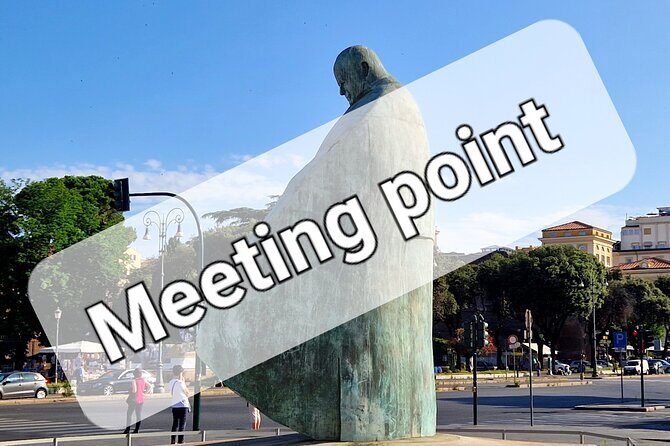
You begin at the statue of San Giovanni Paolo II in the Esquilino area. From there, the tour starts at Piazza della Repubblica (also known as Piazza Esedra). It’s a good opener because it helps you get oriented right away: you can learn how this part of Rome sits within the city’s grand plan, before the route goes more intimate.
This first stop is short (about 5 minutes), so don’t expect a long history lecture. Expect a set-up—like a mental map for what you’ll see next, especially when churches and fountains start “talking to each other” through design.
Michelangelo’s basilica: Santa Maria degli Angeli e dei Martiri and the ancient Baths
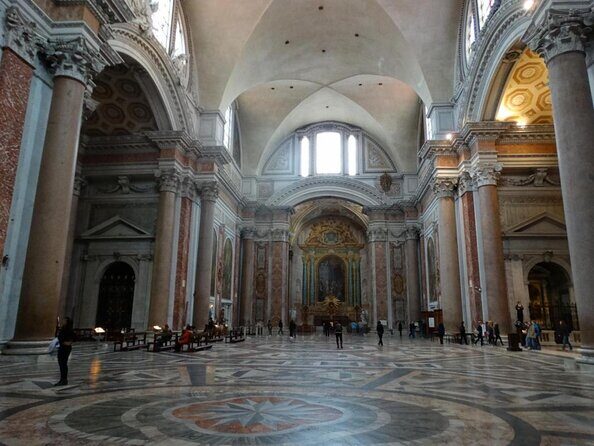
Next comes Basilica di Santa Maria degli Angeli e dei Martiri, designed by Michelangelo. The key idea you should remember here is simple: the church blends into the remains of ancient Baths. It’s one of those Rome moments where you realize the city didn’t replace the past—it stacked it.
This stop is about 20 minutes. That’s enough time to appreciate the scale and then understand what you’re seeing, instead of just snapping photos and moving on. If you enjoy when a guide explains how architecture uses space (and not just artwork on walls), this is a strong early anchor.
A practical note: churches are calm but not always easy for long gawk sessions. If it’s crowded, focus on what your guide points out—this is one of those “look smarter” stops.
Fountain of Moses: Domenico Fontana’s water and story
Then you’ll hit Fountain of Moses, a quick 5-minute stop. The fountain is credited to Domenico Fontana, and that matters because in Rome, even small fountains sit inside bigger artistic conversations.
This is the kind of stop where a guide’s explanation changes everything. Without that, you might see a decorative structure. With it, you start noticing how meaning shows up in the details—and how “fallen angels” fits the broader spiritual theme of the route.
Santa Maria della Vittoria: Bernini’s Ecstasy of Saint Teresa
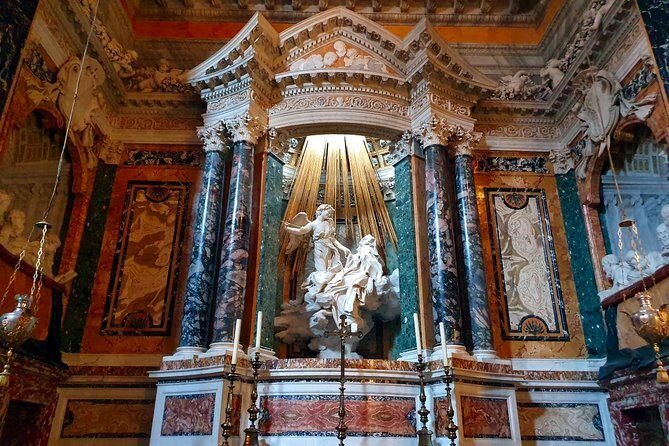
Now you get one of the most famous Baroque works on the list: Santa Maria della Vittoria. This church is dedicated to the victories granted by Saint Mary, and it houses Bernini’s Ecstasy of Saint Teresa.
Expect about 20 minutes here. That’s not a museum-stare session, but it’s enough to understand what Bernini was trying to do. The guide’s strength is connecting the dramatic physical style of Baroque sculpture to the religious story—so you don’t just read it as “fancy marble,” you see it as persuasion.
If you’re short on time in Rome and want one “I came for the art” stop, this is a solid bet.






Quattro Fontane: four fountains at a crossroads
Next is the Quattro Fontane, the crossroads known for its four fountains. It’s another quick 5-minute moment, but it’s also a great palate cleanser. You go from the intensity of Bernini to a street-level intersection where design becomes a navigation tool.
This stop is also where the tour’s theme starts feeling more personal. You’re learning how symbols and sacred ideas show up not only inside churches, but also in public spaces you’d usually walk past.
San Carlo alle Quattro Fontane: Borromini’s tight, clever church
Right after the crossroads, you’ll visit San Carlo alle Quattro Fontane, designed by Borromini. This church gets about 15 minutes.
Borromini’s work is often described as twisty and inventive—and that’s fair. But what makes this stop useful on a tour like this is how the guide links the design choices to the spiritual goal: to create a feeling, not just a building. When you understand the “why,” the church stops being confusing.
If you like architecture, bring your attention here. If you don’t, it still helps because the tour team usually keeps the explanation grounded and practical—what to look for first, what to ignore, and how to spot key features without getting lost.
Chiesa di Sant’Andrea al Quirinale: Bernini’s oval surprise
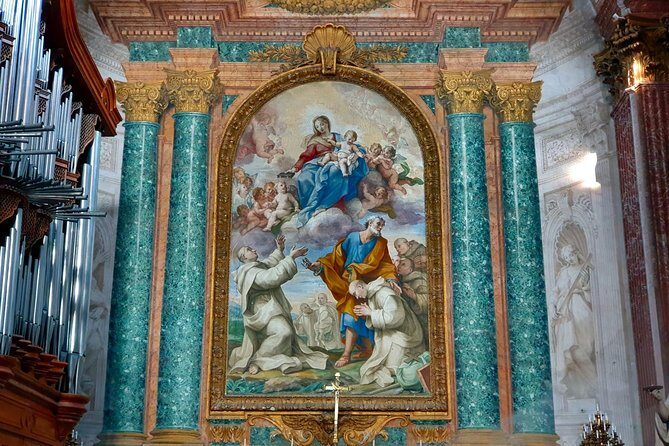
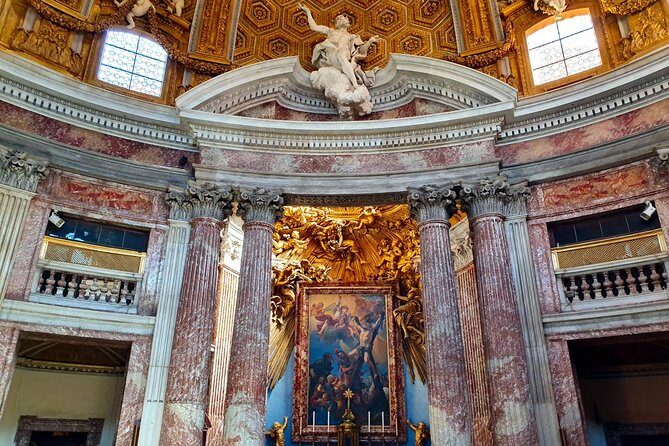
Next is Chiesa di Sant’Andrea al Quirinale. The standout: it’s an oval church designed by Bernini. You’ll get about 20 minutes.
An oval church is not just a shape. It changes how space feels and how people move inside. During this stop, listen for the guide’s explanation of how Baroque design controls sightlines and mood. It’s one of those places where you quickly realize Rome’s “drama” isn’t only in painting or sculpture.
This stop fits the “fallen angels” theme too. Even when the angel story isn’t being narrated in a literal way, you’ll feel the same emotional language: light, motion, and sacred intensity.
Palazzo Del Quirinale: seeing power from the outside
You’ll then stand at Palazzo Del Quirinale, the residence of the President of the Italian Republic. Expect about 10 minutes.
The building can’t be entered during the tour, so treat this as a photo-and-context moment. You’ll get the historical and political framing, but you won’t get the inside experience. It’s still worthwhile because it shows how Rome’s layers keep shifting: ancient sacred spaces, then modern state identity.
Trevi Fountain: the big one, with context
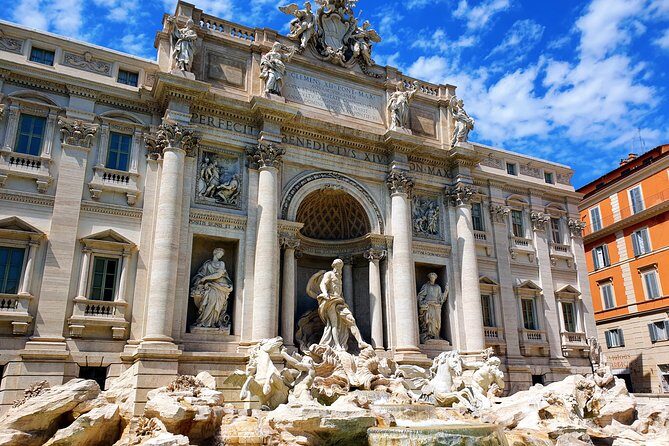
Next is Trevi Fountain, the world-famous stop you’ve probably seen in photos a hundred times. This part lasts about 20 minutes, and yes, it can be busy—so you’ll want to stay focused on what you’re there to learn.
Trevi works best with a guide because it’s not only about the final “wow.” It’s about how the fountain tells a story through its sculpture and layout. In a tour like this, you’re also learning how Trevi fits the spiritual and artistic pattern you’ve already seen—Baroque drama and public spectacle in one place.
Tip: keep your attention on the details your guide points out. If you chase every photo angle, you’ll miss what makes the stop click.
Santi Apostoli: paintings and the tombs of two apostles
After Trevi, you’ll head to Santi Apostoli for about 20 minutes. This church is noted for impressive paintings and the tombs of two Apostles.
This stop is valuable because it slows the pace slightly into sacred gravity. It’s not only about beauty; it’s about meaning. When the guide connects the artworks and the role of apostles, the place feels like it has an internal logic, not random decoration.
If you’re someone who likes religious art, this is a good moment to linger—just within the tour’s timing.
Palazzo Venezia: a calmer pause at the Museo Nazionale del Palazzo di Venezia
Then comes a “pause” stop: Museo Nazionale del Palazzo di Venezia. You’ll spend about 20 minutes, and the tour frames it as an idyllic oasis inside busy Rome.
This is a smart intermission between high-intensity church stops and the final Baroque flourish near the Jesuit mother church. Even if you don’t go museum-deep, the setting helps reset your brain—and it makes the route feel less like a sprint.
Use this time to ask any questions you’ve been saving. With a small group, you can usually get a clearer answer than you would on bigger tours.
Chiesa del Gesù: the Jesuit model of Baroque design
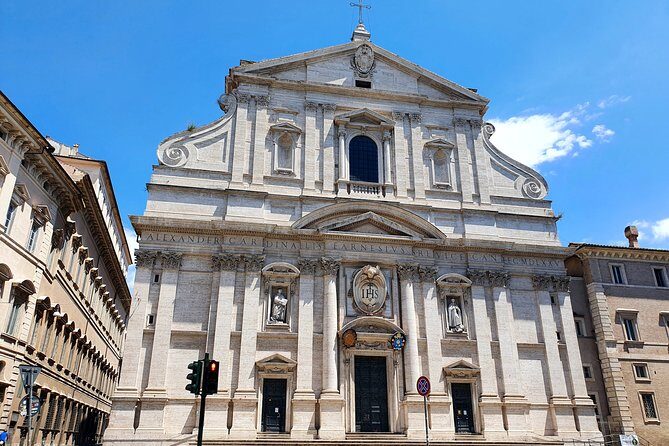
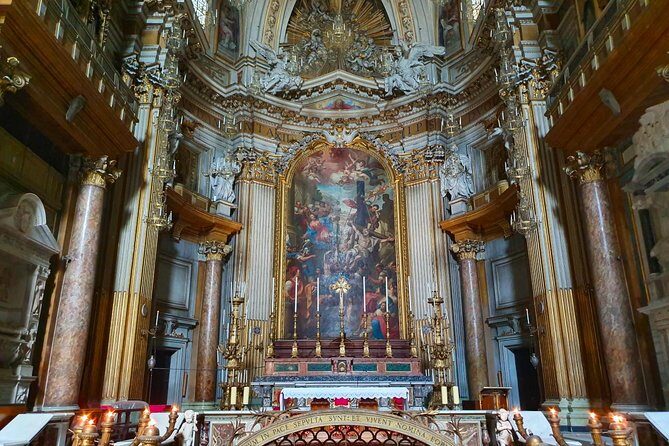
The tour finishes at Chiesa del Gesù, listed as the mother church of the Jesuits and a model building of the Baroque. This last stop gets about 20 minutes.
It’s a fitting finale because it pulls together the tour’s core theme: Baroque art is persuasive. It’s meant to affect how people feel and how they interpret spiritual ideas.
If you’re comparing notes after the tour, this is often where the story locks in. The earlier stops teach you how to look. The last church shows you why Rome’s religious art uses that look.
Price, time, and value at $60.07 per person
At $60.07 per person for a roughly 3 to 4 hour walk, the biggest value isn’t the ticket itself. It’s the guided interpretation—someone points out what you’d miss and explains why it’s there.
Another practical value: the listed stops show free admission for what you’re visiting. So you’re paying mostly for the guide and time, not a stack of entry fees.
Also, this is a max 5-person tour. That’s rare at this price point, and it directly affects your experience. You can ask questions without shouting. You can slow down when something sparks interest. You’re not wrestling a crowd through every stop.
One review even notes the walking length felt substantial—around 11 miles from their hotel during their stay—so keep your expectations athletic. If you’re comfortable walking several miles in Rome, the price feels more like a guided city lesson than a “sit and see” tour.
Logistics that matter: meeting point, dress code, and pace
You start at a defined meeting location near the Statua di San Giovanni Paolo II in the Esquilino area, and you end at Piazza Venezia (near the bus station by that name).
Here’s the honest advice: arrive a few minutes early and use the exact map/photo shown for the meeting point if you can. One unhappy review mentioned trouble finding the guide and a lack of identifying cues. Even if that’s an outlier, it’s a good reminder that meeting in Rome is easy to mess up when you’re tired.
Church rules are not optional on this kind of route. To enter churches, your shoulders, back, and knees must be covered. Plan your outfit like you’re going to a conservative place of worship, because that’s exactly what you’re entering.
Also, the tour needs good weather. If it’s pouring, it may get changed or refunded, so check conditions near departure.
Pace: the itinerary is built from short stops. That’s good for energy. It’s not great if you need long pauses inside every church. If you prefer slower tourism, choose the tour time that matches when you’re most alert.
Should you book Fountains and Fallen Angels?
Book it if you want Rome that feels like a story, not a checklist. This tour works well for art lovers, architecture fans, and people who like when a guide connects sacred meaning to what you see in stone and water. The small group size and Roberto’s reputation for patience make it especially worth it.
Skip it if churches make you uncomfortable, if you struggle with walking/standing for a full 3 to 4 hours, or if you hate a structured route. Also, if you dislike being in a schedule with a guide keeping things on track, you might find the pacing a bit tight.
If you’re on the fence, go with your priorities: if you care about why Trevi, Bernini, and Borromini matter, this tour is a strong match.
FAQ
How long is the Rome Fountains and Fallen Angels walking tour?
It runs about 3 to 4 hours.
What language is the tour offered in?
The tour is offered in English.
Is it a small group?
Yes. The maximum group size is 5 travelers.
Do you need tickets to enter the stops?
The listed stops have free admission. The tour uses a mobile ticket.
What should I wear for church stops?
You need your shoulders, back, and knees covered to enter the churches.
Where do I meet and where does it end?
It starts at the Statua di San Giovanni Paolo II in the Esquilino area and ends at Piazza Venezia (near the bus station by Piazza Venezia).
If you want, tell me your travel dates and whether you’re choosing morning or afternoon, and I’ll help you pick the best one based on a realistic Rome pace.