REVIEW · DINING EXPERIENCES
Rome Food Experience Max 6 People Group Tour | w/Private Option
Book on Viator →Operated by LivTours · Bookable on Viator
Rome tastes better with a plan. This 3-hour evening walk lines up aperitivo snacks, big Roman flavors, and a food story that crosses neighborhoods you’d miss on your own. I especially like how the tastings feel like a full meal, not random bites, and how the guide connects each dish to the city’s past.
What really sold me is the max six group size and the chance to learn from a local sommelier-style guide while you eat: you start with Prosecco and finger food, then keep moving through the Jewish ghetto, pizza by the slice, Cacio e Pepe near the Pantheon, and gelato to finish. One thing to keep in mind is that you’ll be walking and you’ll be eating a lot, so come hungry and pace yourself.
Stop-by-stop Roman specialties paired with drinks
Small group size (no more than six) for real conversation
Jewish Ghetto stops and classic Roman fried bites
Pizza by the slice + beer, then Cacio e Pepe by the Pantheon
Finish with gelato made with season-fresh ingredients
Ask your guide for where to go next in Rome
In This Review
- Aperitivo Hour Meets Real Roman Food
- Why the Max Six Group Size Changes Everything
- What You’ll Taste: A Meal-Style Lineup (Not Just Samples)
- The Route: Piazza Mattei, the Ghetto, Pizza, Pantheon, and Gelato
- Stop 1: Piazza Mattei and Aperitivo-Start Energy
- Stop 2: Ottavia and the Jewish Ghetto Bites
- Stop 3: Largo Argentina Area Sacra and Pizza by the Slice
- Stop 4: Piazza della Rotonda and Cacio e Pepe at the Pantheon
- Stop 5: Piazza Navona and Gelato for the Finish
- The Wine and Prosecco Part: What’s Included and Why It Works
- Pasta and the Pantheon Glow: The “Sit-Down” Moment
- Guide Power: Ask for AJ (and Learn From the Best)
- Value for Money: What the $216.46 Really Buys
- Who Should Book This (and Who Might Want a Different Plan)
- FAQ
- FAQ
- How long is the Rome Food Experience tour?
- What is the group size for this experience?
- What’s included in the food and drinks?
- Where do you meet and where does the tour end?
- Is there a private tour option?
- Can dietary restrictions be accommodated?
- What language is the tour offered in?
- What is the minimum drinking age?
- Is there a cancellation refund if plans change?
- Should You Book This Rome Food Experience?
Aperitivo Hour Meets Real Roman Food
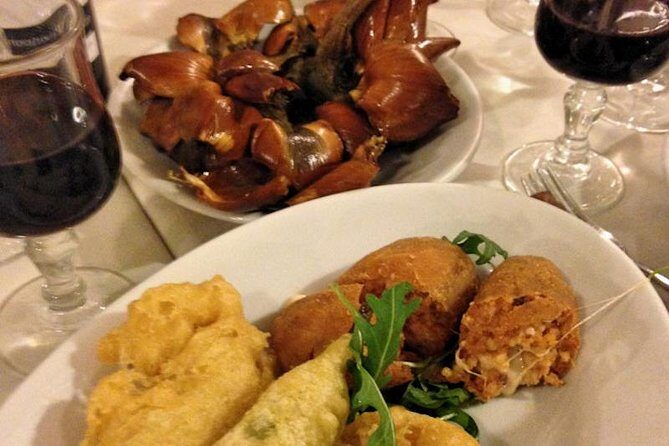
Rome does aperitivo the way other cities do dinner. It’s not just drinks and snacks; it’s a ritual that kicks off the evening, when locals slow down and snack their way toward a good night out. This tour is timed for that moment, so your first tasting lands right when the city is in its pre-dinner rhythm.
I love that the experience is built around movement. You’re not stuck at one restaurant waiting for the next course. Instead, you stroll from place to place and keep getting food that matches the area you’re in. That pacing matters in Rome, where great food often lives behind small doors on quiet streets.
The other big plus is how the tour treats food as a cultural clue. You’ll hear how Jewish cuisine shaped Roman gastronomy, and you’ll get context for why certain street foods became popular in the 1960s and 1970s. If you like seeing the “why” behind what’s on the plate, this is a strong fit.
One consideration: the tastings are described as equivalent to a 5-course lunch or dinner with drinks. That’s wonderful if you love food, but if you’re the type who wants to nibble lightly, plan to eat slower than you think you need to.
Why the Max Six Group Size Changes Everything
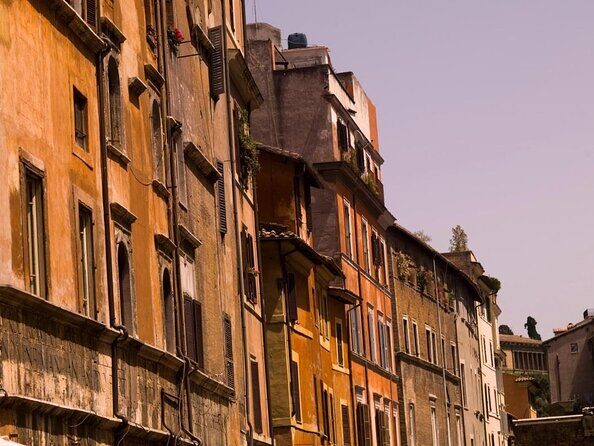
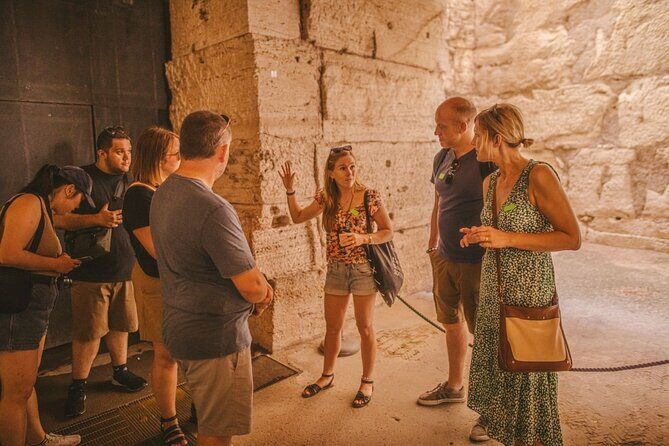
Small group tours are usually “small” in name only. Here, the cap is only six people, which makes a real difference in Rome, where you move through dense neighborhoods and narrow streets. With a group this size, your guide can handle questions and dietary requests without losing the flow.
You’ll also get a better feel for what’s going on around you. Rome can be loud and visually chaotic; a compact group helps you notice details. Your guide can point out connections between famous landmarks and what people ate near them, then tie that back to dishes you’re trying right then.
I also like that the tour is positioned as a walking tour of the historical center, ending near the Pantheon. You’re not just doing a restaurant hop. You’re building a mental map of central Rome while you eat, which helps you enjoy the rest of your trip more.
You can also read our reviews of more food & drink experiences in Rome


What You’ll Taste: A Meal-Style Lineup (Not Just Samples)

This tour has a full “meal arc.” You start with an aperitivo setup, then you hit savory stops that feel like courses, and you end with dessert. It’s the kind of evening where you can actually forget about dinner plans afterward.
Here’s the lineup as you’ll experience it:
- Prosecco and finger food at the first stop
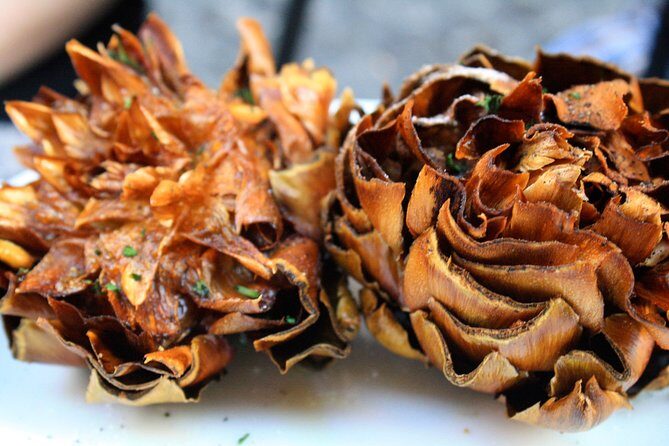
- Jewish ghetto staples like artichoke alla giudia and fiori di zucca (fried zucchini flowers)
- Pizza by the slice paired with Italian beer
- Cacio e Pepe with wine by the Pantheon area
- Gelato at the end, made with season-fresh ingredients
- Homemade pasta with local wine during the grand finale restaurant stop
Food-wise, this is smart because it balances crunchy-fried bites, street-food comfort, and then a more sit-down, showy Roman meal moment with pasta. Drinks are built in throughout: Prosecco at multiple points, beer with pizza, and wine paired with pasta and the Cacio e Pepe stop.
Also, your guide is positioned as a local expert you can ask for next-step recommendations once the tour ends. That’s not a throwaway line. If you do this early enough in your trip, you can use those suggestions to shape the rest of your evenings.
The Route: Piazza Mattei, the Ghetto, Pizza, Pantheon, and Gelato
Let’s walk through the stops in order and talk about what each one gives you.
Stop 1: Piazza Mattei and Aperitivo-Start Energy
You meet in Piazza Mattei (the meeting point is right there at the square). The first stop is at a welcoming bar with meats and cheeses plus a glass of Prosecco. You’ll also have finger food that gets the evening rolling.
This first tasting is key because it sets your appetite. You’re only just starting, and the guide’s background story gives context before the heavier fried foods show up later. It’s also the kind of place where it’s easy to relax for a moment and get your bearings.
A small practical note: because this is early evening, bar lines and foot traffic can vary. Wear comfortable shoes and expect to do some weaving with other pedestrians.
Stop 2: Ottavia and the Jewish Ghetto Bites
Next comes the former Jewish ghetto area. This stop matters because it’s not just a background lesson; you eat dishes that tie into that culinary foundation of Roman gastronomy.
Here, you sample Roman-Jewish favorites like artichoke alla giudia and fiori di zucca, again paired with Prosecco. Artichoke alla giudia is deep-fried artichoke—crisp, salty, and wildly satisfying. Fiori di zucca are fried, stuffed zucchini flowers, and they’re delicate in a way that surprised me when I first learned about them. On a tour, you don’t just hear about them—you get to taste what people meant by “the appetite comes with eating,” l’appetito vien mangiando.
The potential drawback at this stop is simple: fried foods can be intense if you don’t eat slowly. So keep sipping Prosecco between bites and don’t rush. Your future gelato self will thank you.
You can also read our reviews of more tours and experiences in Rome



Stop 3: Largo Argentina Area Sacra and Pizza by the Slice
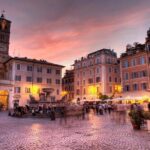
You then walk toward Largo Argentina, where you’ll pass the famous historical site and hear about its connections with the city’s food story. The tour keeps moving through the center, so you get both history on the street and immediate food reward.
This is where you get pizza al taglio—pizza by the slice—plus Italian beer. This stop reflects how Roman street food took off during the 1960s and 1970s. The dish is simple, but that’s what makes it such a great learning moment: you can see how everyday food becomes iconic.
Practical tip: if you’re choosing between flavors, pick at least one classic and one that sounds different. That way you’ll taste both comfort and surprise without eating something you don’t enjoy.
Also, pizza is filling. You’ll likely feel full by now, but you still have more savory dishes ahead.
Stop 4: Piazza della Rotonda and Cacio e Pepe at the Pantheon
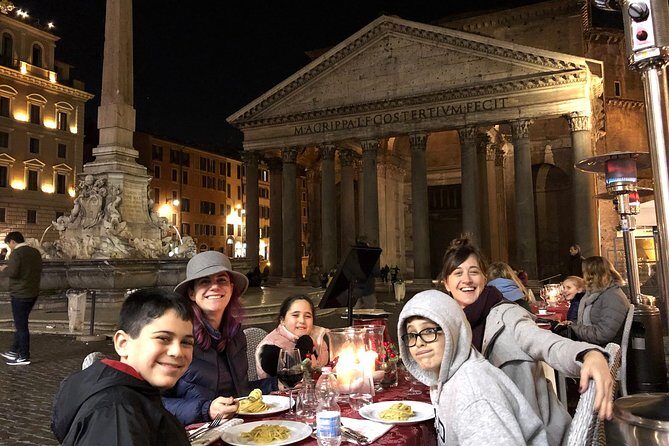
Now you’re headed toward Piazza della Rotonda, and the star moment here is eating near the Pantheon area. You’ll sit by the Pantheon while you enjoy your last savory dish: Cacio e Pepe, paired with more wine.
This stop is a chef’s test in a simple disguise. Cacio e Pepe is all about the balance—cheese and pepper, done with care. If you’ve ever wondered why some minimalist dishes are the hardest to do well, this is where you’ll feel it.
You’ll also hear how the guide connects landmarks you pass to the way people ate in earlier Rome. That’s what makes the stop more than a photo moment. You don’t just see the Pantheon at night; you understand why this area kept pulling people in.
If you’re even slightly worried about overfilling: stop for a second. Take small bites. The tour’s next step is dessert, and gelato deserves a clear head.
Stop 5: Piazza Navona and Gelato for the Finish
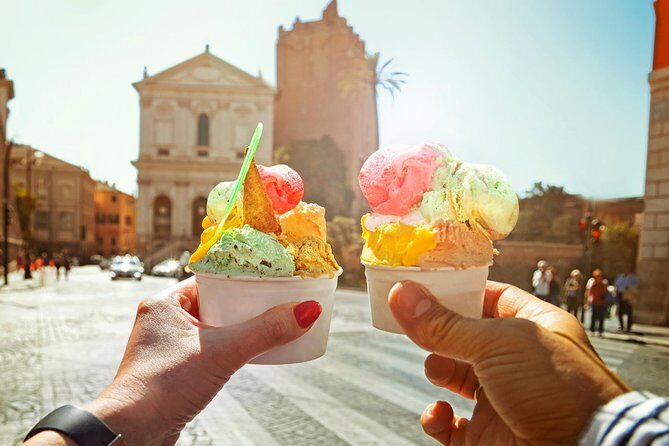
The last stop is at Piazza Navona for gelato. You’ll end your tour with ice cream from a popular gelateria where the ice cream is made with season-fresh ingredients.
Gelato here works as a reset. You go from warm, savory dishes to something cold and lighter, with a sweet finish that doesn’t feel like a punishment after heavy fried foods and pasta.
This is also a strong “close the loop” moment. After learning about Roman and Roman-Jewish food patterns, you end with a very Roman pleasure people still chase daily.
The Wine and Prosecco Part: What’s Included and Why It Works
Drinks can be a weak point on some food tours. Either you get tastings that feel watered down, or the alcohol becomes the main event. Here, the drinks are integrated into the pacing.
You’ll have Prosecco early with meats and cheeses, then Prosecco again with the Jewish ghetto tastings. Later you’ll pair pizza with Italian beer, and then you’ll get wine with pasta and with the Cacio e Pepe stop.
Why this works: each drink follows the type of food you’re eating.
- Prosecco helps cut through fried and salty bites
- Beer fits the slice-and-street-food mood of pizza
- Wine pairs naturally with pasta and the more restaurant-style flavors near the Pantheon
And if you’re traveling with a group, the drink rhythm helps everyone stay in sync. Nobody has to wonder when the next course arrives.
Reminder from the tour info: minimum drinking age is 18, and the dress code is smart casual.
Pasta and the Pantheon Glow: The “Sit-Down” Moment

A big part of why this tour feels like a real meal is that it doesn’t only stay in quick bites. There’s a glamorous restaurant stop with a view over the Pantheon, where you enjoy homemade pasta with local wine while you admire the building lit up at night.
This is the moment when the evening shifts from “walk and sample” to “slow down and enjoy.” You’ll learn about Roman pasta and the significance of your dish while you eat. Even if you’re not a pasta nerd, it’s a great way to understand how ingredients and technique become identity in Roman cuisine.
The value here is not just the meal. It’s the contrast: you taste street food on the way, then you’re served a more polished version in a stunning setting. That mix keeps the whole evening from feeling repetitive.
Guide Power: Ask for AJ (and Learn From the Best)

One of the most consistently praised parts of this experience is the guide. People mention names like AJ (including AJ from LIVTours), Michela, Alessandro, Santi, Jill, Tiffany, Marta, and Dario Deluca. The theme is clear: the best tours are about the human touch, and this one leans hard into that.
What you should pay attention to is style:
- People liked guides who were personable and engaging, not robotic
- They also liked how guides tied food to local history while still keeping the mood fun
- Many emphasize clear English and the way the guide gives helpful Rome recommendations after the tour ends
So if you can request a guide, put in a note for AJ. If you can’t, don’t worry. The structure is built for strong local expertise, and the best version of this tour comes from a guide who can explain what you’re tasting in plain language.
And at the end, take a minute to ask for advice. The tour sets you up to explore more of Rome, but you still need the guide’s best picks for where to eat, what to see, and how to do it efficiently.
Value for Money: What the $216.46 Really Buys

At $216.46 per person, this isn’t a bargain. But it’s not overpriced in a tourist-trap way either, because the cost is tied to real expenses: multiple venues, a small group setup, and a meal-style lineup with drinks.
Here’s what you’re effectively paying for:
- A guided walk across multiple neighborhoods in central Rome
- Tastings that add up to an equivalent of a 5-course meal with drinks
- Prosecco, beer, and wine spread across the evening
- Several signature dishes you’d be hard-pressed to order on your own in the right order (including artichoke alla giudia and fiori di zucca)
- Gelato and a restaurant pasta stop near the Pantheon
If you compare it to buying separate meals and drinks at random spots, the savings isn’t the main story. The main story is convenience and quality control. A good guide gets you to places you might not find, and the tasting order prevents you from missing key experiences.
Also, because it’s max six people, you’re paying for a more tailored experience. That’s part of why it gets such high satisfaction.
Who Should Book This (and Who Might Want a Different Plan)
This is ideal if you:
- Want a food-focused evening that also teaches the story behind the dishes
- Enjoy aperitivo culture and want the start of dinner without having to research everything
- Prefer small groups and conversational guides
- Like classic Roman flavors plus a specific angle on Roman-Jewish cuisine
It might not be ideal if you:
- Get overwhelmed by a lot of walking
- Don’t eat fried foods or aren’t interested in tasting multiple specialties
- Are looking for a lighter, snack-only evening rather than an equivalent full meal
The tour also accommodates dietary restrictions like vegetarian or gluten-free if you specify under Additional Notes after booking. If you’re not sure what to request, choose the key “yes/no” items for your restrictions so the guide can steer you to the right substitutions.
FAQ
FAQ
How long is the Rome Food Experience tour?
It lasts about 3 hours.
What is the group size for this experience?
The group is limited to a small size of no more than six people.
What’s included in the food and drinks?
You get an aperitivo start with meats and cheeses and Prosecco, tastings that are equivalent to a 5-course lunch or dinner with drinks, pizza by the slice with beer, gelato, and homemade pasta with wine.
Where do you meet and where does the tour end?
You meet at Piazza Mattei, 00186 Roma RM, Italy, and the tour ends near Piazza della Rotonda, 00186 Roma RM, close to the Pantheon.
Is there a private tour option?
Yes, there is a private tour option available.
Can dietary restrictions be accommodated?
Yes. You can request vegetarian or gluten-free options by specifying your needs after booking under Additional Notes.
What language is the tour offered in?
The tour is offered in English.
What is the minimum drinking age?
The minimum drinking age is 18.
Is there a cancellation refund if plans change?
Yes. You can cancel up to 24 hours in advance for a full refund.
Should You Book This Rome Food Experience?
If you want a Rome evening that mixes history, neighborhoods, and an actual meal worth of tastings, I’d book it. The combination of small group size, a guided route timed for aperitivo, and signature bites like artichoke alla giudia plus pizza by the slice makes it feel efficient and meaningful.
I’d especially recommend it to first-timers who want a map of central Rome built through food. Just plan to eat well: wear smart casual shoes, arrive hungry, and pace the fried bites so you can enjoy gelato at the end.