REVIEW · AUDIO TOURS
Rome: Castel Sant’ Angelo Ticket and Audio Guide
Book on GetYourGuide →Operated by Clio Muse Tours - Italy · Bookable on GetYourGuide
Rome’s best fast pass is a fortress. This Castel Sant’Angelo ticket gets you in faster and gives you a self-guided visit powered by an offline smartphone audio guide—so you can set your own pace instead of watching a clock.
What makes it especially fun is the mix of big, cinematic structure and quieter corners. You’ll move through Emperor Hadrian’s cylindrical mausoleum, then hit the Sala Paolina area with its famous, well-kept frescoes—parts that reward slowing down and looking closely.
One thing to plan for: the entry time can be more specific than you might expect, and you’ll also need to bring your own setup (at minimum headphones and a charged phone). If your ticket shows a specific entry slot, follow that rather than assuming it’s open-ended.
In This Review
- Key things to know before you go
- Why Castel Sant’Angelo Feels Different Than Other Roman Stops
- Getting In Smoothly: Skip-the-Line and the Reality of Time Slots
- Your Self-Guided Audio Tour: How It Works on Your Phone
- The Mausoleum of Hadrian: What to Look For Inside
- Sala Paolina Frescoes: The Room That Makes You Slow Down
- Panoramic Terraces and the Rome-From-Above Moment
- Cost and Value: Is $31 Worth It?
- When This Works Best (and When a Live Guide Might Beat It)
- Planning Tips That Make the Day Easier
- Should You Book This Castel Sant’Angelo Ticket?
- FAQ
- What’s included with this Castel Sant’Angelo ticket?
- Where does the self-guided audio tour start and end?
- Do I need to bring headphones and a smartphone?
- How does entry time work with this ticket?
- What languages are available for the audio guide?
- What phones are compatible with the audio tour?
- How much storage do I need for the download?
- Are pets or large bags allowed?
Key things to know before you go

- Skip-the-line with an emailed ticket: show your barcode at the main entrance to get moving fast.
- Offline audio + maps: you download ahead, then use the app on-site without hunting for signals.
- Sala Paolina fresco time: this room is a major highlight, and it’s worth giving it a focused pass.
- Top-of-castle views: the “go up, then pause” payoff is real, with Rome spread out below.
- You’re doing it at your pace: no live guide means you can spend longer where you care most.
- Bring headphones and a charged phone: the visit depends on it, because a smartphone and headphones aren’t included.
Why Castel Sant’Angelo Feels Different Than Other Roman Stops

Castel Sant’Angelo is Roman history you can actually walk through. Instead of just looking at ruins from the outside, you get interior spaces, stair-and-corridor rhythms, and moments where the building’s purpose becomes obvious.
This site also has a built-in “two moods” effect. You spend time with the heavy imperial story of Hadrian’s mausoleum, then you shift to lighter spectacle—especially once you’re higher up and the views start doing their job.
And because the ticket is self-guided, you don’t have to match anyone else’s pace. If you like reading details and pausing for photos, this fits your style. If you want fast motion, you can also skip around without waiting on a group.
You can also read our reviews of more tours and experiences in Rome



Getting In Smoothly: Skip-the-Line and the Reality of Time Slots

The big practical win is the skip-the-line admission ticket. You receive your ticket by email, then use your barcode at the entrance to enter right away.
That said, don’t treat the entry rules like a one-size-fits-all promise. The product description says it’s valid for 1 day, but at least one booking experience notes the time slot on the ticket is what matters for entry. So when you get your email, check the details carefully and show up for the time you’re actually assigned.
In Rome, “save time” is mostly about avoiding long purchasing lines and getting your visit started on schedule. This is exactly what you’re buying: fewer delays so you can spend your energy inside the mausoleum and up on the terraces.
Your Self-Guided Audio Tour: How It Works on Your Phone

This is a smartphone audio experience. After you buy, you download the app and the offline audio tour before you arrive. The tour is designed to start and end at the main entrance of Castel Sant’Angelo.
The audio package includes offline text and narrated segments, plus maps. That matters because Castel Sant’Angelo is easy to walk into and feel oriented at first—then a few corridors later you may wonder where you are. The maps and narration help you connect the building’s layout to what you’re seeing.
Supported devices are specific. You need an Android (version 5.0 and later) or an iOS phone, and it is not compatible with Windows Phones or older Apple models (like iPhone 5/5C and older, older iPod Touch, iPad 4th gen and older, and iPad Mini 1st gen). If your phone is older, it’s worth checking before you plan your day.
You also need some storage. Plan for 100–150 MB of free space for the download, and bring a charged phone so you don’t get stuck mid-tour.
The Mausoleum of Hadrian: What to Look For Inside

This visit’s backbone is Hadrian’s mausoleum—also known as a cylindrical imperial monument that dominates the experience. With the audio playing, you’ll get the story behind why it was built and how it functioned in its time.
In practice, what works best is giving yourself a slow first pass. When you enter, don’t rush straight to the viewpoints. Take a minute to orient yourself and then let the audio narration connect the spaces you’re standing in.
If you like architecture and symbols, you’ll appreciate how the structure’s shape and scale become part of the story. The narration is there to help you “read” the building, not just walk past it.
And because this is self-guided, you can pause when something grabs your attention—like a notable corridor view, a transition point, or a spot where you can see the shape of the structure more clearly.
Sala Paolina Frescoes: The Room That Makes You Slow Down
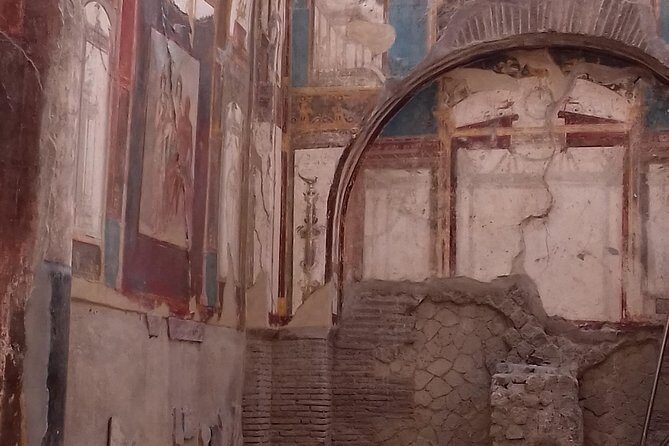
Sala Paolina is where the visit gets visually theatrical. The experience includes time for the fresco-lined rooms, and this one is specifically highlighted for its stunning, well-maintained frescoes.
This is the place to do a “two look” strategy. First, look quickly to get the overall composition. Then, on the second look, focus on smaller details the audio calls out—colors, iconography, and what the scenes are meant to communicate.
Even if you think you’re not the museum type, fresco rooms have a way of making you stop moving. The audio helps you understand what you’re seeing without turning the visit into an exam, and it’s one of the easiest spots to justify spending a bit extra time.
You can also read our reviews of more guided tours in Rome






Panoramic Terraces and the Rome-From-Above Moment

One reason Castel Sant’Angelo earns repeat visits is what happens as you go higher. You get panoramic views across Rome, and the experience includes a top-of-castle feel where you can see the city spread out below.
This is also a good place to change gears. After reading about emperors and monuments, it’s refreshing to just look. You’ll likely want a slow walk and a longer pause here, not a quick photo-and-go.
There’s also a cafe/bar area on-site, which makes the “rest your feet” plan realistic. If your day in Rome is packed, this is the built-in moment to grab a drink or snack and enjoy the view without needing to plan extra stops.
And yes—there are bathroom facilities on-site, which matters more than you’d think when you’re doing a long walking day. It lets you keep your momentum instead of spending time hunting for a break.
Cost and Value: Is $31 Worth It?

At about $31 per person, you’re paying for two things: faster entry and a phone-based audio experience. If you’re the type who hates lining up for tickets, the skip-the-line portion alone can feel like good value.
The audio guide adds value in a different way. You’re not just getting admission; you’re getting context that helps you understand what you’re looking at as you go. Since there’s no live guide included, the audio becomes the primary “explainer,” so it’s a smart match if you want a detailed visit without the schedule pressure of a guided group.
Is it worth it if you ignore the audio? Sometimes. If you only care about views and fast movement, you might still feel the ticket paid off because you avoid the worst lines. But if you’re hoping for a richer storytelling layer, plan to actually use the audio and headphones.
When This Works Best (and When a Live Guide Might Beat It)
This setup fits best when you like control. You choose how long to spend in the mausoleum areas, when to stop for photos, and which rooms deserve your extra attention.
It also works well when your group isn’t synchronized. If one person wants the audio, another wants speed, or you just don’t want to move with a stranger’s pace, self-guided is a relief.
That said, a live guide can beat audio when you want more live back-and-forth or deeper explanations on demand. Even with a strong audio track, some people prefer a person to add extra context as they move.
If you’re on the fence, use this rule of thumb. If you’ll put on headphones and follow along at least through the mausoleum and Sala Paolina, this ticket is a solid choice. If you hate audio tours or you know you’ll tune out, you may get more value from a guided option.
Planning Tips That Make the Day Easier
A little prep makes this experience smoother. Download the audio tour before you leave for Castel Sant’Angelo, and leave yourself enough time to get through the download without rushing.
Bring headphones and keep them within reach. Also keep your phone topped up—offline audio still uses battery, and you don’t want that low-battery panic during the part you care about.
Wear shoes you can walk in comfortably. Castel Sant’Angelo involves climbing and moving between levels, and while it’s wheelchair accessible, some sections may still be hard for people with limited mobility due to stairs and access constraints.
For luggage: pets aren’t allowed, and luggage or large bags aren’t allowed either. If you’re traveling with a big pack, plan ahead for what you can carry that day.
Should You Book This Castel Sant’Angelo Ticket?
If you want a smooth start, skip-the-line access is the big reason to book. If you also like structure plus story—Hadrian’s mausoleum, fresco rooms, and then the Rome-from-above viewpoints—this ticket delivers that mix in a format that’s easy to fit into a busy day.
I’d book it if:
- You dislike long lines and want your time to be spent inside.
- You’re comfortable with self-guided audio and you’ll actually listen.
- You want to move at your pace through the fresco highlights and terraces.
I’d think twice if:
- Your phone is older or you’re not confident about downloading an offline guide.
- You prefer a live explainer who can answer questions in real time.
- You’re expecting a fully open-ended entry window and don’t want to follow a specific time slot.
If you like independent travel, this is a practical way to get the best parts of Castel Sant’Angelo without turning your day into a queue-management exercise.
FAQ
What’s included with this Castel Sant’Angelo ticket?
The ticket includes skip-the-line admission for Castel Sant’Angelo plus an audio tour for Android and iOS. It also includes offline text, audio narration, and maps.
Where does the self-guided audio tour start and end?
The self-guided tour is designed to start and end at the main entrance of Castel Sant’Angelo.
Do I need to bring headphones and a smartphone?
Yes. A smartphone and headphones are not included, so you should bring your own headphones and a charged smartphone.
How does entry time work with this ticket?
The experience is valid for 1 day, but you should check the time slot shown on your ticket for entry timing. One booking experience noted that the time slot on the ticket is what you use to enter.
What languages are available for the audio guide?
The audio guide is available in English, German, Italian, French, Spanish, and Chinese.
What phones are compatible with the audio tour?
The tour requires an Android (version 5.0 or later) or iOS smartphone. It is not compatible with Windows phones, and it does not work with certain older iPhone/iPad/iPod models listed in the requirements.
How much storage do I need for the download?
You need 100–150 MB of free space for the download.
Are pets or large bags allowed?
No. Pets are not allowed, and luggage or large bags are not allowed. Smoking is also not allowed.