REVIEW · CYCLING TOURS
Rome: E-Bike Tour of the Seven Hills
Book on GetYourGuide →Operated by Golf Cart and E-Bike Tour in Rome · Bookable on GetYourGuide
Rome has a way of wearing you out. This e-bike tour keeps you moving.
I really like the electric fat-tire e-bikes for making the uphill parts feel doable, and I also love how guide Sven (and Andre) turns major landmarks into a story you can track as you ride. One heads-up: it’s not a quiet countryside cruise—busy streets and traffic near the most popular sights mean more stop-and-go than you might expect if you’re picturing pure hilltop serenity.
You’ll start in the historic center and work through Rome’s big “greatest hits,” plus enough side streets and viewpoint moments to feel like more than a photo run. Expect frequent short stops, quick scenic pauses, and then some climbing back into the action. You should feel fine if you can ride a bike and handle around 15 km with uphill sections.
In This Review
- Key points to know before you go
- Why Rome’s Seven Hills Feel Like a Cheat Code on an E-Bike
- Where You Meet on Via dell’Orso and How the Setup Works
- Quirinale to Trevi: Power, Drama, and a Quick Photo Break
- Trinità dei Monti, Pincio, and Popolo: Views That Just Make Sense
- Navona to Campidoglio: Classic Sights With Real Street-Noise Included
- Ancient Corners: Torre Argentina and Portico d’Ottavia (Why These Stops Matter)
- Circus Maximus to Aventine Hill: Long Views and the Edge of Rome
- Tiber Island, Trastevere, and Castel Sant’Angelo: The Ride Ends Like a Movie Scene
- Price and Value: Is $81 for 3 Hours a Good Deal?
- The Ride Style: How Much Effort Should You Expect?
- What to Bring for a Smooth Seven Hills Tour
- Who This Tour Fits Best (and Who Should Skip It)
- Should You Book the Rome Seven Hills E-Bike Tour?
- FAQ
- FAQ
- How long is the Rome Seven Hills e-bike tour?
- Where do I meet for the tour?
- What’s included in the price?
- Is the tour free to cancel?
- How much does it cost?
- What languages are the tours offered in?
- About how far do you ride?
- Is the tour okay for beginners on e-bikes?
- What should I bring?
- Are there age or physical limits?
Key points to know before you go
- Small group (max 8) keeps the ride feeling personal and easy to manage.
- Fat electric e-bikes help a lot on the hills, even if you’re not a daily cyclist.
- Seven hills + top viewpoints give you domes, rooftops, and big city views you can’t easily reach on foot.
- Historic center route hits major squares and monuments without turning it into a museum day.
- Guide-led storytelling connects the Roman Empire to later eras while you move through the city.
- All-weather operation means you’ll want real shoes, water, and a sensible layer.
Why Rome’s Seven Hills Feel Like a Cheat Code on an E-Bike
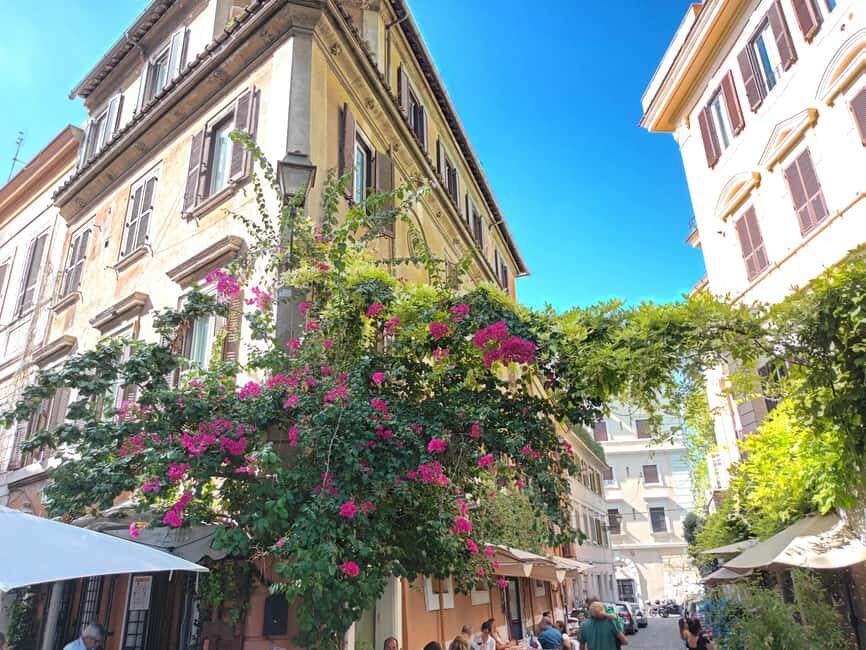
Rome’s seven hills are the city’s natural “shaping tool.” They’re why some streets feel like ladders, why certain viewpoints look like they were built for postcards, and why walking can turn into a slow grind of stairs and switching plans.
On an e-bike, that same geography becomes a feature instead of a chore. The ride helps you keep momentum, so you spend your energy on enjoying the views rather than wrestling the terrain. And because the tour is guided, you’re not stuck doing mental navigation while also trying to get your bearings and bike in traffic.
This is also a smart way to get context. As you move from square to square, the guide can tie what you’re seeing to what came before—Roman power, the rise of Christianity, and later eras that shaped today’s Rome. You get a “timeline you can ride,” not just a list of sights.
You can also read our reviews of more cycling tours in Rome
Where You Meet on Via dell’Orso and How the Setup Works
You’ll meet at Via dell’Orso, 21, at the shop. The practical win here is that there’s no hotel pickup needed—just show up, get fitted, and roll.
Once you arrive, you’ll get the essentials that matter for comfort and safety: an e-bike rental, a helmet, and insurance, plus a live guide. The e-bike type reported in the experience is a fat bike style, which usually means more stability and traction than a skinny-tire bike. That matters in a city where surfaces and turns can feel unpredictable.
The tour runs about 3 hours, which is long enough to feel like you covered Rome’s core, but short enough that you’re not stuck fighting jet lag plus cardio plus crowds all day.
Quirinale to Trevi: Power, Drama, and a Quick Photo Break
After starting from Via dell’Orso, you’ll head toward Piazza del Quirinale. This first stretch is a good “warm-up” in spirit. You get an early chance to absorb how the city opens and tightens as you move through different streets. There’s a photo stop and scenic ride time en route, so you’re not just pedaling into the first busy area without a reason.
Next comes Trevi Fountain. Even if you’ve seen it on every screen imaginable, being there by bike changes the rhythm. You’re close enough to see the scale, but you’re not stuck in an all-day line of slow walking. You’ll have a visit/photo moment, then you move on rather than turning it into a half-day event.
Why I like this part of the tour: it sets expectations early. Rome’s iconic sights are iconic for a reason, but you still need the right pace to enjoy them. This tour keeps you from getting stuck in sight-only mode.
Trinità dei Monti, Pincio, and Popolo: Views That Just Make Sense
From Trevi, the ride naturally pushes you toward the hillier side of central Rome. You’ll stop at Santissima Trinità dei Monti for a photo moment and scenic riding time on the way. Then you roll toward Terrazza del Pincio, another viewpoint that’s worth treating like a proper break rather than a quick glance.
After Pincio, you pass Piazza del Popolo. It’s a strong visual anchor as you move through the city’s changing levels. Then the route continues toward Piazza Navona, again with a visit and a photo stop.
This section is where the e-bike does its real job. Hills are part of the attraction—Rome sits where it sits—but having motor support helps you arrive with energy to enjoy the view. You can focus on what matters: the domes in the distance, the layers of rooftops, and the way Rome looks from above when you’re not exhausted.
Navona to Campidoglio: Classic Sights With Real Street-Noise Included
Piazza Navona is the kind of place where your brain immediately starts labeling details. You get a visit and photo time here, then you keep moving, which is key. If you linger too long, you lose the rest of the ride. If you rush, you miss what makes Navona feel alive.
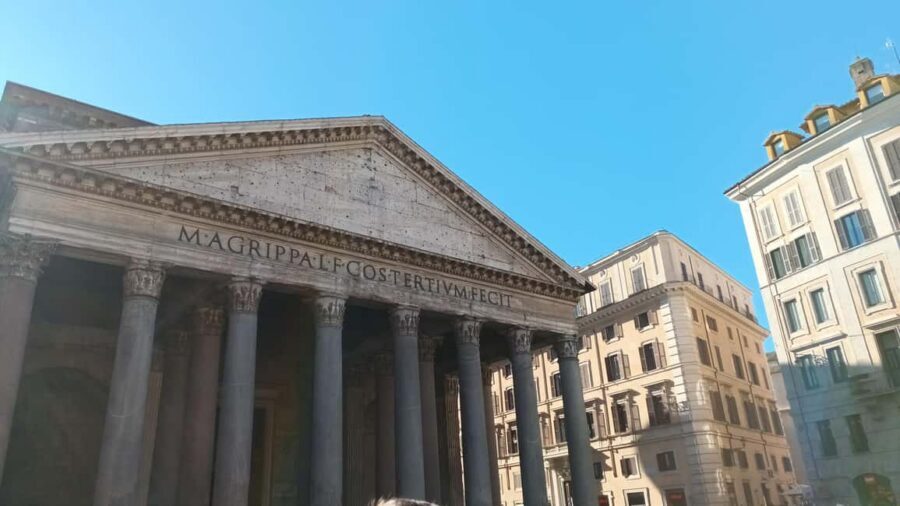
Next you’ll get to Piazza della Rotonda (home to the Pantheon area) for a photo stop and ride time. From there, you pass Largo di Torre Argentina and make a photo/visit moment at Portico d’Ottavia.
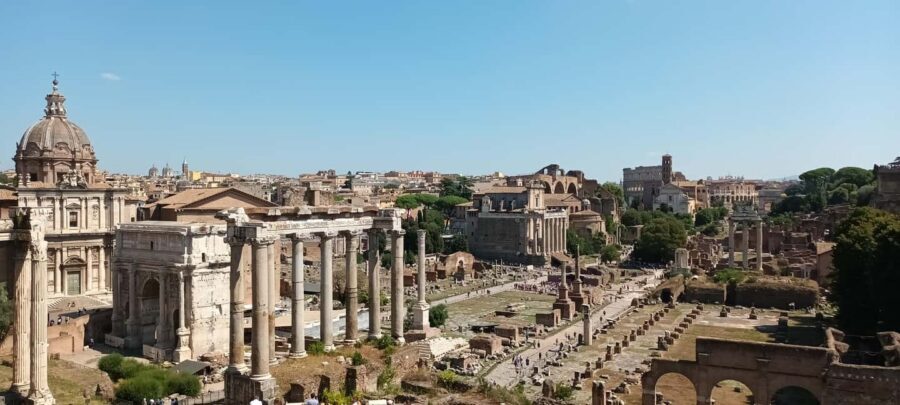
Then comes Piazza del Campidoglio, with scenic views and a photo stop. This is another hill-adjacent moment that gives you a perspective shift. You’re seeing Rome not just as scattered monuments, but as a connected city built on top of older layers.
One practical note: busy central streets are part of the deal. In one experience, the pace was described as less relaxing than hoped because of traffic around the most touristic areas. Even when the guide is doing everything right, you should expect the ride to be active—more navigating and controlling your speed than gliding.
You can also read our reviews of more tours and experiences in Rome



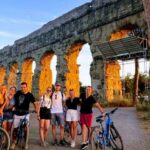
Ancient Corners: Torre Argentina and Portico d’Ottavia (Why These Stops Matter)
Some Rome stops are so famous you’ll know them instantly. Others are the kind of places you walk right past unless someone points them out.
That’s where Largo di Torre Argentina and Portico d’Ottavia can shine. These areas connect you to older Rome in a way that feels more grounded than just staring at a single landmark. The guide’s job here is especially important—when they connect the site to what came before, it turns a quick stop into a meaningful pause.
You’ll get photo moments and a visit at Portico d’Ottavia, which helps you slow down without losing the day. If you’ve ever felt like Rome is all “big stops” and no “in-between,” these pauses are a nice correction.
Circus Maximus to Aventine Hill: Long Views and the Edge of Rome
As you head on, you pass Circus Maximus, then continue toward Aventine Hill. You’ll stop for photos and scenic viewing there, plus ride time.
This is one of those Rome moments where the city feels wider and calmer in your head, even if the streets themselves aren’t. From a viewpoint, you can see how Rome spreads out. You also start noticing the rhythm: hills, bridges, and the way major monuments sit in the city’s sightlines like they’re guarding the skyline.
Aventine Hill is also a nice reminder of why the tour concept works. A bike makes it easier to reach viewpoint territory without turning the whole outing into a stair workout. And because it’s guided, you don’t just look—you understand what you’re looking at.
Tiber Island, Trastevere, and Castel Sant’Angelo: The Ride Ends Like a Movie Scene
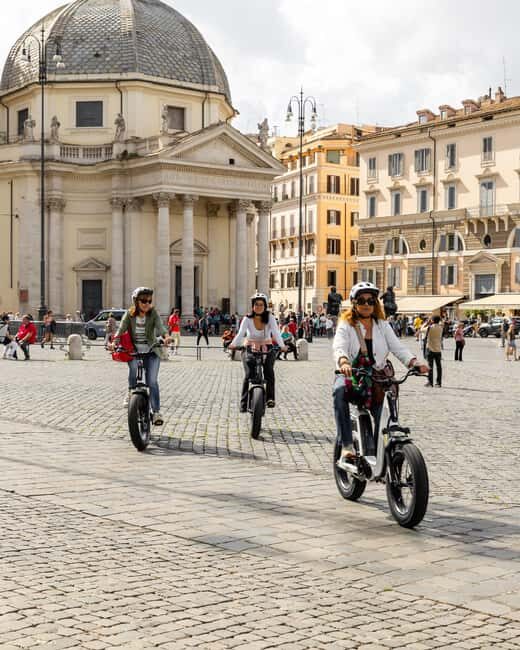
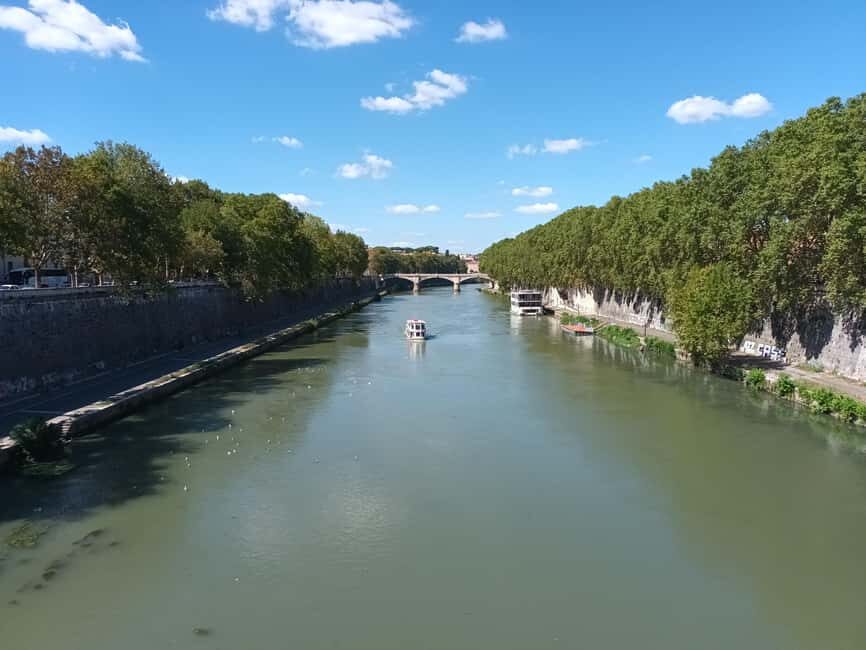
Later on, you’ll reach Tiber Island for a photo stop and scenic ride time. Then you pass Trastevere, which usually means you’re in the mood for winding streets and river-adjacent energy.
Finally, you’ll make it to Castel Sant’Angelo for a photo stop and scenic ride time, then you return to Via dell’Orso, 21.
This ending matters because Castel Sant’Angelo sits on a visual axis that feels final and satisfying. You’ve been climbing and weaving across central Rome, and then you close with the river and a monument that gives the ride a clear finish line.
If you’re the kind of person who likes a strong ending rather than a scattered one, this route delivers.
Price and Value: Is $81 for 3 Hours a Good Deal?
At about $81 per person for 3 hours, the best way to judge the value is not just the price tag—it’s what you get included.
You receive:
- E-bike rental
- Helmet
- Live tour guide
- Insurance
That means you’re not separately renting a bike, and you’re not left figuring out the best viewpoints and transitions yourself. For Rome, that’s real value because the city can be hard to read quickly if you’re mixing old streets, crowds, and elevation.
Also, the tour is set up for a small group (up to 8), which often improves the experience. Smaller groups mean fewer bottlenecks at stops and smoother regrouping.
So is $81 “cheap”? Not exactly. But for what’s included—guided pacing, e-bike support on the hills, and a route that hits major sights plus viewpoint time—it’s priced like a practical sightseeing day, not like a quick skip-the-line ticket.
The Ride Style: How Much Effort Should You Expect?
The tour covers about 15 km, including uphill climbs. That sounds like a lot until you remember the point: the bike has electric help, so the climbing is more manageable than a traditional bike tour.
Still, the rules are clear:
- You should have a basic level of fitness
- You must be able to ride a bike
- Children under 12 aren’t allowed
- It’s not suitable for pregnant women or people with mobility impairments
Before you book, be honest with yourself. If you can’t safely ride a bike in a city setting, don’t gamble. But if you can pedal and steer comfortably, the e-bike support should make the experience feel like sightseeing with a boost, not like punishment.
What to Bring for a Smooth Seven Hills Tour
For comfort and sanity, bring:
- Comfortable shoes
- Camera
- Sunscreen
- Water
And wear clothes suited to real street riding. The tour operates in all weather conditions, so plan for rain or sun. You don’t need a fancy kit, but you do need to be prepared for Rome’s day-to-day weather swings.
Who This Tour Fits Best (and Who Should Skip It)
This tour is ideal if you want to:
- See a lot of Rome in about half a day
- Get help on the hills
- Learn the connections between Roman eras while moving through the city
It’s also a good fit for first-time e-bike riders. One highlight from the experience notes is that the bikes are easy to learn, even if you’ve never ridden an electric bike before.
Where it might not fit:
- If you’re expecting a calm, low-traffic ride, adjust your mental picture. Central Rome is central Rome.
- If you’re not comfortable riding a bike, skip it.
- If you fall into the “not suitable” categories listed (under 12, pregnancy, mobility impairments), choose a different format.
Should You Book the Rome Seven Hills E-Bike Tour?
If you want Rome with a built-in pace and you’d like the hills to feel friendly, I’d book this tour. The mix of major sights, viewpoint stops, and guided historical context is exactly the kind of structure that saves time and prevents that common Rome problem: doing monuments without understanding them.
I’d hesitate only if you strongly prefer slow, quiet sightseeing with minimal street navigation. City driving conditions are part of this experience, and the route includes traffic-heavy zones around top landmarks.
Bottom line: for about 3 hours, with e-bikes provided and a small group, this is a practical way to see the Seven Hills without arriving wrecked.
FAQ
FAQ
How long is the Rome Seven Hills e-bike tour?
It lasts about 3 hours.
Where do I meet for the tour?
Meet at Via dell’Orso, 21.
What’s included in the price?
Included are the e-bike rental, helmet, live tour guide, and insurance.
Is the tour free to cancel?
You can cancel up to 24 hours in advance for a full refund.
How much does it cost?
The price is listed as $81 per person.
What languages are the tours offered in?
The guide availability includes English, French, Italian, and Norwegian.
About how far do you ride?
The total distance is about 15 km, including uphill climbs.
Is the tour okay for beginners on e-bikes?
You must be able to ride a bike, but the e-bike setup is designed to make the ride easier, including for first-timers.
What should I bring?
Bring comfortable shoes, a camera, sunscreen, and water.
Are there age or physical limits?
Yes. Children under 12 aren’t allowed, and it’s not suitable for pregnant women or people with mobility impairments, and you must be able to ride a bike.