REVIEW · CATACOMBS TOURS
Rome: Catacombs & St Clement’s Underground Semi-Private Tour
Book on GetYourGuide →Operated by Touriks · Bookable on GetYourGuide
The underground at St. Clement’s is unlike anything on the surface. This semi-private tour takes you into two very different worlds under Rome, starting with St. Clement’s Basilica where you can literally watch centuries stack on top of each other. Then you switch gears to one of the city’s major catacomb complexes, with long, dim corridors and burial galleries that explain how beliefs changed over time.
I especially liked the small-group feel (max 10) paired with professional guidance. You get live interpretation in several languages and sterilised headsets, which really helps when the ceilings get low and the passageways get quiet. The other big win is that the tour is planned around time-saving logistics, with van transfers and a place to store luggage.
One drawback to plan for: it is not suitable for everyone. You’ll go far below ground, you’ll be walking moderately on underground paths, and it’s specifically not for wheelchair users or people with claustrophobia.
In This Review
- Key things I’d circle on the map
- Why St. Clement’s + Domitilla works so well together
- Meeting point at Via di San Giovanni in Laterano: the logistics are part of the value
- St. Clement’s Basilica underground: seeing 3 historical layers stack up
- The Mithraic Temple and the underground stream: pagan Rome under Christian Rome
- The martyr’s house setting and the 4th-century basilica remains
- Domitilla catacombs at 16 meters down: burial city scale
- What the catacombs feel like: low ceilings, darkness, and camera reality
- How the guide and headsets shape the whole tour
- Price and value: what $134.81 buys you in Rome terms
- Who this tour suits best (and who should skip it)
- Should you book this Rome catacombs and St. Clement’s tour?
- FAQ
- Where is the meeting point?
- Is hotel pickup included?
- What’s included in the tour price?
- How long is the tour, and how big is the group?
- What should I wear or bring?
- Is it wheelchair accessible or okay for claustrophobia?
- What happens if the tour is canceled due to weather or church events?
Key things I’d circle on the map
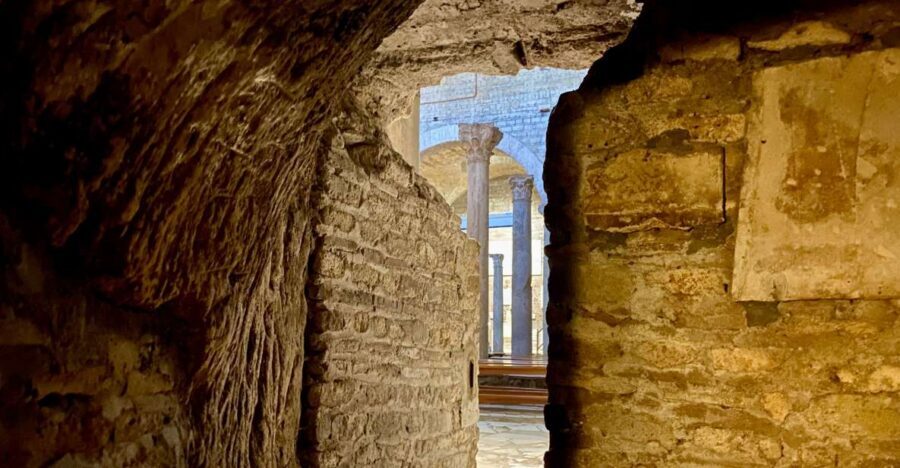
- St. Clement’s 3-level underworld: see multiple historical layers stacked beneath the basilica
- 14 meters down: the underground starts close to the modern church, then goes further into older remains
- Mithraic Temple + underground water: a striking pagan cult site plus an underground stream crossing
- Domitilla catacombs at 16 meters: a large, ancient burial complex outside the city walls
- Small groups (max 10) with headsets: easier listening in low, echo-y spaces
- Van transfers + luggage drop-off: less backtracking on a tight 3-hour plan
Why St. Clement’s + Domitilla works so well together
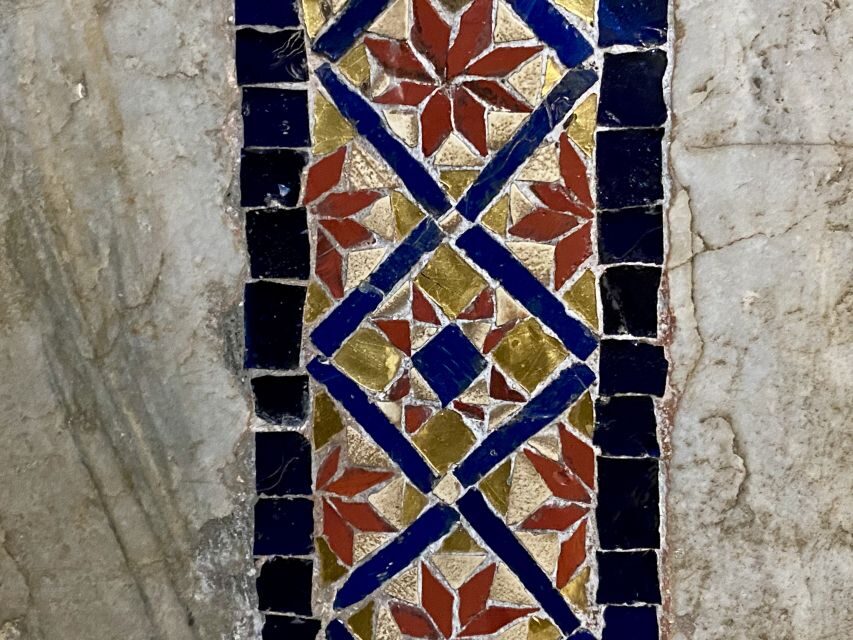
This tour pairs two underground stops that teach you different parts of the Roman story. St. Clement’s is about layers of Christian development literally built over earlier spaces, and it gives you a clear sense of how Rome reused and repurposed sites. Domitilla is more about the shift in burial practices and belief systems, shown through the layout of a major catacomb labyrinth.
You also get a neat contrast in atmosphere. St. Clement’s has an indoor, guided, narrative flow with impressive ancient remains you can study close up. Domitilla feels more like stepping into a vast underground city of passages, where the scale can be humbling.
You can also read our reviews of more private tours in Rome



Meeting point at Via di San Giovanni in Laterano: the logistics are part of the value
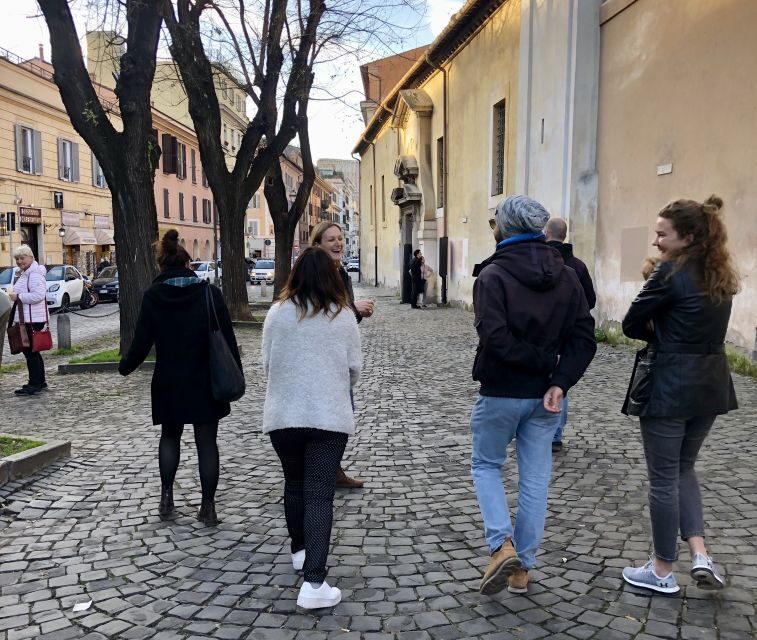
You meet at a specific spot near St. Clement’s Basilica, at Via di San Giovanni in Laterano 132. Arrive early, and plan to be there before the official start so you can check in and settle before you head underground.
The tour uses a van to connect the stops efficiently. That matters in Rome, because even short distances add up quickly when you’re trying to keep a tight 3-hour window.
Also pay attention to the luggage rule. You can’t bring large bags inside, but there’s a luggage deposit service at the office for the duration of the tour, which saves you from hauling everything onto the underground paths.
St. Clement’s Basilica underground: seeing 3 historical layers stack up
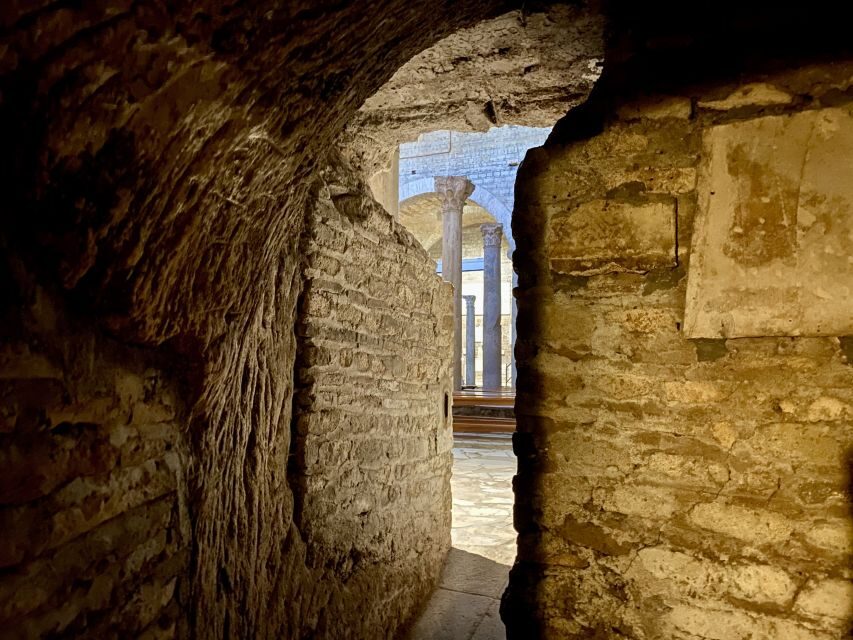
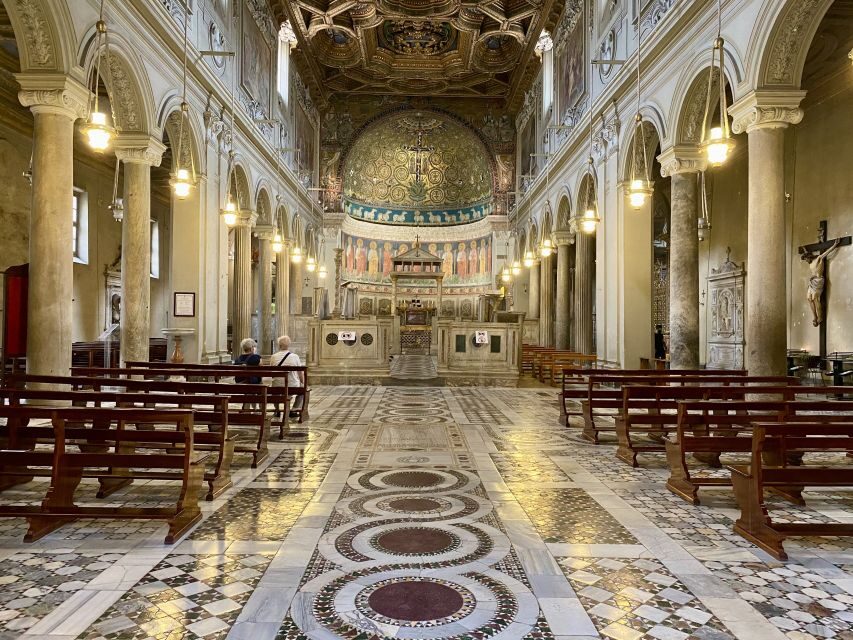
Your first main stop is St. Clement’s Basilica, where the big thrill is structure and time-travel. You start by descending beneath the basilica into a hidden world that reveals multiple floors of Roman life rather than a single static ruin.
What makes it special is the way the tour walks you through the “before and after.” As you go deeper, you’re essentially moving through eras in reverse, then returning upward by following how later buildings were constructed over earlier ones. It’s a rare chance to understand Rome’s underground as an ongoing construction story, not just a one-time burial site.
Depth-wise, you’re going down to about 14 meters below ground during the experience. The trip isn’t just symbolic; you feel it in the change of light, the enclosed corridors, and the way the route is paced for careful viewing.
The Mithraic Temple and the underground stream: pagan Rome under Christian Rome
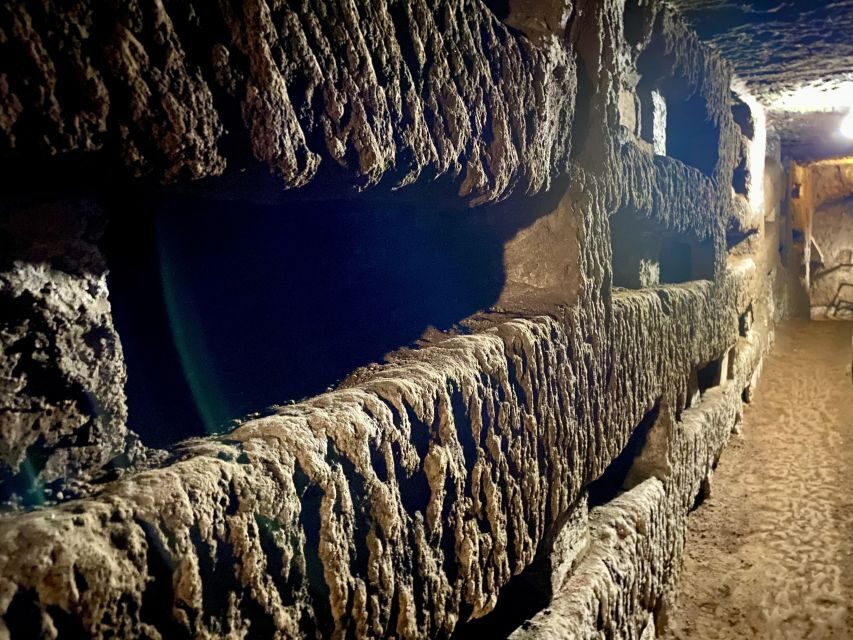
One of the most memorable stops in St. Clement’s underground is the Mithraic Temple area. Mithraism was one of the major Roman mystery cults, and here it’s preserved in a way that helps you picture religious life that predates the later Christian layers.
Even better, you don’t just pass by artifacts behind ropes. The tour route includes the chance to experience a dramatic underground feature: an underground stream that you can touch as part of the guided walk.
That blend of cult sites and daily reality is the point. It turns underground Rome from a collection of stones into a place people actually moved through, worshipped in, and navigated.
The martyr’s house setting and the 4th-century basilica remains
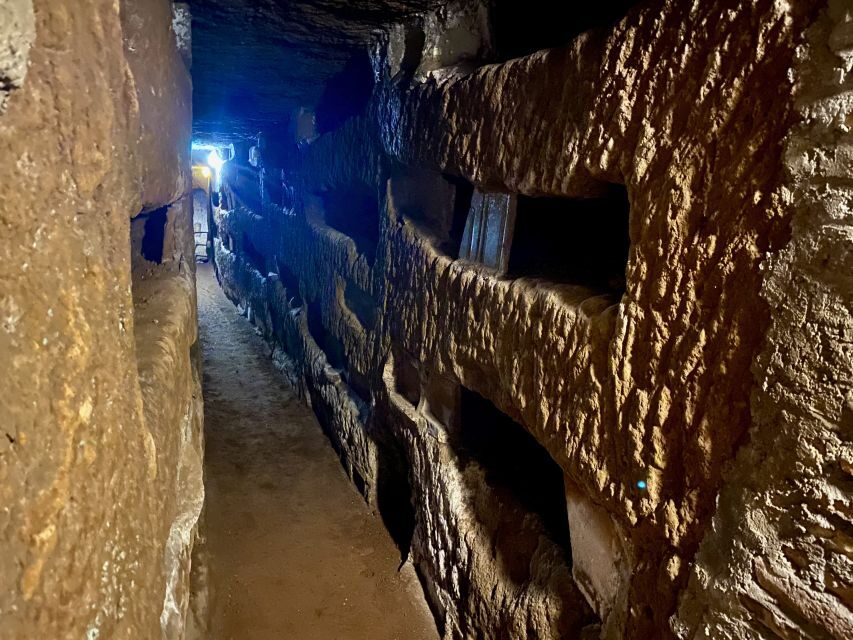
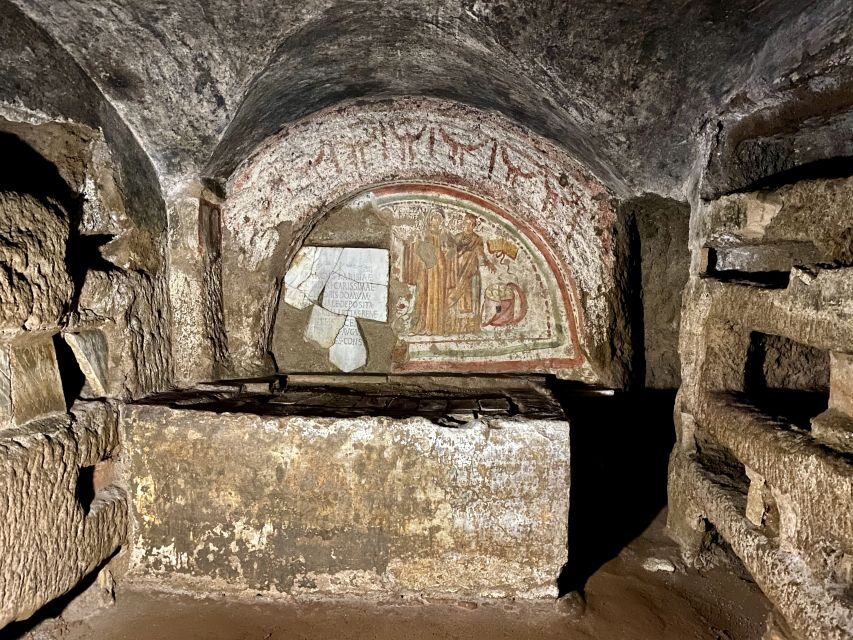
As you move through the route back upward, the story becomes more explicitly Christian. You’ll see remains connected to the martyr’s house and then the remains of a basilica built on top of it, including features tied to a later period around the 4th century.
This is where you’ll likely spend time looking closely at wall surfaces and fresco scenes. The tour emphasizes what you’re seeing—what the images represent and how they relate to the lives of the martyrs portrayed.
The key value for you: this portion helps you read the underground like a guided exhibit with context. Without that interpretation, it’s easy to feel overwhelmed or bored by “more rooms and more walls.” With it, the scenes start to connect to the broader story of Roman Christianity taking shape.






Domitilla catacombs at 16 meters down: burial city scale
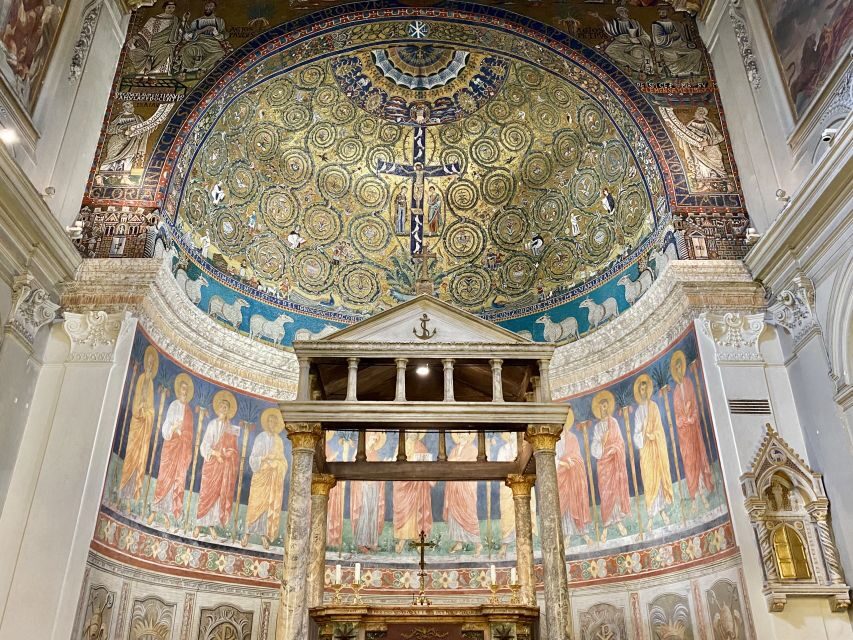
After St. Clement’s, you head to the Catacombs of Domitilla, one of the largest and most ancient catacomb sites in Rome. This is the second underground lesson: burial spaces organized over time, tied to changing beliefs and community identity.
You descend another 16 meters below the surface to reach the accessible sections of the complex. Expect a guided walk through underground burial chambers and galleries, with an explanation of how the catacombs reflect the shift from paganism to Christianity.
This stop is different from St. Clement’s because the emphasis is on layout and scale. Domitilla can feel repetitive in the way corridors and niches repeat, and that’s actually part of what catacombs are: functional, expandable systems built for many years.
What the catacombs feel like: low ceilings, darkness, and camera reality
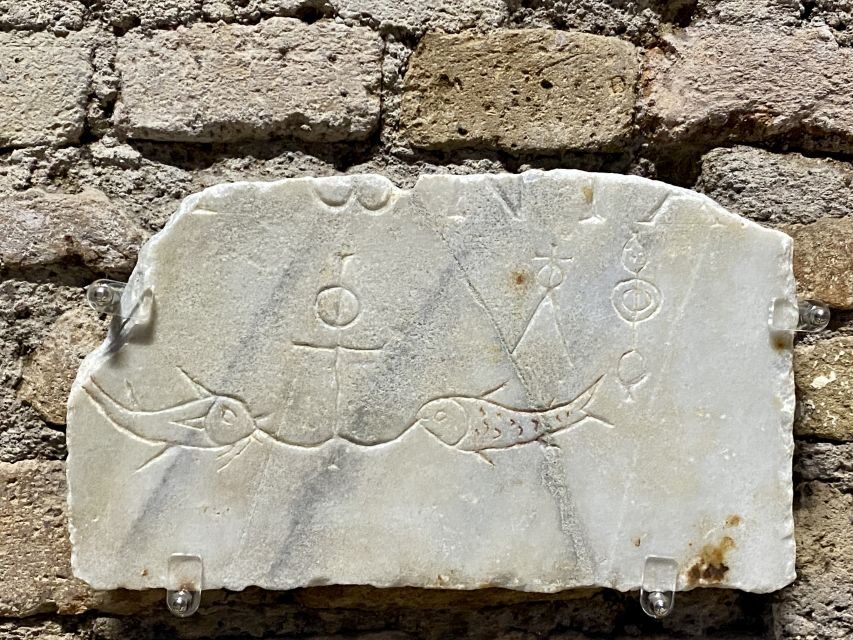
Underground conditions are part of the experience, and you should plan accordingly. You’ll be in enclosed spaces with low ceilings and it can feel tight, especially if you’re not used to dark enclosed places.
The good news: the tour uses sterilised headsets, which helps you follow the guide even when you can’t see well ahead. Also, the spaces are described as very well lit, which matters because “lit” still feels dim compared to daylight.
For photography, don’t plan on a full free-for-all. Camera use may be discouraged, and even when allowed, what you capture can look repetitive because the experience is more about route and explanation than about one dramatic “photo spot.”
How the guide and headsets shape the whole tour
The guide is a major part of why this tour earns such high marks. The route depends on explanation, not just access, because the story is layered and the meaning isn’t obvious from the walls alone.
You’ll also want the headsets. Underground acoustics can turn simple instructions into guesswork, and having a clear audio track makes the tour smoother for everyone, including people who might feel a little nervous in tight, dark stretches.
One more practical detail: the tour is set up for private or small groups, with a maximum of 10 participants. That number stays close enough for the guide to keep an eye on pace and questions without feeling like you’re in a large cattle line.
Price and value: what $134.81 buys you in Rome terms
At around $134.81 per person, this isn’t a budget catacomb outing. But you’re paying for more than entry tickets.
You’re getting:
- a live guide for both underground sites
- entrance and private-transport fees
- sterilised headsets for clear listening
- van transfers between stops
- luggage deposit so you don’t drag bags underground
That combination matters if you want a one-and-done experience that doesn’t require you to map routes, line up multiple entrances, and translate your way through layered sites.
Still, do keep your expectations realistic. If you’re the type who wants the “biggest” visual wow factor at every moment, you might feel the catacomb sections can be more about structure than spectacle. The guide’s interpretation becomes the difference-maker here.
Who this tour suits best (and who should skip it)
This is a great fit if you like guided storytelling and you want to understand what you’re seeing, not just walk around in the dark. It’s also ideal if you prefer a smaller group, want headsets for easier listening, and appreciate practical logistics like luggage storage and van transfers.
It may be a poor fit if you’re prone to anxiety in enclosed spaces. The tour is explicitly not suitable for claustrophobia, and it’s also not wheelchair accessible.
In terms of comfort, wear comfortable walking shoes. There’s a moderate amount of walking, and underground floors can feel different than what you’re used to on Rome’s sunlit streets.
Should you book this Rome catacombs and St. Clement’s tour?
If you want a guided underground tour that teaches you how Rome’s religious life evolved over time, I’d book it. The pairing of St. Clement’s layered underworld with Domitilla catacombs gives you two complementary perspectives in one compact 3-hour plan, with headsets and van transfers to keep things practical.
Book it especially if you value interpretation—depth, meaning, and story—more than you value a “look-only” photo stroll. Just go in prepared for dark, enclosed walking and for a tour that moves through a lot of rooms, where pacing and explanation matter more than nonstop visual surprises.
FAQ
Where is the meeting point?
You meet at the TouriksPoint at Via di San Giovanni in Laterano 132, about 15 meters from St. Clement’s Basilica. Arrive about 15 minutes early, and you’ll need to be there 5 minutes before the tour starts.
Is hotel pickup included?
No. Hotel pickup and drop-off aren’t included. The tour includes on-site assistance and van transport between the underground sites, but you start at the listed meeting point.
What’s included in the tour price?
The tour includes entrance fees and private-transport fees, a live professional guide, sterilised headsets, luggage deposit for the duration of the tour, and full on-site assistance.
How long is the tour, and how big is the group?
The tour lasts about 3 hours. The maximum group size is 10 participants, with private or small-group options available.
What should I wear or bring?
Wear comfortable shoes. For church entry, you need shoulders and knees covered, so short skirts and sleeveless shirts are not allowed.
Is it wheelchair accessible or okay for claustrophobia?
It’s not suitable for wheelchair users, and it’s not suitable for people with claustrophobia. Expect enclosed underground spaces and descents well below street level.
What happens if the tour is canceled due to weather or church events?
The tour can be subject to weather conditions and/or liturgic-calendar events. If it’s canceled, you’ll be given an option of an alternative date or a full refund.