REVIEW · GUIDED
Rome: Discovering the Jewish Ghetto guided tour
Book on GetYourGuide →Operated by Unlimited Explorations · Bookable on GetYourGuide
Rome’s Jewish Ghetto walks fast—but you’ll remember it. I love how the route pairs Piazza Mattei with the Fountain of Turtles and how the guide connects Portico d’Ottavia to Jewish Rome right where you stand. One heads-up: entrances to the Great Synagogue and the Church of San Bartolomeo on Tiber Island aren’t included, so you’ll mostly see key sites from the outside.
You start at Teatro di Marcello, right by the street-level hustle of Rome, then your walking shoes carry you through narrow lanes and landmarks that explain how a major Jewish community shaped the city. Expect a focused 2-hour pace, plenty of stops, and a route that finishes back at the meeting area, ending near the Tiber Island church.
If you want a compact way to understand Jewish history and everyday culture in Rome—complete with iconic stops like Piazza Mattei and the quieter Isola Tiberina—this guided walk makes it easy. I also like that the tour runs in Italian or English, though the guide may be bilingual or monolingual depending on the group.
In This Review
- Key moments that make this walk worth your time
- Why the Teatro di Marcello meeting point helps you hit the ground running
- The Jewish Ghetto streets: where the guide turns a map into a story
- Piazza Mattei and the Fountain of Turtles: more than a quick photo stop
- Portico d’Ottavia and Piazza Giudia: using architecture to understand the neighborhood
- The Great Synagogue of Rome: what you get when entry isn’t included
- Crossing Ponte Fabricio and heading to Isola Tiberina’s calm
- San Bartolomeo all’Isola: the tour’s reflective ending on the island
- Price and value: is $44.41 for 2 hours a good deal?
- How to dress and prepare so the walk feels easy
- The guide makes it: what the strongest feedback tells you
- Who this walking tour is best for
- Should you book this Rome Jewish Ghetto tour?
- FAQ
- Where do I meet the guide for the Rome Jewish Ghetto tour?
- How long is the guided tour?
- What is included in the tour price?
- Are entrances to the Great Synagogue and San Bartolomeo included?
- What languages are offered during the tour?
- Is this tour suitable for people with mobility impairments?
- Is the tour suitable for people with motion sickness?
- Is there free cancellation?
Key moments that make this walk worth your time
- Fountain of Turtles at Piazza Mattei: a small scene with big symbolic weight and great photo angles
- Portico d’Ottavia: you’ll see one of Rome’s historic monuments while learning what it meant in the area
- Jewish landmarks around Piazza Giudia: the story shifts from architecture to community life
- Great Synagogue views plus context: you get the background even without included entry
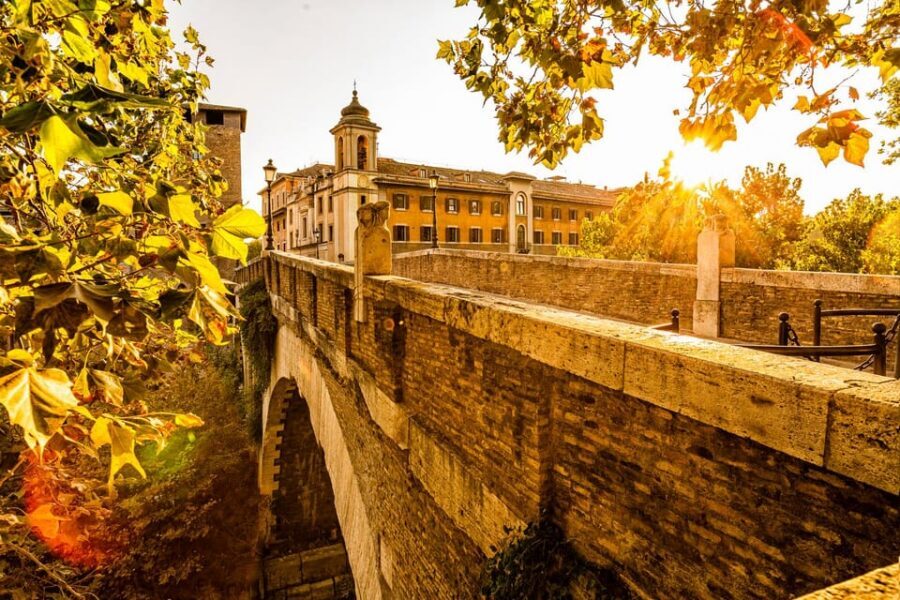
- Ponte Fabricio to Tiber Island: one of Rome’s oldest bridges, then a calm change of pace
- San Bartolomeo all’Isola: St Bartholomew’s church experience anchored by relics of martyrs
Why the Teatro di Marcello meeting point helps you hit the ground running
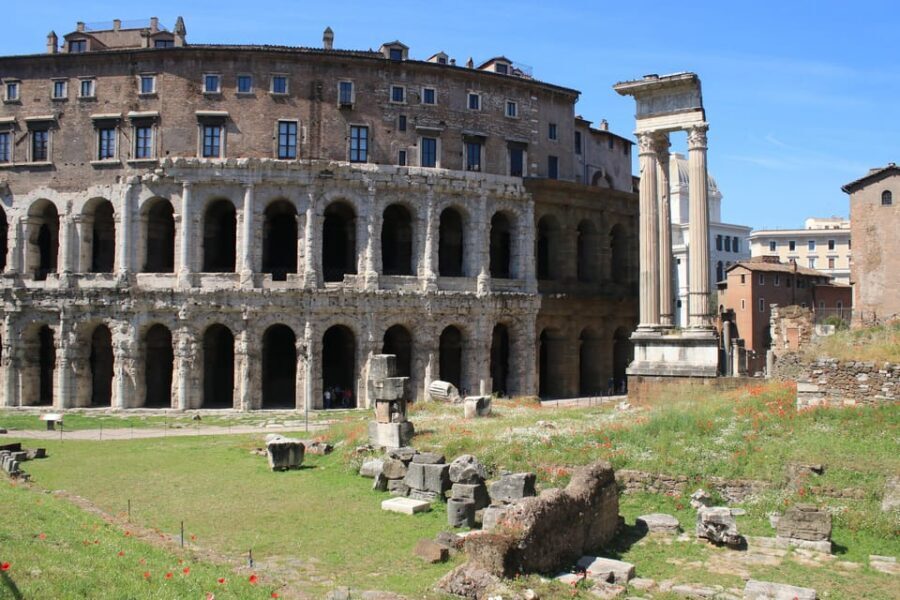
Meeting at the intersection by Via del Foro Piscario, in front of Teatro Marcello, is a smart move. It puts you in the right Rome “mode” immediately: ancient stone all around, lots of street activity, and easy orientation without needing public transit or a long walk from your lodging.
Starting there also sets the tone of the tour. You’re not only visiting a single museum stop. You’re moving through the city in the way Rome actually works—sight by sight, street by street, with the guide explaining what your eyes are landing on.
Another practical plus: the tour ends back at the meeting point. That’s useful in Rome, where getting “back to your life” matters. You’ll finish with your bearings and can hop to dinner, gelato, or your next neighborhood plan without feeling lost at the far end of town.
You can also read our reviews of more guided tours in Rome

The Jewish Ghetto streets: where the guide turns a map into a story
This is the core experience: walking the Jewish Ghetto area with an expert guide who connects places to lived history. The streets are narrow and close together, which makes it feel like the neighborhood is doing some of the storytelling for you. You’ll pass by synagogues, see points associated with the community, and hear how Roman Jewish life worked through different eras.
What I like about this kind of tour is that it keeps you from treating the Ghetto like a checklist. Instead, the guide points out small details you’d likely miss on your own—how certain locations relate to each other, and how the neighborhood’s landmarks helped define identity over time.
You also get a sense of the community’s role in the wider city. The walk isn’t only about hardship. It’s about continuity: resilience, culture, and the way Jewish presence shaped Rome’s character. Expect references to traditional kosher restaurants too, which helps the neighborhood feel real rather than frozen behind history glass.
Piazza Mattei and the Fountain of Turtles: more than a quick photo stop
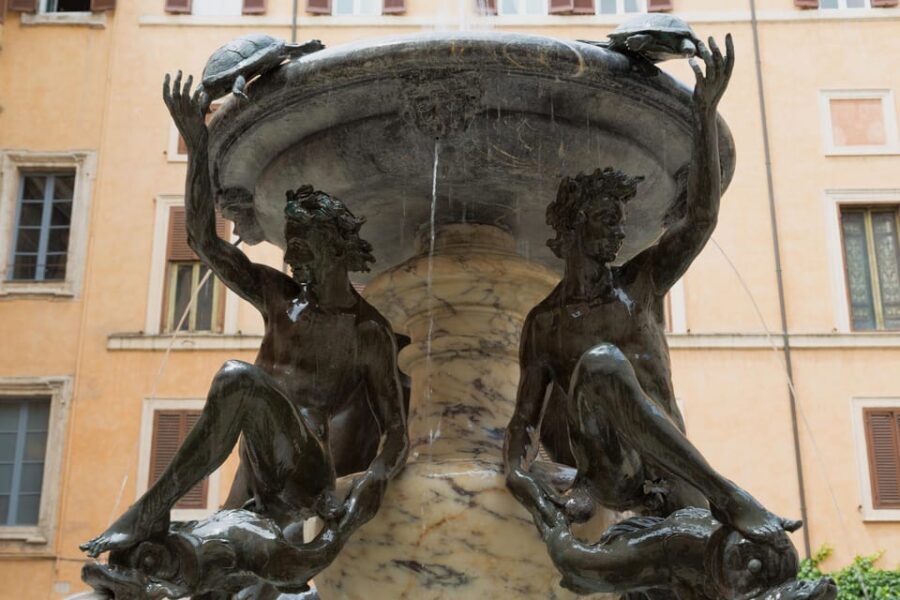
Piazza Mattei is one of those places you can recognize in a second because of the famous Fountain of Turtles. You’ll stop here with the guide, and you’ll have time to take photos and slow down long enough to look up at the fountain itself.
What makes it worthwhile on this specific tour is context. This isn’t just a “pretty square” moment. You’re arriving after walking the Ghetto streets, so the fountain becomes a kind of break in the story—an open space where you can reset, breathe, and then continue with a clearer sense of where you are.
And yes, those bronze turtles are a conversation starter. The Fountain of Turtles is described as a symbol of Trastevere, which is exactly the kind of small, local detail that makes Rome feel like it has layers. You’ll likely find yourself noticing how neighborhoods and symbols spill into each other.
If you’re traveling with a camera phone, this is a great stop. Keep your eyes open for the best angles: the square gives you a few workable perspectives, and it’s easier to frame the fountain than some of the narrow streets farther along.
Portico d’Ottavia and Piazza Giudia: using architecture to understand the neighborhood
From Piazza Mattei, the tour continues toward the Portico d’Ottavia, a standout historic monument. Walking under it changes the feel immediately. You go from open square to covered architecture, and that physical shift helps you understand why ancient buildings mattered to daily life.
The guide’s job here is to connect the monument to the surrounding Jewish history. You’re not just admiring columns and arches. You’re learning how the area’s story is tied to the physical space.
Next up is Piazza Giudia. Even if you’ve never heard the name before, it’s the kind of stop that makes the whole neighborhood click. It’s where you can sense the long timeline: Roman city life, Jewish identity, and the way history leaves traces in street names and major public points.
This segment is also a reminder that the Ghetto story isn’t only in one place. It stretches into the city’s larger structure—arches, bridges, and public squares—so you’re essentially learning to “read” Rome while you walk.
The Great Synagogue of Rome: what you get when entry isn’t included
You’ll reach the Great Synagogue of Rome during the walk, with the guide explaining the history of Rome’s Jewish community. Even without included synagogue entry, this stop has value because of what the guide provides: background, significance, and the larger context for what you’re seeing from the outside.
That matters if you’ve ever felt frustrated by tours that end right at a gate. Here, the tour is designed to give you the meaning behind the landmark, not just the location.
One practical consideration: since entrances to the synagogue aren’t included, you should plan your mindset accordingly. If you’re someone who needs inside access to feel satisfied, you might consider arranging a separate synagogue visit on another day. But if you’re happy with strong context and exterior viewing, this tour still delivers.
Also, your guide may point out how the story extends beyond the synagogue itself—toward surrounding streets and other historic points tied to community life.
Crossing Ponte Fabricio and heading to Isola Tiberina’s calm
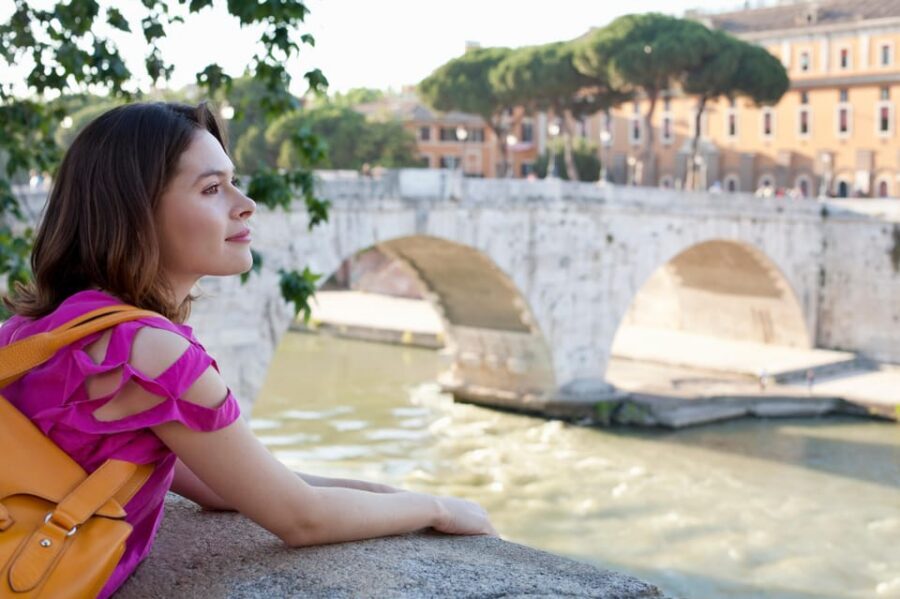
Then comes a satisfying change of pace. You’ll cross Pons Fabricius (Ponte Fabricio), described as one of Rome’s oldest bridges. Bridges in Rome have a way of making the city feel connected—like every neighborhood is linked by layers of time.
Once you cross, you’re headed toward the Tiber Island (Isola Tiberina). The island is presented as one of the city’s oldest and most peaceful islands, and that description fits what you’ll likely feel on arrival. It’s quieter than the surrounding streets, and the walking rhythm slows down just because the environment does.
This is a good moment to let your brain digest what you’ve learned. Up to now, you’ve been moving through a dense set of cultural and historic cues. On the island, you can take a breath and enjoy the different atmosphere.
San Bartolomeo all’Isola: the tour’s reflective ending on the island
The finish is at San Bartolomeo all’Isola (also referred to as the Basilica di San Bartolomeo all’Isola Tiberina). You’ll learn about the church dedicated to St Bartholomew, and the guide will point you toward the fact that it houses relics of various martyrs.
That detail matters because it explains why this church fits the arc of the walk. You started in an area strongly tied to Jewish identity and community history. You end on a site connected to Christian tradition and relics, located on one of Rome’s older islands. In other words, you’re finishing with a landmark that reflects Rome’s layered religious landscape.
Just note the practical part: entrances to the church aren’t included. So you may be limited to what you can see from outside or what access the situation allows. If your schedule allows it, you can always plan a separate visit for interior time. Still, the context your guide gives you here makes even an exterior-focused stop feel purposeful.
Price and value: is $44.41 for 2 hours a good deal?
At $44.41 per person for a 2-hour guided walk, the value mostly comes down to one thing: how much you rely on a good guide to turn landmarks into meaning.
This tour includes an expert guide and covers a string of major points: Jewish Ghetto streets, Piazza Mattei, Portico d’Ottavia, Piazza Giudia, the area around the Great Synagogue, and then the bridge and island finish at San Bartolomeo. For many people, that’s exactly the sweet spot. You get multiple stops without spending your whole day commuting between far-flung sites.
The main trade-off is that entrances to the synagogue and church are not included. If you’re expecting the tour to pay for everything inside, it won’t. But if you’re looking for a guided orientation plus the story behind what you’re seeing, the price can make sense.
Also, the tour is short enough that it doesn’t drain your energy budget. Two hours is ideal for Rome. You’ll still have plenty of time afterward to explore on your own.
How to dress and prepare so the walk feels easy
The tour is on foot, so comfort matters. Wear comfortable shoes with good grip. Rome’s sidewalks can be uneven, and a longer walk can become annoying fast if your shoes aren’t up to it.
A second practical note: the tour is not suitable for people with motion sickness. If you’re sensitive to motion or movement, this is worth taking seriously.
If you need step-free access or have mobility limitations, it’s also not suitable for people with mobility impairments. The route is described as a walking tour through historic areas.
Finally, language can affect your experience in small ways. The guide can be bilingual or monolingual depending on the group composition, with Italian and English available. If you’re fluent in one language and prefer it, double-check your comfort level before booking.
The guide makes it: what the strongest feedback tells you
The biggest recurring theme here is the guide’s quality. Names vary by group, but you may even encounter a guide like Lucia, who has been praised as perfect. Beyond that, there’s also praise for going beyond the planned route—adding extra curiosities along the way and making the tour feel like a conversation instead of a script.
That matters because this tour’s power isn’t a single monument. It’s the way the story flows between places. When the guide is good, those connections become clear. When the guide is merely okay, you’re left with photos and vague context.
If you’re the type of traveler who loves learning why a place matters, not just what it looks like, this tour is the kind where the guide can seriously level up the experience.
Who this walking tour is best for
This is a great fit if:
- You like walking and want a tight, guided overview of Jewish history and cultural landmarks in central Rome
- You enjoy architecture with context, like Portico d’Ottavia and major bridges
- You want a finish that feels calm, like the transition to Isola Tiberina
It may be less ideal if:
- You need included inside access to the synagogue and the church
- You have mobility impairments
- You have motion sickness
Should you book this Rome Jewish Ghetto tour?
I’d book it if you want a 2-hour guided walk that connects Jewish Rome landmarks into a single, understandable route. It’s strong for orientation: you’ll leave knowing how the neighborhood’s key points relate to each other, from Piazza Mattei to Ponte Fabricio and the final stop on Tiber Island.
I would not book it as your only plan if you specifically need guaranteed interior access to the synagogue or San Bartolomeo. Since entrances aren’t included, you’ll likely want a separate plan for inside viewing.
If you’re staying in Rome for a short time and want an experience that balances meaningful stops with manageable walking, this one hits the practical sweet spot.
FAQ
Where do I meet the guide for the Rome Jewish Ghetto tour?
Meet your guide at the intersection with Via del Foro Piscario, right in front of the Teatro Marcello.
How long is the guided tour?
The duration is 2 hours.
What is included in the tour price?
The price includes an expert guide.
Are entrances to the Great Synagogue and San Bartolomeo included?
No. Entrances to the Synagogue of Rome and the Church of St Bartholomew on Tiber Island are not included.
What languages are offered during the tour?
The tour is offered in Italian and English. The guide could be bilingual or monolingual depending on the group.
Is this tour suitable for people with mobility impairments?
No, it is not suitable for people with mobility impairments.
Is the tour suitable for people with motion sickness?
No, it is not suitable for people with motion sickness.
Is there free cancellation?
Yes. You can cancel up to 24 hours in advance for a full refund.