REVIEW · ROME
Rome: Catacombs and Appian Way Golf Cart Small-Group Tour
Book on GetYourGuide →Operated by WHEEL TOURS SHPK · Bookable on GetYourGuide
Rome has a way of tiring your legs fast. This small-group golf cart tour keeps you moving and still lets you stop for photos, stories, and the big icons. You cruise past places like the Colosseum and the Circus of Maxentius, then trade city noise for the hush of the catacombs.
I especially love the guided pacing. With a live English guide and headsets, you don’t have to fight traffic noise just to catch the story. I’ve seen guides like Federico (Fede) and Antonella praised for making Rome feel clear, human, and easy to follow.
One drawback to plan around: you’re in a cart on cobblestones, so the ride can feel bumpy and sightlines are not always perfect from your seat. If you’re sensitive to uneven surfaces or have claustrophobia concerns for stairs, you’ll want to read the catacomb notes carefully.
In This Review
- Key things I’d center in your decision
- Why the Golf Cart Route Makes Sense in Rome
- Termini Meeting Point: Quick Start, Easy Orientation
- Colosseum to Baths of Caracalla: Big Roman Names, Calm Pace
- Domine Quo Vadis: A Chapel Stop With a Story Hook
- Catacombs of San Callixtus (or San Sebastiano): 16 Meters Underground
- Stairs and comfort considerations you should not ignore
- Appian Way: The Road You Can Actually Stand On
- Circus of Maxentius, Pyramid of Caius Cestius, and Views From Circus Maximus
- Mouth of Truth, Theatre of Marcellus, Venetian Square, and Trajan’s Column
- Golf Cart Reality Check: Comfort, Bumps, and Visibility
- Guides Make the Difference: Federico, Antonella, and Alessandro
- Who This Tour Is Best For
- Price and Value: What You’re Paying For
- Should You Book This Rome Catacombs and Appian Way Golf Cart Tour?
- FAQ
- How long is the Rome Catacombs and Appian Way golf cart tour?
- Where is the meeting point?
- Does the tour end at the same place?
- Is there a guide on the tour?
- Are headsets included?
- What’s included in the price?
- What should I bring?
- What should I know about the catacombs environment?
- Is it wheelchair accessible?
- Are pets allowed?
- What payment and cancellation options are available?
Key things I’d center in your decision
- Headsets included so you can actually hear the guide while you zip between stops
- 16-meter catacomb descent plus a visit that’s more reflective than sightseeing-on-the-run
- Appian Way original pavement stop where the city’s history feels physical under your feet
- Iconic Rome stops by cart, including Colosseum, Baths of Caracalla, Theatre of Marcellus, and Trajan’s Column
- Strong guide performance, with names like Federico (Fede), Antonella, and Alessandro showing up repeatedly for storytelling and clarity
Why the Golf Cart Route Makes Sense in Rome
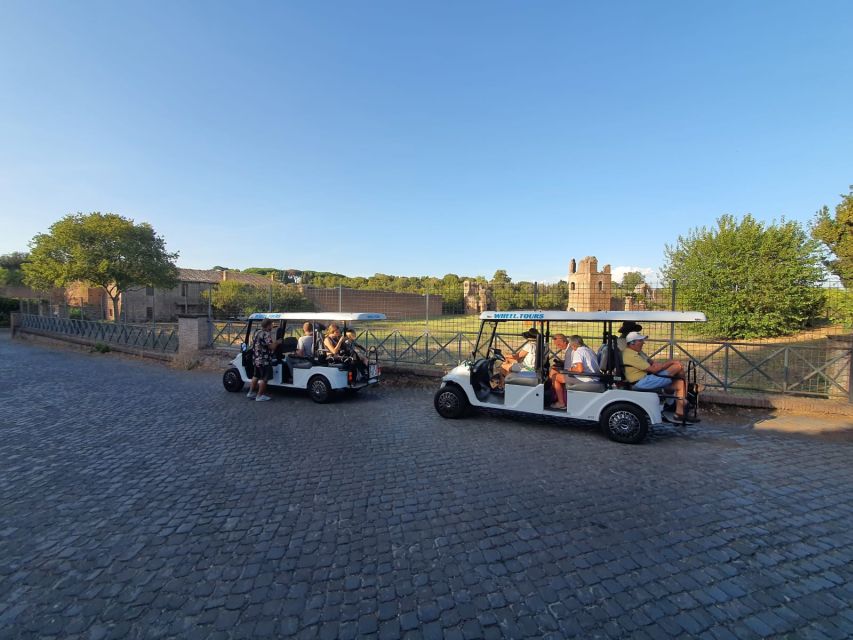
Rome is famous, but it’s also exhausting. This tour is built for the day when you still want the landmarks, but you don’t want your afternoon to be a slow, sore shuffle between them. You cover a lot of ground by golf cart, with enough stops to reset and take photos.
The best part is the mix: you get Rome’s famous facades and you get the out-of-the-way feeling of the Appian Way and the catacombs. It’s a compact “greatest hits + something different” format in about 3 hours.
You should still expect a bit of walking around photo stops and the catacombs area, but the overall effort is lighter than a full day on foot.
You can also read our reviews of more tours and experiences in Rome.



Termini Meeting Point: Quick Start, Easy Orientation
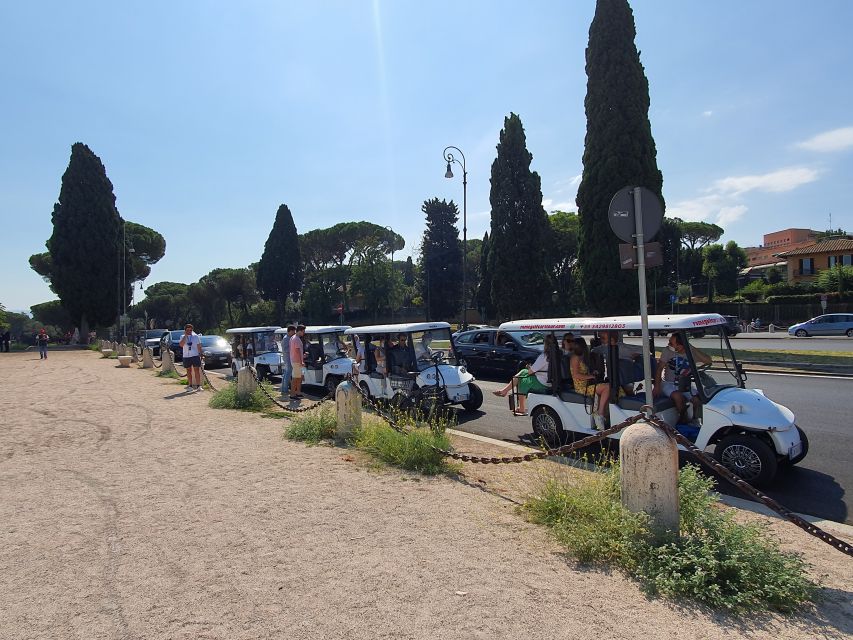
You meet close to Termini Central Train Station, just a short walk away. Your guide will be holding a Wheel Tours sign, so you’re not hunting around a huge station plaza.
Because the tour ends back at the same meeting point, you avoid the “how do we get home now?” stress that can come with end-in-a-different-neighborhood tours. It’s also a plus if your plan for the day is flexible—no long transport needs at the end.
Once you’re with the group, you’ll get set up with headsets and bottled water, which helps on any day when Rome traffic and crowds make everything louder.
Colosseum to Baths of Caracalla: Big Roman Names, Calm Pace
Early on, you roll past the Colosseum, which is impressive even when you’re just seeing it from the route. Even better, your guide connects what you see to what happened there—gladiators, spectacle, and the Roman love of public events.
From there, the tour shifts to the Baths of Caracalla. The ruins are easier to “read” when someone points out what you’re looking at and explains how the bathing complex worked. From a cart, it’s not about close-up archaeology; it’s about getting the story fast and then moving on.
This is one reason people like the golf cart format: you get context without spending hours between two distant sites.
Domine Quo Vadis: A Chapel Stop With a Story Hook
The tour includes a stop at Church of Domine Quo Vadis. This church is tied to a well-known Christian legend connected to the Appian Way area. In practice, you’re not just looking at a building—you’re being pointed to why this place matters along the route.
If you like walking into religious sites with a sense of what you’re standing on, this stop is a good payoff. It also helps balance the “outdoor Rome” part of the tour with something calmer and more intimate.
Note: depending on your timing, the catacomb focus later in the tour can vary, so this church stop can act as a steady historical anchor.
Catacombs of San Callixtus (or San Sebastiano): 16 Meters Underground
This is the heart of the experience. You descend to explore the Catacombs of Rome, with an included entrance fee and a descent of 16 meters underground.
It’s also a real environment change. Inside, the temperature stays around 15°C / 59°F and it’s humid. That means even if you’re comfortable topside, you’ll want a layer so you don’t feel cold once you’re underground.
Another key point: the catacombs are a sacred place. Keep your voice low, move carefully, and respect that this isn’t a theme attraction. The stairs are part of the realism, but they’re also a factor for comfort and safety.



Stairs and comfort considerations you should not ignore
The monument is not wheelchair accessible. It’s also not recommended for those with claustrophobia and those with serious walking problems. There are 50 irregular steps down and 50 irregular steps up, with no elevators and no place to sit along the way, plus an uneven floor.
If any of that sounds like a problem for you, you’ll want to reconsider the tour or ask whether a different route is possible.
Appian Way: The Road You Can Actually Stand On
One of the most memorable parts is the stop at the ancient Appian Way, where you can walk on the original road pavement. This is the kind of stop that makes the guide’s explanations click—suddenly the history isn’t just names and dates.
From a practical standpoint, it’s also a great photo moment. You’re not only taking pictures of Rome; you’re taking pictures with Rome’s roads as the backdrop.
Even better, this stop feels like you’ve left the center of the city. The route gives you a quick dose of countryside-adjacent Rome without needing a day trip plan.
Circus of Maxentius, Pyramid of Caius Cestius, and Views From Circus Maximus
The tour weaves in a set of “less crowded, more interesting” landmarks.
You’ll drive by the Circus of Maxentius and then later get a scenic pause at the Belvedere of Romulus and Remus in the Circus Maximus. These stops are about scale. Standing or viewing from these points helps you understand how the Romans designed public life around processions, games, and crowds.
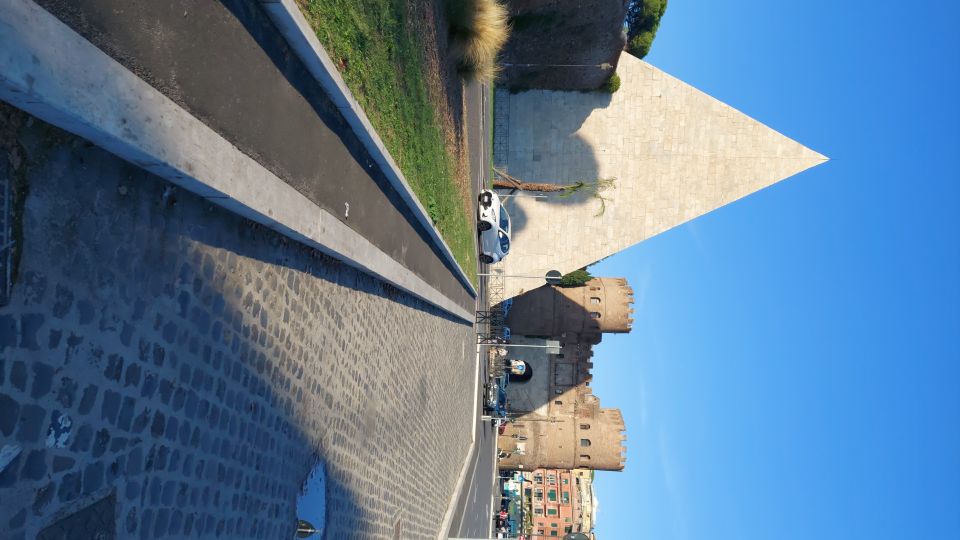
Then there’s a drive by the Pyramid of Caius Cestius—small enough to miss if you’re just sightseeing on your own, but distinctive when it shows up in your view. It’s one of those landmarks that looks like it belongs in a history book, yet you’re standing close enough to photograph it clearly.
If you like having a guide translate what you’re seeing into something meaningful, this part of the itinerary is where that pays off.
Mouth of Truth, Theatre of Marcellus, Venetian Square, and Trajan’s Column
Rome’s icons don’t end with the classics you already know. The tour also includes stops and views connected to the Mouth of Truth, the Theatre of Marcellus, and a panoramic look at the Venetian Square and the Fatherland Monument.
You’ll finish with a nod to the Column of Trajan, which is another “big Rome” marker that works well in a short time window. From the cart, it becomes less about close inspection and more about building a mental map of where things sit relative to each other.
This ending sequence matters because it helps you understand Rome as a network, not a checklist.
Golf Cart Reality Check: Comfort, Bumps, and Visibility
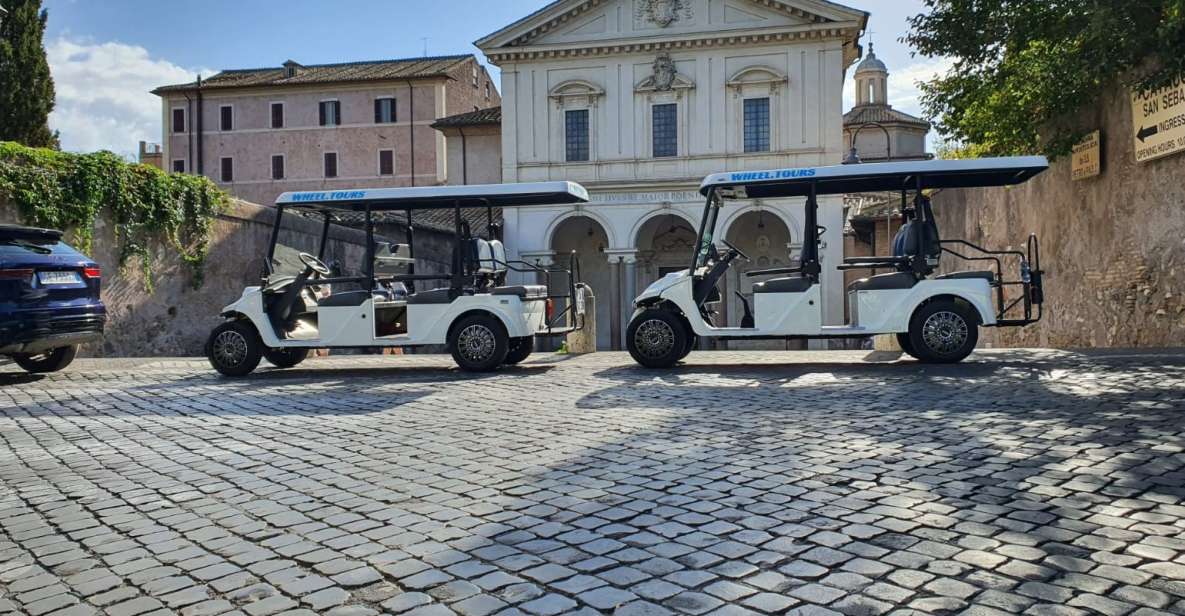
Let’s be honest about the ride. The golf cart is a major reason this tour works when you’re tired of walking. You get a comfortable seat, and you don’t have to navigate streets on foot while cars and scooters move around you.
That said, you might find the cart design makes it harder to see certain monuments from your exact seat, especially when traffic or turns cut your view. A few people also note that cobbled streets can create a rougher ride depending on conditions and how the cart’s suspension feels that day.
My advice: don’t judge the tour solely by the first minute from your seat. You’ll get set stops with views and photo opportunities where you can adjust your angle and take good pictures.
Guides Make the Difference: Federico, Antonella, and Alessandro
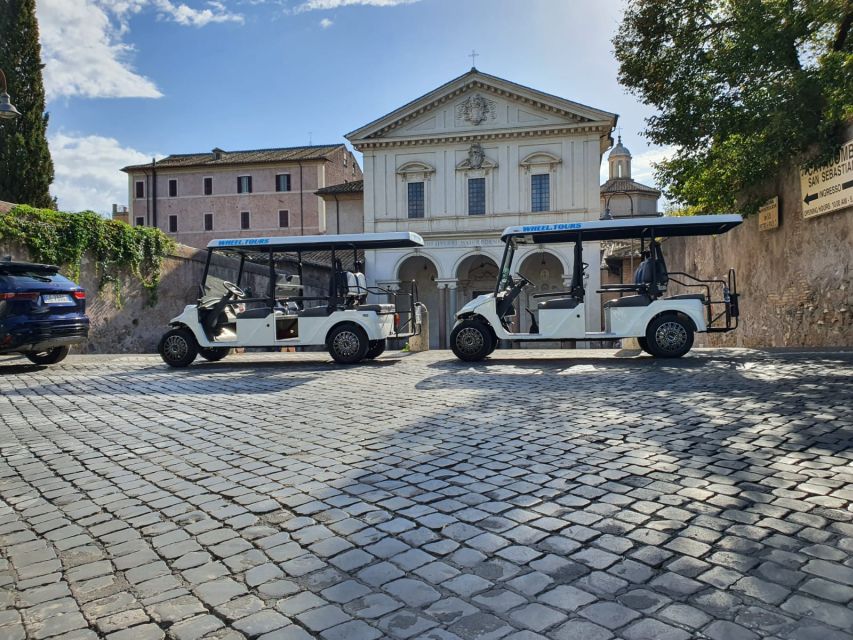
This tour shines when the guide turns sites into stories you can follow.
People repeatedly praise guides for being clear and fun, with names like Federico (Fede), Antonella, Alessandro, and others showing up in standout experiences. You’ll want that kind of guide because Rome can feel like a blur when you’re moving fast.
Guides also tend to check that you’re keeping up. Some guides pace their explanations and answer questions before moving ahead, which makes a short tour feel more satisfying.
If you’re the type who likes hearing what to look for—why a ruin is where it is, what a building was used for, what legends mean—this tour format is a strong fit.
Who This Tour Is Best For
This is a great choice if:
- you want lots of major sights in a short amount of time
- you’d rather save your energy and pace yourself
- you like a guided narrative rather than wandering solo
- you feel done after a day or two of heavy walking
It’s also a good option if you want a clear “next steps” map. After the cart tour, you’ll likely know where you want to return on your own at a slower pace.
It’s not ideal if:
- uneven steps and tight underground spaces are an issue for you
- you strongly dislike stairs and cannot manage irregular steps
- you need wheelchair access (the catacombs are not wheelchair accessible)
Price and Value: What You’re Paying For
At $113.29 per person for about 3 hours, you’re paying for convenience plus guided logistics. The tour includes your golf cart, a live English guide, bottled water, headsets, and the catacombs entrance fee.
In Rome, time and energy are expensive. You’re not just buying transportation—you’re buying a guided route that bundles multiple major stops, then adds a meaningful underground experience.
If your goal is to maximize what you see without turning your trip into an endurance event, this price can feel fair. If you already plan to spend most of your day walking and you don’t care about structured storytelling, you might decide to build a cheaper DIY plan. But for a short, guided “Rome hits + catacombs” experience, this is a very workable value.
Also note: you’ll want to bring a face mask or protective covering, since that’s required for the experience.
Should You Book This Rome Catacombs and Appian Way Golf Cart Tour?
Book it if you want a smart way to cover big Roman landmarks and still get a powerful underground stop. The headsets, the mix of iconic sights and Appian Way stops, and the guided catacomb descent make it feel like you get more than a simple drive-by.
Skip or carefully reconsider if stairs and claustrophobic environments could be an issue. The catacomb route involves a lot of irregular steps with no seating and no elevator, so comfort matters more here than almost anywhere else.
If you’re flexible on timing, this tour also offers a nice chance to match your day’s mood: morning or afternoon can change which catacomb focus is part of the plan.
FAQ
How long is the Rome Catacombs and Appian Way golf cart tour?
The tour duration is 3 hours.
Where is the meeting point?
You meet at a location that is about a 5-minute walk from Termini Central Train Station. Your guide will be holding a Wheel Tours sign.
Does the tour end at the same place?
Yes, the activity ends back at the meeting point.
Is there a guide on the tour?
Yes. The tour includes a live English-speaking guide.
Are headsets included?
Yes. Headsets are included, which helps you hear the guide clearly during the ride.
What’s included in the price?
Included items are the golf cart tour, tour guide, bottled water, headsets, and the entrance fee to the Catacombs.
What should I bring?
Bring a face mask or protective covering. For the catacombs, it’s also smart to dress for cool, humid conditions.
What should I know about the catacombs environment?
The catacombs are about 15°C / 59°F and humid. They are also described as a sacred place.
Is it wheelchair accessible?
The monument is not wheelchair accessible, and the experience is not recommended for those who have serious walking problems.
Are pets allowed?
No, pets are not allowed.
What payment and cancellation options are available?
You can cancel up to 24 hours in advance for a full refund, and you may be able to reserve now & pay later (subject to availability).