REVIEW · ROME
Rome: Castel Sant’Angelo Skip-the-Line Guided Tour
Book on GetYourGuide →Operated by Loving Rome · Bookable on GetYourGuide
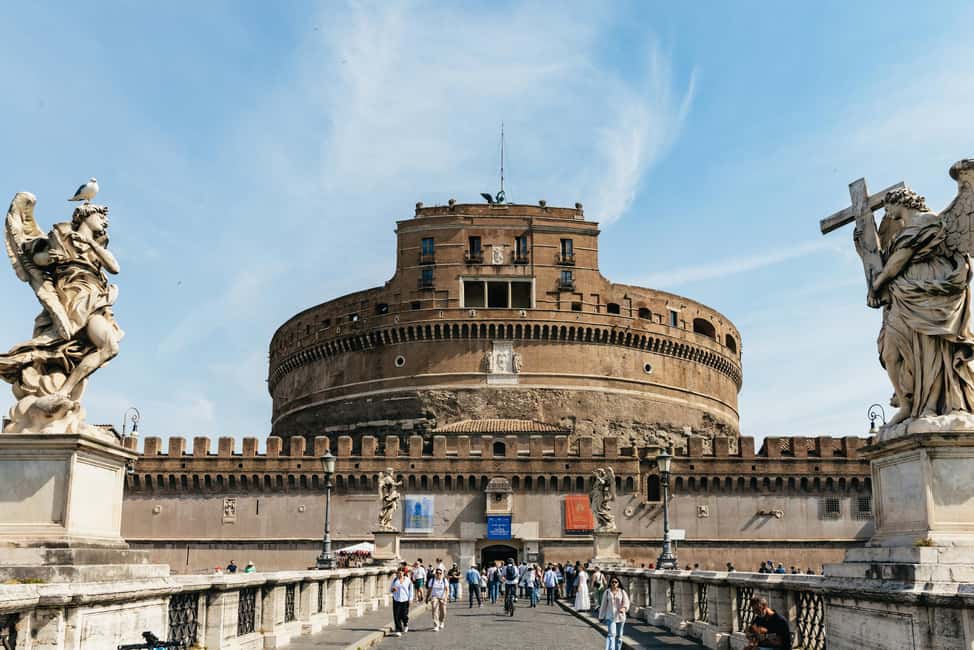
Castel Sant’Angelo isn’t just a stop with photos. It’s a structure that keeps changing jobs across centuries, and a good guide helps you read the whole building like a timeline. You start with skip-the-line entry and then move through areas that are usually closed, with stories tied to Hadrian’s tomb, papal power, and even the darker side of city life.
What I like most is the focus on places most people don’t casually get to see, including the Olearie, historical prisons, and the theater connected to Clemente VII. The second big win is the ending: you get to climb up and earn some serious panoramic views of Rome from the terrace, which makes the whole tour feel like more than a museum walk.
One consideration: you’ll need comfortable shoes and you should expect a series of stairs to reach the terrace. This isn’t set up for wheelchair users, and the route can feel like a workout if you’re not used to climbing in old stone.
In This Review
- Key highlights you’ll actually care about
- Entering Castel Sant’Angelo Through a Separate Entrance
- From Hadrian’s Tomb to Papal Power: The Big Story You’ll Hear
- The Olearie Stop: Why This Room Matters
- Historical Prisons and the Clemente VII Theater: The Darker Side
- Masterpieces, Sculptures, and Paintings You’ll Actually Notice
- The Treasury Room and the Pope’s Apartment: Seeing Power Up Close
- Terrace Views: Your Rome Photo Break With Real Payoff
- What the Tour Includes (and What It Doesn’t)
- Price and Value: Is $66.05 a Good Deal?
- Who This Tour Fits Best
- Practical Tips Before You Go
- Should You Book This Skip-the-Line Tour?
- FAQ
- Where do I meet for the Castel Sant’Angelo guided tour?
- How long is the tour?
- Does this tour include skip-the-line entry?
- Who runs the tour and what language is it in?
- What’s included in the price?
- What should I bring?
- Are food and drinks allowed during the visit?
- Is this tour suitable for wheelchair users?
- Do I need to provide names matching my passport?
- Is there an aperitivo option after the tour?
Key highlights you’ll actually care about
- Skip-the-line entry using a separate entrance
- Exclusive access to usually closed areas like the Olearie and historical prisons
- Clear storytelling from guides such as Alex, Alec, Donatella, Oleg, and Angnese
- Art and rooms with context, including the treasury area and pope-related spaces
- Terrace views over Rome, reached after climbing stairs
Entering Castel Sant’Angelo Through a Separate Entrance
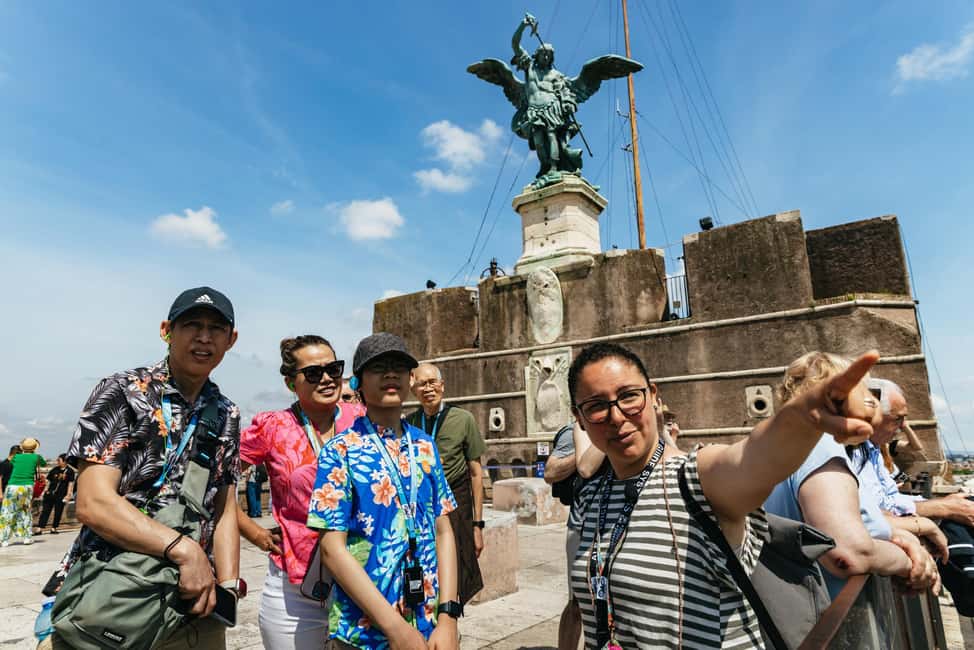
Your tour starts right by the river at the main entrance on Lungotevere Castello. Meet the representative holding a “Loving Rome” flag, then use your skip-the-line ticket to head in through a separate entrance. This matters in Rome, where lines can eat up your energy and your best light for photos.
From the start, the tour has a simple rhythm: go in, follow the guide, listen through a headset if needed, and move toward the building’s most interesting layers. Expect a guided pace that’s meant to keep you oriented while you’re surrounded by confusing corridors and staircases.
Also note the one logistics rule that trips people up: late arrivals or no-shows aren’t accommodated. So if you’re trying to stitch this in between other Roman plans, give yourself buffer time.
You can also read our reviews of more tours and experiences in Rome.



From Hadrian’s Tomb to Papal Power: The Big Story You’ll Hear

Castel Sant’Angelo began as something very specific: the monument erected by Roman emperor Hadrian as his tomb. During your tour, you’ll connect the building’s layout to what it was meant to be at the start, then watch it get repurposed as Rome’s power shifted.
A good guide keeps the building from feeling like random rooms. You’ll learn how it served as a private residence to popes, then later acted as a state treasury, and eventually became tied to imprisonment and public executions. That sequence helps you understand why this fortress feels both grand and grim, often in the same space.
You’ll also get pointed at key “anchors” inside the complex, including the burial place of the late emperor and areas linked to the pope’s apartment. Even if you’ve seen exterior photos, this is where you start to grasp how the place functioned as a machine for authority—moving people, hiding people, storing valuables, and making punishments public.
The Olearie Stop: Why This Room Matters
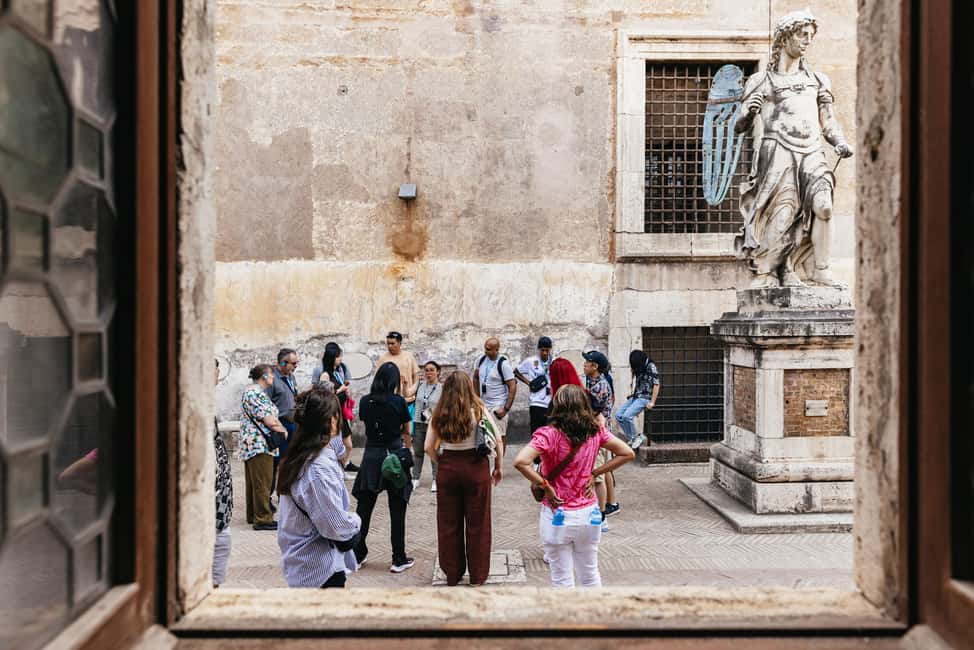
One of the most interesting parts of the tour is heading to the Olearie. Even the name hints at a practical use—oil-related storage or functions—so it’s not just a decorative stop. Your guide uses it to show how the fortress worked beyond pageantry, supporting systems that required secure storage.
This kind of stop is valuable because it gives you more than landmarks. You start to see the castle as infrastructure. A fortress that controls access also needs internal spaces that keep essential goods and operations running, and the Olearie helps explain that side of the building’s life.
If you like tours that connect architecture to daily function (not only famous figures), this is a standout. It also helps you pace the tour so it’s not only dramatic corridors and gloomy corners.
Historical Prisons and the Clemente VII Theater: The Darker Side
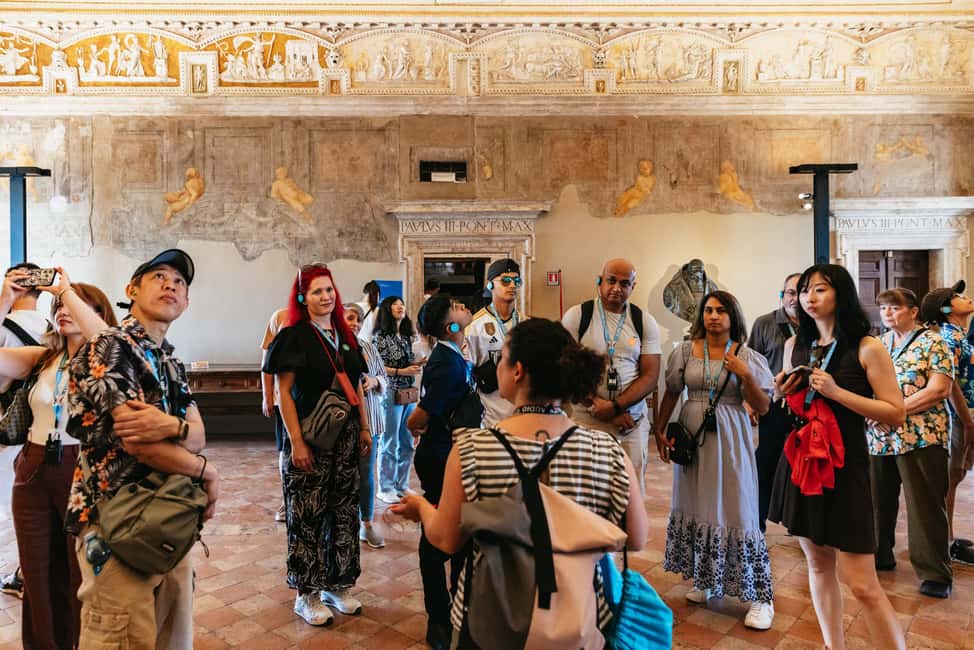
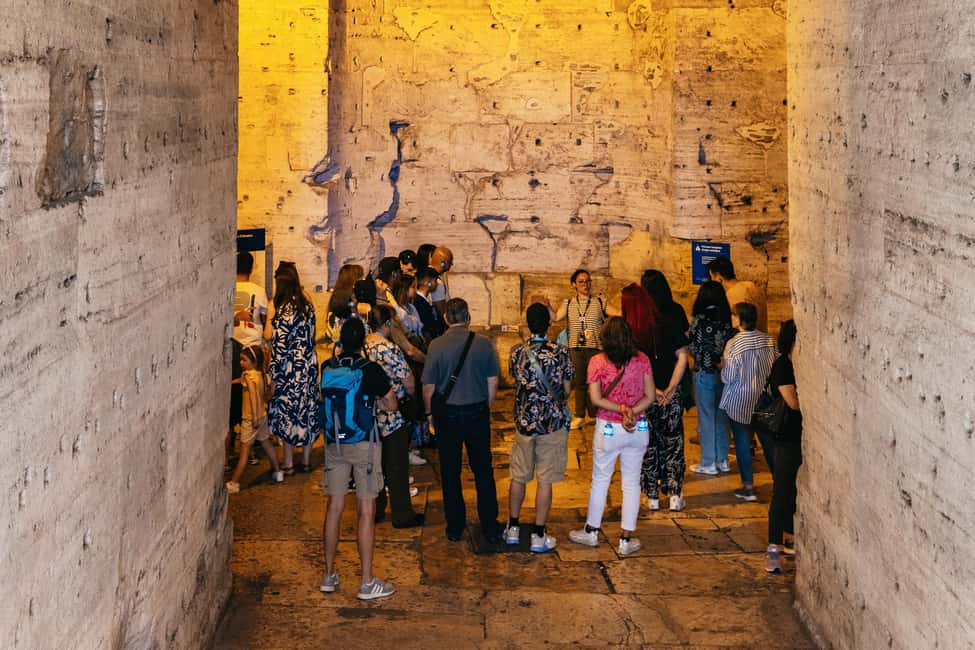
Castel Sant’Angelo has a reputation, but it doesn’t land until you walk the spaces tied to punishment and confinement. On this tour, you’ll explore historical prisons, which adds weight to what you learned about the fortress being used for detention. The setting makes the topic easier to understand because you can see how the building’s design supported control and separation.
Then comes a curveball that makes the story feel complete: the theater of Clemente VII. This is one of those “Rome does not do one thing at a time” moments. A fortress that can hold prisoners also housed a place for performance and social life under papal influence, which helps you see how power used space for different purposes.
The best part here is how your guide threads it together. The prisons aren’t presented like horror movie scenery; they’re treated like part of how the castle evolved. You’re also given context for the people and periods tied to each use, so you leave with a clearer mental map of what changed over time.
Masterpieces, Sculptures, and Paintings You’ll Actually Notice
The tour isn’t only about history as text on a plaque. You’ll be guided toward sculptures and paintings around the castle, and the terrace views help you see how the art and architecture work together in the larger setting.
The way the guide frames these artworks makes a difference. Instead of just naming items, you get context for why they were placed where they are and how the castle’s changing roles affected what mattered inside. That’s the kind of information that turns a “nice building” into something you can talk about.
Also, you’re not wandering blind. With a headset if needed, you can focus on what your guide points out without straining to hear over the noise and foot traffic around the complex. Many people find the audio clarity makes listening easier, especially when you’re climbing and moving through multiple levels.



The Treasury Room and the Pope’s Apartment: Seeing Power Up Close
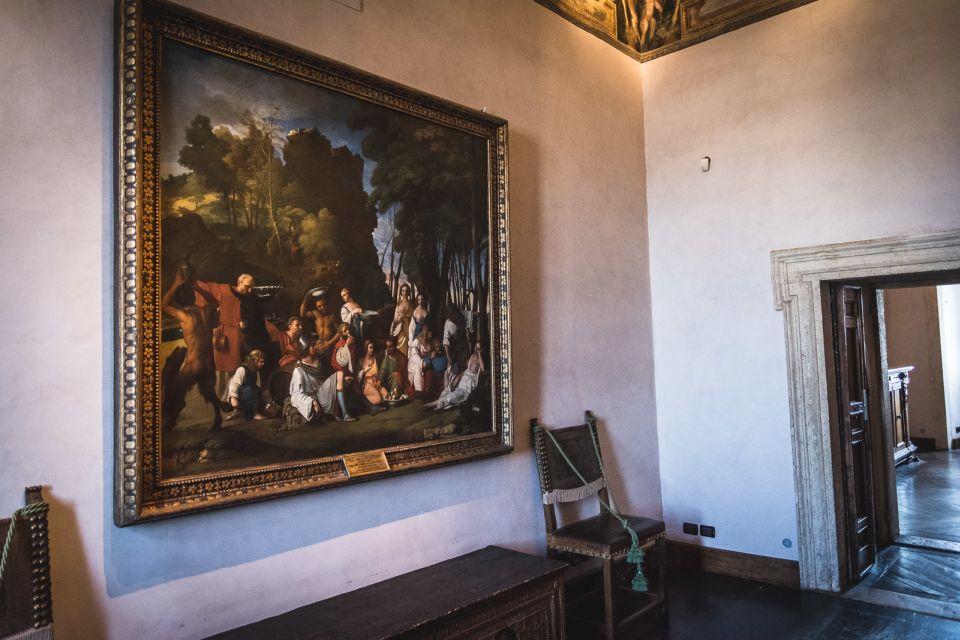
Two stops that help you grasp the castle’s serious side are the treasury room and the pope’s apartment areas. Your tour uses these spaces to explain how the fortress wasn’t only defensive. It was also an administrative center where state assets could be secured and where papal life had a physical home.
The treasury room is the kind of room that makes you slow down, even if you’re usually a fast walker. It’s not just a “look, there’s a room” moment. Your guide’s explanations connect it to why a fortress would store wealth—security, control, and keeping key items close to authority.
The pope’s apartment elements, meanwhile, help you understand the building as residence, not just prison or monument. You’re given enough framing to see how rulers used the castle for comfort and access, then how those same spaces could shift roles as politics changed.
Terrace Views: Your Rome Photo Break With Real Payoff
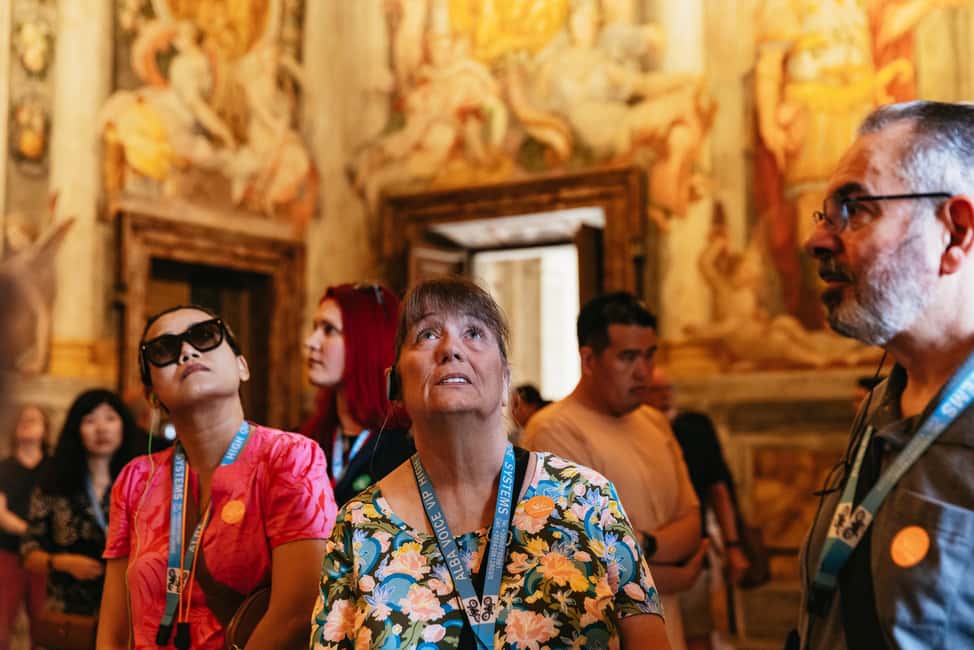
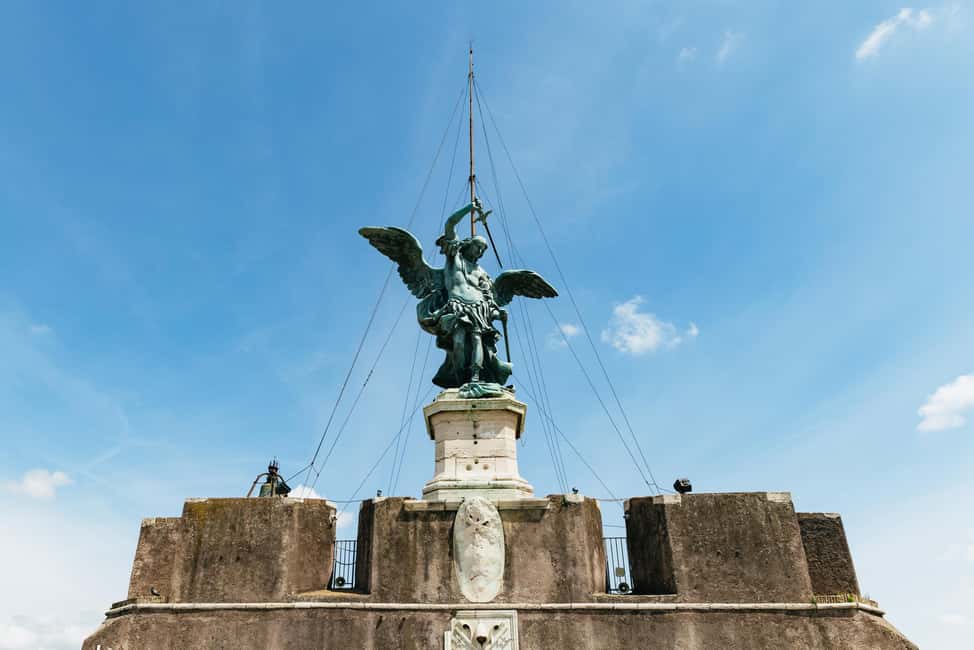
Every Castel Sant’Angelo visit should end with the views, but the terrace makes more sense after you’ve toured the rooms first. You’re not just looking at Rome; you’re seeing the city from the same kind of vantage point that power holders could use.
Your tour finishes with panoramic views of Rome from the terrace. You’ll have time for photos as you take in the broad picture—river, rooftops, and the sense of the city’s scale. In winter especially, the light can make the view feel crisp, which many people love because it’s easier to see details from higher ground.
Do plan your energy for the climb. This isn’t a flat promenade, and the terrace is reached via stairs. Wear shoes you can trust on stone steps, and if you’re sensitive to heights, take it slow on the approach so you can enjoy the end without rushing.
What the Tour Includes (and What It Doesn’t)
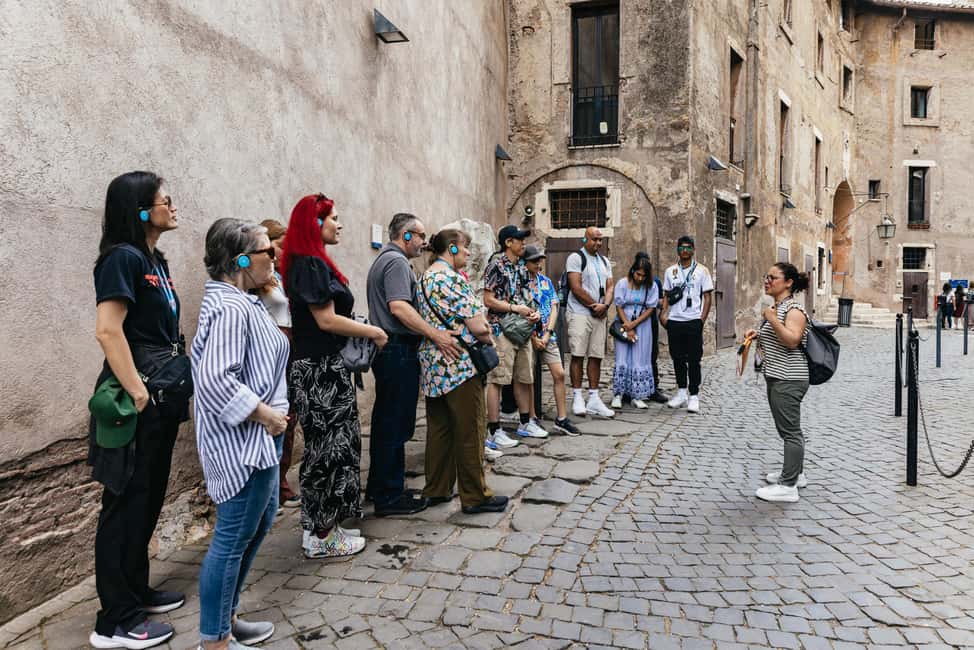
You get the core value items: skip-the-line entrance, a live English-speaking guide, and headsets if needed. The headset part sounds small, but it changes the experience. When you can hear the guide clearly, you retain the story and you notice details without guessing.
You also get access to the areas the guide highlights, including the Olearie, historical prisons, the theater of Clemente VII, and key spaces such as the burial place of Hadrian and the pope-related areas mentioned in the tour description. That’s the practical reason this is worth paying for instead of just buying a basic entry ticket.
What you should remember: food and drinks aren’t allowed, and luggage or large bags aren’t allowed either. So pack light. Also, unaccompanied minors aren’t allowed, and the tour isn’t suitable for wheelchair users.
And yes, there’s an easy bonus idea if you want it: add a traditional aperitivo in a nearby bar after the tour. It’s a nice way to wind down while you’re still thinking about the castle’s stories.
Price and Value: Is $66.05 a Good Deal?
At $66.05 per person, this tour isn’t cheap—but the value is clear if you care about access and interpretation. The price buys you three things that matter in Rome:
First, you skip the line through a separate entrance, which saves time you can use for better walking routes and photo windows. Second, you pay for a guide who brings the building’s multiple uses to life, rather than letting you “figure it out” on your own. Third, you get into spaces that aren’t typically open in a casual visit, including areas like the Olearie and historical prisons.
If you only want a quick exterior look and a few photos, a self-guided visit might feel cheaper. But if you want the context—why this fortress became a tomb, then a papal residence, then a prison, then a place with state functions—the guided format is what makes your ticket feel like money well spent.
Who This Tour Fits Best
This is ideal for you if you:
- Want more than a sightseeing checklist and prefer a story that ties architecture to real events
- Enjoy fortress-style buildings and want the less-famous rooms, not just the “main hall”
- Like guided explanations that keep you oriented while you’re moving through staircases and changing levels
It’s less ideal if you have mobility limits due to stairs, or if you’d rather wander slowly without a structured route. Also keep it in mind if you’re traveling with kids: the tour description says unaccompanied minors aren’t allowed.
Practical Tips Before You Go
Bring comfortable shoes. Expect a series of stairs to reach the panoramic terrace, and old stone floors don’t forgive rushed walking.
One important document detail: you need to provide full names of each participant exactly as they appear on your passport or valid ID during booking, and you should bring your passport or valid ID for verification. This is the kind of rule that can cause delays if you show up with mismatched details.
If you want the smoothest experience, arrive with enough time to find the meeting point and get started before your assigned time slot.
Should You Book This Skip-the-Line Tour?
My honest take: book it if you want access plus interpretation. The skip-the-line entry, English guide, and emphasis on usually closed areas like the Olearie and historical prisons make it the kind of tour that pays off even if you’re only in Rome for a short time.
Pass if you’re hoping for a mostly flat, casual visit, or if you’re fine with just the basics. In that case, you might prefer a self-paced ticket and your own pacing.
If you can do stairs and you like a guided narrative, this is one of the better ways to see Castel Sant’Angelo as more than a photo stop—more like a fortress that tells its story in layers.
FAQ
Where do I meet for the Castel Sant’Angelo guided tour?
Meet in front of the main entrance to the Lungotevere Castello. Look for a representative holding a “Loving Rome” flag.
How long is the tour?
The tour runs 1 to 2 hours. Starting times depend on availability for your selected date.
Does this tour include skip-the-line entry?
Yes. You use a skip-the-line entry ticket through a separate entrance.
Who runs the tour and what language is it in?
You’ll have a live tour guide in English. Headsets are included if needed, and an optional audio guide in English may be available.
What’s included in the price?
The price includes skip-the-line entrance to Castel Sant’Angelo, the guide, and headsets if needed.
What should I bring?
Wear comfortable shoes, and bring your passport or valid ID for verification.
Are food and drinks allowed during the visit?
No, food and drinks are not allowed.
Is this tour suitable for wheelchair users?
No, the tour is not suitable for wheelchair users.
Do I need to provide names matching my passport?
Yes. You must provide full names of each participant exactly as they appear on your passport or valid ID during booking.
Is there an aperitivo option after the tour?
You can add a traditional aperitivo in a nearby bar after the tour, but it’s not listed as part of what’s included.