Rome looks different after dark. That’s the whole point here: a private taxi circuit that strings together Rome’s best-lit landmarks with minimal stress. You get a quick read on neighborhoods and monuments from the road, plus short stops for photos and viewpoints, so you don’t burn half the night lost between highlights.
Two things I really like: the pickup-friendly setup (you plug in your departure address) and the way the ride keeps moving without turning into a long walking tour. One consideration: it’s not a full ticketed museum day, and the price is aimed at convenience—if you’re happy arranging your own taxi, you may find cheaper options.
In This Review
- Key highlights at a glance
- A 2-Hour Taxi Circuit That Helps You Read Rome Fast
- Night Strategy: Pickup, Timing, and Photo-Friendly Stops
- Palatine and Aventine Views: Learning Rome’s Shape in Minutes
- Piramide Cestia: A Roman Monument You Can Spot From the Road
- Isola Tiberina: Healing Legend Meets Real Hospitals
- Castel Sant’Angelo and St. Peter’s: The Power of Exteriors
- Terrazza del Gianicolo: The Panoramic Payoff
- Piazza Venezia: Getting Your Bearings Fast
- Trevi at Night: Classic Icon, Quick Hit Approach
- Piazza Barberini and the Quirinale Area: Elegance Without the Detour
- Campo de’ Fiori: Market Square, Night Atmosphere
- Price and Value: Why $198.48 Per Group Can Make Sense
- Comfort and What You Should Actually Expect From the Driver
- Who This Rome by Night Taxi Tour Fits Best
- Should You Book It?
- FAQ
- What’s the duration of the Rome by Night Taxi City Tour?
- How much does it cost and how many people are included?
- Is pickup included?
- Are tickets to the sights included?
- Is there a certified tour guide included?
- What kind of vehicle is used?
- What happens if the weather is poor?
Key highlights at a glance
- Private taxi pacing: short, practical stops built for nighttime photos rather than slow sightseeing marathons.
- Viewpoints first: Palatine and Aventine angles to help you understand Rome’s layout fast.
- Iconic river island stop: Isola Tiberina, known for its healing legend and the hospitals on the site.
- Big-name exteriors: St. Peter’s Basilica and the Castel Sant’Angelo area are experienced from outside.
- Golden-hour city skyline: Terrazza del Gianicolo sets you up with a classic panoramic payoff.
A 2-Hour Taxi Circuit That Helps You Read Rome Fast
This is a simple idea done well: Rome is huge, so at night you want a plan that minimizes navigation. You’re in an air-conditioned vehicle, and because it’s private transportation, you’re not stuck waiting for a bus full of people to catch up. The total time is around 2 hours, which is long enough to hit major sights but short enough that you still feel fresh afterward.
What makes it work is the rhythm. You’ll get multiple quick stops for views and landmark exteriors, not just one or two big ones. In the best moments, your driver times the stops so you can grab photos and still keep the tour flowing—even when traffic slows things down.
The other nice part is orientation. Rome at night can feel like a puzzle, but viewpoints like the Palatine/Aventine and Gianicolo help you understand where things sit relative to each other.
You can also read our reviews of more city tours in Rome

Night Strategy: Pickup, Timing, and Photo-Friendly Stops
Before anything else, decide what you want from this kind of tour: fast orientation, easy sightseeing, or maximum photo time. This tour leans toward the first two, and the stops are designed for that. Expect the focus to be on seeing the sights from key angles and getting enough time to step out for photos.
Pickup is part of the deal. You’ll share your departure address, and they’ll come to take you around Rome. That’s a big help if you’re staying farther from the main tourist clusters or you don’t want to deal with walking in the dark just to “start the tour.”
One real-world issue to keep in mind: the start time depends on the taxi coming to you. In one case, there was a wait at the beginning, so if you’re trying to line this up with dinner reservations or a show, build in a buffer.
Palatine and Aventine Views: Learning Rome’s Shape in Minutes
The tour starts with two of the most useful mental map builders: a view over Palatino’s hill and then the Aventine hill area. Even if you’ve seen photos of Rome from these spots, at night they feel different—less about monuments “standing there” and more about how the city layers itself across hills and rooftops.
Why I like this approach: viewpoints early in the tour train your eye. Once you’ve seen Rome’s elevation and the way streets connect down the slopes, the later stops feel less random. It also keeps you from wasting your best night hours doing long transfers or backtracking.
The downside is also simple: because these are viewpoint stops, you won’t get museum-level detail here. If you want interiors and deep explanations for every site, you may find this more about impressions than facts.
Piramide Cestia: A Roman Monument You Can Spot From the Road
One stop focuses on Piramide Cestia, a monument tied directly to ancient Rome. It’s the kind of structure that clicks instantly because it’s so visually clear, and it makes a good contrast to the later Renaissance and Baroque landmarks you’ll see.
At night, this is where Rome turns into a photography game. You’re likely to get a brief window to take pictures, and then you move on. That’s ideal if you’re traveling with limited time and want variety without committing to long ticket lines.
Just note the admission detail: a ticket is not included. The tour is framed around a short visit, so if you want to go inside (if it’s open at the time), you’ll need to handle that separately.
Isola Tiberina: Healing Legend Meets Real Hospitals
The tour then heads to Isola Tiberina. The legend here is about powerful healing, which is part of why hospitals are located on this small stretch of land. It’s a striking moment because Rome isn’t only monuments—it’s also living institutions and everyday function.
What you’ll enjoy is the contrast: you go from classic skyline views to something more grounded and human. Even for a short stop, it’s memorable because the island concept feels unique, and you can usually take photos with the river and city framing the shot.
Admission is listed as free for this stop. That’s a relief if you want at least one place where you don’t have to worry about extra ticket decisions during your night planning.
You can also read our reviews of more evening experiences in Rome

Castel Sant’Angelo and St. Peter’s: The Power of Exteriors
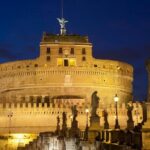
After the river island, you’ll reach Museo Nazionale di Castel Sant’Angelo, described as the fortress of the Popes. In many Rome tours, Castel Sant’Angelo becomes a background silhouette. Here, it gets time as its own stop, so the structure feels less like scenery and more like a landmark.
Then comes St. Peter’s Basilica. The focus is on admiration from the outside and the colonnade. This matters because St. Peter’s can be overwhelming if you try to do everything in one night—crowds, lines, and decisions about entry. An outside look still gives you the scale and drama, especially at night when lighting makes architectural lines feel sharper.
One detail to plan around: the tour notes admission tickets not included at these stops. Even if you’re mostly there for exteriors, you should assume that if you want to go inside or access restricted areas, you’ll need your own ticket plan.
Terrazza del Gianicolo: The Panoramic Payoff
If you want one stop that makes the whole taxi loop feel worth it, it’s usually Terrazza del Gianicolo. This is where the city opens up. You get a broad panoramic view of Rome, and it’s one of those moments that turns your mental map into something visual.
Why this viewpoint works during a night tour: you’re not just seeing one building. You’re seeing the idea of Rome—the hills, the spread of rooftops, and the way landmark areas relate to each other.
Time is limited (about 10 minutes at this stop), so keep your camera ready and decide quickly what you want. Think wide first, then close details if you still have energy.
Piazza Venezia: Getting Your Bearings Fast
Next up is Piazza Venezia, often described as the center of the city center and a kind of ground zero. Even if you don’t know every historical reference, the location is useful because it sits at a crossroads of major roads and walking corridors.
At night, plazas can feel like breathing spaces. You’ll be able to stand, look around, and connect the dots. It’s also a practical break in the tour sequence—after viewpoints and fortress/basilica stops, this is where you reset and reorient.
This is listed as free to enjoy, which makes it a good “no-cost” moment when you want photos without decisions about tickets.
Trevi at Night: Classic Icon, Quick Hit Approach
No Rome evening is complete without Fontana di Trevi. The tour frames it as one of the world’s most beautiful fountains, and the key word for your planning is quick hit. You’re given time for the fountain, and then you move on.
If you’ve only experienced Trevi in daylight crowds, you’ll likely appreciate the nighttime change. Still iconic, still dramatic, but often easier to photograph than daytime chaos. The tour is designed so you don’t spend the entire night waiting around—so you still get other neighborhoods after this stop.
The stop is listed as free, so your only task is to use the time well: step back for the full fountain view, then get a closer shot if the lighting allows.
Piazza Barberini and the Quirinale Area: Elegance Without the Detour
After Trevi, you shift into a slightly quieter, more polished Rome with Piazza Barberini. It’s an elegant square in a famous area, and it works as a change of pace. You’ve been chasing monuments; now you’re seeing the “everyday grand” side of Rome’s streetscape.
Then you reach Palazzo Del Quirinale, the historic building tied to the president of the Italian republic. This is another exterior-focused moment, with the payoff being architecture and a sense of where power and government sit in the city.
For planning: admission tickets are not included here, and your stop time is short. Treat it as a chance to see and photograph the building’s presence rather than a museum visit.
Campo de’ Fiori: Market Square, Night Atmosphere
The last stop is Campo de’ Fiori, famous for its market in the morning and its nightlife vibe later. On top of that, it’s tied to the memory of Giordano Bruno, who was burned there—his statue stands in the square.
This final stop is a nice way to end the tour because it brings you from landmark Rome into human-scale street life. Even with a short stop, the atmosphere can feel like a shift from “sightseeing” to “you’re in the city now.”
Admission is listed as free, so there’s no extra cost decision here—just walk in, look around, and decide if you want to stay for drinks or keep exploring.
Price and Value: Why $198.48 Per Group Can Make Sense
Let’s talk money in a way that helps you decide. The cost is $198.48 per group, for up to 4 people, and the tour is built around private taxi transport plus the curated nighttime route. If you compare it to taking separate taxis to each location, you may find the per-group price feels reasonable—especially late at night when transit planning and finding drivers can be annoying.
The value is strongest when you care about time. You’re not organizing multiple rides, you’re not negotiating routes on the fly, and you’re not guessing which order is smartest. The tour structure also gives you a “best of” coverage in a compressed window.
Where the price can feel less appealing is if you’re traveling solo or as a couple and you’re comfortable with independent taxi/ride-share planning. One caution: if you expect a fully guided, ticketed museum experience, the listing makes it clear that a certified tour guide is not included. The driver is part of the experience, but you shouldn’t assume it will match the depth of a separate licensed guide-led tour.
Comfort and What You Should Actually Expect From the Driver
This is a taxi tour, so expect the driver to be your main source of local guidance rather than a formal guide with a specialized certification. The tour does include air-conditioned comfort and private transport, and the driver experience can make or break the night.
In the best situations, the driver is punctual and friendly, knows how to place you for photos, and adjusts for traffic so you still get the highlights. In one case, traffic was heavy and the ride extended a bit to make sure the group saw the best of Rome at night.
That said, the taxi world is still the taxi world. Delays can happen, and one review noted a bumpy start and a 15-minute wait. If you’re the type who gets stressed by small schedule changes, plan a little breathing room into your evening.
Who This Rome by Night Taxi Tour Fits Best
This is a strong match for you if:
- You want quick orientation and multiple major sights in one evening.
- You prefer outside viewing over long indoor museum time.
- You’re traveling as a small group (up to 4) and want to split the cost.
- You’d rather spend your night on photo stops and viewpoints than on transit logistics.
It might not be your best choice if you:
- Want a deep, ticket-based experience at each monument.
- Need a certified guide for detailed explanations at every stop.
- Have a super tight schedule with no flexibility at all (since nighttime traffic can shift timing).
Should You Book It?
I’d book this Rome by Night Taxi City Tour if your goal is simple: see a lot of Rome’s top landmarks with minimal friction, mostly from the outside, and still have an easy evening plan. The format is especially smart for first-timers who want to understand where things are before committing to longer days later.
Skip it—or pair it with something else—if you’re chasing museum entry tickets and a certified, lecture-style guide. And if you’re easily bothered by small delays, give yourself buffer time so the start doesn’t wreck your night.
If you want a practical, efficient night circuit, this one delivers.
FAQ
What’s the duration of the Rome by Night Taxi City Tour?
It runs for about 2 hours.
How much does it cost and how many people are included?
It’s $198.48 per group, and the group size can be up to 4 people.
Is pickup included?
Yes. Pickup is offered, and you should enter your departure address.
Are tickets to the sights included?
Admission tickets are not included for some stops, while others are free. Plan on bringing your own tickets if you want to enter sites that list admission as not included.
Is there a certified tour guide included?
No. A certified tour guide is not included.
What kind of vehicle is used?
You’ll travel in an air-conditioned vehicle with private transportation.
What happens if the weather is poor?
The experience requires good weather. If it’s canceled due to poor weather, you’ll be offered a different date or a full refund.