REVIEW · CYCLING TOURS
Rome By Night: Small Group E-Bike Tour
Book on GetYourGuide →Operated by Rex-Tours · Bookable on GetYourGuide
Rome looks different after dark. This small-group Rome by Night e-bike tour strings together major landmarks with less heat, fewer crowds, and the kind of glow you only get when the city powers down for a bit. You start at sunset, so you catch golden light before the monuments fully light up.
I love the way the ride lets you cover huge distances without feeling drained, thanks to an e-bike assist. I also like the small-group size (up to eight), which makes it feel personal when your guide, like Leo or Marco, adjusts to what you care about. The main consideration: this is still a bike experience, so it’s not for everyone and it won’t work for people who can’t ride, plus it’s not suitable for wheelchair users or very young kids.
In This Review
- Key things that make this e-bike tour work
- Meeting your guide at sunset, then rolling into Rome’s glow
- Why an e-bike is the smart way to do Rome at night
- The Colosseum and Roman Forum stops: what to notice after dark
- Trevi Fountain and the Pantheon: lighting, angles, and guide talk
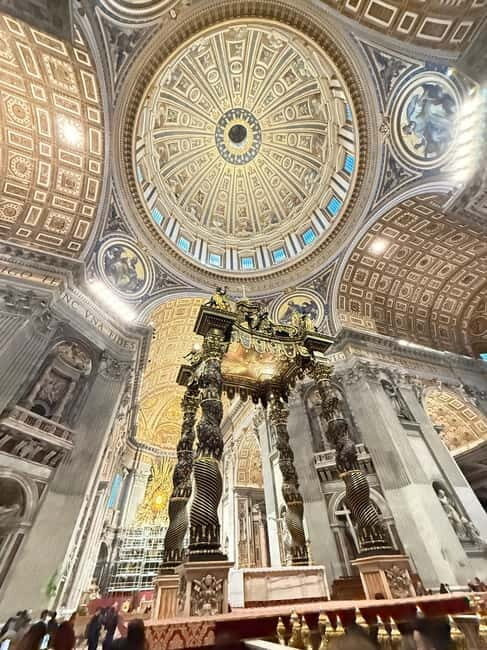
- Spanish Steps to St Peter’s Basilica: stacking Rome’s biggest wow moments
- Safety, pace, and how “small group” really feels in motion
- Group size: why up to eight riders is more than a number
- Is $81 per person a good value for Rome highlights after dark?
- Who should book this Rome by Night e-bike tour
- Quick practical notes before you go
- Should you book Rome By Night with Rex-Tours?
- FAQ
- How long is the Rome By Night e-bike tour?
- What’s included in the price?
- Is hotel pickup or drop-off included?
- Does the tour start at sunset?
- Which sights are included on the route?
- How big is the group?
- What languages are the live tour guides?
- Who is the tour not suitable for?
Key things that make this e-bike tour work
- Sunset start: you get the shift from day crowds to nighttime atmosphere
- Small group (max eight): easier conversations and more responsive pacing
- Quick, scenic routing: less time stuck in traffic and more time enjoying views
- Big hits in one loop: Colosseum, Forum, Trevi Fountain, Pantheon, Spanish Steps, St Peter’s Basilica
- Guides who focus on safety and clarity: riders get instructions and a steady pace
Meeting your guide at sunset, then rolling into Rome’s glow
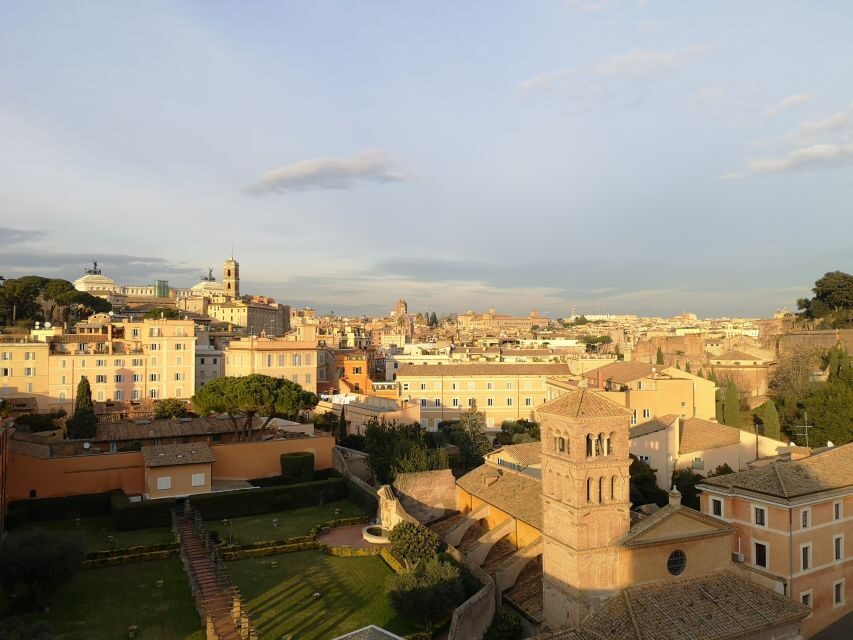
This tour begins at sunset, which matters more than it sounds. Rome’s “night version” isn’t just pretty, it’s calmer: the heat eases, the sidewalks thin, and the light on stone is softer. You’re not sprinting between sights in full daylight; you’re moving at the moment the city changes mood.
Your guide leads the route at a pace that’s designed for small-group biking. In practice, it means you spend less time figuring out where to go next and more time looking up—at façades, arches, and domes lit from below. The guides cover the story of what you’re seeing as you ride, and they do it in English or German.
If you want a tour that feels like a local night walk but with wheels, this is that. You’ll also appreciate the helmet included with the e-bike rental. You don’t need to hunt down gear, and you’re set up for a straightforward start.
You can also read our reviews of more cycling tours in Rome
Why an e-bike is the smart way to do Rome at night
Walking Rome at night can be magical, but it can also turn into sore legs and decision fatigue. With an e-bike, you get the best of both worlds: mobility to connect the major sights, plus a relaxed way to enjoy the streets between stops.
The e-bike assist is especially useful in warm months, when that Rome heat can feel like it never leaves. One rider noted the cool breeze factor during summer riding, and that tracks with the whole logic of the tour: start at sunset, cover major points, and keep the experience comfortable.
Also, you’re getting views that you’d miss standing in a crowd. From the saddle, you can angle your attention: look at the monument, then sweep your gaze along the street you’re riding, then stop for a closer look. It’s the kind of sightseeing that feels more like moving through the city than checking boxes.
And because the group stays small, the ride doesn’t turn into a slow-moving conga line. You’ll still share the streets, but you won’t spend three hours trapped behind dozens of other people.
The Colosseum and Roman Forum stops: what to notice after dark
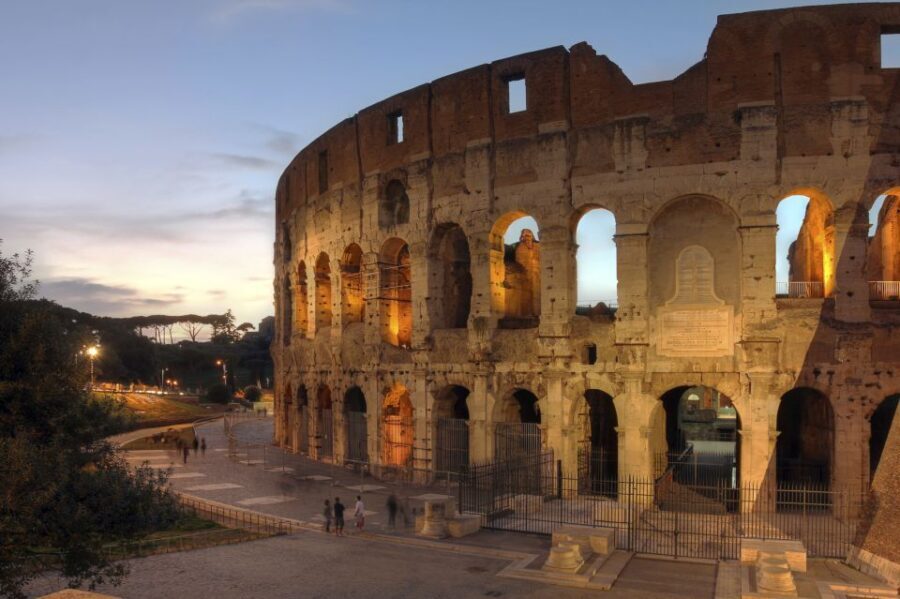
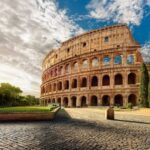
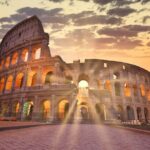
The big-ticket start of the route is the area around the Colosseum and Roman Forum. After dark, the scale hits differently. In daylight, you can feel the crowds and the tour-clock pressure. At night, the stone texture and lighting create a stronger sense of theater—like the ruins are still part of an active story.
This is a stop where your guide’s approach matters. Riders have described guides like Marco as strongly historical and excellent at communication, and that’s exactly what you want at the Forum: context that helps the ruins make sense. Even if you’ve seen photos before, it’s hard to feel the layout until someone points out what you’re looking at.
A practical tip: don’t treat this as just a photo break. Use the moment to orient yourself. Ask your guide what aspect is most important tonight—structure, history, or how the space worked when it was alive. When the guide is attentive (as described by riders), you’ll get a better experience in the time you have.
Potential drawback here: this is one of the most photographed places in Rome, and even on a night ride, it can still feel busy at key moments. The tour helps by routing you efficiently and using a bike-friendly pace, but it doesn’t magically eliminate crowds at the very biggest sites.
Trevi Fountain and the Pantheon: lighting, angles, and guide talk
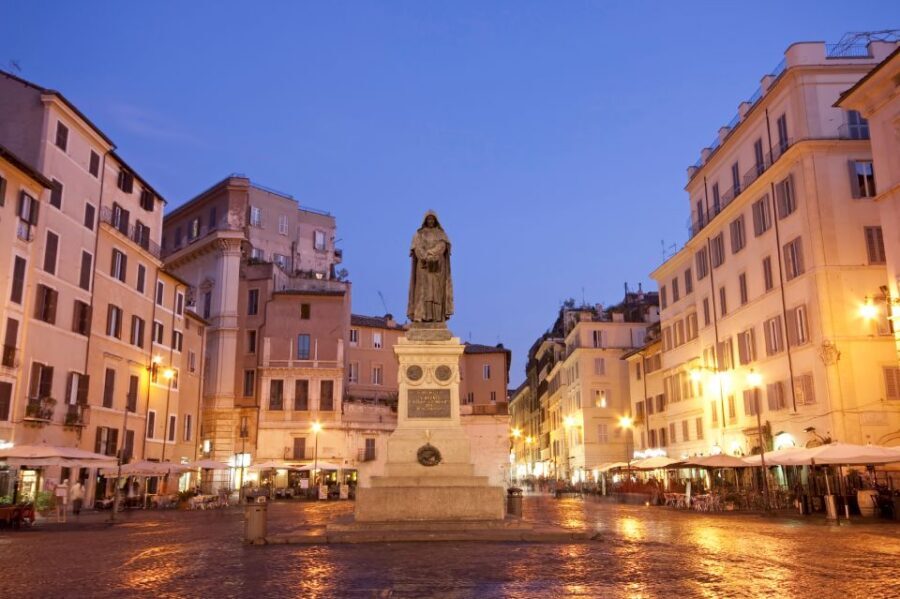
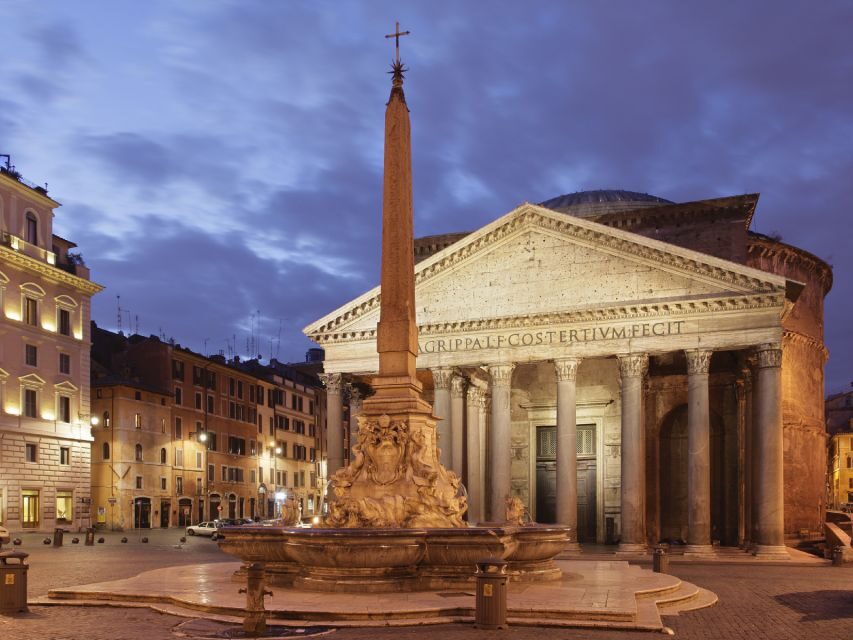
From the Forum area, the route continues to Trevi Fountain and the Pantheon—two landmarks where the lighting does a lot of the work. Trevi is a spectacle in any light, but at night it becomes more about glow and reflections than daytime rush. Pantheon, meanwhile, can feel almost cinematic after dark, especially because it’s such a distinct shape and silhouette.
This part of the ride is where the small-group format starts to feel like value, not a perk. If the group is under eight, you can actually hear what the guide is saying instead of constantly turning your head over people’s shoulders. That matters because these stops are more enjoyable when you understand the “why,” not just the “what.”
And because you’re riding between points, you’re not stuck in one location for too long. You get a sequence: a highlight, then movement, then another highlight. That keeps attention from dropping and helps the whole three hours feel efficient.
There’s also a nice pacing rhythm implied by the route: you’re not overscheduling yourself with extra stops. The tour focuses on major sights you likely want anyway. That’s helpful if you’re short on time, visiting in hot weather, or trying to reduce the number of separate tickets and decision points.
Spanish Steps to St Peter’s Basilica: stacking Rome’s biggest wow moments
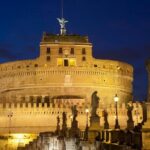
The latter portion of the ride connects Spanish Steps with St Peter’s Basilica. This is a big sweep of contrasts: elegant urban perspective at the Steps, then a totally different scale and atmosphere near the Vatican.
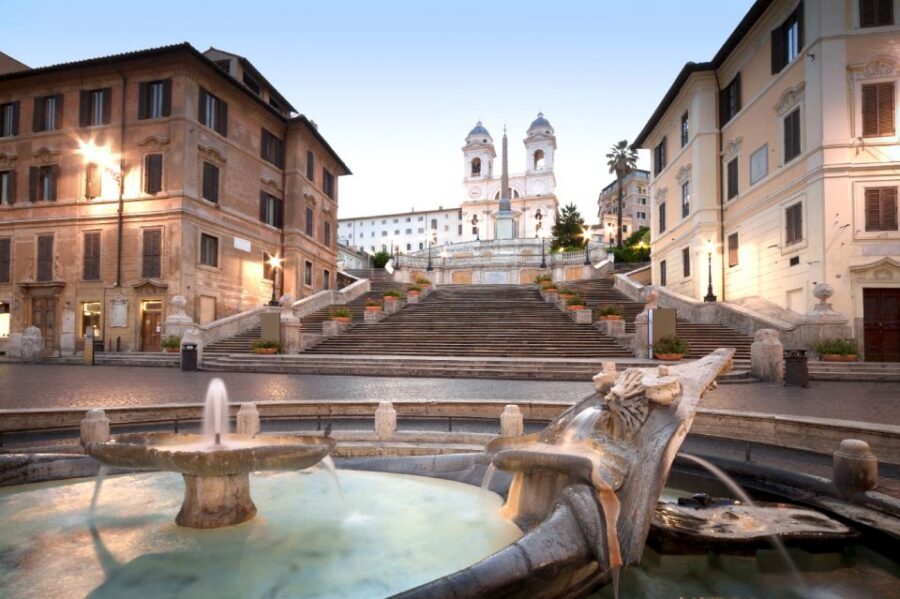
Spanish Steps at night can be a study in elevation and line-of-sight. You’ll get a sense of how people gather there and how the area works visually, which is hard to grasp from one static street corner. Then you transition toward St Peter’s Basilica, where the mood shifts again—space, lighting, and the feeling of an iconic destination.
One of the strongest reasons riders seem to enjoy this tour is the guide’s ability to tailor the experience. In smaller situations—like one tour that had only two riders—your guide can steer you toward places that match your interests. That flexibility matters when you’re riding a set route but still want the experience to feel like it belongs to you.
A note on expectations: this is a bike tour with planned stops, not a guided museum crawl with long indoor time. If you’re hoping for lots of ticketed time inside buildings, you’ll likely want to pair this tour with follow-up visits.
You can also read our reviews of more evening experiences in Rome
Safety, pace, and how “small group” really feels in motion
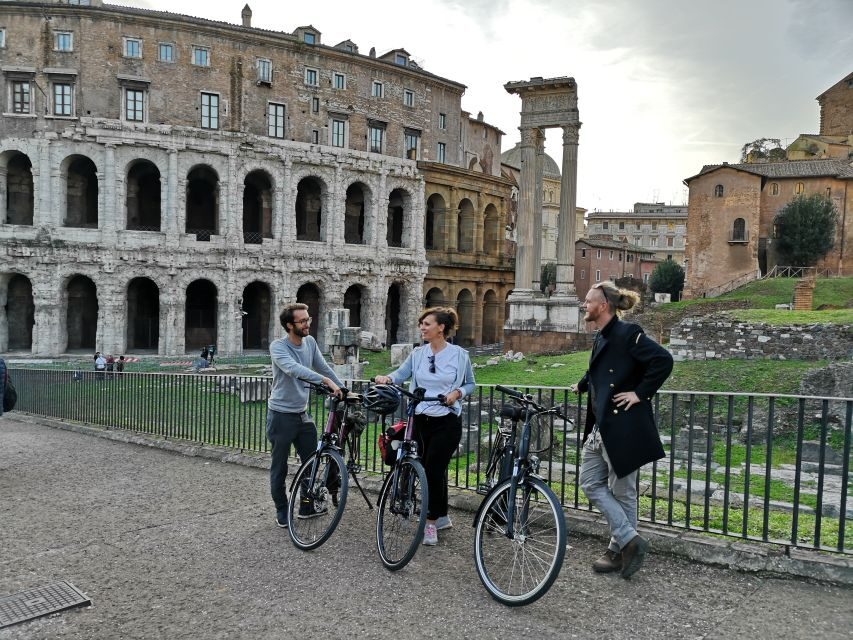
E-bike tours rise or fall on comfort and safety management. Riders have specifically praised guides for being attentive to safety and for making instructions easy to follow. That’s a big deal, especially when you’re navigating streets at night with vehicles and other pedestrians.
The best part of a well-run e-bike tour is that the pace stays human. You’re not forced to sprint to keep up, but you also don’t idle for long. Your guide handles the flow, and the route plan helps keep you from zigzagging.
You’ll also likely notice how the guide communicates—Marco and Leo were highlighted for clarity and entertainment, with Leo described as taking riders through Rome with humor and local affection. That kind of delivery matters because three hours is long enough for context, but short enough that you’ll notice if the guide is vague.
One more practical detail that popped up in feedback: on at least one departure, the guide provided waters for the group. Even if that varies, it’s a reminder that guides sometimes think about small rider needs, especially on warm evenings.
Group size: why up to eight riders is more than a number
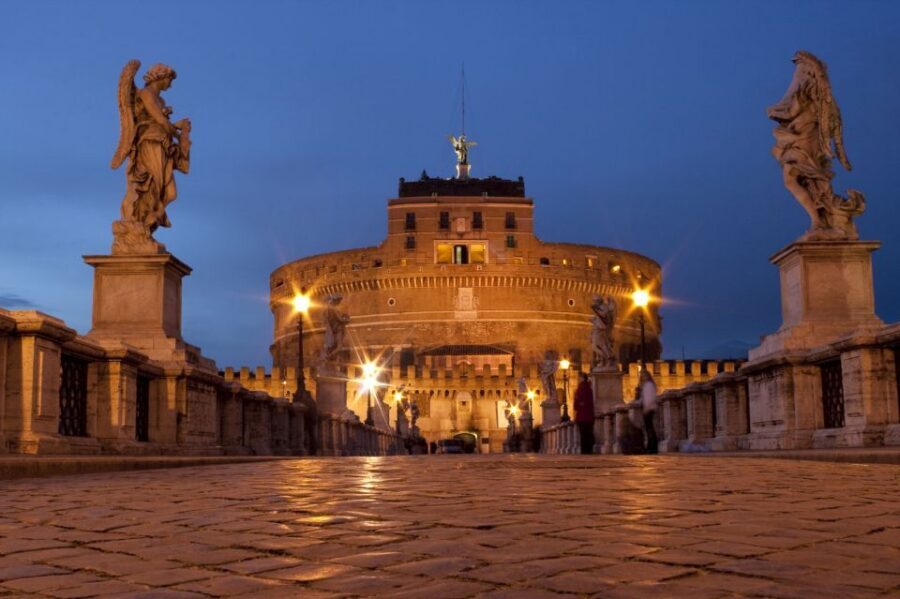
“Small group” can mean anything. Here, it means your experience stays interactive. With a maximum of eight participants, you get a better chance to ask questions, hear explanations, and adjust the ride’s flow.
That shows up in how personalized the experience can become. One rider described a tour with only two participants where the guide was accommodating and took the riders to a couple of places based on their interests. That’s the real benefit: flexibility inside a guided structure.
Also, smaller groups usually mean smoother movement at stops. You’re less likely to get stuck waiting for a giant bunch to regroup. It’s not just comfort; it’s time. In three hours, minutes matter.
If you’re traveling with someone who wants the same sights but different interpretations—one person loves architecture, the other loves Roman stories—this format is a good fit.
Is $81 per person a good value for Rome highlights after dark?
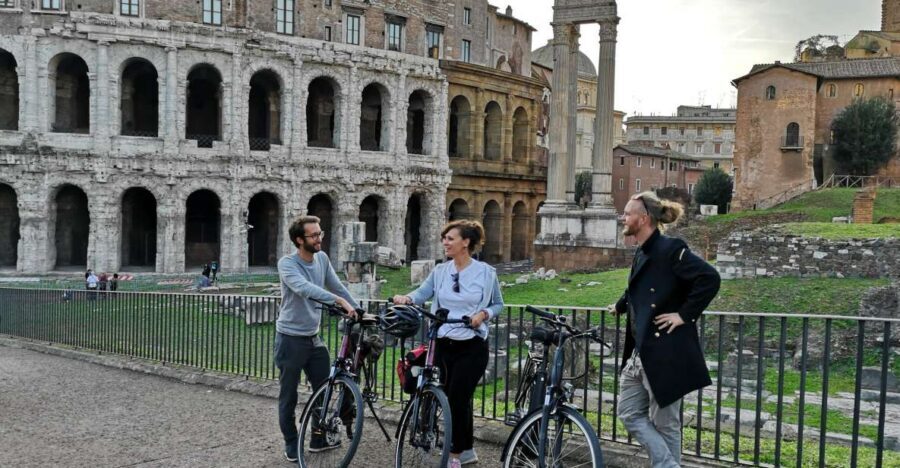
At $81 per person for a 3-hour ride, the value depends on what you want out of Rome. If you’re trying to see a cluster of top sights in a single night without spending that time trapped in queues or crisscrossing the city on foot, this price can feel reasonable.
Here’s what you’re paying for:
- E-bike rental is included
- Helmet is included
- A live guide provides the route and historical context
- The tour is built to run at sunset and includes the night atmosphere
What you’re not paying for:
- Hotel pickup and drop-off
- Food and drinks
So you’re not buying a full-day experience. You’re buying a focused slice: the best-known highlights connected by an easy ride and guided explanations while the city is at its most photogenic. That makes it a strong option if you already plan to do food and drinks on your own schedule.
Also, the tour avoids the most frustrating parts of sightseeing: heat and crowds. Even when some crowds remain near major landmarks, the overall structure reduces the worst of the day-time pressure.
Who should book this Rome by Night e-bike tour
I’d point you toward this tour if:
- you want a highlights night route without overplanning
- you’re visiting in summer heat and want a sunset start
- you like getting explanations while you move, not only standing still
- you enjoy bike travel and can comfortably ride an e-bike
This tour likely won’t fit if you can’t ride a bike or if mobility limits make biking impossible. It also isn’t suitable for children under 12, people with mobility impairments, wheelchair users, riders under 4 ft 4 in (135 cm), people over 243 lbs (110 kg), or people over 70 years.
If you meet the riding requirements and you want a guided, efficient way to see Rome after dark, this is a smart use of a half-day.
Quick practical notes before you go
Meeting point may vary based on your booked option, so confirm the exact location when you book. Plan to be ready to ride at sunset, since that’s the core timing for the whole experience.
And because there’s no hotel pickup, you’ll want to get yourself to the meeting point under your own steam. That’s normal for Rome night tours, but it’s the kind of detail that can make or break your stress level that evening.
Also remember the tour runs for 3 hours, so treat it as a major “Rome highlights” block. If you love staying out late, you’ll likely want to follow up with an extra dinner stroll afterward.
Should you book Rome By Night with Rex-Tours?
If your goal is to see a concentrated set of Rome’s top landmarks with a guide, while avoiding the worst heat and daytime crowds, I think this is a solid choice. The strongest selling points are the sunset timing, the small group size, and the practical value of covering big sights without burning your legs.
It’s also reassuring that riders praised guides like Leo and Marco for communication, safety attention, and even personalization when the group is tiny. With a 4.7 rating and a “small group up to eight” setup, you’re not likely to get lost in a crowd-driven experience.
So yes, I’d book it—especially if you can ride and you want your first Rome night to feel easy, guided, and genuinely different from daytime sightseeing.
FAQ
How long is the Rome By Night e-bike tour?
The tour lasts 3 hours.
What’s included in the price?
E-bike rental and a helmet are included.
Is hotel pickup or drop-off included?
No. Hotel pickup and drop-off are not included.
Does the tour start at sunset?
Yes. The e-bike experience begins at sunset.
Which sights are included on the route?
You’ll make stops at the Colosseum, Roman Forum, Trevi Fountain, Pantheon, Spanish Steps, and St Peter’s Basilica.
How big is the group?
The group is a private or small group format, with a maximum of eight participants.
What languages are the live tour guides?
The guide offers German and English.
Who is the tour not suitable for?
It’s not suitable for children under 12, people with mobility impairments, people who can’t ride a bike, wheelchair users, people under 4 ft 4 in (135 cm), people over 243 lbs (110 kg), and people over 70 years.