REVIEW · CRUISES & BOAT TOURS
Pre Cruise Rome Private Tour & transfer to Civitavecchia T.C.
Book on Viator →Operated by Luke Limousine · Bookable on Viator
Rome on a cruise timetable is tricky.
This private setup is built for that exact problem: you get door-to-cruise transfer plus a smart “greatest hits” route through classic sights, without squeezing into crowds or wasting time figuring out where to go. It’s especially useful when you’ve got a few hours before you need to be heading to Civitavecchia.
I really like two things here. First, the private vehicle with room to spread out (and help with luggage) makes a long travel day feel calmer. Second, the experience is led by an English-speaking driver who can keep things moving and adjust to what you need in the moment, including help coordinating with other plans when timing matters.
The main drawback to plan around is time. Each stop is brief, and Pantheon entry is not included (you’ll pay the ticket separately), so this isn’t the best choice if you want long, slow museum-style pacing.
In This Review
- Key things that make this Rome cruise tour work
- Why this Rome-to-Civitavecchia private day fits cruise reality
- Pickup at Fiumicino or your Rome hotel: the “start smart” advantage
- The private van: comfort, WiFi, and a driver who keeps you on track
- Quick-hit Rome: your stop-by-stop route (and what to expect)
- Circus Maximus (Circo Massimo)
- Vittoriano (Altare della Patria) and the Tomb of the Unknown Soldier
- Trevi Fountain (Fontana di Trevi)
- Piazza di Spagna and the Spanish Steps
- The Pantheon
- Piazza Navona
- St. Peter’s Square (Vatican City)
- Pantheon planning: the one extra cost you should budget
- The cruise-port finish: getting there with breathing room
- Price and value: what $959.68 means for your group size
- Who this is best for (and who should consider another plan)
- Should you book this Rome cruise private tour?
- FAQ
- How long is the Rome private tour and transfer?
- What’s the group size?
- Where does pickup happen?
- Are tickets for the stops included?
- Does the tour include transportation to the cruise port?
- Is WiFi available during the ride?
- Is the driver available in English?
- Can I cancel and get a full refund?
Key things that make this Rome cruise tour work
- Pickup anywhere in your Rome stay or at Fiumicino with a minivan and luggage help
- Private, English-speaking driver who can handle real-world timing
- Photo-friendly, quick-hit route built around major Roman landmarks
- Most stops have free viewing so you spend less time on ticket logistics
- Pantheon costs extra (plan for the 5 euro entry fee)
- A cruise-ready finish with about 1 to 1.5 hours of driving to the port
Why this Rome-to-Civitavecchia private day fits cruise reality
A cruise day in Rome isn’t like a normal sightseeing day. You’re managing a schedule that includes pickup time, getting out of busy areas, and then arriving with enough buffer to check in. This tour is designed for that rhythm: it moves you from the Rome airport area or your hotel into central highlights, then gets you back on the road to the cruise port without turning your day into a stressful race.
The big value is not just that you’ll see famous places. It’s the pacing and the transportation piece working together. Instead of you trying to string together buses or taxis while also watching the clock, you get a driver, an air-conditioned van, and a route through the most recognizable Roman stops.
This is also a good fit for small groups who want conversation and flexibility. With up to 8 people in your private party, it feels more like a controlled sightseeing day than a mass tour where you’re always waiting for stragglers.
You can also read our reviews of more boat tours in Rome


Pickup at Fiumicino or your Rome hotel: the “start smart” advantage

Your day starts with a straightforward plan. The driver picks you up either at the exit of the arrivals terminal at Rome Fiumicino Airport, or at your Hotel/B&B in Rome. In both cases, you’re dealing with one point of contact instead of multiple transfers.
You also get practical help with luggage using the comfort minivans. That sounds small, but on a cruise day it matters. You don’t want to haul bags through stations, fight for curb space, or spend energy on logistics that can eat hours.
From the pickup point, you’ll have around 15 to 30 minutes to reach the first stop on the itinerary. That gives you time to settle, get oriented, and avoid that awkward feeling of being rushed as soon as you’re picked up.
The private van: comfort, WiFi, and a driver who keeps you on track
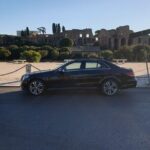
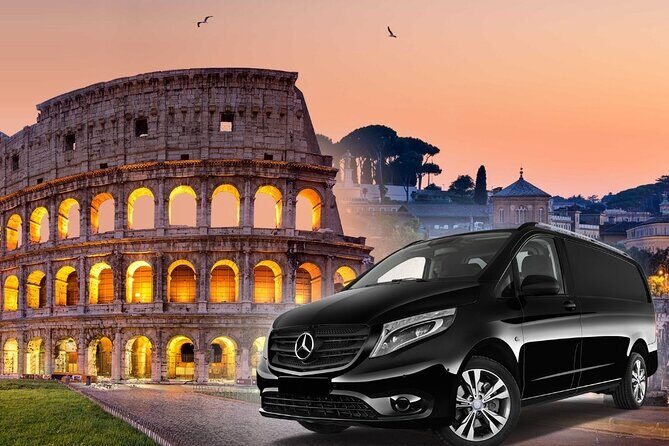
Included in the ride are air-conditioned vehicle, private transportation, and WiFi on board. That combination is simple but effective: you’re more comfortable in Rome’s heat, and you can manage practical stuff like maps, messaging, or checking cruise timing without burning phone battery.
The other advantage is the driver role. This is not just a chauffeur who drops you and disappears. You get an English-speaking driver, and one strong theme from real experiences is responsiveness. One group shared that the driver, Luca, picked them up early and helped coordinate with a guide for their Vatican and Sistine Chapel plans since they weren’t familiar with the area. He then waited and got them to the cruise ship on time for check-in.
That kind of adaptation is exactly what makes a private cruise-day tour worth it. Your timing may be different from the plan, and the ability to handle real timing issues is the difference between a smooth day and a frantic one.
Quick-hit Rome: your stop-by-stop route (and what to expect)
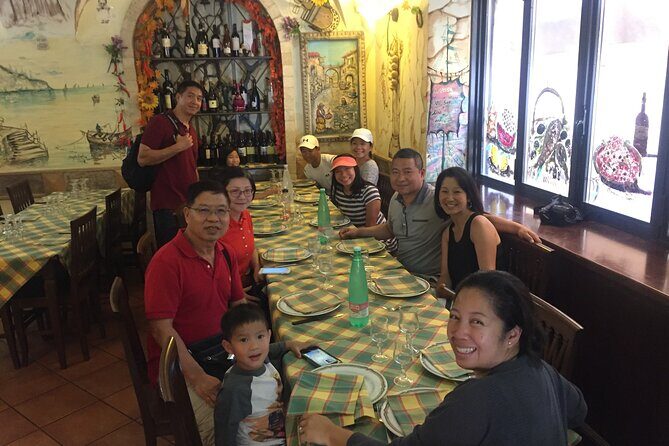
This part of the day is all about smart visibility. You’re not touring slowly. You’re getting that “I’ve arrived in Rome” feeling fast—then moving on.
Circus Maximus (Circo Massimo)
You’ll start at Circo Massimo, an ancient Roman circus with an estimated capacity of 180,000 spectators. Chariot races happened here, and the site connects to the big Roman-empire vibe you see in stories about chariot racing—so it’s a fun anchor point for understanding the scale of the old city.
You’ll have about 20 minutes, and that’s enough to snap photos and get a sense of where the chariots would have run. The trade-off: because it’s a large open historic space, you won’t feel like you’re stepping into a fully guided indoor exhibit. Think of it as an outdoor orientation stop.
You can also read our reviews of more private tours in Rome




Vittoriano (Altare della Patria) and the Tomb of the Unknown Soldier
Next comes the Vittoriano, the national monument to Vittorio Emanuele II—also called Altare della Patria. In the center you’ll find the Tomb of the Unknown Soldier, a powerful memorial for an Italian soldier who died in World War I whose identity remains unknown.
You’ll also have about 20 minutes. This is one of those stops where you can get a lot out of a little time if you look up and around. The monument is visually dramatic, and it helps you connect modern Rome with national identity themes.
A practical consideration: in peak hours, the area can feel busy because it’s a major landmark and photo spot.
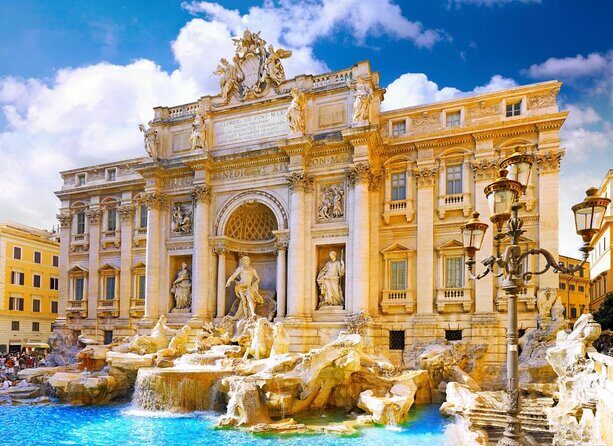
Trevi Fountain (Fontana di Trevi)
Then it’s Fontana di Trevi. This is the classic “Roman photo,” and for good reason: it’s the largest of the famous fountains in Rome. There’s also a well-known tradition tied to the coin toss—dropping a coin into the fountain (with your eyes closed in the tradition) is meant to help you return to Rome.
Your visit is about 20 minutes. That’s enough to get pictures, do the coin tradition if you want, and find a good viewing angle.
The drawback is crowding. Even when you only stay briefly, Trevi can be packed. Your best move is to think like a photographer: aim for a quick sweep of angles rather than trying to “stand forever” in one place.
Piazza di Spagna and the Spanish Steps
You’ll move to Piazza di Spagna, home of the famous Spanish Steps. This square is strongly tied to the Palazzo di Spagna and the Spanish embassy to the Holy See, which helps explain why this area has long been part of Rome’s diplomatic and cultural map.
You’ll also see the Barcaccia fountain, a recognizable early Baroque feature associated with Pietro and Gianlorenzo Bernini. With about 20 minutes, the goal is simple: walk, look, shoot, and enjoy the energy of one of the most photographed corners in the city.
One consideration: because it’s iconic, it tends to attract crowds. A short stop works best here, because you’re getting the essence without getting stuck in one crowded spot too long.
The Pantheon
Next is the Pantheon, described as a temple dedicated to all past, present, and future divinities. It was founded around 27 B.C. and remodeled around 124 A.D. That time depth is part of the magic: you’re looking at a building with layers that span centuries of Roman ambition.
Here’s the important part: Pantheon admission ticket entry is not included, and the ticket is listed at 5 euro per person. Your time is about 20 minutes, so you need to manage entry quickly if you want the most from your window.
If you’re the kind of person who likes architecture and wants a payoff for your time, the Pantheon is absolutely worth planning for. If you hate adding costs at the last minute, factor that in before you arrive.
Piazza Navona
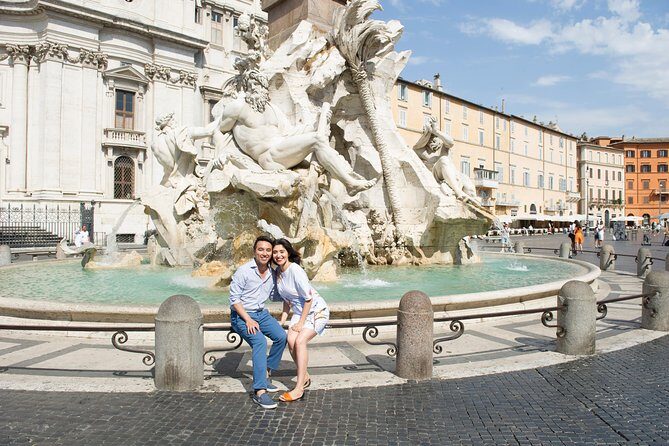
Then comes Piazza Navona, often described as one of Rome’s most beautiful squares, known for its three major fountains. It’s a great pause in the route: the fountains and the open square feel like a stage set, and it’s an easy place to slow your feet for a moment even if the stop is still relatively short.
You’ll have about 20 minutes. This is a good break after the more monumental and church-adjacent sights.
St. Peter’s Square (Vatican City)
Finally, you head to St. Peter’s Square. This huge plaza sits at the edge of Rome’s historic center and belongs to Vatican City. It also serves as a boundary space between Vatican territory and Italy. St. Peter’s Square is known for Baroque architecture and large-scale urban planning.
Your visit here is about 30 minutes, which matters because this is the stop where the day shifts from sightseeing to cruise preparation mode. You’ll have enough time to get key photos and feel the scale of the square before you get back into travel mode.
Also, St. Peter’s Square is described as a daily meeting point for Catholic faithful from around the world, which can add atmosphere even in a short visit.
Pantheon planning: the one extra cost you should budget
This tour is good about keeping things free where possible, but it’s honest about one exception: the Pantheon ticket is not included and is 5 euro per person.
I like tours that tell you this up front, because it prevents the awkward scramble at your stop. Since your time window is around 20 minutes, you don’t want to lose momentum waiting for payment or figuring out entry details.
My practical advice:
- Bring cash or a card you’re comfortable using, since the ticket amount is small but the timing is tight.
- Treat the Pantheon stop as a “look and lock in” moment. In limited time, focus on the structure and main interior impression rather than trying to see everything.
If you’re not excited about the Pantheon itself, you might feel the cost more strongly. But if you like iconic buildings, it’s one of Rome’s best payoffs per minute.
The cruise-port finish: getting there with breathing room
After the last stop, you’ll drive to your cruise ship with about 1 to 1.5 hours of driving time.
This is where the tour design shows its value. The earlier stops are quick, so the day doesn’t balloon. Then you transition to transit with enough time to reduce last-minute stress. For cruise check-in, that buffer is not a luxury. It’s peace of mind.
Also, the tour lists operating hours as 12:00 AM to 11:30 PM, which suggests you can match different departure schedules and pick-up timing windows.
Price and value: what $959.68 means for your group size
The price is $959.68 per group for up to 8 people. That’s a group rate, so the “value” depends on how many of you are actually traveling.
Here’s the math in plain terms:
- If you fill it with 8 people, it comes to about $120 per person
- If you have 4 people, it’s about $240 per person
- If you have 2 people, it’s about $480 per person
So when it’s best value: when you can travel as a full small group and split the cost. It can still be worth it for couples, especially if you value the private setup and the cruise-transfer timing safety. But purely on cost, it’s harder to justify if you’re just two people and you’d rather spend on tickets and meals instead.
In exchange for the money, you’re paying for transportation + guided routing + time efficiency. This is not a “see one neighborhood” stroll. It’s a whole day plan that pulls you from airport/hotel to the port.
One more signal: this tour is often booked around 91 days in advance on average. That’s a hint that people plan ahead for cruise days. If you’re traveling in a busy season, waiting can reduce options.
Who this is best for (and who should consider another plan)
This tour is tailor-made for:
- Cruisers with limited time who want major landmarks without figuring out transit
- People who want a private vehicle and a calmer pace than public tours
- Groups up to 8 who can share the group rate and lower per-person cost
It’s less ideal if:
- You want long interior time in major sites
- You prefer slow, museum-level pacing
- You’re allergic to any extra ticket costs (because the Pantheon entry fee is separate)
Also, if you love deep, guided storytelling in each place, the short stops can feel a bit “photo and move on.” The trade-off is that you see a lot more in the time you have.
Should you book this Rome cruise private tour?
I’d book it if your priority is a smooth Rome day with predictable logistics: pickup handled, luggage handled, major highlights checked, then a timely drive to Civitavecchia. The best part isn’t any single landmark—it’s that you’re not flying blind on a cruise schedule.
I’d think twice if you’re traveling solo or as a couple and budget is tight, or if you’re craving long time inside the big sights. In those cases, you might prefer a cheaper transfer plus a separate plan with more time at fewer places.
If you do book, my recommendation is to treat the Pantheon as a planned stop (set aside the 5 euro per person), and use the rest of the route for what it’s built for: fast, classic Roman highlights that help your cruise day feel complete.
FAQ
How long is the Rome private tour and transfer?
The experience runs about 4 to 5 hours, depending on timing and the drive back to the cruise ship.
What’s the group size?
It’s a private tour for your group, with pricing listed for up to 8 people.
Where does pickup happen?
You can be picked up at the exit of the arrivals terminal at Rome Fiumicino Airport, or at your Hotel or B&B located in Rome.
Are tickets for the stops included?
Most stops are listed as free. Pantheon entry is not included and costs 5 euro per person.
Does the tour include transportation to the cruise port?
Yes. It includes private transportation, and after the last stop there’s about 1 to 1.5 hours of driving time to your cruise ship.
Is WiFi available during the ride?
Yes, WiFi is included on board.
Is the driver available in English?
Yes, the driver provides services in English.
Can I cancel and get a full refund?
Yes. There is free cancellation up to 24 hours in advance for a full refund. If you cancel less than 24 hours before the start time, the amount paid is not refunded.