REVIEW · ROME
Rome Underground San Clemente Basilica Exclusive Tour & Tickets
Book on Viator →Operated by Tour In Rome by Tour in the City · Bookable on Viator
Rome under your feet is the real magic here. This tour focuses on San Clemente al Laterano, where you can see how the same spot in Rome keeps getting rebuilt over centuries, then ties it to nearby ancient sites like the gladiator training school at Ludus Magnus and the famous church San Pietro in Vincoli.
I especially like that you can choose your style: a licensed English-speaking guide who walks you through the underground levels, or a self-guided audio option that lets you go at your own pace. I also like the hit of variety in the route: one stop is ancient brick training space, one stop is a multi-era basilica above and below ground, and one stop is Michelangelo’s Moses.
One drawback to consider: the self-audio experience depends on your phone and your headphones. The tour recommends a smartphone from 2020 or later, and it’s smart to bring your own headphones for best sound.
In This Review
- Key takeaways before you go
- San Clemente al Laterano: the underground you actually came for
- Private guided vs audio self-guided: pick the rhythm that fits you
- If you want a full guided package (private option)
- If you want to go at your own pace (self-guided audio option)
- Ludus Magnus: Domitian’s gladiator training school in real brick
- San Pietro in Vincoli and Michelangelo’s Moses: the celebrity stop
- Where the tour starts (and why timing matters)
- What you get for the money: value check for $33.64
- Who should book this San Clemente underground tour
- Should you book this Rome Underground San Clemente tour?
- FAQ
- How long is the Rome Underground San Clemente Basilica tour?
- What languages are available for the audio guide?
- Is the tour private or group-based?
- What are the main sites included?
- Is the entrance ticket included?
- Where do I meet for the tour?
- What should I wear?
- Do I need headphones for the audio tour?
- Is cancellation free?
Key takeaways before you go
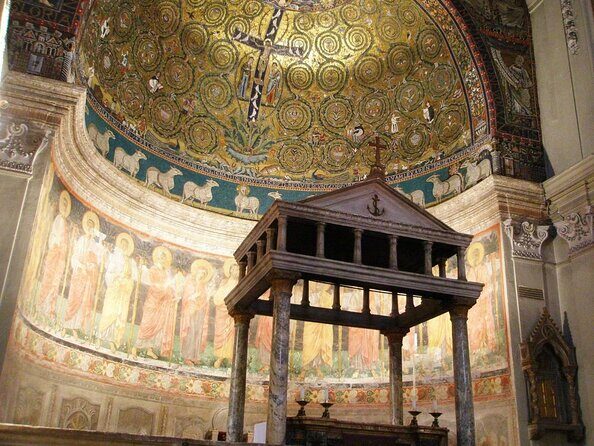
- Two tour modes: private guided (with tickets) or self-guided audio at San Clemente
- Three eras stacked at San Clemente: Republican-era villa → early Christian/medieval layers → 12th-century basilica
- Ludus Magnus access: you see Domitian’s gladiator training complex and enter the main gym
- Michelangelo’s Moses included: you’ll get a guided look at the famous, unfinished sculpture in San Pietro in Vincoli
- You’ll need the right attire: smart casual, with shoulders and knees covered
- Time-slot pacing matters: arrive at least 20 minutes early for your scheduled entry
San Clemente al Laterano: the underground you actually came for
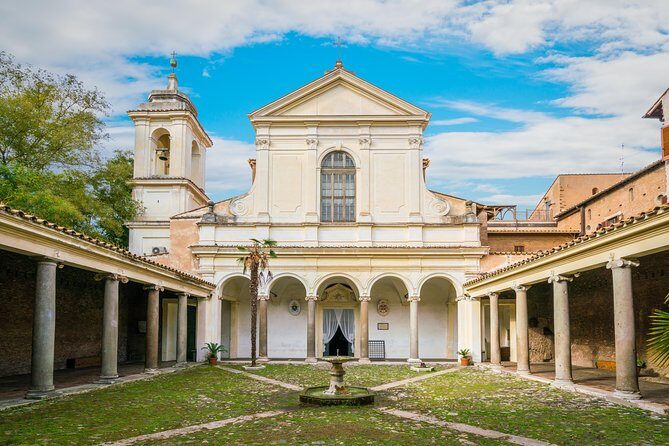
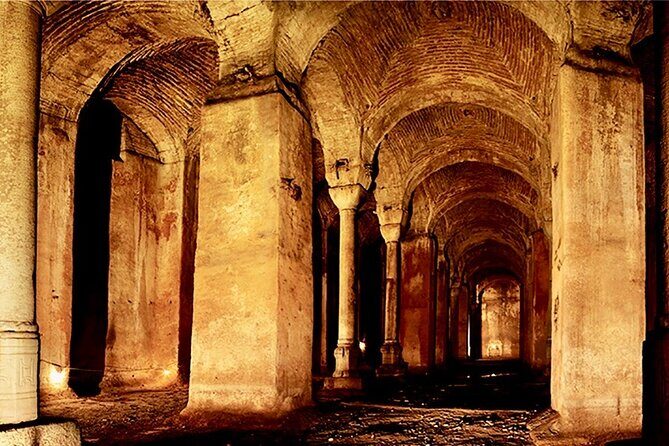
San Clemente is one of those Rome sites where the building itself is the story. The setting is famous for showing three levels of the city’s past right in the same footprint. You’re not just looking at ruins. You’re watching Rome rebuild Rome.
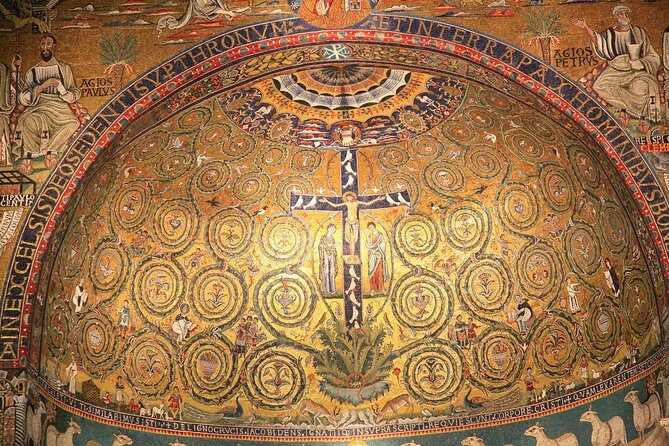
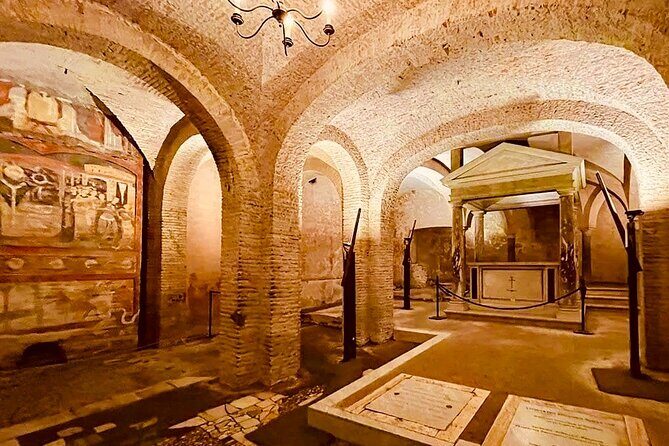
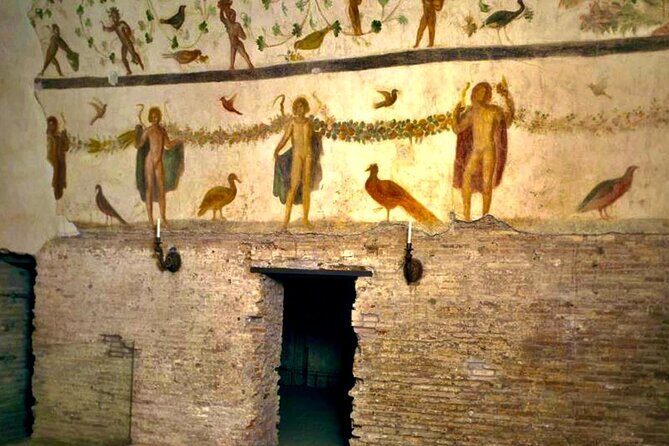
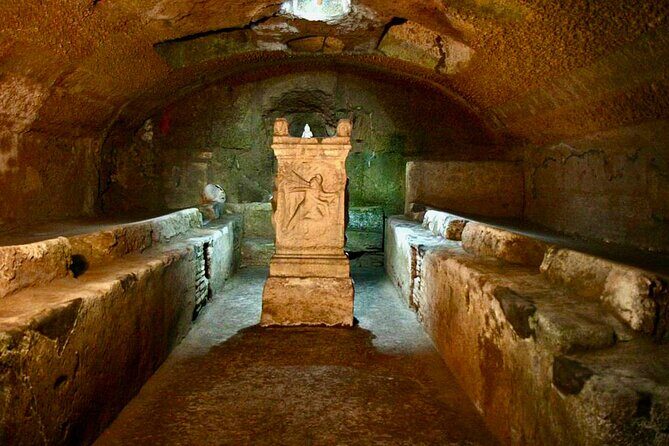
At the top is a 12th-century basilica. Under it sits a 4th-century church, and below that you get even older layers, including remnants tied to a Roman-era villa from the Republican period. Then, deeper still, the space reveals early Christian and medieval layers, plus a Mithraeum (a temple connected to the worship of Mithras). That combination is what makes San Clemente special: it’s not one chapter. It’s the book, torn and re-bound multiple times.
This is also where a guide really pays off—especially if you care about why religious buildings move “downward” over time. If you choose the private guided option, you’ll have a licensed English-speaking guide leading you through the underground levels and explaining how the site changes by era.
If you pick the self-guided audio tour, the value is that you control the pace. You can pause, backtrack, and spend extra time where your interest spikes—without feeling rushed along by the group. The audio app is multilingual (English, Italian, Spanish, French, German) so you’re not locked into one language experience.
Small consideration: San Clemente is an underground experience. Dress accordingly. Even when Rome is warm on the street, the underground spaces can feel cooler, and you’ll want comfortable coverage since the dress code requires shoulders and knees.
You can also read our reviews of more tours and experiences in Rome


Private guided vs audio self-guided: pick the rhythm that fits you
This tour gives you two ways to experience the same core site, and that changes how you’ll get value.
If you want a full guided package (private option)
The private guided tour is built for people who want the story connected, not just the photos. You get a licensed English-speaking guide for the underground levels at San Clemente, plus the rest of the route that links the area together: San Pietro in Vincoli and Ludus Magnus, including entrance where noted.
This option also includes the “why this matters” layer—how the underground spaces relate to Rome’s changing religious and architectural life. Based on how guides have been praised (including names like Sabrina and Martin for being thorough and clearly passionate), the experience tends to feel like walking with someone who truly enjoys explaining what you’re seeing.
If you want to go at your own pace (self-guided audio option)
The self-audio option is best if you like structure-lite travel. You arrive, you start the audio, and you spend your time exactly where you want it.
The audio is designed to cover the San Clemente Basilica and its underground content in multiple languages. The tour recommends using a smartphone produced in 2020 or later, and it’s also recommended that you bring headphones. If you show up with a basic phone or no headphones, the audio experience can turn from relaxing into frustrating.
Also note the practical reality: you still need to make the timing work. Plan to arrive early—at least 20 minutes before your scheduled entry—so you can check in and get set up without stress.
Ludus Magnus: Domitian’s gladiator training school in real brick
From San Clemente’s layered past, the route shifts to a different kind of Rome: the gladiator world.
You’ll head to Ludus Magnus, an ancient gladiator training school on the northeast side of the Colosseum. The highlights here are very tangible. You’re not just seeing a sign and walking away. The experience includes entry into the most important gladiator gym, which helps you understand the space as a working training ground.
This complex was built by Emperor Domitian at the end of the 1st century A.D. It was constructed largely in brick, and the layout matters. The building was rectangular and likely had multiple floors. Around a central courtyard, there were rooms for the gladiators. In the courtyard, there was even a miniature amphitheater used for training.
That courtyard-centered design is what you want to watch for as you move through. It explains how gladiators lived and trained in a contained routine, rather than just “fighting in an arena.” It’s a shift in perspective, and it makes the Colosseum area feel less like one big monument and more like a whole ecosystem.
One practical note: this part is time-boxed (about 30 minutes). If you love Roman architecture details, you may want to give yourself a moment to stand still and look around once you’re inside.






San Pietro in Vincoli and Michelangelo’s Moses: the celebrity stop
Then comes San Pietro in Vincoli, also called St. Peter in Chains. This stop feels different from the underground spaces because it’s more about relics and art.
The church houses an important relic: two sets of chains that bound St. Peter when he was imprisoned in Jerusalem and Rome. That adds a religious layer to the day that’s separate from the archaeology work.
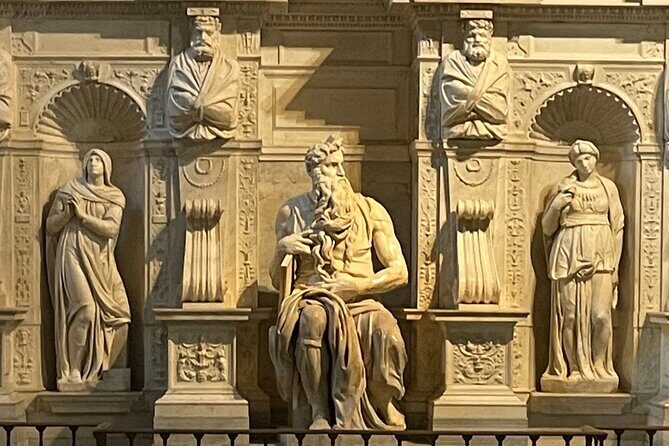
The art highlight is Michelangelo’s Moses. This sculpture is unfinished, and it was originally intended as part of the tomb of Pope Julius II. The original plan was huge—an enormous funeral monument with 47 statues—but the project was never completed, partly because Michelangelo had other commissions pulling him away.
If you’re the kind of visitor who likes to connect art choices to political and religious pressure, this stop can hit hard. You’re seeing how unfinished work still becomes iconic. And because the tour includes a look at the Moses (either as part of the guided experience or as a described included component), you’re not just walking past a famous name.
The stop is about 30 minutes, and it includes time for a walk through the nearby area. You’ll also get context for where this church sits relative to the larger Colosseum neighborhood.
Where the tour starts (and why timing matters)
This is a tour where the meeting point details really matter because the experience can start at slightly different check-in spots depending on which option you book.
For the main meeting location, you’ll meet at Piazza di San Clemente (Piazza di S. Clemente, 00184 Roma RM). The route also ends back at Piazza di San Clemente.
If you book the audio guide only option, the meeting point is specified as Via Labicana, 96, where you can purchase tickets and download the audio guide app. That’s a key detail: audio-only doesn’t necessarily start at the same spot as the guided tour flow.
You should arrive 20 minutes early. Underground sites don’t run on your schedule; they run on timed entry. Showing up late can compress your time inside, and that’s the part you paid to see.
What you get for the money: value check for $33.64
At about $33.64 per person, this tour is priced like a focused Rome “specialist” experience, not a big all-day bus tour. For the money, you’re getting:
- Access to San Clemente with skip-the-line reservation and ticket handling (for the San Clemente basilica portion)
- In the private guided option, tickets included for the additional sites on the route and a licensed guide
- An experience that’s built around multiple underground levels, not just a quick interior look
The value becomes clearer when you compare what most Rome sightseeing offers: a church interior, a view, and a gift-shop stop. Here, you’re paying for a structured path through stacked Rome time—plus an ancient gladiator site and Michelangelo’s Moses if you choose the guided package.
If you choose the self-audio option, the value is more about flexibility. You’re essentially buying a guided-style audio interpretation, in a setting where you can stop and go. Just remember: you’ll still need the right tech setup (app + headphones + phone that works smoothly).
Extra costs are minimal in the tour description, but standard Rome realities apply: food and drinks are not included, and transportation to/from attractions isn’t included.
Who should book this San Clemente underground tour
Book this if you:
- Care about how Rome changed over time, not just famous landmarks
- Want an underground experience that goes beyond a single level
- Love archaeology, architecture, and religious art connections
- Prefer a structured explanation (private guided) or quiet pacing (audio)
If you only want a quick highlight loop, you might find this a lot of building-and-levels in a short time. But if you’re the type who enjoys reading what the stone is telling you, you’ll likely find the day satisfying.
Should you book this Rome Underground San Clemente tour?
Yes—if your idea of a great Rome day includes underground archaeology and a multi-era site where one building sits on top of another. The private guided version is the strongest choice if you want context stitched together, especially for Ludus Magnus and Michelangelo’s Moses.
Choose the self-audio option if you like going at your own pace and you’re comfortable with phone-based audio (bring headphones, and aim for that recommended newer smartphone).
Either way, plan to dress properly, arrive early, and treat San Clemente like the main event it is. This is one of those Rome experiences where the city makes sense only after you look down.
FAQ
How long is the Rome Underground San Clemente Basilica tour?
It runs about 2 hours to 2 hours 30 minutes.
What languages are available for the audio guide?
The audio guide is available in English, Italian, Spanish, French, and German.
Is the tour private or group-based?
It’s listed as a private tour/activity, meaning only your group participates.
What are the main sites included?
You can include San Clemente Basilica (with underground levels), Ludus Magnus, and San Pietro in Vincoli. The private guided option covers all of these, while the self-guided audio option covers San Clemente Basilica and its undergrounds.
Is the entrance ticket included?
The tour includes the skip-the-line entrance ticket and reservation fee to the Basilica of San Clemente. For the private guided option, entrance tickets are included for the additional stops mentioned.
Where do I meet for the tour?
The meeting point is Piazza di San Clemente. For the audio guide only option, the meeting point is listed as Via Labicana, 96.
What should I wear?
The dress code is smart casual, with shoulders and knees covered.
Do I need headphones for the audio tour?
Headphones are recommended for optimal audio quality, and you may want to bring your own.
Is cancellation free?
Yes. Free cancellation is available if you cancel up to 24 hours in advance for a full refund.