REVIEW · ROME
Rome by Ape Calessino Auto Rickshaw
Book on Viator →Operated by Dearoma Tours · Bookable on Viator
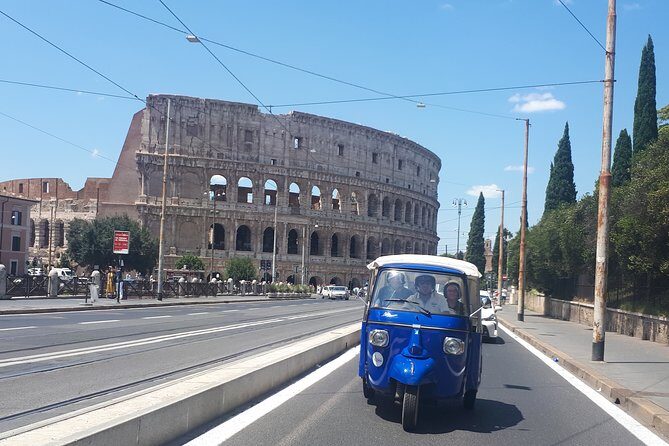
Rome looks different from a tiny rickshaw. This private 3-hour ride turns crowded streets into an easy photo hunt, using an Italian Ape Calessino (the classic 1960s vehicle) with a guide in English and hotel pickup.
Two things I especially like: you get a smooth, flexible route with personal attention, and you’re timed well for “see a lot, stop often” sightseeing. You also get a built-in break with caffè/cappuccino/gelato, which is a smart way to keep energy up while you hop between viewpoints.
One thing to consider: this is panoramic, so entrance fees are not included for the Colosseum, the Baths of Caracalla, or the Vatican. If you want to go inside those, you’ll need to plan your tickets separately.
In This Review
- Key highlights worth planning for
- The Ape Calessino ride: fast photos without the big-tour vibe
- Price and value: what $505.23 per group really covers
- Getting started: hotel pickup and a clean route into Rome’s top sights
- Vittoriano, Imperial Forum, and the Colosseum without entry-ticket stress
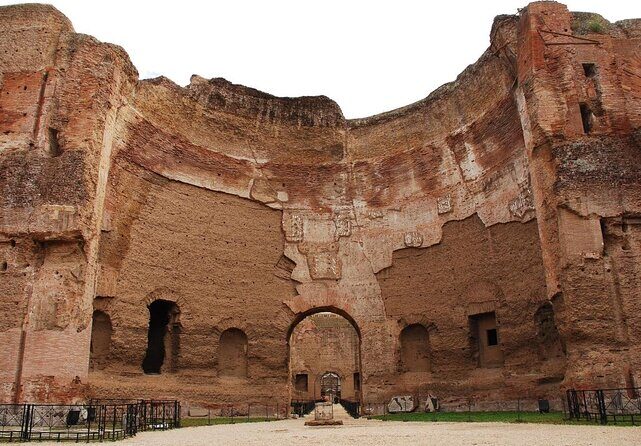
- Terme di Caracalla: vaulted rooms, cold-hot cycles, and marble everywhere
- Appian Way: the road built for long-distance power
- Circus Maximus: chariots, obelisks, and the Ben-Hur feel
- Pyramid of Cestius and the Knights of Malta keyhole
- The Pyramid of Cestius
- The Knights of Malta keyhole view
- Aventine and Janiculum hills plus a Vatican stop: views with context
- Coffee, cappuccino, and gelato: the right kind of pause
- Campo de’ Fiori: market energy, then aperitivo nearby
- Small-group private tours: when this one makes the most sense
- Should you book the Rome by Ape Calessino Auto Rickshaw?
- FAQ
- How many people can be in my group?
- Do I get hotel pickup and drop-off?
- Is this a private tour?
- What’s included in the tour besides the ride?
- Are entrance fees included for the Colosseum, Baths of Caracalla, or the Vatican?
- What language is the guide in?
- Do I need to wear a helmet?
Key highlights worth planning for
- Ape Calessino, aka the tuk tuk style ride: classic small-vehicle fun with helmets required
- Private route with flexibility: your guide can adjust for your pace and requests
- Efficient sight stops: from Piazza Venezia and the Vittoriano to hills, the Circus Maximus, and the Vatican
- Caracalla + Appian Way time: real, specific landmarks with context and short legs-stretch moments
- Included coffee or gelato break: caffè/cappuccino/gelato keeps the day moving
- Panoramic format: you’ll see many big-name sights from the outside, not through the gates
The Ape Calessino ride: fast photos without the big-tour vibe
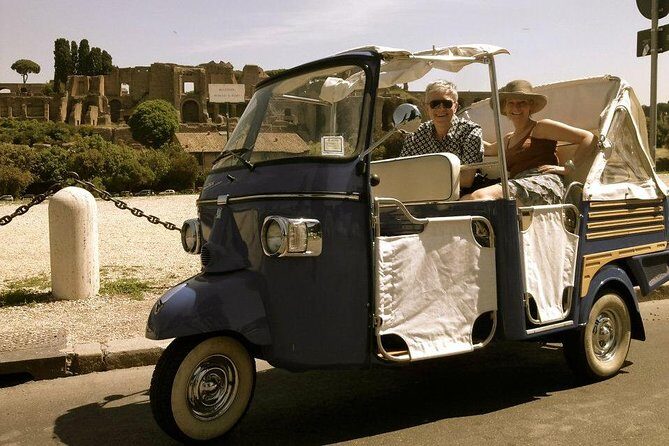
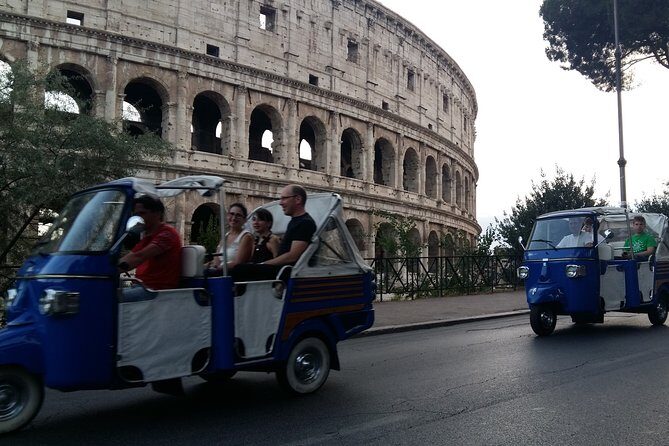
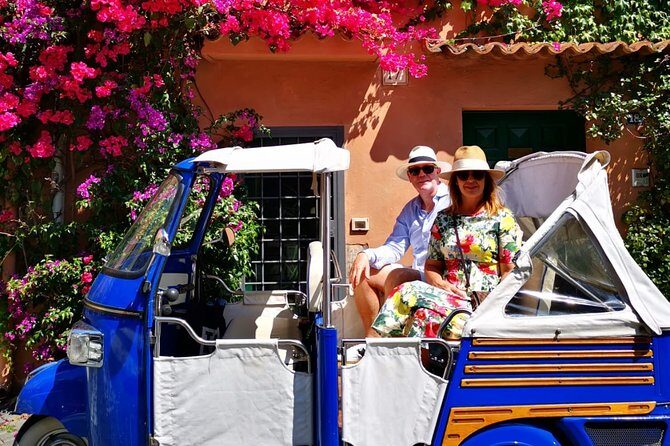
If you’ve only ever seen Rome from sidewalks or bus windows, this kind of transport changes the whole feel. The Ape Calessino is the Italian-designed three-wheeler built for tight streets and quick hops. It’s the same basic idea as the tuk tuk style you’ll recognize from parts of Asia, but here it feels like a quirky local machine rather than a theme-park novelty.
You sit where you can actually look around, and that matters in Rome. The guide can point out what you’d miss standing still, while you get a steady stream of viewpoints for photos. Plus, with hotel pickup and drop-off, you’re not starting your day wrestling luggage or figuring out where to meet.
And yes, it’s fun. The best part is that the fun doesn’t replace the information. Your guide ties sights together: monuments to ancient power, roads to everyday movement, and big-name ruins to details you can still spot today.
You can also read our reviews of more tours and experiences in Rome.



Price and value: what $505.23 per group really covers
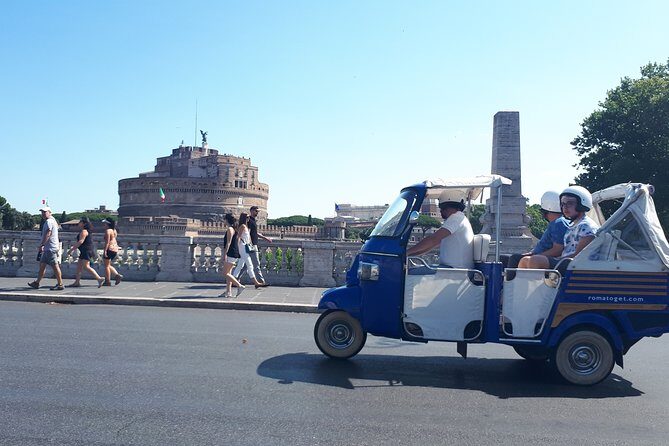
This tour is priced at $505.23 per group (up to 3 people), for about 3 hours. That might sound high if you’re thinking per person only, but the math gets more reasonable when you account for what’s included.
You’re paying for:
- A private vehicle/ride plus a professional guide
- Hotel pickup and drop-off
- Helmets (all guests must wear them)
- Transport during the tour
- A caffè/cappuccino/gelato stop
- A mobile ticket (you don’t need to chase paper)
Where you should adjust your expectations: entrance fees are not included for the Colosseum, the Baths of Caracalla, or the Vatican. So you’re buying a guided panoramic plan, not the full inside-entry experience.
In practice, this is good value for people who want a confident first-day orientation and don’t want to spend hours coordinating transit and entry lines. It’s also a great fit if you’re traveling as a small group and want the guide’s focus.
Getting started: hotel pickup and a clean route into Rome’s top sights
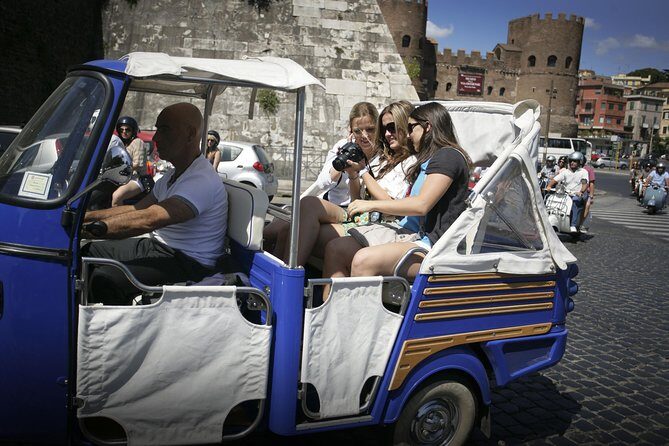
The tour begins with pickup at your hotel (or Airbnb/private accommodation). Once you’re in, your guide gets you settled in the backseat of the Ape Calessino and starts moving. That early start is handy in Rome, where delays can turn a plan into a shrug.
From there, you’ll zip through famously congested streets with the guide shaping what you notice. One of the first big orientation moments is Piazza Venezia, where you’ll see the Vittoriano, one of Europe’s largest monuments. You’ll also get your bearings for the ancient area as you head toward the Imperial Forum zone.
A practical tip for your camera: Rome can be bright and contrasty, especially around white stone monuments. Keep a lens cloth in your pocket. Tiny specks and glare show up fast when you’re taking quick shots while the vehicle is moving.
Vittoriano, Imperial Forum, and the Colosseum without entry-ticket stress
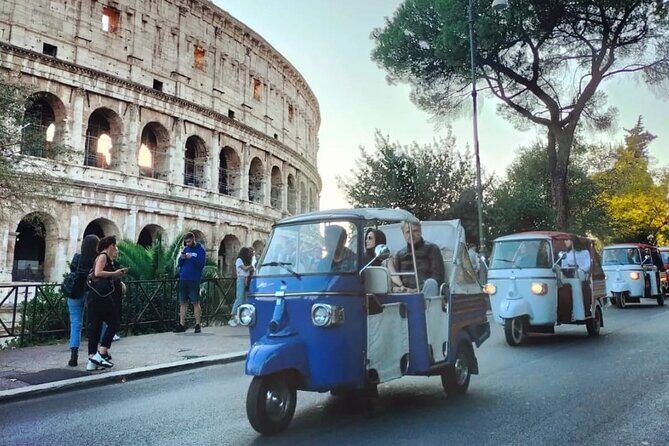
The big-name sequence is designed to give you structure. You don’t just see the Colosseum as a postcard. You see it after the guide sets the stage with what was happening nearby, so the ruins feel like part of a system rather than random stone blocks.
You’ll continue to the Colosseum and learn the story behind it, including the darker side of its use in ancient times. And because the tour is panoramic, you won’t be walking into the Colosseum as part of this specific package. That’s not a flaw if your goal is orientation and context. It’s actually a smart trade when you’re short on time.
If your must-do is inside-the-Colosseum wandering, plan that as a separate visit. This tour helps you arrive there understanding the geography, the purpose, and the scale.
Terme di Caracalla: vaulted rooms, cold-hot cycles, and marble everywhere
One of the most impressive stops is Terme di Caracalla. You’ll have a short visit time (about 10 minutes), but it’s packed with enough detail to make the ruins easier to read.
Here’s what makes the Baths of Caracalla special:
- They began under Septimius Severus (AD 206) and were completed under Caracalla (AD 216)
- They were designed to accommodate about 1,600 bathers
- The surviving complex is among the most extensive Roman bathing establishments still visible today
Your guide will point out how the baths worked like a whole body system. You’ll hear about the frigidarium (cold room), caldarium (hot room), and tepidarium (lukewarm room). Between spaces, there’s also a huge roofed hall area with clerestory windows, described as a prototype for later vaulted church nave design. That kind of detail is why this stop lands well even with a short time window.
You’ll also learn about elements like open-air swimming pools and the heavy use of marble, sculpture, mosaics, frescoes, and decorative work. Even if you can’t see every finished surface anymore, knowing what should be there changes how you interpret the shapes that remain.
Plan for this reality: the stop is not an admission-included tour. You’re seeing and learning from the outside ruins and key areas, not going inside the paid spaces.



Appian Way: the road built for long-distance power
Next comes Appian Way (Via Appia Antica), the famous road that ran from Rome down toward southern Italy. Even at a short stop (about 5 minutes), it can feel like more than a quick photo stop because the guide gives you the why.
The Appian Way started in 312 BCE, credited to the censor Appius Claudius. It was celebrated by ancient writers, and it served as the main route toward ports in southeastern Italy and then toward Greece and the eastern Mediterranean. In other words, this road helped move people and influence, not just supplies.
What you should look for during your moment there:
- The road’s width and surface engineering (stones laid with care, drainage designed into the shape)
- Nearby monuments and milestones that helped travelers measure distance
For your own comfort, wear shoes you don’t mind standing on uneven ground. Even when the walking is brief, Roman surfaces have a habit of being less flat than you’d expect.
Circus Maximus: chariots, obelisks, and the Ben-Hur feel
From the road system, you pivot to a major entertainment arena: the Circus Maximus. This is where the guide can make ancient spectacle feel real.
You’ll learn the basics: it was one of the largest hippodromes ever built, shaped as a big U with seating on three sides and a dividing structure where chariots raced. Built in the time of Julius Caesar, it could hold massive crowds, then expanded further over the centuries.
The standout detail here is the central spine with two Egyptian obelisks brought from Africa. That’s the kind of physical feature that makes the whole space memorable, and it’s great for photos because it gives you a clear “center line” to frame.
Since you’re not going inside, your best strategy is to pause, look, and then let the guide’s measurements and descriptions map onto what you see.
Pyramid of Cestius and the Knights of Malta keyhole
Rome likes to hide its weirdest treasures in plain sight, and this tour includes two of them.
The Pyramid of Cestius
This Piramide Cestia is the only surviving ancient Egyptian-style pyramid in Rome. It rises about 36 meters, and it dates to the first century BC. It was built as the tomb of Caius Cestius, and later it was incorporated into the Aurelian Walls.
You’ll hear a standout construction fact: an inscription on the white marble façade says the building took 330 days. Even if you only get a brief look (about 5 minutes), that detail makes the monument feel less like a random oddity and more like a deliberate statement.
The Knights of Malta keyhole view
Then you’ll reach Piazza dei Cavalieri di Malta, famous for the keyhole of the Knights of Malta. The whole point is that it frames a view of Saint Peter’s Basilica. People queue because the photo is easy; the real experience is seeing it in person and noticing how precise the framing is.
It’s a short stop, and it’s free, but it’s also one of those moments that’s hard to replicate on a screen.
Aventine and Janiculum hills plus a Vatican stop: views with context
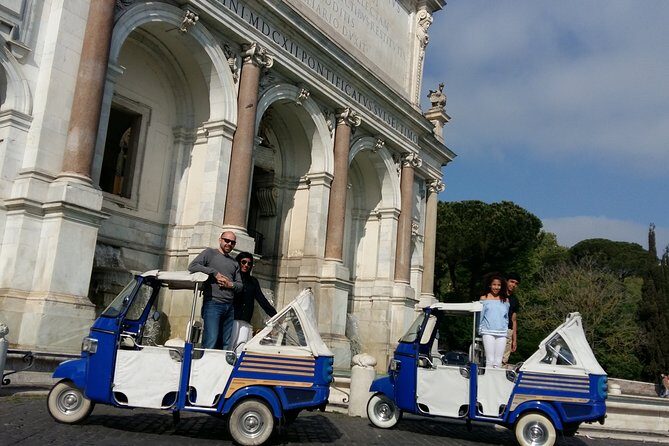
A good Rome tour should give you at least one “height” moment. This route includes both Aventine and Janiculum Hills, plus stops that set up major religious and political Rome.
From these higher points, the guide can help you connect the modern city to ancient planning. Even if you’re not spending hours walking, the viewpoint angle often gives you a mental map you can use later when you’re exploring on your own.
The tour also includes a Vatican stop. Because the tour is panoramic, you’re there to see and understand rather than to do a full entrance-and-exit inside tour. This works well if you want to keep your day flexible and avoid stacking too many long-ticket visits back-to-back.
Coffee, cappuccino, and gelato: the right kind of pause
You’ll get a break built into the schedule with a caffè/cappuccino/gelato stop. I like this kind of planning because it prevents the classic Rome problem: you save time earlier, then spend it later hunting for a place to sit.
The guide also has a track record of adding extra food recommendations. In the reviews tied to this experience, guides named Marco and Michael were mentioned with pastry suggestions, including lobster tail style pastries. That’s not part of the fixed package, but it fits the overall vibe: the guide is paying attention to how you’re doing, not just calling out monuments.
If you have a sensitive stomach or you’re prone to heat fatigue, use this break as your reset. Even a small coffee and gelato stop can make the rest of your route feel easier.
Campo de’ Fiori: market energy, then aperitivo nearby
To close, you’ll visit Campo de’ Fiori, a lively central square with two faces. During the day it’s known for a famous market. At night, the area becomes an aperitivo and cocktails hotspot.
What I like about this stop is that it matches how you might actually want to continue your Rome day. If you’re still buzzing, Campo de’ Fiori is a simple place to grab something and keep moving on foot afterward.
It’s also well located for connecting to other major sights like Piazza Navona, the Pantheon, Via del Corso, Trastevere, and the Colosseum area. Even if this tour doesn’t put you inside those places, you’ll leave with a better sense of where they are relative to each other.
Small-group private tours: when this one makes the most sense
This is a private tour, meaning only your group participates, up to 3 people. That small size changes the feel in Rome. You’re not shouting across a bus. You can ask questions, ask for extra photos, or adjust the pace without slowing a larger crowd.
I’d especially recommend it if:
- You want an efficient first-day orientation so you understand where the ancient and modern city connect
- You like photo-heavy sightseeing but don’t want long walking marathons
- You’re traveling in a small group and want hotel pickup instead of meetup logistics
- You’d rather learn in real time while moving through traffic than study maps all morning
If your top priority is “I want to go inside every major site,” know that this tour is panoramic at the big-ticket spots (Colosseum, Baths of Caracalla, Vatican). You can still do those interior visits, but plan them as separate additions.
Should you book the Rome by Ape Calessino Auto Rickshaw?
Book it if you want a fun, well-paced introduction to Rome with a guide who can explain what you’re seeing while you travel in an eye-catching classic Ape Calessino. The value is strongest for small groups that want hotel pickup, short landmark stops, and an included coffee/cappuccino/gelato reset.
Skip or adjust your expectations if you need paid entry into the Colosseum, the Baths of Caracalla, or the Vatican as part of a single package. This is built to help you see Rome clearly and quickly from multiple angles, not to replace ticketed interior tours.
If you’re flexible and you like your sightseeing with context, this is a very solid choice for getting your bearings fast in Rome.
FAQ
How many people can be in my group?
The tour price is listed per group for up to 3 people.
Do I get hotel pickup and drop-off?
Yes. Pickup and drop-off are provided at your hotel, Airbnb, or private accommodation in Rome.
Is this a private tour?
Yes. It’s a private tour/activity, and only your group participates.
What’s included in the tour besides the ride?
The tour includes a driver/guide and professional guide, transport by private vehicle, helmets, and a coffee/cappuccino/gelato stop.
Are entrance fees included for the Colosseum, Baths of Caracalla, or the Vatican?
No. The tour is panoramic, so it does not include entrance fees inside the Colosseum, Baths of Caracalla, or the Vatican.
What language is the guide in?
The tour is offered in English.
Do I need to wear a helmet?
Yes. All guests must wear helmets.