REVIEW · ROMAN FORUM TOURS
Roman Forum and Palatine Hill Experience
Book on Viator →Operated by The Empireverse · Bookable on Viator
Lines disappear fast at Rome’s Forum. This 2-hour visit pairs pre-booked SUPER tickets with an audio guide so you can move at your own speed while you walk the political heart of ancient Rome and climb for Palatine views. I like that it includes the Domus Tiberiana, reopened to visitors in 2023. One caution: the audio guide experience can depend on getting the instructions and files through WhatsApp, and a few people found it frustrating if their phone setup or connection was tricky.
You’ll also get a small-group feel (max 25 travelers), which matters on Palatine Hill where you naturally slow down. The route is simple: Roman Forum first, then Palatine Hill, then a short stop at Domus Tiberiana. The main drawback to plan around is that site closures can mess with timing on some days, so go in with a bit of flexibility.
In This Review
- Key things that make this tour work well
- Roman Forum and Palatine Hill: what you really get for $49.20
- Price reality check
- Meeting point near the Colosseum: easy to find, easy to miss
- How the 2 hours are paced (and why it feels manageable)
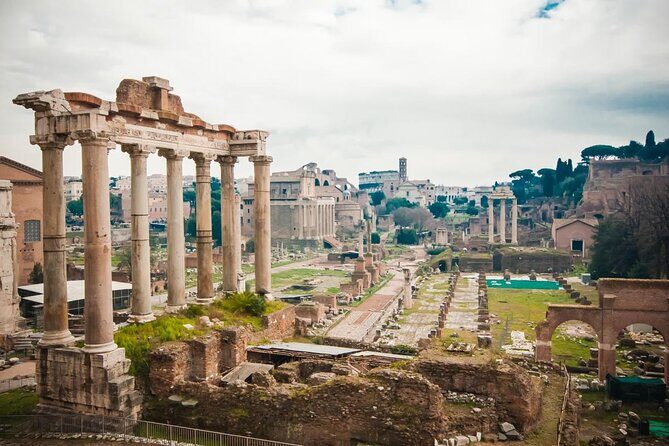
- Stop 1: Foro Romano, where Rome’s public life becomes readable
- What can be frustrating at this stop
- Stop 2: Palatine Hill, Rome’s power address with real-world views
- The “pace check” you should know
- Stop 3: Domus Tiberiana, the short interior chapter (15 minutes)
- The audio guide: the best part if it’s working, the weak spot if it isn’t
- What about the live guide? Expect audio-first, but some days add a human voice
- Crowd control and timing: why “skip the line” is only half the story
- Included sites you’ll actually care about: Curia Iulia and Santa Maria Antiqua
- Who this tour is best for
- Should you book Roman Forum and Palatine Hill with this audio-timed setup?
- FAQ
- How long is the Roman Forum and Palatine Hill experience?
- What language is the tour offered in?
- How much does it cost?
- Is this tour timed to help you avoid long lines?
- Do I need to bring a headset for the audio guide?
- Is there a live tour guide included?
- What parts are included besides the Forum and Palatine Hill?
- Where do I meet for the tour?
- What time should I arrive?
- Is there a limit on group size?
- What is the cancellation window?
Key things that make this tour work well
- Skip-the-line style tickets designed to cut waiting at two of Rome’s biggest ancient sites
- Domus Tiberiana access, including fresco-filled imperial rooms reopened to visitors in 2023
- Audio guide pacing, so you are not stuck listening while you wait for a group to catch up
- Small group size (up to 25), helpful when routes get crowded and uphill
- Focus stops: Foro Romano, Palatine Hill, then Domus Tiberiana (a short, concentrated finale)
- Near the Colosseum area meeting point, so your day stays logistically tight
Roman Forum and Palatine Hill: what you really get for $49.20

At $49.20 per person for about 2 hours, this isn’t trying to do everything in Rome. It zeroes in on two headline ruins—Foro Romano and Palatine Hill—plus a time-limited bonus: Domus Tiberiana. That’s a good value if your goal is clarity and time savings over wandering alone with a phone and random signage.
Here’s what you should notice. You’re buying:
- Admission tickets for the Forum and Palatine route (the “SUPER” ticket set)
- Domus Tiberiana
- An audio guide (and you bring your own headset)
- Entry to specific included areas listed as part of the ticket bundle, such as Curia Iulia and Santa Maria Antiqua
You’re not buying:
- Colosseum entrance (that’s separate)
- A paid live tour guide in the typical sense
So the value formula is simple: you’re paying for a smoother entry + a guided-style narrative without having to keep up with a large group. If you’re the type who likes to stop, look, and replay sections at your own pace, this setup usually fits. If you need a live human voice the whole time, you’ll want to read closely and have a Plan B for the audio.
You can also read our reviews of more tours and experiences in Rome.



Price reality check
Rome is full of “skip the line” claims. Here, the price makes sense because you’re paying for an organized ticket package and included sites—not just a walk-and-talk. Still, a few experiences reported that things didn’t go as smoothly as expected (audio access problems, entrance issues due to crowd-control closures). That’s why I’d treat this as a ticket-and-story tour, not a guaranteed perfect script.
Meeting point near the Colosseum: easy to find, easy to miss
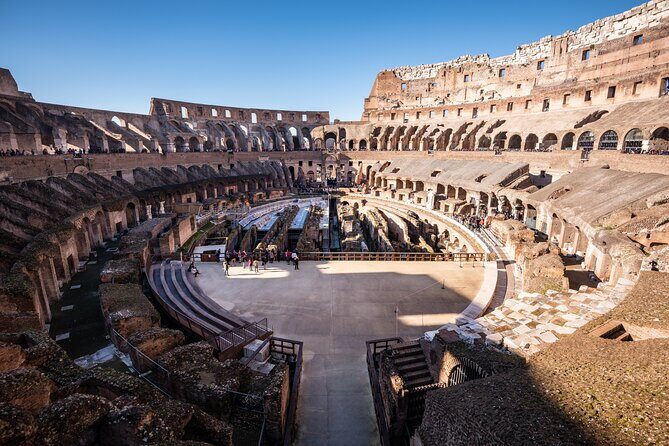
The start is at Piazza del Colosseo, 23 and the end is at Palatine Hill, Parco archeologico del Colosseo, Via di S. Gregorio, 30.
Practical tip: arrive 15 minutes early and have valid ID with you. Also keep your bag situation simple. They ask you to avoid large purses, bags, or backpacks. In a place like the Roman Forum, you’ll thank yourself for traveling light.
One more thing I learned the hard way in Rome: “near a famous landmark” can still mean confusing in the moment. People flagged unclear meeting signage and mixed-up pointers at the start. So I’d show up early, take one minute to confirm you have the right group/ticket instructions, and don’t assume anyone will read your mind.
How the 2 hours are paced (and why it feels manageable)
This is structured as three segments:
- Roman Forum (about 45 minutes) with admission included
- Palatine Hill (about 45 minutes) with admission included
- Domus Tiberiana (about 15 minutes) with admission included
That adds up to roughly the total tour time. The design is smart: the Forum gives you the political-and-ceremonial backbone of Rome, Palatine gives you the imperial “where the power lived,” and Domus Tiberiana finishes with the kind of interior detail you can’t really recreate from the outside.
Expect uphill walking on Palatine and a lot of looking up. Even with a tight schedule, you’ll want decent shoes.
Stop 1: Foro Romano, where Rome’s public life becomes readable
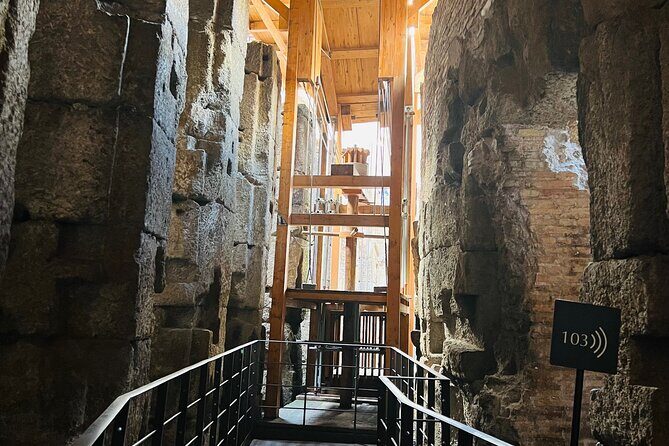
The Roman Forum is the “center of the center.” You’ll move among the remnants of temples, basilicas, and government buildings—places tied to politics, ceremonies, and everyday commerce.
What’s especially valuable here is not any single wall. It’s the way your brain starts to connect the dots:
- You see the spaces where public decisions played out
- You understand why processions and announcements mattered so much
- You grasp that “history” here is not just buildings—it’s how a city governed itself



What can be frustrating at this stop
Rome can shut entrances or reroute access quickly. One account described the Forum closing early for a period, which caused a scramble around timing and entry. That kind of day-of change is outside any operator’s control, but it’s the reason I always say: keep your schedule flexible when the Forum is involved.
Stop 2: Palatine Hill, Rome’s power address with real-world views
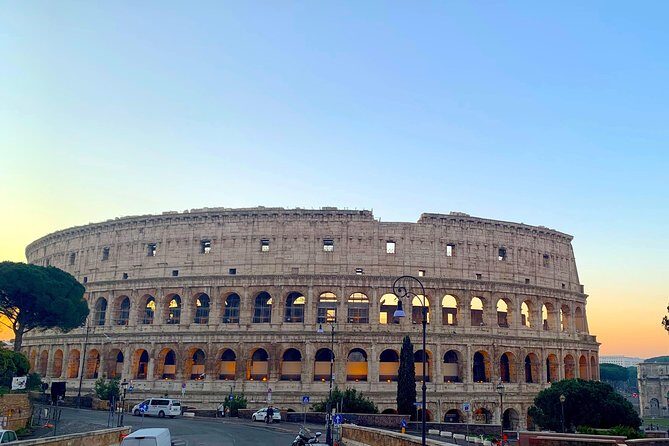
Then you climb Palatine Hill, the legendary birthplace area for Rome’s early story and—later—the residence zone for emperors.
This stop is built for two kinds of satisfaction:
- Interpretation: You’re not just looking at ruins; you’re being guided to understand the imperial connection to the hillside.
- Views: Palatine is positioned for sweeping city panoramas. Even if you know Rome well, the sightlines help you understand why the elite wanted this vantage.
You’ll also walk through parts of the sprawling imperial grounds described as having opulent architecture and fresco-related details. That helps turn Palatine from “nice ruins” into “a place people lived to project status.”
The “pace check” you should know
Palatine can slow you down because your eyes keep catching details. If you’re the type who likes photos from multiple angles, plan for longer pauses even in a 45-minute block.
If you’re traveling with another timed ticket that day, build in buffer. One review mentioned an issue getting to Palatine before a last entrance time on a tight schedule. Not a universal rule, but it’s a good reminder: don’t stack this tour back-to-back with another timed site.
Stop 3: Domus Tiberiana, the short interior chapter (15 minutes)
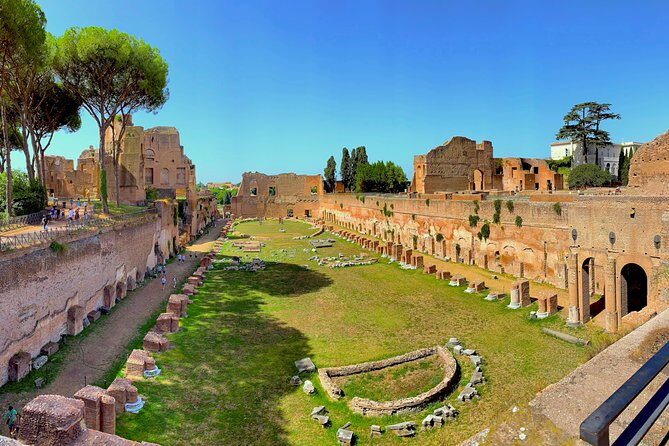
Domus Tiberiana is the reason this tour feels more complete than the standard Forum + Palatine circuit.
It’s described as an imperial residence on Palatine Hill that reopened to visitors in 2023. And that timing matters because “newly accessible” sites tend to feel less over-toured than the most famous ruins.
What you can expect during the short visit:
- Well-preserved sections of the residence
- Architecture that gives you a clearer sense of scale
- Wall art details tied to imperial life, including frescoes mentioned in the description
Fifteen minutes sounds short, but this kind of stop works when it’s treated like a focused interior break. You’ll get the sense of domestic luxury and imperial privacy—an angle you don’t get just by walking through open-air ruins.
The audio guide: the best part if it’s working, the weak spot if it isn’t
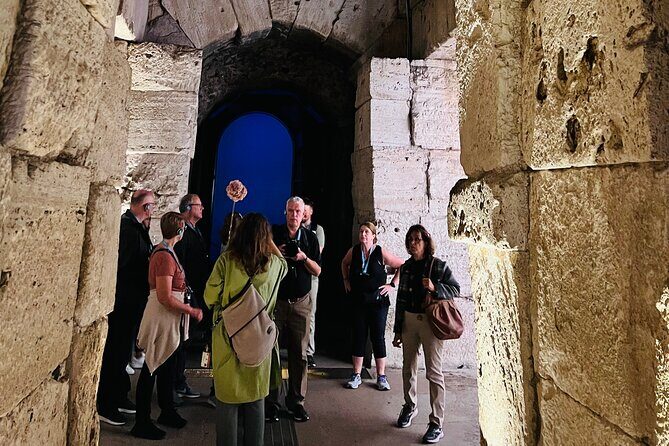
This tour uses an audio guide and asks you to bring your own headset. A few people loved the freedom of not being locked to a group pace. The audio format can be great for Rome because you can pause, read, and restart when you’re ready.
But here’s the honest drawback that showed up more than once: audio access can be tied to WhatsApp instructions and it can be a problem if you have limited phone data or trouble downloading.
So do this before you go:
- Make sure your phone can access WhatsApp normally
- Test headset volume and connection
- Be ready to use data or wifi to get instructions
If your phone setup is shaky, the tour can feel more like self-guided wandering than a structured experience.
What about the live guide? Expect audio-first, but some days add a human voice
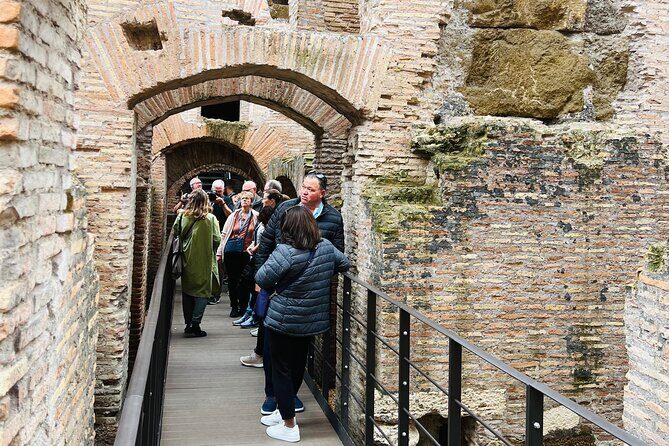
The official approach is audio-guided, and the included info says a tour guide isn’t part of the package. Still, multiple reviews mention a live guide experience with names like Sarah Gildea, Tanya, and others leading the walking and explanations.
Here’s my practical take: treat this as primarily audio-led, but don’t be shocked if you encounter staff support or a guide voice in certain segments or days. Rome tourism can work differently depending on ticket type, day staffing, and site rules.
If you strongly prefer a constant live guide, aim to confirm what you’ll receive on your exact booking day.
Crowd control and timing: why “skip the line” is only half the story
This experience is marketed as helping you avoid long lines using pre-booked tickets. In most cases, that’s exactly what you want on the Forum and Palatine, where waiting can eat your best morning energy.
However, some people reported:
- Audio that didn’t start smoothly due to phone access issues
- Delays and confusion at entry
- Days when closures affected what they could access or when they could enter
That’s not unique to this tour—Rome has a way of changing plans at the gate. What you can control: show up early, travel light, have your ID ready, and keep your expectations realistic about Rome’s day-of operations.
Included sites you’ll actually care about: Curia Iulia and Santa Maria Antiqua
Beyond Foro Romano and Palatine Hill, the ticket bundle lists Curia Iulia and Santa Maria Antiqua as included points.
Why those matter:
- Curia Iulia connects you to the idea of Senate life and Roman governance space.
- Santa Maria Antiqua gives you a contrasting layer—Roman-era context intersecting with later religious history—so you don’t leave feeling like you only saw ruins from one single time period.
Even if you’re not an architecture buff, these stops help the Forum feel like a real map of Rome’s long timeline.
Who this tour is best for
I’d especially recommend this if:
- You want a tight, efficient Roman Forum + Palatine schedule
- You like self-paced touring with a guide narrative on your phone
- You want the extra ticket value of Domus Tiberiana (reopened in 2023)
- You prefer smaller-group movement (max 25)
I’d think twice if:
- You rely on phone audio but your connectivity or WhatsApp access is unreliable
- You need a live guide continuously to enjoy the experience
- You’re on a super tight itinerary with no flexibility for day-of closures
Should you book Roman Forum and Palatine Hill with this audio-timed setup?
Yes—with a few smart conditions.
Book it if you’re getting decent phone reliability, you want to see both sites in a focused 2-hour window, and Domus Tiberiana is on your must-see list. The combo of Forum + Palatine with an interior stop that reopened in 2023 is a strong way to spend limited time in Rome.
Don’t book (or at least be cautious) if you know your WhatsApp setup is unreliable, you hate audio formats, or you expect a flawless, unchanging entrance path. Rome can throw curveballs at any ticket holder.
My final advice: treat this as a great value ticket package for people who can handle an audio guide. If that sounds like you, you’ll likely get your money’s worth fast—because when the Forum is moving, the best way to see it is to keep your day from getting stuck in lines.
FAQ
How long is the Roman Forum and Palatine Hill experience?
It runs about 2 hours, with roughly 45 minutes at the Roman Forum, 45 minutes on Palatine Hill, and about 15 minutes at Domus Tiberiana.
What language is the tour offered in?
The experience is offered in English.
How much does it cost?
The price is listed as $49.20 per person.
Is this tour timed to help you avoid long lines?
The experience includes Roman Forum and Palatine Hill SUPER tickets, and the goal is to avoid waiting in long lines at the sites.
Do I need to bring a headset for the audio guide?
Yes. The tour includes an audio guide and specifically asks you to bring your own headset.
Is there a live tour guide included?
A tour guide is listed as not included. The experience is centered on an audio guide.
What parts are included besides the Forum and Palatine Hill?
Domus Tiberiana is included, and the ticket bundle also lists imperial palaces, Santa Maria Antiqua, and Curia Iulia as included.
Where do I meet for the tour?
The meeting point is Piazza del Colosseo, 23, 00184 Roma RM, Italy.
What time should I arrive?
Please arrive 15 minutes earlier and bring a valid ID.
Is there a limit on group size?
Yes. The maximum group size is 25 travelers.
What is the cancellation window?
Free cancellation is available up to 24 hours in advance for a full refund.