REVIEW · FOOD
Rome: Trastevere Food and Wine Tasting Tour
Book on GetYourGuide →Operated by Emotion club · Bookable on GetYourGuide
A good tasting tour beats a shopping list. This one takes you through Trastevere the way locals actually eat—cheese, cured meats, pizza, wine, and gelato—with a small group and a live guide. You start at a real local landmark (the statue of Giuseppe Gioachino Belli) and then work your way through neighborhood spots that feel lived-in, not staged.
I especially like the cheese-and-cured-meat stop at Antica Caciara, where you can sample everything from Pecorino Romano to a 30-month-old Parmigiano Reggiano plus prosciuttos and speck. I also love that the tour is heavy on flavor education, not just eating—your wine tasting comes with practical pairing guidance from a wine-expert style of host.
One possible drawback: this is not for everyone. It’s not suitable for gluten intolerance and it’s also not recommended for people with mobility impairments, plus you’ll want to check with the guide if you have allergies or food intolerances before you taste.
In This Review
- Key highlights you’ll care about
- Why Trastevere food tastes different than the rest of Rome
- Meeting at Giuseppe Gioachino Belli: how the 3.5 hours actually move
- Antica Caciara cheese and prosciutto: the real flavor lesson
- Ivo a Trastevere pizza: why the dough matters
- Wine tasting at an enoteca: learning to match, not just sip
- Chef Günther gelato: when dessert gets weird (in a good way)
- Price and what $84.96 really buys you in Rome
- Who this tour fits best (and who should skip it)
- The best way to get the most out of it
- Should you book the Rome Trastevere Food and Wine Tour?
- FAQ
- How long is the Rome: Trastevere Food and Wine Tasting Tour?
- Where do I meet my guide?
- What is included in the price?
- Is hotel pickup included?
- What language is the tour guide?
- How large is the group?
- Is the tour suitable for gluten intolerance or mobility impairments?
- What should I bring or prepare for?
Key highlights you’ll care about
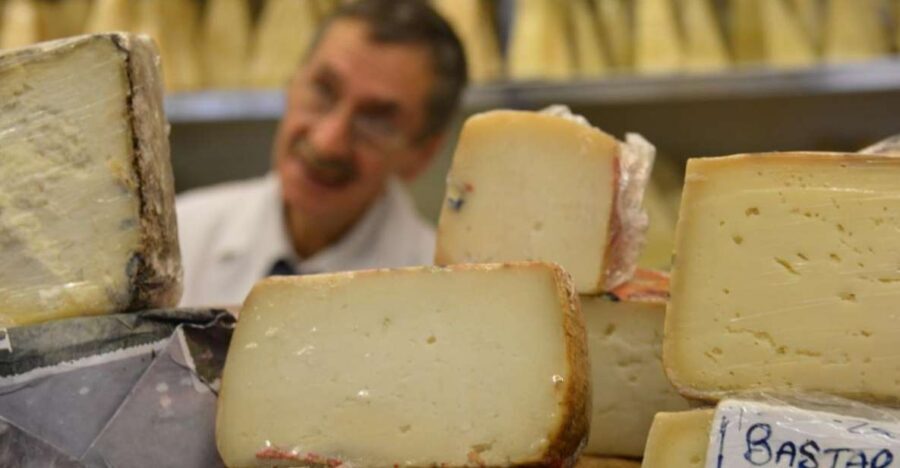
- Antica Caciara: cheeses and cured meats from Signor Roberto’s long-running shop tradition
- Line-skip pizza at Ivo a Trastevere: 100% natural, yeast-free dough, served in a side-street setup
- DOCG wine plus pairing tips: Nobile di Montepulciano and Traminer, taught with food matching in mind
- Chef Günther gelato: seasonal flavors and unusual picks like blue cheese gelato and eggnog zabaione
- Small group of up to 8: you’ll get more explanation at each stop than on big bus tours
Why Trastevere food tastes different than the rest of Rome
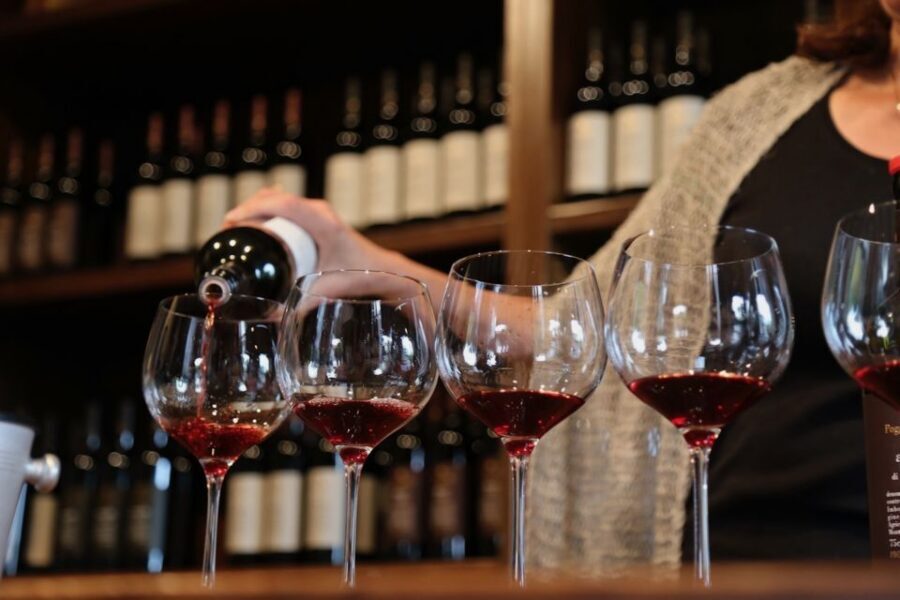
Trastevere has a way of making food feel casual and close to home. Instead of one big tourist meal, you get a string of tastings that build on each other—salt, fat, acid, then sweet—so the whole evening makes sense.
What makes this tour work is the mix of classics and curveballs. You’ll hit familiar favorites like Margherita-style pizza with buffalo mozzarella and Pachino tomatoes, but you’ll also try things that most people only see on the menu and skip at the last second, like gelato with blue cheese.
And because the group stays small (up to 8), the guide can adjust the pace. You’re not just collecting bites; you’re learning the logic behind what you’re eating, and that turns the tasting into something you can repeat later.
You can also read our reviews of more food & drink experiences in Rome


Meeting at Giuseppe Gioachino Belli: how the 3.5 hours actually move
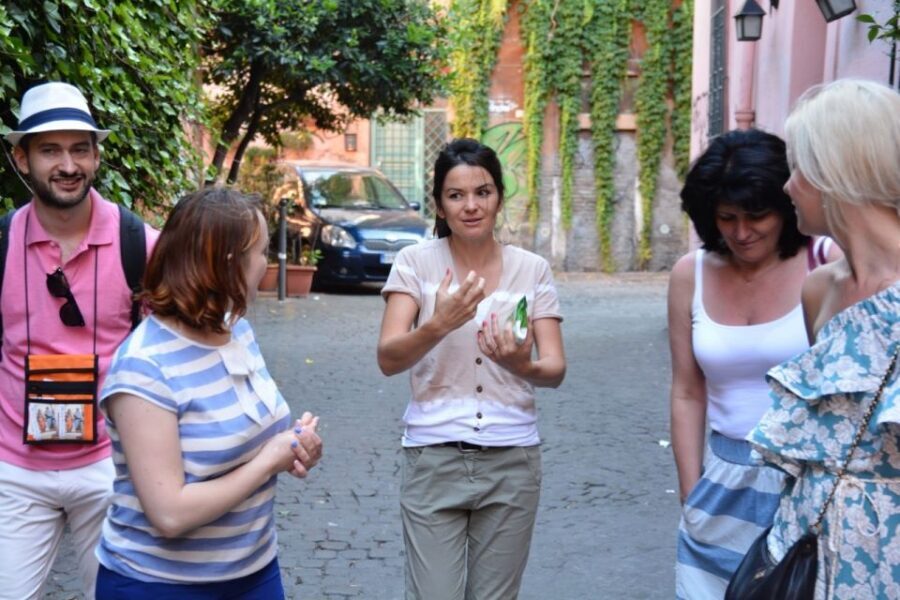
The tour starts at the statue of Giuseppe Gioachino Belli, right by the taxi stand on the main square. Your guide will be holding a sign with the provider’s name, so you can spot them without playing guessing games.
It runs about 3.5 hours, and the route keeps you walking through Trastevere. Comfortable shoes are the real “must bring” item here, because you’ll be moving between shops and small food stops rather than using a vehicle.
The language is Russian, so if you’re not comfortable in that, you’ll need to rely on the guide’s explanations and the shared rhythm of tastings. That said, guides like Anna and Andrea are described as engaging and strong at making the experience easy to follow, which matters when you’re trying to learn on the go.
Antica Caciara cheese and prosciutto: the real flavor lesson
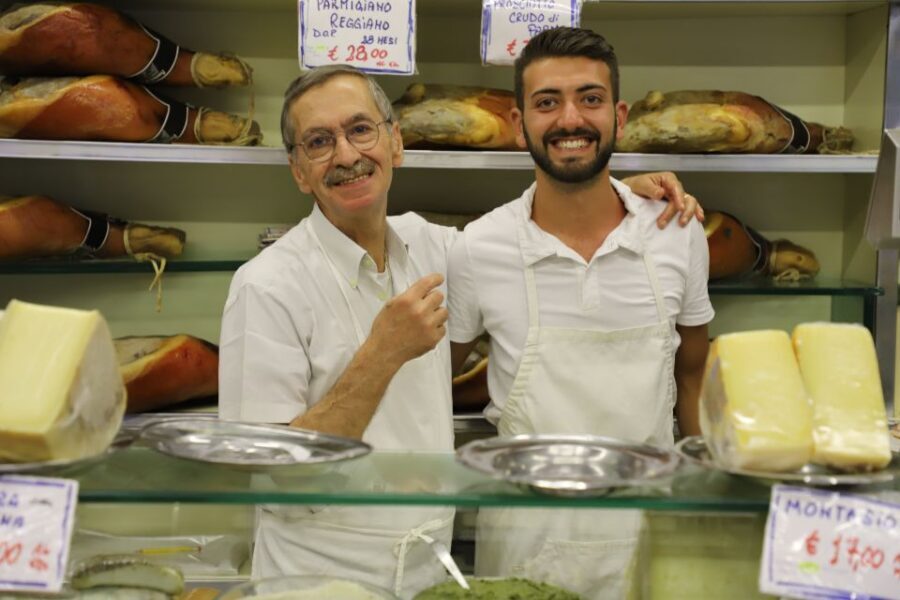
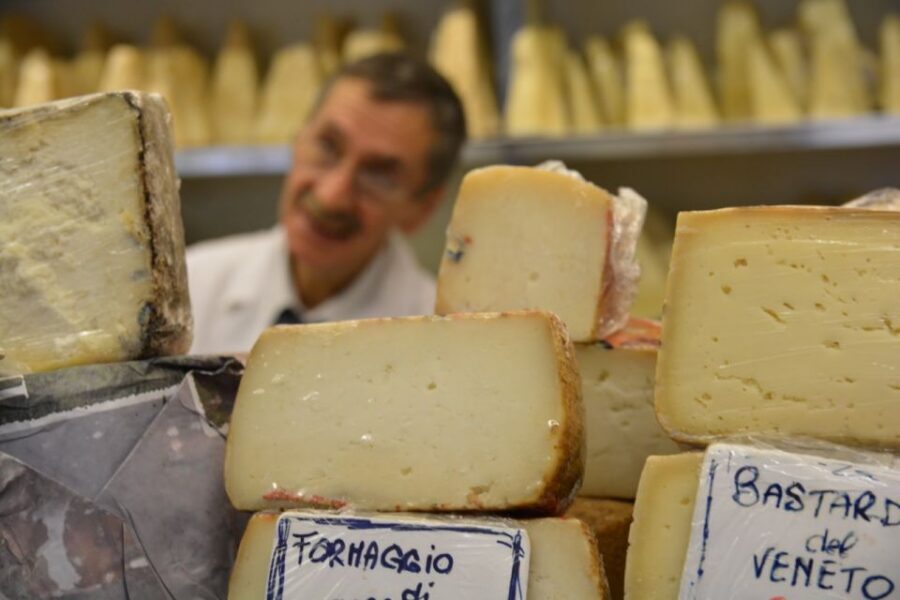
Your first major food stop is cheese and cured meat at Antica Caciara, where you sample a selection guided by the shop team. This isn’t “try everything once and move on.” The tasting is built to show how different Italian cheeses and hams behave on your palate.
You’ll see a lineup that covers the Italian cheese spectrum:
- Pecorino Romano (sheep’s cheese with a salty, tangy edge)
- A 30-month-old Parmigiano Reggiano (aged, nutty, and firm)
- Prosciutto di Parma and Speck Alto Adige (each with its own smoky or sweet-salty personality)
One detail worth paying attention to is the shop’s human side. Signor Roberto has been behind the counter for almost 60 years, so the vibe is more “local craft” than “food theater.” If you like the idea of buying from people who’ve lived with the product forever, this stop is a big part of the charm.
If you’re watching your portion pace, slow down here. This is your foundation stop, and it sets up the rest of the meal—especially the pizza and the wine.
Ivo a Trastevere pizza: why the dough matters
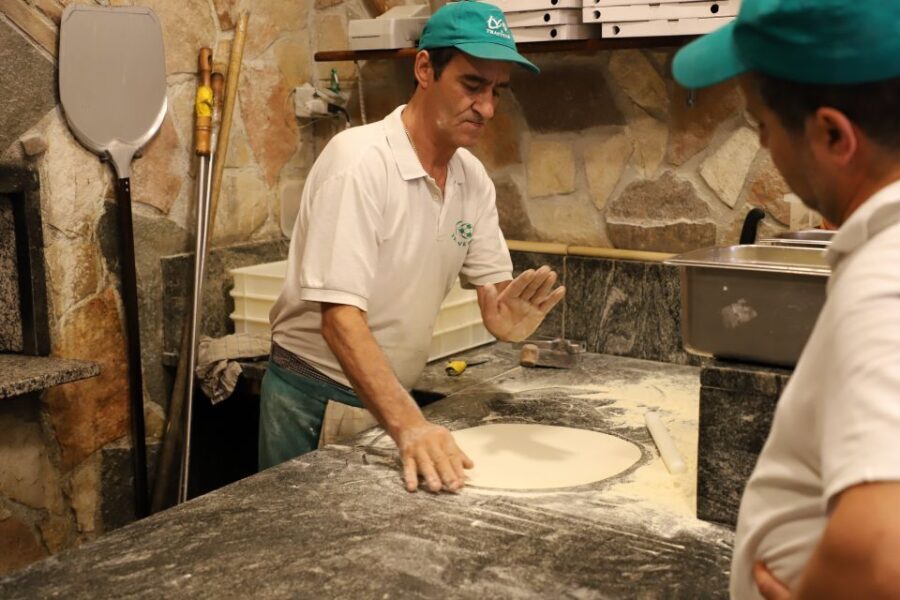
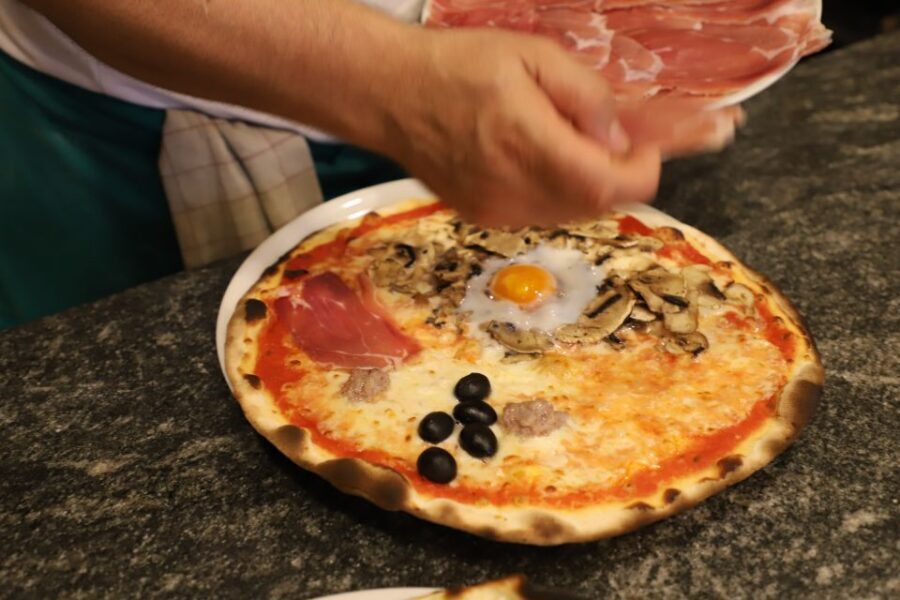
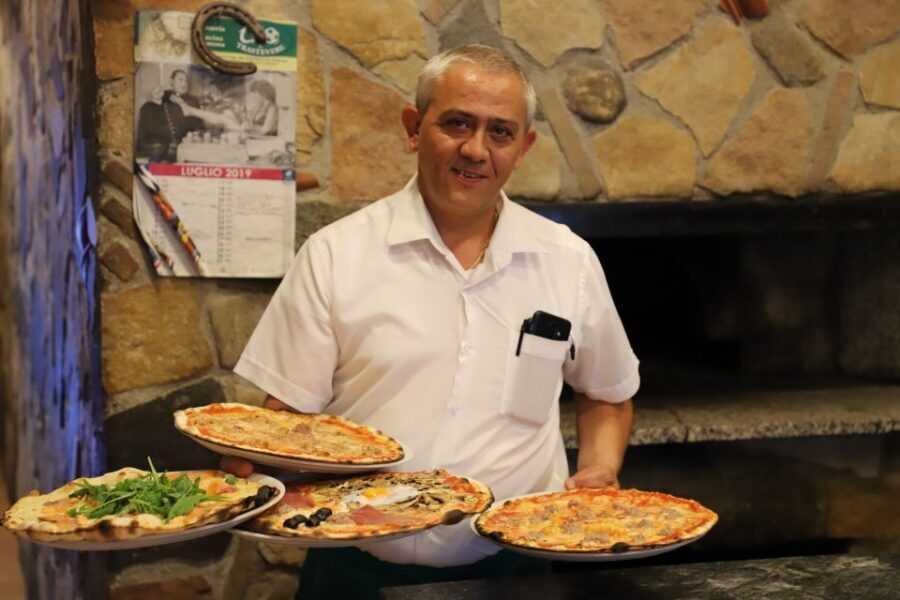
Next comes pizza at a cult spot, Ivo a Trastevere, tucked into a side street. One advantage you get is skipping the long lines, which is a big deal in Rome when waiting can swallow your evening.
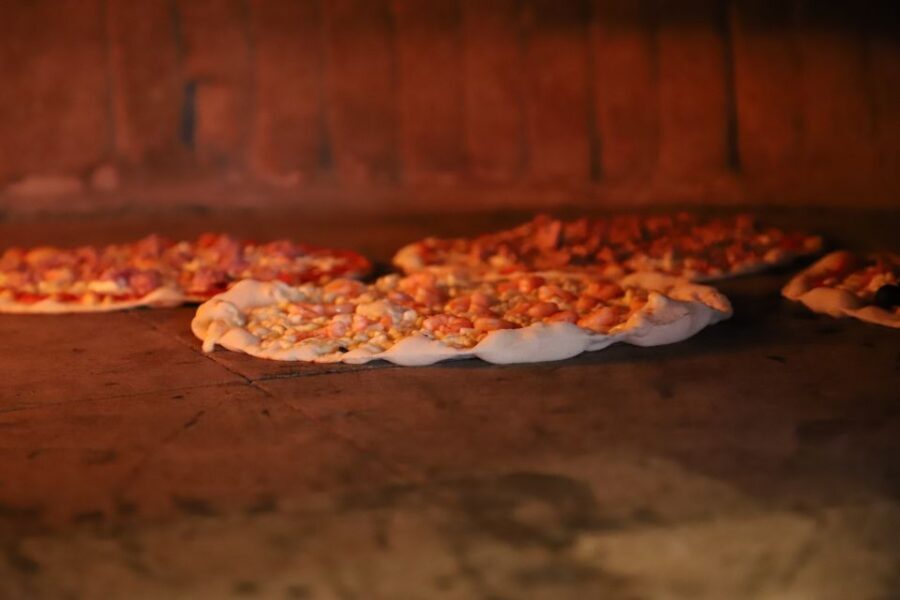
The pizza is made from 100% natural and yeast-free dough. That detail matters because it changes the texture and the way the crust feels—less bready, more focused, and often easier to enjoy when you’re tasting multiple things.
You’ll try several slices, including:
- Margherita with buffalo mozzarella and fresh Pachino tomatoes
- The Diavola with spicy salami
- A gorgonzola and pear combination (sweet-salty flavor pairing done without overthinking)
This stop is also the easiest place to get picky—in a fun way. The cheese flavor you learn here will help you understand the wine later, and the “spicy salami” slice is a good test of how bold your palate wants to go.
Practical tip: don’t treat this like a full dinner you order from scratch. It’s a structured tasting, so you’ll likely want to pace bites instead of rushing for a flavor wipeout.
Wine tasting at an enoteca: learning to match, not just sip

Then it’s time for wine at an enoteca, with a style of guidance focused on pairing. You taste Italian DOCG wine and get instruction on how to select a bottle and match it with food choices.
The two wines you’ll sample are:
- Nobile di Montepulciano (Tuscan red)
- Traminer (a fragrant white wine from the Italian Alps)
The value here isn’t fancy jargon. It’s the practical skill of learning what a wine tends to do when it meets cheese, cured meats, and richer bites. Reds often handle salt and cured flavors well, while aromatic whites can refresh your palate between heavier foods.
If you’ve ever ordered a random bottle and hoped it worked, this is the opposite approach. You’re tasting with purpose, and the guide helps you connect the dots between flavor, texture, and what’s in your glass.
And because the tour stays small, you can ask simple questions without getting lost in a group shuffle. That turns wine tasting from a passive activity into something you can use the next time you’re ordering in Italy.
You can also read our reviews of more tours and experiences in Rome




Chef Günther gelato: when dessert gets weird (in a good way)
You finish with gelato made by Chef Günther, known for seasonal ingredients and less-common flavor combinations. This is a smart way to end, because gelato is cold and sweet, which resets everything after wine and cured meats.
You’ll choose among both traditional and unusual flavors, including:
- Pistachio and mango
- Gorgonzola blue cheese and dark chocolate
- Eggnog zabaione
- Ricotta Stregata
Yes, blue cheese in dessert sounds unusual. That’s exactly why it’s worth trying on a guided tasting tour. The guide context helps you understand the flavor intention, and you get to taste how a savory note can work when it’s paired with chocolate.
If you’re the type who only orders “safe” gelato flavors, you can still have a great time here. But I’d encourage you to at least sample one unconventional flavor—half a scoop is often enough to change how you see Italian dessert.
Price and what $84.96 really buys you in Rome
At $84.96 per person for about 3.5 hours, the first question is always: is it worth it? For this tour, the value comes from how many different tastings you get in a guided format.
You’re paying for:
- A local guide
- All food and wine tastings (cheese, cured meats, pizza, wine, gelato)
- The kind of access that helps you skip long lines at Ivo a Trastevere
If you tried to build this on your own, you’d still need a plan for where to go and what to order in the right order. And you’d probably end up doing more than you want to—because Rome menus can be intimidating when you’re hungry.
The other value factor is pacing. A small group plus structured stops means you can actually enjoy the flavors, instead of turning the night into “fast food crawl” mode.
Who this tour fits best (and who should skip it)
This works best for you if you:
- Like walking around neighborhoods without rushing every ten minutes
- Want a guided intro to Italian cheese and cured meats
- Enjoy wine tasting when someone explains what to look for
- Don’t mind eating multiple course-style tastings in one evening
It’s harder for you if:
- You have gluten intolerance, since the tour is not suitable for that
- You have mobility impairments, since it’s not suited for people with reduced mobility
- You have allergies or strong intolerances and haven’t checked with the guide first
One small, practical takeaway: if you go in hungry, you’ll enjoy it more. The tour is built as a full tasting experience, and many people get the best results by not over-filling at lunch beforehand.
The best way to get the most out of it
Bring the basics: comfy shoes. Then bring the right mindset: treat each stop like a clue.
Try to taste in this order as much as you can:
1) Start with cheese and cured meats
2) Then go to pizza and notice how the crust and cheese handle salt and heat
3) Then use the wine pairing to confirm what you felt
4) Finish with gelato so you end on something cool and clear
Also, don’t be shy about asking quick questions as you go. The guide is there to translate not just food names, but how to think about what you’re tasting.
If your guide is Anna or Andrea, expect a friendly, story-forward tone—Roman food culture is part of the experience, not an afterthought. That makes the tastings feel like they belong together.
Should you book the Rome Trastevere Food and Wine Tour?
Book it if you want an evening that feels like Rome lives in the details: the counter at a long-running cheese shop, a line-skipped pizza stop, and gelato flavors that go beyond the usual scoops. For the price, you’re getting multiple high-quality tastings in a small-group setting, with wine pairing guidance that helps you shop smarter later.
Skip it if you’re dealing with gluten intolerance or mobility needs, or if you prefer a lighter, sit-down meal only. This is not that type of tour; it’s a tasting route with walking and repeated food moments.
If you’re torn, here’s my straight call: if you can handle walking comfortably and you like the idea of tasting cheese, pizza, wine, and gelato without decision fatigue, this is an easy yes.
FAQ
How long is the Rome: Trastevere Food and Wine Tasting Tour?
The tour lasts about 3.5 hours.
Where do I meet my guide?
Meet your guide by the statue of Giuseppe Gioachino Belli, right by the taxi stand on the main square. Look for the guide holding a sign with the activity provider’s name.
What is included in the price?
The tour includes the food and wine tastings and a live tour guide.
Is hotel pickup included?
No. Hotel pickup and drop-off are not included.
What language is the tour guide?
The tour is conducted with a live guide in Russian.
How large is the group?
It’s a small group limited to 8 participants.
Is the tour suitable for gluten intolerance or mobility impairments?
No. It is not suitable for people with gluten intolerance or for people with mobility impairments.
What should I bring or prepare for?
Wear comfortable shoes, and if you have allergies or dietary restrictions, check with the guide before consuming anything.