First day in Rome can be chaos. This private half-day route is a smart way to get oriented fast and see the big-ticket monuments in a calm, organized sweep. I like that you travel in a private vehicle with onboard Wi-Fi, so the trip feels smoother than jumping between taxis and crowds. I also like that the driver acts like an informal guide, sharing context and practical tips as you stop. One thing to consider: several major attractions require paid admission, and you usually won’t go inside with the driver.
This isn’t a long, slow museum day. It’s a focused tour built around short, high-impact stops, so you can build a plan for the rest of your trip. The biggest drawback is timing: each stop is limited, and when you want more time inside, you’ll need to do it on your own afterward with a separate visit.
In This Review
- Key Things That Make This Tour a Win
- Why This 4-Hour Rome Route Feels Efficient (Without Rushing You)
- Pickup, Private Transport, and the Comfort Factor
- The Big Value Question: What You Pay For vs What You Figure Out Yourself
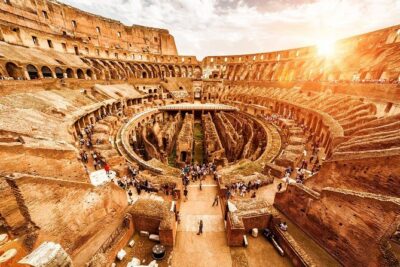
- Colosseum: How to Make the Most of a 30-Minute Stop
- Piazza Venezia: The Quick Pivot Stop That Sets Up Your Photos
- Trevi Fountain: A Photo-First Stop With a Paid Entrance Add-On
- Pantheon: Where You Actually Feel the Ancient Genius
- Piazza Navona: Baroque Drama, Bernini’s Water Show, and Fast Viewing
- Spanish Steps: The Classic Stroll Window (and What You Should Notice)
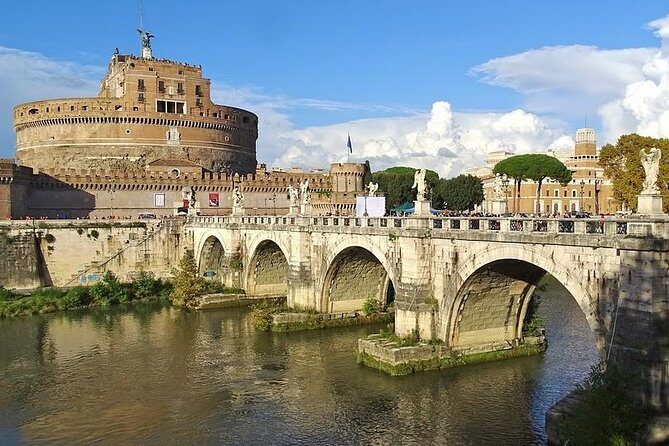
- Castel Sant’Angelo: Mausoleum Views From the River Side
- St. Peter’s Square: Big Vatican Energy Without the Vatican Schedule Panic
- Palatine Hill: The Best Rome View for Your Remaining Time
- The Driver as a Storyteller: What the Best Reviews Have in Common
- What Might Not Suit Everyone (And How to Fix It)
- Should You Book This Private Rome Landmarks & Hidden Corners Tour?
- FAQ
- What does the tour price include?
- Is this a private tour?
- Which major attractions require admission tickets?
- Are meals included?
- Is there Wi-Fi on the ride?
- What vehicle do you use for small groups?
- Can I get airport pickup?
Key Things That Make This Tour a Win
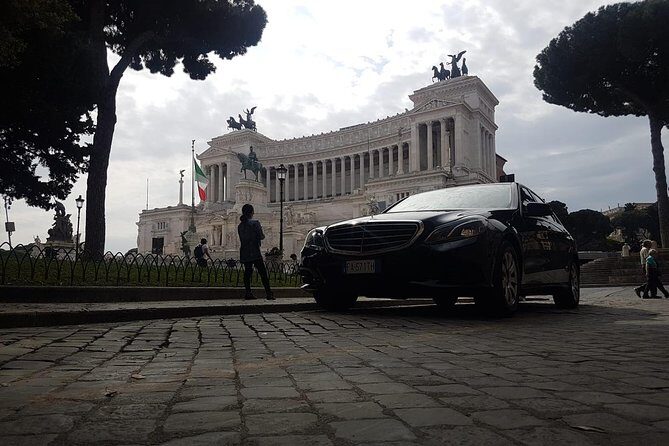
- Private vehicle + hotel pickup: you start and end with less stress, not more.
- Onboard Wi-Fi and water: small comforts that matter in Rome heat.
- A classic monuments hit list: Colosseum, Trevi, Pantheon, Vatican Square, and Palatine Hill.
- Short stops, flexible pacing: you can ask for extra viewing time at a stop.
- Driver-led stories without museum entry: you get the background before you walk in.
- Real human guide feedback: names like Adrian, Georgio, Andriev, Gaber Hussein, Andrea, Claudio, and Sean/Shawn came up often for strong guiding.
Why This 4-Hour Rome Route Feels Efficient (Without Rushing You)
Rome is famous for long lines and long walks. This tour is built to protect your time: you cover the highlights in a tight loop while sitting back in a private car. The payoff is that you leave with a mental map of the city, not just a camera full of photos.
I also like the “preview” approach. Your driver gives you the story first, then you look for it in real life. After a tour like this, it’s easier to choose what deserves your next hours—whether it’s ancient Rome, Baroque squares, or the Vatican.
You can also read our reviews of more city tours in Rome

Pickup, Private Transport, and the Comfort Factor
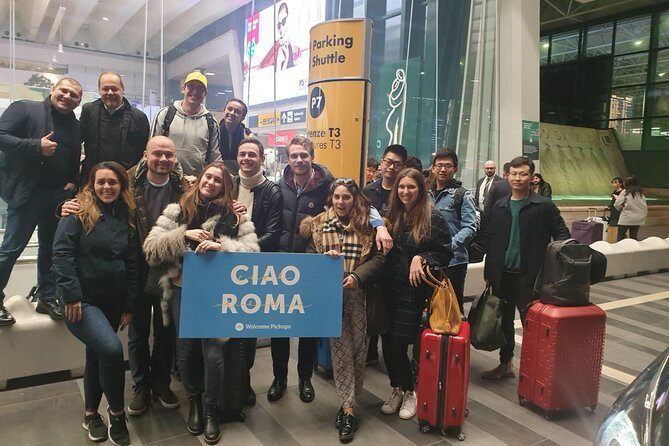
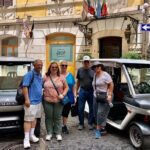
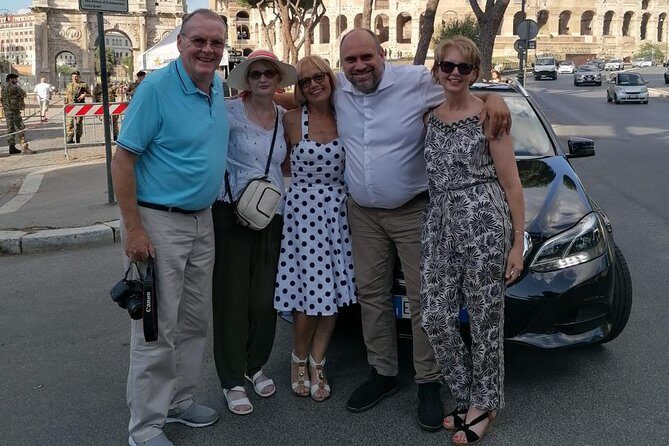
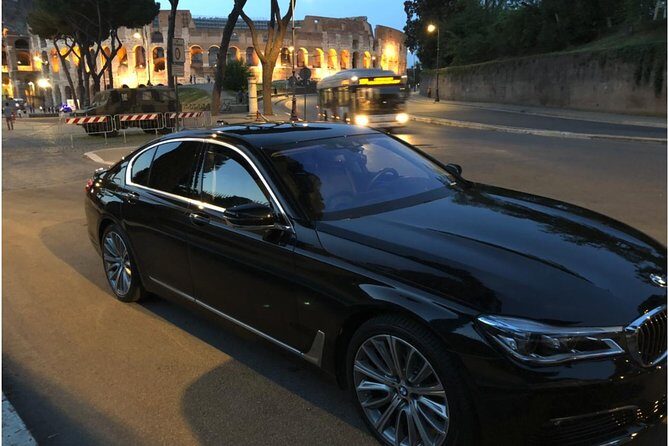
You’ll get hotel or custom pickup and drop-off, and you’re told your driver’s details in advance so it’s easy to spot the car. For the vehicle, it’s a comfortable sedan for 1–4 people, and a spacious minivan for 5–8 people. Either way, you’re not squeezed into a bus or stuck waiting on a group you don’t know.
The onboard Wi-Fi is a genuine bonus for navigation, messages, and quick planning. And you also get water during the ride, which is handy when you’re bouncing between sun, shade, and stone. One review noted how much they appreciated an air-conditioned car in summer—Rome in July can be no joke.
The Big Value Question: What You Pay For vs What You Figure Out Yourself
Price is $318.39 per person for about 4 hours. That cost covers pickup, the driver, fuel and tolls, and all taxes/handling, plus water and Wi-Fi. What it does not cover is admission to several attractions.
Here’s the part you should budget from the start:
- Colosseum (Roman Forum & Palatine Hill included): €16
- Trevi Fountain: €2
- Pantheon: €2
- Castel Sant’Angelo: €20
You may also want to plan for licensed guides if you choose to go inside with one, since that’s not included in the basics.
So the value is not that everything is free. The value is that you’re paying to avoid the hassle of coordinating transport and timing on a short trip, while still having the freedom to explore on your own once you arrive.
Colosseum: How to Make the Most of a 30-Minute Stop
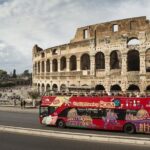
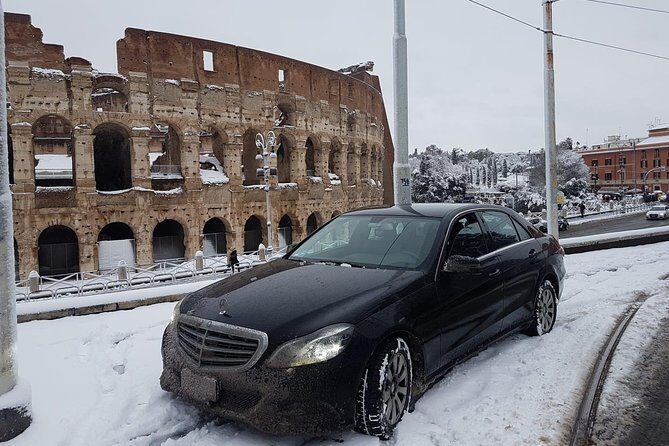
The Colosseum is commissioned in the early Flavian era, around A.D. 70–72, and it’s easy to see why it became a symbol of Rome. On this tour you’ll have about 30 minutes, but that does not include admission. The ticket cost is €16, and it’s for the Colosseum plus the Roman Forum & Palatine Hill.
The practical trick here is pacing. Use those minutes to orient yourself—find the best entry route and decide what you want most: the architecture, the views, or the Forum area next. Then go inside (or return later) with the ticket you’ll buy or prepare in advance.
If you’re worried about crowds, private transport helps you arrive on your schedule. Several people loved how their drivers handled the traffic and found convenient parking so older travelers or anyone with mobility limits didn’t do extra walking.
Piazza Venezia: The Quick Pivot Stop That Sets Up Your Photos
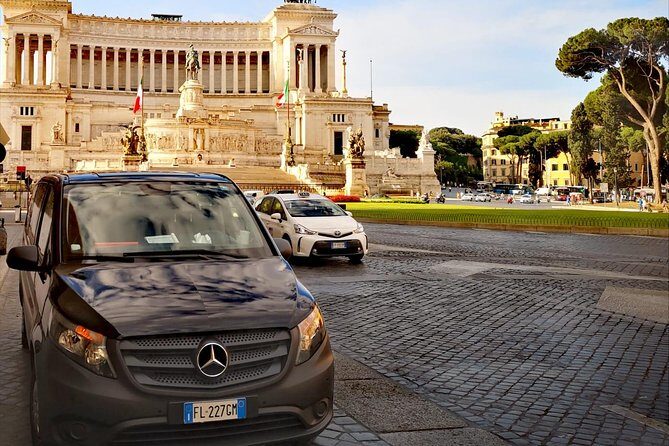
Piazza Venezia sits near the geometric center of Rome, and it has a name story tied to Cardinal Venezia, who ordered construction of his palace in 1455. You only get about 20 minutes, and it’s more of a “view and positioning” stop than a deep-dive.
Use it for photos and for noticing the street grid. This is the kind of place where, after you look around for a few minutes, you start to understand where everything connects. It’s short on purpose—it keeps the rest of the route realistic.
You can also read our reviews of more private tours in Rome




Trevi Fountain: A Photo-First Stop With a Paid Entrance Add-On
Trevi Fountain is a late Baroque masterpiece, designed by Nicola Salvi and completed in 1762. You’ll have around 20 minutes, and admission is listed as €2.
This stop is all about timing and expectation. You don’t come here to linger for hours on a private tour schedule. You come to get your classic shot, enjoy the scale, and then move on before your afternoon gets swallowed by lines.
If you plan to return later for a longer visit, this quick touch is a great way to decide. And if you only have a day or a half-day, it’s one of the best “make Rome feel like Rome” moments.
Pantheon: Where You Actually Feel the Ancient Genius
The Pantheon is one of ancient Rome’s most preserved monuments and a former temple dedicated to the pagan gods. You’ll get about 30 minutes, with admission listed at €2.
This is a stop where short time can still work, because the building does a lot for you immediately. If you walk in prepared—head up, slow steps, notice the dome and the interior light—you don’t need hours to appreciate why it mattered then and still matters now.
The driver’s job here is especially useful. You’ll get the context before you step inside, which makes the experience feel like more than just seeing a famous dome. Then you can explore at your own speed once you’re there.
Piazza Navona: Baroque Drama, Bernini’s Water Show, and Fast Viewing
Piazza Navona is one of the best-known Baroque squares in Rome. Your stop is about 30 minutes, and you’ll get Bernini’s Fountain of Rivers at the center, with the square facing Borromini’s church.
The value of this stop is how it changes the mood from ancient stone to theatrical Baroque design. If you like wandering with purpose, this is a good place to pause, people-watch a little, and check out the architecture details around the fountains.
It’s also a strong photo stop without requiring you to pay admission. You’ll have time to step back and take in the geometry of the square, then zoom in for close-up shots.
Spanish Steps: The Classic Stroll Window (and What You Should Notice)
The Spanish Steps connect Piazza di Spagna and the Church of Trinità dei Mont. You get about 30 minutes here, and admission is free.
This is a “walk the edges” stop. Don’t just stand at the bottom and hope Rome lines up for your photo. Use the stairs as a frame: look for viewpoints from different angles and notice how the steps lead your eye across the square.
One practical idea: if you want a breather, the Spanish Steps area can give you a natural reset between ticketed monuments. You’ll have just enough time to enjoy it without feeling stuck.
Castel Sant’Angelo: Mausoleum Views From the River Side
Castel Sant’Angelo began life as the Mausoleum of Hadrian. Your stop is about 30 minutes, and admission is listed as €20.
This is a great shift in vibe. Instead of focusing on fountains and domes, you get a massive fortress-like structure tied to Roman emperors, later history, and a commanding riverside position. If you choose to go inside, plan for at least part of your time to be “museum pace,” not “photo sprint.”
Even if you keep it outside, it’s a strong architectural stop. And because the tour moves efficiently, you’re not giving up the rest of the day to one building.
St. Peter’s Square: Big Vatican Energy Without the Vatican Schedule Panic
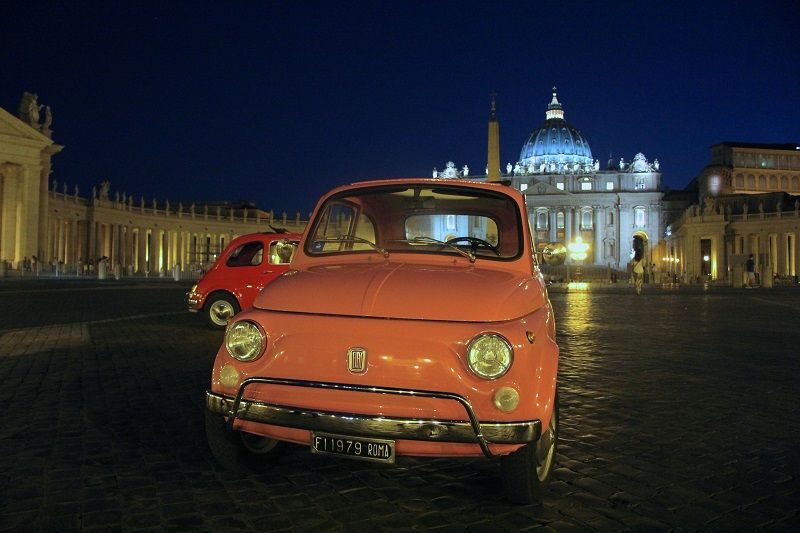
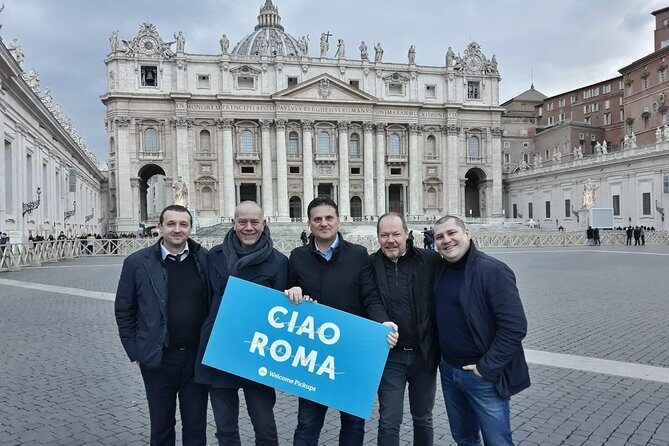
St. Peter’s Square is one of the largest and most beautiful squares in the world, located at the feet of St. Peter’s Basilica in Vatican City. You’ll have about 30 minutes, and admission is free.
This stop is all about scale and orientation. In a short time, you can still understand how the square is designed to funnel your attention toward the basilica. If you’re also planning to visit the Vatican museums later, this preview helps you see how the complex is laid out.
One thing to keep in mind: the square can be affected by events or crowd controls. If access changes on your date, the tour notes that some stops may close, and they may offer a suitable alternative.
Palatine Hill: The Best Rome View for Your Remaining Time
Palatine Hill is the central hill of Rome, and it’s often the kind of place where you feel the city’s age. You’ll get about 20 minutes, and admission is free on the tour stops listed—though note that the Colosseum ticket includes Palatine Hill and the Roman Forum.
So here’s the practical move: if you already used your Colosseum ticket and covered Palatine Hill inside that visit, you may treat this stop as a view break. If not, you may want to use this time to connect what you saw earlier with what you’ll see later.
It’s one of the best “I can picture Rome in layers now” moments. From a hilltop perspective, the city feels more legible.
The Driver as a Storyteller: What the Best Reviews Have in Common
The strongest praise isn’t about seeing a list of monuments. It’s about how the driver shapes the experience. People repeatedly highlighted drivers like Adrian, Georgio, Andriev, Gaber Hussein, Andrea, Claudio, and Sean/Shawn for getting them close to the sights, explaining history clearly, and keeping the day relaxed.
Also worth noting: the tour says drivers act as informal local guides and share stories and local tips at every stop. But drivers are not permitted to enter museums or archaeological areas. Translation: you’ll get context and planning help, then you do the inside walking yourself.
When that balance works, the tour becomes a smart first pass. It also makes the next day’s bigger-ticket attractions easier to enjoy, because you’ll already know what you’re looking at.
What Might Not Suit Everyone (And How to Fix It)
If you want deep museum time, this isn’t that kind of tour. It’s a short, moving overview, so you’ll spend more time looking from outside and inside at your own pace once you pay admissions.
If you hate paying add-ons, you may prefer a different option where admissions are bundled. Here, admissions are clearly listed, so it’s best to budget ahead and avoid surprise.
Finally, if you’re unlucky with closures, the tour notes that some stops may be closed on the date due to public holidays, maintenance, or special events. They’ll try to offer an alternative, but you should keep expectations flexible.
Should You Book This Private Rome Landmarks & Hidden Corners Tour?
I’d book this if:
- You have limited time and want the Colosseum, Trevi, Pantheon, and Vatican Square in one organized plan.
- You prefer a private ride and less hassle over figuring out routes and parking.
- You want a first-day orientation so your next visits feel smarter.
I’d skip it if:
- You want long guided time inside major attractions with a licensed museum guide included.
- You’d rather pay for fewer add-on tickets and spend more time in one place.
For most people doing Rome as a short trip, this hits a sweet spot: the classic sights plus smart pacing, delivered from a calm private car. It’s not pretending to be a full-day Rome master class. It’s a highly practical way to get the city in your head fast—then choose what to savor next.
FAQ
What does the tour price include?
The price includes hotel or custom pickup and drop-off, an English-speaking local driver/informal guide, fuel and tolls, Wi-Fi on board, water, and all taxes and handling charges.
Is this a private tour?
Yes. It’s a private tour/activity, so only your group participates.
Which major attractions require admission tickets?
Admission fees are not included for the Colosseum (€16), Trevi Fountain (€2), Pantheon (€2), and Castel Sant’Angelo (€20). The other listed stops are free.
Are meals included?
No. Meals and beverages are not included.
Is there Wi-Fi on the ride?
Yes. Wi-Fi is provided on board the private vehicle.
What vehicle do you use for small groups?
For 1–4 people, a comfortable sedan is assigned. For 5–8 people, you’ll use a spacious minivan.
Can I get airport pickup?
Airport pickup is not automatically included, but you can select an option with airport pickup included when booking if available.