REVIEW · CATACOMBS TOURS
Roman Countryside Walk: Catacombs, Aqueducts and Appian Way
Book on Viator →Operated by Tours About · Bookable on Viator
If you want Rome without the crush, this walk is a smart choice. You’ll spend a morning traveling from central Rome by round-trip bus, then move through the countryside landmarks tied to the Appian Way. I like that it stays small, with a max of 15 people, so your guide can actually keep the group moving and answer questions as you go.
Two big reasons I think you’ll enjoy it: you get real time at San Callisto catacombs (with major burial areas like the crypt of St. Cecilia and the crypt of the Popes), and you also see major surface monuments like the Aqua Claudia aqueduct and a walk along Via Appia itself. One drawback to plan for: the tour is mostly underground and in tight spaces, so if you have claustrophobia, you’ll want to think carefully before booking.
In This Review
- Key points to know before you go
- The value: why this 3-hour format works
- Getting there and meeting your guide (Via Cavour start)
- Stop 1: Catacombs of San Callisto and the power of scale
- Stop 2: Circus of Maxentius and the surprise of Caffarella Park
- Stop 3: Mausoleum of Cecilia Metella (outside view only)
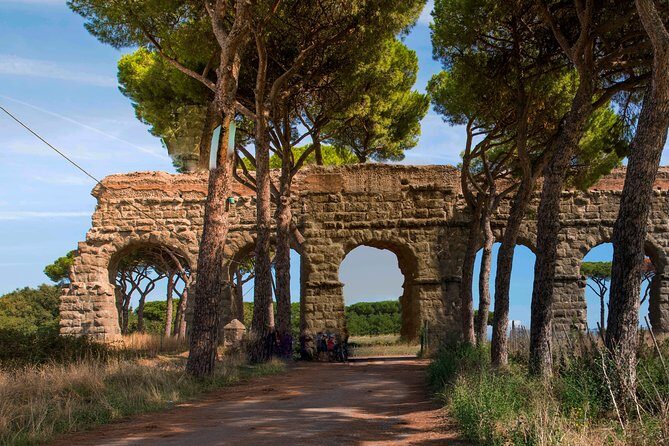
- Stop 4: Aqua Claudia aqueduct (engineering you can actually picture)
- The Appian Way walk: Via Appia Antica, the Queen of Roads
- Who this tour fits best
- What to wear and bring (so you’re comfortable fast)
- The human factor: guides and drivers make the difference
- Price and value: what your $86.90 really buys
- Should you book this Appian Way countryside walk?
- FAQ
- Where does the tour start?
- What time does it begin?
- How long is the tour?
- Is transportation included?
- How big is the group?
- Are photos allowed in the catacombs?
Key points to know before you go
- Small group (max 15) helps you get more out of the guide’s explanations and keeps the pace comfortable.
- Catacombs time is substantial, and you should expect narrow, mostly underground passageways.
- You’ll cover iconic engineering: Via Appia plus the aqueduct (Acqua Claudia), known for long-arc construction.
- Bus transfers are included, but there’s no hotel pickup, so you’ll meet at Via Cavour 224.
- Photo rules in the catacombs apply, so plan to leave your camera stowed for that part.
- Proper dress code is required, with knees and shoulders covered.
The value: why this 3-hour format works
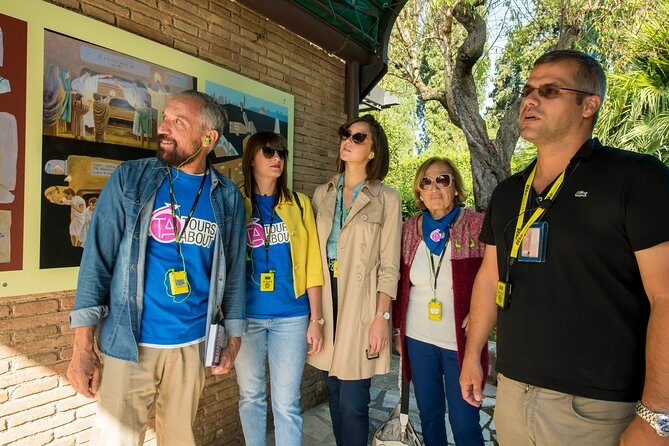
At $86.90 per person for about 3 hours, you’re paying for two things: a guide and transportation that gets you out into the countryside fast. This is the kind of tour where time matters. Instead of trying to stitch together buses, lines, and separate tickets, you start from Via Cavour 224 at 9:45 am and get a direct run to the sites.
The pacing also makes sense. You’re not doing a long hike. You’re doing a focused hits tour: a couple of major monuments outdoors, then the catacombs and aqueduct areas, then a short walk on Via Appia Antica. For many people, that’s the sweet spot—enough to feel like you’ve left the tourist core, without burning your entire day.
You can also read our reviews of more walking tours in Rome



Getting there and meeting your guide (Via Cavour start)
The tour starts at Via Cavour 224, 00184 Roma. That matters because the listing notes there’s no pick-up or drop-off, so you’ll want to plan to arrive on your own and be ready to go when your start time hits. The fact that the tour is near public transportation is useful if you’re staying anywhere central and don’t want to add extra taxi costs.
One small detail that comes up in the reviews: your guide and driver meet the group at the meeting point, then walk you over to the van/bus. That’s helpful when you’re in Rome and you’re already a little rushed. It also signals that the operation is designed to be smooth for first-timers.
Stop 1: Catacombs of San Callisto and the power of scale
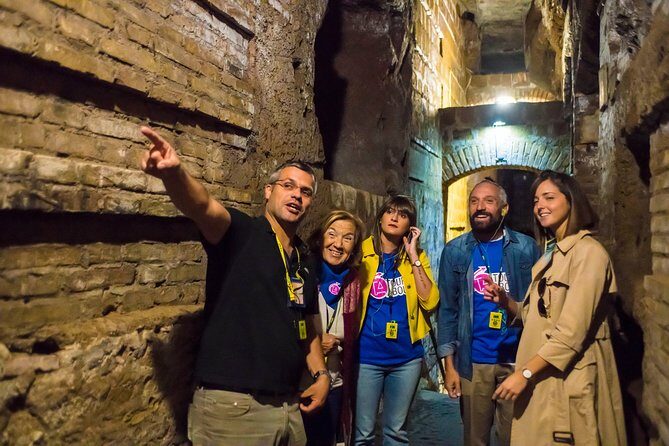
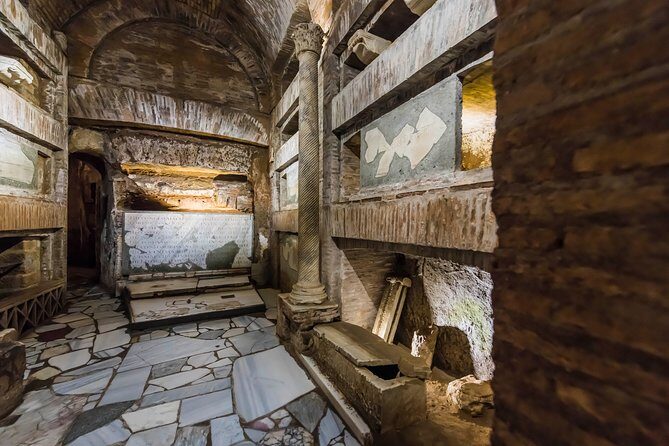
The tour begins with a comfortable bus ride out to the countryside, and the first major stop is the Catacombs of San Callisto. This is one of the largest and most important catacomb complexes in Italy. The site is tied to early Christian burial on a massive scale—one key detail is that it’s described as a burial place for 500,000 Christians, including martyrs and popes.
What I like about this stop is that you’re not just looking at carvings on walls. You’re walking into an underground system of burial spaces with recognizable sections. The tour explains that the catacombs are divided into two areas: the crypt of St. Cecilia and the crypt of the Popes. That structure helps you make sense of what you’re seeing, instead of feeling like you’re wandering through corridors without a map in your head.
Practical note: the tour says photography is not permitted in the catacombs. This is one of those rules that can surprise people, so it’s worth respecting it early. I’d also suggest you switch off the urge to take “proof photos” down there. Use your eyes instead.
Stop 2: Circus of Maxentius and the surprise of Caffarella Park
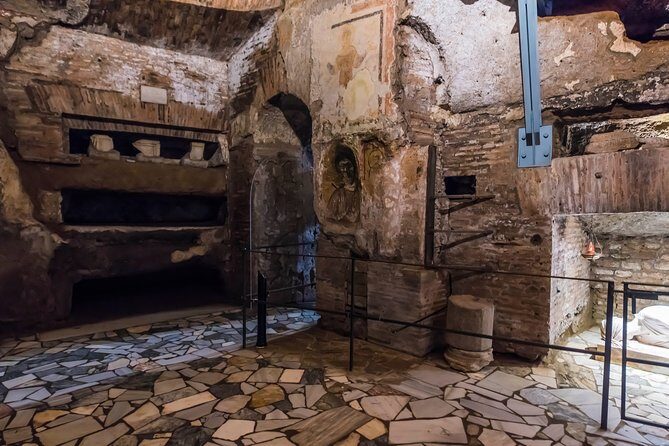
After the catacombs, you head by bus to the Circus of Maxentius, a well-preserved structure located in Caffarella Park. It’s not as famous as the Colosseum or Circus Maximus, and that’s exactly why it’s a good early-morning stop. You get the feel of a different part of Rome—less photo-bomb chaos, more open space around the monument.
This is also a nice pacing break. Catacombs are intense and underground. Then you move to a structure that’s outdoor-facing and easier to see in full. Admission is noted as free for this part, so it’s also a value win: you’re paying for the tour experience, not an endless list of extra tickets.
Stop 3: Mausoleum of Cecilia Metella (outside view only)
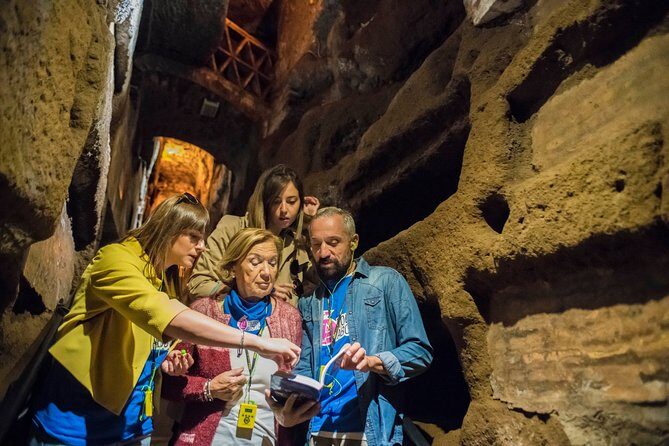
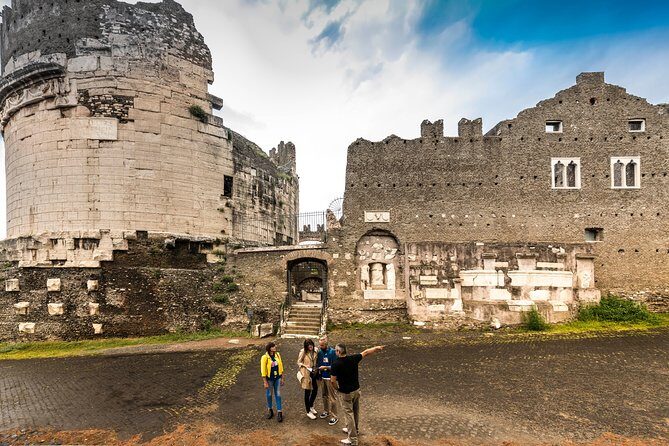
Next comes Mausoleo di Cecilia Metella e Castrum Caetani, in the Appia Antica archaeological area. You’ll get an external visit to the Mausoleum of Cecilia Metella, a monumental tomb built to honor a Roman noblewoman in the 1st century B.C. It sits on a hill along Via Appia, so even from the outside you’ll understand why it was designed to be seen.
One thing to manage expectations: this is an outdoor/external view stop, not a detailed interior visit. That’s not a flaw—it’s just the format. It means you’ll use this time to read the monument’s position and scale in the surroundings, not to spend time inside.






Stop 4: Aqua Claudia aqueduct (engineering you can actually picture)
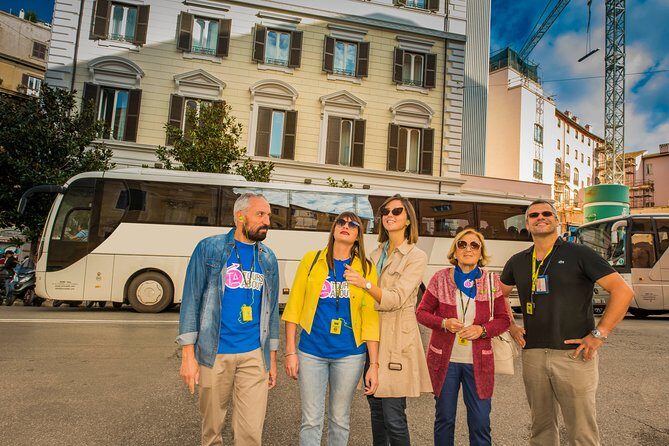
The final major technical marvel is the Claudian Aqueduct, also referenced as Acqua Claudia. The tour notes it was built in 38 A.D. and completed only 14 years later, and that it stretched with arches for nearly 70 kilometers. That is a big number, but it lands differently when you’re standing near it.
You’re getting an active explanation of how it functioned as a key water source for Rome. And since part of the aqueduct is now integrated into an aqueduct park setting, the visit helps you connect the structure to its environment instead of treating it like a standalone ruin.
Admission is noted as included here, which makes this a clean, straightforward part of the itinerary. You won’t be hunting for another ticket desk while your group waits.
Also, the tour includes a warning about being in narrow, mostly underground spaces. This is relevant to the catacombs portion, but it’s worth keeping in mind when you’re mentally preparing for the whole experience. I’d treat the underground segment as the main test.
The Appian Way walk: Via Appia Antica, the Queen of Roads
After the aqueduct area, you’ll walk on Via Appia Antica, described as one of the oldest and most significant streets in the world—Rome’s “Queen of Roads.” The tour explains it connected Rome to Brindisi in southern Italy and served as a main trade route with Greece and the East. It’s also tied to engineering from around 300 B.C.
Even if you’ve seen photos of Roman roads before, doing it on foot changes your perspective. The road isn’t just a symbol; it’s a physical route that once pushed trade, people, and power through the landscape. A short walk here is the right length for most people, because it gives you that sense of distance and direction without turning into a long hike.
One detail that’s especially sweet if you like keepsakes: one of the reviews mentions the guide taking each couple’s picture at the Appian Way and aqueducts. That’s not a reason to book alone, but it signals the guide is paying attention to small moments, not just facts.
Who this tour fits best
This works best if you:
- Want a morning outing away from the busiest city streets
- Like a mix of underground and above-ground Roman sites
- Prefer a small group where the guide can keep things organized
- Want a guided explanation of why these landmarks matter, not just photos
It may not be your best match if you:
- Have claustrophobia, since the tour is mostly underground and in narrow spaces
- Are strict about photo-taking rules in catacombs (photos are not allowed there)
- Are uncomfortable with a formal dress requirement
What to wear and bring (so you’re comfortable fast)
The tour notes a proper dress code: cover your knees and shoulders. That’s easy to handle—just pick a top and bottom that meet the requirement before you leave. Since you’ll be underground, breathable layers are smart. You don’t want to feel overheated during outdoor stretches, then freezing when you switch into underground corridors.
Bring:
- A small daypack
- Water if you tend to get thirsty (the tour is short, but you’ll still be walking)
- Your patience for narrow passages if you’re prone to worry down below
If you’re bringing a phone or camera, plan for the catacombs rule. It’s better to get that out of your system before you enter the underground areas.
The human factor: guides and drivers make the difference
The highest praise in the reviews is how smooth and kind the team is. One review specifically names Katia as the guide and Mario as the driver, calling them wonderful and attentive. Another review highlights the friendly, considerate approach and points out the small group size (around 12 people, even though the cap is 15).
That’s the kind of quality that matters on this itinerary. You’re moving between several sites with different rhythms—bus ride, underground passages, then outdoor monuments. When the guide is good, you spend more time learning and less time waiting or trying to figure out where to stand.
Price and value: what your $86.90 really buys
Here’s how I’d think about it. The tour price includes an expert guide and transfer service (round-trip bus transportation from central Rome). The itinerary also includes entry at the aqueduct stop, and catacombs access is part of the experience flow.
What’s not included is pick-up and drop-off. So you’ll need to be at the meeting point. That’s standard, but it’s important for value: if you’re far from the center, you may spend extra getting to Via Cavour to make the timing work.
Still, for a compact 3-hour package that hits multiple major landmarks without you coordinating the logistics, the price feels reasonable. You’re buying clarity, timing, and a guided narrative—especially valuable for the catacombs and the aqueduct engineering.
Should you book this Appian Way countryside walk?
Yes, if you want a guided morning that mixes underground and above-ground Rome beyond the typical center routes. The San Callisto stop plus the Aqua Claudia aqueduct and the Via Appia walk is a strong combo in a short time.
I’d say think twice if you’re claustrophobic or sensitive to tight spaces. The tour is explicitly mostly underground in narrow areas. Also, if you rely on photos as your main way to experience places, remember that photography is not permitted in the catacombs.
If your goal is to get out of central Rome and feel the ancient road-and-water story in a way that’s easy to understand, this one has the right shape.
FAQ
Where does the tour start?
The tour starts at Via Cavour, 224, 00184 Roma RM, Italy.
What time does it begin?
Start time is 9:45 am.
How long is the tour?
The duration is about 3 hours.
Is transportation included?
Yes. Round-trip transfer service is included, but pick-up and drop-off are not.
How big is the group?
The tour has a maximum of 15 travelers.
Are photos allowed in the catacombs?
No. Taking photographs is not permitted in the catacombs.