REVIEW · POMPEII
Private Tour with Official Guide through the wonders of Pompeii.
Book on Viator →Bookable on Viator
Pompeii gets clearer fast.
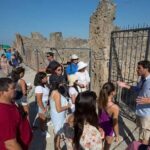
This private tour runs you through the park with an official guide and a tight hit list of the city’s big storylines: public life (theaters and squares), private life (the villas), and everyday routines (baths, streets, and even a time-worn place to grab food). It’s offered in English and starts at 12:30 pm, so you’re not stuck in the morning crowds.
I really like two things about how this experience is set up. First, the route is balanced: you move from the Teatro Grande and Odeon / Teatro Piccolo into homes like Casa dei Vettii and Casa degli Amorini Dorati, then back out to the baths and temples. Second, the guide is the star of the show—Paolo (an archaeologist who worked on excavations) brings lots of stories and points out small details that are easy to miss when you’re on your own. One possible drawback: you’ll be moving for a solid 2 to 3 hours, so if you want to linger for a very long time in one single spot, you’ll need to ask for extra time.
In This Review
- Key highlights you’ll care about
- Why this Pompeii tour fits a real vacation schedule
- Meeting point and what the tour includes (and what it doesn’t)
- How the route tells Pompeii’s story in the right order
- Theater day: Teatro Grande and Teatro Piccolo (Odeon)
- Villas and wall art: Casa dei Vettii, Casa del Fauno, Casa degli Amorini Dorati
- Bath culture outside and inside: Suburban Baths and Stabian Baths
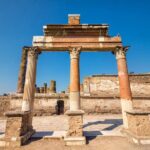
- Main square and temples: Foro di Pompeya, Tempio di Giove Capitolino, Temple of Apollo
- The mosaic-house moment: Casa del Poeta Tragico
- The street you can walk in your mind: Via dell’Abbondanza
- Food and daily routine: Thermopolium Regio VI, Insula VIII, 8
- Price and value: is $102.35 per person worth it?
- Tips to get the most from this tour
- Should you book this Pompeii private tour?
- FAQ
- Do I need a ticket for the Pompeii archaeological park?
- How long is the private tour?
- Is the tour offered in English?
- Is this tour private or shared with other groups?
- What time does the tour start, and where does it meet?
- What’s included in the price?
Key highlights you’ll care about
- An official, English-speaking guide (Paolo) who ties monuments to daily life
- A smart mix of sights: theaters, villas, baths, temples, and street-level leftovers
- Tight timing across major stops, built for a 2-3 hour visit
- Pauses for photos and questions, not just a rushed walk-through
- You still buy the Pompeii park ticket separately to enter the archaeological area
- Easy start logistics at Via Villa dei Misteri, with the tour ending back there
Why this Pompeii tour fits a real vacation schedule
Pompeii is big, and it doesn’t feel forgiving if you’re trying to figure things out on the fly. This private format helps because you get a route that makes sense instead of a random loop of stone and shadows. The pacing is built for seeing the major zones without burning your whole day in the heat and crowds.
The 12:30 pm start can be a nice sweet spot. It gives you the morning to sleep in, handle lunch plans, or just wander around your base in the Naples/Pompeii area. Then, come early afternoon, you get a guided run through the park’s key highlights. When the tour ends, you’re back at the meeting point, which is handy if you’re lining up dinner plans later.
Another practical plus: it’s designed as a private group. That matters more than people expect in Pompeii. You’re not fighting for attention, and you can ask follow-up questions without the whole group having to march on. Service animals are allowed, and it’s near public transportation, so you can keep the rest of the day flexible.
You can also read our reviews of more guided tours in Pompeii

Meeting point and what the tour includes (and what it doesn’t)
You’ll meet at Via Villa dei Misteri, 1, 80045 Pompei NA, Italy, starting at 12:30 pm. The tour returns to the same place when it’s done.
Included with the tour:
- Tour guide
- Map of the Archaeological Park Pompeii
- Bottled water
Not included:
- Archaeological Park Pompeii ticket
- Tip
That ticket point is important. The itinerary is packed with major entrances and viewpoints, so plan on securing your Pompeii admission separately. Once that’s handled, the tour itself is set up so you can focus on seeing rather than guessing.
Also, the tour uses a mobile ticket. That’s one less thing to juggle while you’re moving through the park, and it helps if you’re already juggling transit, reservations, and sunscreen.
How the route tells Pompeii’s story in the right order
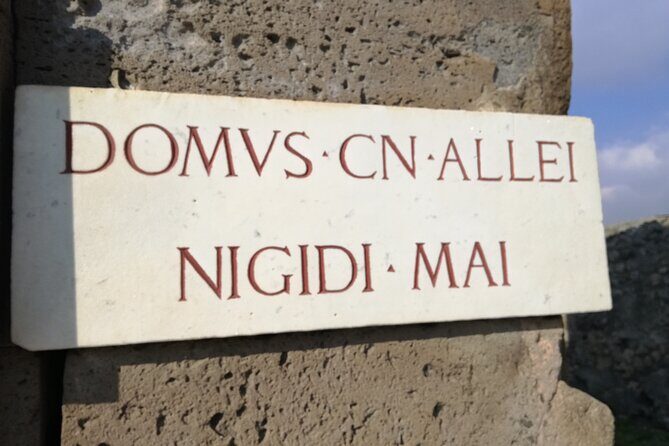
A good Pompeii visit doesn’t just list buildings. It shows relationships: where people gathered, where they lived, where they cleaned up, and where public power sat. This tour builds that flow.
You begin with the theater world—places for performances and social life—then move into the villas, where you can read wealth and taste from frescoes and mosaics. After that, you shift into bathing culture and big public spaces like the main forum. You end by connecting the religious center and the daily street grid, including a classic spot type: the thermopolium (a Roman-style snack and drink place).
The stop times are generally short (think 5 to 20 minutes each). That’s the trade-off. You get breadth and clarity, but you’re not doing slow museum browsing all day.
Theater day: Teatro Grande and Teatro Piccolo (Odeon)
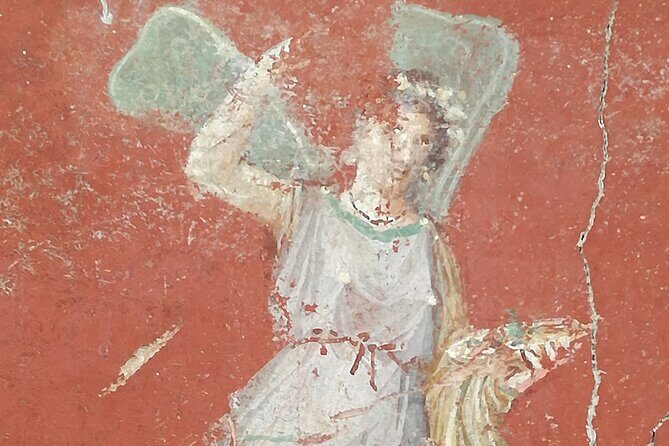
If you only remember one thing about Pompeii’s public culture, make it this: people didn’t just work and hide indoors. They went out. They watched. They talked. And they performed their identity in shared spaces.
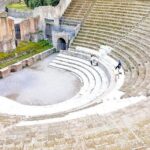
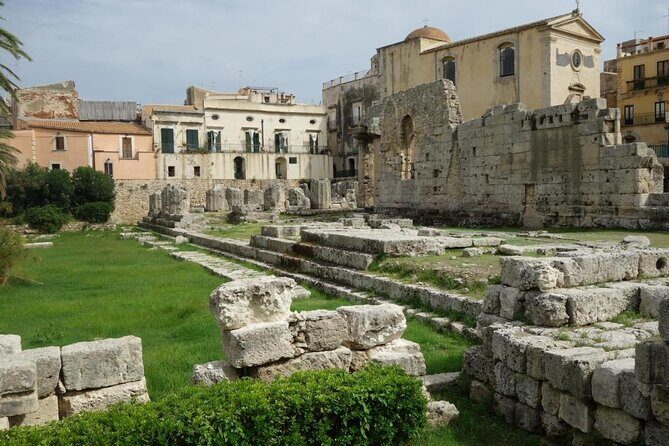
At Teatro Grande, you’ll see the Greek-Roman theater that staged big tragedies and comedies. This is a great first stop because it instantly puts the city into context. Even if you’re not a theater person, you’ll start noticing how Pompeii was designed for groups—views, movement, and gathering space.
Then the tour heads to Odeon – Teatro Piccolo, known as a symbol of the singing tradition. That shift from a big stage to a smaller performance space is a smart way to show range. It’s also a reminder that entertainment wasn’t a single fixed event. It was a pattern.
What to look for during these theater stops:
- How the space funnels attention toward the stage area
- Where you can stand for the best sightlines (your guide can point it out)
- How the design supports crowd movement, not just sitting
Villas and wall art: Casa dei Vettii, Casa del Fauno, Casa degli Amorini Dorati
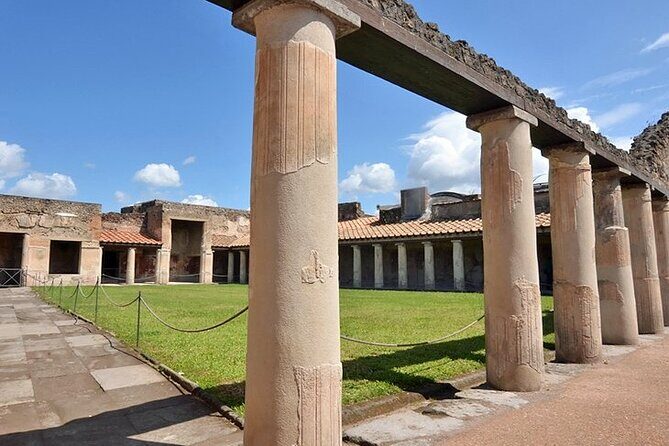
Pompeii’s houses do more than show rooms. They show status, personality, and the art people lived with every day.
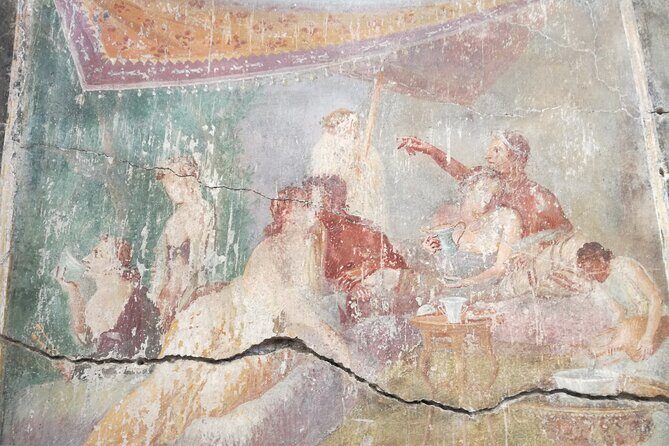
Casa dei Vettii is a strong early housing stop, especially for anyone who likes visual detail. Here you’ll get time to focus on architecture and decoration like frescoes and mosaics. This is where Pompeii stops feeling like ruins and starts feeling like a real home—at least the parts that survived.
Then you visit Casa del Fauno, described as one of the oldest villas in Pompeii. An older villa stop matters because it helps you see that Pompeii wasn’t built in a single era. It grew and changed, and the streets and houses carry that timeline.
Next is Casa degli Amorini Dorati, and the name alone sets expectations. The beauty here is the point. Even with limited time, this stop is built to make you slow down a little and notice the ornament level. It’s also one of those moments where having an official guide is useful: they can help you see patterns instead of just admiring surface decoration.
A realistic tip: because these stops are time-boxed, bring your phone ready for photos, but also take a second to look with your eyes first. The guide’s explanations help you spot what matters quickly.
You can also read our reviews of more private tours in Pompeii

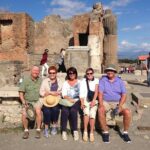

Bath culture outside and inside: Suburban Baths and Stabian Baths
Pompeii has more than temples and homes. It has a strong bathing story, and it’s one of the most practical ways to understand Roman daily life.
You’ll start with Suburban Baths, described as an extraordinary spa built near the walls. That location detail isn’t just geography. It shows how bathing was woven into the city’s edges and movement.
Then comes Stabian Baths (Terme Stabiane), the largest baths of Pompeii. Big baths can be overwhelming if you wander without a plan. In a guided route, the key is that you learn what the space is for—how it functions as a routine, not just a big pile of stones.
Here’s what I’d aim to do during the baths stops:
- Picture the flow of movement from area to area
- Note where light and open space would have mattered for comfort
- Watch for clues that tell you how public the experience was
This is a perfect segment if you want Pompeii to feel human. Baths are social, practical, and routine-based. They connect the grandeur elsewhere with everyday life.
Main square and temples: Foro di Pompeya, Tempio di Giove Capitolino, Temple of Apollo
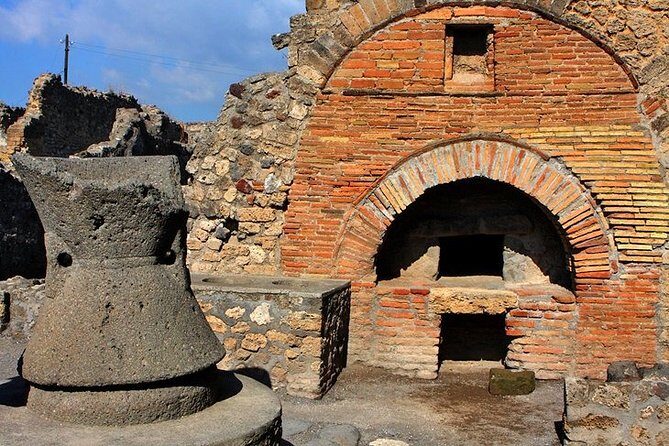
After homes and bathing culture, you shift back into civic and religious focus. That move is what makes the tour feel like a complete city, not a collection of attractions.
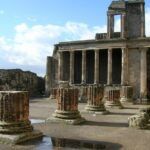
At the Foro di Pompeya, the main square, you get one of the best areas for understanding public power. This is where civic life would have played out—crowds, speeches, and the city’s main social orbit.
Next you visit Tempio di Giove Capitolino, described as the Temple of the temples. That phrase is a big promise: this is the kind of stop where the guide’s explanations help you understand why it mattered in the city’s hierarchy.
Then you head to the Temple of Apollo, tied to the god of the sun and connected to Zeus. Even if you only catch a slice of the myth, it helps you read why temples were built where they were and why they stood as more than just architectural projects.
Practical tip: temples can feel similar if you only glance. Give the guide your attention for the first minute or two at each site, and you’ll start seeing differences in how the spaces communicate rank and purpose.
The mosaic-house moment: Casa del Poeta Tragico
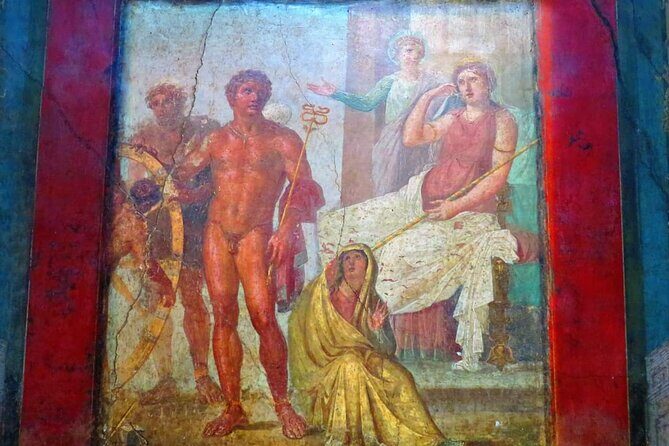
You don’t always need a long stop for it to matter. Casa del Poeta Tragico is a short visit, but it’s centered on something specific: the famous mosaic.
This is the kind of Pompeii stop that rewards focus. Rather than trying to absorb every doorway and wall, you can anchor on the mosaic as a storytelling device—what someone wanted to display, and what kind of taste and identity the owner projected.
If you’re the type who loves art details, this is a good place to slow down for a minute. If you’re more into street life and civic spaces, it still works because it shows how “private” art and “public” identity overlap.
The street you can walk in your mind: Via dell’Abbondanza
No Pompeii tour feels complete without the main street. Via dell’Abbondanza is the city’s main street, and it’s where the urban grid clicks into place.
This is where you start understanding how everything connects: the houses, the public spaces, the places where people would have walked and traded and lived their day.
If you’re short on energy, this is a great segment to use it wisely. You can’t cover the whole city, but you can learn the rhythm. Your guide can help you connect street layout to the bigger stops you saw earlier.
Food and daily routine: Thermopolium Regio VI, Insula VIII, 8
One of the most fun ways to make Pompeii feel real is to look for a place where people ate and drank. The tour stops at Thermopolium Regio VI, Insula VIII, 8, described as one of the restaurants of the time.
Even without getting lost in details you can’t verify onsite, a thermopolium stop gives you a human anchor. It turns Pompeii from “ruins” into a city with habits: quick meals, daily needs, and places people likely visited more than once.
This also helps with pacing. After temples and baths, a food stop breaks the pattern and makes the city feel lived-in.
Price and value: is $102.35 per person worth it?
At $102.35 per person, this is a mid-range Pompeii private tour price point. The value comes from what’s included and what you avoid doing on your own.
You’re paying for:
- An official guide who can explain what you’re looking at
- A route that covers major zones in about 2 to 3 hours
- A Pompeii map to help you orient yourself
- Bottled water (small, but it helps in the park)
You’re not paying for:
- The Pompeii park ticket itself
- Tips
If you’re thinking about doing Pompeii unguided, you’ll likely spend energy figuring out priorities instead of learning how the city worked. Pompeii is full of “interesting but where do I look?” moments. A good guide turns those moments into quick answers.
This is also where the private format earns its keep. If you’re a small group, it’s often more cost-effective than it sounds because you avoid renting or hiring a guide ad hoc for a bunch of separate stops.
Tips to get the most from this tour
- Wear shoes you don’t mind getting dusty or uneven. Pompeii surfaces can be rough.
- Bring a hat and sunscreen. Even a short stop list can be sunny.
- Plan to have your Pompeii ticket ready before the tour begins, since it’s not included.
- If you care about photos, ask early. The guide can usually give you time without derailing the flow.
- Use the short stops as opportunities: listen for one or two key takeaways, then look for the evidence in the stone.
And if the guide you get is Paolo, you’re in a good spot. The recurring theme with him is clear: he uses stories, humor at the right level, and he points out the small stuff that makes Pompeii feel like a real place instead of a postcard.
Should you book this Pompeii private tour?
Book it if you want a guided, efficient Pompeii experience that covers the main “city functions” in a short time window. This works especially well for first-timers who don’t want to waste energy guessing where to start, and for groups who value a guide’s ability to point out details.
Skip it (or consider a longer, more flexible plan) if you’re the type who wants long, slow wandering through one or two specific areas. This tour is built for breadth and clarity, not for staying an hour in a single room.
If your goal is to leave Pompeii with a sensible mental map—where public life happened, what homes looked like, how baths worked, and what the temples signaled—this private route is a strong choice.
FAQ
Do I need a ticket for the Pompeii archaeological park?
Yes. The Archaeological Park Pompeii ticket is not included, so you’ll need to buy it separately.
How long is the private tour?
The duration is about 2 to 3 hours.
Is the tour offered in English?
Yes. The tour is offered in English.
Is this tour private or shared with other groups?
It’s private. Only your group participates.
What time does the tour start, and where does it meet?
It starts at 12:30 pm and meets at Via Villa dei Misteri, 1, 80045 Pompei NA, Italy. The tour ends back at the same meeting point.
What’s included in the price?
The tour includes the tour guide, a map of the Archaeological Park Pompeii, and bottled water. A tip is not included.