REVIEW · CITY TOURS
Private tour of Ostia, the ancient city harbor, by van with a PhD archaeologist
Book on Viator →Operated by Rome in tours · Bookable on Viator
Ostia Antica feels like Rome’s port frozen in time.
This private Ostia Antica tour gets you from Rome by luxury van, then lets a PhD archaeologist guide you through the city’s most important streets and buildings, with skip-the-line entry. You also get headsets if your group is 6 or more, which makes the walk more comfortable and easier to follow.
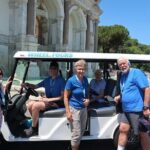
Two things I really like: the pace is private and question-friendly, and the focus stays on how Ostia worked as a Roman city (not just a pile of ruins). When my guide was Fernando, it was easy to ask as many questions as I wanted and still keep moving. Even the driver, Constantino, kept logistics smooth from pickup to drop-off, so you don’t lose half your day figuring out transit.
One thing to consider: you’re getting about 3 hours inside the site during the full ~4-hour experience. That’s great for seeing the highlights, but if you want lots of museum time or a slower stroll through every corner, you may feel slightly time-crunched.
In This Review
- Key Highlights Worth Booking For
- Why Ostia Antica Is One of Rome’s Best “Real City” Ruins
- Price and Logistics for a 4-Hour Ostia Day Trip
- The Private Van Pickup That Keeps Your Day From Stretching
- Meeting Fernando, the Archaeology Brain, and Your Earbuds Moment
- Necropolis, City Walls, and the Entrance Gate: Starting With the Edges
- Decumanus and Warehouses: Reading the Port City Economy
- Baths of the Charioteers and Neptune: Social Life in Public Space
- Caupona and Thermopolium: How People Grabged Food on the Go
- Insulae, Middle-Class Housing, and the Theater: Who Lived Where
- Square of the Guilds and Castrum: Work, Pride, and Control
- Forum and Capitolium: Power, Religion, and City Pride
- Augustus, Lares Augusti, and the Final Street-Memory at Thermopolium
- What to Do With Only 3 Hours at the Site
- Who This Tour Fits Best (And Who Might Want a Different Option)
- Should You Book This Ostia Antica Private Tour?
- FAQ
- How long is the private Ostia Antica tour?
- Is pickup available from my accommodation?
- Do I need to buy tickets separately?
- Is this tour walking-heavy?
- Are headsets included?
- What’s included in the price?
- What’s not included?
Key Highlights Worth Booking For
- PhD archaeologist-led interpretation that connects buildings to how people lived and worked
- Private van pickup and return to your accommodation (driver handles the moving parts)
- Skip-the-line entry so your time goes to ruins, not waiting
- Headsets included for groups of 6+ so you hear every detail clearly
- A tight, high-impact route across necropolis, forum, temples, and daily-life streets
Why Ostia Antica Is One of Rome’s Best “Real City” Ruins
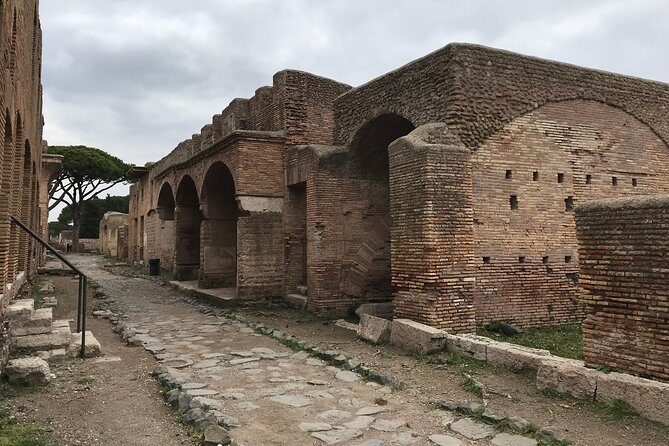
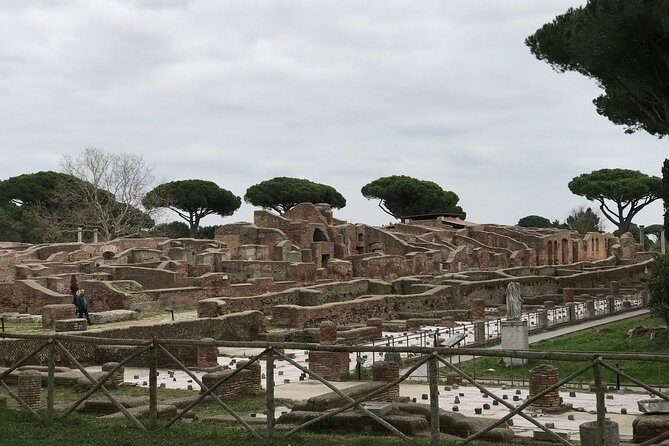
Ostia Antica is Rome’s ancient port city, and the payoff is how practical it feels. Instead of seeing only temples and monuments, you walk streets that once linked daily life to the food, goods, and shipping that kept the empire running. A good archaeologist guide helps you read the signs: where people traded, where they ate, how homes were laid out, and how the city organized itself around civic and religious space.
This tour leans into that working-city story. You’re not just looking at columns; you’re learning how Ostia supported Rome’s rise, and how a harbor city became a hub of money, movement, and social rank. That context makes the ruins easier to understand on the spot, especially when you’re moving from necropolis to main streets to the forum.
Also, because it’s private, you can pace yourself. If one area grabs you, you can ask follow-up questions and get a clearer explanation without derailing the whole day.
You can also read our reviews of more city tours in Rome



Price and Logistics for a 4-Hour Ostia Day Trip
At $528.09 per person, this isn’t a budget outing. It’s priced like what it is: a private van experience with a PhD archaeologist, ticket fees included, and transport all the way from Rome and back. The value comes from reduced hassle and real interpretation. You’re paying for time saved and for higher-quality guidance on what you’re seeing.
Here’s the practical math: the full tour is about 4 hours, with roughly 1 hour 30 minutes round-trip driving. That leaves around 2.5 hours tied to the main visit, and you get about 3 hours at the site as part of the overall timing structure (the exact flow depends on how the day runs, but the key point is that your walking time is focused and scheduled).
One more logistics win: you get skip-the-line entry. In Rome-area ruins, that can matter a lot on a hot day or when you just want to start walking.
Finally, you’ll do this as a walking tour. The driver takes you to the site and returns you to your accommodation after the visit. Near public transportation too, so you have backup options if your pickup doesn’t work for your exact location.
The Private Van Pickup That Keeps Your Day From Stretching
Pickup is offered, and the driver handles the “get there” piece. If you’re outside the defined pickup area, you’re told to contact support so they can find a solution. That matters because Ostia Antica isn’t right in the center of Rome, and public transit plus luggage-plus-heat can turn a nice day into a tiring day.
In a private setup, you also get flexibility about where you’re starting from. You can plan your morning around your hotel pickup instead of around bus schedules. If you’re traveling as a couple, a small family, or a group who wants quiet conversation without being squeezed into someone else’s pace, this format makes a lot of sense.
And yes, it’s private in the strict sense: only your group participates.
Meeting Fernando, the Archaeology Brain, and Your Earbuds Moment
This is built around one-on-one guiding energy, and it’s backed by a PhD archaeologist. That’s not just a title. What you tend to get with this kind of guide is explanation that’s grounded in how things were used, not only what things are called.
If your group is 6 people or more, headsets are included, so you can hear clearly even when you’re walking and moving around corners. That’s a small detail that makes the day smoother, especially if you have mixed ages or if you’re more focused on listening than reading every sign on your own.
Also, the guide is set up to handle questions. When Fernando was mentioned in feedback, the theme was simple: he created room for questions and didn’t rush answers.
Necropolis, City Walls, and the Entrance Gate: Starting With the Edges
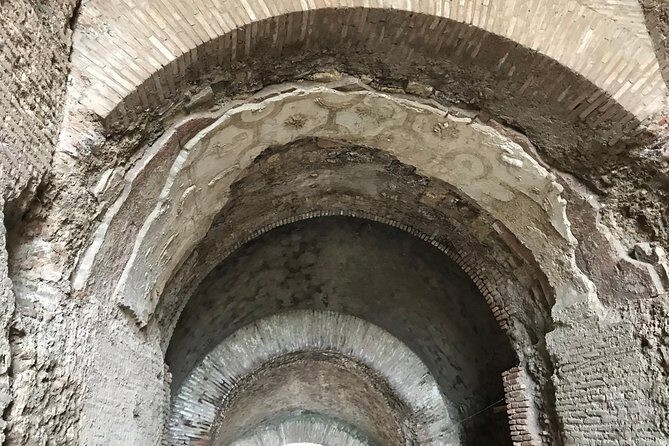
Your route begins at Parco Archeologico di Ostia Antica, where you’ll first face the necropolis and the city’s defensive boundaries. This is a smart opening. It frames the city as more than a trading machine. You’re seeing how people marked death, how the city separated itself, and how movement into the urban space worked.
Starting near the necropolis gives you a sense of how Roman identity stretched beyond daily shopping and meals. Then you move to the entrance gate and city walls, which helps you understand how Ostia controlled access and defined its limits.
A drawback here is that the beginning can feel slightly less “wow” than the forum. If you want the biggest monumental drama first, you might have to trust the process. The upside is that once you’ve got the city boundary and layout in your head, the rest of the walk clicks faster.
You can also read our reviews of more private tours in Rome




Decumanus and Warehouses: Reading the Port City Economy
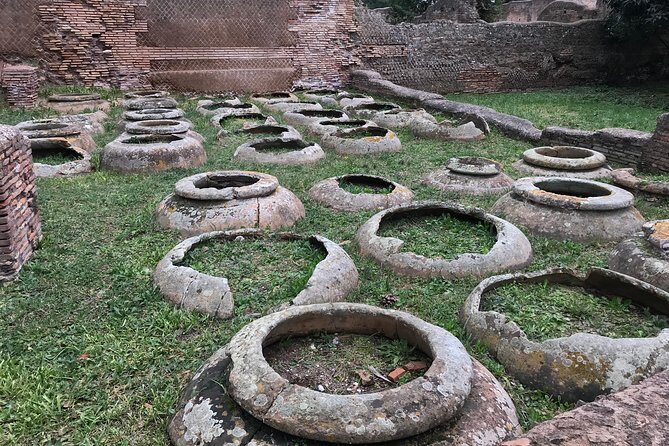
Then you hit Decumanus, the main street, and it’s where Ostia really starts to make sense as a working harbor city. You’re walking along a route that functioned as a spine. A guide’s job here is to connect the street grid to real life: movement of people, movement of goods, and the rhythms of civic and commercial activity.
Next comes warehouses, which is where you start seeing Ostia as logistics. These buildings weren’t just storage. They were part of a system that linked the port to consumption and distribution. When your guide ties warehouse space to trade and shipping, the ruins shift from “cool to look at” to “I understand why this was built this way.”
If you’re the type who likes practical details—who, what, where, and why—this segment is often the most satisfying.
Baths of the Charioteers and Neptune: Social Life in Public Space
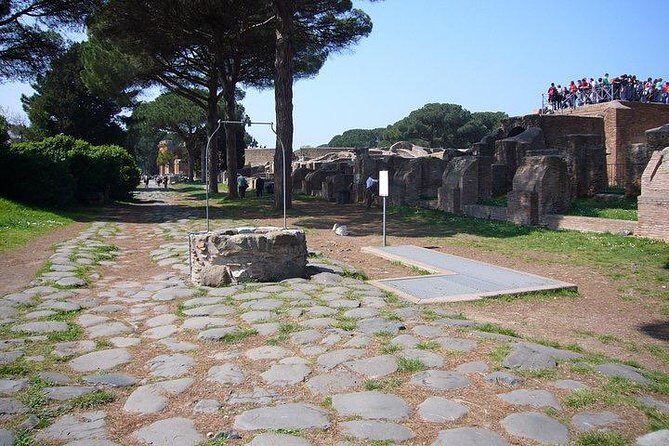
Ostia wasn’t only about work. The tour moves you into the world of the Baths of the Charioteers and the Baths of Neptune. Public baths were major social hubs in Roman life, and in Ostia you can start to understand how leisure and health were organized in shared spaces.
The baths are especially useful when you’re learning to spot Roman design logic: circulation, shared rooms, and spaces built for routine. With a PhD archaeologist guiding, you’re less likely to treat the baths as a vague bathroom museum and more likely to see them as a daily-life engine.
The main consideration here is sun and walking comfort. Bath areas can be open and exposed. If you’re visiting in warmer months, plan your water breaks and take shade when you can.
Caupona and Thermopolium: How People Grabged Food on the Go
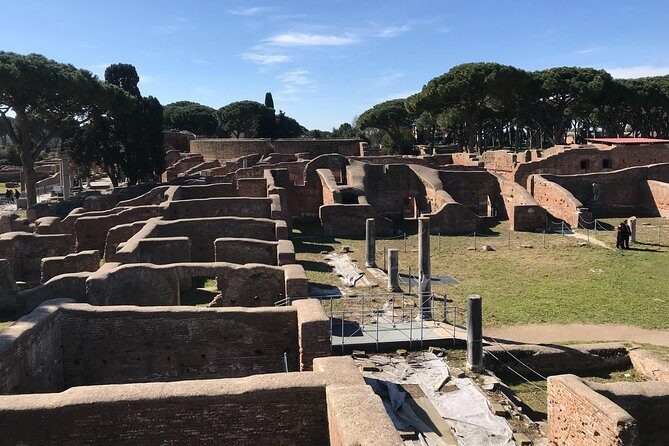
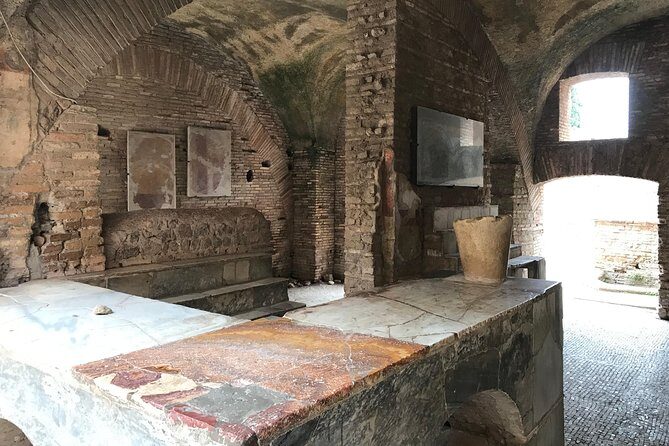
Now we get to the eating places: a caupona (a tavern setting) and later a thermopolium (a Roman-style eatery). These stops are some of the most human in the entire site because you can picture real people arriving, ordering, and eating without the formality of a full sit-down meal.
Your guide can make these spots click by explaining their role in daily urban life—who would use them, what they offered, and how such places fit into a city that processed huge amounts of incoming goods. This is where you get that sense of being able to imagine the street scene, not just walk past it.
If you like to compare Roman life to modern street-food routines, this part will feel natural.
Insulae, Middle-Class Housing, and the Theater: Who Lived Where
A key stop is insulae, the housing system of the middle class. This is important because it helps you balance your view. If you only see temples and public buildings, you might forget that most people lived in dense, multi-family structures.
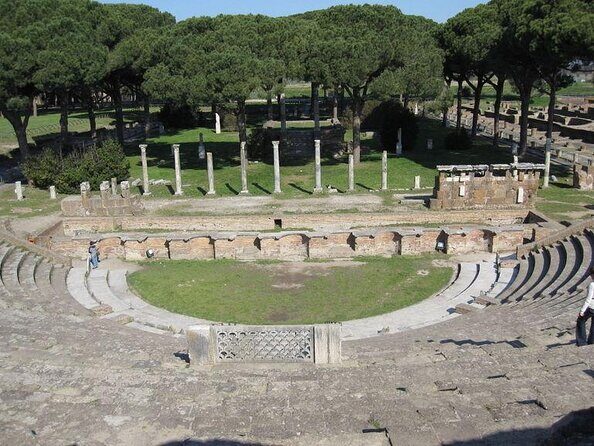
With insulae, your guide can explain how social rank and daily living showed up in architecture. Then you move on to the theater, which adds another layer. Theater space ties to public gatherings, entertainment, and how culture functioned in a port city.
The theater and housing together help you answer a bigger question: how a city built for trade also built spaces for community identity.
Square of the Guilds and Castrum: Work, Pride, and Control
The Square of the guilds points you toward how organized work and social identity connected. Guild activity wasn’t only business. It shaped who had visibility, status, and influence in civic life.
Then comes the castrum, the military camp. Seeing a camp within an urban context helps you understand how Rome controlled, protected, and managed its territories. A harbor city could be powerful and busy, which also meant it needed security and enforcement.
This is where having a PhD archaeologist on the ground is valuable. The city starts to feel like a machine with multiple systems: civic ceremony, labor networks, entertainment, food, housing, and security.
Forum and Capitolium: Power, Religion, and City Pride
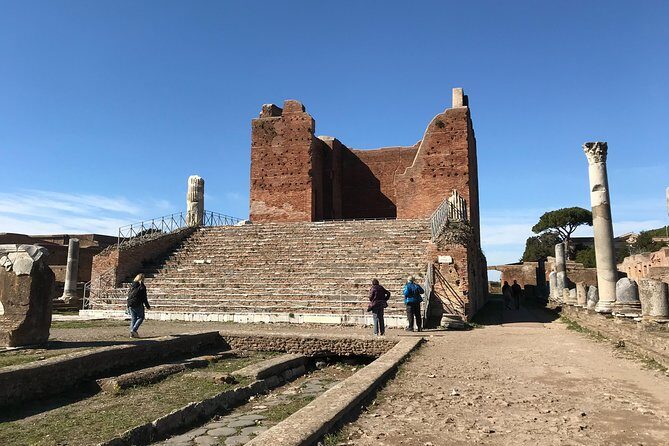
The route pushes toward the heart: the forum and the Capitolium (with temples to Jupiter, Juno, and Minerva). This is Rome’s message in stone. In Ostia, you can see how public life and religion reinforced each other and how the forum functioned as the stage for civic identity.
The Capitolium stop is often a turning point because it anchors the city’s political and religious structure. You get a better sense of what Romans were “supposed” to believe and how authority was displayed.
One drawback to keep in mind: forums can be busy visually even when you’re alone. That’s where your guide matters most—helping you place structures in order and explaining what roles they played so you don’t feel lost in a layout soup.
Augustus, Lares Augusti, and the Final Street-Memory at Thermopolium
You’ll also see the so-called shrine of the Lares Augusti and the Temple of Augustus and Rome. These stops link religion to imperial identity. The Lares Augusti connection is a reminder that household and civic beliefs could blend in Roman life, while the Augustus temple makes the political message unmistakable.
The tour then returns you through everyday life elements again, landing at a thermopolium. That loop is clever: you get the big-message spaces, then you get the places where people actually ate. The contrast helps you understand Ostia as a city that held both authority theater and practical street routines.
What to Do With Only 3 Hours at the Site
This tour is designed for highlights. That’s a plus if you want a single sharp day trip rather than a long multi-session project.
To make the most of the time on site, I’d do two things:
- Bring a short list of what you most want to understand, like how the port economy worked or what daily life looked like for the middle class.
- Ask your guide at the start what order makes the most sense for your interests. With a private guide, you can usually steer your attention without changing the whole plan.
If you’re hoping for extra museum time, you may find the scheduled ruins focus means there’s less room for wandering beyond the core route. In that case, you could plan a follow-up stop on another day.
Who This Tour Fits Best (And Who Might Want a Different Option)
This private Ostia Antica tour is a strong fit if you:
- Want deep explanation from a PhD archaeologist rather than self-guided reading
- Prefer a private van day trip with pickup and return built in
- Enjoy architecture and urban planning, especially when tied to how cities worked
- Want a manageable outing that still feels like a real Roman city walk
It may be less ideal if you:
- Want lots of free time to wander without direction
- Need a very long time on-site for slower browsing and a lot of museum material
- Are looking for a purely budget-friendly outing
Should You Book This Ostia Antica Private Tour?
If you care about meaning, not just photographs, I’d book it. The mix of skip-the-line entry, private guiding, and a route that covers both civic power and daily-life places is the real reason this works. You’re not just collecting sights; you’re learning how the city functioned.
The price is high, but the structure is efficient: van pickup, ticket fees included, and a guide who can connect buildings across the whole urban layout. If you’re the kind of person who asks questions and likes to understand what you’re looking at, this is exactly the kind of day trip that pays off.
If you want a longer stay and have time to spare, you might ask to add time on a future visit. For a sharp, high-value Rome day that doesn’t waste your energy, this private Ostia tour is a very strong choice.
FAQ
How long is the private Ostia Antica tour?
It’s about 4 hours total. The experience includes a visit of about 3 hours at the site, with driving time from Rome and back.
Is pickup available from my accommodation?
Pickup is offered. If your hotel is beyond the defined pickup area, you’re asked to contact customer support so they can find a solution.
Do I need to buy tickets separately?
Ticket fees are included in the tour price, and you skip the line.
Is this tour walking-heavy?
Yes. It’s a walking tour. The driver takes you to the attractions and returns you to your accommodation after the visit.
Are headsets included?
Headsets are included for a party of 6 people or more.
What’s included in the price?
Included items are the local guide (PhD archaeologist guide), ticket fees, private tour, and transportation to and from the site by luxury van or car.
What’s not included?
Food and souvenirs are not included.