REVIEW · CYCLING TOURS
Private Rome Bike Tour
Book on Viator →Operated by Fat Tire Tours Holdings LLC - Italy · Bookable on Viator
Rome by bike feels like cheating traffic. This private 3-hour tour is a fun, efficient way to see Rome’s headline sights without spending your time wrestling buses and walking uphill. I love the personalized attention that comes with a private group, and I love the skip-the-lines advantage that saves you from the slow churn outside the big monuments. One thing to consider: admission tickets aren’t included for the Colosseum and Pantheon, so you’ll want to plan for those separately.
The route balances major landmarks with real street-level Rome. You’ll cycle along Imperial Forums Street, pause for photos, and end near Campo de’ Fiori, where the city feels local instead of museum-only. My other favorite is the guide storytelling—names like Marko and Marco come up in guide feedback, and the vibe is clear: explanations stay on track and keep younger travelers paying attention.
The big practical downside is the surface: this is a bike tour through areas with cobbled streets, so it’s not a great fit if you’re pregnant or if your comfort level with uneven ground is low. Still, with rain ponchos provided and a route designed for bike pacing, it’s one of the easier ways to see a lot in a short time.
In This Review
- Key highlights you’ll actually feel
- Why a private bike tour makes Rome easier
- Meeting at Via dei Delfini: the start matters more than you think
- Colosseum stop: skip-line savings and the story behind the stones
- Cycling up to the Pantheon: the oldest structure, made approachable
- Via dei Fori Imperiali: where the ride turns into a history lesson
- Trevi Fountain: coin-throw time plus actual photo room
- Navona, Pantheon area, and Campo de’ Fiori: end with real Rome energy
- Who this bike tour is best for (and who should rethink it)
- Price and value: $210.72 per person for a short, targeted Rome hit
- Practical tips so your ride stays fun
- Should you book this Private Rome Bike Tour?
- FAQ
- How long is the Private Rome Bike Tour?
- Where does the tour start and end?
- Is this a private tour?
- Are admission tickets included for the Colosseum and Pantheon?
- What are the main stops during the 3-hour route?
- Does the tour run in bad weather?
- What if I need to cancel?
Key highlights you’ll actually feel
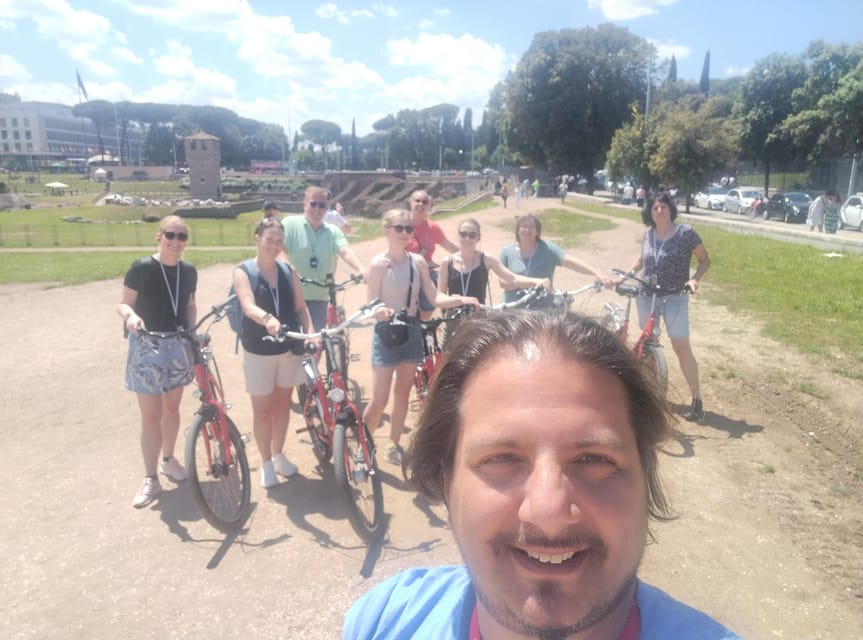
Skip long lines at major stops with your guide in front of you
Colosseum + Pantheon timing built into a tight 3-hour loop
Imperial Forums Street ride for an up-close, street-to-stone viewpoint
Photo stops at Trevi and the historic market area with time to breathe
Rain or shine operation with ponchos available
Private group format means the guide can slow down or answer questions
Why a private bike tour makes Rome easier
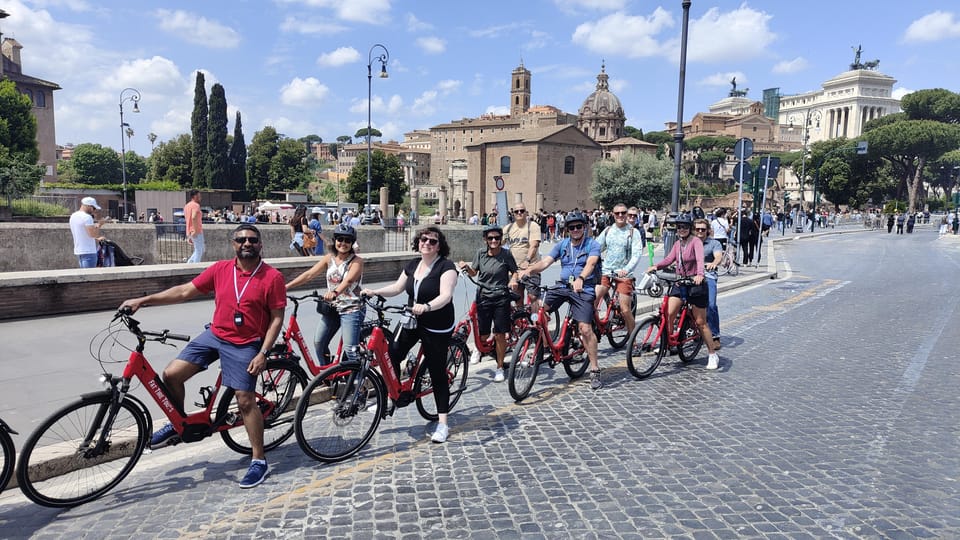
Rome looks compact on a map, then you step outside and realize it has moods: hills, cobbles, long queues, and long distances between your must-sees. This kind of bike tour solves a lot of the friction. In about three hours, you get to cover a best-of list that usually takes most of a day on foot.
You also avoid the public-transport guessing game. You’re not timing buses, decoding stops, or paying for awkward transfers. Instead, you just follow the guide and let the bike carry you between neighborhoods and monuments.
Private is the other big win. This is set up so only your group rides together, which usually means the pace and photo stops can match your comfort level. If you want a couple extra minutes for pictures at Trevi Fountain, the guide can typically work with that. If someone in your group needs a slower moment at a cobbled stretch, you’re not stuck with a fast-moving crowd.
You can also read our reviews of more cycling tours in Rome
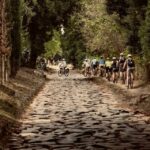
Meeting at Via dei Delfini: the start matters more than you think
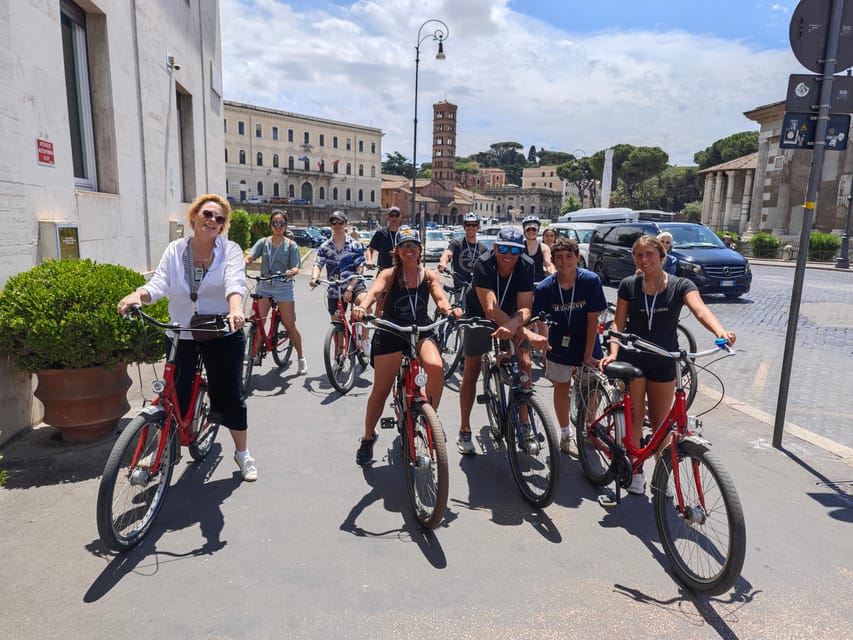
Your tour starts at Via dei Delfini, 35, 00186 Roma RM. It also ends back there, which is handy because you don’t need a complicated end-location plan.
Arrive 15 minutes early. That buffer matters because you’ll want time to get your bearings, confirm your meeting spot, and get settled before you roll out. The area is also described as near public transportation, so if you’re coming in from somewhere else, you’ll usually have options.
You should expect a real street start, not a grand “tour begins here” plaza. In practical terms: wear comfortable clothes, have your phone ready for the mobile ticket, and treat the first few minutes like a warm-up.
Colosseum stop: skip-line savings and the story behind the stones
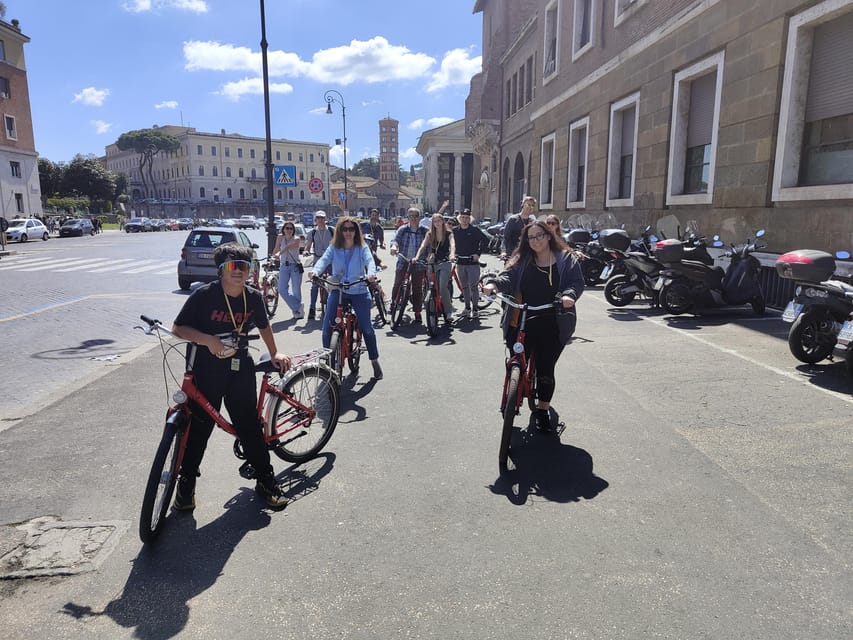
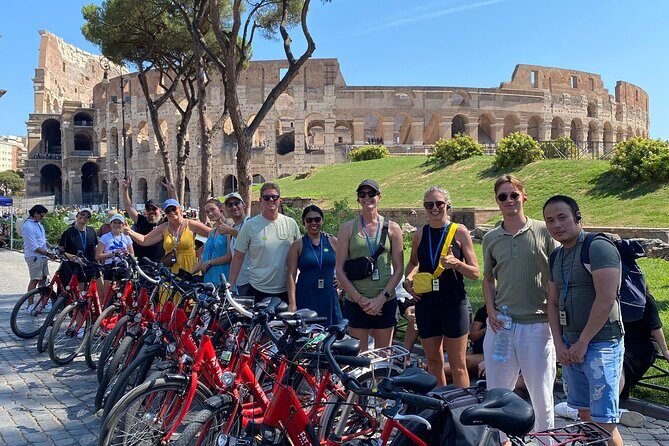
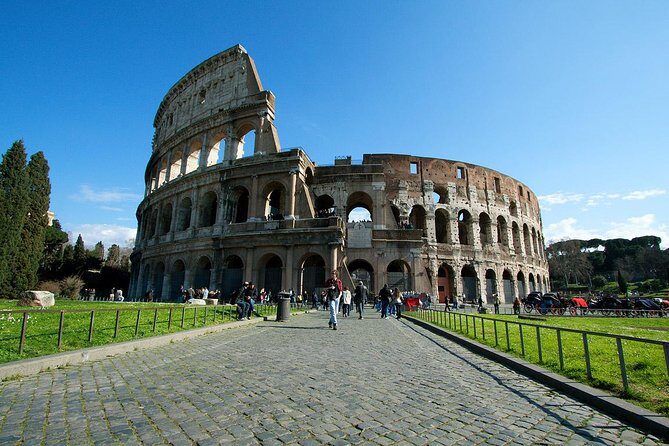
The Colosseum stop is about 20 minutes, and it’s built around guided context. This is the kind of monument where your brain helps if someone connects the details—what you’re seeing, how it worked, and why it mattered.
The tour includes guaranteed skipping of the long lines, which is the main reason to put this stop into a guided format. Even if you’ve bought tickets in advance, queues and bottlenecks outside major sites can eat your time. Here, the guide helps you move through faster.
Important planning note: admission for the Colosseum is not included, so you’ll need a separate ticket strategy. The good part is that you’ll be ready for the moment you arrive instead of spending your precious tour time figuring out ticket purchasing.
What to do in the 20 minutes: don’t try to “fully see” the Colosseum. Instead, focus on two things:
- Get oriented first: where you’re standing and how the structure feels from this specific viewpoint.
- Listen for the story points the guide highlights, because that’s what turns a famous photo into something you understand.
If your guide uses extra tools like a VR headset in some versions of the Colosseum storytelling, take it seriously for the mental picture. Even a short tool like that can help you visualize what you’re looking at, especially if you’ve never been before.
Cycling up to the Pantheon: the oldest structure, made approachable
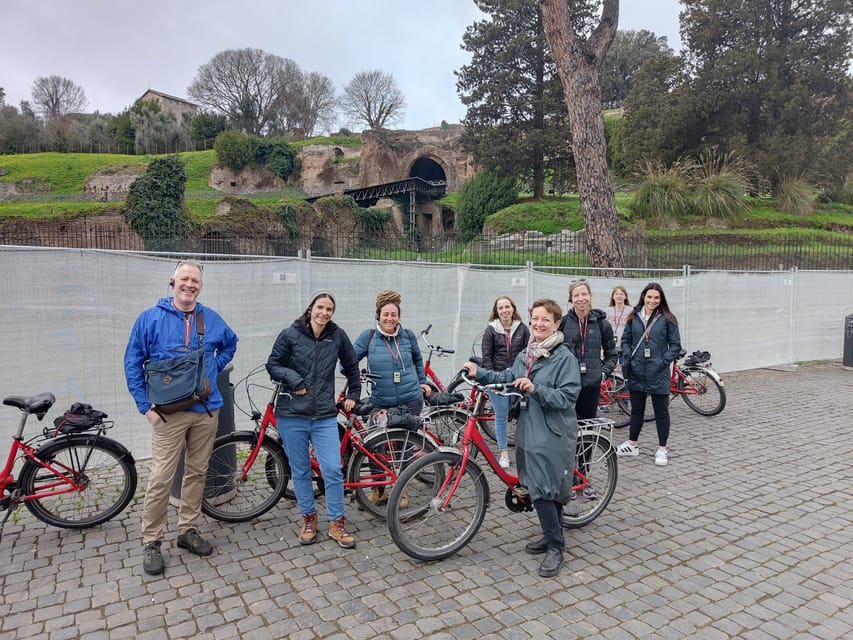
Next comes the Pantheon, another 20-minute stop. You’ll cycle up to the Pantheon, and that matters more than it sounds. On foot, the approach can feel like constant effort. By bike, you get the transition moments without losing the flow.
Again, admission isn’t included for the Pantheon, so plan for your ticket separately. The benefit of having a guide here is that you’re not stuck figuring out timing, entrances, and where to look first.
The Pantheon is also a stop where your senses can do a lot of work quickly. Your guide will likely point you toward the key visual features and explain why this place still draws attention thousands of years later. You don’t need a full hour to make it worthwhile—20 minutes can be enough if you know what to look for.
One practical drawback: if you’re the type who likes slow wandering and lots of internal reading time, 20 minutes might feel short. The fix is simple: decide what your top question is before you arrive, then use the guide time to answer it.
Via dei Fori Imperiali: where the ride turns into a history lesson
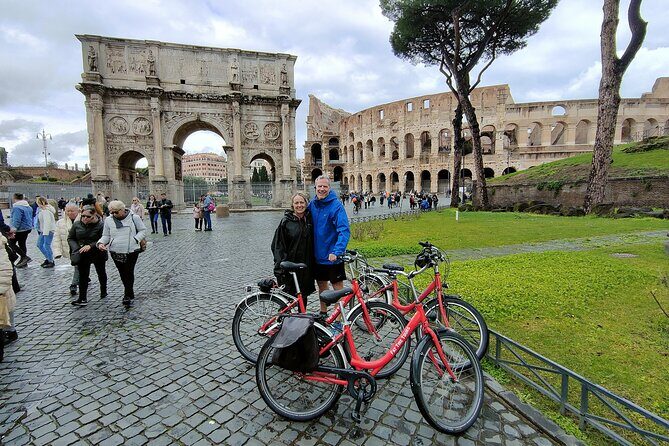
This is one of my favorite segments because it’s not just standing still. Via dei Fori Imperiali is where you cycle along Imperial Forums Street and get an explanation of the Imperial Forums area.
The stop is about 20 minutes, and it’s described as a ride with viewing and explanation. That mix is smart. From street level, you see how the area connects, and you get a sense of the “big picture” without needing to be stuck in one exact viewpoint.
A key value here is pacing. You’re not spending your whole tour indoors or in single-location queues. Instead, you’re moving through an important corridor and learning as you go. It’s also a relief if you’ve already done a lot of walking that day.
The watch-out: this is also where Rome’s streets can feel rough under wheels. If your bike comfort level is low, take it slower on the cobbles. Good news: your private group format gives you more flexibility to match your comfort.
You can also read our reviews of more private tours in Rome


Trevi Fountain: coin-throw time plus actual photo room
Then you reach the Trevi Fountain stop for about 15 minutes. Trevi is famous for a reason, but it’s also famous for crowds. This is why that short, guided timing works. You get a focused moment to see it and take photos without turning your tour into a queue-based afternoon.
Admission is free here, which is nice because you aren’t paying monument fees for the most photographed fountain in Rome. You’ll have time to throw your coin and enjoy the setting, and you can get better pictures by stepping slightly off the busiest line rather than standing in the densest pack.
A quick practical tip: if you care about photos, think about the shot you want before you arrive. Trevi is wide, and people often default to the same angle. If your goal is a clean crowd-free image, your best chance comes from timing and small repositioning during the stop.
The only consideration is time. Fifteen minutes is enough to do the classic moment and get your pictures, but it’s not enough to linger forever. If that’s your style, treat Trevi Fountain as the highlight stop, not the end-of-day relaxation.
Navona, Pantheon area, and Campo de’ Fiori: end with real Rome energy
The last named segment is Navona / Pantheon / Campo de’ Fiori, with about 20 minutes of soaking up the sights and sounds of Campo dei Fiori. It’s also described as Rome’s oldest market area, which is a big deal because it gives your tour a more local texture.
This is where the tour shifts from monument mode to street-life mode. You’re still in the center of famous Rome, but you’re not stuck facing the same postcard view. If you like markets, watching people, and reading the rhythm of a neighborhood, this stop is the payoff for ending on the right kind of street.
Also, the stop is listed as free, so your money isn’t going toward another ticket. What you’re paying for here is time and guidance: knowing where to look, what to notice, and how to keep the tour moving while still feeling like a Rome walk-through.
A practical note: this is also where you’ll likely do your best “last photos” before heading back to the meeting point. Plan to bring your battery-friendly settings and don’t rely on unlimited phone storage if you’re shooting a lot.
Who this bike tour is best for (and who should rethink it)
This tour is described as suitable for most travelers, and it’s offered in English with a professional guide. Kids are welcome, but the rules are straightforward: children should already be comfortable riding, can navigate different surfaces, and can handle a group ride. There are limited 20-inch and 24-inch bicycles available for kids.
If you’re traveling as a family, the bike format can be a real win because children can burn energy without you spending the entire time dragging them through lines. One guide feedback detail I liked from the notes is that the explanations can stay engaging for teens, which is harder than it sounds at monuments.
For adults, it’s great if you want maximum sight coverage without turning Rome into a 10-mile walking challenge. It’s also ideal if you hate wasting half a day in transit.
If you’re pregnant: the guidance is clear that pregnant women are strongly discouraged due to cobbled streets. That’s not a small detail. Uneven surfaces and bike handling are a real factor here.
If you’re nervous about biking: you can still enjoy this, but be honest about your comfort level on uneven roads. A private group helps, but the physical reality doesn’t change.
Price and value: $210.72 per person for a short, targeted Rome hit
At $210.72 per person for about 3 hours, this isn’t a bargain-basement activity. You’re paying for three things that add real value:
- A professional guide who manages timing and storytelling
- Guaranteed skip-the-lines benefits at major sites
- A bike-based route that compresses a lot of seeing into a short window
If you compare this to paying for individual skip-line entry products and then spending your own time figuring out transport, timing, and photo stops, the price starts to make sense. You’re buying convenience and momentum.
The one cost you should budget for: tickets for the Colosseum and Pantheon are not included. That doesn’t make the tour bad value—it just means you can’t treat it as an all-in package. Plan for those admissions and you’ll feel in control.
Also factor in that this is a private tour. Private means you’re not splitting guide time among a huge crowd, so the experience feels more tailored than a large group bus-style tour.
Practical tips so your ride stays fun
Here’s how to make the most of your time on the bike:
- Arrive early and start relaxed. The first minutes set the tone.
- Wear shoes you don’t mind getting a little dusty from street-level riding.
- Expect some uneven pavement. Go slow where it feels rough.
- Bring your water and basic snacks, since food and drinks aren’t included.
- If rain shows up, don’t panic. The operator runs rain or shine, and rain ponchos are available.
One more tip: treat the stops like chapters, not like a checklist. If you focus on a couple key moments at each site, the whole loop will feel satisfying instead of rushed.
Should you book this Private Rome Bike Tour?
I’d book it if you want a time-efficient, guide-led way to hit Colosseum, Pantheon, Imperial Forums, Trevi Fountain, and Campo de’ Fiori without losing hours to transit and lines. It’s also a strong fit for families who can ride comfortably and for anyone who prefers Rome with movement instead of constant stop-and-go walking.
I’d hesitate if you’re not comfortable on bikes over cobbled streets, or if the idea of buying separate tickets for the Colosseum and Pantheon sounds like an annoyance. Also, if you want long, slow immersion at just one monument, the short stop times may feel limiting.
If you fall into the sweet spot—short on time, ready for cycling, and want a smart route—this tour is the kind of plan that turns Rome from a list into a route you’ll remember.
FAQ
How long is the Private Rome Bike Tour?
It lasts about 3 hours.
Where does the tour start and end?
It starts at Via dei Delfini, 35, 00186 Roma RM, Italy, and it ends back at the same meeting point.
Is this a private tour?
Yes. It’s a private tour, and only your group participates.
Are admission tickets included for the Colosseum and Pantheon?
No. Admission tickets are not included for the Colosseum and Pantheon. Some other stops listed are free.
What are the main stops during the 3-hour route?
The stops are Colosseum, Pantheon, Via dei Fori Imperiali (Imperial Forums area), Trevi Fountain, and Navona / Pantheon / Campo de’ Fiori.
Does the tour run in bad weather?
Yes. The tour operates rain or shine, and rain ponchos are available.
What if I need to cancel?
You can cancel for a full refund if you cancel at least 24 hours before the experience start time.