REVIEW · POMPEII
Private Pompeii Tour with 3D Virtual Reality Headset
Book on Viator →Operated by Flashback Journey to Pompeii · Bookable on Viator
Pompeii hits different with VR. This private tour uses 3D 360-degree Gear VR plus an audio-guided experience so you can look at key parts of the ancient city and better picture what life looked like about 2,000 years ago. I really like the way it turns the ruins into something you can follow step by step, with a licensed local guide answering questions in the real site. I also like the practicality: you get skip-the-line entry and you’re not stuck in a huge crowd. One watch-out: the VR visuals can feel a bit cartoon-like, so if you want pure realism, you may still wish you’d done a standard walking tour too.
This is a great match if you enjoy history but also like a modern tool that helps your brain build the missing pieces. You’ll choose morning or afternoon, and the tour runs about 2 to 3 hours. It’s private, so only your group participates, and the experience is designed to work in all weather.
In This Review
- Key things to know before you go
- Pompei rebuilt in your head with 360° Gear VR
- The guide + audio layer that keeps you from feeling lost
- Stop 1: Pompeii Archaeological Park, with temples, shops, theaters, and homes
- Morning or afternoon choice, plus private-group comfort
- Gear VR logistics: what to do with bags, shoes, and your eyes
- How much is $217.49 really buying you?
- Should you book this VR Pompeii tour?
- FAQ
- What’s the price per person?
- How long is the tour?
- Is the tour private?
- What language is the tour offered in?
- Where does the tour start and end?
- Is transport to and from Pompeii included?
- Who can use the 3D VR headsets?
- What’s included in the ticket?
- Is free cancellation available?
Key things to know before you go
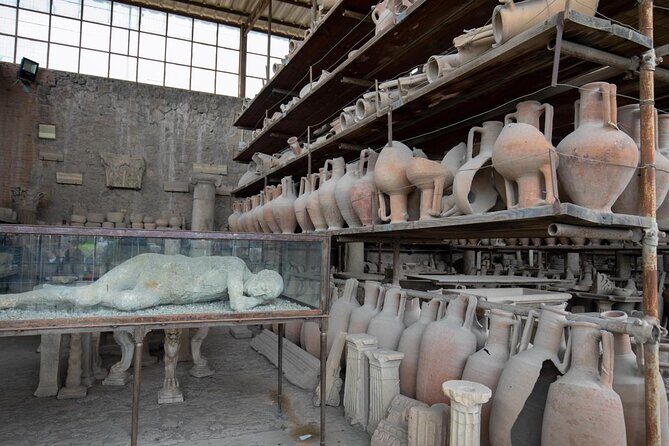
- 360° 3D Gear VR shows Pompeii as it likely looked before the eruption
- Licensed local guide keeps you oriented and answers questions on-site
- Skip-the-line entry is included, saving time at the gate
- Not a kid-friendly VR setup: not recommended under 13 (with limited parent discretion for ages 9–12)
- Comfort rules matter: uneven ground, lightweight-bag tips, and headset health warnings are part of the deal
- Best for context: you’ll walk away with a clearer picture of temples, homes, shops, theaters, and markets
Pompei rebuilt in your head with 360° Gear VR
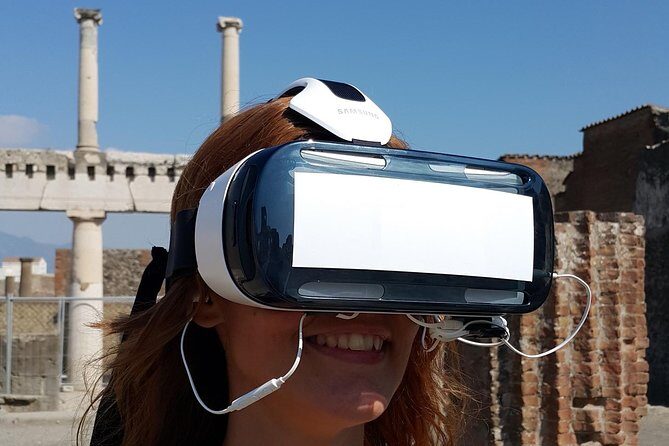
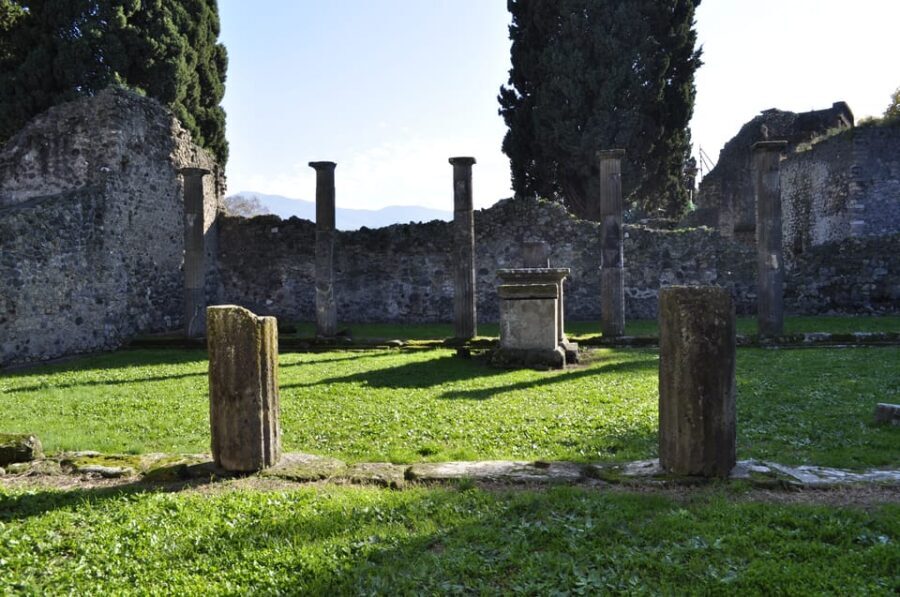
Pompeii is already powerful as a place to wander. The streets and building shells make you feel the shock of what happened when Vesuvius erupted. Still, the ruins can be hard to fully picture. Stone without roofs is tough for the imagination.
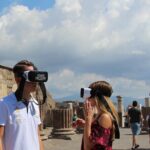
That’s where this tour’s VR approach earns its keep. The headset experience is 3D and 360 degrees, so you’re not just watching a screen. You’re looking around—up, down, and around corners—while your guide gives the story. The big payoff is that you start connecting what you’re seeing in front of you with what those structures once were. It helps you stop thinking only in fragments.
In practice, you’ll spend time at Pompeii Archaeological Park with the guide, and the VR is used to time-shift you. The idea is simple: see what the city may have looked like before destruction, then walk the real streets so your eyes and brain line up.
You can also read our reviews of more private tours in Pompeii



The guide + audio layer that keeps you from feeling lost
One reason Pompeii can feel overwhelming is that there’s a lot to look at and not always a clear path. This tour uses a licensed, local guide to keep the visit moving with purpose. And you get audio commentary that supports what you’re seeing.
What I like about that combination is the balance. You’re not only staring at the VR. You’re also getting real explanations tied to the archaeological site around you. That matters because Pompeii is not a single monument. It’s a whole urban puzzle: civic spaces, homes, businesses, entertainment venues, and religious sites.
In the feedback, the guide quality comes through clearly, and that makes sense. In a place like this, good guiding changes the whole experience. You’re more likely to notice details, ask questions, and leave with a sense of how the city worked.
Stop 1: Pompeii Archaeological Park, with temples, shops, theaters, and homes
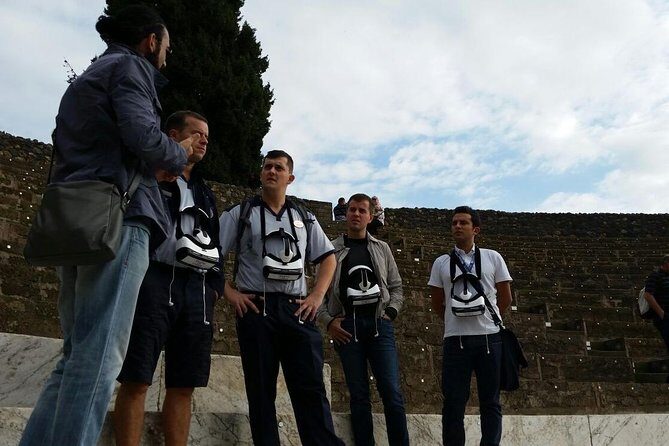
This tour is centered on one main stop: Pompeii Archaeological Park. You’ll be there about 2 hours, and the overall tour timing can stretch to around 2 to 3 hours depending on the flow of the experience.
Here’s what you should expect to cover in that time:
- Key areas that help you understand how people lived and worked
- Temples and other religious spaces
- Homes and everyday domestic life
- Shops and market life
- Theaters and public spaces for entertainment
The VR portion is designed to place you in a view of the city around that theme of daily life—then bring you back to the existing ruins so you can match the past to the present. That time-travel effect is the core reason this tour stands out.
The best part is learning what to look for. Instead of wandering randomly, you get guided context. You’ll likely notice how entrances align, how rooms and public spaces relate, and how streets connect areas that might otherwise look like they belong to separate stops.
One realistic drawback: if you’re hoping the VR will be photorealistic in every moment, temper your expectations. Some animation can come off as more stylized than you might want. The guide and the real-site walking are what keep the whole visit anchored.
Morning or afternoon choice, plus private-group comfort
You can pick a morning or afternoon tour. That flexibility matters at Pompeii because the site can feel more comfortable at the right time of day. Also, it’s easier to match to your broader day plan in the area.
This is a private tour/activity. Only your group participates, which usually means fewer delays and less waiting around for other people to catch up. And you’re meeting at Piazza Esedra, 80045 Pompei, Italy. The tour ends back at that same meeting point, so you’re not dealing with a separate drop-off location.
Skip-the-line entry is included. Even if you’ve planned well, that small time save is worth money in your travel day. It also helps you start the tour feeling less rushed.
The tour operates in all weather. That’s a big practical detail in this region where clouds and showers can happen fast. If weather changes your comfort, you’ll still get the experience.
Gear VR logistics: what to do with bags, shoes, and your eyes
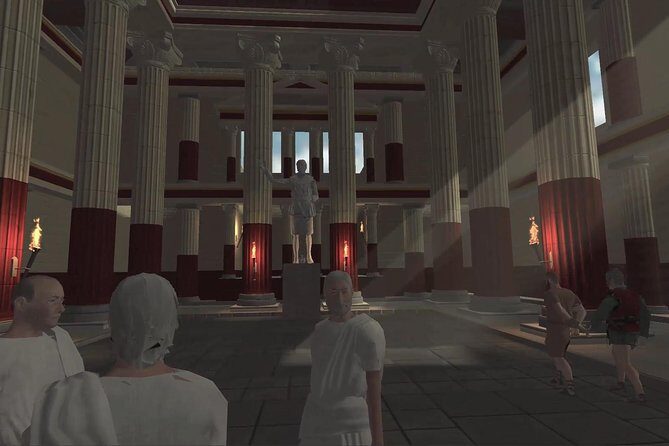
This tour uses Gear VR headsets for the 3D 360° experience. That’s not just a fun detail—it affects what you should prepare.
Wear comfortable shoes. Pompeii has uneven terrain, so you’ll be on your feet in a way that can surprise you if you’ve been wearing fragile footwear. Take the walking seriously and pack accordingly.
Travel light. The guidance is to minimize bags, pocketbooks, and backpacks. You may have to wear a lightweight bag across your shoulder during parts of the tour. Plan like you’ll be moving often and changing positions.
Now the big section: health and safety. VR can trigger issues for some people. The tour specifically says use of the 3D headsets is not recommended for children under 13 for health and safety reasons. Children ages 9–12 are at a parent’s discretion, and children under 9 are not permitted to use the headsets.
The tour also flags a list of health situations where you should consult a doctor before taking the tour, including:
- history of seizures, dizziness, epilepsy, or blackouts
- preexisting binocular vision abnormalities
- psychiatric disorders
- heart conditions and other serious medical conditions
- pregnancy and the elderly
There’s also a note for people with pacemakers: the Gear VR can emit radio waves that could affect nearby electronics, so you should consult your doctor or the manufacturer before using it.
If you’re prone to motion sickness or visual discomfort, take it seriously. You’ll be told to stop immediately if you feel symptoms such as dizziness, disorientation, eye strain, nausea, blurred vision, or anything similar to motion sickness. The tour is clear that you should discontinue use if any of those come up.
This isn’t meant to scare you. It’s just smart travel planning. If you’re medically cleared and you handle VR well, you’ll get the benefit of the technique without turning it into a struggle.






How much is $217.49 really buying you?
The price is $217.49 per person, and it’s for a private tour that includes several real components:
- a licensed local guide
- a 3D 360-degree VR headset experience
- skip-the-line entrance fee
That combination is the value story. If you’re the type of traveler who loves classic Pompeii wandering with a guide, you already get part of what you want here. But the extra cost is paying for the VR reconstruction layer and the time-saving entry.
Is it “worth it”? For the right person, yes—especially if you struggle to visualize ancient city life from ruins alone. The VR is doing work that takes a standard guide-hours walking and careful explanation to replicate. This tour compresses that “get your bearings and understand the layout” step into a format that’s easier for many brains to grasp.
I do think it’s important to be honest about trade-offs. If you’re the kind of traveler who values strict realism above storytelling, you might find the VR animation a little too cartoon-like. In that case, you’d want to treat the VR as a helpful guide to understanding, not a perfect reconstruction.
For adults and teens, the feedback points toward strong enjoyment of this tech-forward approach. If your group has mixed interests—one person loves Roman history, another just wants to understand what they’re seeing—this tour can make everyone feel like they got something.
Should you book this VR Pompeii tour?
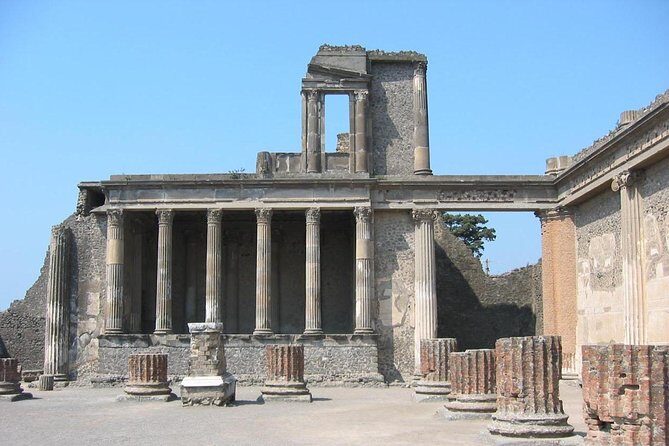
Book it if you want Pompeii to feel less like a list of ruins and more like a lived-in city. This is a smart choice if:
- you like tours with a guide who can explain what you’re looking at
- you want a 360° 3D way to picture daily life
- you prefer a private group experience
- you’d rather save time with skip-the-line entry
Skip it or consider a different style of Pompeii tour if:
- you’re sensitive to VR or have any of the health concerns listed and can’t get medical clearance
- you strongly prefer photorealism and think VR animations need to be perfect to be worth it
- you’d rather spend all your time outdoors walking and reading details directly at the site
If you’re unsure, here’s a useful way to decide: ask yourself whether you want Pompeii explained through a “see it like it was” tool. If yes, this private VR approach is a very practical way to make the ruins click.
FAQ
What’s the price per person?
It’s listed at $217.49 per person.
How long is the tour?
The experience is about 2 hours, with the full tour time noted as approximately 2 to 3 hours.
Is the tour private?
Yes. This is a private tour/activity, and only your group participates.
What language is the tour offered in?
It’s offered in English.
Where does the tour start and end?
It starts at Piazza Esedra, 80045 Pompei NA, Italy, and ends back at the same meeting point.
Is transport to and from Pompeii included?
No. Transport is not included.
Who can use the 3D VR headsets?
Use of the 3D virtual reality headsets is not recommended for children under 13. Parents may use discretion for children aged 9 to 12. Children under 9 are not permitted.
What’s included in the ticket?
You get a licensed local guide, a 3D 360-degree VR headset experience, and a skip-the-line entrance fee.
Is free cancellation available?
Yes. You can cancel up to 24 hours in advance for a full refund. If you cancel less than 24 hours before the start time, the amount paid won’t be refunded.