REVIEW · NAPLES
THE WONDERS OF ANTIQUES: The Archaeological Museum of Naples
Book on Viator →Bookable on Viator
Naples can turn antiques into living stories. This guided visit through the Museo Archeologico Nazionale di Napoli makes ancient art feel organized and usable, not random. I especially like the way the experience flows from Roman-Greek works to the Pompeian collection and then to the big, show-stopping Farnese masterpieces, with clear explanations that make comparisons easy to follow.
A second thing I like: the best versions of this tour lean on humor and smart art talk, like the way guides such as Fabio use plain English and comparisons between Greek and Roman art to help it click. One possible drawback to plan for is that entrance tickets aren’t included, so you’ll want to arrange museum entry separately before you go.
In This Review
- Key highlights at a glance
- Naples’ Archaeological Museum: why this tour format works
- Inside the museum: Roman-Greek, Pompeii, then Farnese
- Roman-Greek collection: where to start so nothing feels random
- Pompeian collection: artifacts with story weight
- The Farnese collection: big masterpieces, guided attention
- Fabio and the art-nerd advantage: humor, clarity, and comparisons
- What I’d do before you arrive
- Pompeii follow-up strategy: how to get more out of your Naples days
- Timing and pace: 9:00 am start, 1h 45, and a private flow
- Price and value: what $193.24 per group really means
- Practical tips that make the tour smoother
- Who should book this Naples antiques tour?
- Should you book it?
- FAQ
- How long is the Archaeological Museum of Naples guided tour?
- What time does the tour start?
- Where do we meet for the tour?
- Is this a private tour?
- Is the tour offered in English?
- Are entrance tickets included?
- When will I receive confirmation after booking?
Key highlights at a glance

- One focused stop at the Museo Archeologico Nazionale di Napoli, so you aren’t bouncing around all day
- Roman-Greek to Pompeii to Farnese sequence that gives you context as you move through galleries
- English-led storytelling that helps you compare styles without feeling lost
- Pompeian priorities like mosaics can be worked into the route if you have a must-see
- Private group experience (up to 15) that keeps the pacing from dragging
- Tickets are extra, so budget time to handle admission
Naples’ Archaeological Museum: why this tour format works
The Museo Archeologico Nazionale di Napoli is the kind of museum that can overwhelm you if you walk in cold. Too many rooms. Too many sculptures. Too many plaques. This tour style solves that by giving you a guided path through the museum’s strongest story line.
You start at the museum’s address on Piazza Museo, right where most people will base their Naples sightseeing. The tour then stays on track for about 1 hour 45 minutes, which is long enough to understand what you’re looking at, but short enough that you don’t spend the whole day stuck in one building.
Also, this is offered in English, which matters a lot here. Ancient art is hard even when you speak the language, and it gets easier only when someone explains what you’re seeing in real terms.
You can also read our reviews of more museum experiences in Naples


Inside the museum: Roman-Greek, Pompeii, then Farnese
This is a one-stop tour. The entire experience is built around a guided circuit through three big themes: Roman-Greek, Pompeian, and the Farnese collection.
Roman-Greek collection: where to start so nothing feels random
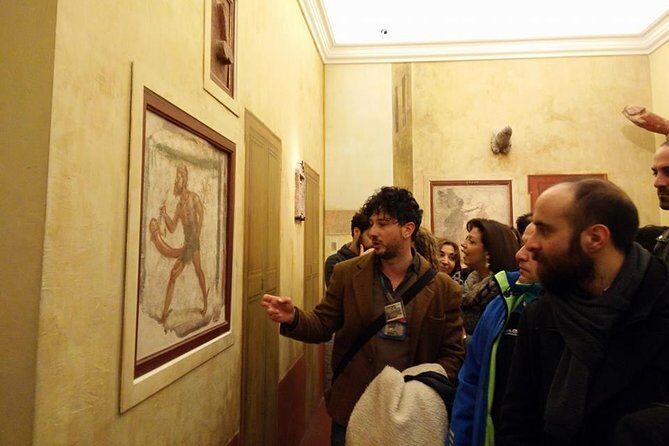
Starting with the Roman-Greek material is a smart move. It gives you a reference point before you hit the more emotional stories tied to Pompeii. You’ll get guided context that helps you notice the differences in how Greek art and Roman art express power, beauty, and identity.
If you’ve ever looked at a statue and thought, I know it’s important, but why, this part is where you begin getting answers. The explanations are designed to help you connect form with meaning, not just name-drop dates.
Pompeian collection: artifacts with story weight
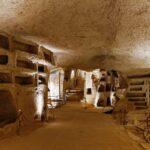
Then you move into the Pompeian section—especially valuable if you’ve visited Pompeii (or you’re planning to). Pompeii turns into a second story when you see the objects recovered from the city.
One of the most consistent takeaways from people who did this as a follow-up is that it helps them make sense of what they saw outside. If Pompeii made an impact, this is the place where the museum helps you understand why the details mattered.
A bonus: mosaics tend to be a highlight. If mosaics are high on your list, ask your guide to prioritize them early in your route. In at least one example, the guide worked with a guest’s request to go to the mosaics first, then build outward from there.
The Farnese collection: big masterpieces, guided attention
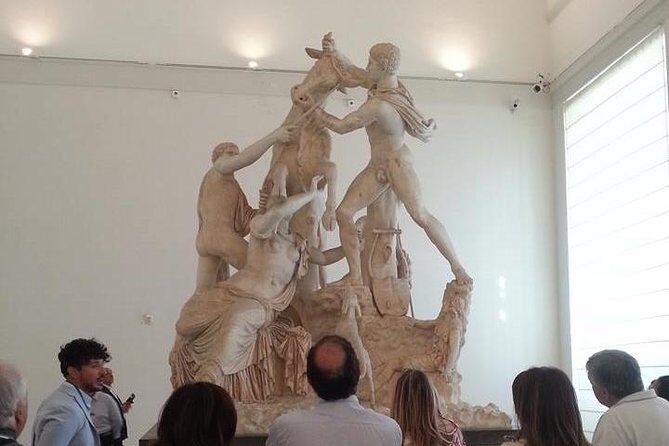
Finally, the tour ends at the Farnese masterpieces. This is where you’ll feel the museum shifting from “context” to “wow, look at that craftsmanship.”
The Farnese segment is a strong ending because it gives your brain something solid to hold onto. After Roman-Greek and Pompeian context, these masterpieces land with more weight. You’re not just seeing a great object. You’re seeing how all that earlier context helps you read it better.
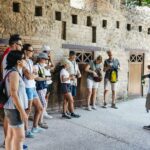




Fabio and the art-nerd advantage: humor, clarity, and comparisons
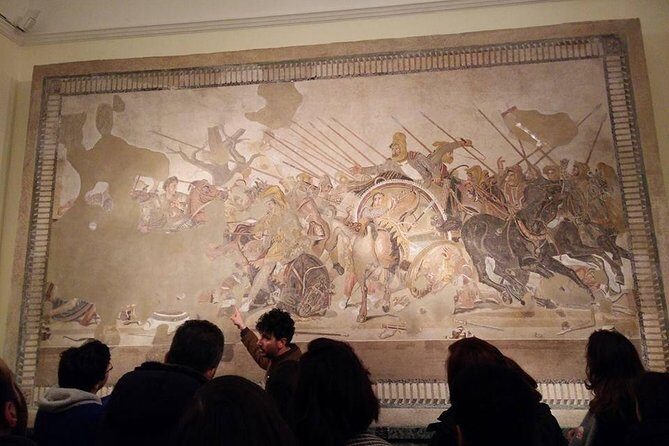
The tour’s quality depends heavily on the guide, and the pattern you’ll want to look for here is simple: can they make art feel understandable in real time? People who went on this experience with guides like Fabio describe explanations that are clear and easy to follow, with a sense of humor that keeps the museum from feeling like homework.
Two things this kind of guide approach does well:
- It helps you compare ancient Greek vs Roman art without needing a degree in classics.
- It keeps you moving with purpose, so you’re not stuck reading plaques that take longer than the tour itself.
If you’re traveling with kids, this is another point in the tour’s favor. There’s an example of Fabio using questions and quiz-style prompts to keep two children (ages 11 and 8) engaged. Even if you don’t have kids, that same technique often works for adults who are tired of staring at stone.
What I’d do before you arrive
Bring one simple list in your head:
1) Pompeii artifacts and mosaics
2) Anything you think looks especially important
3) A question about what makes Greek and Roman art different
With that, you’re ready to use the guide instead of just watching them talk.
Pompeii follow-up strategy: how to get more out of your Naples days
This tour is especially useful if Pompeii is already in your itinerary, because the museum becomes a “why” machine. You’ll see Pompeii-related objects in a calmer setting than the ruins, where context can get lost.
Here’s a smart way to plan your timing:
- If you’re headed to Pompeii soon, use the museum tour to build a vocabulary for what you’ll later see firsthand.
- If you already visited Pompeii, use the museum tour to connect what you walked past to what it actually means.
The best part is that you don’t have to choose one museum experience over the other. This guided tour is designed to make the two complement each other.
And if you love mosaics, don’t assume they’ll just happen at some point. Tell your guide you want to start with mosaics, and then let them guide the rest.
Timing and pace: 9:00 am start, 1h 45, and a private flow
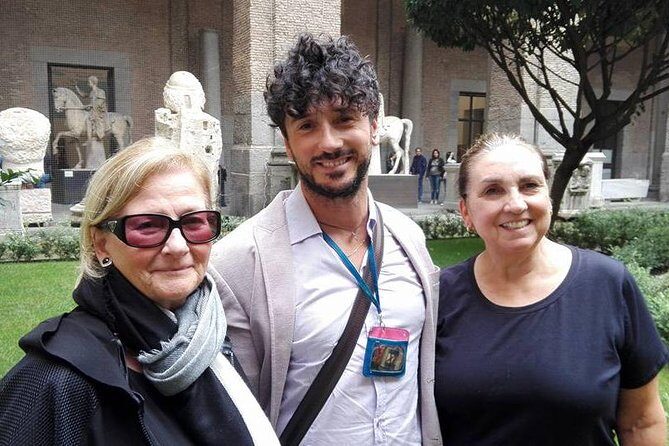
The tour begins at 9:00 am and runs for about 1 hour 45 minutes. Starting earlier is helpful. Museums tend to feel less chaotic earlier in the day, and you’ll get more comfortable with the layout before the building gets busier.
This is also a private tour for your group only. The group size listed is up to 15, which is big enough for friends and multi-person families, but still small enough that a good guide can keep track of where everyone is looking.
One practical consideration: because this is a guided route through major sections, you won’t be able to wander freely for long. If you love slow museum browsing, you might want to add extra time on your own after the tour. But if you want structure and learning without losing half the day, this tour hits a workable pace.
Price and value: what $193.24 per group really means
The price listed is $193.24 per group (up to 15). That’s not cheap if you’re coming solo or as a couple, but it becomes reasonable once you split it among friends or family.
For example:
- If you had 2 people, you’d be paying roughly $96 per person.
- If you had 6 people, it drops to about $32 per person.
- If you filled close to 15, it becomes about $13 per person.
What you’re paying for is the guided structure and the English explanations that help you understand what you’re seeing in the Pompeian and Farnese sections. Since entrance tickets are not included, factor that in when you budget. Still, the guide time is the big value piece here.
Also, the fact that it’s commonly booked about 116 days in advance hints at steady demand. If you have fixed travel dates, booking earlier can help you lock in the exact slot you want.
Practical tips that make the tour smoother
A museum tour is only as good as the small logistics that support it. Here’s what I’d do to keep it easy:
- Handle museum entry ahead of time. Since tickets aren’t included, you don’t want to waste your tour start staring at ticket counters.
- Arrive a few minutes early at Piazza Museo, 19 (80135 Napoli). Your tour ends back at the same meeting point, so it’s also easier if everyone knows the exact location.
- Wear comfortable shoes. Even though it’s one main stop, museums involve a lot of indoor walking.
- Pick your priority before you go in. If mosaics matter, say so early. Guides can usually adjust the order within a guided circuit.
The good news: the meeting point is described as near public transportation, so you aren’t forced into a complicated logistics puzzle to get there.
And if plans change, this experience offers free cancellation up to 24 hours before the start time. That gives you breathing room if your Naples schedule shifts.
Who should book this Naples antiques tour?
Book this tour if you fit one of these profiles:
- You want an English-guided museum visit that explains what you’re seeing without slowing you down.
- You’re going to Pompeii (or you already did) and want a guided way to connect the ruins to the objects.
- You enjoy art history when someone makes it understandable, with humor and clear comparisons.
- You’re traveling with a small group (up to 15) and want everyone to get the same organized overview.
If you’re the type who only enjoys museums in silence and likes to read every label for 45 minutes, you might not love how structured this is. But for most people, the guided route is exactly the right use of time.
Should you book it?
Yes, I think this is a smart booking for Naples, especially if Pompeii is part of your trip. The biggest reason is focus: you get a guided walkthrough that moves from Roman-Greek context to Pompeian artifacts, then finishes with the Farnese masterpieces in a way that helps it all make sense. Add in strong English-led explanations from guides such as Fabio, and the experience has a real “lightbulb” quality.
If you’re willing to purchase museum entry separately and show up ready to prioritize (mosaics, Pompeii objects, Farnese highlights), this tour is good value and a genuinely efficient way to get more out of one of Naples’ most important museums.
FAQ
How long is the Archaeological Museum of Naples guided tour?
It lasts about 1 hour 45 minutes.
What time does the tour start?
The start time is 9:00 am.
Where do we meet for the tour?
You meet at Museo Archeologico Nazionale di Napoli, Piazza Museo, 19, 80135 Napoli NA, Italy.
Is this a private tour?
Yes. It’s private, and only your group participates.
Is the tour offered in English?
Yes, it’s offered in English.
Are entrance tickets included?
No. Entrance tickets are not included.
When will I receive confirmation after booking?
Confirmation is received within 48 hours of booking, subject to availability.