REVIEW · TREVI FOUNTAIN TOURS
Trevi Fountain Underground Guided Tour Small group
Book on Viator →Operated by Rome with Silvia · Bookable on Viator
Rome has a second Trevi.
What I like most is the chance to stand over ancient aqueduct ruins and see how the Romans fed fountains with water that is still described as fresh and clear today. I also love the small-group feel and the built-in Q&A support with radio headsets. One thing to plan for: it’s a compact underground visit, and you may spend more time standing than you’d expect from the idea of a big tunnel walk.
This is run by Rome with Silvia, and the guides are the reason the underground feels like more than a set of ruins. If you’re expecting a long, cinematic tunnel experience, adjust your expectations. You’ll get a smart, focused route aimed at water systems, archaeology, and what you can actually see beneath the street.
In This Review
- Key points I’d plan around
- Entering the Trevi Fountain Underground: what this tour is really about
- Meeting at Piazza dei Crociferi and the 11:00 start that keeps things efficient
- Stop 1 at Trevi Fountain: seeing the aqueduct story beneath the beauty
- Stop 2 at Vicus Caprarius: the City of Water and Aqua Virgo
- “Water purity” in plain language: what Aqua Virgo means for your visit
- Small-group flow, radio headsets, and time to ask questions
- How the cramped feel affects the experience (and how to handle it)
- Price and value: is $57.68 worth your hour?
- What to pack and plan for an underground Trevi visit
- Who should book this Trevi Fountain Underground tour
- Should you book Trevi Fountain Underground Guided Tour Small group?
- FAQ
- How long is the Trevi Fountain Underground Guided Tour?
- What’s the price per person?
- Is the tour offered in English?
- How big is the group?
- What’s included in the ticket?
- What’s not included?
- Where does the tour start?
- What time does the tour start?
- Can I cancel for free?
Key points I’d plan around

- Max 10 travelers means more time to ask questions instead of shouting over crowds
- Radio headsets included so you can actually hear the explanations underground
- Aqua Virgo, pure water ties the aqueduct story to the fountain in a concrete way
- Vicus Caprarius is where the visit feels most alive, with flowing water still active in the area
- Cramped spaces are part of the experience, so good shoes and patience help
- Title expectations: you’re focused on underground archaeology and water routes, not a full view of every exterior fountain area
Entering the Trevi Fountain Underground: what this tour is really about
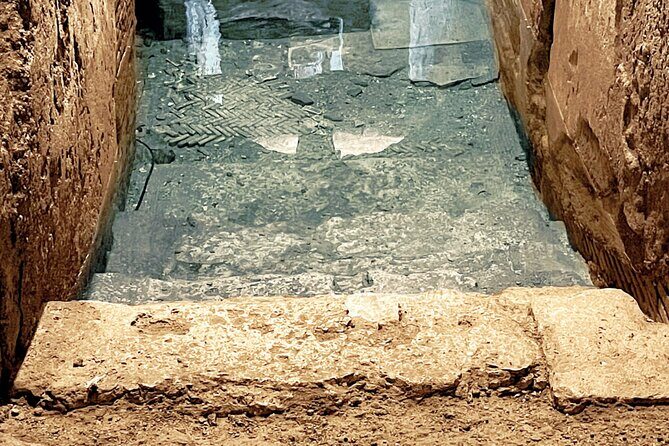
This tour is for the kind of Rome fan who likes cause-and-effect. You see a famous monument above ground, then you follow the water story underneath it. The main theme is the aqueduct system—how Roman engineers built long water routes—and how those routes shaped what we now recognize as Trevi’s water.
At a high level, you get two underground perspectives. First, you look at the remains under the Fontana di Trevi area, including visible traces connected with the ancient aqueduct. Then you move to Vicus Caprarius, often described as one of the stronger underground archaeological sites tied to the city’s water network.
If you’re more into big showpieces than “small, real archaeological spaces,” this can feel short and tighter than expected. But if you like learning how cities work—water, transport, daily infrastructure—this tour gives you a very direct payoff.
You can also read our reviews of more guided tours in Rome



Meeting at Piazza dei Crociferi and the 11:00 start that keeps things efficient
The tour starts at Piazza dei Crociferi (00187 Roma RM) at 11:00 am, and it ends back at the meeting point. It’s about 1 hour, give or take, and it runs in English with a mobile ticket.
Why that matters: the Trevi area can get thick with daytime crowds, and this format keeps your time under control. An underground tour also has an advantage: you’re not fighting the sun, and you’re not competing with the same level of outdoor noise. Still, you should expect that the underground portion is more restrictive than the open-air square—so it’s not the kind of experience where you walk at your own pace for hours.
The tour is near public transportation, and service animals are allowed. Most people can participate, but if you’re sensitive to crowded, confined spaces, bring your comfort strategy with you.
Stop 1 at Trevi Fountain: seeing the aqueduct story beneath the beauty
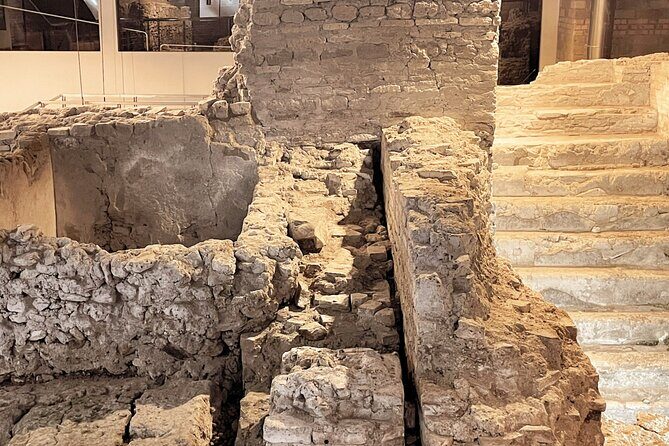
Your first stop is at the Fontana di Trevi zone, where you’ll get an underground perspective on what’s beneath the famous fountain. This part runs about 15 minutes, with admission included.
Here’s the value: you’re not just looking at a famous view from above. You’re trying to understand what supports the fountain. In practical terms, you’ll see remains tied to the ancient water system beneath the Trevi area, including traces of the aqueduct connection.
The big benefit of this short first segment is momentum. It gives you a mental map before you go deeper into the more substantial underground archaeological area. When you reach the second stop, you’re less likely to feel like you’re just seeing random stones underground. You’ll know what to listen for: water routes, where “pure water” fits into the story, and what parts of the system are visible.
Possible drawback: because it’s brief, you’ll want to pay attention to the guide’s explanation early. If you only start listening after you think you’ve figured it out, you may miss the point of what’s on display.
Stop 2 at Vicus Caprarius: the City of Water and Aqua Virgo
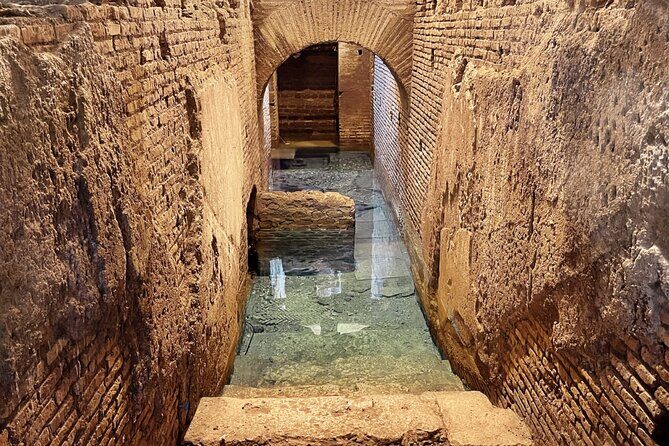
The heart of the tour is Vicus Caprarius – the City of Water, with a time slot of about 40 minutes. This is where the underground experience feels most tangible.
You’re in an archaeological area located underground beneath the Trevi zone, and it’s tied to one of the Roman aqueducts. The name mentioned here is Aqua Virgo, and the explanation connects it to meaning: pure water, referring to the clarity and freshness of the water.
What I especially like about this stop is the sense of ongoing reality. The area still has water described as flowing fresh and clear, and that sound does something nice. It makes the space feel less like a museum room and more like a living remnant of the city’s water systems.
Why your guide matters here: the tour is designed so you don’t just look around. A good guide helps you connect what you’re seeing to the bigger water route story—why these aqueducts mattered and how the city’s fountains were supplied. One big theme you’ll come away with is the idea that Roman water was treated as something worth protecting and maintaining, not just moving from point A to B.
Small caveat: this is not an open, roomy underground walk. It’s underground archaeology, and that means close quarters. Plan to stand where you’re directed and don’t expect a long, free-flowing stroll.
“Water purity” in plain language: what Aqua Virgo means for your visit
The Aqua Virgo detail isn’t just trivia. It changes how you interpret what you see.
When the tour frames the aqueduct as pure water, you start noticing the logic behind the whole system. Romans weren’t only feeding fountains for show. They were delivering water via built routes, then connecting it to places where water would be used, displayed, and celebrated.
It also gives you a clearer explanation of why the underground is worth your time. Underground archaeology can be visually tough: stones are stones. But with a guided focus on water origin and route, the ruins become evidence in a story you can follow.
If you like when history has a practical backbone—how a city actually worked—this stop gives you that feeling. You leave with a stronger sense of Trevi as part of a network, not just a single monument.



Small-group flow, radio headsets, and time to ask questions

This tour caps at 10 travelers, and that size is a real advantage underground. In a cramped space, bigger groups can turn into shuffle lines where one person is constantly blocking another. With a smaller group, you’re more likely to hear the explanation and to ask a question that isn’t answered while you’re behind someone’s shoulder.
Add the included radio headsets, and your experience becomes less dependent on your standing spot. You can focus on the guide’s words instead of trying to catch every sentence over background echo. That’s especially helpful in underground spaces where sound can bounce.
A simple strategy: come with one or two questions ready. For example, ask how Aqua Virgo connects to the broader water network story the guide is building. Even if you already know basic Roman aqueduct facts, your questions can guide what you pay attention to in each underground segment.
How the cramped feel affects the experience (and how to handle it)
Let’s be honest. This tour is sometimes described as small and cramped, and the “tunnel walking” expectation can lead to disappointment. You’re not doing a long corridor trek.
What you’re doing instead is visiting specific underground areas, with moments of viewing and listening, and likely some standing time while the guide explains what you can’t easily infer on your own. If you go in expecting “mostly walking,” you might feel stuck in place.
How I’d handle it:
- Wear shoes that work well on uneven underground surfaces.
- Keep your phone ready for quick photos, but don’t let it steal your attention from the guide’s explanation.
- Treat the spaces like mini classrooms: short viewing moments, then explanation, then another viewing moment.
If you need lots of movement for comfort, or you’re uncomfortable in tight quarters, this is the main reason you might choose a different kind of tour.
Price and value: is $57.68 worth your hour?
The price is $57.68 per person, and the tour is about 1 hour. On paper, that can sound “brief.” In practice, the value is tied to three things you get with the booking:
- Entrance tickets included
- Radio headsets included
- A small-group guided format (max 10)
So you’re paying for more than just getting into an underground space. You’re paying for an interpretation service that turns archaeology into a coherent story—especially around the aqueduct theme.
Also, Trevi is popular, and underground access can be less common than open-air sights. If you’re short on time in Rome, an hour that targets a specific curiosity (Roman water systems beneath Trevi) can be a smart use of limited hours.
Is it “worth it” for everyone? Not automatically. If your main goal is the biggest outdoor Trevi experience, you’ll likely prefer to spend more time above ground. If your goal is to understand the infrastructure behind the monument, this price can feel fair for what you get.
What to pack and plan for an underground Trevi visit
The tour is underground and described as cramped, so think comfort first.
Bring:
- Comfortable, closed-toe shoes
- Something light for temperature swings underground
- Water if you want it, since the total experience is only about an hour
Think about your expectations:
- You’ll likely see limited “big tunnel” views.
- You’ll get the best value by listening and looking at what’s pointed out.
Also, language matters: it’s offered in English, and the radio headsets help you follow along even if the room acoustics aren’t perfect.
Who should book this Trevi Fountain Underground tour
This is a great fit if you:
- Love Rome when it’s technical and practical, not only postcard-perfect
- Want a guided explanation that connects Trevi to Roman water systems
- Prefer a small-group experience with room for questions
- Like archaeology where the water story makes the ruins more understandable
It might be less ideal if you:
- Expect a long tunnel walk instead of a focused, site-based underground visit
- Want an outdoor photo-focused route instead of standing and listening
- Don’t enjoy confined spaces, since the experience can feel tight
Should you book Trevi Fountain Underground Guided Tour Small group?
I’d book it if you want to understand Trevi as part of a Roman water network, not just as a famous fountain. The combination of underground access, a focused route, and radio headsets makes it one of those “short and specific” tours that can pay off fast—especially if you’re the type who likes how cities function.
I would skip or at least mentally reframe it if you’re expecting an expansive tunnel walk. This experience is about seeing particular archaeological areas and learning what they mean for the aqueduct and water story. Go in with that mindset, and it feels far more satisfying.
If you decide to go, book early. The average booking time is about 72 days in advance, which tells you this one has steady demand.
FAQ
How long is the Trevi Fountain Underground Guided Tour?
It’s about 1 hour.
What’s the price per person?
The price is $57.68 per person.
Is the tour offered in English?
Yes, it is offered in English.
How big is the group?
This tour has a maximum of 10 travelers.
What’s included in the ticket?
The tour includes radio headsets and entrance tickets.
What’s not included?
Tips are not included.
Where does the tour start?
It starts at Piazza dei Crociferi, 00187 Roma RM, Italy, and it ends back at the same meeting point.
What time does the tour start?
The start time listed is 11:00 am.
Can I cancel for free?
Yes. You can cancel up to 24 hours in advance for a full refund. If you cancel less than 24 hours before, the amount paid is not refunded.