REVIEW · POMPEII
Private Pompeii and Vesuvius with Wine Tasting and Full Tickets
Book on Viator →Operated by Leisure Italy · Bookable on Viator
Pompeii and Vesuvius in one day is a big deal. What I like here is the private setup: you get a dedicated guide at Pompeii, a driver handling the transfers, and a Vesuvius climb plan that keeps the day moving without feeling rushed. I especially love the pairing of Roman ruins with wine tasting and lunch at Cantina del Vesuvio, where you taste Campania wines grown on the slopes of the volcano.
Two more things click for me: you get full tickets arranged for the Pompeii sites and the Vesuvius National Park, and the Pompeii guide can shift the pace so it works for families. The possible drawback? The day is still about walking—Pompeii involves uneven paths and the Vesuvius trail is gravel and ash with sun and wind. If anyone in your group has limited mobility or hates exposure, you’ll want to plan carefully.
Also, this is clearly built for real-world visiting. The Pompeii program focuses on major stops (Forum, baths, elite houses, theatre) and then you’re off for the crater experience—plus an included set-menu lunch that doesn’t pretend you’ll find time to hunt for food on your own.
In This Review
- Key highlights worth knowing before you go
- A private day that keeps you out of the headache
- Pompeii first: start at Porta Marina and work toward the Forum
- The Forum Baths, the Macellum, and the everyday life you can actually picture
- Elite homes and a peek into real neighborhoods
- Theatre time: Teatro Grande makes crowds feel normal
- The Antiquarium: an emotional on-ramp before you walk the streets
- Vesuvius National Park: a short hike to the crater with wind in your face
- Wine tasting and lunch at Cantina del Vesuvio: why it pairs so well
- Family-friendly, but still a real walking day
- Logistics that make the day feel smooth
- What to wear and how to pace an 8–9 hour day
- Price and value: $701.99 per person is steep, but here’s why it can make sense
- Should you book this private Pompeii and Vesuvius day?
- FAQ
- What’s included in the Private Pompeii and Vesuvius tour with wine tasting?
- How long does the tour take?
- Do you offer pickup?
- Is the tour offered in English?
- Is it family-friendly?
- Do we climb Vesuvius?
- Is cancellation free if plans change?
Key highlights worth knowing before you go
- Private driver + ticket handling: Your driver brings you close to the start of the Vesuvius trail and takes care of tickets.
- Pompeii guided route with major hits: You’ll see the Forum area, the baths, aristocratic homes like the House of the Vettii, and more.
- Kid-friendly option built in: A Pompeii-for-kids visit with interactive activities is recommended for ages 6–11.
- Wine tasting on Vesuvius slopes: Tasting includes multiple wines plus a set lunch at Cantina del Vesuvio.
- Crater walk with a volcanologist talk: You get a live introduction on the mountain before you walk around the crater.
- Full tickets and mobile access: Admissions for the listed stops are included, delivered via a mobile ticket.
A private day that keeps you out of the headache
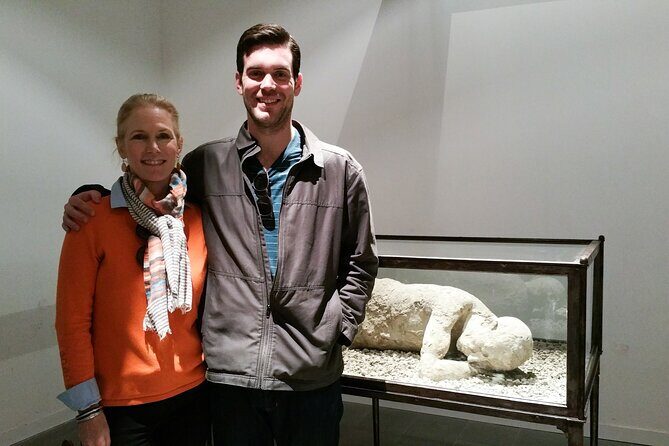
This tour feels designed around one goal: remove the friction. Instead of juggling trains, lines, and ticket booths, you show up, ride in a comfortable vehicle, and follow a guide who’s already mapped the day. That matters in Pompeii. Ruins are fun, but crowds and constant decision-making can drain the joy fast.
I also like the “stop where you want” idea because it’s realistic. Pompeii isn’t a checklist you can speed-run. If someone needs a slower pace near the Forum, or your group wants extra time at a specific house or theatre, a private guide can adjust. The tour is still structured, but you’re not trapped in a rigid cattle-car rhythm.
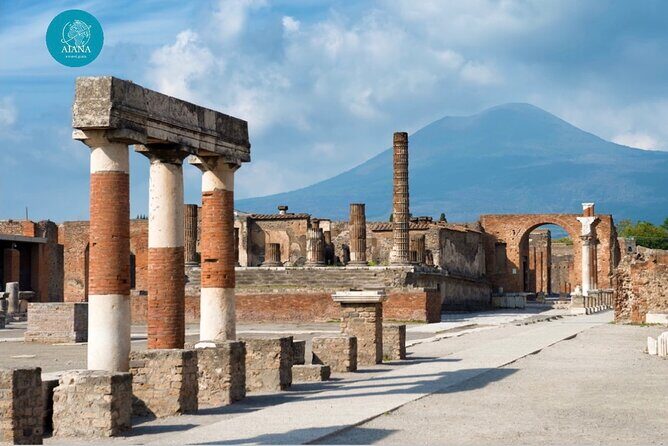
The best part is the way it connects the dots. You go from Roman civic life in Pompeii to the volcanic reality of AD 79 at Vesuvius. It’s the same story told two different ways—city ruins first, then the mountain itself.
You can also read our reviews of more tours and experiences in Pompeii

Pompeii first: start at Porta Marina and work toward the Forum
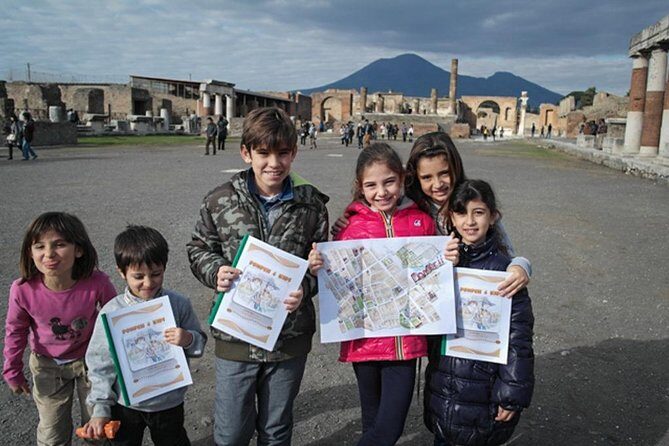
Your Pompeii time begins at the Archaeological Park of Pompeii, where your private guide steers you through a highlights route. If you choose the kid option, the visit includes Pompeii for kids activities plus an interactive tour book. It’s aimed at children roughly ages 6–11, which is perfect for families who want structure without turning the day into a lecture.
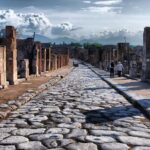
One of the route choices that I find smart is beginning near Porta Marina. It’s one of Pompeii’s main gates and links to the defensive walls. Standing there lets you understand how people entered the city and how commerce and travel worked—merchants and sailors came through this kind of access point, not some imaginary city center.
From the gate area, the tour moves into the heart of the city’s spiritual and civic spaces. The Temple of Apollo sits in an open courtyard near the Forum. Apollo was tied to the sun, music, and prophecy, so even a short stop gives context for what people believed they were walking through.
Then you hit the Forum. From higher modern walkways and terraces, you can see the layout of temples and civic buildings. Even when you only get a short look, the elevated perspective helps you understand how religion, administration, and commerce were mixed into one monumental square.
The Forum Baths, the Macellum, and the everyday life you can actually picture
Pompeii is famous for big sights, but what makes it feel real are the places tied to daily routines. Two of those stops are the Macellum (the main food market) and Terme del Foro (the Forum Baths).
At the Macellum, you get a sense of how food supply and trade kept the city running. It’s a covered complex with counters and organized spaces for vendors. Even in brief viewing time, you can visualize the flow: shoppers moving through the market, workers handling goods, and everyone gathering where food and commerce met.
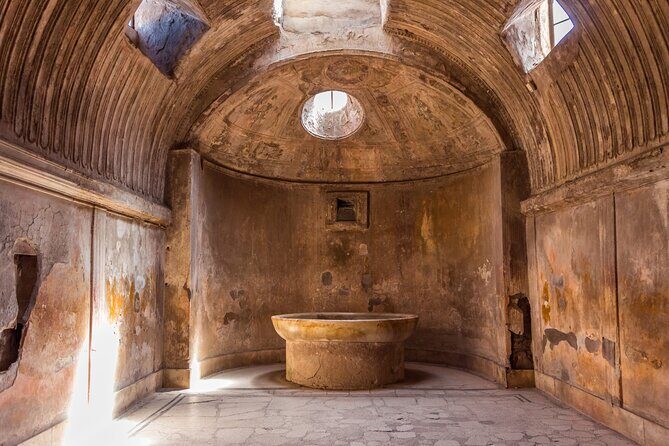
Then comes the Forum Baths, which are among the most elegant public bathing areas in Pompeii. What stands out here is the design: warm and hot bathing halls, changing spaces, and a cold plunge, all supported by an advanced hypocaust heating system. This is also one of the places where Pompeii’s preservation does its magic. Stucco reliefs and vaulted ceilings help you picture the social side of bathing, not just the hygiene.
There’s a practical angle too: these stops are dense but manageable. You don’t need to be an archaeology expert to benefit. You just need eyes and a willingness to imagine ordinary routines—bathing, eating, shopping—happening right where you stand.
Elite homes and a peek into real neighborhoods
If you want a contrast from the public spaces, the tour includes aristocratic residential sites, including the Casa dei Vettii. This is one of Pompeii’s finest wealthy homes, known for rich frescoes and a layout organized around atria and a peristyle garden. The point isn’t just to see fancy paintings—it’s to understand aspiration. In Pompeii, wealthy owners used art and architecture to broadcast taste and status.
Another memorable stop is Insula dei Casti Amanti, named after a fresco of a loving couple. You view the block through elevated ramps that give you a panoramic look down into workshops, storerooms, and domestic rooms. That elevated access is important: it lets you picture daily life and work without grinding through fragile surfaces.
I like this stop because it adds social texture. You’re not only seeing wealthy homes or grand civic buildings. You’re seeing the “in-between” places where craftsmen operated, families lived, and neighborhoods carried on right up to the eruption.
Theatre time: Teatro Grande makes crowds feel normal
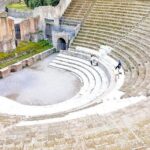
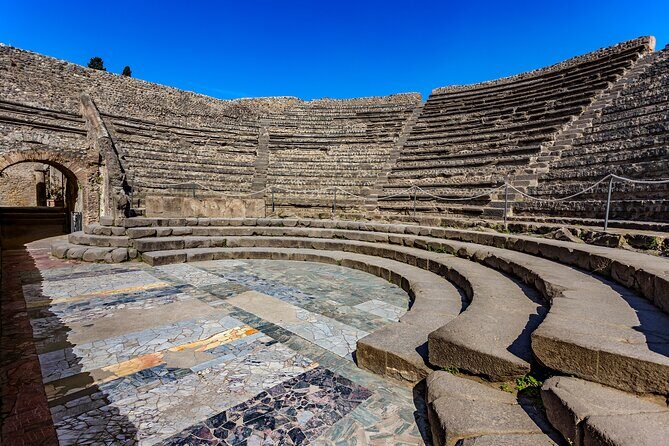
The day doesn’t stop at temples and houses. You also get Teatro Grande, Pompeii’s large theatre. Standing on the upper terraces, you can look down at the curved seating tiers, the stage area, and the orchestra area. Even when your time on site is brief, the structure makes it easy to picture performances and ceremonies drawing crowds.
What I appreciate is how this stop ties back to the theme of communal life. Roman culture here wasn’t just religion and administration. Public entertainment was a social event, and the views toward the city and Vesuvius help the ruins feel connected to the real geography around them.
You can also read our reviews of more food & drink experiences in Pompeii



The Antiquarium: an emotional on-ramp before you walk the streets
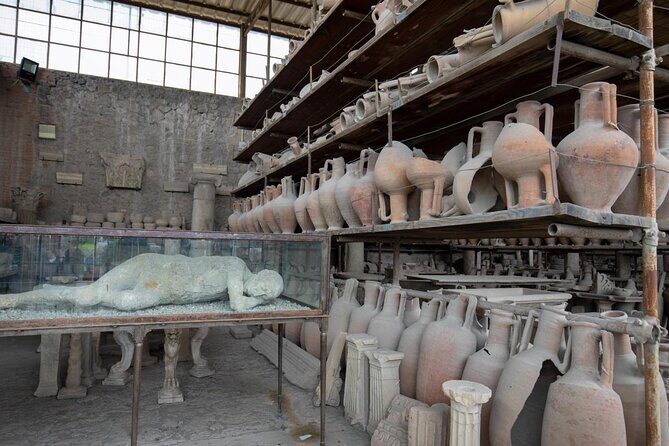
Between the outdoor ruins and the heavier eruption story, the Antiquarium di Pompei acts like a “get your bearings” museum. You move through organized galleries with artifacts like statues, household items, inscriptions, and jewelry recovered during excavations. That matters because Pompeii is scattered across open space. Museum context helps your brain lock onto what you’re seeing.
The closing rooms include plaster casts of victims and eruption material. This is the part where the mood can shift quickly. It’s not a long stop, but it changes how you read the buildings outside. You start noticing not just architecture, but the human scale of the city’s final moments.
If you’re sensitive to emotional material, go in mentally prepared. It’s powerful and it’s included, so plan your expectations accordingly.
Vesuvius National Park: a short hike to the crater with wind in your face
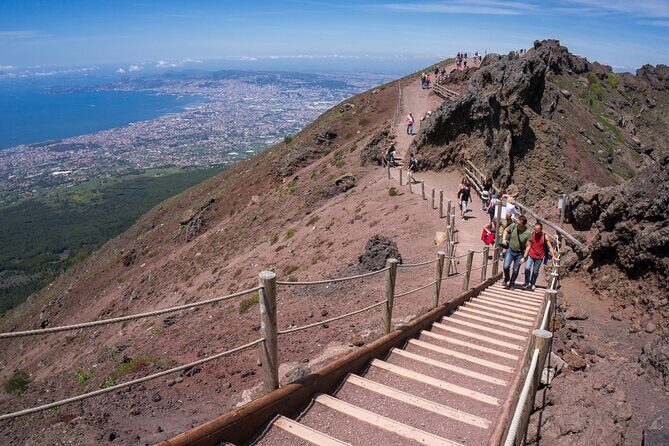
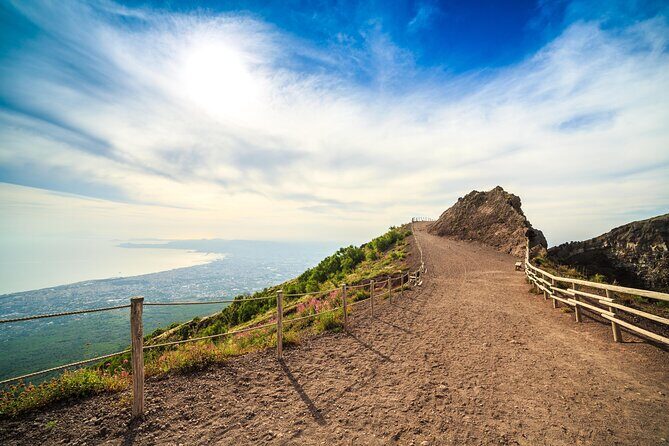
After Pompeii, you head to Vesuvius National Park. Your driver handles the tickets and takes you as close as possible to the start of the trail. The uphill walk takes about 30 minutes on gravel and ash, and you’ll be in sun and exposed wind. This isn’t a gentle stroll through a garden.
Once you reach the top, you can listen to a live introduction from a volcanologist. It’s a shared talk in English that runs about 10 minutes and starts every few minutes. Think of it as a quick reset: what you’re seeing, what it means, and how to interpret crater views without drowning in technical language.
Then you can walk halfway around the crater on your own. Plan about 30 minutes for that loop. On a clear day, the views are great for photos. And yes, weather can be weird. One group described dealing with snow during an April visit and still feeling well looked after by the driver and guide.
If someone in your group doesn’t want to climb, there’s a café by the parking lot for an alternate option.
Wine tasting and lunch at Cantina del Vesuvio: why it pairs so well
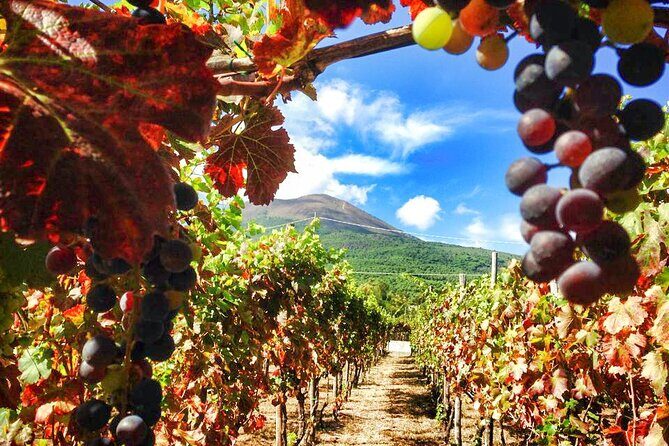
This tour doesn’t treat the food as an afterthought. At Cantina del Vesuvio – Famiglia Russo, the experience includes wine tasting plus a set-menu lunch in the vineyard area in the national park zone.
The tasting portion includes five different wines: Rosè Sparkling, White, Rosé, Red, Red Reserva, plus a sweet dessert wine. That lineup gives you a quick survey of styles without forcing you to commit to one type all afternoon.
Then lunch arrives as a composed meal:
- Bruschetta, provolone cheese, salame, and capocollo cured pork meat
- Spaghetti with the cherry tomatoes del Piennolo from Mount Vesuvius
- Pastiera, a Neapolitan wheat and ricotta cake
I like this because it’s local without being precious. The tomato variety is tied to Vesuvius agriculture, and Pastiera is a classic regional dessert. If you’re comparing wine and meals in different parts of Italy, this vineyard setting on the mountain slopes adds a layer you just don’t get back in town.
Also, this is a day where you’ll likely burn energy. A proper lunch helps you enjoy the crater walk earlier and still feel good at the end.
Family-friendly, but still a real walking day
There’s an option for a kid-focused Pompeii visit with Pompeii for Kids activities and an interactive tour book, especially recommended for kids ages 6–11. The concept is simple: turn the ruins into a game while still teaching the key ideas. That’s a big win for families who want structure and energy burned in the right direction.
What I’d watch is pacing. Even with a kids route, Pompeii involves walking between sites and dealing with stone paths. This is not a stroller-friendly day by default.
For Vesuvius, it’s similar. The climb is about 30 minutes up on gravel and ash, and you’re exposed to sun and wind. Kids can do it, but bring layers, sun protection, and a calm plan for breaks.
Logistics that make the day feel smooth
A lot of Pompeii tours fall apart because logistics eat the time. This one includes pickup from Naples, Sorrento, Pompeii, and other locations like hotels, vacation rentals, train stations, airports, and cruise terminals or ports. You specify your pickup place at booking, which helps avoid the usual guessing game.
It’s also offered in English, and it’s a private tour activity, meaning only your group participates. That matters if you’re traveling with kids, older adults, or just anyone who hates being rushed by a mass-group schedule.
They also use mobile tickets, and the stops include admission ticket coverage at each site. Your guide at Pompeii helps you connect the dots as you move, instead of you wandering and hoping you understand what matters.
What to wear and how to pace an 8–9 hour day
This is listed as about 8 to 9 hours, which means you need to travel like it’s a full day, because it is. Comfortable walking shoes are a must. Add sun gear: sunglasses, sunscreen, hat. On Vesuvius, you’ll be in open air where wind can make it feel colder than you expect.
Bring water. The tour includes lunch, but there’s still a climb and walking in between. If you tend to get tired, plan a slower pace in Pompeii rather than trying to sprint through the highlights.
One more practical thought: because Pompeii stops include many different areas, your time at each spot can be short. That’s not a flaw—it’s how you see a lot without spending all day on one courtyard. If you want deeper time in one place (for example, the theatre or the baths), you can ask your guide to shift the schedule.
Price and value: $701.99 per person is steep, but here’s why it can make sense
At $701.99 per person, this isn’t a budget tour. You’re paying for a private guide, private transport, full admissions, and a structured full-day experience that includes both wine tasting and a set lunch.
Here’s what drives value:
- Tickets are included across multiple Pompeii stops and Vesuvius.
- Transport is included via private pickup and a driver who handles key parts of the mountain day.
- Food and wine are included at Cantina del Vesuvio, with a clear tasting and meal format.
- You’re not stuck in a crowd since your group is private, which makes the guided experience easier to enjoy.
When the price feels justified: couples and families who want one guided day that covers the big Pompeii highlights plus the crater. When it might not: if you only want one site, hate wine tasting, or prefer to explore Pompeii at your own pace for hours without structured stops.
Should you book this private Pompeii and Vesuvius day?
Book it if you want a guided Pompeii day that actually connects the major spaces (gate, temple, Forum, baths, markets, elite homes, theatre) and then moves you to Vesuvius for a real crater experience plus a vineyard lunch.
Skip or reconsider if your group struggles with walking or exposure. The Vesuvius trail is sun and wind with gravel and ash, and Pompeii involves a lot of moving between sites. Also consider your feelings about alcohol: the tasting is included as part of the experience, so it’s best if you’re open to trying wine.
If you’re hoping for a calm, confident day with drivers and guides who clearly know how to handle a full program, this one has strong momentum in the way it’s delivered. People rave about the personal touch, and you’ll likely feel it when your guide helps you get around the crowds and your driver keeps the logistics smooth.
FAQ
What’s included in the Private Pompeii and Vesuvius tour with wine tasting?
It includes admission tickets for the Pompeii sites on the route, admission for Vesuvius National Park, a guided Pompeii experience in English, transport with pickup options, and wine tasting plus a set-menu lunch at Cantina del Vesuvio. The Vesuvius part also includes a guided volcanologist introduction and time to walk near the crater.
How long does the tour take?
The tour is listed as about 8 to 9 hours.
Do you offer pickup?
Yes. Pickup is offered from Naples, Sorrento, Pompeii, and other locations such as hotels, vacation rentals, train stations, airports, and cruise terminals or ports. You specify your pickup place when booking.
Is the tour offered in English?
Yes, it’s offered in English.
Is it family-friendly?
There’s a kid-focused option for Pompeii with Pompeii for Kids activities and an interactive tour book, recommended for kids around ages 6 to 11. The day still involves moderate walking, so comfortable shoes and breaks matter.
Do we climb Vesuvius?
The plan includes walking up to the top along the trail and then walking about halfway around the crater. There is also a café by the parking lot if someone does not feel like climbing.
Is cancellation free if plans change?
Yes. Free cancellation is available if you cancel up to 24 hours in advance for a full refund.