REVIEW · PRIVATE
Private Guided Walking Tour of Rome
Book on Viator →Operated by Raphael Tours & Events · Bookable on Viator
Rome gets easier with a guide. This private 3-hour walk strings together the landmarks you came for, plus the smaller squares and fountain stops that most people miss. I love the fast, logical route for a first-time day, and I love that you’re led by a Blue Badge–type guide with specialist knowledge that helps the sights click.
One thing to keep in mind: you’ll be on cobblestones for a few hours, and the day is built around seeing a lot of big names in a short time—so plan for walking pace, photos, and possible crowding near the headline spots.
In This Review
- Key highlights (quick take)
- Private Rome walk: quick orientation on foot
- Meeting at Via dei Condotti: how the schedule and format work
- Spanish Steps area and Fontanelle fountains: cobblestones, corners, and an easy pace
- Trevi Fountain: legend, movies, and crowd reality
- Government District to the Pantheon: Marcus Aurelius and Raphael
- Piazza Navona to Campo de’ Fiori: Domitian stadium and Bernini’s Four Rivers
- Price and value: what $215.08 per person actually buys
- Which guides bring the best Rome stories: Tommaso, Irene, Fabio, Paola
- Should you book this private walking tour of Rome?
- FAQ
- How long is the Private Guided Walking Tour of Rome?
- Where does the tour start?
- Is the tour private?
- What major sights will we visit?
- What’s included and what should I pay for separately?
- Does it run in all weather?
Key highlights (quick take)
- A customizable private route that can be shaped to your interests
- Morning or afternoon timing so you can fit it around your other plans
- Prime Rome icons on foot: Pantheon, Trevi Fountain, Piazza Navona, Spanish Steps
- Fountain and street details you can actually use—Fontanelle water fountains, not just views
- Specialist guidance backed by a professional guide and an art-history angle
- A friendly finish near Campo de’ Fiori for an easy next stop in the neighborhood
Private Rome walk: quick orientation on foot
If Rome feels like chaos on day one, this tour is built to straighten it out. You start in the center, walk through small lanes and open piazzas, and you get a guided map of what matters—without waiting for you to stumble into the right spot. It’s the kind of experience that helps you stop treating every street as a surprise and start treating it like a story you can follow.
The other thing I like is the pacing. About three hours sounds short, but the route is designed for steady movement with “pause points” where you can actually look, ask questions, and take photos. You also get built-in breaks between major stops for gelato and pastries (those are on your own dime, but it’s a normal part of the day).
This is also a private setup, so the guide can tailor the focus. If you’re more into ancient Rome than Baroque art, or you want extra time at one place, you can usually steer the conversation that way. That’s a real upgrade versus the big-bus version of Rome, where your input lasts about five seconds.
You can also read our reviews of more walking tours in Rome


Meeting at Via dei Condotti: how the schedule and format work
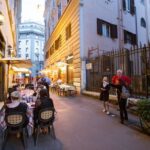
You meet at Via dei Condotti, 86, 00187 Roma, at a typical Roman coffee-bar meeting point in the city center. From there, you’ll walk through central Rome and end back at the meeting point according to the activity description—though the route narrative says the tour concludes at Campo de’ Fiori. Practically, that means you should treat the finish location as “nearby,” and it’s worth asking your guide on the day how they’ll close out the walk.
Tours run in English, and you can choose morning or afternoon. Expect weather to be weather: the tour operates in all conditions, so dress for sun or showers and wear shoes you trust on cobblestones.
It’s also well-positioned for getting there on transit since it’s near public transportation. If you’re traveling with a service animal, the tour allows service animals, and most people can participate.
Spanish Steps area and Fontanelle fountains: cobblestones, corners, and an easy pace
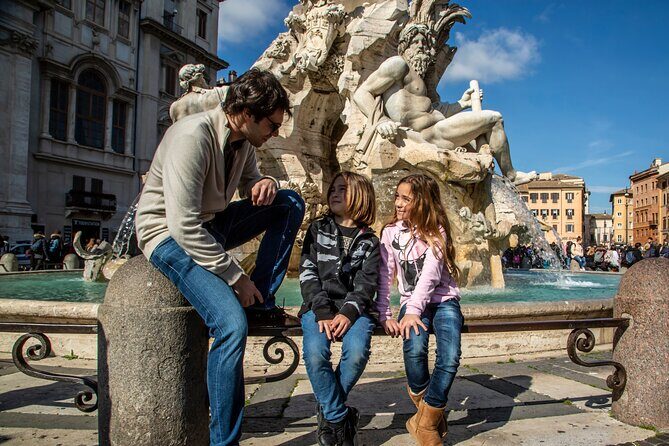
The walk begins at Piazza di Spagna, in the general area of the Spanish Steps. This is a smart start because it puts you right into the photo-and-people-watching zone, but you don’t just stand there like a statue. The guide leads you through the “in-between” parts of Rome—narrow walkways, corners, and small piazzas you’d likely pass without a map or a reason to slow down.
One of my favorite parts of this segment is the focus on fountains. You’ll drink fresh water from the Fontanelle (the elegant fountain outlets scattered around the city). It sounds like a small detail, but it changes how you experience Rome. Instead of “sight, sight, sight,” you start noticing the practical city life behind the pretty stone.
You’ll also get a chance to stop for pastries and gelato during the tour for photos and a break. Since those are not included, you’ll want to bring a bit of cash or a card ready for snacks. The payoff is that your energy stays up for the rest of the big-ticket stops.
And yes, you’ll cover cobblestones. Wear comfortable shoes—your feet will thank you later, and your photos will be sharper because you won’t be fighting pain every time you turn a corner.
Trevi Fountain: legend, movies, and crowd reality
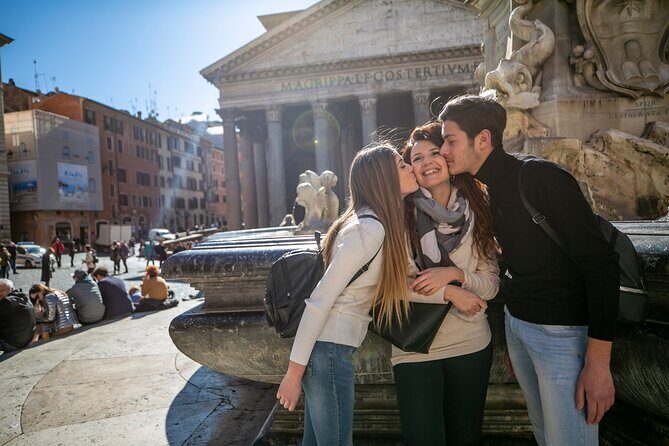
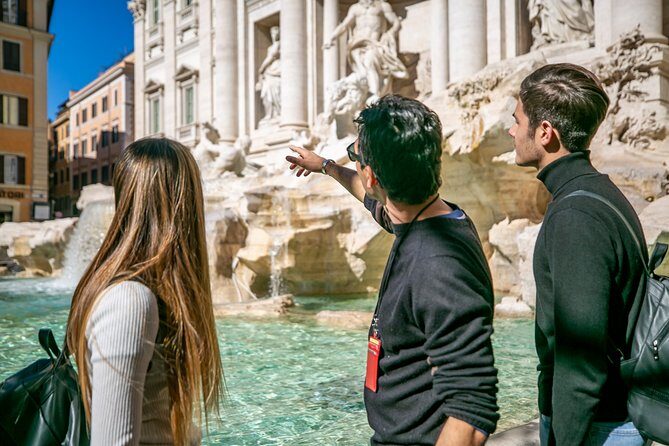
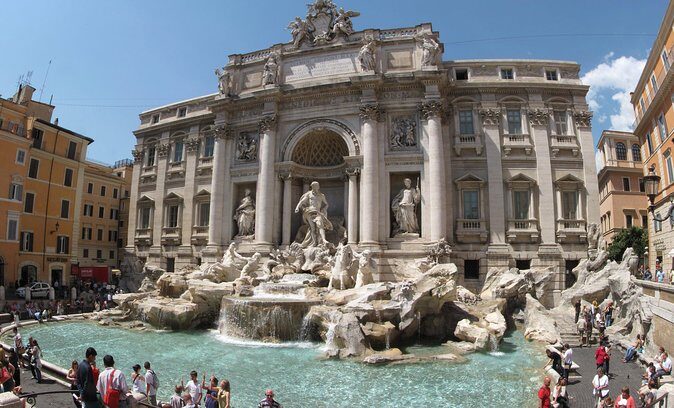
Next comes Fontana di Trevi, the Rome spot you can recognize even if you’ve never been there in person. The guide connects it to the pop-culture versions of Rome too, including Fellini’s La Dolce Vita. That matters because it gives you context: you’re not just looking at a landmark; you’re seeing the icon through the lens that made it famous.
The classic legend is built right into the visit: toss a coin in the well, make a desire, and use it as a promise that you’ll return to Rome. It’s touristy, sure—but it’s also one of the few “do this in the moment” rituals that actually feels fun rather than forced.
Here’s the practical consideration: this stop can get busy. This is why a guide helps. They can steer you through when and how you look, and they can keep you from wasting time in the wrong choke point while you wait for a decent angle. You’ll spend about 30 minutes here, so you’re not trapped for hours, but you’ll still get time to enjoy it.
Government District to the Pantheon: Marcus Aurelius and Raphael
From Trevi, the tour moves into the government district area where you’ll see Roman-era traces mixed with modern power buildings. One of the stops is the Column of Marcus Aurelius, a notable ancient monument in that zone. The guide also points out nearby context like the Temple of Hadrian, tied to Emperor Antoninus Pius for his ancestor—details that make the street-level view feel less random.
This segment is good for a particular kind of traveler: the person who likes understanding how old Rome and newer Rome share the same ground. It also gives your brain a bit of variety before you hit the Pantheon.
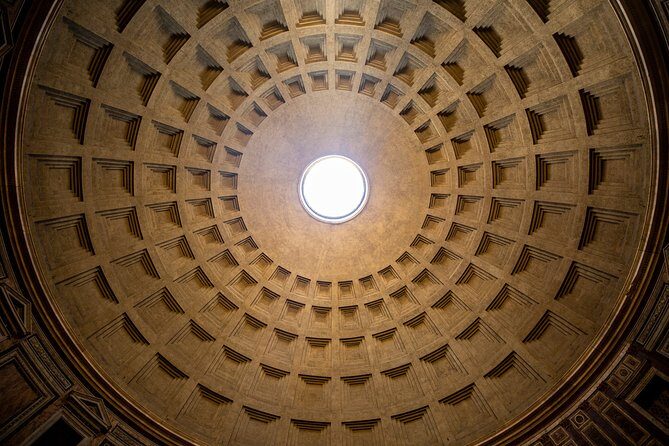
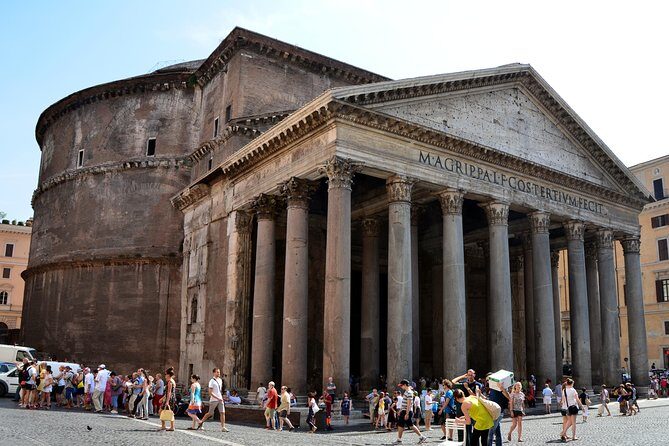
Then you reach the Pantheon, one of the world’s most famous buildings. You’ll spend about 30 minutes there, and the guide brings focus to the story behind it, including the fact that Raphael is buried there. That’s a classic “you thought you knew the building, but here’s the extra layer” moment.
Practical tip: with iconic interiors, the “best” view depends on crowds and lighting. Since you’re not in a museum-only mode but in a walking tour with multiple stops, use your time to watch the guide’s framing, then do a quick self-check of what you want most: the big architectural impression or the finer points you can spot once the initial wow passes.
Also, if you’re the type who likes questions, this is where you’ll get value. The building’s scale is obvious, but the meanings and timeline make it stick.
You can also read our reviews of more guided tours in Rome




Piazza Navona to Campo de’ Fiori: Domitian stadium and Bernini’s Four Rivers
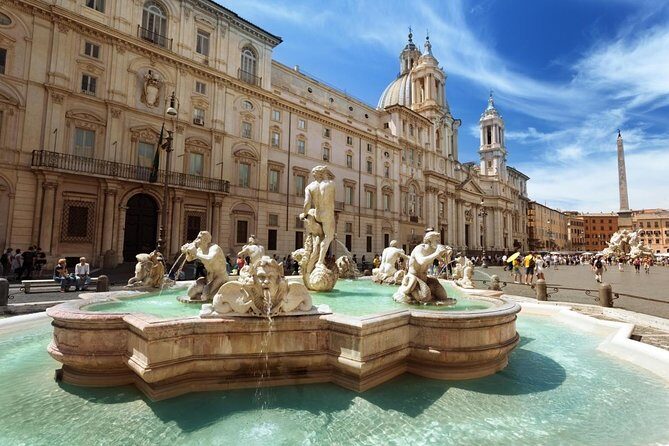
Piazza Navona is where Rome starts stacking stories fast. The square you see today sits over the ruins of a stadium built under Emperor Domitian, and it once held around 30,000 spectators. That kind of detail changes how you interpret the space: you stop thinking of the piazza as just a pretty square and start seeing it as a reused stage.
You’ll also see the church of St. Agnes in the piazza and—most famously—the Fountain of the Four Rivers, designed in 1651 by Gian Lorenzo Bernini for Pope Innocent X. This is the moment to slow down. The guide’s job here is to translate all that Baroque symbolism into something you can actually read at street level.
You spend about one hour in this area, and the tour wraps by concluding at Campo de’ Fiori. Campo de’ Fiori is a great landing spot because it’s lively and practical for continuing your day: you’re not stuck leaving the city’s center exhausted and far from dinner plans.
One more note: because this is both a landmark area and a social zone, expect more noise and more foot traffic than earlier stops. That’s normal. Use it as part of the “feel” of Rome rather than fighting it.
Price and value: what $215.08 per person actually buys
At $215.08 per person, this isn’t a bargain-walking tour. The value comes from three places.
First, it’s private. You’re paying to have your guide’s attention on your group only, with the ability to adjust. That matters in Rome because the city rewards pacing and questions. If you’re traveling with people who don’t all move at the same speed, private helps you avoid constant negotiating.
Second, the inclusions lean specialist: you get a professional guide and a Blue Badge-type guide, plus an art-history angle via an art historian. That’s not just name-checking. It means you get explanations that make the Pantheon, the Bernini fountain, and even the Marcus Aurelius column feel connected rather than like random stops.
Third, the format is efficient. You can fit this into a first-day half-day window and come away with “what to see next” instincts. You’ll likely return to at least one of these areas again during your trip, this time with your own sense of direction.
If you’re a solo traveler, it may feel steep. If you’re traveling with a partner or a small group where one guide can keep the day smooth, it usually feels more reasonable. The tour also notes group discounts, so ask when you book if that applies to your specific party size.
Which guides bring the best Rome stories: Tommaso, Irene, Fabio, Paola
One of the strongest signals here is guide quality. Different guides shape the day differently, and the names matter because you can get a sense of their style.
- Tommaso gets praised for being a delight and doing a standout job leading a private group of six with lots of learning.
- Irene is noted as a native of Rome and an archaeologist, with deep knowledge that covers ancient sites plus politics and drama around the city.
- Fabio is praised for showing parts of Rome you might not see on your own, with strong English and lots of answers that keep the walk interesting.
- Paola stands out for guiding in French and taking the group to a local gelato spot, plus giving lunch addresses—exactly the kind of practical help that turns a tour into a usable day plan.
So here’s how I’d think about it: if you want more archaeology-and-politics flavor, you’ll likely appreciate the guides with an archaeologist background. If you want a smooth orientation walk with quick explanations and great English, other guides in the mix can be a perfect fit.
Because it’s private, you can also steer the conversation mid-walk. Ask what to notice on your next visit, or what to skip later, and you’ll usually get better Rome from those answers than from any brochure.
Should you book this private walking tour of Rome?
Book it if you want a first-day Rome foundation without museum stress. This is a smart choice when you want to see the big icons (Pantheon, Trevi, Piazza Navona, Spanish Steps) and still get real context for why they matter. It’s also a strong option if your group includes mixed interests, since the route can be customized.
Skip or rethink it if you hate walking on cobblestones or you prefer slower, deeper time at fewer places. With multiple major stops in a few hours, you’ll get good coverage, but not the kind of long, sit-down study you’d do inside a single site for half a day.
If you’re unsure, choose the timing that matches your energy level. Morning can feel calmer for your first round of pictures. Afternoon can be great for atmosphere—just remember you’re still outside for most of the day.
FAQ
How long is the Private Guided Walking Tour of Rome?
It runs for about 3 hours.
Where does the tour start?
The meeting point is Via dei Condotti, 86, 00187 Roma RM, Italy.
Is the tour private?
Yes. This is a private tour/activity, and only your group participates.
What major sights will we visit?
You’ll visit stops including Piazza di Spagna, Trevi Fountain, the Column of Marcus Aurelius, the Pantheon, and Piazza Navona, with the tour concluding at Campo de’ Fiori.
What’s included and what should I pay for separately?
Included: a professional guide, Blue Badge guide, local guide, and a professional art historian guide. Not included: food and drinks, and hotel pickup and drop-off. Gelato and pastries are typically part of the walk but are own expense.
Does it run in all weather?
Yes. It operates in all weather conditions, so dress appropriately and wear comfortable shoes.