Rome is steep. This tour helps.
What makes this ride special is the mix of major sights and fast, low-stress navigation. You cover viewpoints and landmark squares with an e-bike’s assist, then you get short photo-friendly stops so you’re not stuck in long lines or wrestling with transit in the midday heat.
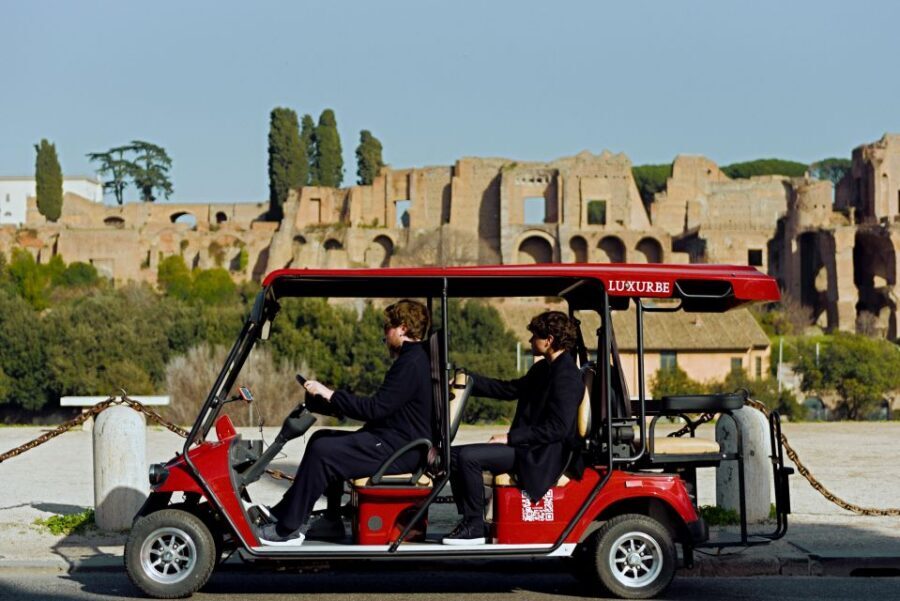
Two things I really like: first, the route hits big-name places like Trevi Fountain and Piazza Navona but also includes quieter stops such as the Portico d’Ottavia and the Jewish Ghetto area. Second, the guide can adapt. In one group example, the guide Andrea switched a 12-year-old over to a golf cart because she was a bit too short and didn’t feel comfortable on the e-bike.
One drawback to keep in mind: the tour is timed and the stops are short. If you want long inside visits (Pantheon and Castel Sant’Angelo aren’t included), you’ll need extra time on your own afterward.
In This Review
- Key highlights you’ll actually feel on the ride
- Why Rome’s Seven Hills is a perfect match for an e-bike
- Starting point at Via dell’Orso: your “easy mode” for getting oriented
- Quirinale viewpoint to Trevi: the big skyline moments early
- Piazza di Spagna from above to Terrazza del Pincio
- Piazza del Popolo and Piazza Navona: two squares, two moods
- Pantheon area: admire the landmark, plan the inside visit separately
- Ghetto Ebraico stop at Portico d’Ottavia: where the past feels close
- Capitoline Hill and Michelangelo’s Piazza del Campidoglio
- Circo Massimo to Aventine Hill: ancient arenas and orange garden views
- The Tiber Island, Trastevere feel, and a strong finish at Castel Sant’Angelo
- What this tour is really good for (and who should skip it)
- Should you book the Private E-Bike Tour of Rome’s Seven Hills?
- FAQ
- How long is the private e-bike tour?
- How much does it cost?
- Is the tour offered in English?
- Where does the tour start?
- Where does the tour end?
- What’s included with the tour?
- Is admission included for all stops?
- Is there a mobile ticket?
- Is pickup at a hotel included?
- What’s the cancellation policy?
- Is this a private tour?
Key highlights you’ll actually feel on the ride
- E-bike effort stays reasonable, so you can spend your energy on photos and people-watching, not on climbing
- Viewpoints are built in, including the Terrazza del Pincio and the Capitoline Hill outlook
- Iconic squares without the grind, like Trevi, Piazza Navona, and Piazza del Popolo
- Jewish Ghetto and Portico d’Ottavia stop adds a strong human-history layer
- Private group format means your guide can pace the ride to your comfort level
- Helmet and guide are included, which makes the whole experience feel simpler and safer
Why Rome’s Seven Hills is a perfect match for an e-bike
Rome’s beauty comes with friction: steep streets, lots of pedestrian zones, and distance that adds up faster than you expect. An e-bike is the middle ground that lets you see a lot without turning the day into a workout contest.
Here’s the practical part. You get help on the climbs, so you’re not arriving at viewpoints sweaty and cranky. That matters because many of the best moments are at short stops—10 to 15 minutes—where you want to look, take a few photos, and keep moving.
Also, the tour is private. That means your pace and your needs are part of the plan. If someone in your group is tired, cautious, or just not feeling it on a bike, there’s more chance to adjust than on a big public group ride.
The tour runs about 3 hours 30 minutes, and it’s offered in English. You’re also given a mobile ticket, which makes meeting up less of a scavenger hunt.
You can also read our reviews of more cycling tours in Rome
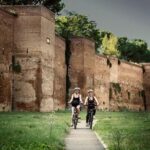
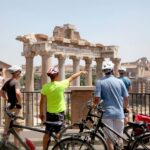
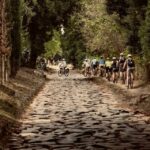
Starting point at Via dell’Orso: your “easy mode” for getting oriented
You begin at Via dell’Orso, 21, 00186 Roma RM. That’s handy because it puts you in a classic central zone where you’re not fighting across town to find the start.
From there, you ride through Rome in a way that’s meant to help you get your bearings fast. You’re not just seeing landmarks—you’re learning how the city pieces connect: viewpoints, major squares, and the way hills change the angles of what you see.
You’ll have an included helmet and an included guide. That combination is underrated. In Rome, even experienced walkers find it stressful to cross between busy areas and calmer back streets. Having someone steer the route and manage timing makes the whole day feel smoother.
And yes, the guide quality matters here. In the one family story where the guide Andrea helped a 12-year-old by switching to a golf cart, you can see the benefit of a guide who pays attention to real comfort—not just the idea of a perfect tour.
Quirinale viewpoint to Trevi: the big skyline moments early
Your first stop is Piazza del Quirinale, a square where the view reaches toward San Pietro. This is a smart opener. It’s not yet the densest tourist zone, but you get that Rome skyline feeling right away, which helps you understand what you’ll be chasing on the hills.
The stop is around 10 minutes, free admission. Short means you’ll be moving quickly, but it also keeps the day from bogging down. Use the time for a few photos and then look away from your camera. The fun is in noticing the angles—Rome is full of them.
Then you head to Trevi Fountain for about 15 minutes, with free admission. The classic moment here is the coin toss. More important than the ritual is what you notice once the crowd noise fades for a second: Trevi sits at a dramatic point in the street geometry, so the fountain reads like a stage set. If you’re the type who likes architecture, take a slow lap for a minute after throwing the coin.
One tip: at Trevi, keep your coin moment quick and then step half a pace to the side to avoid the tightest photo cluster. You’ll get clearer lines and still be part of the moment.
Piazza di Spagna from above to Terrazza del Pincio
Next you move toward Trinita dei Monti, where you get to admire Piazza di Spagna from above. This is exactly the kind of stop that makes the e-bike choice worth it. Without help, the climb and stairs can eat your time and energy. With assist, you arrive with enough breath to actually enjoy the view.
You get around 10 minutes, free. From this angle, Piazza di Spagna looks different than it does from street level—more like a composition than a destination.
After that comes Terrazza del Pincio, also about 10 minutes, free admission. This is one of those Rome views where the city feels like it stretches and layers. Even if you’ve seen pictures before, the scale lands differently in person because you can place so many landmarks relative to each other.
If you like photos, this is a good moment to do them in two rounds: one quick round facing the main skyline, then a second round turning slightly to capture the depth. Rome isn’t just “wide,” it’s angled.
Piazza del Popolo and Piazza Navona: two squares, two moods
You’ll then hit Piazza del Popolo, with its circular shape and dramatic framing by obelisks, twin churches, and baroque fountains. You’ll also see it’s a meeting point for historic routes, which helps you connect your ride to the walking patterns locals and visitors follow.
This stop is brief, about 10 minutes (free). The best use of the time is to stand still. Don’t rush through. Take 60 seconds and scan the edges first, then look toward the center.
From there you go to Piazza Navona for about 15 minutes, free admission. This is where the vibe changes: it’s famous for three ornate fountains and for the energy around outdoor cafés and street performers. Keep an eye on where the movement is—sometimes the best view is not where the crowd is densest.
A practical note: Navona can feel crowded, so plan to buy nothing during the first minute unless you’re sure you want it. I’d rather you take a lap, find your sightlines, and then decide if you want a drink or snack.
You can also read our reviews of more private tours in Rome
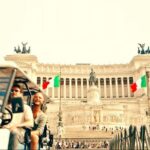


Pantheon area: admire the landmark, plan the inside visit separately
Next is the Pantheon area. You’ll spend about 10 minutes at Piazza della Rotonda, dominated by the Pantheon and surrounded by cafés and restaurants.
What you should know upfront: admission isn’t included. That means you’ll likely be outside and in the square for views rather than a guaranteed inside ticket.
So for value, treat this stop as a “get the scale” moment. Look up at the dome, study the stone rhythm, and notice how cafés spill right up against the landmark. Then, if you want to go inside, you’ll need to arrange that separately.
This is one reason to book the day as a mix. Short stops help you see more. If you want inside time, schedule it on another block when you’re not racing against the ride’s timing.
Ghetto Ebraico stop at Portico d’Ottavia: where the past feels close
One of the strongest parts of this tour is the Ghetto Ebraico di Roma area and the Portico d’Ottavia stop. This is around 15 minutes and free.
Instead of being only a pretty-photo location, it adds a human layer. The Portico d’Ottavia is described as an ancient monumental structure with archaeological remains that evoke imperial Rome. That combination matters: you’re seeing a physical reminder that Rome’s story changed under many hands and eras.
The best way to handle a stop like this is to slow down and let yourself read the space. When the group moves on quickly, you can miss the details that make the site meaningful. If your guide suggests something specific to look for, take it seriously—this is a stop where explanation turns architecture into context.
Capitoline Hill and Michelangelo’s Piazza del Campidoglio
Then comes Piazza del Campidoglio, designed by Michelangelo, set on the top of the Capitoline Hill. You’ll spend about 15 minutes and the stop is free.
The star here is the massive statue of Marcus Aurelius. It’s one of those figures that makes you feel the weight of time—because you’re not just looking at an object, you’re looking at a piece of how Romans have presented power through the ages.
The other big payoff is the view. From here, you can look out toward the Imperial Forums, which makes the ancient-city connection click. Rome stops being “random ruins” and becomes a map with purpose.
This is also a good place to take a breath. You’ve already climbed and ridden through several neighborhoods. The pace of this stop is naturally more thoughtful, and it’s a nice shift from fountain-square energy.
Circo Massimo to Aventine Hill: ancient arenas and orange garden views
Next is Circo Massimo, where you see the ancient Roman arena used for chariot racing. You’ll have about 10 minutes, free. The view helps you understand why this spot mattered. Even if you don’t picture the original races perfectly, you can feel the scale and the way the palaces of the Palatine area dominate the visual field.
After that comes the Aventine Hill area, including the Orange Garden, with about 15 minutes and free admission. This is a different style of viewpoint. Instead of the most famous skyline angles, you get a gentler, scenic perspective over parts of Rome.
If your group includes people who get tired of constant “top-of-the-list” sights, this is where you can win them back. It’s still iconic in its own way, but the feel is calmer.
The Tiber Island, Trastevere feel, and a strong finish at Castel Sant’Angelo
Your route then touches the Tiber Island, described as an oasis in the heart of Rome with ancient bridges and the history of the Fatebenefratelli hospital. You’ll have about 10 minutes here.
That stop works well because it turns the day’s big monuments into something more human. The river is the centerline, and suddenly the city’s movement makes more sense.
After that you visit Trastevere, known for narrow cobbled streets, lively trattorias, and the charming Basilica of Santa Maria. This part is about atmosphere, so treat it as a chance to wander by glance—street textures, door colors, and how locals and visitors fill the corners.
Then you end at Castel Sant’Angelo, about 15 minutes. Admission is not included. You’ll hear that it was originally Hadrian’s mausoleum, and you’ll get the advantage of views over the Tiber and Rome’s past.
Castel Sant’Angelo is also a strong end point because it’s a natural “cap” to the day. You’re finishing with a fortress shape and river views—exactly the kind of imagery that helps the mental picture of Rome stick.
What this tour is really good for (and who should skip it)
This ride is best if you want:
- A structured Rome day with short, well-timed stops
- Big viewpoints without exhausting yourself on steep streets
- A guide to handle the route so you can focus on the sights
- A mix of famous landmarks and meaningful stops like the Ghetto Ebraico / Portico d’Ottavia area
It’s less ideal if you:
- Want long museum time as part of the same ticket (Pantheon and Castel Sant’Angelo admissions aren’t included)
- Prefer to spend 45–90 minutes per stop instead of 10–15 minutes
- Need a very low-motion experience. This is an e-bike tour, and while most people can participate, comfort varies. One family in a real example used a golf cart alternative for a young guest who felt uneasy and was too short for the e-bike.
Value-wise, at $69.79 per person, the price makes sense when you factor in the included e-bikes, helmet, and guide, plus the fact that you’re covering a lot of ground in only about 3.5 hours. You’re paying for time and logistics as much as for sightseeing.
Should you book the Private E-Bike Tour of Rome’s Seven Hills?
If you want a smooth, high-coverage Rome day without turning steep climbs into a problem, I’d book it. The mix of views, major squares, and at least one deeper stop near the Portico d’Ottavia gives you more than a checklist.
I’d think twice only if you know you want full inside time at places like the Pantheon or Castel Sant’Angelo and you don’t want to plan extra entries. In that case, you might use this tour as your “orientation and photo day,” then return later.
One last practical mindset: treat each stop as a moment to look and decide. If you find a spot you love—maybe the skyline from the Terrazza del Pincio or the view from Piazza del Campidoglio—you’ll know exactly where to go longer on your own.
FAQ
How long is the private e-bike tour?
It runs about 3 hours 30 minutes.
How much does it cost?
The price is $69.79 per person.
Is the tour offered in English?
Yes, it’s offered in English.
Where does the tour start?
The meeting point is Via dell’Orso, 21, 00186 Roma RM, Italy.
Where does the tour end?
It ends back at the meeting point.
What’s included with the tour?
You get the e-bike, a helmet, and a guide.
Is admission included for all stops?
No. Admission for Pantheon and Castel Sant’Angelo is not included. Other stops listed are free.
Is there a mobile ticket?
Yes, you receive a mobile ticket.
Is pickup at a hotel included?
No. Pickup at the hotel is not included.
What’s the cancellation policy?
Cancellation is free up to 24 hours in advance for a full refund. The experience also depends on good weather, and it may be rescheduled or refunded if conditions aren’t suitable or if a minimum number of travelers isn’t met.
Is this a private tour?
Yes. Only your group participates.