REVIEW · PRIVATE
Private Baroque Tour: Discover Bernini & Caravaggio’s Best Works
Book on Viator →Operated by VIVICOS INTERNATIONAL TRAVEL SRL · Bookable on Viator
Baroque Rome is a lot like stagecraft. This private tour keeps you focused on the art and architecture that grew out of artists like Bernini and Caravaggio, with a flexible route through major churches and key squares. You choose either a 9am or 2:30pm start, and you’re met right by the Spanish Steps area with a guide who can tailor the pace to your interests.
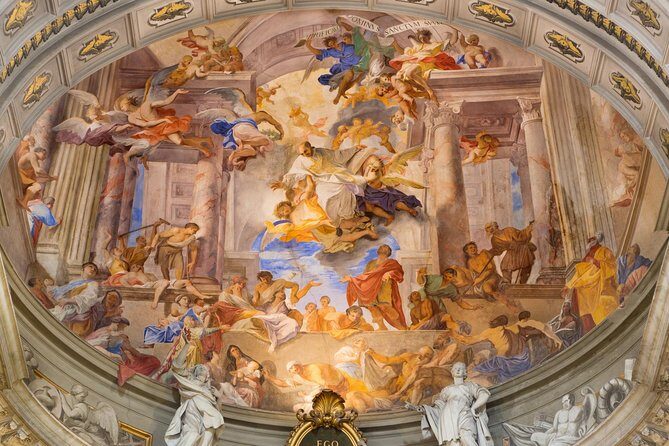
I especially love two things. First, you get the kind of close-up, inside-the-church viewing that turns big names into details you can actually see—like the optical trick dome at Chiesa di Sant’Ignazio di Loyola. Second, the tour’s stories land because the guides (for example, Chiara, Laura, and Marzia) are praised for being kind, intelligent, and able to explain what you’re looking at without rushing you.
One thing to watch: the dress code is strict for churches. Shorts and sleeveless tops mean trouble, and you could be refused entry if your knees and shoulders aren’t covered.
In This Review
- Key highlights you’ll feel on this tour
- Why this Baroque walk starts by the Spanish Steps
- Piazza di Spagna and Trevi: two quick stops that set the tone
- Chiesa di Sant’Ignazio di Loyola and the fake dome trick
- Piazza Sant’Ignazio: a small square with big photo power
- Santa Maria Sopra Minerva and Bernini’s elephant detail
- St. Andrew of the Fratte: Bernini angels in a 17th-century setting
- Caravaggio at St. Agostino: dark drama in church form
- Church of St. Louis of the French and the shift back to streets
- Piazza Navona and Bernini’s Fountain of the Four Rivers
- Price and timing: is $332 per person worth it?
- What you should watch for: dress code, walking, and closures
- Who this tour fits best (and who should skip it)
- Should you book this private Baroque tour?
- FAQ
- What time does the private tour start?
- How long is the tour?
- Where do I meet my guide?
- Where does the tour end?
- Is this a private tour?
- Are entrance fees included?
- What’s the dress code for churches?
- Does the tour run in bad weather?
- Can the driver pick me up from my hotel?
- What is the cancellation window for a full refund?
Key highlights you’ll feel on this tour
- Private, 3-hour format focused on the Baroque period rather than trying to do Rome in a day
- Fake perspective dome at Chiesa di Sant’Ignazio di Loyola, a standout optical illusion
- Bernini sightings including the angel sculptures and the famous elephant connection at Santa Maria Sopra Minerva
- Caravaggio and collaborators encountered through church art, not just museum posters
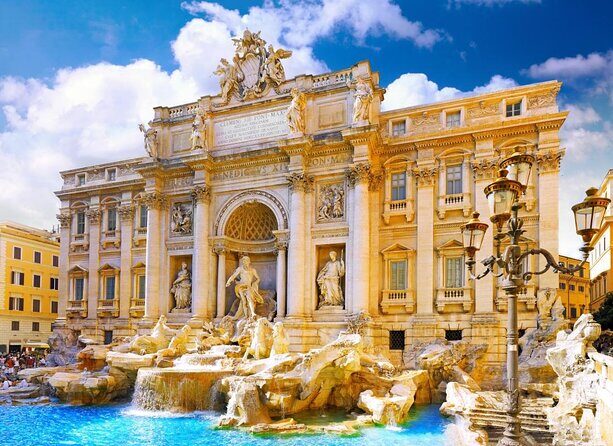
- Trevi and Piazza Navona, handled as quick “art stops” so you keep momentum
- Guides named in real experiences (Chiara, Laura, and Marzia) who bring personality to the explanations
Why this Baroque walk starts by the Spanish Steps
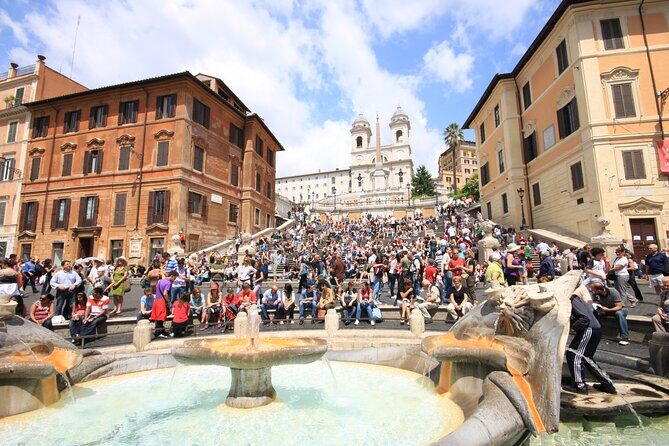
If your Rome plan leans heavily ancient, this tour gently pushes you into a different Rome. The Baroque era is all about drama: light, motion, convincing space, and church interiors that feel designed for emotion. That’s why starting near the Spanish Embassy by the Spanish Steps makes sense. You’re already in a historic heart, and you’re not far from the central church zone where the Baroque story really comes alive.
This is also built as a private experience. That matters in Rome. You’re not stuck listening from the back of a crowd, and you can ask your guide what to notice—hand gestures in sculpture, the illusion tricks in painted architecture, or why a church façade or interior looks the way it does. With a private guide, the pace is more natural.
And because the itinerary is flexible, you’re not locked into a rigid checklist that ignores real-world conditions. Churches can change hours, and on this kind of walk, your guide can swap in similar highlights if needed. That flexibility is a quiet value.
You can also read our reviews of more private tours in Rome
Piazza di Spagna and Trevi: two quick stops that set the tone
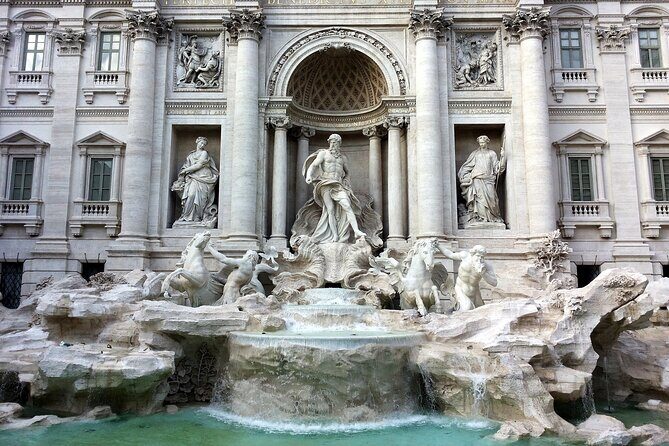
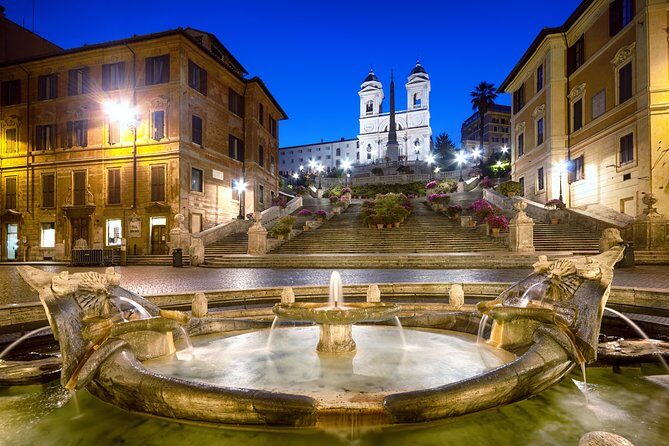
You begin at Piazza di Spagna, meeting your guide in front of the Spanish Embassy close to the Spanish Steps. This is a good “orientation” stop because you’ll get bearings fast without immediately going deep into museum-style logistics.
From there, the tour moves to Fontana di Trevi. This is a short visit—about 20 minutes—so treat it like a visual breather and a moment to reset. The tour reminder is simple and classic: throw three coins back into the fountain if you want to follow the tradition. Even if you’ve seen photos, Trevi is still worth the quick look because it’s one of the clearest ways to feel how Rome mixes sculpture, drama, and public space.
The practical angle: since Trevi is a magnet for crowds, the shorter time can be a blessing. You get your moment, then you keep walking toward the calmer, more art-focused church interiors.
Chiesa di Sant’Ignazio di Loyola and the fake dome trick
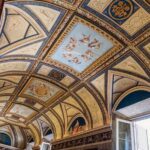
If you only remembered one moment from a Baroque tour, make it this one. Chiesa di Sant’Ignazio di Loyola is famous for a painted dome effect that creates convincing depth where none exists. You’re not just seeing Baroque ornament—you’re seeing Baroque thinking: how to make your eyes believe something the room can’t physically do.
Your guide helps you see what’s actually happening. The effect works because of perspective and how the painting is planned to match how you stand. You’ll likely spend around 20 minutes in this area, which is enough to walk in, look up, then look again once someone points out what changes your perception.
This is also a good stop for learning how Baroque art functions as storytelling. The church uses illusion to do emotional work. You come expecting decoration; you leave feeling like space itself was manipulated.
Piazza Sant’Ignazio: a small square with big photo power
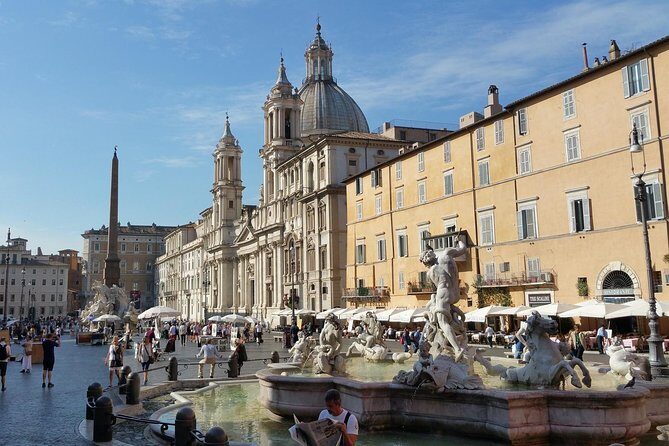
After the church visit, you’ll be in Piazza Sant’Ignazio—the square in front of the church. It’s one of those spots where the timing matters. A quick square break gives you a chance to reframe what you just saw inside.
Even though the time here is brief (again, about 20 minutes), it’s smart. You’ll be transitioning from indoor optical effects to outdoor urban viewpoints. This pause lets your brain cool down and then snap back into observation mode.
If you’re the type who likes photos but hates feeling rushed, you’ll appreciate that this isn’t a long photo marathon. It’s a practical stop that supports the main experience: the Baroque ideas behind the visuals.
Santa Maria Sopra Minerva and Bernini’s elephant detail
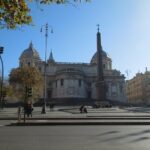
Next comes Santa Maria Sopra Minerva (and the surrounding square). This is where the tour connects famous names to specific, memorable objects—particularly when it comes to Bernini.
One detail you shouldn’t miss: the elephant connection associated with Bernini. You’re guided toward the feature so you’re not hunting around blind, and you get the kind of explanation that makes a single sculpture feel like it has a whole backstory. Bernini’s reputation is huge, but the best part of seeing these works in Rome is that you experience the physical scale and craftsmanship directly.
This stop is also a good reminder of why church art is different from museum art. In a museum, objects can feel like they were removed from life. Inside a church, they feel like they were made for worship space and human movement. Baroque design counted on people looking up, turning, and walking past.
St. Andrew of the Fratte: Bernini angels in a 17th-century setting
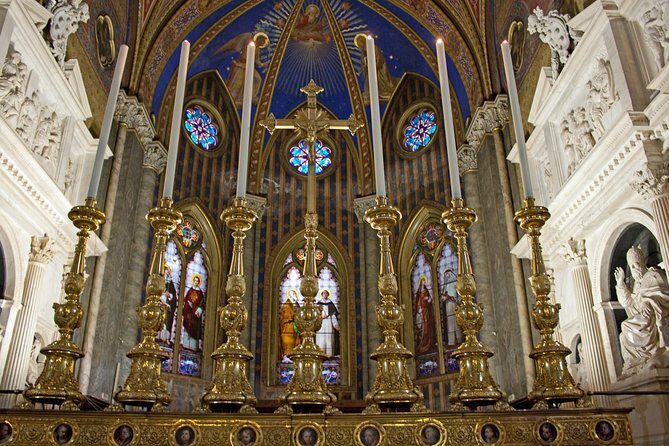
As the tour continues through the Baroque church circuit, you’ll also visit Chiesa di Sant’Andrea della Fratte, a 17th-century church known for Bernini-sculpted angels. This is the kind of stop that doesn’t just show a style—it shows Baroque personality.
Angels might sound like a generic religious subject, but Baroque angels are rarely static. They’re built to feel caught mid-moment, with emotion visible on faces and bodies arranged for motion. When you see them in the context of a church interior, you understand the Baroque goal: make spirituality feel immediate and present.
The time at each church is limited (the whole tour is about 3 hours), so your guide’s job is crucial. You want the explanation that points your eyes to the most important parts—what to notice first, and what to see after you look again.
Caravaggio at St. Agostino: dark drama in church form
The Baroque story in Rome is incomplete without Caravaggio, and this tour makes sure you don’t treat him as a name on a book cover. At the Church of St. Agostino, you’ll see acclaimed works connected to Caravaggio, along with pieces tied to Sansovino and Raphael.
Why this matters: Caravaggio’s art often feels like it’s doing something emotional in real time. In a church, that emotional intensity can land even harder because it’s surrounded by religious space and lived-in atmosphere. You’re not just viewing a scene—you’re watching how lighting, realism, and mood were used to pull you into the moment.
Your guide’s commentary is especially helpful here because Caravaggio can feel subtle until someone points out the visual choices that create the effect: how figures are staged, how attention is guided, and how the artwork communicates without needing a caption.
Church of St. Louis of the French and the shift back to streets
A little walking brings you to the Church of St. Louis of the French in its square area near Piazza Navona. This is where the tour balances indoor and outdoor rhythm, so you don’t feel like you’re permanently staring at marble without break.
Again, time is short—about 20 minutes—so think of this church stop as a focused chapter, not a full deep museum experience. The goal is to keep the Baroque storyline moving and to give you the best, most teachable moments in each place.
If you like art-and-architecture tours that keep you engaged (instead of just letting you wander), this stop style fits. Your guide helps you look at what matters.
Piazza Navona and Bernini’s Fountain of the Four Rivers
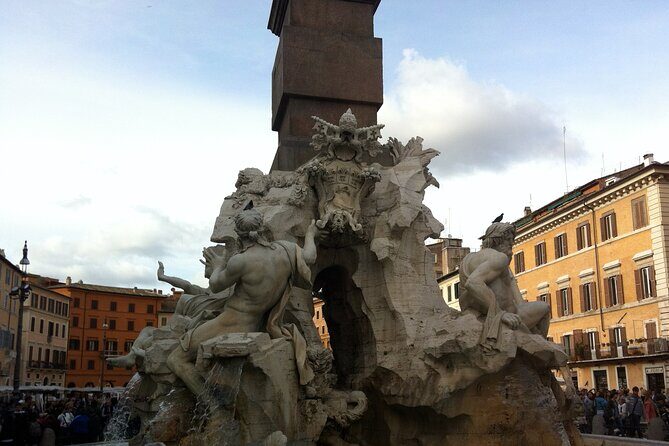
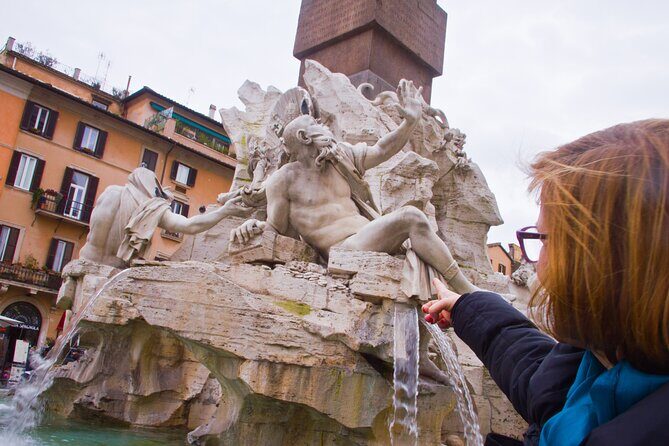
You wrap up in Piazza Navona, one of Rome’s most dramatic public spaces. Here, the centerpiece is the Bernini fountain of the Four Rivers. If you’ve ever wondered why Baroque feels theatrical, Piazza Navona is a clean answer. The fountain, the angles of the square, the way people gather around it—it all feels planned.
This final stop also makes logistical sense. After about 3 hours, the tour ends in central Rome at a convenient location for guide and group. From here, you’re set up to keep exploring at your own pace—dinner, more squares, or a slow walk through the streets while Baroque visuals are still fresh in your head.
If you want a simple plan: after the tour, take 30 minutes to sit somewhere nearby and just watch how people move through the space. Baroque design was always built for real bodies and real attention.
Price and timing: is $332 per person worth it?
At $332.14 per person for about 3 hours, this is a premium-priced city activity. But you’re paying for something that’s hard to replicate on your own: a private guide who connects the dots between multiple churches, multiple artists, and multiple visual tricks in a tight time window.
Also, it’s scheduled with two start times (9am and 2:30pm). That’s not just convenience. It lets you match your energy and your sightseeing plan—morning for clearer light and calmer crowds, afternoon for a slower pace and easier pairing with late-day meals.
Another value signal: you don’t need to buy time-consuming tickets just to enjoy the core stops. Entrance fees aren’t included unless you request them, and many of the listed stops are free to access as experiences. Plus, the tour uses a mobile ticket, which is one less hassle when you’re moving fast in central Rome.
In short: it’s priced for people who want depth and attention, not people trying to check Rome off a list.
What you should watch for: dress code, walking, and closures
You’ll be moving through central Rome and popping in and out of churches. The good news is that the tour stays within a tight zone, so it doesn’t turn into a full-day transit project. Still, it’s moderate walking, and it’s not designed for limited mobility.
The bigger practical issue is the dress code. For places of worship, you need knees and shoulders covered for both men and women. That means no shorts, no sleeveless tops. If you show up like you’re heading to a beach club, you risk being refused entry.
Then there’s the reality of church schedules. Churches are holy places and can close without notice. The tour notes that if any site is closed, it can be replaced with similar highlights. This is exactly why private guiding helps: your guide can adapt on the ground.
Finally, the tour runs in all weather conditions. Rome can change fast, so wear layers and bring something rain-ready if the forecast looks shaky.
Who this tour fits best (and who should skip it)
This is best for you if:
- You care about art and architecture and want real explanations, not just free time
- You’re drawn to Baroque drama and want to see how techniques create effects—like that fake dome
- You prefer a more personal pace with a guide, especially in churches
- You want to see more than ancient Rome without switching into a full museum day
This may not be ideal if:
- You’re trying to keep Rome sightseeing super minimal on foot
- You’re not willing to follow the church dress code rules
- You want lots of time at just one place (this is a concentrated circuit across multiple sites)
Should you book this private Baroque tour?
Yes, if you want Baroque Rome to make sense quickly. This tour does a smart job of pairing famous artists—Bernini and Caravaggio especially—with the actual locations where Baroque ideas show up in sculpture, painting, and architectural illusion. The private format is the real multiplier: it helps you look better, not just look longer.
If your time in Rome is tight and you’re already curious about Baroque, book it. If you’re mainly into ancient ruins and you’re allergic to church visits, you may feel like you’re stepping off your comfort zone. But if you can follow the dress code and you’re up for moderate walking, this is one of the cleanest ways to understand Baroque Rome in a few hours.
FAQ
What time does the private tour start?
You can choose either a 9am start time or a 2:30pm start time.
How long is the tour?
The tour lasts about 3 hours.
Where do I meet my guide?
Meet your guide at Piazza di Spagna, near the Spanish Embassy by the Spanish Steps.
Where does the tour end?
The tour ends in central Rome at Piazza Navona.
Is this a private tour?
Yes. It is a private tour/activity, with only your group participating.
Are entrance fees included?
Entrance fees are not included unless requested.
What’s the dress code for churches?
You must cover knees and shoulders. No shorts or sleeveless tops are allowed, and you may risk being refused entry if you don’t comply.
Does the tour run in bad weather?
Yes, it operates in all weather conditions, so dress appropriately.
Can the driver pick me up from my hotel?
Yes, the driver can pick you up from a central located hotel in Rome for an extra price. You just need to inform them to arrange it.
What is the cancellation window for a full refund?
You can cancel up to 3 days in advance of the experience for a full refund. Cancellation less than 3 full days before the start time is not refunded.