REVIEW · POMPEII
Pompeii walking tour (2hrs)
Book on Viator →Operated by Bites of History with Margherita · Bookable on Viator
Two hours in Pompeii beats a pile of photos. This private walking tour takes you into the Archaeological Park of Pompeii, the city famously destroyed by Mount Vesuvius in 79 A.D., yet miraculously preserved enough that you can still see real spaces like theatres, shops, houses, and rooms with wall decorations. It is the kind of experience where the stones stop being random ruins and start behaving like a place you could actually visit.
I especially like having a licensed guide who slows you down in the right spots, so you understand how Romans lived: what people ate, how the thermal baths worked, and how entertainment fit into daily life. I also like Margherita’s style—she’s described as engaging, funny, and very professional, and her tours have a step-by-step feel that helps you notice details you would normally miss.
One possible drawback: the entrance ticket isn’t included, so you’ll need to buy the Pompeii admission separately, and two hours means you’ll only cover a selection of the huge site.
In This Review
- Key highlights to look for
- Entering Pompeii with a plan, not a maze
- Where you meet: Piazza Esedra and starting inside the site
- What you actually see in the 2-hour walking loop
- Margherita’s guide style: step-by-step, not lecture-mode
- Everyday Roman life: how Pompeii helps you picture meals, work, and routine
- Thermal baths and gladiator training: the culture behind the spectacle
- Frescos, marble, and the parts you can’t fake
- Price and value: what $60.08 buys you
- Practical pacing: private, English, and mobile-friendly
- Who this tour fits best
- Should you book this Pompeii walking tour?
- FAQ
- How long is the Pompeii walking tour?
- Is the Pompeii admission ticket included in the price?
- Where do we meet for the tour?
- Is this tour private or shared?
- Is the tour offered in English?
- What happens if the weather is bad or I cancel?
Key highlights to look for
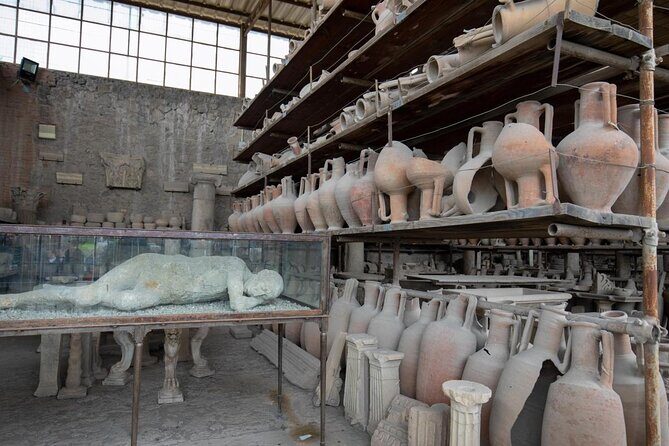
- Private 2-hour format focused on the best preserved parts, not a rushed checklist
- Margherita’s storytelling that turns ruins into everyday life—food, baths, games, and more
- Help with the on-site flow, including assistance getting tickets in at least some cases
- Made-for-people pacing where you get context for what you’re standing in front of
- Meets at Piazza Esedra at the Pompeii entrance area for an easy start
Entering Pompeii with a plan, not a maze
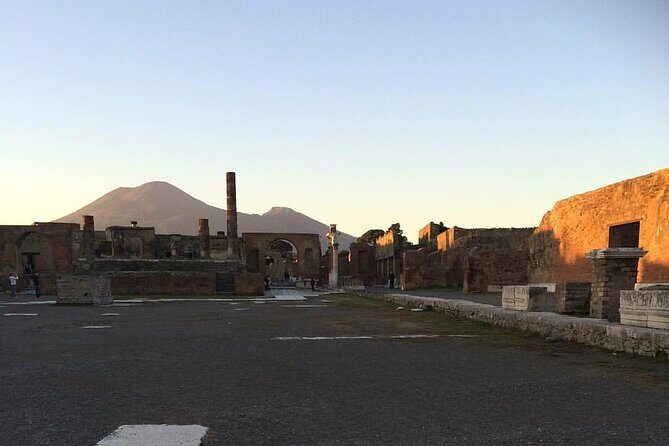
Pompeii is big. Really big. Without help, it is easy to wander for an hour, see impressive fragments, and still feel like you missed the point. This tour fixes that by giving you a structured walk through a “best preserved” slice of the city—so you can spend your energy on places that make the strongest impact.
The setting helps. This is not a recreated theme park. Pompeii is a Roman city that was destroyed in 79 A.D. by Mount Vesuvius, and it survived through the centuries in a way that lets you read daily life off the walls: spaces that once had purpose now have visible clues. A good guide matters here because Pompeii does not hand you the meaning on a silver platter. You have to be shown what you are looking at.
With a private format, you also avoid the awkward feeling of trailing behind a group you cannot keep up with, or waiting for people who move at a different speed. You get a two-hour window where the guide can adapt to your pace and attention.
You can also read our reviews of more walking tours in Pompeii

Where you meet: Piazza Esedra and starting inside the site
You meet at the Archaeological Park of Pompeii area, in front of the ticket office in Piazza Esedra, Pompeii (80045). The experience starts from there and ends back at the same meeting point.
That matters more than it sounds. Pompeii entrances and nearby transport can be confusing the first time. Meeting at a clear, public point at the entrance helps you get started without drama. It also means you’re ready to enter and begin learning immediately, rather than burning time at the perimeter.
Also, the tour offers a mobile ticket. That is handy if you want everything on your phone and you do not want to juggle paper while you’re walking.
What you actually see in the 2-hour walking loop
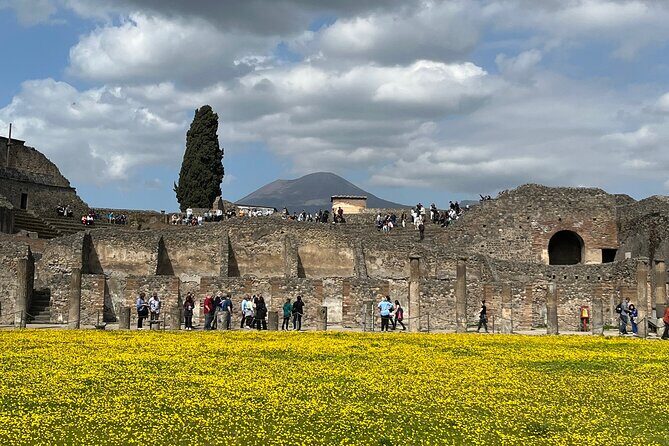
Even with only two hours, you can get a satisfying sweep—if the walk is focused. The tour’s core promise is a guided path through spaces that communicate what Pompeii was like when it was functioning city life.
Expect to hear about and look at:
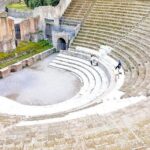
- Theatres and entertainment spaces (how people gathered to watch performances)
- Shops and commercial areas, where you can connect architecture to real trade
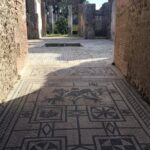
- Houses with surviving frescos and marble details that help you picture wealth, taste, and daily routines
- A look at the thermal baths, including how they worked as a system
- The gladiators’ gym, tied to training and spectacle
The key is not just seeing these stops. It is understanding why they mattered. Pompeii works best when you connect the physical space to the human behavior inside it—what people did there, what they valued, and what that tells you about Roman culture.
And in a city that was buried and preserved, that connection is the difference between seeing ruins and feeling like you are walking through the same streets people once lived on.
Margherita’s guide style: step-by-step, not lecture-mode
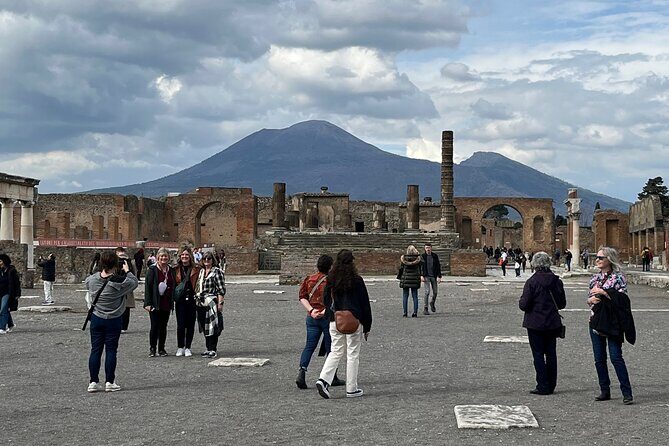
This tour is led by Bites of History with Margherita, and multiple descriptions of her approach share a consistent theme: she keeps it engaging while staying grounded and professional.
Here’s what that means for you in real terms:
- You are guided through Pompeii in a way that feels step-by-step, so you are not left guessing what you are looking at.
- She makes connections between what you see and how people lived—food, daily customs, and how entertainment fit into everyday life.
- The tone is described as both fun and serious at the same time, which is exactly what you want in a place where the facts matter but the atmosphere matters too.
One practical bonus that came up: Margherita has offered Naples food tips alongside Pompeii context. That is not essential to seeing the ruins, but it is useful if Pompeii is part of a longer itinerary and you want a plan for what to eat after the walking is done.
In at least one reported case, she also helped visitors get oriented after arriving—meeting people at the train station and walking together to the Pompeii entrance. Even if your own arrival details differ, it gives you a sense of how she handles the real-world friction that can slow tours down.
Everyday Roman life: how Pompeii helps you picture meals, work, and routine
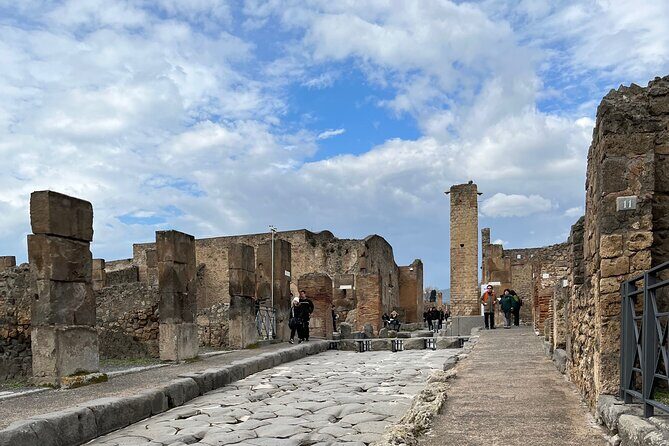
What I like about the “everyday life” emphasis is that it protects you from a common Pompeii problem: getting stuck on only dramatic scenes. Pompeii has plenty of wow moments, but the best tours help you see the normal parts too.
This guide approach focuses on how Romans lived in the city day to day. That includes ideas like:
- Food and daily eating habits (what people may have eaten and how food culture worked)
- The way shops and neighborhoods suggest trade and routine
- House details that hint at social status and lifestyle
- How a place like Pompeii structured leisure as part of the city rhythm
When you learn the purpose behind a space, you start spotting the same themes across stops. You can look at a street corner and quickly understand what kind of activity might have happened there. That is when the ruins feel less like scattered fragments and more like a functioning social machine.
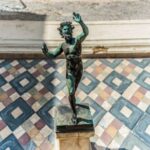



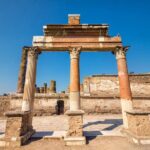

Thermal baths and gladiator training: the culture behind the spectacle
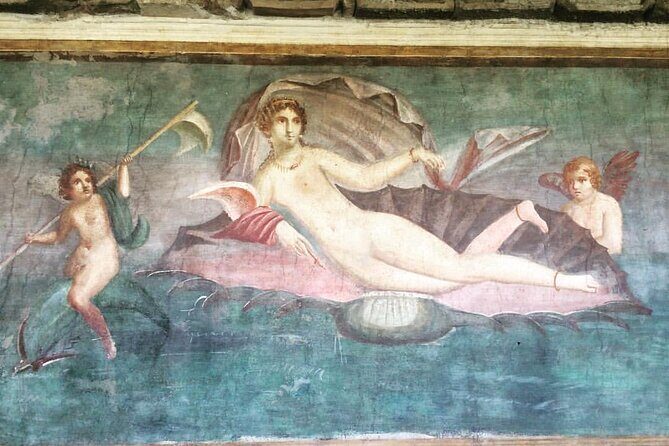
Pompeii is famous for the big public entertainment ideas, and this tour includes the elements that explain why people cared.
You’ll hear about the thermal baths and how they worked. Even if you have visited other Roman sites, the baths are a great learning moment because they show how the Romans blended comfort, routine, and social life in one system.
You’ll also visit the gladiators’ gym, which connects the city to a different side of Roman culture: discipline, training, and spectacle. It is not only about violence; it is about preparation, entertainment, and public identity.
These stops are valuable because they represent two major “human magnets” that bring history to life:
- a place where people unwind and socialize
- a place where people gather for performance and excitement
The guide’s job is to keep those meanings clear as you walk. That is what you get in a well-told, well-paced two hours.
Frescos, marble, and the parts you can’t fake
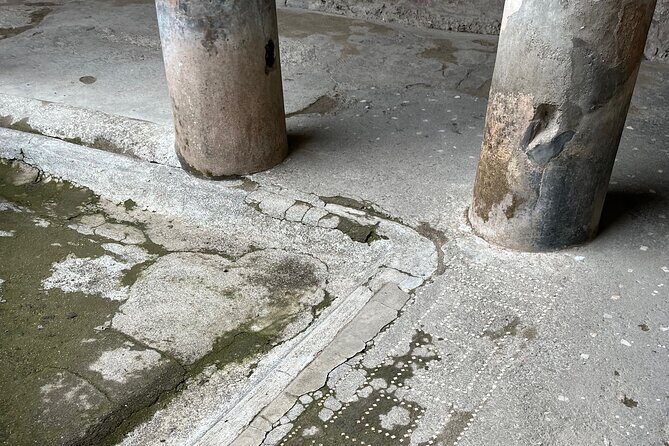
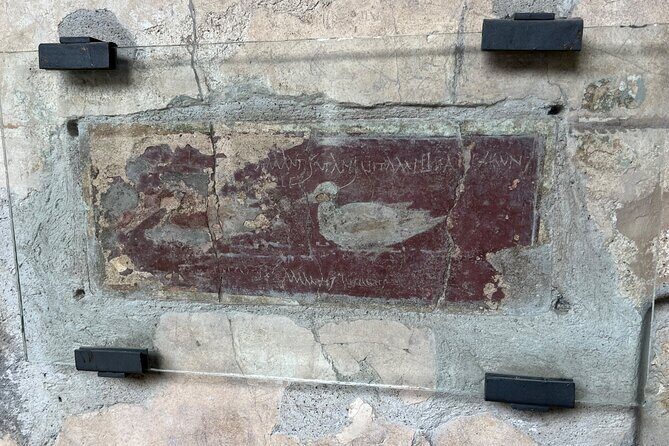
One of the strongest reasons to do a guided Pompeii walk is simple: Pompeii is visual, and details matter. The tour highlights frescos and marble surviving in houses, which helps you understand that this was not a stripped-down city. People decorated their spaces in ways that signaled taste and status.
Without guidance, you can see wall art and pretty stone and move on. With guidance, you can start to interpret what the setting suggests: what kind of home it was, what the rooms were likely used for, and how decorative choices fit the social world.
This is also where the “best preserved city” framing becomes practical. Preservation makes it possible to do more than admire. It enables you to compare the physical space with the life that once happened there.
Price and value: what $60.08 buys you
At $60.08 per person for about 2 hours, the big value is the time and expertise of a licensed guide in a private format. You are not paying just for someone to point at stones. You are paying for direction—what to prioritize, how to connect the stops, and how to keep you oriented inside a massive site.
The other value piece is efficiency. Pompeii is not a “wander for 3 hours and figure it out” place unless you enjoy that kind of puzzle. A guide helps you turn confusion into clarity quickly.
Just remember the price does not include the Pompeii admission ticket. So your real cost is the tour price plus the site entry. If you are comfortable buying tickets on your own and you want the guide-led selection of highlights, this is a solid setup.
Practical pacing: private, English, and mobile-friendly
This experience is offered in English and is described as a private tour/activity, meaning only your group participates. That combination is ideal if you want your questions answered in real time and you do not want to merge into a bigger flow.
The tour is also built for real travel logistics:
- Mobile ticket is provided
- The meeting point is near public transportation
- The tour is set up so most travelers can participate
- Service animals are allowed
Duration is around 2 hours, which is a good middle ground. Long enough to make a difference, short enough that you’re not still walking when your feet decide they are done.
Who this tour fits best
This Pompeii walk is a great match if:
- you want a guided, meaning-based visit rather than a speed-run
- you like stories about how people lived—food, baths, entertainment, and daily routine
- you want a private setup where the guide can keep your attention in the right spots
- you are visiting for the first time and you want help making sense of what you see fast
If you already know Pompeii very well and you want total freedom to pick any corner of the site, you might find a guided two-hour loop limits your selection. But if your goal is to come away with a clear understanding of what Pompeii was like, this format is built for that.
Should you book this Pompeii walking tour?
I’d book it if you value a focused walk, clear explanations, and a guide who can make the site feel understandable in just two hours. The strongest selling point here is how the tour organizes Pompeii into experiences you can relate to: homes with decoration, baths with purpose, and entertainment with cultural meaning.
I would think twice only if:
- you really want to explore Pompeii at your own pace with no structure
- you are not able to arrange the separate entry ticket in addition to the tour price
- weather could be a major issue on your travel day (because the experience requires good weather)
If you want Pompeii to click, not just impress, this is a smart way to make the most of limited time.
FAQ
How long is the Pompeii walking tour?
It’s approximately 2 hours.
Is the Pompeii admission ticket included in the price?
No. Admission tickets for the archaeological park are not included.
Where do we meet for the tour?
You meet in front of the ticket office in Piazza Esedra at the Archaeological Park of Pompeii.
Is this tour private or shared?
It’s a private tour/activity. Only your group will participate.
Is the tour offered in English?
Yes, English is listed as the offered language.
What happens if the weather is bad or I cancel?
The experience requires good weather. If it’s canceled due to poor weather, you’ll be offered a different date or a full refund. If you cancel for any reason, it’s non-refundable and cannot be changed, so the amount you paid will not be refunded.