REVIEW · ROME
Treasure hunt in Rome, Ghetto and Trastevere
Book on Viator →Operated by X City Tours · Bookable on Viator
Rome turns into a game here.
This treasure-hunt walk through Jewish Rome and Trastevere is the kind of tour that makes you notice details you would normally walk right past. I love the quiz format—it keeps your brain switched on without turning the route into a lecture. I also like that it’s an evening-style outing, so you get a smart dose of history while still leaving the rest of your day flexible.
You should know one thing before you book: the stops are brief (think quick “look, learn, answer” moments). It’s not a slow museum-style experience, so if you want lots of time inside buildings or a deep guided monologue, this may feel a bit too light.
In This Review
- Key highlights
- Where this Rome treasure hunt fits in your trip
- Meeting point and the simple start-to-finish flow
- The route stop by stop: what you’ll actually see
- Teatro di Marcello: the first clue in ancient stone
- Tempio Maggiore di Roma: a major Jewish landmark
- Isola Tiberina: the river crossing that connects everything
- Trastevere streets and squares: where the city feels lived-in
- Fontana della Botte: a fountain with a story
- Porta Settimiana: ancient door, modern street energy
- Piazza di Santa Maria in Trastevere: quiz finish line
- Why the quiz style is better than it sounds
- Evening timing and the sweet spot for energy
- Price and value: what $30.10 buys you
- Who will enjoy this most (and who might not)
- Small group size: why it feels manageable
- Hosts and the human touch (names you might hear)
- Practical tips so the hunt stays fun
- Should you book this treasure hunt in Rome?
- FAQ
- How long is the Rome treasure hunt?
- How much does it cost?
- Is the tour in English?
- Do I need a printed ticket?
- Where do I meet and where does it end?
- How big is the group?
- Are there admission fees for the stops?
- Is this tour near public transportation?
- What’s the cancellation option if my plans change?
Key highlights
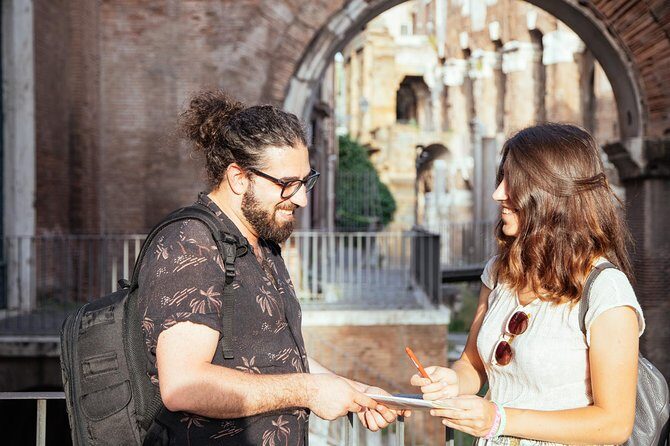
- Quiz-driven route that nudges you to spot clues instead of just staring at monuments
- Jewish Ghetto + Trastevere focus, so you see Rome beyond the usual postcard circuit
- Major landmarks in short stops like Teatro di Marcello and Tempio Maggiore di Roma
- A crossing via Isola Tiberina, tying neighborhoods together with a classic river crossing
- Small group size (up to 20), which helps the experience feel organized but not crowded
Where this Rome treasure hunt fits in your trip
Rome has two speeds: the fast “see everything” sprint and the slow “learn the city” walk. This experience lands in the second lane, but with training wheels. You’re given a route and prompts, and you solve questions as you go. That makes the walk feel active rather than passive, which is exactly what I want on a trip where I already see a lot of ruins.
The best match is a first-time visitor who doesn’t yet know which streets to linger on, or a repeat visitor who’s tired of only hitting the top 10. It’s also a solid option if you live in Rome (or you’re staying long enough to feel like you’ve exhausted the main sights) because it highlights corners that don’t always make it into the standard itinerary.
It’s offered in English, uses a mobile ticket, and runs about 2 hours 30 minutes. You’re walking through the center with stops that include outdoor viewing and a couple of religious/historic sites—so wear shoes you’ll trust for uneven sidewalks.
You can also read our reviews of more tours and experiences in Rome.



Meeting point and the simple start-to-finish flow
Your start point is at the Fontana della Terrina, on Via della Chiesa Nuova (00186 Roma RM). The end is at the Fontana di Santa Maria in Trastevere, in Piazza di Santa Maria in Trastevere (00153 Roma RM), where you finish and wrap the quiz.
The practical upside: you don’t end up backtracking across the whole city. The route moves you from one Roman “story zone” into the next—so your day feels like progress, not like commuting.
This also matters because the tour is small: maximum 20 travelers. In a city like Rome, smaller groups usually mean less milling around at the same street corner trying to locate everyone.
The route stop by stop: what you’ll actually see
Teatro di Marcello: the first clue in ancient stone
You begin at Teatro di Marcello, one of those Roman constructions that makes you stop even if you’ve seen a lot of ruins. The structure’s scale and layout help you get a feel for how the Romans built for crowds. Even when you only have a few minutes here, the goal is clear: look closely, get the vibe, and then move on before your legs turn into luggage.
Tip for you: don’t just face the main façade. If the walkway allows, take a step to get a different angle. Rome rewards that habit.
Tempio Maggiore di Roma: a major Jewish landmark
Next is the Tempio Maggiore di Roma, a key religious site for Rome’s Jewish community. You’re there for a short stop, but the payoff is learning how this area fits into Rome’s wider story. This isn’t “just another pretty building.” It’s a chance to understand the city’s cultural layers in a place that still matters.
A quick heads-up: religious sites can have rules about dress and behavior. The tour data doesn’t spell out specific requirements, so treat this as a normal respectful-visitor moment—cover up if needed and keep your voice down.



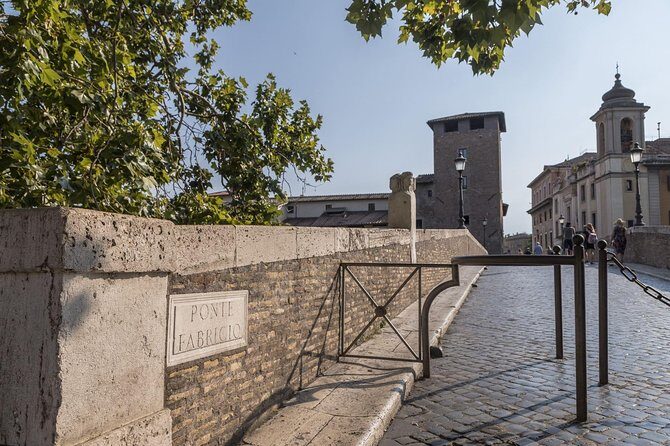
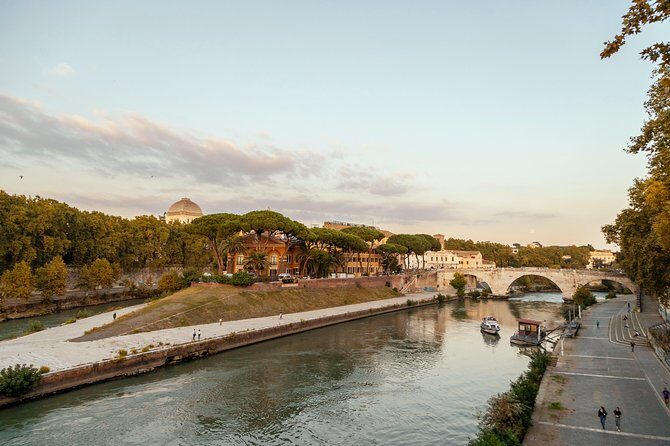
Isola Tiberina: the river crossing that connects everything
Then you cross through Isola Tiberina, the Tiber Island. This is a classic way to “move between worlds” in Rome. Instead of switching neighborhoods by bus or subway, you transition by a geographic feature—water—and that changes how the city feels. You’re literally connecting the itinerary sections across the river.
This stop also adds variety. After you’ve been looking at streets and buildings for a while, the river moment acts like a breather for your eyes.
Trastevere streets and squares: where the city feels lived-in
Now you’re in Trastevere, walking through its typical streets and squares. This is where Rome often shifts from monumental to everyday. You’ll get that sense of place: narrow lanes, small squares, and the feeling that people live here, not just visit.
Because it’s a quiz route, you’re likely to slow down at corners you would normally ignore. That’s the advantage of this format—your pace becomes intentional.
Good to know: because Trastevere involves more walking along older streets, go easy on the heels or thin soles. You’ll be happier.
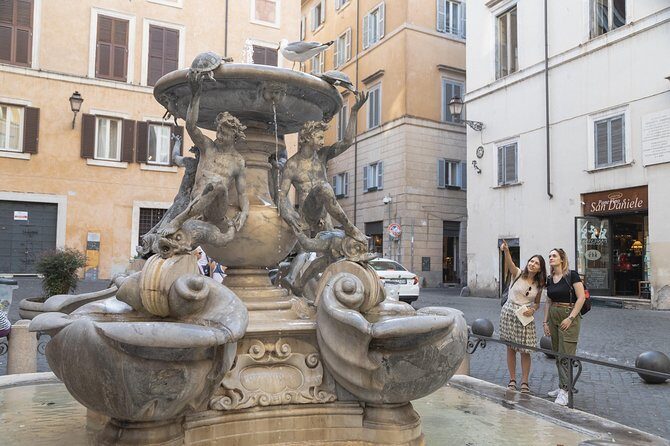
Fontana della Botte: a fountain with a story
You’ll stop at Fontana della Botte, a fountain tied to local history and curious details. Fountains in Rome can look like set decoration, but this one is presented for a reason. The goal is to connect what you see with a background story so it doesn’t fade after the photo.
This is also one of the best examples of what makes the treasure hunt idea work. You don’t just pass the object—you learn what makes it interesting, then you move on.
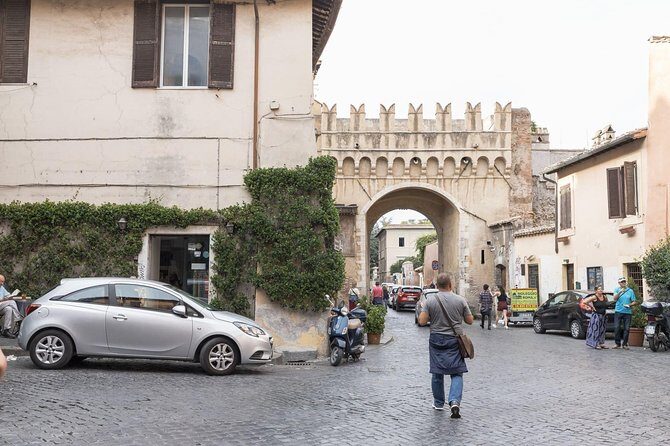
Porta Settimiana: ancient door, modern street energy
Next up is Porta Settimiana, an ancient door dating back to Roman times. You’re told to look at it as more than a relic. Porta Settimiana helps you visualize how Rome worked as a defended city and how historic routes and entrances shaped life.
A door is a small thing compared to the big-ticket ruins, but that’s the point. Short stops let you cover more variety, and that variety is what helps you remember Rome as a whole city instead of only as an archaeological park.
Piazza di Santa Maria in Trastevere: quiz finish line
Finally, you wrap at Piazza di Santa Maria in Trastevere at the fountain. This is where the fun part clicks into place: the quiz finishing moment. It’s the end of the game, which helps you feel satisfaction instead of “okay, now what.”
From a planning perspective, finishing in a lively square area is handy. Even if the tour ends the evening, you can still step into dinner mode without needing a second navigation plan.
Why the quiz style is better than it sounds
A quiz might sound like a gimmick, but here it’s doing real work. It turns your brain into a scavenger hunt tool. You’re pushed to read small details, notice placement, and connect landmarks to the stories attached to them.
One big win: it doesn’t require you to be an expert. You’re learning as you go. I also like that it works for both first-timers and repeat visitors. If you’ve never been, you get orientation through questions. If you’ve been 10 times, you still get challenged because Rome’s side streets and lesser-known corners don’t always teach you new things.
And if you’re traveling alone, you’re not stuck in a silent museum line. Past participants have specifically liked the team feel—solving questions alongside others—even though it’s not a traditional “stand still, listen to the guide forever” setup.
Evening timing and the sweet spot for energy
The experience is framed as an evening option, which matters more than you’d think. Rome can feel like a lot in midday heat. An outing that takes about 2.5 hours means you get a strong hit of history and atmosphere, and then you still have time to eat, wander, or do your own sightseeing.
Each stop is short, which helps keep the energy steady. The most common problem with walking tours is burnout: you start excited and end cranky. This one aims to prevent that by keeping the rhythm quick.
Price and value: what $30.10 buys you
At $30.10 per person for around 2 hours 30 minutes, this is priced like an activity, not like a full-day guided excursion. Since the route includes major, varied stops—and the tour uses a mobile ticket in English—it’s a practical way to spend an evening.
The value comes from structure. You aren’t just wandering randomly through the Jewish Ghetto and Trastevere; you’re guided by a game that pushes you to learn while walking. That’s often what you pay extra for in other formats: someone organizing your route and explaining what you’re looking at.
Also, the itinerary indicates free admission at stops. That means you’re not paying extra entry fees for the sights on the list. (Always double-check any on-the-day rules for specific buildings, but the tour is designed to avoid costly gate fees.)
Who will enjoy this most (and who might not)
You’ll likely have a great time if:
- You like walking tours but want something more engaging than hearing facts for two hours.
- You want Jewish Ghetto + Trastevere coverage without spending the whole day.
- You’re traveling with friends, family, or a mixed group and want the experience to feel social.
It may be less ideal if:
- You want long museum time or in-depth guided commentary.
- You strongly dislike quiz-style activities.
- You want a slow, fully detailed history lecture at every stop.
Also, religious sites and neighborhoods can mean you’ll be around other pedestrians. Rome is Rome. Keep your group pacing tidy so nobody gets separated.
Small group size: why it feels manageable
With up to 20 travelers, you’re not stuck in a mass of bodies. That helps for two reasons. First, it’s easier to move as a group without constant waiting. Second, you can actually hear instructions and keep the quiz flowing.
In addition, the experience is described as near public transportation. That’s helpful in Rome, where you can plan to arrive early, take a breather, and then start fresh.
Hosts and the human touch (names you might hear)
In English-language versions, you’ll meet the on-the-ground hosts. People have thanked staff members named Alisa and Matteo for making the walk instructive and fun. That’s a good sign if you care about a tour that feels like a real guiding team rather than a faceless product.
Practical tips so the hunt stays fun
Here are the things that will make this smoother for you:
- Bring comfortable shoes. You’ll be on foot for most of the 2.5 hours.
- Keep your phone charged. A mobile ticket is part of the experience.
- Plan for light weather changes. Rome in the evening can shift quickly.
- Go at the quiz pace. The route only works if you slow down enough to answer.
- Be respectful at religious sites. Even on a quiz walk, keep the tone appropriate.
Should you book this treasure hunt in Rome?
Book it if you want a fun alternative to the usual sightseeing tour and you like learning through doing. The Jewish Ghetto/Trastevere mix is a smart way to see the city’s different identities, and the quiz format makes the walking feel purposeful rather than repetitive.
Skip it if you’re craving a deep, slow guided tour with long stops and extended time inside major sites. This is built for quick discovery moments. Think: great evening activity, not a replacement for a full-day museum plan.
If you’re on your first trip to Rome, it’s an easy win. If you’ve been before, it’s also a strong choice because it nudges you into neighborhoods and details that don’t always show up on the standard route.
FAQ
How long is the Rome treasure hunt?
It lasts about 2 hours 30 minutes.
How much does it cost?
The price is $30.10 per person.
Is the tour in English?
Yes, it’s offered in English.
Do I need a printed ticket?
No. It uses a mobile ticket.
Where do I meet and where does it end?
You start at Fontana della Terrina on Via della Chiesa Nuova (00186 Roma RM) and finish at Fontana di Santa Maria in Trastevere in Piazza di Santa Maria in Trastevere (00153 Roma RM).
How big is the group?
The maximum group size is 20 travelers.
Are there admission fees for the stops?
The itinerary lists free admission for the stops.
Is this tour near public transportation?
Yes, it’s described as near public transportation.
What’s the cancellation option if my plans change?
You can cancel for a full refund up to 24 hours in advance. If you cancel less than 24 hours before the start time, the amount paid isn’t refunded.