REVIEW · COLOSSEUM TOURS
Night at the Colosseum Guided Walking Tour of Ancient Rome
Book on Viator →Operated by Rome Tours by Tommaso · Bookable on Viator
That first view of Rome’s ruins is a jolt. This private guided walk strings together the big-name sights around the Colosseum in a way that helps you understand what you’re seeing, not just look at it. I like that you get official art and historian guidance while everything stays outside, so you skip the usual indoor-monument stress.
I also love the smart pacing: you’re not trapped in a rush, and you can ask questions as you go. In fact, guides like Tommaso, and the kind of patient explanations people mention (including Max and Maria), are exactly what turns stonework into stories you can follow.
One thing to consider: it’s still a walking tour in an outdoor environment, so you’ll want comfortable shoes and good weather on your side.
In This Review
- Key points to know before you go
- A night walk through Rome’s power centers (no ticket maze)
- Where you start, where you end, and why the route feels logical
- Stop 1: Teatro di Marcello and what Roman shows were really like
- Stop 2: Piazza del Campidoglio, Michelangelo’s square, and forum viewpoints
- Stop 3: Mercati di Traiano (Museo dei Fori Imperiali) and Trajan’s big idea
- Stop 4: Colonna Traiana and the war story in reliefs
- Stop 5: Foro Romano, where Rome ran on law, trade, and temples
- Stop 6: The Colosseum area from the outside, with gladiators made understandable
- Stop 7: Arch of Constantine and why it influenced later cities
- Why the guide matters more than the sightseeing list
- Price and value: what $289.73 really covers
- Practical tips so you get the most from the night walk
- Who should book this tour, and who might want a different option
- Should you book Night at the Colosseum Guided Walking Tour?
- FAQ
- Where does the tour start and where do you end?
- How long is the tour?
- Is this tour private?
- Is the tour inside monuments or outside only?
- What’s included in the price?
- Are admission tickets included?
- What should I wear?
- What happens if the weather is bad?
- Are service animals allowed?
Key points to know before you go
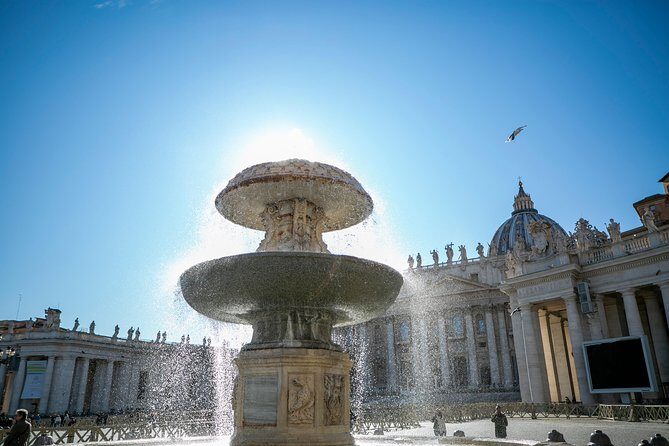
- All outside, no monument entry: no waiting for interior tickets or security lines.
- Private with your group: easier questions, less standing around, better flow.
- Stops that connect the dots: theater, civic square, Trajan’s market complex, Trajan’s column, the Forum, then the Colosseum area.
- Roman “comics” on Colonna Traiana: campaign reliefs explained clearly and in context.
- Great finish location: you end near Piazza del Colosseo for Metro or taxi onward.
A night walk through Rome’s power centers (no ticket maze)
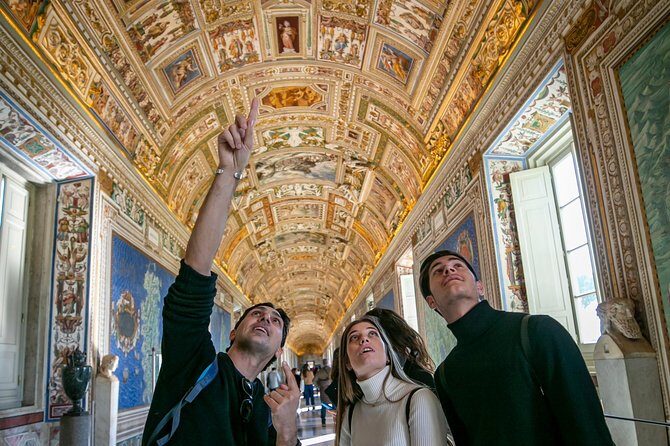
This is the kind of tour that makes Rome feel like a living map. Instead of hopping around on your own and guessing what came first, you get a guide to connect the sights as parts of one story: shows, government, conquest, law, trade, and spectacle.
The biggest practical win is simple: it’s all outside. You won’t enter monuments, and that’s why admission tickets aren’t included. You still get the “why it matters” of each place, just without the time burn of interior entry.
If you’re the type who hates losing time to crowding, this approach helps. It’s also private, so you’re not swallowed by a sea of strangers listening through the back of someone else’s headphones.
You can also read our reviews of more walking tours in Rome

Where you start, where you end, and why the route feels logical
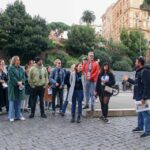
You meet at Chiesa di Santa Maria in Portico in Campitelli, at Piazza di Campitelli 9. The tour finishes at Piazza del Colosseo, which is convenient because you’re close to public transit and you can take a taxi from there without needing extra navigation.
That start-to-finish flow matters. You begin with preserved entertainment space, move into Rome’s civic heart, then work your way through the empire’s major public complexes, law-and-market area, and finally the Colosseum zone. It feels like you’re walking forward through time, not zigzagging randomly across the city.
You’ll also get a mobile ticket, which is handy for keeping things organized (and it’s just less friction on arrival).
Stop 1: Teatro di Marcello and what Roman shows were really like
Your first stop is Teatro di Marcello. This is one of the best preserved ancient theatres in Rome, and your guide uses it as a starting point for understanding Roman entertainment and public gatherings.
The practical value here is orientation. The moment you’re standing near a major theatre, you can start picturing how crowds moved, how events were staged, and why public performance mattered in Roman civic life. If you’ve only seen ruins from far away, this stop gives you a concrete anchor.
Time on this stop is about 15 minutes, so don’t expect a slow museum-style experience. Instead, think of it as a fast, focused primer that helps you read what comes next.
Stop 2: Piazza del Campidoglio, Michelangelo’s square, and forum viewpoints
Next comes Piazza del Campidoglio, designed by Michelangelo. This is where Rome shifts from ancient theatre energy to the visual language of authority. You’ll also see the town hall and the statue of Marcus Aurelius, plus you’ll get a view of the forums.
I like this stop because it teaches you how to “see” Rome. The guide’s commentary helps you connect the modern-looking civic layout to the ancient structures you’re about to explore. Even if your photos don’t capture everything, your brain will.
This stop runs about 30 minutes, which gives you breathing room to look around, reset your bearings, and ask questions before you head into the more complex ruins.
Stop 3: Mercati di Traiano (Museo dei Fori Imperiali) and Trajan’s big idea
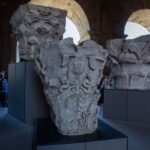
Then you move to Mercati di Traiano – Museo dei Fori Imperiali. Your guide frames this as the grandest forum complex built by Trajan, and that detail changes how you see the area. This wasn’t just a place for browsing; it was a statement about power, urban planning, and Roman ambition.
Time here is about 15 minutes, so the goal isn’t to memorize every corner. It’s to understand what this site represented: a fusion of public life and imperial identity.
Possible drawback: because time is short and the area can feel visually busy, you may want to focus on what your guide emphasizes. Pick a few key points and track them closely rather than trying to absorb every surface.
You can also read our reviews of more guided tours in Rome

Stop 4: Colonna Traiana and the war story in reliefs
One of the most memorable stops is Colonna Traiana. This monument shows Trajan’s campaign of war in Romania through sculpted reliefs. The tour points out how the reliefs can feel like a comic book—sequential, scene-by-scene, and designed to be read like a narrative.
Time here is about 10 minutes, but the payoff can be big. Once you know you’re looking at a designed story, it stops being “a tall column with carvings” and starts being a visual record of how the empire wanted to communicate conquest.
If you’re the kind of person who loves details, you’ll get more out of this stop by asking a question or two. The tour is built to allow questions, so this is a good moment to slow down mentally even if the stopwatch keeps moving.
Stop 5: Foro Romano, where Rome ran on law, trade, and temples
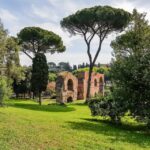
Next is the Foro Romano—the center of Rome and the Roman Empire. Your guide explains its role as the hub for the most important judicial courts, major trade activity, and significant temples.
This stop is about 30 minutes, and it’s where the tour’s structure really clicks. You’re no longer just visiting “famous ruins.” You’re understanding how people lived inside the empire’s decision-making system: disputes, commerce, religious authority, all in one area.
The drawback here is also straightforward. The Forum zone can overwhelm your senses if you go in expecting one single viewpoint. Go in expecting layers. Let the guide help you sort what’s civic, what’s religious, and what’s practical.
Stop 6: The Colosseum area from the outside, with gladiators made understandable
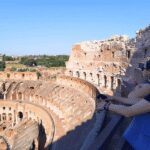
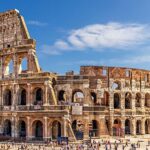
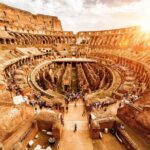
Then you reach the Colosseum. You’ll see it from outside and learn about gladiators and Roman shows. Since you’re not entering the monument on this tour, it’s not about ticketed interior viewing. It’s about getting context so the building shape and setting make sense.
Time is about 30 minutes, which is enough to get a strong picture of the Colosseum’s role without feeling like you’re rushing through a giant queue.
One consideration: if you’re craving inside-the-Colosseum views specifically (stairs, floors, and deeper architectural access), this may not fully satisfy you. This tour is designed to help you connect the Colosseum to the rest of the empire’s public world, with time spent learning the story rather than managing access.
Stop 7: Arch of Constantine and why it influenced later cities
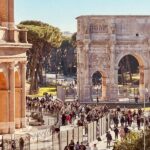
Finally, you’ll see the Arch of Constantine. This is described as the best preserved ancient arch and a model for later monuments, including references like the Arch of Triumph in Paris and Marble Arch in London.
Time is about 20 minutes, and I love this stop because it brings Rome out of the past and into the present. You’re looking at an ancient structure, then noticing how later cultures borrowed the same visual language to claim legitimacy and celebrate power.
If you enjoy design, symbolism, and “how power gets staged,” this is a great finish. It gives you a satisfying wrap-up note after the Forum and Colosseum context.
Why the guide matters more than the sightseeing list
At this price point, you’re paying for the story-shaping. The tour includes an official art and historian tour guide, and that shows up in how you understand each site’s purpose.
The reviews also line up with what you’ll want from a guide: calm, clear explanations, patient answers, and the ability to steer the group so you’re not stuck fighting crowds. Names that come up like Tommaso, plus mention of Max and Maria as being especially helpful, match the kind of guidance that makes a night walk feel less like wandering and more like learning.
The guide’s job here isn’t just facts. It’s helping you read stonework: why this theatre matters, how Trajan’s complex signals imperial messaging, what the Forum functioned like, and how the Column’s reliefs tell a war narrative.
Price and value: what $289.73 really covers
The price is $289.73 per person for an approximately 2 hours 30 minutes private walking tour. That sounds steep until you translate it into what you’re getting: a private guide, official historian-style commentary, and a route that saves you from the typical time waste of monument entry.
Because the tour is all outside and admission tickets aren’t included, you’re not paying for separate site fees. The value is concentrated in the guide experience: explanations, pacing, and help navigating a complex set of locations without turning your evening into a logistics problem.
Also, this is booked on average about 35 days in advance, which tells me it’s popular enough that you shouldn’t wait too long if you have specific dates in mind—especially if you’re traveling during busy seasons.
Group discounts are listed too, so if you’re traveling with others, it may cost less per person depending on how your booking is set up.
Practical tips so you get the most from the night walk
This tour is practical by design: a set route, a clear start and finish, and a guide who keeps you moving at a pace you can handle. Still, a few things will make a big difference.
- Wear comfortable shoes. You’re outside the whole time.
- Plan for good weather. The experience requires it.
- Ask questions early. The tour is set up so you can take them as you go, not only at the end.
- Focus on fewer details per stop. With multiple major sites, it’s better to understand the key ideas than to try to memorize everything.
If you’re visiting Rome for the first time and feel overwhelmed by the sheer number of ruins, this kind of guided threading is a relief. It turns scattered landmarks into a sequence you can recall later when you’re back in a cafe trying to remember what you saw.
Who should book this tour, and who might want a different option
This tour fits best if you:
- Want a private guided experience rather than a big crowded group
- Like learning the meaning behind monuments, not just collecting photos
- Prefer a route that stays all outside and doesn’t require monument entry
It may be less ideal if you:
- Specifically want to go inside the Colosseum or other interiors (this tour does not enter monuments)
- Need a very relaxed pace with long stops at each site (this is efficient, with shorter timed segments)
It’s also said that most people can participate, and service animals are allowed. If you’re using public transport, you’re near transit, and the ending location by Piazza del Colosseo is straightforward.
Should you book Night at the Colosseum Guided Walking Tour?
If you want Rome to make sense fast, I’d say yes. This tour’s strength is its focus: major sites around the Colosseum, all connected with explanation, and no monument entry hassle. You finish in a great spot for getting around, and the private format makes questions feel natural instead of rushed.
Book it if you’re tired of getting lost in “I saw a bunch of ruins” mode. You’ll come away with a clearer picture of how Roman entertainment, government, war messaging, and public life all connect.
Skip it (or pair it with another plan) if your top priority is interior access. This is a night walk that trades ticket time for context, and that trade is exactly what makes it good value for the right traveler.
FAQ
Where does the tour start and where do you end?
The tour starts at Chiesa di Santa Maria in Portico in Campitelli, Piazza di Campitelli, 9, 00186 Roma RM, Italy. It ends at Piazza del Colosseo, 00184 Roma RM, Italy.
How long is the tour?
The duration is approximately 2 hours 30 minutes.
Is this tour private?
Yes. It’s a private tour/activity, and only your group will participate.
Is the tour inside monuments or outside only?
This tour is all outside. You won’t enter any monument.
What’s included in the price?
The tour includes an official art and historian tour guide.
Are admission tickets included?
No. Admission tickets are not included because the tour is all from outside.
What should I wear?
Wear comfortable shoes, since it’s an outside walking tour.
What happens if the weather is bad?
This experience requires good weather. If it’s canceled due to poor weather, you’ll be offered a different date or a full refund.
Are service animals allowed?
Yes, service animals are allowed.