REVIEW · POMPEII
Late Afternoon Best time to visit Pompei on a private tour
Book on Viator →Operated by Alex Tour · Bookable on Viator
Pompeii hits different at golden hour. This late-afternoon private tour is built to help you see the big moments of Pompeii without roasting in the midday sun, and you get a personal guide to explain what you’re looking at as you walk. I especially love the smart pacing—you cover a lot in about two hours, but you can still ask questions and slow down when something catches your eye—and the evening atmosphere, with the ruins lit by that softer light you normally only get with an early start. One thing to consider: you’ll still need Pompeii’s entrance ticket (currently €18 for adults), since it’s not included in the tour price.
With a licensed guide (Alex from Alex Tour is repeatedly mentioned), you’ll start at the sea gate area and work through the site’s main threads: public life, daily routines, and then the haunting remains from AD 79. A private group also means you’re not stuck matching a stranger’s pace, which makes the experience feel less like a checklist and more like a story with clear scenes. Main drawback: if the weather turns, the experience can be adjusted or canceled—because Pompeii is outdoors and requires good conditions.
In This Review
- Key highlights at a glance
- Why late afternoon is the move for Pompeii
- Entering Pompeii from the sea gate: orientation and context first
- The Forum, Apollo, and the bath houses: public life you can feel
- Theater to Menander’s House: power, art, and how people lived
- Street-level food and a 2,000-year-old bakery stop
- The Orto dei Fuggiaschi casts: the stop that stays with you
- Tickets, timing, and what your € and dollars buy
- Meeting point and practical logistics that affect your day
- Who this private tour suits best
- Should you book this late-afternoon private Pompeii tour?
- FAQ
- What is the duration of the late-afternoon Pompeii private tour?
- Where does the tour start and end?
- Is the Pompeii entrance ticket included in the price?
- Does the private tour include a guide?
- Can you get skip-the-line tickets?
- What if the weather is poor?
- Is the tour suitable for most travelers?
Key highlights at a glance
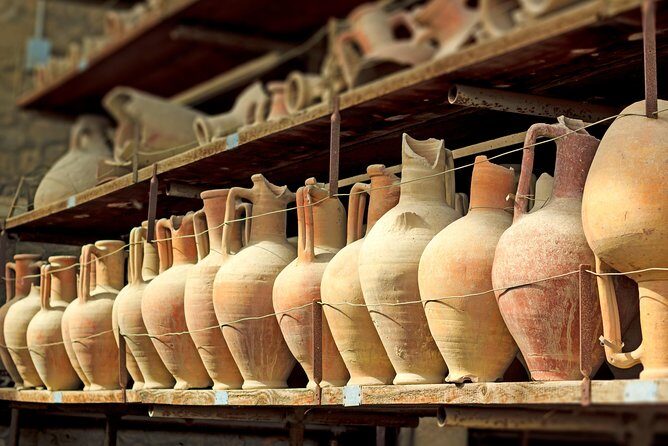
- Golden light timing for the Forum and other major stops, so the stone looks less harsh than in midday
- Private licensed guide who steers you through quickly but still answers questions
- AD 79 context early on, so the ruins make sense before you start wandering
- Victim plaster casts at Orto dei Fuggiaschi, a stop that hits hard and stays with you
- Everyday life stops beyond temples—baths, theater, homes, a 2,000-year-old bakery, and street-food counters
Why late afternoon is the move for Pompeii
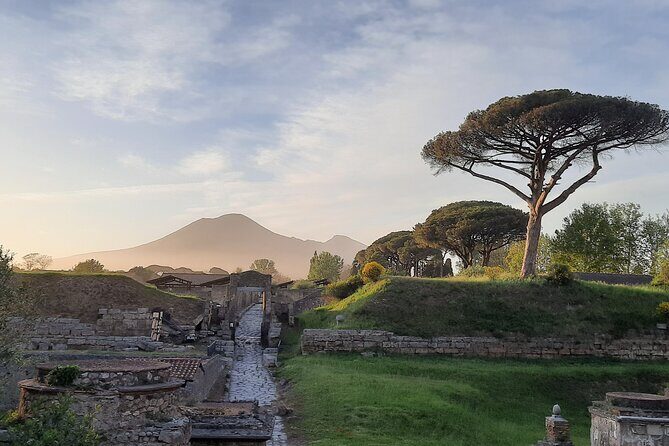
Pompeii is famous, which is great for your bucket list. It’s not great for your comfort. The late afternoon strategy is simple: you’re usually coming into the site when the heat eases and people have started thinning out. That alone can make your photos better and your feet less miserable.
This tour is also designed around understanding what you’re seeing. You begin with an introduction to the eruption’s dynamics and the city’s background before you start bouncing from landmark to landmark. That matters because Pompeii isn’t one “thing.” It’s an entire city that froze in time. When you have a guide connecting the dots—politics and religion in the Forum, everyday routines in bath houses and streets, and the tragedy represented by the casts—you don’t just look at ruins. You read them.
And because it’s private, the late-afternoon vibe isn’t ruined by awkward crowd math. You’re moving as a group, not as a cattle line.
You can also read our reviews of more private tours in Pompeii


Entering Pompeii from the sea gate: orientation and context first
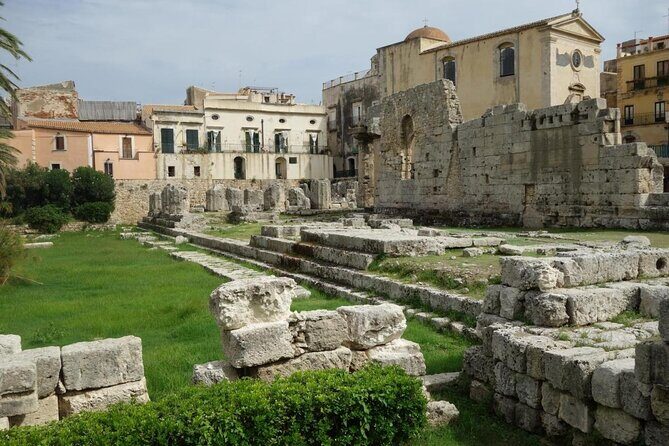
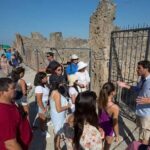
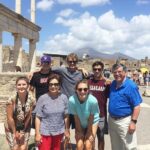
You’ll meet near Via Villa dei Misteri, 2, 80045 Pompei, and then your experience starts from Porta Marina, the sea gate. That starting point is a smart choice. It frames Pompeii as a living port city rather than just a collection of buildings.
Before you go deep into specific sights, you get the eruption context: what happened and why Pompeii preserved so much. Even if you’ve read a bit about AD 79, this is where the site starts to click—when you understand how the event played out, the streets, roofs, and cavities stop being random shapes.
From there, you visit a string of major “city life” elements that help you build mental maps fast:
- The Forum, the main square and social engine of Pompeii—where public life happened
- Body casts, showing people preserved in their final moments
- A public bath stop (you’ll also hit the Stabian Baths later)
- A house chosen based on crowds, opening rotation, or your request, so your guide can adapt in real time rather than forcing you into a plan that doesn’t fit conditions
- Shops and workshops, so you see Pompeii as a place where trade and labor mattered
- A water system, which is one of those details that sounds technical—until you realize how central water was to daily routines
- The Theatre, which helps connect Pompeii’s Greek influence with Roman public life
One practical perk: the pacing is quick, but not frantic. You’re not just walking past things. You get explanations at the right moments so you can actually recognize what you’re seeing.
The Forum, Apollo, and the bath houses: public life you can feel
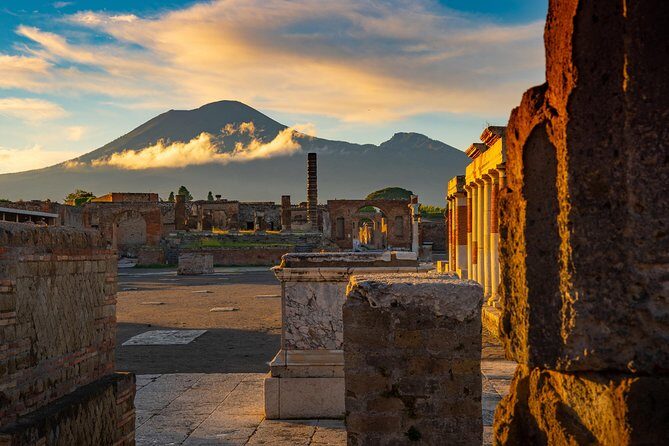
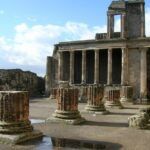
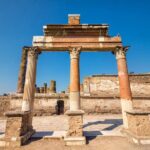
After your initial orientation, you go into the Forum, Pompeii’s main stage. This is where the city’s political, economic, religious, and social rhythms overlap. With a private guide, you get more than “here’s a big square.” You learn to spot what made it powerful: civic focus, gathering spaces, and how religion sat right inside the public flow.
Then the tour shifts from the civic center toward myth and devotion at the Temple of Apollo. Pompeii’s religious structures are often the quickest “wow” stops because the layout still feels intentional. With guidance, the mythology and symbolism don’t stay abstract—they connect to what people valued day to day.
Next come the Roman baths, including the Stabian Baths (Terme Stabiane). Bath houses in Pompeii aren’t just about hygiene. They’re social hubs, conversation spaces, and places where routine and status overlap. When you’re moving through a city that’s frozen, the baths help you picture what a normal afternoon might have looked like—except for the fact that Pompeii didn’t get to finish its day.
Drawback to plan around: bath and interior-adjacent stops can feel more compressed, especially as paths get busy. The good news is that your guide can steer you to what’s most relevant and adjust time based on crowd levels and openings.
Theater to Menander’s House: power, art, and how people lived
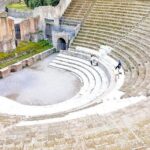
Pompeii’s Teatro Grande is next—one of the places where the site shows its Greek roots. Even though you’re in an archaeological park, the theater’s structure still helps you understand performance and public gatherings in a pre-modern city. You’ll get the sense of how people assembled, watched, and responded to community events.
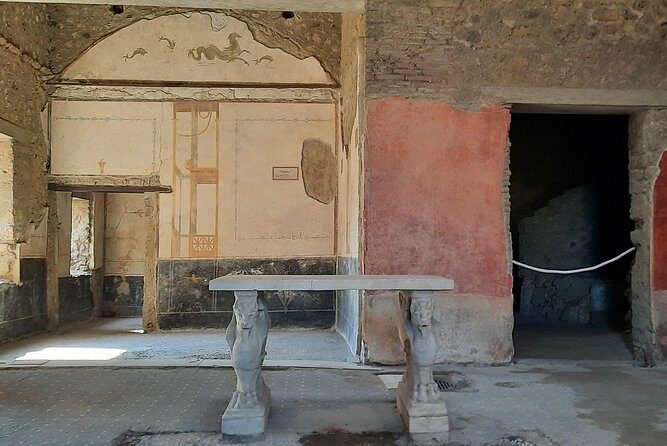
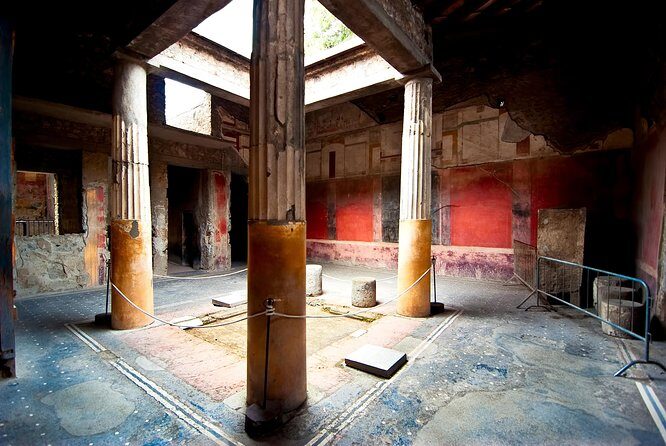
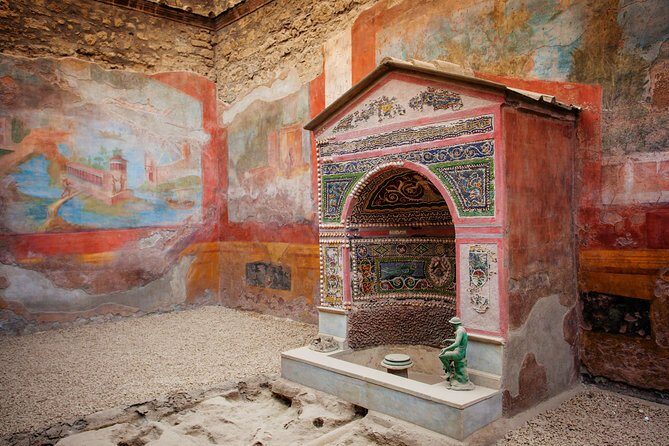
From there, you step into a very different atmosphere at Casa del Menandro. This is a rich Roman domus with fresco paintings and mosaics. The contrast is useful: the theater and Forum show you public life, while the home shows private taste, decoration, and wealth. It’s not just pretty artwork. It’s messaging—what the household wanted to show and how they wanted the world to see them.
Another subtle value of a private tour is your guide’s ability to keep the story coherent. Instead of treating each stop as a separate museum label, you get a narrative line: public spaces, then leisure and culture, then household luxury.
One more note: Pompeii’s homes can be weather- and crowd-affected. This tour handles that by keeping flexibility in mind—your guide can pick the “rich house” portion based on what’s open and not overly clogged at the time you arrive.
Street-level food and a 2,000-year-old bakery stop
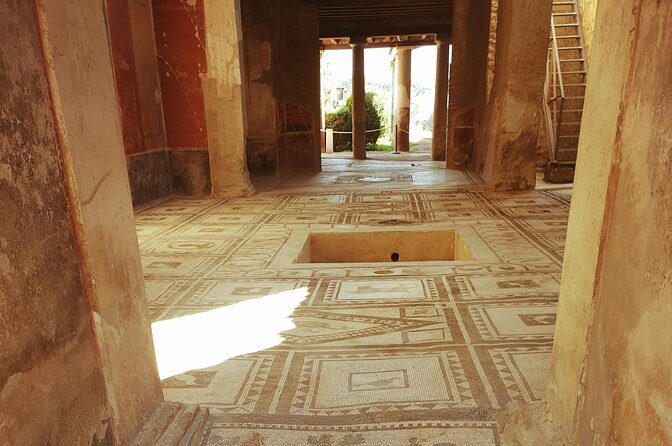
This is where the tour feels most like daily life. You’ll see the Panificio di Popidio Prisco, a bakery with equipment that dates back roughly 2,000 years, including oven and mills. It’s the kind of stop that makes Pompeii feel less like tragedy and more like a real place with real routines. Bread mattered. Grinding grain mattered. People waited, bought, cooked, and ate.
You’ll also pass the Termopolio di Vetuzio Placido, an ancient street-food counter. This is not just “look at an artifact.” It’s a practical window into how people fed themselves in a walkable city—snacking, stopping, grabbing something hot or ready.
If you love travel that connects to everyday habits, these stops are a highlight because they’re human-scale. You can almost imagine ordering something, even though the world doesn’t work that way anymore.

The Orto dei Fuggiaschi casts: the stop that stays with you
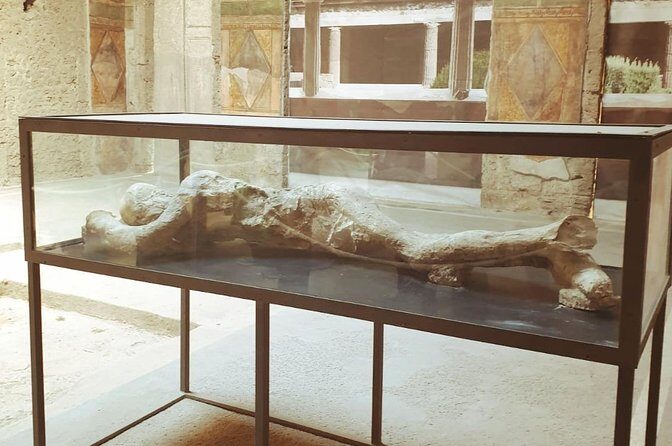
Then comes Orto dei Fuggiaschi, the area with plaster casts of the victims of the eruption. This part of the tour is often the emotional turning point. The tragedy stops being a headline and becomes a set of individual final moments.
A good guide is careful here: you get context without turning it into spectacle. You’ll hear how the city’s preservation works, and you’ll understand why the casts matter so much to historical study and to your own comprehension of what happened in AD 79.
If you’re traveling with kids or teens, plan for a slightly heavier mood during this segment. It’s educational, but it’s also intense. The tour format helps because you’re with a private guide, who can adjust pacing and answer questions without the pressure of a crowd funnel.
Tickets, timing, and what your € and dollars buy
The tour price is $249 for a private experience lasting about two hours, and it includes a private licensed guide with a mobile ticket.
Two extra money notes you should plan for:
- Entrance ticket isn’t included. Adults are listed at €18 (under 18 are free).
- On request, your guide can purchase skip-the-line tickets if available—helpful if you want to minimize waiting and maximize ruin time.
So how does this price make sense? Here’s the practical angle:
- You’re paying for time efficiency. Pompeii can eat hours if you’re wandering without orientation.
- You’re paying for interpretation. The best value isn’t just walking among stones—it’s learning what those stones meant.
- You’re paying for comfort. Late afternoon plus private pacing means less frustration and fewer “did we miss something?” moments.
If you’re cost-sharing with a small group, the guide’s presence often becomes easier to justify. If you’re traveling solo or as a couple, it still can be worth it because Pompeii is big and your two-hour window matters.
Meeting point and practical logistics that affect your day
You’ll start at Via Villa dei Misteri, 2 and end back at the same spot. That matters because Pompeii days can get messy with travel between areas. Having a clear loop reduces stress.
The meeting location is also described as near public transportation, which can help if you’re not driving. Service animals are allowed, and most travelers can participate—so the format is fairly accessible for a wide range of visitors.
One more logistics reality: Pompeii is outdoors and involves walking on uneven surfaces. This tour is timed well for an afternoon, but you’ll still be moving. Wear supportive shoes, and bring water—especially if you’re going during warmer months.
Who this private tour suits best
This tour style works especially well if you:
- Want fewer crowds and less heat without sacrificing major sights
- Prefer a guide who keeps the day moving but still pauses for questions
- Like a mix of public monuments, daily life, and the human story behind AD 79
- Are traveling with teens who actually engage when the facts are told clearly and quickly
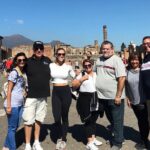
Based on repeated mentions of Alex’s approach, the tour also fits groups that include different paces—people who want to move fast, and people who need extra time to take in details. You’ll likely find the guide is good at keeping everyone involved, not just one enthusiastic person.
Should you book this late-afternoon private Pompeii tour?
Book it if you want your Pompeii visit to feel organized, meaningful, and comfortable. The late-afternoon timing is the big win, and the private guide is the second. Together, they help you avoid the classic Pompeii trap: walking around impressive ruins while missing the connections that make them unforgettable.
Skip it or consider alternatives if:
- You’re on a super tight budget and the entrance ticket plus guide fee feels steep
- You strongly prefer a very slow, self-guided meander with no structured stops
- Weather is unreliable during your travel window, since the experience depends on good conditions
If you do book, go in with one mindset: Pompeii is a city, not a theme park. This tour gives you the tools to “read” it fast—and still leave room to feel the weight of what was lost.
FAQ
What is the duration of the late-afternoon Pompeii private tour?
The tour lasts about 2 hours.
Where does the tour start and end?
You start at Via Villa dei Misteri, 2, 80045 Pompei NA, Italy, and the experience ends back at the same meeting point.
Is the Pompeii entrance ticket included in the price?
No. The entrance ticket is not included. Adults are listed at €18, and under 18s are free.
Does the private tour include a guide?
Yes. A private licensed guide is included.
Can you get skip-the-line tickets?
On request, skip-the-line tickets can be bought by the guide.
What if the weather is poor?
This experience requires good weather. If it’s canceled due to poor weather, you’ll be offered a different date or a full refund.
Is the tour suitable for most travelers?
Most travelers can participate, and service animals are allowed.