REVIEW · ROME
Morning Vespa Sidecar Tour with Cappuccino
Book on GetYourGuide →Operated by Vespa Sidecar Tour · Bookable on GetYourGuide
Rome wakes up on a scooter.
This morning Vespa sidecar tour turns Rome’s major sights into a smooth ride with live guide narration delivered by headphones, plus an Italian breakfast to start the day right. It’s built around getting you past the stress (roads, parking, timing) so you can focus on views and stories as you move through town.
What I like most is that you never have to drive or figure out parking. The other big win is the pacing: you cover a stack of iconic places (from Trevi to the Pantheon to the Colosseum) in about three hours, with narration that helps you understand what you’re seeing instead of just hopping off and snapping photos.
One thing to consider: this tour is not a good fit if you have mobility limits or certain health concerns, and it’s not allowed for pregnant travelers. If that’s you, you’ll want to choose a different style of sightseeing.
In This Review
- Quick hits you’ll actually use
- The idea: seeing Rome without the driving headache
- Start with cappuccino and cornetto (yes, before the helmets)
- Meeting point: where the tour actually begins
- How the Vespa sidecar ride works (and what safety gear you should notice)
- Quirinale: setting the tone from one of Rome’s hill zones
- Fontana di Trevi: classic Rome, best enjoyed with context
- Pantheon: the stop with an entry ticket included
- Piazza Navona: the square that always looks like a stage
- S. Peter: big church views with guide timing
- Gianicolo Hill: panoramic lookout time that feels like payoff
- Trastevere & Jewish Ghetto: neighborhood contrast in one run
- Piazza Venezia to the Colosseum: finishing with momentum
- What the guide does differently (and why headphones are worth it)
- Price and value: is $152.93 per person worth it?
- Who should book this morning Vespa sidecar tour
- Weather and comfort: what happens if the morning turns gray
- Should you book this tour or skip it?
- FAQ
- How long is the Morning Vespa Sidecar Tour with Cappuccino?
- What’s included in the tour price?
- Where does the tour meet?
- Can passengers drive the Vespa sidecar?
- What are the child rules?
- Is this tour wheelchair accessible?
Quick hits you’ll actually use
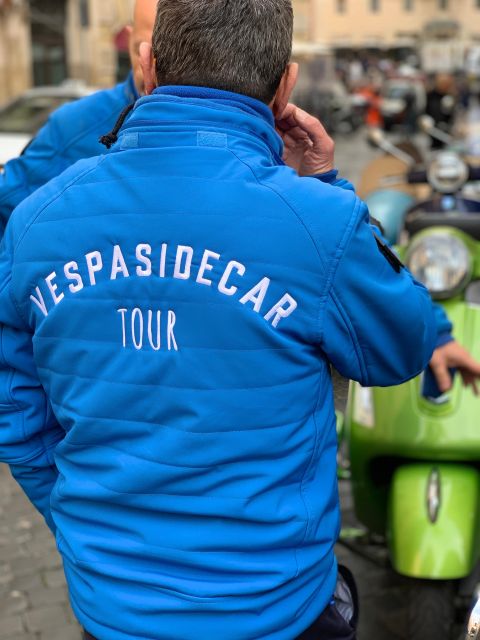
- You ride passenger-style with professional drivers, so you can relax and take photos instead of scanning for lanes.
- Live guide narration through headphones keeps you oriented while you’re moving through busy areas.
- Italian breakfast included (cappuccino and cornetto) so you start sightseeing with fuel, not hunger.
- Pantheon entry ticket is included, meaning one key stop is already handled.
- Safety gear is real, including CE helmets, sterilized disposable head covers, and seat belts in the sidecar.
- Weather support is built in with waterproof ponchos, plus winter blankets and electric water bottles.
The idea: seeing Rome without the driving headache
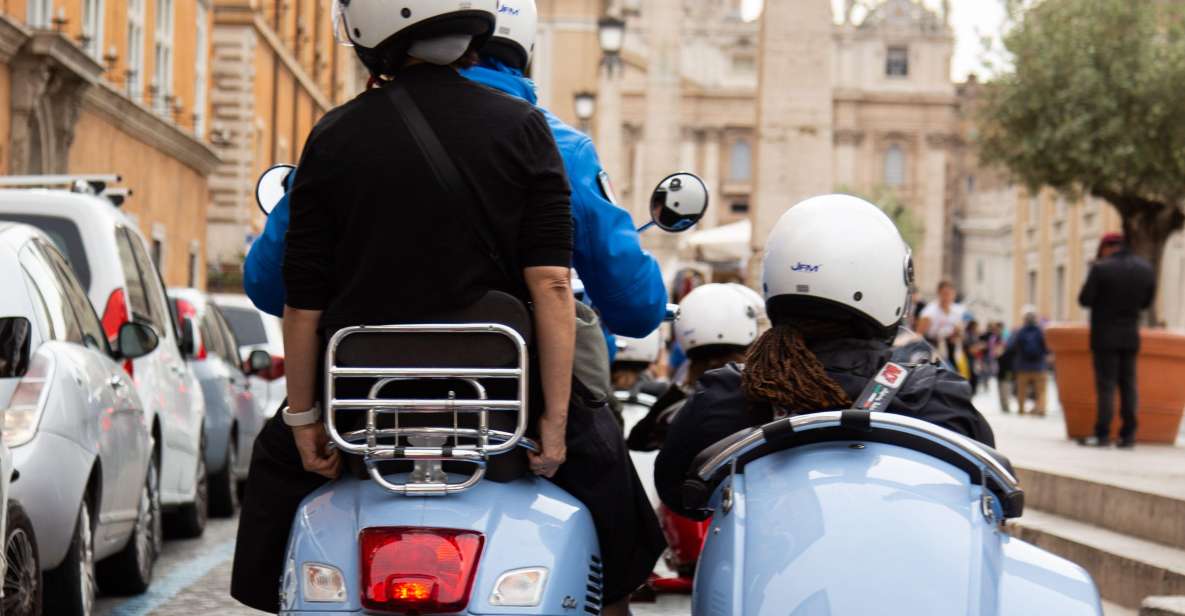
This tour is made for people who want the feel of Rome on a small scooter without the strain. You’ll be carried through streets that can get tight and chaotic, and you can keep your eyes on the sights instead of the road.
The setup also changes how you experience Rome. When you’re moving, you catch the city’s rhythm—squares, facades, changes in neighborhood tone—faster than if you’re starting and stopping at every turn. With a licensed guide talking through headphones the whole way, the ride isn’t just sightseeing motion. It’s guided context while you watch Rome unfold.
You can also read our reviews of more tours and experiences in Rome.


Start with cappuccino and cornetto (yes, before the helmets)
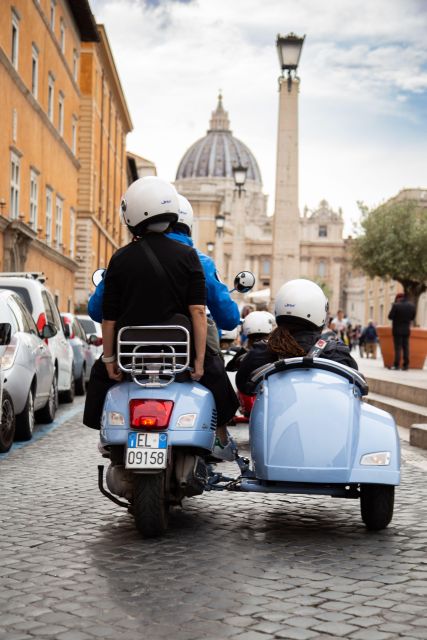
The itinerary begins with an Italian breakfast: cappuccino and cornetto. It might sound simple, but it matters on a morning tour. A lot of Rome days start with coffee that turns out to be dessert or ends up arriving too late. Here, breakfast is part of the plan so you’re not stuck making decisions before you even see your first landmark.
You’re also more likely to enjoy the ride when you’re not hungry or rushing. Riding in a sidecar means you’re not taking long breaks to find food or wait in lines for breakfast somewhere else. You start, you move, you snack less later.
Meeting point: where the tour actually begins
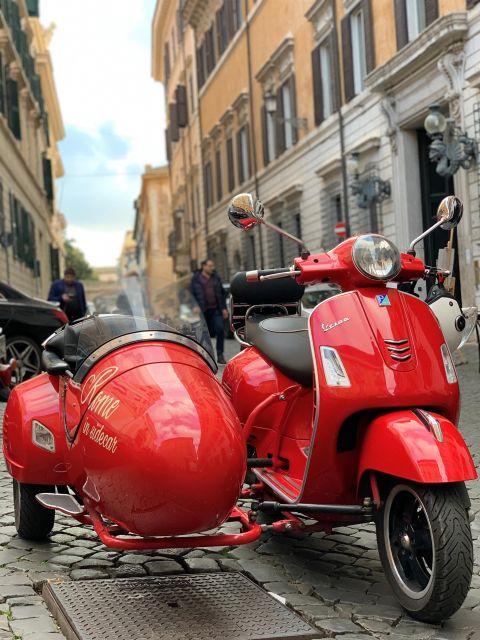
The tour meets at P.za della Repubblica, 41, Roma, near the green newspaper kiosk. The start time is 09:00 AM, and the tour ends back at the meeting point.
That matters because it keeps logistics straightforward. You’re not chasing transfers across town, and you’ll be back where you started—handy if you’ve planned the rest of your day nearby.
How the Vespa sidecar ride works (and what safety gear you should notice)
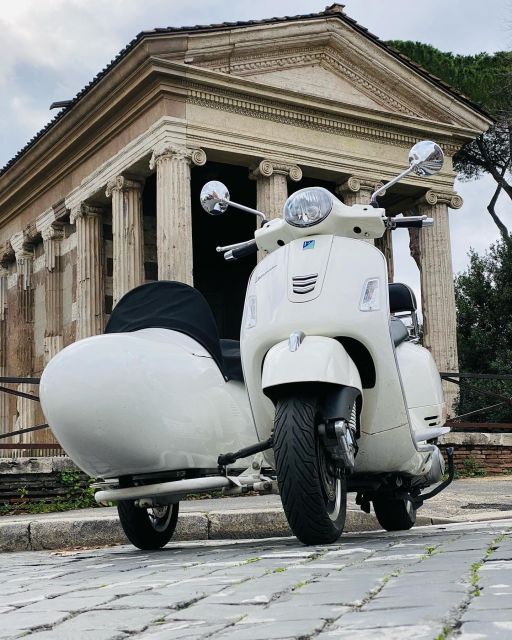
This is a passenger-focused experience. The drivers handle the Vespa sidecar route, and passengers are not allowed to drive the vehicles. For legal and safety reasons, that rule is firm, so you can treat this as a guided ride, not a scooter rental.
Safety details are part of the included package:
- CE helmets with sterilized disposable head covers for hygiene and comfort
- Seat belts for the passenger riding in the sidecar
- Waterproof ponchos in case of rain
- Blankets and electric water bottles available in winter
- Full insurance policy included in the price
If you’re sensitive to cold or damp weather, the ponchos and winter items are a real plus. Rome can swing from sunny to drizzly fast, and the tour doesn’t ignore that.
Quirinale: setting the tone from one of Rome’s hill zones
The route starts with Quirinale. You’ll get narration while you’re in transit, so you’re not left guessing what you’re looking at as buildings and street perspectives shift.
Why this first stop is useful: it helps you “read” Rome early. Quirinale sits in a hill area, and the early sightseeing context helps you understand how elevation, streets, and monumental spaces connect across the city. It’s a smart start because the rest of the day includes classic center sights and then moves toward panoramic viewpoints.
Fontana di Trevi: classic Rome, best enjoyed with context
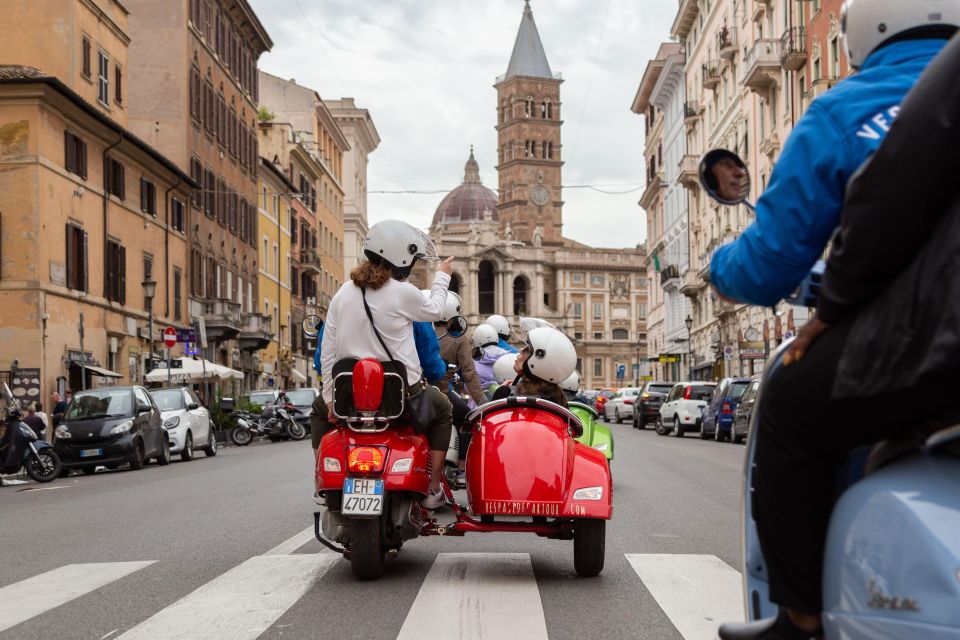
Next up is Fontana di Trevi, the famous fountain that people crowd for all day. Seeing it from a Vespa sidecar approach adds something simple: you don’t have to make a big production out of getting there. You’re guided in, and the guide’s live narration helps you notice details you’d otherwise miss when you’re just trying to get a clear photo.
A practical tip for Trevi: aim to look around the setting, not only at the center. The fountain is the headline, but the surrounding streets and the way people flow through the area give you a real feel for how Rome handles crowds and spectacle.
Pantheon: the stop with an entry ticket included
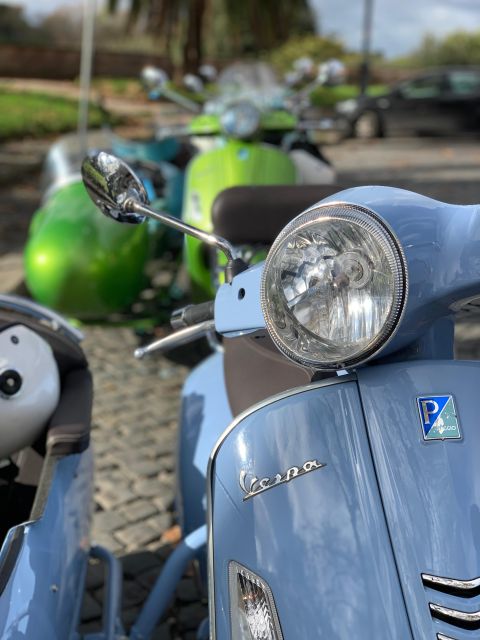
The tour includes entry tickets to the Pantheon, which is a big deal in a short tour. It’s one of those places where being able to go inside (not just view it from outside) changes the whole experience.
From your perspective, what you’ll feel is straightforward: you get a guided understanding and a chance to experience the scale and design without having to pay extra on the spot for entry. In a half-day tour style, removing that friction is value.
Also, the narration matters here. Even if you know the Pantheon’s reputation, having a guide explain what to look for while you’re there makes your visit more than a quick photo stop.
Piazza Navona: the square that always looks like a stage
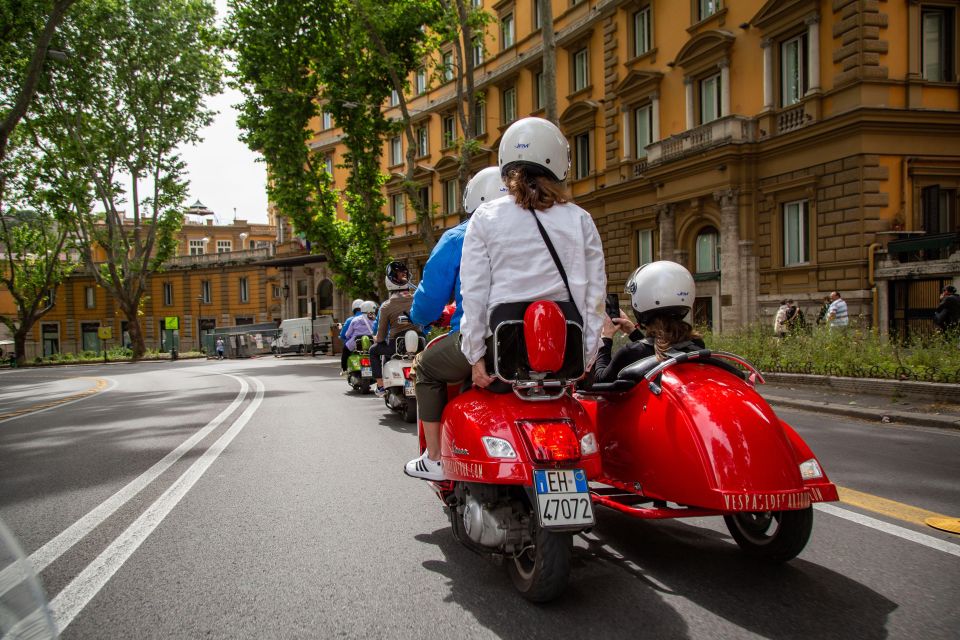
After the Pantheon comes Piazza Navona. Squares in Rome aren’t just open space; they’re social stages. From the tour perspective, Navona works well because it’s a visual pause where you can take in the architecture, the open area, and the feel of the neighborhood.
This is also where the live narration helps you connect dots. As you move from indoor monument (Pantheon) to open square (Navona), your guide can keep the storyline moving—why these places matter and how they fit into the city’s broader pattern.
S. Peter: big church views with guide timing
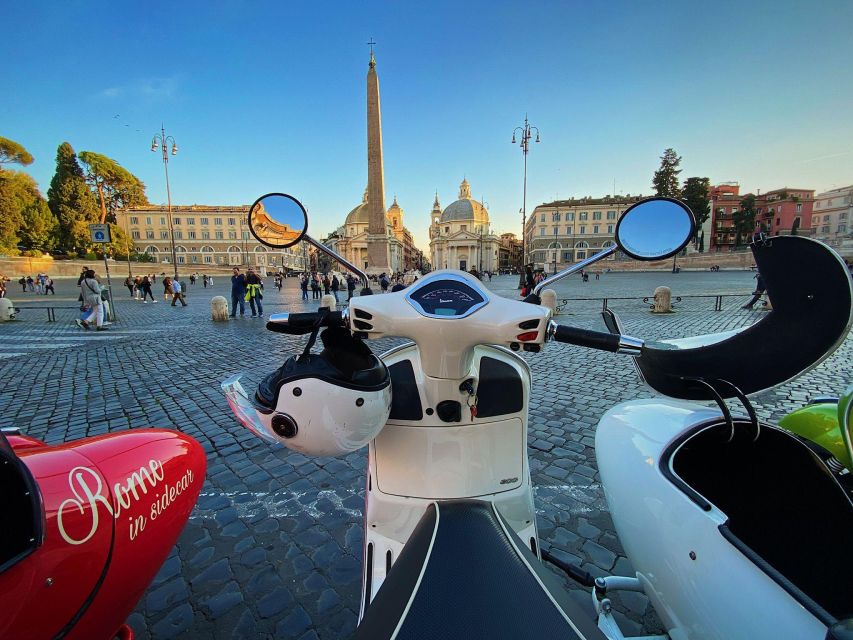
Then you’re headed toward S. Peter. The data doesn’t promise a specific interior visit, but it does indicate you’ll be guided through the area as part of the main highlights.
The practical advantage of this stop on a sidecar tour: timing. You’re in a controlled schedule, with narration guiding your attention as you approach the big landmark area. For places like this, where foot traffic can get intense, having the ride and commentary managed for you reduces the stress of trying to figure out what to do next.
Gianicolo Hill: panoramic lookout time that feels like payoff
Next is Gianicolo Hill, a known viewpoint zone. This is where the tour’s structure starts to feel worth it. After classic central stops, Gianicolo gives you a change of perspective—height, distance, and the sense of Rome stretching out in every direction.
You’ll also appreciate the sidecar angle here. Many sightseeing plans focus on walking viewpoints. Riding part of the route into a hill area keeps you from burning time just getting there. The payoff is the panorama and the feeling that you’re finally seeing the city as a whole, not just a list of monuments.
Trastevere & Jewish Ghetto: neighborhood contrast in one run
Then the tour shifts into Trastevere & the Jewish Ghetto. This section is important because it breaks the day out of pure postcard Rome. Neighborhoods like these give you different street textures—smaller lanes, older street layouts, and a different vibe than the grand monumental core.
The tour’s description also calls out narrow streets and hidden gems, which is exactly why this part matters. You don’t just pass landmarks; you get exposed to how these districts feel as you move through them.
If you care about authenticity over just major monuments, this is the section you’ll likely remember most. It’s the city’s lived-in side, delivered with guide context so it doesn’t turn into random passing scenery.
Piazza Venezia to the Colosseum: finishing with momentum
After the neighborhood blocks, you end up at Piazza Venezia and then the Colosseum. These are the kinds of places you can’t help but notice, even if you’re not a Roman history expert.
What makes this finish work in a three-hour tour is momentum. By the time you reach the Colosseum, you’ve already had multiple frames of reference: you started with a hill zone, saw major fountains and squares, got inside the Pantheon, and then moved through neighborhoods and viewpoints. So when the Colosseum shows up, it lands with weight instead of feeling like a standalone stop.
Practical note: the Colosseum area can be busy. In a sidecar tour, you don’t try to “win the crowd” with an independent plan. The guide’s job is to manage your timing and route while you keep receiving narration.
What the guide does differently (and why headphones are worth it)
One of the strongest parts of this tour is the professional licensed guide delivering live narration through headphones. That’s a big deal in Rome, because landmarks can blur together if you’re just observing without context.
Headphones also make the ride better for you. You’re not turning your head every time the guide speaks from the front. You can listen continuously while watching the city change around you. The result: you finish the tour with a clearer story, not just a set of photos.
The experience is also designed with professional drivers handling the Vespa driving. That removes a common stress point—people thinking about road rules, parking, or where to pull over. Your job is basically to sit back and take in the view.
Price and value: is $152.93 per person worth it?
At $152.93 per person, this isn’t a bargain-basement activity. But it also isn’t just a ride. You’re paying for a package that includes:
- a guided route with live narration in English
- a full breakfast with cappuccino and cornetto
- headphones and hygiene-focused helmet setup
- waterproof ponchos and winter extras
- a full insurance policy
- Pantheon entry tickets
- passenger seat belts and regulated safety constraints
In a three-hour format, that combination adds up fast. You’re not cobbling together transport, buying separate entry tickets for a top sight, and then trying to find someone to guide you through the city’s story. If you want efficiency and guidance in one morning, the price starts to look more like a “you’re buying structure” fee than a simple sightseeing ticket.
If you prefer unguided wandering and you already know exactly where to go and how long everything takes, you might decide it’s not the best fit. But if you want Rome condensed into a fun, guided ride with key access handled, this one makes financial sense.
Who should book this morning Vespa sidecar tour
This tour is a strong match if you:
- want a fun way to see major Rome highlights in a short time
- like guidance so you’re not stuck translating your way through every stop
- enjoy the idea of narrow streets and viewpoint payoffs
- appreciate safety gear and clear rules
It’s less suitable if you:
- have back problems or heart problems
- are pregnant (not permitted)
- need wheelchair access (not suitable)
- are traveling with a child under 5 years old
There are also height and weight limits you should check carefully:
- sidecar capacity up to 110 kg / 242 pounds, and maximum height 1.90 m
- maximum weight for riding on the back of the saddle is 118 kg / 260 pounds
- for children: minimum 5 years, accompanied by an adult
- if a child is taller than 150 cm they can sit behind the driver; otherwise they ride in the sidecar with the seatbelt
Service animals are allowed, which helps make the experience more flexible for some families.
Weather and comfort: what happens if the morning turns gray
Rome mornings can change quickly. The tour addresses that with waterproof ponchos if rain hits, plus blankets and electric water bottles available in winter.
That means you’re not left deciding on the spot whether to reschedule or power through cold gear. It’s built into the experience, which makes it easier to say yes to the tour even when the forecast looks uncertain.
Should you book this tour or skip it?
I’d book it if you want a guided, high-impact Rome morning where you don’t drive and you get live English narration while hitting big sights like the Pantheon and the Colosseum. The combination of cappuccino and cornetto, headphones, safety gear, and Pantheon entry ticket makes it feel like a complete plan rather than a loose route.
I’d skip it if you have the specific health restrictions listed, need wheelchair access, or you’d rather spend longer walking at your own pace. Also, if you’re the type who hates helmets or can’t handle riding in an enclosed passenger setup, don’t force it. In those cases, choose a more traditional walking or private car tour.
If you fit the general audience, this is the kind of activity that helps you get your bearings fast and enjoy Rome without the stress.
FAQ
How long is the Morning Vespa Sidecar Tour with Cappuccino?
The duration is 3 hours. Starting times can vary, so you’ll want to check availability for your date.
What’s included in the tour price?
It includes a traditional breakfast with cappuccino and cornetto, a licensed English-speaking guide with live narration through headphones, professional drivers, a full insurance policy, CE helmets with sterilized disposable head covers, seat belts for the sidecar passenger, waterproof ponchos, and entry tickets to the Pantheon. Winter includes blankets and electric water bottles.
Where does the tour meet?
The meeting point is P.za della Repubblica, 41, Roma RM, Italy, near the green newspaper kiosk. The tour starts at 09:00 AM and ends back at the meeting point.
Can passengers drive the Vespa sidecar?
No. For legal and safety reasons, passengers are not allowed to drive the vehicles.
What are the child rules?
Children must be accompanied by an adult, and children must be at least 5 years old. If a child is taller than 150 cm they can sit behind the driver; otherwise they ride in the sidecar with the seatbelt on.
Is this tour wheelchair accessible?
No. It is not suitable for wheelchair users.