REVIEW · PANTHEON TOURS
Kid-Friendly Private Tour of Rome with Spanish Steps Trevi Navona & Pantheon
Book on Viator →Operated by Pink Umbrella Tours Corporate Events and Team Building · Bookable on Viator
Rome with kids needs a plan.
This private tour strings together Rome’s biggest postcard stops with kid-focused tricks: games, visual aids, and stories that make the sites feel like a scavenger hunt. You’ll also get a fast, organized route through areas where crowds can slow you down, so your family keeps moving instead of wandering.
What I like most is the easy, family pace—it’s active but not frantic—and the kid-first guidance. In the best moments, the guide (Thomas) kept children engaged while still delivering real context you can use right away.
One thing to consider: you’re walking and sightseeing in central Rome, so you’ll be dealing with busy streets and lines nearby. The tour helps with that, but it’s still an urban highlight circuit, not a quiet stroll.
In This Review
- Key highlights worth knowing
- Why This Rome Highlights Tour Works for Families
- Starting Outside Antico Caffè Greco on Via dei Condotti
- Piazza di Spagna and the Spanish Steps: 174 Steps Kids Can Actually Count
- Trevi Fountain: Baroque Magic and a Coin-Toss Tradtion
- The Pantheon Approach: Marcus Aurelius, Montecitorio, Hadrian’s Temple
- Entering the Pantheon: The Dome, the Oculus, and Why It Feels Different
- Piazza Navona: Baroque Square Life and Street Performers
- Time, Pace, and What You’ll Actually See in 2.5 Hours
- Price and Value: What $156 Buys Your Family
- Who Should Book This Kid-Friendly Rome Private Tour
- Should You Book It? My Decision Guide
- FAQ
- How long is the Rome kid-friendly private tour?
- What’s the price per person?
- Is this a private tour or a shared group?
- What age is this tour suitable for?
- What language is the tour offered in?
- Where do we meet for the tour?
- Where does the tour end?
- Is hotel pickup or drop-off included?
- Are entrance tickets included?
- Is there free cancellation?
Key highlights worth knowing
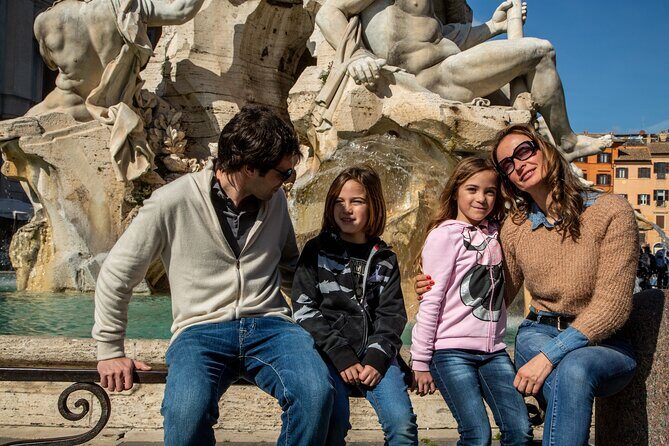
- A professional kid-friendly guide uses games and visual aids to keep ages 6+ focused
- Private means your group only, so the pace can match your kids
- Trevi Fountain + legend + Baroque scale gives a memorable payoff for a quick stop
- Pantheon’s dome and oculus make the final wow moment in a practical, kid-friendly format
- Crowd management matters, and the guide plans routes to keep you on track
- Admission is free at the stops, so your money goes mostly to expert guiding
Why This Rome Highlights Tour Works for Families
Rome can overwhelm kids fast. Too much museum time, too many dates, too many rules. This tour avoids that. It targets the places that grab attention immediately—Spanish Steps, Trevi Fountain, Pantheon, and Piazza Navona—then adds just enough context to make those images stick.
The private setup is the real advantage. When it’s only your group, you don’t get stuck waiting for other families to finish photos, or forced to match a pace that fits someone else’s patience level. It’s still a guided walk, but you control the rhythm through your guide’s approach.
I also like that the content is built for children, not just translated for them. The guide uses fun activities rather than long lectures. That keeps kids from going into “bored mode” the moment the street turns into a maze.
You can also read our reviews of more private tours in Rome


Starting Outside Antico Caffè Greco on Via dei Condotti
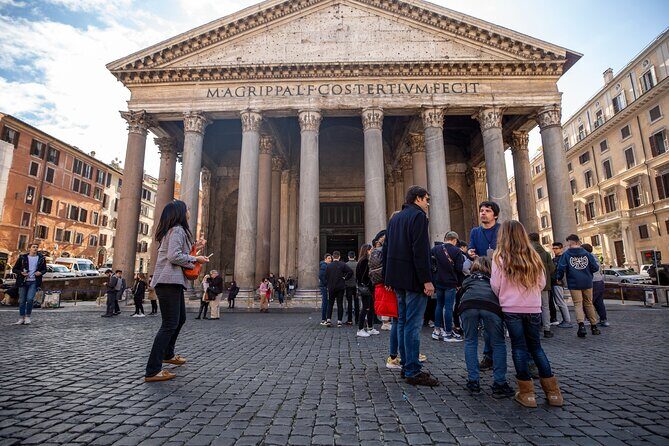
You meet at Antico Caffè Greco, on Via dei Condotti 86. This is a smart meeting choice because it puts you right where families can begin with confidence: you’re near public transportation, and the landmark is easy to spot compared with more obscure corners.
Right from the start, the guide sets the tone with tools that help kids stay tuned. The tour begins with visual aids and games, which is a practical way to handle attention spans. You’ll also get the “what we’re doing and why it matters” framing early, so later stops don’t feel random.
This is also a good moment to get the practical stuff out of the way: bathroom timing, water breaks, and quick baseline questions from you. Rome’s center moves fast, so being ready at the start keeps the rest smoother.
Piazza di Spagna and the Spanish Steps: 174 Steps Kids Can Actually Count
Your tour kicks off in Piazza di Spagna, the home of the Spanish Steps. The guide points out the iconic stairway of 174 steps—and kids often latch onto countable details like that better than architectural jargon.
It’s also a place with instant pop-culture context. These steps show up in film history, including Roman Holiday starring Audrey Hepburn. Even if your kids don’t know the movie, they can still enjoy the “this is famous on purpose” angle.
One practical consideration: the Spanish Steps area can get crowded. Expect people hovering for photos, and expect it to feel like you’re inside a living postcard. The best move for your family is to listen to your guide’s timing for where to stand and how long to linger—don’t try to do a full free-for-all photo session on your own.
Trevi Fountain: Baroque Magic and a Coin-Toss Tradtion
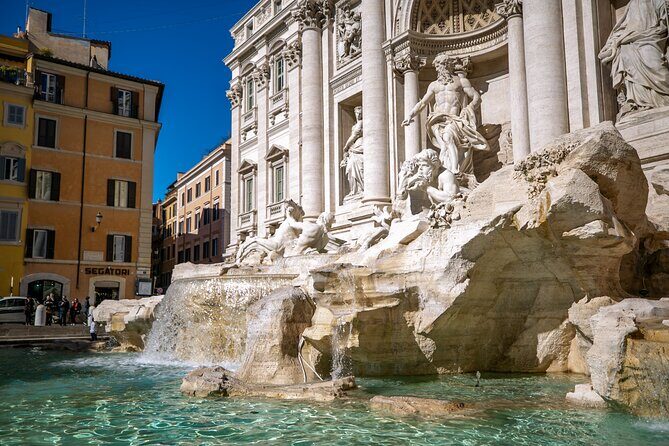
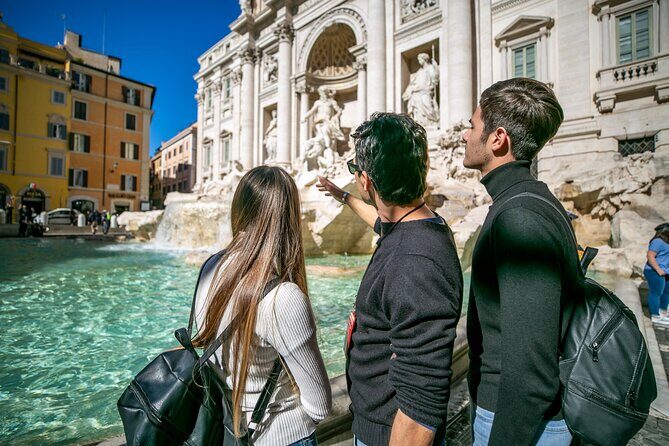
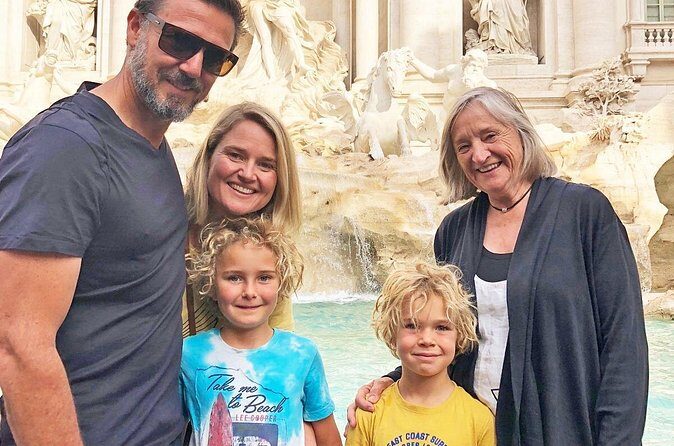
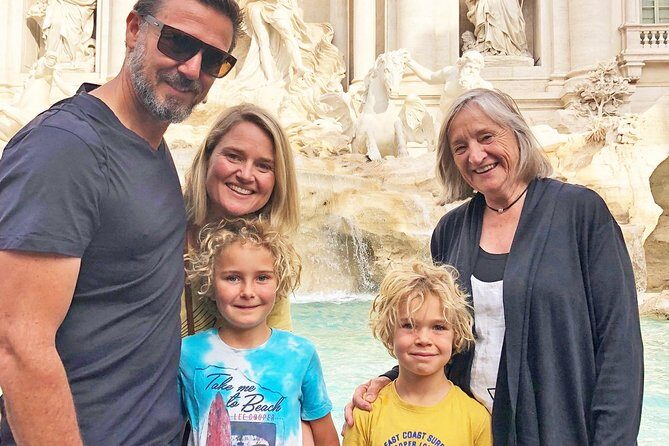
Next comes Fontana di Trevi, where the scale is the star. This is described as the largest Baroque fountain in Rome, and that checks out in real life: it’s big enough that kids can understand it as a “wow” object, not just a pretty wall of water.
Then there’s the legend. If you throw a coin into the fountain, the story says you’ll return to Rome. That gives you something simple and memorable to do on the spot—one short ritual, one clear payoff.
The only catch is timing. Trevi draws huge crowds, and it can feel slow even when the tour keeps moving. Since the tour is kid-friendly and private, your guide has an easier job than if you were self-guiding. You can rely on the route strategy and keep your family focused on the main viewing moments rather than getting stuck in the slow parts.
Tip for parents: treat the fountain stop like a short story moment. Ask your kids to listen for one fact, then do the coin toss, then move on. It helps kids get the full experience without turning it into a long wait.
The Pantheon Approach: Marcus Aurelius, Montecitorio, Hadrian’s Temple
Between Trevi and the Pantheon area, you’ll stroll through a section packed with named landmarks. This isn’t just for sightseeing—it’s the tour’s way of teaching you to read the city.
You’ll see the Column of Marcus Aurelius, plus Montecitorio (the seat of the Italian Parliament). You’ll also pass Saint Ignatius’ church and the Emperor Hadrian’s temple on the way to the Pantheon.
What I like about this part is the “connective tissue” effect. When you walk past these locations, the city stops being a list of unrelated photos and starts feeling like a designed timeline. Kids may not care about the centuries, but they usually enjoy the simple way the guide frames what each place used to be versus what it looks like today.
It’s also a chance to adjust. If your child needs a quick regroup moment—snacks, water, or a rest—this is the kind of slower stretch where a guide can keep things moving without rushing you into the next stop.


Entering the Pantheon: The Dome, the Oculus, and Why It Feels Different
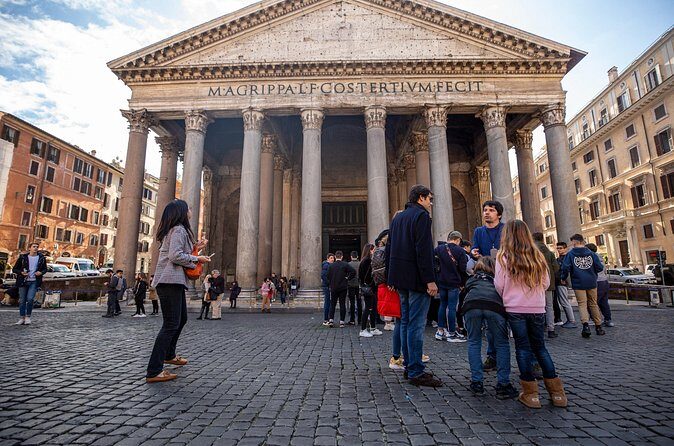
The Pantheon is the centerpiece, and you’ll feel that even on a short visit. The tour focuses on what makes it so unusually preserved and so visually dramatic: the giant dome and the famous hole at the top, the oculus.
Here’s the key detail the guide highlights: the oculus is the only source of light inside. That single fact turns the building from a “big old church” into a functional design you can picture. Kids often find the light coming from one opening easier to understand than complicated explanations of ancient engineering.
The guide also connects the idea of the space to the sky and the gods above. Even if your kids don’t follow every historical thread, the building’s effect does the work. When light streams down through the oculus, it’s hard not to feel something—especially compared with Rome’s tighter, noisier streets outside.
Plan for one “quiet moment” here. Even if you’ve got an energetic group, give the kids a couple minutes to look up. It’s the kind of pause that makes the rest of the tour sink in.
Piazza Navona: Baroque Square Life and Street Performers
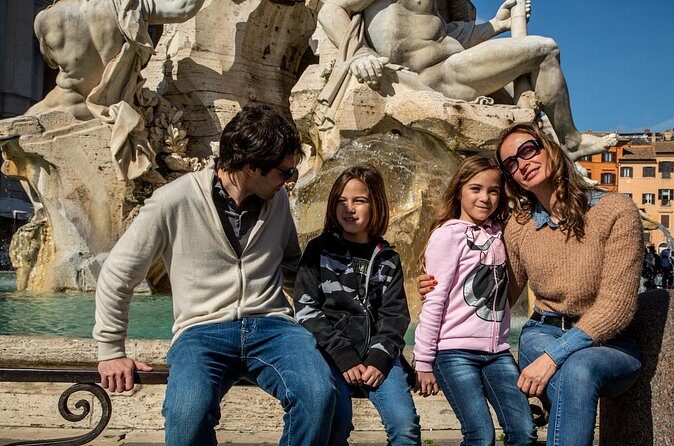
Your tour ends at Piazza Navona, a Baroque-style square known for its charm and popularity. It’s surrounded by restaurants and terraces, which makes it a natural landing spot for a post-tour treat.
This stop also brings the street-life side of Rome. The square is where you often see street artists and performers—magicians and dancers are part of the normal scene. For families, that matters because it gives kids a less structured, more playful finale.
If you’ve got younger kids who are done with “looking at monuments,” this ending can still work because it’s about observing real-world Rome. You’re not forcing another long lesson. You can just enjoy the atmosphere, grab gelato, and watch the show.
One note: as you wrap up, keep an eye on bags and small items. Central Rome is busy, and the end of a tour often means you’re excited and moving faster than usual.
Time, Pace, and What You’ll Actually See in 2.5 Hours
This is about 2 hours 30 minutes total, roughly. The stops are designed as short “hit-and-learn” segments, which fits family needs. You’re not spending 90 minutes inside a museum trying to hold attention the whole time.
Here’s how the tour tends to feel based on the stop timing:
- Early movement from Via Condotti into Piazza di Spagna
- A quick but meaningful run at Trevi Fountain
- A longer stroll section toward Pantheon with multiple named landmarks
- A focused Pantheon stop built around the dome and oculus
- A final Piazza Navona finish with relaxed street energy
The tour is also listed as suitable for kids age 6 and over, with children accompanied by an adult. That means the guide will likely keep the content age-appropriate rather than expecting young kids to sit through long explanations.
If your kids are on the younger side but strong walkers, this kind of pace can still work—just be ready for occasional “pause points” where the guide helps you reset.
Price and Value: What $156 Buys Your Family
At $156 per person, this isn’t the cheapest way to see Rome. But it’s also not trying to be. You’re paying for private, guided clarity in a city that’s easy to get lost in and hard to navigate with kids.
The value comes from a few concrete items:
- Private tour only for your group, so you’re not squeezed into someone else’s schedule
- Kid-focused professional guiding, including games and visual aids
- A Blue Badge guide plus additional guiding support, including a local guide and an art historian guide
- Admission ticket free at the stops listed, so you’re not paying extra to enter what you came for
- Mobile ticket and English-speaking service
When you compare this to self-guided roaming, the math often improves for families. Rome isn’t just about seeing buildings—it’s about choosing the order, timing through crowds, and knowing what to look up at. A good guide turns the city into a set of memorable moments instead of a blur of streets.
The guide factor is the standout. The experience rating notes that Thomas made it fun and engaging with kids, and he managed the hardest part—crowds—with calm planning and grace. That’s the kind of value you feel immediately with children.
Who Should Book This Kid-Friendly Rome Private Tour
This tour is a strong fit if:
- You’re traveling with kids age 6+
- You want a highlights loop without planning your day down to the minute
- You’d rather have a guide explain the big “why this matters” moments than read on your phone
- Your family benefits from games, visual cues, and a structured route
You might consider a different style of tour if:
- You want long museum-style time or deep-dive research stops
- Your group needs a very slow pace with frequent long breaks
- You’re hoping for a quiet, uncrowded experience (Rome’s center is rarely that)
For families who want the classic Rome sights—Spanish Steps, Trevi, Pantheon, and Navona—this hits the right amount of time and attention.
Should You Book It? My Decision Guide
If you want Rome’s greatest hits in one organized, kid-friendly package, I’d book this. The biggest reason is practical: it’s paced and guided for families, and it’s built around the places kids can immediately recognize and enjoy.
Choose it when your priorities are:
- Fun + structure for children
- A route that helps you handle crowds instead of fighting them
- A guide team that includes art history context without turning into a lecture
FAQ
How long is the Rome kid-friendly private tour?
It lasts about 2 hours 30 minutes.
What’s the price per person?
The price is $156.00 per person.
Is this a private tour or a shared group?
It’s a private tour, so only your group participates.
What age is this tour suitable for?
It’s suitable for kids aged 6 and over, and children must be accompanied by an adult.
What language is the tour offered in?
The tour is offered in English.
Where do we meet for the tour?
The meeting point is Antico Caffè Greco, Via dei Condotti, 86, 00187 Roma RM, Italy.
Where does the tour end?
The tour ends at Piazza Navona, 00186 Roma RM, Italy.
Is hotel pickup or drop-off included?
No. Hotel pickup and drop-off are not included.
Are entrance tickets included?
The tour notes that admission tickets are free for the listed stops.
Is there free cancellation?
Yes. There is free cancellation, and you can cancel up to 24 hours in advance for a full refund.