REVIEW · COLOSSEUM TOURS
Full Day Combo: Colosseum & Ancient Rome and Rome Evening Panoramic Walking Tour
Book on Viator →Operated by Your Way Tours · Bookable on Viator
Rome in two moods, same day.
This full-day combo stacks the Colosseum and Roman Forum in the afternoon with a dusk-to-night walking tour through the historic center. I like how it’s paced so you see major monuments without spending your whole day charting routes on your phone, and the group stays small (max 20), so you’re not swallowed by crowds.
Two things I’d call out right away are the stories tied to the sights (think gladiator-era context in the Colosseum and how the Forum functioned as government) and the switch to evening viewpoints where Rome looks softer and more photogenic. One consideration: it’s a long day with a few uphill moments, including a climb to Capitoline Hill, and you’ll handle your own connection between the afternoon and evening portions.
If you’re the sort of person who likes your Rome organized but still walkable, this is a strong fit. If you hate walking or want everything timed like a shuttle bus, you may find the gaps and routing a bit hands-on.
In This Review
- Key highlights you’ll feel on this tour
- How the afternoon-to-evening plan changes Rome’s feel
- Starting at Campo de’ Fiori: the easiest meeting point for a long day
- Entering the Colosseum without the long-line headache
- Roman Forum: turning ruins into a place that mattered
- Capitoline Hill and Piazza del Campidoglio: the small hill with big payoff
- Pantheon time at Piazza della Rotonda: a classic stop with two looks
- Piazza Navona: two visits that make the fountains part of your evening plan
- Piazza del Popolo at 19:00: the evening switch
- Terrazza del Pincio sunset views
- Piazza di Spagna and the Barcaccia: the photo stop with real street life
- Trevi Fountain at night: coin legend, more important than ever
- Second-round Pantheon and another Piazza Navona: why you see them twice
- Ending at Campo de’ Fiori: perfect launchpad for dinner and night wandering
- Price and value: what $104 buys you
- Who this tour fits best (and who should think twice)
- Should you book this Colosseum + evening panoramic combo?
- FAQ
- How long is the full-day combo tour?
- Where do I meet the guide?
- What time does the Colosseum portion start?
- When does the evening walking tour begin?
- Are Colosseum and Roman Forum tickets included?
- Is Pantheon entry included?
- What group size should I expect?
- Do I need to bring ID?
- Is hotel pickup or transport included?
Key highlights you’ll feel on this tour
- Skip-the-line timing for the Colosseum with a guided start at 1:45 pm
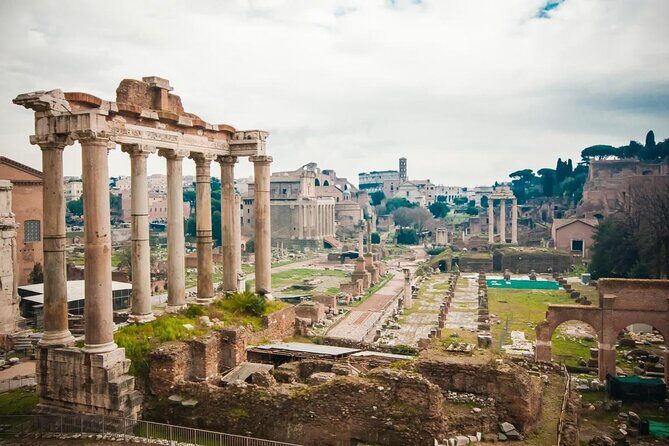
- Roman Forum + government focus so the ruins make more sense than random stones
- Capitoline Hill and Michelangelo’s Piazza del Campidoglio viewpoint stop
- After-dusk route built around iconic squares and fountains at night
- Headsets when needed so you can actually hear in crowd-heavy areas
- Small group (up to 20) for a more human pace through the center
How the afternoon-to-evening plan changes Rome’s feel
This tour is designed like a one-two punch. You start in the afternoon with the main ancient icons, when the Colosseum and Roman Forum are still manageable and the light helps you spot details. Then you shift to the evening, when the mood changes fast: the same streets feel calmer, and the big sights like Trevi and the Spanish Steps look better after dark.
The biggest value is not just seeing more. It’s that the night walk gives you a sense of how Rome works in real time—people flowing between squares, fountains acting like landmarks, and viewpoints replacing straight-from-a-book sightseeing.
It also ends where many nights naturally begin: Campo de’ Fiori, so you’re not stuck far from dinner plans when the tour finishes around 22:00.
You can also read our reviews of more walking tours in Rome

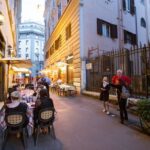
Starting at Campo de’ Fiori: the easiest meeting point for a long day
Both the start and end are Campo de’ Fiori (00186 Roma RM), which is convenient if you’re staying somewhere central or you like to keep your bearings simple. Your afternoon begins at 13:45 (1:45 pm), and the tour ends at about 22:00 back at Campo de’ Fiori.
There’s no hotel pickup or drop-off. That matters because it means you’ll likely rely on public transport or walking to reach the meeting point. If you’re trying to conserve energy, it’s worth planning how you’ll get there before you commit.
Also note the tour includes entrance tickets for key ancient stops, but you’ll handle food breaks between the two parts on your own. Think of that downtime as time to recharge rather than a problem.
Entering the Colosseum without the long-line headache
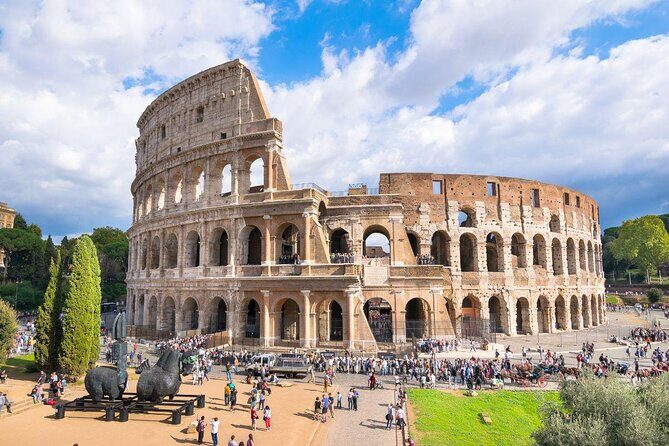
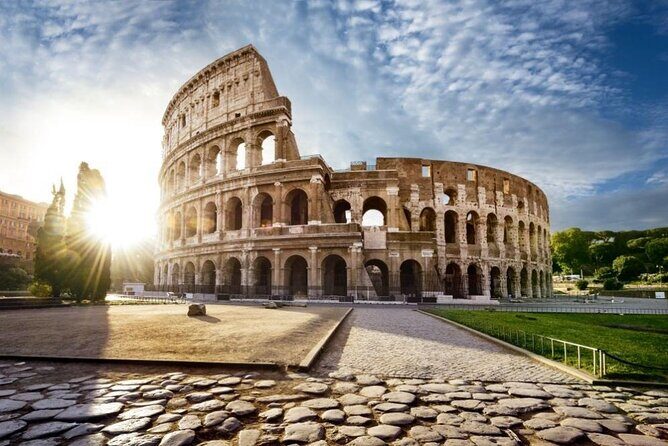
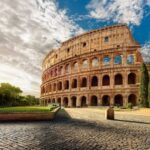
The first official stop is the Colosseum, starting with guided skip-the-line entry support. You’ll spend about 1 hour there, and admission plus the reservation fee are included in the price.
This is where having a real guide does real work. The Colosseum isn’t just one big arena—you’ll get context that helps you visualize how it was used, including gladiator-fight storytelling as you move through the first and second tiers. Even if you’ve seen photos, the tiers read differently once you understand what you’re looking at.
Practical tip: the Colosseum can still be crowded. You’ll want comfortable shoes and a day-pack that’s not bulky, so getting through the flow of visitors feels easier. If you’re sensitive to stairs, just know you’ll be moving between levels and viewing points.
Roman Forum: turning ruins into a place that mattered
After the Colosseum, you move into the Roman Forum (about 1 hour), the center of Roman public life. This stop is included with admission, so you’re not scrambling for tickets or timed entry during the busiest part of the day.
I love the way this kind of guided Forum visit changes your mental map. The Forum can look like a collection of broken walls unless someone connects the dots for you: where political activity happened, how public space functioned, and why this area mattered more than a backdrop.
The key drawback here is crowd density. You may feel that you’re walking through “ancient Rome,” not a quiet museum. The fix is to take cues from your guide—pause where they ask you to, and don’t rush the explanations if you want the ruins to click.
Capitoline Hill and Piazza del Campidoglio: the small hill with big payoff
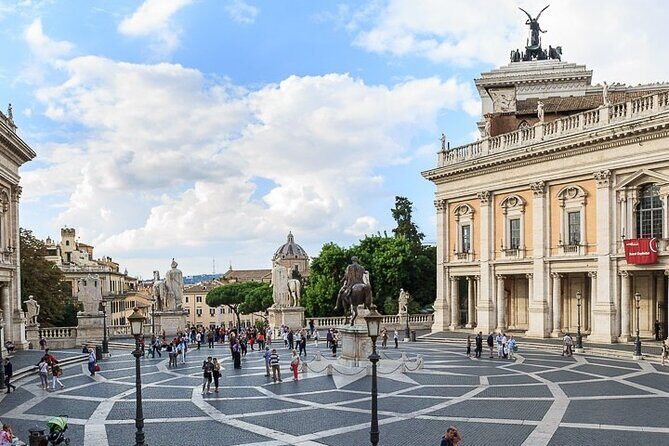
Next comes Capitoline Hill and the Piazza del Campidoglio, designed by Michelangelo. This segment is shorter (about 30 minutes), but it’s a payoff stop because the hill is compact and the view helps organize the city in your head.
This is also one of the more physical moments of the day because you’re climbing up. The tour notes a moderate physical fitness level, and this is exactly where that applies.
If you’re traveling with knee issues or you’re short on stamina, pace yourself on the ascent. The good news is the time here is limited and focused—less wandering, more payoff.
You can also read our reviews of more evening experiences in Rome
Pantheon time at Piazza della Rotonda: a classic stop with two looks
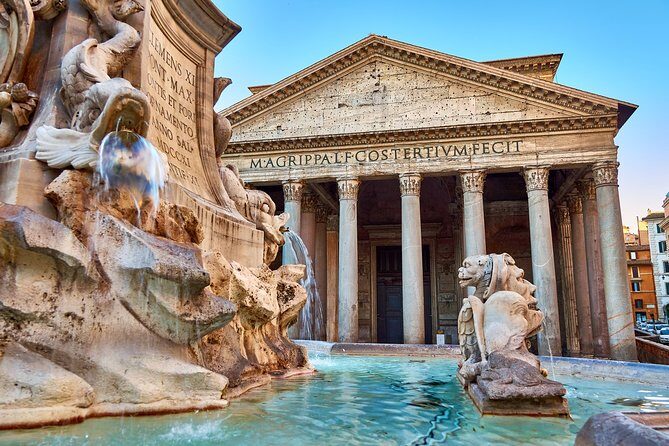
The tour schedules time at the Pantheon area at Piazza della Rotonda. You’ll have a 30-minute stop there, with admission listed as free in one part of the day.
Later, there’s another Pantheon moment described as an exterior explanation, with admission ticket not included. So treat this as a “multiple-touch” monument: you’ll likely get at least one close look during the afternoon, then a second chance later when you’re already in evening rhythm.
Even if you’re not entering, the Pantheon exterior reads fast. The building is unusually preserved, and once you’ve seen it once with context, it becomes easier to recognize details even from a distance. That’s a big part of why it works in a combo tour.
Piazza Navona: two visits that make the fountains part of your evening plan
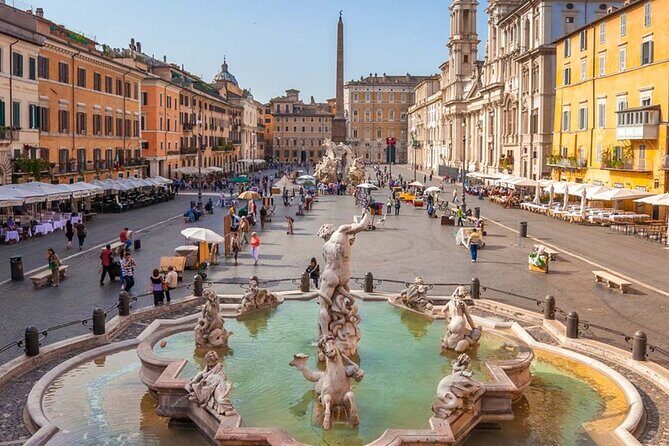
You’ll hit Piazza Navona in two blocks: first at the end of the afternoon portion and again later during the night walk. That’s smart because it changes how you experience the same square across the day.
The tour highlights the fact that the piazza features three major fountains, with special attention on Bernini’s Fountain of the Four Rivers in the center. In daytime, it’s easier to inspect the stonework and the layout. At night, the square becomes more about people flow, lighting, and the overall energy of the area.
A practical point: this is a place where photos happen. If you want better photos, don’t fight the first cluster in the center. Give yourself a minute, then move slightly to find an angle with fewer bodies.
Piazza del Popolo at 19:00: the evening switch
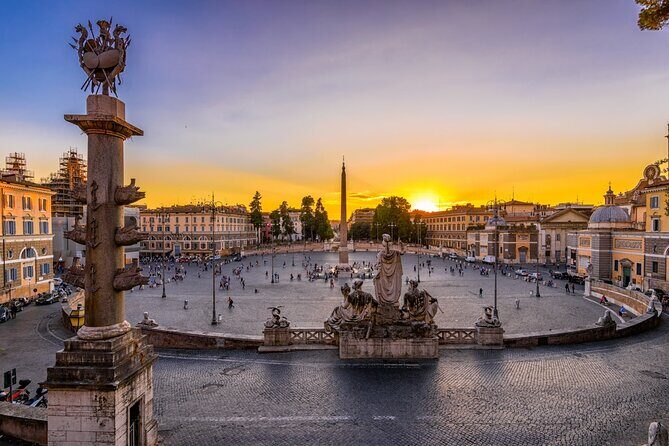
The evening portion begins at 19:00 at Piazza del Popolo. Before that time, you’ll have handled the ancient stops and the daytime square hopping, and then you reset for the panoramic night walk.
Piazza del Popolo is a different kind of Rome square—churches, monuments, and a long-used public gathering space. It’s also a convenient staging point for a walking route that fans out toward the viewpoints and fountains you’ll want after dusk.
Terrazza del Pincio sunset views
You’ll continue with your guide to Terrazza del Pincio (also called Pincio Terrace) for sunset over the rooftops. This is one of those Rome moments where the city looks layered instead of flat.
It’s a short stop (about 20 minutes), but it can become a highlight because you’re not just standing in front of a monument—you’re looking across the city and letting your brain connect neighborhoods, churches, and rooftops.
If you’re traveling in warmer months, arrive with water in mind. If you’re traveling in cooler months, think about layers; rooftop views make temperature shifts noticeable.
Piazza di Spagna and the Barcaccia: the photo stop with real street life
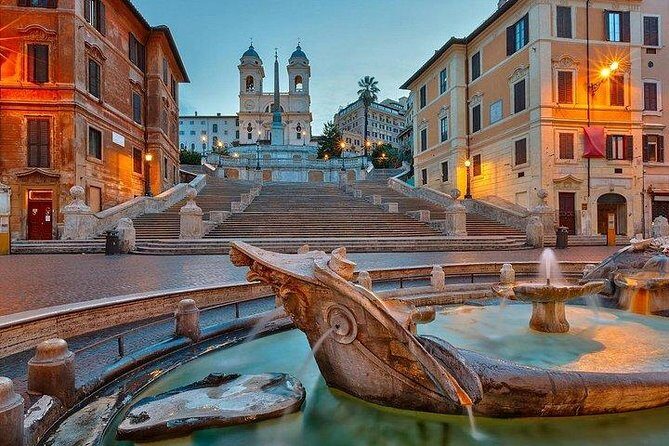
From the terrace, you’ll move toward Piazza di Spagna for the Spanish Steps and Bernini’s Barcaccia fountain. This is timed at nightwalking pace (about 20 minutes), which helps because Rome’s central streets can feel intense at peak times.
You’ll get the fountain and steps as anchor points, then enough time to wander around them rather than just pose and sprint away. The square also gives you a sense of how “top sight” areas still function as neighborhood public space.
If you’re trying to get photos without a crowd wall, go slightly later in the visit window rather than arriving at the first minute.
Trevi Fountain at night: coin legend, more important than ever
The evening route brings you to Fontana di Trevi, described as the biggest Baroque fountain in Rome. You’ll spend about 20 minutes here.
There’s a familiar legend that if you throw a coin into the fountain, you ensure a return to Rome. In practice, the real value is that Trevi changes from photo postcard to something more lived-in when the lights are on and the surrounding streets wake into night.
Tip: keep your belongings secure and be mindful that this stop gets busy. Use the guide’s timing so you’re not stuck waiting in one tight spot the whole time.
Second-round Pantheon and another Piazza Navona: why you see them twice
One of the clever mechanics of this combo tour is that you revisit key monuments at different times. You’ll see the Pantheon area again as an exterior explanation, then you’ll end up at Piazza Navona for a second stroll.
That structure helps if you like comparison. The Pantheon exterior at night can look more stark and graphic. Piazza Navona at night feels like a different stage set: same architecture, different atmosphere.
Also, seeing them twice reduces the chance you miss something because you were tired, chatting, or caught in a slow-moving crowd. It’s a practical choice for a day like this.
Ending at Campo de’ Fiori: perfect launchpad for dinner and night wandering
You’ll finish at Campo de’ Fiori after about 20 minutes on the last stop. It’s described as historically connected to public events, and today it’s a marketplace in the morning and a night hub after dark.
I like ending here because it’s easy to keep walking. You’re already in a lively area with lots of dinner options, and you don’t have to solve transportation right at the moment you’re most tired.
If you still have energy after 22:00, consider starting your next loop in the same direction your route already brought you. That saves time and keeps the day’s walking rhythm intact.
Price and value: what $104 buys you
At $104 for roughly 6.5 hours, the value comes from three things working together:
1) Included Colosseum and Roman Forum access, including the Colosseum reservation fee. You’re also paying for the guide’s time, not just “a ticket and a map.”
2) Small-group control (max 20) plus headsets when needed. That combination matters on major sites because it improves your listening experience and keeps the group moving without chaos.
3) The after-hours style walking portion, which stacks the big sights—Piazza Navona, Piazza di Spagna, Trevi Fountain—into a single evening route. You’re effectively buying someone’s route planning and timing.
One thing to keep in mind: the price covers the guided experience and included admissions, but transport between the afternoon and evening parts isn’t included, and you’ll have to return to the meeting point areas yourself.
So the value is best if you’re comfortable navigating Rome on foot and using public transport.
Who this tour fits best (and who should think twice)
This is a great match for first-time visitors who want an insider’s route through Rome’s top “must-see” landmarks without spending the day alone and confused.
It’s also a strong fit if you enjoy guides who explain what you’re seeing in plain language and connect the monuments to how Rome worked, from arena spectacle to the civic core of the Forum.
Think twice if:
- You dislike stairs or you struggle with moderate uphill walking (Capitoline Hill is part of the day).
- You want zero gaps between tour parts or expect the operator to handle all movement between segments.
- You prefer to move at your own speed without set timing for photo stops.
Should you book this Colosseum + evening panoramic combo?
If you’re aiming to see the Colosseum, Roman Forum, and the headline fountains and squares in one organized day, this is a smart booking. The line-skipping help at the start and the guided context at the ancient stops are the big reasons it feels worth the money.
I’d book it if you’re okay with a full day and you want your evening to feel like a curated walk rather than a random wander. I’d hold off if your priority is a slow, museum-style pace or if you’re unsure you can handle the walking and the hill.
FAQ
How long is the full-day combo tour?
The tour runs for about 6 hours 30 minutes.
Where do I meet the guide?
You meet at Campo de’ Fiori, 00186 Roma RM, Italy, and you also end there.
What time does the Colosseum portion start?
The Colosseum portion starts at 13:45 (1:45 pm).
When does the evening walking tour begin?
The evening part begins at 19:00 at Piazza del Popolo.
Are Colosseum and Roman Forum tickets included?
Yes. Entrance to the Colosseum and the Roman Forum is included, along with the Colosseum reservation fee.
Is Pantheon entry included?
The tour includes time at the Pantheon area, and one Pantheon stop lists admission as free. A later Pantheon stop is described as an exterior look with admission ticket not included.
What group size should I expect?
It’s a small group capped at 20 people, and the tour may use headsets when needed.
Do I need to bring ID?
Yes. You must bring a valid passport or ID document that matches the names provided when booking.
Is hotel pickup or transport included?
No. Hotel pickup/drop-off is not included, and transport between the afternoon and evening parts is not included.