REVIEW · HISTORICAL TOURS
Exploring Rome’s Rich Heritage: Pantheon and Jewish Ghetto
Book on Viator →Operated by Checkandgo Tours · Bookable on Viator
Rome can hit you fast and hard.
This tour strings together two heavy hitters in a smart, walkable route, so you go from the Pantheon’s perfect geometry to the streets that shaped Rome’s Jewish community. I like how the Pantheon skip-the-line setup saves your morning energy, and I also like that the group stays small with headsets, so the guide’s narration stays clear even in busy spots.
My favorite part is the way you’re not just seeing landmarks—you’re getting the “why” behind them. You’ll understand the Pantheon as a temple turned tomb, then move on to places like Largo di Torre Argentina, tied to Julius Caesar’s assassination in 44 BC, and the Portico of Octavia area that anchors the Jewish quarter. You’ll leave with a cleaner sense of how ancient Rome and later Jewish life fit together in the same neighborhood.
One thing to plan for: the Pantheon has a strict clothing rule—knees and shoulders must be covered—or entry is refused. Also, bring a copy of your ID, and keep in mind this experience requires a minimum number of travelers, so if that threshold isn’t met you may be offered another date or a refund.
In This Review
- Key highlights you’ll actually care about
- Entering The Pantheon: the oculus trick and the dress code reality
- Piazza della Minerva: a quick art detour with Bernini’s elephant
- Largo di Torre Argentina: temple ruins under Caesar’s shadow
- Piazza Mattei and the Turtle Fountain: Renaissance whimsy that’s worth stopping for
- Via del Portico d’Ottavia: walking the Jewish Ghetto to the Portico of Octavia
- What you’re really paying for: value in tickets, headsets, and pacing
- Small-group comfort: who will enjoy this most?
- Should you book the Pantheon and Jewish Ghetto tour?
- FAQ
- Where does the tour start and end?
- What time does the tour begin?
- How long is the tour?
- Is the Pantheon admission included, and do I need to queue?
- What should I wear to enter the Pantheon?
- Do I need to bring ID?
- Is pickup or drop-off included?
- FAQ
- Is the Jewish Ghetto part guided?
- What’s included besides the tickets?
- What group size should I expect?
- How much does it cost?
Key highlights you’ll actually care about
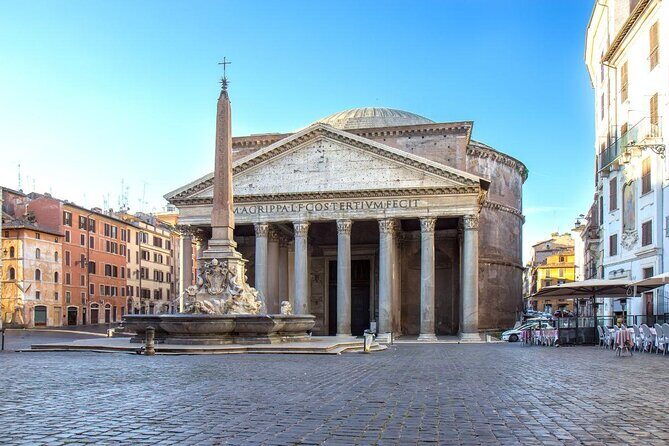
- Skip-the-line Pantheon entry means less waiting, more looking.
- Headsets for the guide’s audio make a small-group tour easier to follow.
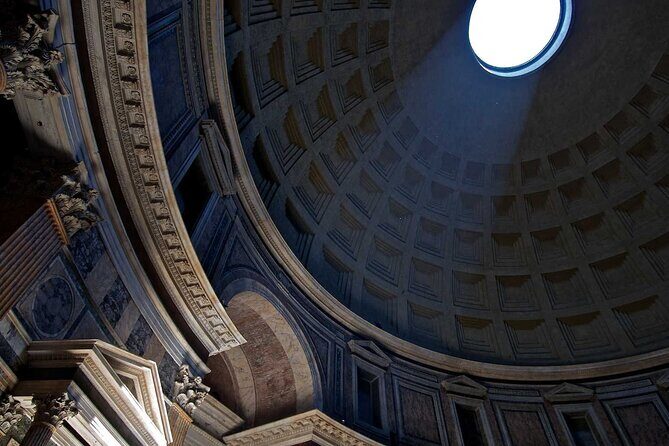
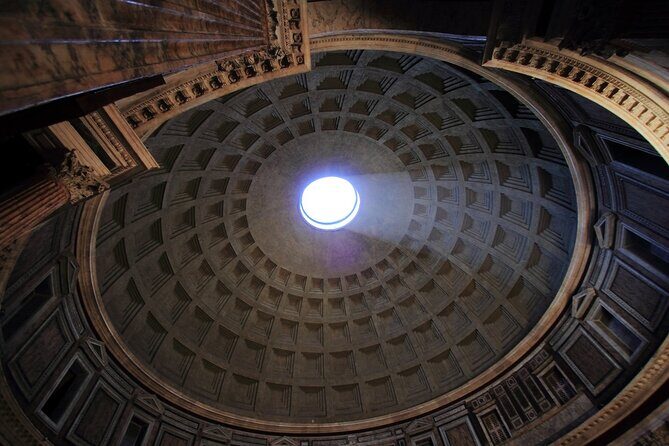
- Pantheon’s dome + oculus explains how light and scale were engineered in Roman times.
- Largo di Torre Argentina places Caesar’s assassination inside real, street-level ruins.
- Jewish Ghetto walking route takes you along Via del Portico d’Ottavia to the Portico of Octavia remains.
Entering The Pantheon: the oculus trick and the dress code reality
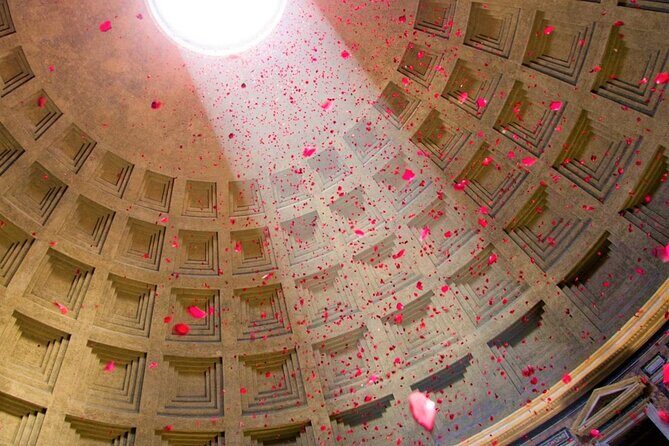
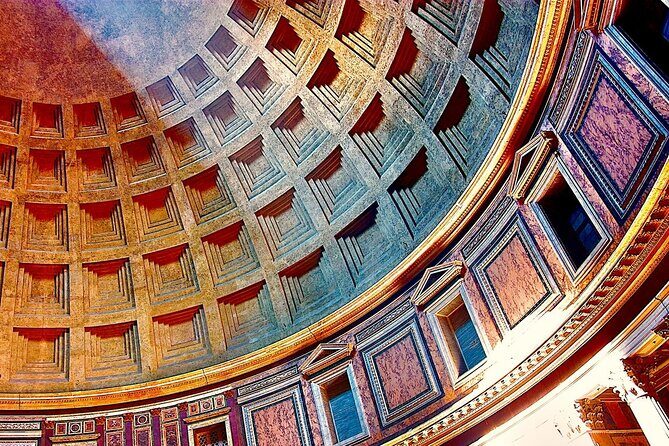
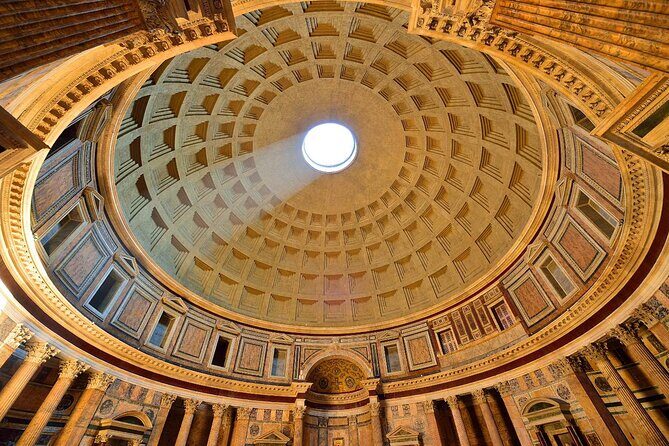
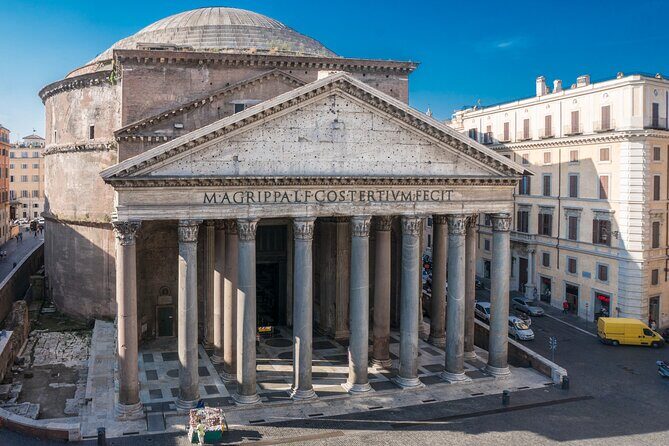
You start at Piazza della Rotonda, right by the Pantheon—one of Rome’s most intact ancient monuments. The moment you get inside, the focus is obvious: the massive domed ceiling and the oculus, a single opening that pulls in daylight and turns the interior into a kind of natural light machine.
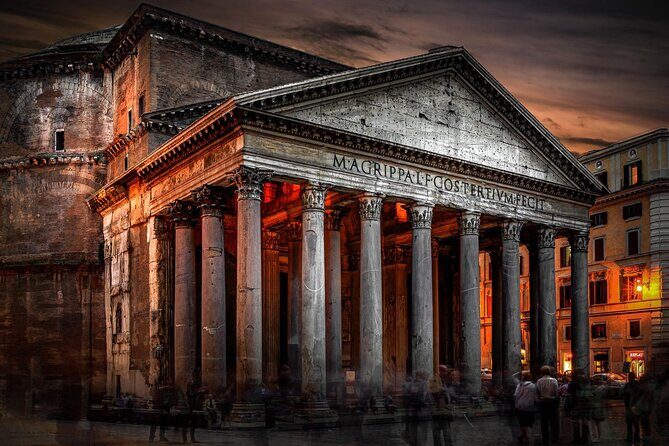
This building’s story is also a big part of why this tour works. Originally, it was built as a temple for the gods, but it later became a major Christian site (Santa Maria ad Martyres). Today you’ll also hear about famous burials inside, including Raphael and the kings of Italy—an unusual twist that keeps the Pantheon from feeling like a museum-only stop.
Practical note: the Pantheon is strict about modest dress. Knees and shoulders must be covered or you may be refused entry. If you’re visiting in hot weather, bring a light layer just in case—Rome summers can be sweaty, but you don’t want your trip start derailed by fabric rules.
You can also read our reviews of more historical tours in Rome



Piazza della Minerva: a quick art detour with Bernini’s elephant
From the Pantheon area you’ll walk to Piazza della Minerva, a small space that packs a lot into a short visit. The star is the obelisk resting on a small elephant, a work connected to Gian Lorenzo Bernini. It’s the kind of detail you can easily miss if you walk fast, but with a guide’s pacing you actually get to register what you’re looking at.
You’ll also see Santa Maria sopra Minerva, described as a rare example of Gothic architecture in Rome. That contrast matters. Rome isn’t only ancient ruins and Renaissance façades—this city mixes eras, and this church is a good reminder that the Middle Ages still leave fingerprints here.
Time-wise, this stop is short, so go with the mindset of: look, learn one or two key details, then move on. That’s a big reason people like this tour—there’s less wandering, more payoff per minute.
Largo di Torre Argentina: temple ruins under Caesar’s shadow
Next comes Largo di Torre Argentina, the archaeological area where you can see the remains of four ancient Roman temples. This is one of those places that feels strangely close to modern street life, with the ruins sitting right where pedestrians pass.
The big historical hook is Julius Caesar’s assassination in 44 BC. Your guide’s job here is to help you place what you’re seeing into a clear timeline: what the space used to be, what happened in that era, and why this particular site became famous. Even if you’ve heard of Caesar before, it’s different when the story is anchored to visible foundations.
One consideration: this stop is more about atmosphere and historical context than “big wow” visuals. If you need huge monuments every minute, you may wish for a bit more scale here. Still, it’s a strong anchor point for understanding how Rome’s story keeps reappearing in new forms.
Piazza Mattei and the Turtle Fountain: Renaissance whimsy that’s worth stopping for
You’ll then reach Piazza Mattei, a compact square that’s famous for the Turtle Fountain. It’s a playful landmark created in the 16th century by Giacomo della Porta, and you’ll hear about sculptures attributed to Bernini that later enriched it.
What I like about this stop is the contrast. After domes, temples, and political violence tied to Caesar, the Turtle Fountain brings you back to human-scale creativity. It’s a reminder that Rome wasn’t only power and empire—it was also craft, wit, and public art built for everyday viewing.
Because the tour is timed, you won’t spend long here. That’s fine. You’ll get enough time to spot the fountain details and learn what they represent, without turning it into a “stand around and guess” photo break.
Via del Portico d’Ottavia: walking the Jewish Ghetto to the Portico of Octavia
The tour’s final stretch is the one many people remember most for its emotional and cultural weight. You’ll walk into the Jewish Ghetto area along Via del Portico d’Ottavia, which is tied to the historic center of Rome’s Jewish community.
Here, the architecture becomes more than background. The streets and structures are part of the story of how the community lived, survived, and maintained traditions across centuries. The guide should help you understand what this area meant historically, not just what it looks like today.
You end in front of the Portico of Octavia, an imposing structure commissioned by Emperor Augustus. Today, what you see are remains that point to the complex’s former importance—once housing a library and a place of worship. It’s a strong ending image, because it links Roman imperial building power with the layered history that followed.
This portion also benefits from the small-group format. With more space and clear audio through headsets, you can actually follow the narrative instead of relying on your own ability to read plaques.






What you’re really paying for: value in tickets, headsets, and pacing
At $43.29 per person, you’re paying for three things that matter in Rome: entry handling, guide time, and audio support.
Pantheon skip-the-line tickets are a big part of the value. The Pantheon draws heavy crowds, and saving time early in the morning can change how the rest of your day feels. You’re not just buying access—you’re buying a smoother start.
You’re also getting tour guide narration through headsets. That’s not a luxury in Rome; it’s often the difference between understanding the “why” and missing it while you look around. With a maximum group size of 25, you get better control of pacing too—less chaos, more chance to ask yourself questions as you go.
Duration is about 2 hours, so this isn’t a slow, meandering “see everything” style tour. It’s a focused route. If your goal is a high-signal overview with key context, this format fits well.
Booking timing: this experience often gets booked around 77 days in advance on average. If you’re traveling during busy periods, don’t wait until the last minute.
Small-group comfort: who will enjoy this most?

This tour suits you best if you like history that’s explained in human terms. You’ll want a guide who connects architecture and events—Pantheon to Caesar-era ruins to the Jewish quarter—without turning the walk into a lecture you can’t keep up with.
You’ll also likely enjoy it if you prefer short stops with built-in meaning. Each pause is designed to point your eyes at something specific: the oculus, Bernini’s elephant-supported obelisk, the temple foundations at Largo di Torre Argentina, the Turtle Fountain details, and the Portico of Octavia remains.
Who might feel “meh”? If you’re in Rome for ultra-detailed archaeology-only content, this may feel too fast for deep exploration at each site. And if you struggle with dress-code restrictions, the Pantheon entry rule is not negotiable—plan clothing accordingly.
Should you book the Pantheon and Jewish Ghetto tour?
I’d book it if you want a morning that connects major Rome stories in a logical walk and you appreciate guided context more than solo wandering. The Pantheon skip-the-line entry plus headsets plus a small group is a strong combo for real-world value, not just sightseeing.
I’d think twice if you’re likely to show up unprepared for the Pantheon’s clothing rule (covered knees and shoulders). Also have a backup plan in your head if the operator can’t run the tour due to minimum traveler requirements—this kind of tour can sometimes shift dates or be refunded.
If your schedule is tight and you want a route that gets you orientated fast—without sacrificing key context—this is a solid choice.
FAQ
Where does the tour start and end?
It starts at Piazza della Rotonda, 2, 00186 Roma RM, Italy, and ends at the Portico of Octavia on Via del Portico d’Ottavia, 29, 00186 Roma RM, Italy.
What time does the tour begin?
The tour starts at 9:00 am.
How long is the tour?
The duration is about 2 hours.
Is the Pantheon admission included, and do I need to queue?
Yes. You get skip-the-line tickets for the Pantheon, and a guided experience inside.
What should I wear to enter the Pantheon?
You must have knees and shoulders covered. If you don’t, entry can be refused.
Do I need to bring ID?
Yes. Bring a copy of your ID.
Is pickup or drop-off included?
No. Pickup/drop-off is not included.
FAQ
Is the Jewish Ghetto part guided?
Yes. The tour includes a guided walk through the Jewish Ghetto area.
What’s included besides the tickets?
You get a tour guide and headsets so you can hear clearly.
What group size should I expect?
The group has a maximum of 25 travelers.
How much does it cost?
The price is $43.29 per person.