REVIEW · MUSEUMS
Rome Capitoline Museums Private Guided Tour and Panoramic Views
Book on Viator →Operated by Tour In Rome by Tour in the City · Bookable on Viator
Rome’s art and views sit on one hill.
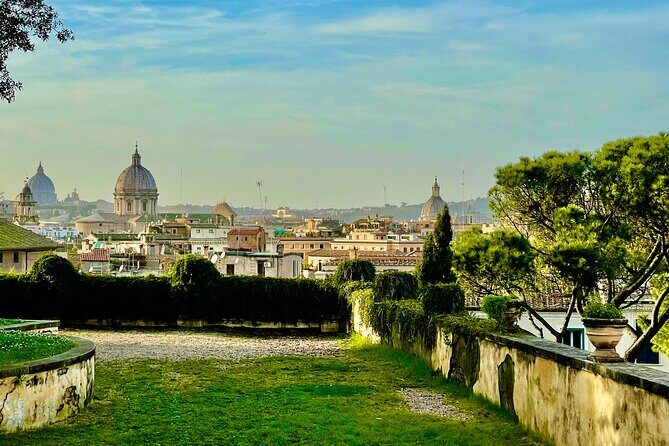
This private Capitoline Museums tour is a smart way to use limited time: you get skip-the-line tickets, an art historian guide, and a route that moves from ancient sculpture to major painting names. I especially like how the museum facts are tied to place, so you’re not just reading labels, and how you end up with panoramic Rome views tied to the same hilltop story.
Two things I’d put near the top: first, the chance to see iconic works like the Capitoline Wolf and the bronze Spinario, plus paintings from major masters including Caravaggio; second, the guide can shape the pace to your interests, which matters when a museum can easily swallow a whole day. One drawback to consider: if you’re a casual sightseer who wants quick Rome snapshots, the focus on art history and context may feel like a long, structured lesson for the time spent.
In This Review
- Key highlights to know before you go
- Capitoline Museums on a private pace: why this route works
- Musei Capitolini: bronze legends, Greek and Etruscan art, and the Pinacoteca’s heavy hitters
- The Roman Forum view is the hidden reward
- Piazza del Campidoglio: Michelangelo’s stage for Rome’s authority
- The Replica Statua Equestre di Marco Aurelio: why copies get their own spotlight
- Palazzo Senatorio: medieval administration on top of ancient remains
- Watch for the “power vibe”
- Palazzo Nuovo: when the museum explains how collections are made
- Palazzo dei Conservatori: art galleries, tapestries, and fresco cycles tied to Roman identity
- This is where the tour clicks
- Panoramic views of Rome: what to expect from the sights
- Price and value: what $288.97 buys you in real terms
- Who should book this private Capitoline tour
- Quick planning tips for your 2.5 to 3 hours
- Should you book this private Capitoline Museums and views tour?
- FAQ
- What is the duration of the Rome Capitoline Museums private guided tour?
- What is the meeting point?
- Is this tour private?
- What language is the tour offered in?
- Does the tour include museum admission tickets?
- Are skip-the-line tickets included?
- What is included besides the guide?
- Is food and drink included?
- What is the cancellation policy?
- Are pets allowed?
Key highlights to know before you go
- Skip-the-line, private pacing: less waiting, more time looking closely with a guide who can respond to questions.
- From bronze myths to big-name painting: the route mixes ancient sculpture and the Pinacoteca’s long-running painting tradition.
- Marcus Aurelius viewpoints in multiple spots: you’ll hit the exedra setting and the Campidoglio staging area.
- Roman Forum glimpses from unusual angles: including a view through an underground passage tied to the Tabularium remains.
- Palaces with layered purpose: you’re not just entering rooms—you’re walking through buildings that served city power.
Capitoline Museums on a private pace: why this route works
Capitoline Hill is where Rome shows off its best trick: old ruins, famous art, and city-scale views all in one tight neighborhood. The Capitoline Museums are also not a “single-room” museum. They’re a cluster of spaces—sculpture halls, painting galleries, and palaces—so a good guide really matters.
This is a private tour designed for a focused time window of about 2 hours 30 minutes to 3 hours. That’s the sweet spot for first-timers and anyone on a “see the big stuff without burning the day” plan. The guide is an art historian, and you’re not limited to reading captions. You get context: who made the work, what was happening when it was made, and why these objects ended up being important later.
The reviews also point to something I value: the guide doesn’t just name-drop. Guides such as Emilio and Martin are praised for pushing beyond the obvious and explaining meaning, not just describing surfaces. That’s exactly what helps when you’re trying to connect centuries of Roman life—from republican myths to Renaissance “reinvention” of classical Rome.
You can also read our reviews of more guided tours in Rome



Musei Capitolini: bronze legends, Greek and Etruscan art, and the Pinacoteca’s heavy hitters
Your tour starts inside the Capitoline Museums, where the first payoff is variety. You’re not just stuck with one type of object. You move through bronze sculpture, ancient ceramics, and then into painting.
You’ll see famous sculpture themes right away. Expect stops that include:
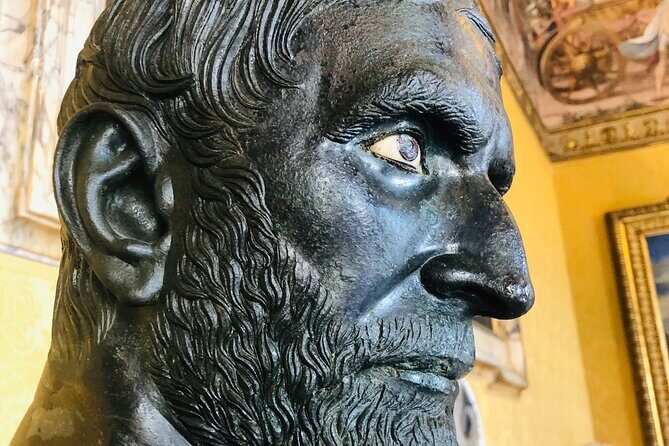
- The Capitoline Brutus bust, a Roman political image in bronze.
- The Spinario, the bronze boy pulling a thorn—an image that keeps turning up as an emblem of Roman art history.
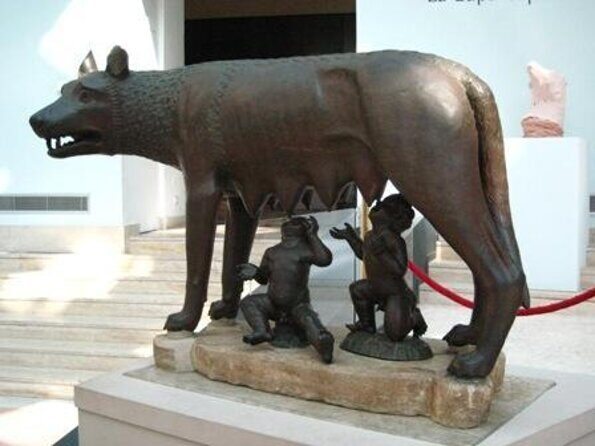
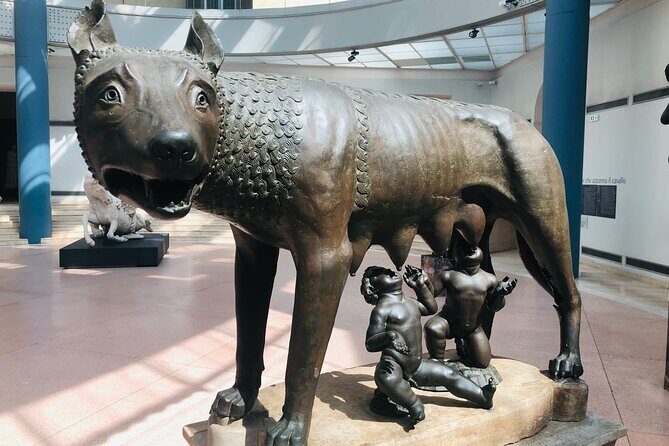
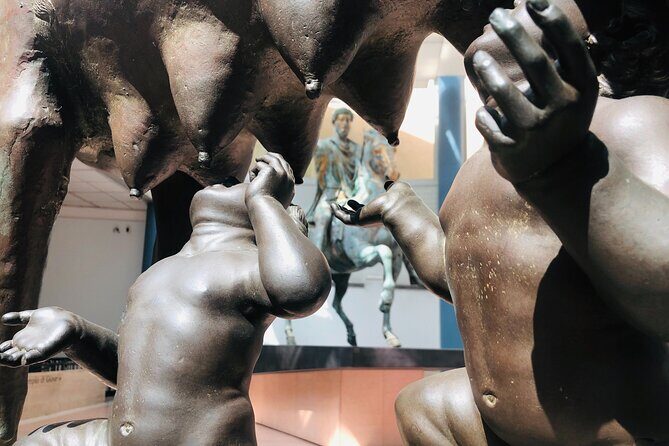
- The Capitoline Wolf, the famous story-symbol that suckles Romulus and Remus.
- A collection of Greek and Etruscan vases, which is a nice reminder that Rome didn’t develop in a vacuum. You’re looking at the wider ancient Mediterranean world that fed Roman taste.
Then you shift to the Pinacoteca, described as the oldest public painting collection. This is where the tour becomes especially useful if you care about painting names you’ve seen in books, but haven’t stood in front of in real life. You’ll encounter paintings by artists including:
Caravaggio, Guido Reni, Carracci, Guercino, Domenichino, Veronese, Titian, Tintoretto, Rubens, and Pietro da Cortona.
The practical value here is how a guide can connect painting style to Roman taste and the later Renaissance/Baroque fascination with antiquity. You’re also shown statuary from Renaissance and Baroque Rome, which helps the museum make a bridge between ancient objects and later interpretations of what Rome wanted art to say.
A major visual moment follows in the exedra: the equestrian statue of Emperor Marcus Aurelius. The statue sits among remains of ancient temples still visible, so you’re not looking at a standalone monument. You’re looking at a statue placed into a layered architecture where the ancient city is physically present.
The Roman Forum view is the hidden reward
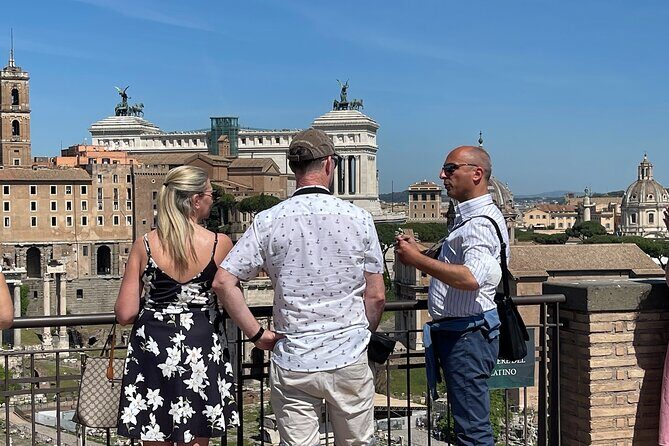
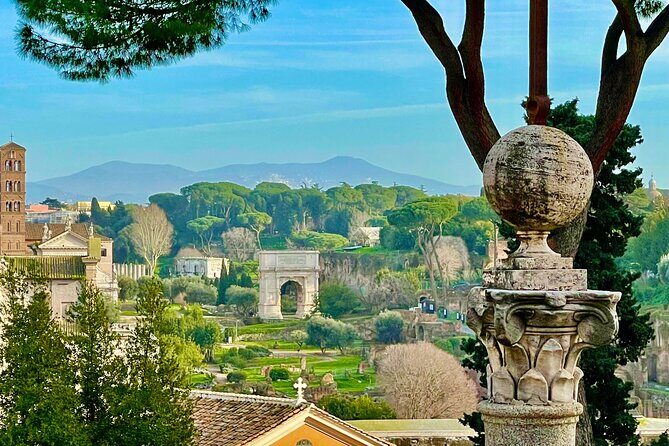
The tour also includes an underground tunnel passage among the Tabularium remains. This part can be surprisingly memorable because it gives you a Roman Forum view from a different perspective. If you’ve seen the Forum before, this is a nice way to reframe it. If you haven’t, it’s a useful “oh, that’s where everything connects” moment.
Along the way, you’ll also encounter additional sculptures and art objects such as:
- the statue of Marforio
- the Dying Gaul
- Cupid and Psyche
This combination is one reason people rate the experience so highly: it doesn’t treat the museum like a checklist. It’s presented like a connected story of Rome’s changing self-image.
Piazza del Campidoglio: Michelangelo’s stage for Rome’s authority
After the museum rooms, you step into Piazza del Campidoglio, built on Capitoline Hill. This square is not just scenic. It’s a deliberate piece of urban design that modern Rome inherited from the Renaissance reshaping of the ancient city.
The square’s makeover has a clear historical trigger: during the 1536 visit to Rome by Spanish emperor Charles V, the hill needed transformation after years of abandonment. Pope Paul III commissioned Michelangelo to finish the layout.
What you’ll notice fast is the square’s “centered power.” Michelangelo created a podium for the equestrian statue of Marcus Aurelius and placed it as the fulcrum of the new urban composition. In other words, the square isn’t an afterthought. It’s built to frame and amplify the monument and the concept of authority.
You’ll also see Michelangelo’s staircase concept with giant steps that make the climb easier, plus a solemn balustrade with classic marble groups. This is a place where Rome feels theatrical in the best way: stone design that guides your movement and your sightlines.
The Replica Statua Equestre di Marco Aurelio: why copies get their own spotlight
In Piazza del Campidoglio, you’ll encounter the Replica Statua Equestre di Marco Aurelio. Since 1997, a copy of the gilded bronze group has stood there, based on a photogrammetric survey.
This isn’t a random replacement. The original equestrian statue was removed from the piazza in 1981 and transported for restoration-related work at the Central Institute for Restoration. It underwent diagnostic tests and restoration interventions to address damage from exposure to atmospheric agents and pollution.
Why does this matter on your tour? Because it’s a reminder that Rome’s “present” monuments often depend on behind-the-scenes conservation decisions. You’re seeing how a city can keep the visual message while protecting the original artwork.
You can also read our reviews of more private tours in Rome


Palazzo Senatorio: medieval administration on top of ancient remains
Next comes Palazzo Senatorio, built between the mid-12th century and the last quarter of the 13th century on ruins of the ancient Tabularium. From 1144, it became the seat of the Municipality of Rome and the residence tied to the Senator, the top civic figure responsible for administration and justice.
The building’s facade faces toward Piazza del Campidoglio and is arranged with loggias and round arches across multiple levels. On the first floor, you’ll see brick arches punctuated with recovered ancient columns featuring Ionic capitals from the first quarter of the 13th century.
There’s also an off-center arch that marks the main entrance from the square. That detail helps you read the palace as functional architecture, not only a museum backdrop.
Watch for the “power vibe”
This stop is short, but it adds something bigger than photos. It helps you connect what you saw in the museum (myths, sculpture, painting) to the reality that these hilltop spaces were about governance. Rome didn’t just preserve art. It used art and architecture to make power feel permanent.
Palazzo Nuovo: when the museum explains how collections are made
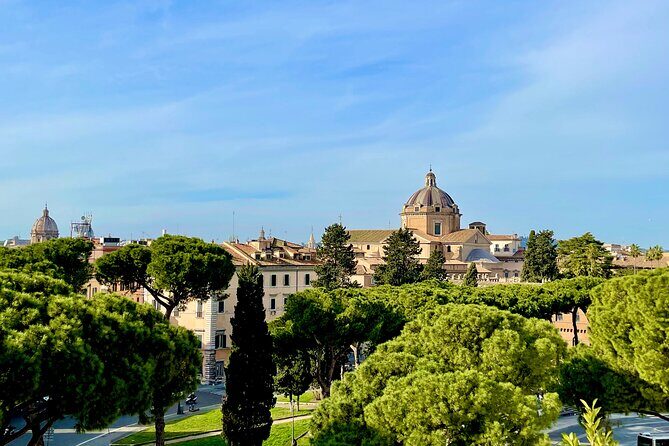
Then you move to Palazzo Nuovo, a 17th-century palace in front of the mirrored Palazzo dei Conservatori. It sits within the same Michelangelo-planned Capitoline setting commissioned by Pope Paul III, with Palazzo Senatorio dominating in the background.
Palazzo Nuovo’s construction began in 1603 based on Buonarroti’s design and finished in 1654 under Pope Innocent by Girolamo and Carlo Rainaldi. The building’s purpose also evolved: it became a museum in 1734 under Clement XII Corsini, after the acquisition of the prestigious Albani collection—418 sculptures—added to existing works.
Here’s the practical value of this context: you start to understand why museums look the way they do. Collections don’t just appear. They gather, relocate, and merge based on politics, taste, and what space different buildings can hold. Palazzo Nuovo is part of that “collection logic.”
If you’re the kind of person who hates vague museum explanations, you’ll like this stop. It offers a clear sense of how ancient objects were sorted and repurposed over time.
Palazzo dei Conservatori: art galleries, tapestries, and fresco cycles tied to Roman identity
Your tour finishes its palace sequence at Palazzo dei Conservatori, set on top of Capitoline Hill in the monumental Piazza del Campidoglio.
This was the residence of the Conservators, magistrates elected by the people to administer the city. It’s a nice counterpoint to the Senator role you saw at Palazzo Senatorio. Same hill, different civic function.
The building also connects to the Renaissance rebuilding campaign. For the Jubilee of 1500, Pope Nicholas V entrusted Michelangelo with rebuilding and reorganizing the square. After Michelangelo’s death, works begun under Pope Paul III Farnese continued with Guidetto Guidetti and finished in 1568 by Giacomo della Porta, who followed Michelangelo’s designs except for one larger representation room on the first floor.
In terms of what you’ll see, Palazzo dei Conservatori houses an art gallery, tapestries, and several bronze sculptures, including the Capitoline Wolf again. You’ll also see fresco cycles decorated in the apartments, with authors including Pietro da Cortona (16th to 17th centuries), tied to ancient history of Rome.
This is where the tour clicks
This stop often feels like the tour’s “meaning” portion: you’ve already seen ancient objects and big-name painting. Here you see how later artists tried to narrate Rome’s past to itself, in wall paintings and decorative programs. It’s not random decoration. It’s storytelling.
Panoramic views of Rome: what to expect from the sights
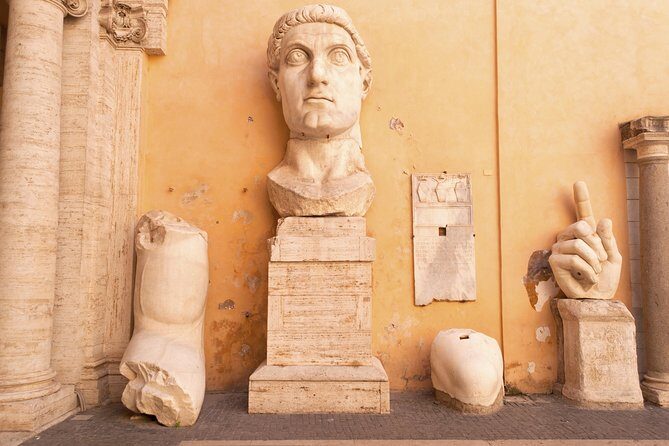
A key selling point of this tour is panoramic views of Rome, and they’re not one-note. You get view moments linked to specific places:
- The exedra area around Marcus Aurelius with ancient temple remains visible.
- The underground passage that provides a view of the Roman Forum.
- The open sightlines in Piazza del Campidoglio, where the square’s design helps you look outward and understand the hill’s position.
If you’re aiming for photos, I’d treat this as a “look first, shoot second” plan. The view moments reward your time because they explain where things sit relative to each other. If you spend all your time photographing, you miss the guide’s connections.
Also, plan for heat in summer. One reason the tour is praised for comfort is that museum viewing here isn’t just wandering in crowds. Still, you’ll be standing and walking, so go with smart casual clothes and comfortable shoes.
Price and value: what $288.97 buys you in real terms
The price is $288.97 per person for a private experience lasting roughly 2 hours 30 minutes to 3 hours. That might sound steep if you’re comparing it to a museum ticket alone. But here’s the value logic that matters.
You’re not only paying for entry. You’re paying for:
- a professional art historian guide
- guaranteed skip-the-lines tickets
- a private route that keeps you from wasting time figuring out what to see
- museum admission tickets included for key stops (with some areas free)
- tax, VAT, and insurance
- the panoramic Rome views tied into the route
If you attempted this on your own, you’d lose time to lineups and you’d likely spend more time trying to guess what’s worth your limited energy. The guide’s job is to make those decisions for you, and to explain why the objects matter.
There’s also the trade-off. The tour can feel like an art-history course. If you want broad Rome highlights with minimal structure, you may feel the price doesn’t match your pace. If you love meaning, you’ll feel the opposite. That’s why this tour scores so well: it delivers exactly the level of explanation people come for.
Who should book this private Capitoline tour
Book it if you’re:
- doing Rome with limited time and want a concentrated “art + city viewpoint” day
- interested in how ancient Rome connects to Renaissance and Baroque interpretations
- the type who asks questions when something looks symbolic (like the Wolf, the Spinario, or the Dying Gaul)
Consider a different style of tour if you’re:
- mainly after casual sightseeing with quick stops and minimal art talk
- expecting a short walkthrough that treats major objects as background scenery
Quick planning tips for your 2.5 to 3 hours
- Bring a question list. You’ll get more out of a private guide when you know what you want to understand.
- Wear comfortable shoes. You’ll move between museums and palaces and climb in the square areas.
- Don’t schedule a super tight next appointment right after. This tour is designed to be paced, and cutting it short hurts the payoff.
- Smart casual is the suggested dress code, so keep it practical rather than fancy.
Should you book this private Capitoline Museums and views tour?
I’d book it if you want a Rome morning or afternoon that feels focused but not rushed. The mix of ancient sculpture, heavyweight painting names, and Marcus Aurelius viewpoints turns Capitoline Hill into more than a museum stop. It becomes a layered story about how Rome keeps retelling itself.
If you’re the kind of traveler who enjoys structure and explanations, the price makes sense fast—because the guide and the skip-the-line entry are doing the heavy lifting. If you only want quick snapshots and zero art-history homework, you might find it too structured for the time spent.
If you’re unsure, use this rule: if you’d gladly read a label for five extra minutes, you’ll probably love this tour. If you prefer a fast walk-and-go plan, you may want a different option.
FAQ
What is the duration of the Rome Capitoline Museums private guided tour?
It runs for about 2 hours 30 minutes to 3 hours.
What is the meeting point?
You meet at Capitoline Museums, Piazza del Campidoglio, 1, 00186 Roma RM, Italy.
Is this tour private?
Yes. It is a private tour/activity, and only your group participates.
What language is the tour offered in?
It is offered in English.
Does the tour include museum admission tickets?
Admission tickets are included where noted in the experience, including the main museum portion. Some areas like Piazza del Campidoglio and the replica statue are free.
Are skip-the-line tickets included?
Yes. The tour includes guaranteed skip-the-lines tickets.
What is included besides the guide?
Included items are the professional art historian guide, private tour, tax/VAT/insurance, and panoramic views of Rome.
Is food and drink included?
No. Food and drinks are not included.
What is the cancellation policy?
Free cancellation is available. You can cancel up to 24 hours in advance of the experience start time for a full refund.
Are pets allowed?
No, pets are not allowed.
If you tell me your travel dates and whether you’re more into ancient sculpture or Renaissance/Baroque painting, I can suggest the best way to time this on your Rome day.