REVIEW · CITY TOURS
Exclusive ROME – Golf Cart City Tour with Italian Gelato
Book on Viator →Operated by Travel in Rome · Bookable on Viator
Rome, minus the sore feet.
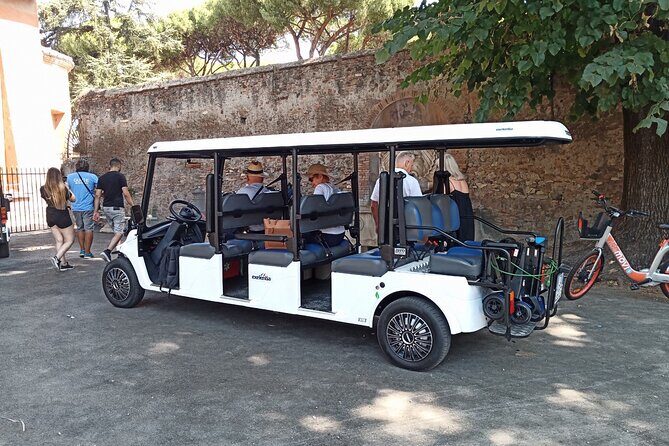
This golf cart tour is built for a more relaxed Rome: open-air views of the big landmarks, quick context from your guide, and onboard Wi-Fi so you can post and upload without burning your data. You also get Italian gelato included, turning the afternoon into something more fun than just sightseeing.
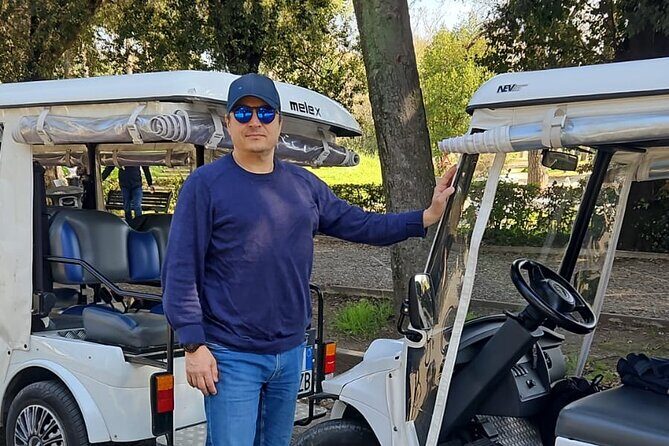
I especially like the hotel pickup and drop-off—it removes the first annoying step of planning Rome. With a cap of just 14 people, guides like Samuel and Stefano can keep the pace friendly and adjust when you want a slower look or a quick photo detour.
One thing to plan for: the Colosseum and Pantheon stops are outside-only. If you want to go in, you’ll need separate tickets (Colosseum from about 40€ and the Pantheon about 7€), so consider whether you want the full indoor experience or prefer the easier, photo-focused version.
In This Review
- Key highlights worth prioritizing
- Why a 3-hour golf cart loop works in Rome
- Hotel pickup, Wi-Fi, and the small-group feel that makes it easier
- Quirinale Palace: architecture and power on the Quirinal Hill
- Trajan’s Market and the Roman Forum valley: where Rome ran on decisions
- Colosseum outside-only: the smart way to get the big picture
- Via Veneto, Spanish Steps, and Pincio: the Rome postcard stops done with breathing room
- Piazza del Popolo and Campo Marzio: big squares and the city’s shopping-and-sight rhythm
- Pantheon outside and Piazza di Pietra columns: seeing more by going less inside
- Marcus Aurelius Column, Trevi Fountain, and Santa Maria Maggiore
- Gelato is included, so plan your energy around that break
- Price and real value: what you’re paying for besides the cart
- Who this tour suits best
- Should you book this Rome golf cart city tour?
- FAQ
- How long is the Rome golf cart city tour?
- Is hotel pickup and drop-off included?
- What’s included with the tour besides the guide?
- Do I need tickets for the Colosseum or Pantheon?
- Is the tour offered in English?
- How big is the group?
- What do I need to provide for hotel pickup?
- Does the tour run in bad weather?
Key highlights worth prioritizing
- Open-air comfort for clearer photos and less window-glare than a big bus
- Hotel pickup plus a small group size of up to 14
- Onboard Wi-Fi and bottled water (and fleece on cooler days)
- Colosseum and Pantheon from outside, with optional tickets if you want more
- Gelato included as a built-in break, not an extra search
Why a 3-hour golf cart loop works in Rome
Rome is huge, and walking between sights can turn your day into a footrace. This tour solves that with a short, planned loop that strings together the most recognizable pieces of the city without you spending hours figuring out how to get from one hill to the next. The cart also helps your eyes stay on what matters—when you’re not pressed behind bus windows, it’s easier to spot details worth noticing.
The timing is also realistic. You’re not expected to do marathon sightseeing. In about three hours, you get a sense of how ancient Rome and modern Rome overlap, plus enough stops to build a mental map for the rest of your trip.
You can also read our reviews of more city tours in Rome

Hotel pickup, Wi-Fi, and the small-group feel that makes it easier
This is one of those tours that starts working the moment you leave your lobby. You get hotel pickup and drop-off, which is a big deal in a city where the entrance you need might not be the one closest to your room.
On the comfort side, you also get Wi-Fi on board. That sounds small until you’re standing by a landmark trying to refresh photos, map directions, or message family back home. A half-liter bottle of bottled water is provided on hot days, and fleece blankets are offered when it’s chilly. It’s the kind of thoughtful touch that keeps the tour from feeling like a compromise.
Group size matters too. With a maximum of 14 travelers, the guide isn’t stuck performing for a crowd. You can ask questions and get answers, and you’re more likely to feel like you’re riding with someone who’s showing Rome to a friend—guides such as Samuel and Stefano are repeatedly described as personable and responsive.
Quirinale Palace: architecture and power on the Quirinal Hill
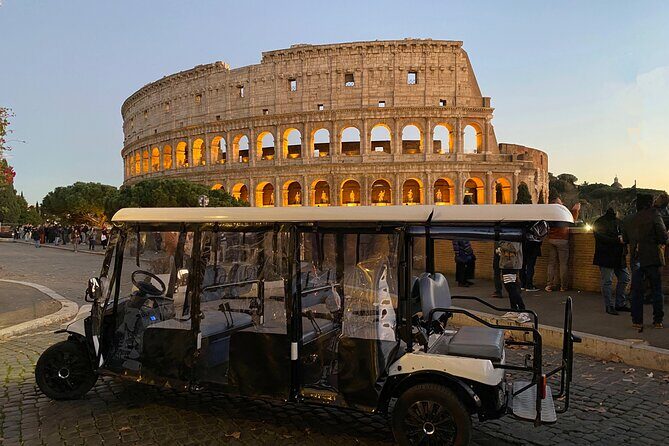
Your first stop puts you at Palazzo del Quirinale. It’s massive in scale (listed as the sixth-largest building in the world), and it has that rare Rome combo of political importance and eye-catching design. You’ll also learn how the palace became home to the presidents of the Italian Republic in 1955, which helps you understand why it still feels like a working seat of power, not a dead monument.
Even if you’re only there for about 10 minutes, it’s worth it if you approach it with a lookout mindset. Watch for the architectural details and the way the palace presents itself from the street—this is the kind of stop that gives you a quick wow without needing a long ticketed entry.
Ticket note: admission isn’t included here, so you’ll get viewing and explanation, not an indoor palace visit.
Trajan’s Market and the Roman Forum valley: where Rome ran on decisions
Next you head toward Mercati di Traiano (Trajan’s Market) and the Fori Imperiali area. This wasn’t just shopping. It functioned as a multifunctional hub tied to the administrative life of ancient Rome—part of the machinery behind Trajan’s Forum.
After that comes the Roman Forum itself: the center of political, religious, and commercial life. The setting matters. You’re in a valley between the Palatine and Capitoline hills, and that geography helps explain why the Forum felt like the heartbeat of the city. As you look at the ruins, you’ll get your orientation for what you’ll later see in photos and guidebooks: temples (like that of Saturn), basilicas (like Basilica of Maxentius), and triumphal arches (such as Septimius Severus). The Via Sacra runs through the area, and it’s the historic main road used for major celebrations.
A helpful way to enjoy this stop: don’t try to memorize everything. Use it to understand the layout. Once you see the Forum as a central valley with key roads and landmark clusters, the rest of your Rome photos start making sense.
Ticket note: this segment is part of the route with time for viewing and explanations, but it’s not framed as an inside museum experience.
Colosseum outside-only: the smart way to get the big picture
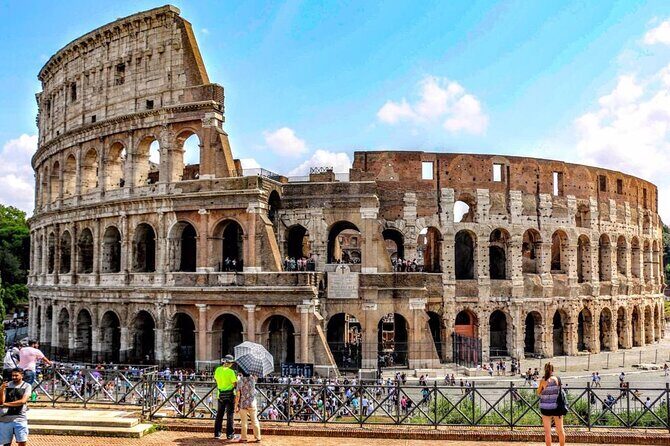
You’ll visit the Colosseum with a key limitation: this is outside only. No ticketed interior time is included in the standard plan. The upside is that you get a guided look at a target you’ll be seeing repeatedly throughout your life—enough context to make it more meaningful, without turning your afternoon into a timed-entry scramble.
The materials specify that Colosseum entrance tickets aren’t included, with tickets starting around 40€. So decide before you go: do you want the deep, indoor experience of the arena and upper levels? If yes, budget for the add-on. If not, the outside stop still works well because you can view it as a landmark with its surrounding urban story.
Practical tip: treat this stop like a photo orientation session. If you’re planning other Rome days afterward, you’ll use the Colosseum as a reference point for where things sit and how the ancient core relates to today.






Via Veneto, Spanish Steps, and Pincio: the Rome postcard stops done with breathing room
From the Colosseum area, the tour shifts to Rome as people imagine it—streets, terraces, and famous stairs.
Via Veneto is next: an elegant stretch that links Piazza Barberini to Porta Pinciana. It’s known for luxury hotels and historic cafés, and it gained worldwide fame for the dolce vita vibe of the 1960s, helped along by Federico Fellini’s film legacy. Even if you just pass through and look around, it’s a useful contrast to the ancient sites because it shows a different era of Rome: social life, fashion, and cinematic mythology.
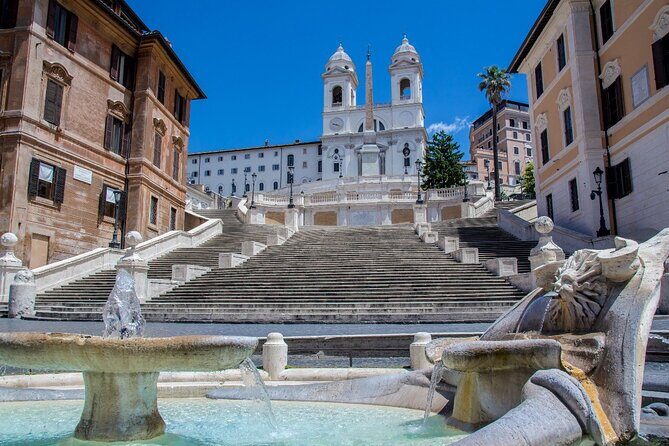
Then you reach the Spanish Steps (Trinità dei Monti). This is a luxury shopping district and also a symbolic place named after the Spanish embassy at the Holy See. The time here is about 20 minutes, which is enough for a slow climb, a couple of broad angle photos, and a quick rest.
After the steps, you’ll head to Terrazza del Pincio at Villa Borghese. This terrace is famous for panoramic views, including the historic center and even the Dome of St. Peter’s in the distance. It’s designed as a promenade space—good for stretching your legs and soaking up the view without needing tickets or a long walk.
Piazza del Popolo and Campo Marzio: big squares and the city’s shopping-and-sight rhythm
Piazza del Popolo is Rome’s grand northern gateway. At the center is the Flaminian Obelisk, an Egyptian obelisk moved into place in 1589 by Sixtus V. The square also connects to Via del Corso and links back to the Pincio through a dramatic set of steps, so you get built-in photo variety: obelisk, architecture, and multiple viewpoints in a single stop.
Then comes Campo Marzio, which you can think of as an “urban connective tissue” area. In ancient Rome, it was dedicated to Mars and tied to military exercises. In later imperial times, it became home to major monuments, including references like the Mausoleum of Augustus and Agrippa’s Pantheon. Today it’s known for commerce and leisure—luxury shopping, prestige hotels, and major sites near Piazza del Popolo, Piazza di Spagna, Via Condotti, the Pantheon, and the Ara Pacis.
The tour gives you about 30 minutes here. It’s not a deep neighborhood walk, so don’t treat it as a full shopping spree. Treat it as a chance to connect what you’ve already seen (Pantheon area, Spanish Steps area) into one neighborhood map.
Pantheon outside and Piazza di Pietra columns: seeing more by going less inside
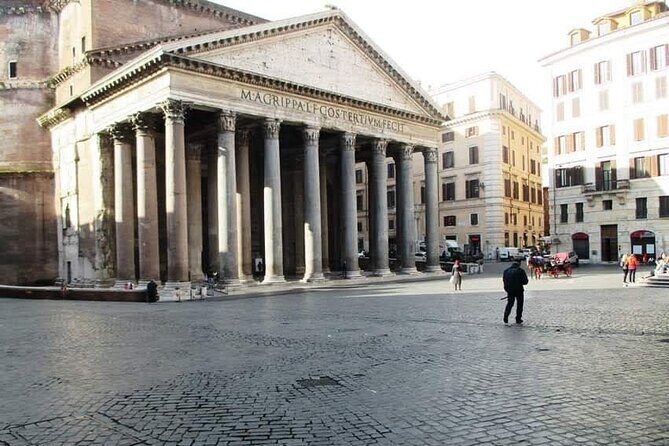
The tour includes a stop at the Pantheon, with an outside-only viewing format. Tickets aren’t included, and the materials list a cost around 7€ if you want to go in.
Here’s why that can be a smart move: you still get the silhouette and street-level presence of one of Rome’s most recognized structures, and you avoid spending time on ticket entry logistics during a fixed 3-hour loop. If your priorities are variety and getting bearings, outside-only makes sense. If you want to experience the interior space (the kind of place where you automatically stop talking), then budget for the ticket add-on.
Nearby, you’ll also see the Temple of Hadrian, known today as Piazza di Pietra. Look for the 11 Corinthian columns, about 15 meters high, and the way the ancient structure is incorporated into a later building. This is a good reminder that Rome layers over itself—one era literally supports the next.
Marcus Aurelius Column, Trevi Fountain, and Santa Maria Maggiore
A stop around the Column of Marcus Aurelius adds something different. This column is about 100 Roman feet tall (roughly 30 meters) and features bas-reliefs narrating wars against the Germans (172–173 AD) and the Sarmatians (174–175 AD). It’s built around 180 AD and sits in front of Palazzo Chigi, which has been the seat of the Italian government since 1961. It’s a strong “history in stone” moment that fits well into a driving-and-photo itinerary.
Then you hit the big one: Trevi Fountain. You’ll spend about 20 minutes here. The information on the fountain’s creation is part of the story you’ll hear: the Acqua Vergine aqueduct reached the site in 19 BC, and the grand fountain construction began in 1732, inaugurated in 1735 by Clement XII. The best way to enjoy Trevi is to keep your expectations flexible. Even without going inside anything, it’s still a powerful urban stage, and the tour time gives you room to experience it from a few angles.
Finally, the route also includes Santa Maria Maggiore, one of the four papal basilicas. It’s described as the basilica where Pope Francis is buried, and it’s noted for retaining early Christian structure and housing important relics such as the Holy Cradle and the icon of Salus Populi Romani. The time details for this particular stop aren’t specified, but it’s clearly part of the loop you’re planning around.
Gelato is included, so plan your energy around that break
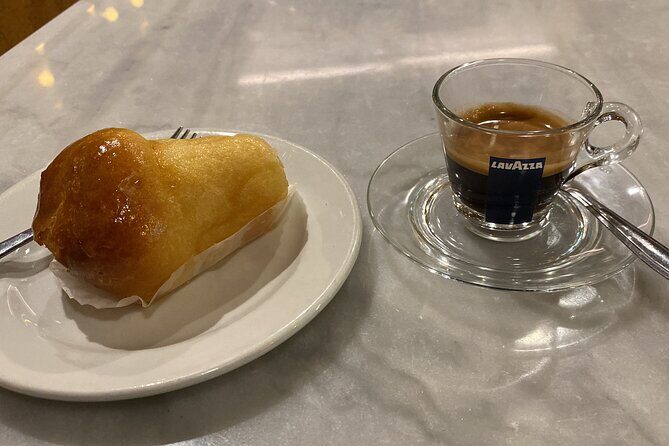
Gelato isn’t an extra checkbox here—it’s part of the tour. Snacks are included, with artisanal Italian gelato for all participants. That matters more than you might think. In Rome, you’ll often lose time searching for a place that’s open, not overpriced, and actually good.
More importantly, the guides’ food judgment gets praised in the practical way you care about: Samuel and Stefano are mentioned as being great at food ideas and even handling recommendations that go beyond just dessert. One guide-specific favorite named in the experience is gelato at Günther, which is a strong hint that the tour’s gelato stop tends to be treated like a real stop, not a quick swipe.
My advice: go for gelato when the cart plan gives it to you. Save your energy for the viewpoint stops right after, like Spanish Steps and the Pincio.
Price and real value: what you’re paying for besides the cart
At $167.01 per person for about 3 hours, you’re paying for more than transportation. You’re buying:
- Hotel pickup and drop-off
- A small group experience capped at 14 people
- Wi-Fi on board and water (plus fleece when needed)
- Included artisanal gelato
- Guided narration in English
The trade-off is that major attractions with tickets still cost extra. The Colosseum entrance is not included (listed starting at about 40€), and the Pantheon entrance is not included (listed around 7€). If you plan to add both, think of it as a base tour plus a ticket add-on budget.
Also plan for tips, since tips aren’t included. That’s common in guided tours, but it’s good to keep in mind so you’re not stuck deciding at the end.
For value, I’d frame this as a first-day orientation tool. It helps you build your Rome mental map fast, while keeping you comfortable and minimizing walking stress.
Who this tour suits best
This is a strong match if you’re:
- A first-time visitor who wants the top sights laid out in a logical flow
- Someone who doesn’t love long walks or hills (the cart helps a lot)
- Traveling with kids or mixed ages; the tour has been described as workable even with young children, and the guides can adapt the pace
- A traveler who wants guide interaction rather than just hearing history through headphones
If you’re the type who wants only ticketed indoor experiences, you may find outside-only stops frustrating. But if you want a smoother day with a guide, clear viewpoints, and gelato included, this hits the sweet spot.
Should you book this Rome golf cart city tour?
Yes, if you want an easier Rome day with great sight coverage and a guide who can keep the experience personal. The combination of hotel pickup, small group size, and the included gelato break makes it feel like a service, not just a route.
Before you book, check whether you care about interiors. If Colosseum and the Pantheon inside are must-dos, budget for the extra tickets. If you’re happy with outside viewing and using the tour for orientation and photo angles, you’ll likely feel the value right away.
FAQ
How long is the Rome golf cart city tour?
It runs for about 3 hours.
Is hotel pickup and drop-off included?
Yes. Pickup and drop-off are included from your hotel.
What’s included with the tour besides the guide?
You get onboard Wi-Fi, bottled water on hot days, and an included gelato snack for all participants.
Do I need tickets for the Colosseum or Pantheon?
Yes. Colosseum entrance tickets are not included (tickets are listed from about 40€), and Pantheon entrance tickets are not included (ticket cost listed around 7€). The tour includes outside viewing stops.
Is the tour offered in English?
Yes. The tour is offered in English.
How big is the group?
The tour is capped at a maximum of 14 travelers.
What do I need to provide for hotel pickup?
You must communicate your hotel for pickup at least 48 hours before the tour.
Does the tour run in bad weather?
This experience requires good weather. If it’s canceled due to poor weather, you’ll be offered a different date or a full refund.