REVIEW · ROME
Etruscan Tarquinia and Cerveteri from Rome
Book on Viator →Operated by Discovery Tours Limousine Service Day Tours · Bookable on Viator
Tombs without the tourist rush. This private Etruscan outing is built for your pace, not a coach schedule. I love that you get UNESCO necropolis time at Banditaccia and Tarquinia without feeling boxed in by a big group, and I love the payoff at the Museo Nazionale Cerite, where you can connect what you see outside to real finds from local tombs. One thing to plan for: entry tickets aren’t included, so you’ll need to budget extra beyond the tour price.
From Rome, you’ll ride in an air-conditioned vehicle with hotel pickup and drop-off anywhere you request. You’ll also get on-the-road context in English from your private driver, who will guide you through the day (but won’t go inside the sites with you). If you want a day that feels structured, with just enough freedom to wander and breathe, this setup makes sense.
The day runs about 8 hours with three main stops plus a lunch break at a nearby trattoria where you can sample local food. It’s designed for small, private groups, and the driver’s explanations are a big part of the value—helpful when you’re staring at tomb mounds wondering what on earth you’re looking at.
In This Review
- Key highlights to know before you go
- Why these Etruscan sites are worth the trip
- Meeting in Rome: pickup, timing, and comfort
- Stop 1: Necropoli della Banditaccia and its massive mound landscape
- Stop 2: Necropolis of Tarquinia for Etruscan city-scale perspective
- Stop 3: Museo Nazionale Cerite in Cerveteri and what art reveals
- Lunch time: a trattoria break without the stress
- Price and value: what you’re really paying for
- What the private format changes for you
- Who should book this Etruscan day trip
- Should you book Etruscan Tarquinia and Cerveteri from Rome?
- FAQ
- FAQ
- Is pickup offered for this tour?
- What time does the tour pick up?
- How long is the tour?
- Is this tour private?
- What language is the tour offered in?
- Are entry tickets included for the sites and museum?
- Is food included?
- What’s included in the tour price?
- Are tickets provided electronically?
- Will the driver enter the sites with you?
- Can I get a refund if I cancel?
Key highlights to know before you go
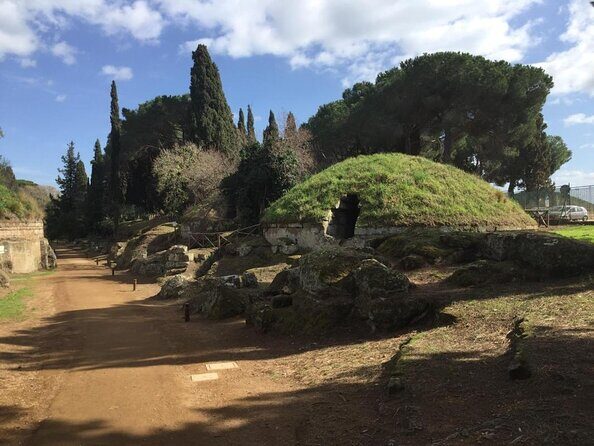
- Private pacing at UNESCO necropolises: Banditaccia and Tarquinia feel more manageable when you’re not trying to keep up.
- Banditaccia’s scale: UNESCO lists the Banditaccia necropolis along with Tarquinia; it covers a huge area and holds around 1,000 tombs overall.
- Cerveteri’s Cerite Museum links art to place: you see Etruscan artifacts and even contents found in local tombs.
- A driver who explains while you travel: you get history and culture context during the drive, not just at the stops.
- Lunch stop included as a break: you’ll have time to eat nearby, but food costs aren’t included.
Why these Etruscan sites are worth the trip
Tarquinia and Cerveteri are often talked about as tomb cities, but that description doesn’t do them justice. The Etruscans treated burial as something deeply connected to identity and art. So when you visit these necropolises, you’re not only looking at old stone. You’re looking at a system of memory: thousands of burial spaces, built and reused, with cultural meaning that you can still read through design.
Banditaccia and Tarquinia are both part of UNESCO recognition for Etruscan necropolises. Banditaccia is tied to one of the largest ancient necropolis areas in the Mediterranean. Tarquinia, meanwhile, is linked to major Etruscan city origins that can date back as far as the 9th century B.C. That blend matters: you get scale at Banditaccia and a sense of historic city power at Tarquinia.
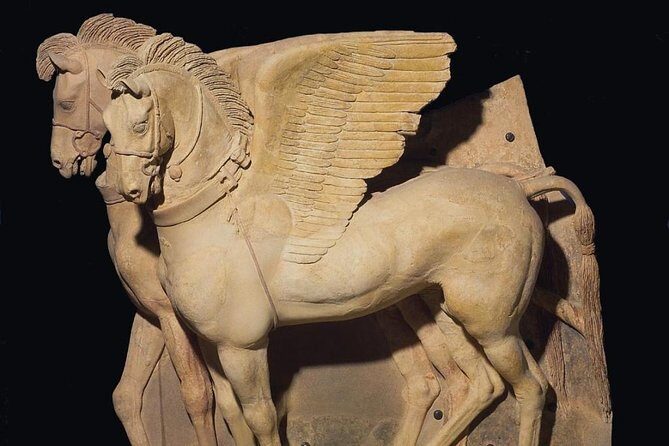
And then there’s the bridge between outside and inside. The Museo Nazionale Cerite focuses on Etruscan art and artifacts found locally, including contents from some tombs. That means you can walk through the necropolis, then return to the museum and see how the objects explain what you just experienced.
You can also read our reviews of more tours and experiences in Rome.



Meeting in Rome: pickup, timing, and comfort
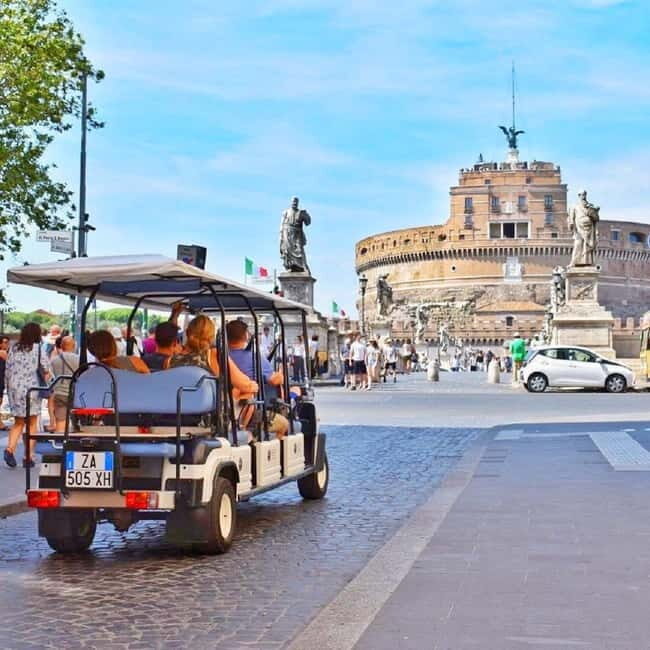
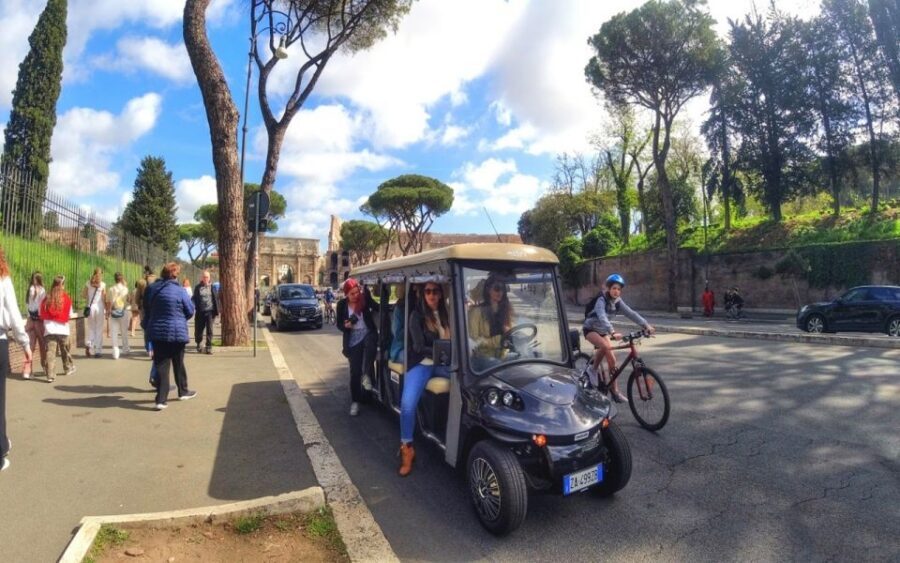
This is set up as a proper day trip from Rome, with pickup and drop-off in any location in Rome you request. Your driver uses an air-conditioned vehicle, and you’ll have bottled water on board. For an 8-hour outing that includes multiple stops, this is a small detail that really helps.
Pickup windows are listed for Tuesday through Sunday, from 8:00 AM to 9:00 AM. That range is important. If you’re planning your morning tightly (early museum tickets in Rome, for example), leave yourself some breathing room so you don’t start the trip stressed.
The driver’s role is also worth understanding. You’ll hear explanations during the day, and you’ll get help with guidance, but the driver won’t enter the sites directly with you. I like that balance. It keeps things moving, but you still have room to focus while you’re at the tombs and museum.
Stop 1: Necropoli della Banditaccia and its massive mound landscape
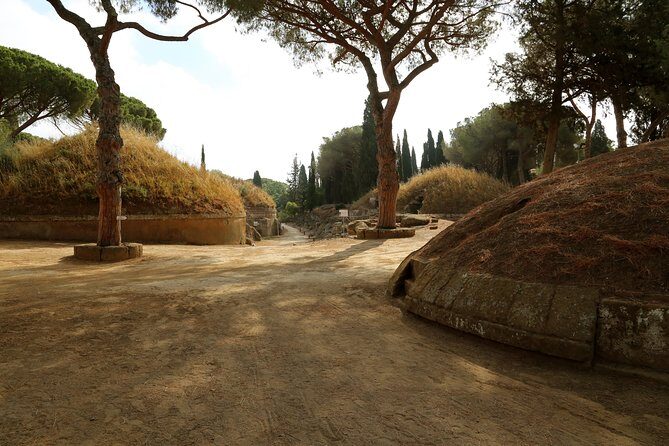
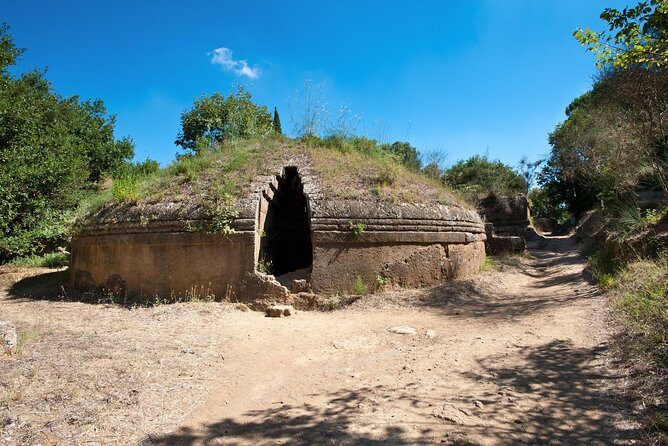
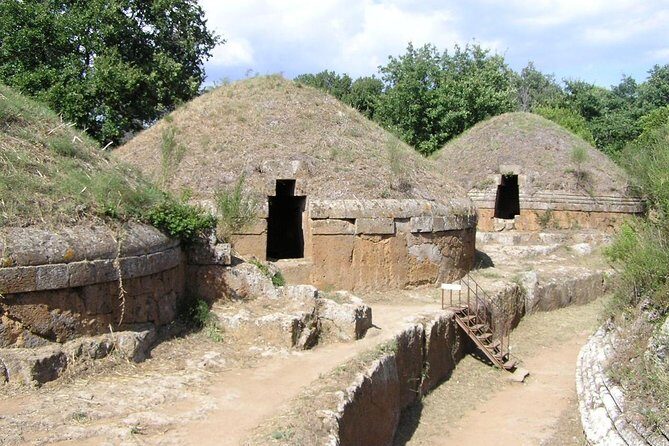
Banditaccia is the big one on the calendar. This UNESCO World Heritage necropolis is recognized together with the necropolis in Tarquinia. The overall site is enormous—about 400 hectares—with only around 10 hectares open for visiting. Even with that limited visiting area, you can still see a lot: the necropolis includes roughly 1,000 tombs, many represented by the characteristic mound structures.
Your time here is about 2 hours, and that’s a good length. It gives you time to slow down and actually process the layout rather than rushing from one viewpoint to another. I also like that a private setup helps you adjust if you’re lingering to understand how tombs are grouped or if you want to pause for a photo break without worrying about a strict group pace.
Practical note: admission tickets aren’t included for Banditaccia. So plan on buying tickets separately and keep an extra buffer in your schedule for that step, even if it’s straightforward. Also, necropolises are often outdoors and uneven; you might find some ground is rough. Comfortable casual wear is recommended, and sturdy shoes can help a lot if paths aren’t flat.
This is the kind of stop where the driver’s commentary during transit can pay off. When you arrive with context, you spend less time trying to guess what’s significant and more time noticing patterns.
Stop 2: Necropolis of Tarquinia for Etruscan city-scale perspective
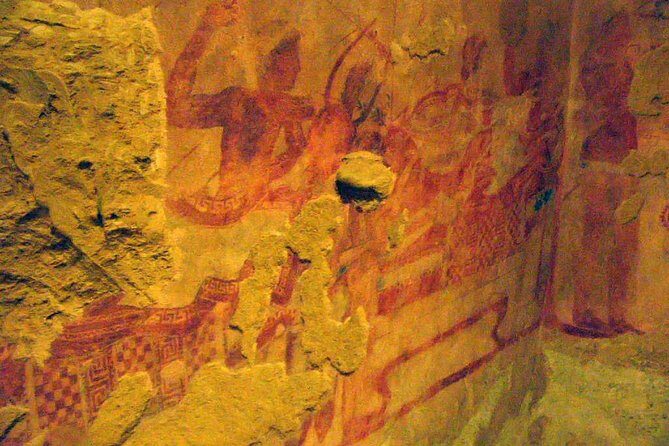
After Banditaccia, Tarquinia shifts the feel from massive necropolis scale to a different kind of Etruscan story. This necropolis is part of what makes Tarquinia one of Italy’s great Etruscan cities. Its origins are listed as dating back to at least the 9th century B.C., which is a huge anchor for your understanding of the region.
You’ll have about 1 hour here. That might sound short compared with Banditaccia, but it’s workable when you’re approaching it with the right mindset. Think of Tarquinia as a focused contrast. You’ve just seen how Banditaccia works across a large, complex area. Now you get a shorter, sharper visit to another major Etruscan burial setting, so your brain can make comparisons instead of getting tired.
Again, admission isn’t included. So the same budgeting advice applies: plan extra for tickets.
I also recommend using your time intentionally. If you tend to skim, set one small goal for the hour—like noticing how tomb arrangements appear on the hillside or finding a vantage where the site’s overall structure becomes clearer. In a private tour, you can aim for that goal and still leave room to wander.
Stop 3: Museo Nazionale Cerite in Cerveteri and what art reveals
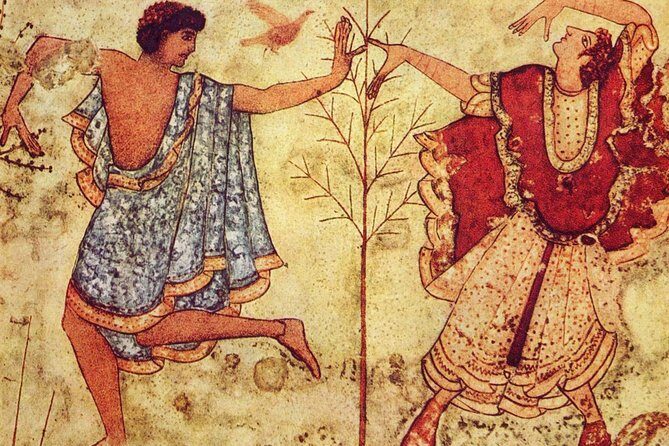
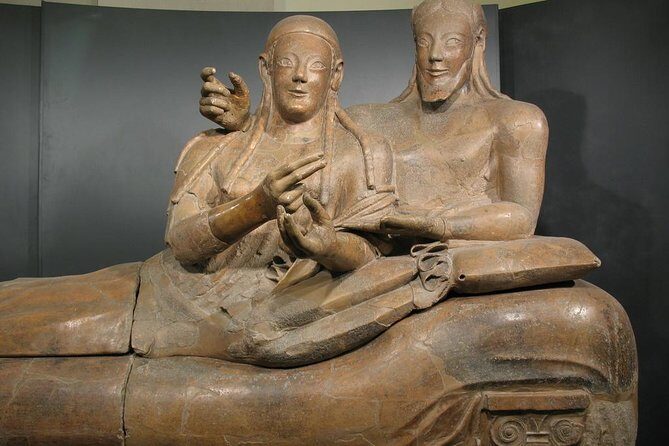
If Banditaccia and Tarquinia are your outside classroom, the Museo Nazionale Cerite is where the lessons become tangible. Your visit here lasts about 1 hour, and it’s focused on Etruscan art and artifacts found locally, including contents from some tombs.
One detail I think is genuinely useful: the museum’s design is described as innovative, placing the Archaeological Museum of Cerveteri at the first place in the world for technology. You don’t need to care about awards to benefit from that. If the exhibits are built with modern presentation in mind, it can make a big difference for understanding Etruscan funerary objects without needing a deep background in archaeology.
This stop is also where the day’s emotional logic clicks. Seeing tomb mounds is one thing. Seeing artifacts that came from burial spaces is another. When you connect those two, the necropolises stop being just remote ruins and start feeling like places with purpose.
Admission tickets aren’t included for the museum either, so you’ll pay that separately. But if you’ve come this far, it’s usually the difference between a sightseeing day and a day that leaves you with real understanding.



Lunch time: a trattoria break without the stress
The tour includes a lunch stop where you can sample local cuisine at a nearby trattoria. Food and beverages aren’t included, so this is less like a catered meal and more like built-in downtime.
I like this approach for day trips like this because it keeps choices in your hands. You can order something light if you’ve been walking a lot, or something more filling if you’re ready for a proper break. And because the day’s schedule is set around major sites, the lunch break keeps the pace humane.
If you’re sensitive to timing, remember that your morning and tomb visits may take longer than you expect if you’re reading and looking carefully. Private tours help here, but it’s still wise to treat lunch as part of the plan, not a random pause.
Price and value: what you’re really paying for
The price is listed at $1,200.05 per group, up to 6 people, for about 8 hours. That sounds like a lot until you do the math.
- If you fill the group (6 people), that’s roughly $200 per person.
- If you have fewer people, the per-person cost rises.
So the value equation depends on your group size, but the bigger point is what you’re buying: private transport, hotel pickup and drop-off, professional driver service, and bottled water—plus the convenience of a day built around three structured stops.
Also, the driver’s explanations during transit are part of the experience value. You’re not just being transported; you’re being oriented. When you’re at a necropolis, orientation turns confusion into curiosity.
One thing to factor in: museum and site entry tickets are not included. Your final total will be tour price plus tickets for Banditaccia, Tarquinia, and the Cerite Museum. Plan for that so you’re not surprised at the last moment.
What the private format changes for you
This is a private tour/activity, meaning only your group participates. That matters more than it sounds.
In crowded group tours, you often lose the ability to slow down at the exact moments you notice something interesting. Here, you can take your time at Banditaccia and Cerveteri, and you can adjust your pace if you want to re-check an area or spend a few extra minutes with the artifacts in the museum.
You also get to operate with a single set of eyes and attention—yours. When I’m at places like this, my best moments come when I stop treating it like a checklist and start treating it like a story. Private pacing makes that possible.
Who should book this Etruscan day trip
This tour is a strong match if you:
- want a smaller, private experience rather than a crowded group day
- enjoy museums and artifacts as much as outdoor sites
- like having a driver explain context as you travel
- want to visit two UNESCO-listed necropolises plus the Cerite Museum in one go
It’s also reasonable for most travelers, and the dress code is comfortable casual. If you’re coming from central Rome and you’d rather not wrestle with transit connections and timing, the pickup-and-drop-off format is a real convenience.
If you dislike walking outdoors, you might want to think ahead about how your comfort level matches necropolis terrain. The tour doesn’t mention special assistance, so it’s smart to consider your own mobility needs before booking.
Should you book Etruscan Tarquinia and Cerveteri from Rome?
I think you should book if your ideal day includes three things: UNESCO necropolis viewing, a museum stop that connects objects to place, and private pacing that lets you take your time. The structure is clear, the sites are major, and the driver-led explanations help you get more out of every hour.
Skip this only if you’re looking for fully included admissions and a turnkey meal package. Since entry tickets and food aren’t included, you’ll need to budget for those add-ons. If you’re comfortable handling that, this is a well-balanced, practical way to experience the Etruscan side of Lazio without the stress of group schedules.
FAQ
FAQ
Is pickup offered for this tour?
Yes. Hotel pickup and drop-off are included, and pickup can be arranged in any requested location in Rome.
What time does the tour pick up?
Pickup hours are listed as Tuesday through Sunday from 8:00 AM to 9:00 AM.
How long is the tour?
The duration is listed as about 8 hours.
Is this tour private?
Yes. It’s a private tour/activity with only your group participating.
What language is the tour offered in?
The tour is offered in English.
Are entry tickets included for the sites and museum?
No. Admission tickets to museums and other sites are not included.
Is food included?
Food and beverages are not included. There is a lunch stop at a nearby trattoria where you can sample local cuisine.
What’s included in the tour price?
Included items are an air-conditioned vehicle, hotel pickup and drop-off, all fees and taxes, bottled water, and a professional tour driver.
Are tickets provided electronically?
You’ll receive a mobile ticket.
Will the driver enter the sites with you?
The driver will not enter the sites directly with you, but you’ll hear explanations and get guidance during the day.
Can I get a refund if I cancel?
No. The experience is non-refundable and cannot be changed for any reason.