REVIEW · WALKING TOURS
Discover the Highlights of Rome in a Walking Tour
Book on Viator →Operated by Journey Tours · Bookable on Viator
Rome makes more sense on foot. This 2.5-hour walking route uses a local plan to hit major sights with less aimless wandering. You get multiple start times too, so you can fit it into your day.
I especially like two moments: the Sant’Ignazio di Loyola interior visit (with that famous illusion ceiling), and the finish in Piazza Navona where you can slow down for coffee and people-watching.
One thing to plan for: entrance fees aren’t included, and when a site requires ticket entry you’ll be shown it from outside. So if you’re hoping for a specific inside moment, check how access works on your day.
In This Review
- Key points at a glance
- A Small-Group Rome Walk With Real Storytelling
- Start at Piazza di S. Agostino: Easy to Find, Easy to Begin
- Piazza Venezia and Palazzo Venezia: Where Rome’s Power Shows Up
- Early-1900s Grandeur at Palazzo delle Assicurazioni Generali
- Trajan’s Column and the Commercial Brain of Ancient Rome
- Trevi Fountain: The Most Famous Stop, Plus the Right Way to See It
- St. Ignazio di Loyola: The One Included Interior That’s Actually Worth Planning For
- The Pantheon Dome: Why This Stop Is Built Into the Route
- Piazza Navona Finale: Coffee Time, Three Fountains, and a Calm Ending
- Value for Money: Is $30.10 a Good Deal?
- Who This Walk Suits Best
- Should You Book This Rome Highlights Walking Tour?
Key points at a glance
- Small group max of 20 keeps the pace comfortable and questions doable
- Fabiana-style storytelling means you get clear context you can actually remember
- Sant’Ignazio di Loyola is included inside, so you’re not just looking at façades
- Pantheon-focused route helps you understand why the dome matters, even if entry is ticketed
- Piazza Navona finish is set up for a low-stress end with fountains and café time
A Small-Group Rome Walk With Real Storytelling
This tour is built for people who want Rome’s highlights without turning it into a checklist sprint. You’re walking through the historic heart on a focused route made by a local, which matters more than you’d think. Rome can feel chaotic at street level. A set plan helps you get your bearings fast and see how the city pieces connect.
The group size is capped at 20, so it feels like a guided stroll rather than a herd. That size also makes a difference when you want to ask questions or need a quick moment to catch up. And you’ll be with a professional English-speaking guide. In the feedback I saw reflected in the experience, the guide Fabiana stands out for being patient and for telling stories with clear background. It’s the kind of explanation that turns landmarks from random stones into meaningful places.
You’ll also get the practical details that keep the day moving: a mobile ticket, service animals allowed, and the route runs close to public transport. Physical fitness needed is only described as moderate, which usually means you should be comfortable with a solid walk and some standing around at stops.
The one trade-off is that entrance access varies by how each site is handled on the day. The tour notes that attractions requiring tickets are visited from outside. That doesn’t make the walk less worthwhile, but it does mean you should treat this as a guided orientation plus key included entry at Sant’Ignazio—not a promise of inside access everywhere.
You can also read our reviews of more walking tours in Rome

Start at Piazza di S. Agostino: Easy to Find, Easy to Begin
Your meeting point is Piazza di S. Agostino. From there, the route works toward Rome’s power-and-faith core. Starting slightly off some of the busiest landmark clusters can make the beginning feel calmer, and it gives you a chance to settle into the day before the big-name stops.
What I like about this start is that it sets you up to understand the city as a set of connected areas. You don’t just pop in and out of famous places. You move through neighborhoods and corridors that explain why Rome looks the way it does: layered buildings, changing uses over centuries, and a habit of reusing impressive structures.
If you’re the type who arrives in Rome and immediately wants a quick “where am I?” answer, this is a good fit. You’ll walk with direction, so your photos will match what you’re learning instead of feeling like random shots. It also helps that the tour offers multiple times throughout the day. That flexibility is useful if you’re dealing with jet lag, planning around church hours, or trying to avoid the worst heat.
Logistically, you’ll want to be ready for a classic walking-tour pace. Bring comfortable shoes and plan on some standing time at viewpoints and doorways. And since the tour is designed around landmarks, you’ll often be stopping near major pedestrian flows. That’s part of the charm, but it also means you’ll want to follow your guide’s cues closely.
Piazza Venezia and Palazzo Venezia: Where Rome’s Power Shows Up
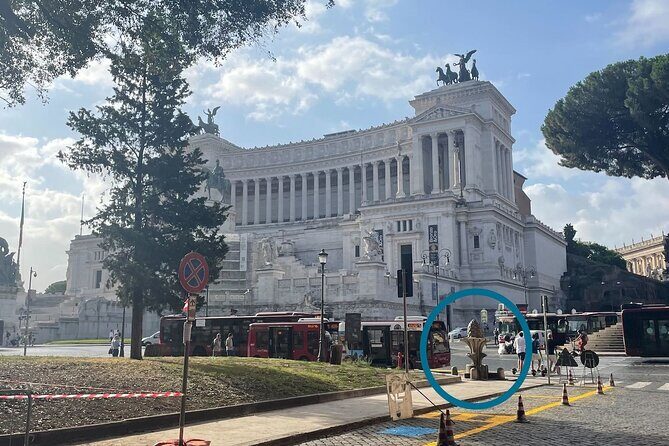
You’ll first reach Piazza Venezia, one of those Rome squares that instantly feels like a crossroads. It’s central, historically significant, and physically important because it connects to lots of major landmarks nearby. One of the big reasons it matters is the presence of the Vittoriano, tied to Italian unification. Seeing a monument like that in the middle of a working city square helps you understand how Rome isn’t only ancient. It’s also modern national story-making.
The piazza also ties into 20th-century political history, including public events and speeches associated with Mussolini. That detail matters because it changes how you read the place. You stop thinking of Rome as just a museum city and start seeing it as a stage that keeps getting reused by different eras.
From there, you move to Palazzo Venezia, which the route frames as a site that shifted roles over time. You’ll learn about it as a papal residence and as Mussolini’s office, and you’ll have a chance to connect those stories to the building you’re looking at. There’s also the National Museum of Palazzo Venezia with medieval and Renaissance art, though the entrance isn’t included.
Here’s the practical value: even if you don’t go into the museum, you get a guided sense of why this area is a hinge point between power, art, and politics. Rome’s biggest sights often come with background you’d never guess from the façade alone.
Time-wise, this portion is short. So don’t expect a deep museum session. Instead, think of it as orientation plus the kind of context that makes later stops click.
Early-1900s Grandeur at Palazzo delle Assicurazioni Generali
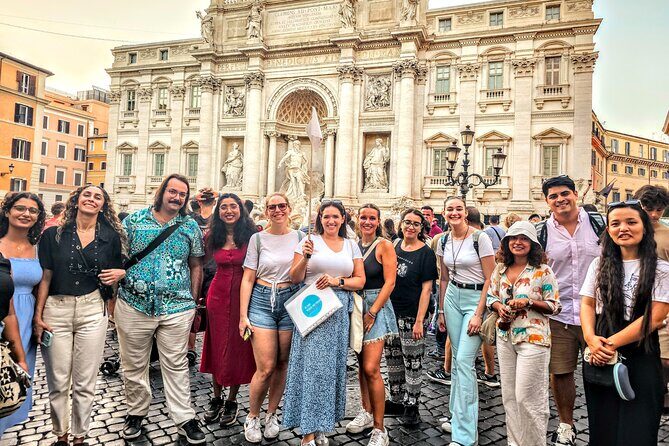
Next up is Palazzo delle Assicurazioni Generali, an early 20th-century architectural stop. It’s a nice contrast from the older monuments you’ll see elsewhere on the walk. You’re not only tracing Rome’s ancient layers. You’re also noticing how the city kept reinventing itself.
This building is described as having a role as headquarters for Italy’s major insurance company. That’s the kind of detail I love in walking tours because it makes architecture feel grounded in everyday institutions, not only ceremonial history. It’s a reminder that Rome’s skyline isn’t static. It keeps absorbing new functions and new economic realities.
This stop is also free from ticket pressure. You’re strolling and learning while moving on, which keeps the pace steady. If you enjoy architecture that shows different periods side-by-side, this short segment is a win. It prevents the walk from feeling like only big tourist icons and nothing else.
Trajan’s Column and the Commercial Brain of Ancient Rome
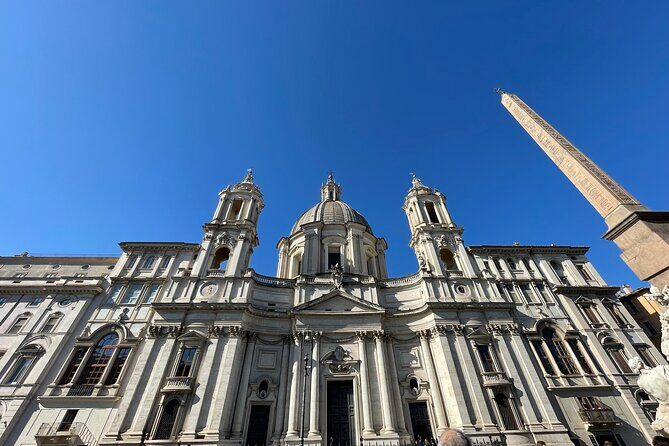
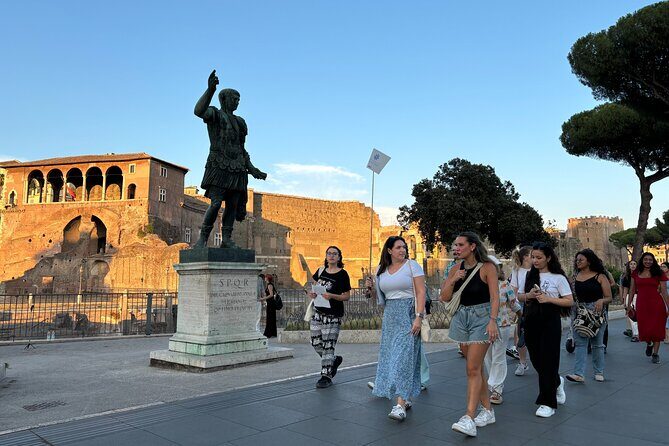
Then you head to Colonna Traiana, Trajan’s triumphal monument. A “triumphal column” might sound like a vague label until someone explains what you’re actually looking at. The key idea here is that it celebrates Emperor Trajan’s victories, and it’s part of how Rome used public art to broadcast authority.
You’ll also be directed toward the nearby Trajan’s Market, described as a well-preserved example of ancient Roman commercial architecture and a sign of advanced urban planning. Even if you only take in what you can from the street, it helps you picture how Romans lived and worked in built structures that were practical, not only ceremonial.
What I like about stopping here is the mental shift. Many first-time visitors think ancient Rome equals temples and forums. This brings in the “how the city actually ran” side: markets, commerce, and the urban design that supported daily life.
This is also a smart change-of-tempo stop. After the drama of political monuments and the grand idea of triumph, you get a more functional Roman story. It makes your understanding feel more complete without turning the day into a long museum day.






Trevi Fountain: The Most Famous Stop, Plus the Right Way to See It
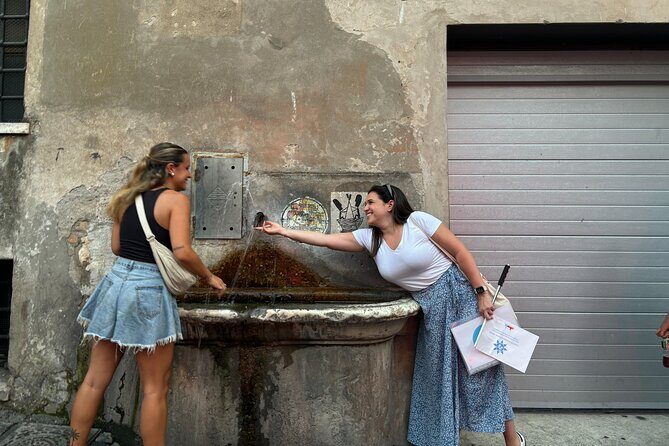
Next, you reach Trevi Fountain, Rome’s most famous Baroque fountain. It’s the kind of sight that can feel like a postcard, but the guide focus helps you see beyond the crowd. You’ll look at the dramatic sculptures and carvings and you’ll learn the coin-toss tradition—toss a coin over your shoulder and you’re meant to return to Rome.
Here’s the practical part: Trevi can be busy, so the value of a guided route is that you’re not just standing there hoping for a good view. You’re getting the context quickly, which helps you enjoy the moment even if you have to share space with plenty of other people.
Time here is enough for a full look and photos without making you feel trapped. And if you’re the type who wants to understand what makes Baroque art feel theatrical, Trevi’s design language is a great introduction.
The fountain is free to see, but it’s not free from crowds. If you’re very sensitive to tight spaces, you might want to give yourself a slower, calmer mindset and follow your guide’s timing rather than trying to control the flow yourself.
St. Ignazio di Loyola: The One Included Interior That’s Actually Worth Planning For
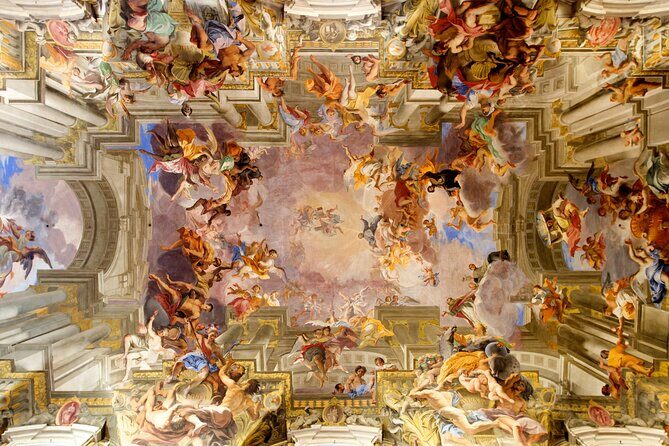
This is the highlight for many people, and for good reason: Chiesa di Sant’Ignazio di Loyola is visited with admission included. You get a Baroque church experience, including the illusionistic ceiling fresco by Andrea Pozzo.
This is the kind of interior that makes you stop walking. The ceiling isn’t just decoration; it’s designed to play tricks on your sense of space. It changes how you think about Baroque art as something that aims to persuade your eyes, not only impress them.
What I like is that the tour doesn’t treat Sant’Ignazio like a quick photo stop. You get around 20 minutes, enough to look carefully and take in the storytelling the guide provides. If you’ve spent your trip seeing exteriors, this is a well-timed “turn the page” moment.
Also, because entry is included here, you don’t have to juggle extra tickets mid-walk. That makes the day feel smoother. It’s one of the clearest ways this tour offers value beyond just sightseeing from the sidewalk.
If you’re wondering whether you’ll miss out because not everything is included, this church helps balance the equation. It gives you a true interior experience in the time window, at a price that’s still reasonable.
The Pantheon Dome: Why This Stop Is Built Into the Route
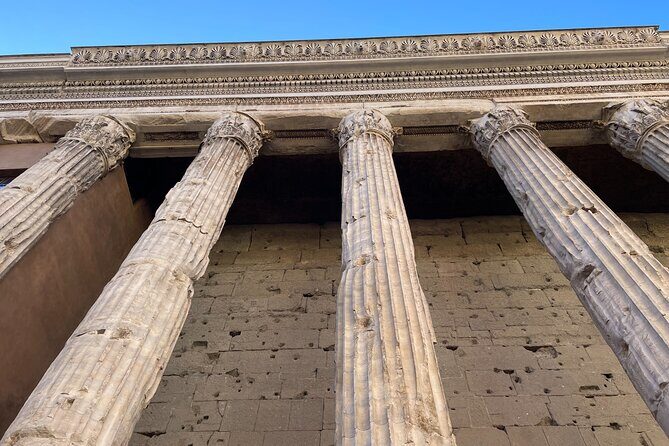
Next comes the Pantheon, one of Rome’s best-preserved ancient monuments. The whole route leans into the dome. That matters because the Pantheon’s design is a visual lesson in Roman engineering and artistic ambition. The big feature is the massive domed roof and the central oculus—a hole in the ceiling that brings in light and gives the space its famous mood.
Now, about “inside” access: the highlights describe seeing the dome, but the tour also notes that ticket-required entries are typically visited from outside. So your real-world experience can vary depending on how the day is handled. Either way, the guide focus helps you understand what you’re seeing, and getting the dome context usually makes even an exterior or threshold view feel more meaningful.
From a planning perspective, this is why I like the structure of the tour. You’re not just rushing to the Pantheon like a checkmark. You’re coming with background, and you’re arriving within a guided framework. That reduces the common first-time issue of staring at a famous building without knowing what makes it special.
If you’re someone who wants maximum interior access, you should treat this as a Pantheon-focused experience, not a guaranteed inside ticket experience everywhere. The tour’s design still pays off because your time is spent with a guided explanation, and the Pantheon is hard to fully “get” without that context.
Piazza Navona Finale: Coffee Time, Three Fountains, and a Calm Ending
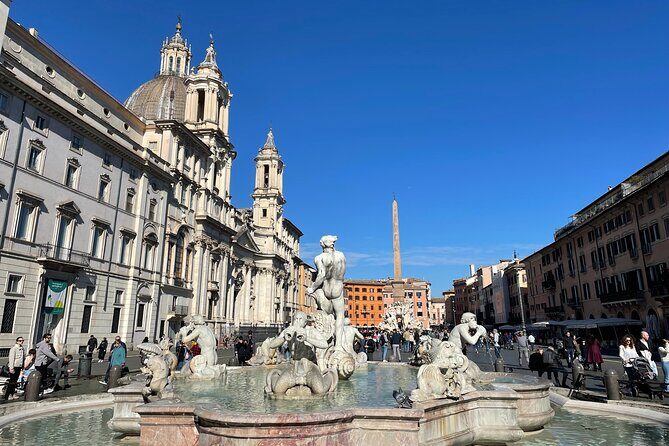
Finally, you end at Piazza Navona, which is set up to be a satisfying conclusion. You’ll enjoy the lively atmosphere and admire the Baroque architecture and the three major fountains: Fontana dei Quattro Fiumi, Fontana del Moro, and Fontana del Nettuno.
I like a closing stop like this because it gives you choices. If you want coffee, you can do it. If you want photos, the open square layout helps. And if you just want to decompress after a couple of hours of walking, this is a good place to sit and let the city move around you.
One note on the end point: the meeting instructions mark the end location as Piazza del Colosseo, while the route’s final stop is Piazza Navona. Either way, the key experience is the wrap-up at Piazza Navona. Expect the tour to position you right where you can comfortably continue on foot, grab a drink, or head to your next plan.
In Rome, the best way to understand a square is to spend a little time in it. This stop is timed for that exact purpose. You’re not just dropped at a landmark—you’re guided to a place where your eyes can rest and your brain can connect the day’s sights.
Value for Money: Is $30.10 a Good Deal?
At $30.10 per person for about 2 hours 30 minutes, this tour is priced like a straightforward city walk, but with a meaningful upgrade: you get a professional English guide plus an included interior visit to Sant’Ignazio di Loyola. That’s the part that turns the price from cheap-to-join into good-to-book.
Also, ticket handling is part of the trade-off. Some entries aren’t included, and ticketed attractions may be viewed from outside. But several of your big-picture stops are essentially exterior experiences with guide-led context. That can be exactly what you want when you’re trying to stay flexible and not wait in lines for every site.
The booking timing tells you something too: it’s commonly booked around 36 days in advance, which suggests it’s not always available right last-minute. If you have a specific day and time you want, booking earlier can protect your schedule.
Overall, I’d call this strong value if you want:
- a guided route with story context
- one included interior (Sant’Ignazio)
- a relaxed ending at a café-friendly square
It’s less ideal if your top priority is inside access to multiple ticketed monuments with no outside viewing. But even then, the guide structure makes the sights easier to understand quickly.
Who This Walk Suits Best
This is a great match for first-timers who want to grasp Rome’s layout fast. It’s also good if you like history told in human terms—politics, art, and engineering—without long museum detours.
You’ll likely enjoy it if:
- you want a focused route rather than picking stops one by one
- you appreciate Baroque art and architectural details (Sant’Ignazio and Trevi deliver)
- you want a guided explanation that keeps the day from feeling random
It may feel less satisfying if you only care about inside tickets at major sites. Since ticketed entries can be outside viewing, you should align your expectations with that.
Either way, the combination of landmark variety—ancient monuments, Baroque churches, and 20th-century buildings—gives you a more complete Rome snapshot than an all-ancient or all-Church-only walk.
Should You Book This Rome Highlights Walking Tour?
Yes, I think you should book it if you want an efficient, story-led walk through Rome’s core highlights with a guide who explains clearly. The included interior at Sant’Ignazio di Loyola is the strongest reason. It gives you an inside experience you can’t easily replicate on your own without planning.
I’d book with extra caution only if your dream day is guaranteed inside access to every major ticketed site. Since ticketed entries may be handled from outside, this is best for people who enjoy context and views as part of the experience, not just doors you must enter.
If you’re aiming for a “get it, understand it, then enjoy coffee and wandering” kind of Rome day, this route is built for exactly that.