REVIEW · POMPEII
Discover Pompeii on this Guided Walking Tour of the Buried City
Book on Viator →Operated by Gray Line I Love Rome by Carrani Tours · Bookable on Viator
Pompeii makes sense when someone points it out. This 2-hour guided walk is built to save your time and connect the dots between streets, buildings, and the eruption story. I like that headsets keep you synced to the guide, and I also like that the admission ticket is included, so you can bypass the long ticket line. One drawback to plan for: language can be a make-or-break detail, especially for German or French, because those tours need a minimum group size.
You’ll meet at Piazza Esedra 2 in Pompei and end right back there, keeping the logistics simple. The group is capped at 15, which helps you actually hear explanations instead of just hearing other people talk over the ruins. If you’re okay with a fast, concentrated visit rather than a slow wander, this is a very solid way to see Pompeii without wasting your trip.
In This Review
- Key highlights you’ll care about
- 2 Hours in Pompeii: what you actually gain from a guided walk
- Piazza Esedra meeting point and the smart flow of a small group tour
- Inside the Pompeii Archaeological Park: pappamonte walls and the Sarno port
- Walking Pompeii with a guide: daily life you’ll be able to see
- Mount Vesuvius explained: somma-caldera basics before the big disaster
- Languages, headsets, and audio guides: how to hear every detail
- Is $63 good value for Pompeii entry and a professional guide?
- Who this tour suits best, and who should consider other options
- Should you book this Pompeii guided walking tour?
- FAQ
- How long is the Pompeii guided walking tour?
- What’s the starting point of the tour?
- Do I get admission to Pompeii included in the price?
- What languages are available for the guide?
- Are headsets included?
- Are there audio guides if I need a different language?
- What’s the maximum group size?
- What do I need to bring for entry verification?
- Is there free cancellation?
Key highlights you’ll care about
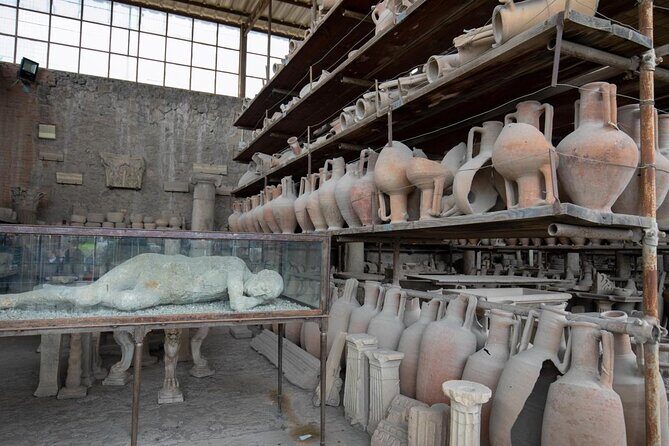
- Small group (max 15) means the guide can keep the pace moving without losing people.
- Admission ticket included helps you jump in faster when you arrive.
- Headsets included so you can hear clear commentary even when you’re standing among other groups.
- UNESCO site focus with guided context about how Pompeii worked day to day.
- Vesuvius explained in plain terms so the eruption story isn’t just dramatic, it’s understandable.
- Language options with backups: guided language plus audio guides (with different seasonal availability).
2 Hours in Pompeii: what you actually gain from a guided walk
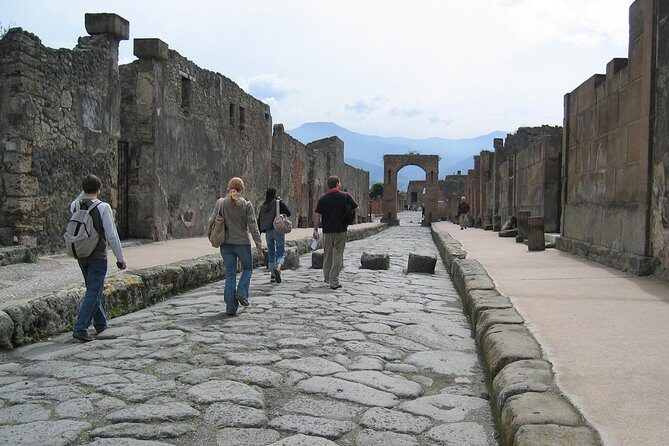
Pompeii is big, but your time usually isn’t. This tour keeps things tight at about 2 hours, which is long enough to get meaning out of the streets and buildings, but short enough that you won’t feel like you’re spending your entire vacation in a museum line.
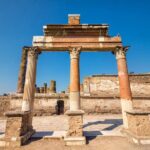
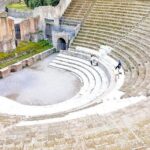
What I like about a guided format here is that Pompeii is not obvious at first glance. You see walls, thresholds, and fragments, but you don’t automatically know what you’re looking at: a home’s layout, a public space’s purpose, or why certain areas matter. With a guide, you’re not just walking from stop to stop. You’re learning how the city functioned and what everyday life might have looked like.
You’ll also be walking a preserved city that’s UNESCO listed. That matters because the site is presented as a place to understand history, not just a place to collect photos. The guide’s job is to turn those stones into stories you can recognize even after you leave.
You can also read our reviews of more walking tours in Pompeii

Piazza Esedra meeting point and the smart flow of a small group tour
The tour starts at Piazza Esedra, 2, 80045 Pompei NA. Then it loops back to the meeting point when you’re done, so you don’t have to solve transportation problems afterward. That may sound basic, but in Pompeii it’s a real convenience.
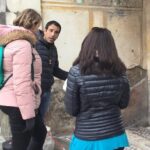
This is a small-group experience with a maximum of 15 travelers. Smaller groups tend to move more smoothly through the park, and they’re easier to manage on uneven ground and at viewing areas. You also get headsets, which can be the difference between enjoying the tour and constantly straining your ears.
One practical thing to keep in mind: you’ll be walking through an outdoor archaeological area, so you’ll want to come prepared for standing and moving. Also, since this is a guided walk rather than a long layover, it’s smart to use your time wisely: listen, look, and don’t get lost in side alleys the guide isn’t covering.
Inside the Pompeii Archaeological Park: pappamonte walls and the Sarno port
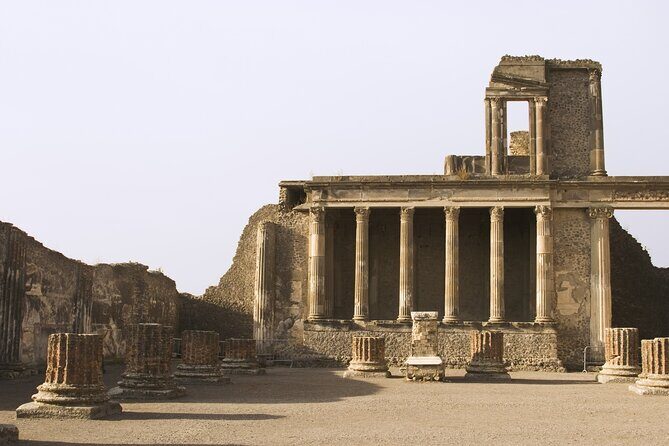
Most of the tour is anchored at the Pompeii Archaeological Park, where you learn why this city was built where it was. Pompeii sat on a plateau formed by lava from Vesuvius. That physical detail matters, because the ground itself shaped where people could live and trade.
You’ll also hear how the city dominated the valley around the Sarno River, with the river delta hosting a busy port. Once you understand the port idea, you start to see Pompeii not as a sealed-off ruin, but as a working city tied to movement of goods and people.
The story gets even more interesting when the guide talks about the earliest traces of the settlement. The origins aren’t perfectly clear, but the oldest evidence dates back to the 7th–6th centuries BC, when the first tuff walls—called pappamonte—enclosed about 63.5 hectares. You’ll get a sense that Pompeii developed through contact among different peoples, including Etruscans, Greeks, and other Italic groups.
That historical framing is useful because it changes how you read what you see. When you walk past different kinds of spaces and building styles, you can connect them to the idea of a city that grew, traded, and changed over time—before the eruption froze it in place.
Walking Pompeii with a guide: daily life you’ll be able to see
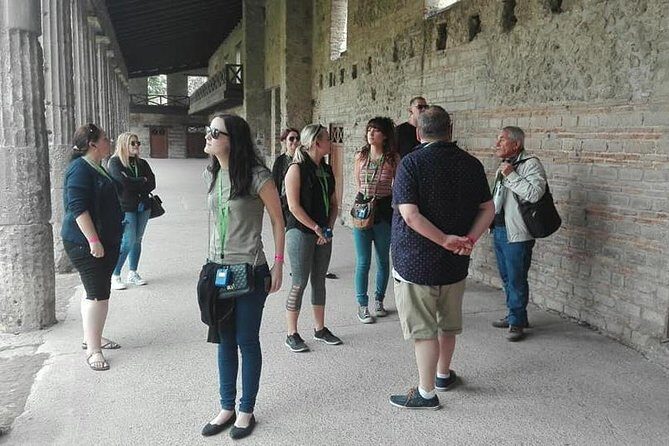
Pompeii’s main magic is that it preserves the physical evidence of routine life. With a guide, you learn how the ruins connect to daily living—how people organized space, how they used buildings, and what the city looked like in action.
A good part of the value here is that the guide is explaining the site as a living place rather than just a list of facts. The tour is designed to give you an insider’s look at Roman daily life, so you’re not only hearing about dramatic moments. You’re understanding the ordinary rhythms: where you’d likely go, how rooms might be used, and why certain areas would matter to residents.
You’ll also benefit from the structure of the visit. Instead of wandering and guessing, you follow the guide’s route through the UNESCO-listed remains. That helps you get the big patterns quickly, and it reduces the frustration of standing in front of a wall and thinking, so what exactly is this?
The one tradeoff is that a guided walk is paced. You won’t have the same freedom as a long solo stroll where you stop every 30 steps. If you like to linger, take a breath, and read everything slowly, you might still enjoy this tour but expect a more focused experience than a self-guided day.
Mount Vesuvius explained: somma-caldera basics before the big disaster

Pompeii is inseparable from Mount Vesuvius, and this tour gives you the volcanic context that makes the eruption story make more sense.
Vesuvius is described as a somma-stratovolcano on the Gulf of Naples in Campania. The details matter: Vesuvius includes a large cone partially encircled by the steep rim of a summit caldera, formed after the collapse of an earlier, much taller structure.
You’ll also learn that Vesuvius sits about 9 km (5.6 mi) east of Naples, and that it belongs to the Campanian volcanic arc. When you hear these basics before you connect them to what happened to Pompeii, the story stops being just tragedy and becomes scientific context.
This is especially helpful if you’re the type of traveler who wants the why, not only the what. You’ll come away with clearer mental images of the volcano’s structure, and that can make the Pompeii ruins feel more logically connected to the natural forces at play.
You can also read our reviews of more guided tours in Pompeii




Languages, headsets, and audio guides: how to hear every detail
This is where you should pay close attention, because hearing the guide clearly can make or break your experience.
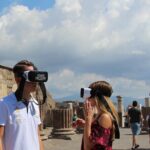
The tour offers professional guides in English, Spanish, German, and French. You’ll also get headsets, which is a huge help in an open-air environment where voices carry unpredictably.
There are also audio guides in additional languages. The exact availability changes with the season:
- From November to March, audio guides include Italian, Portuguese, Chinese, Russian, and Japanese.
- From April to October, audio guides include Italian, plus German (from Mondays to Fridays) and French, Portuguese, Chinese, Russian, and Japanese.
If you booked French or German, there’s an important consideration: a minimum of 10 participants is required to confirm those languages. If that minimum isn’t met, the tour will run in English instead. The good news is that the company notes you can confirm the language option within 24 hours of departure, which is exactly what you should do if your language choice is crucial.
If you care about understanding every detail, don’t rely on translated snippets alone. Use the headsets, and use the audio guide options when available. That way, you’re not stuck guessing what you missed.
Is $63 good value for Pompeii entry and a professional guide?
At $63 for about 2 hours, you’re paying for three things: guided interpretation, convenience, and the included entry. The tour explicitly includes the admission ticket, and it’s set up to help you bypass the long ticket line on arrival.
That combination is often what turns Pompeii from overwhelming into manageable. Buying entry and sorting your way into the site can eat up time you’d rather spend inside. Here, the tour streamlines the start, and you get someone explaining what you’re seeing while you’re there.
You’re also getting headsets and a guide who speaks the tour language, plus audio-guide coverage in other languages. Those extras can matter more than you think, especially when you’re trying to follow complex explanations about Roman city life and volcanic context.
The value question usually comes down to one thing: do you want your Pompeii experience to be structured? If yes, this price starts to look reasonable because you’re essentially buying clarity plus access. If you prefer to wander slowly and read everything at your own speed, you might feel the tour is too structured for your style.
Who this tour suits best, and who should consider other options
This tour fits best if you want a solid Pompeii overview with real context but don’t want to spend your whole day there. It’s also a good choice when you’re traveling in a group where everyone benefits from shared narration and shared pacing.
It’s especially suitable if:
- you like guided history that explains how the place worked
- you want language support via guides and headsets
- you’re short on time and want to reduce wasted moments
It may be less ideal if:
- you’re counting on a specific language at a specific quality level, because language can depend on minimum group size
- you plan to spend extra time lingering in one building or one street
- you prefer entirely self-guided exploration
The tour notes that most travelers can participate, so it’s broadly approachable. Still, treat it as a walking experience through uneven outdoor archaeology and plan accordingly.
Should you book this Pompeii guided walking tour?
If you want Pompeii to make sense fast, I’d book it. The included admission, the headsets, and the way the guide ties together city origins, daily life, and the Vesuvius story all point to a tour that respects your time.
I’d be a careful buyer if language is your top priority. If you’re aiming for German or French, confirm the language within 24 hours of departure, and consider using the audio guide backup when your language is available.
Overall, this is a practical way to see one of Italy’s most famous ruins without turning your visit into a stressful logistics puzzle. If you like structured walking tours with meaningful explanations, this one is easy to recommend.
FAQ
How long is the Pompeii guided walking tour?
It lasts approximately 2 hours.
What’s the starting point of the tour?
The tour starts at Piazza Esedra, 2, 80045 Pompei NA, Italy.
Do I get admission to Pompeii included in the price?
Yes. The admission ticket is included.
What languages are available for the guide?
Guides are available in English, Spanish, German, and French.
Are headsets included?
Yes. Headsets are included.
Are there audio guides if I need a different language?
Yes. Audio guides are available in additional languages, with availability varying by season (November–March and April–October).
What’s the maximum group size?
The tour has a maximum of 15 travelers.
What do I need to bring for entry verification?
You’ll need a valid ID or passport for entry verification.
Is there free cancellation?
Yes. You can cancel up to 24 hours in advance for a full refund.