REVIEW · FULL-DAY
Cortona and Arezzo Full-Day Small-Group Tour from Rome
Book on Viator →Operated by ROMAETRAVEL · Bookable on Viator
This day trip has two big wow towns.
I like the small group feel (max 15) plus hotel pickup in central Rome. I’m also drawn to the way it pairs art stops with real places from Under the Tuscan Sun and Life is Beautiful. One thing to consider: the day can be fast, and the film stops (like Bramasole) are a question you should confirm before you leave.
You’ll leave Rome early, then spend the morning and afternoon zig-zagging through two hill towns that look like they were designed for photos. In Arezzo, the emphasis is on major Renaissance art, especially Piero della Francesca. In Cortona, it’s the town’s dramatic setting—plus a few very specific movie locations that explain why these places have such staying power.
The value here isn’t only the sights. It’s the format: one guided day, limited group size, and an organized route that helps you “get oriented” in places that can otherwise feel hard to navigate—especially if you don’t want to rent a car.
In This Review
- Quick Reasons This Day Trip Works
- Cortona and Arezzo in One Day: The Good Math
- Morning Departures From Rome: Pickup, Start Time, and Realistic Expectations
- Piazza Grande in Arezzo: A Sloped Stage for Markets and Antiques
- San Francesco: Piero della Francesca’s Legends of the True Cross
- Arezzo Cathedral and Mary Magdalene Stained Glass
- Bramasole in Cortona: The Movie Villa Stop That Needs a Quick Confirm
- Cortona’s Piazza Della Repubblica: The Town Center You Can Feel
- Eremo Le Celle: A Quiet Franciscan Hermitage Near Mount Sant’Egidio
- Basilica di Santa Margherita: A Hill-Edge Church With Local Identity
- Group Size, Driver vs Guide, and What to Look For
- The Value of a $442.15 Cortona and Arezzo Day Trip
- Who Should Book This Tour From Rome
- Should You Book Cortona and Arezzo From Rome?
- FAQ
- What towns does this full-day tour visit?
- How long is the tour?
- Is hotel pickup included in Rome?
- What time does the tour start?
- How big is the group?
- Are admissions included for the main stops?
- Does the tour include film locations from Under the Tuscan Sun and Life is Beautiful?
- What’s the cancellation policy?
- Where does the tour end?
Quick Reasons This Day Trip Works
- Two hill towns in one day: Arezzo for art and Cortona for the “Tuscan town on a hill” experience.
- Movie-location storytelling: Under the Tuscan Sun and Life is Beautiful connect the scenery to pop culture.
- Piero della Francesca focus: you’re pointed toward specific works like Legends of the True Cross and Mary Magdalene.
- Legible walking stops: you get central piazzas and landmark churches without long self-planning.
- Small-group pacing: max 15 people helps questions and conversation stay normal.
- Easy comfort prep: comfortable shoes are explicitly recommended for the day’s walking.
Cortona and Arezzo in One Day: The Good Math
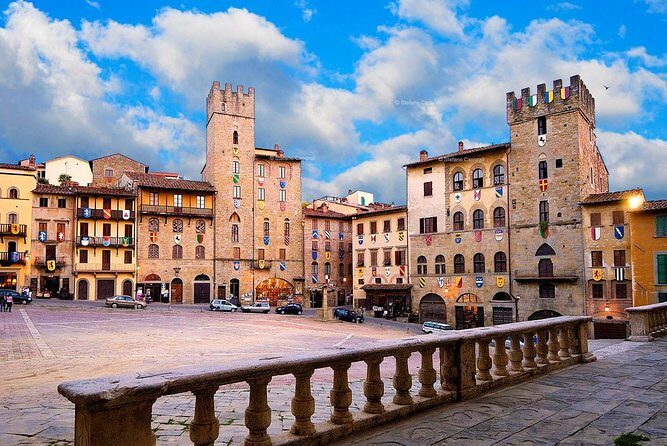
Two towns means you see more variety than a single-town day trip. Arezzo gives you a real Renaissance-art morning, with major visual landmarks tied to Piero della Francesca. Cortona then shifts the mood to a hilltop town feel—narrow streets, strong viewpoints, and the kind of vibe that makes you understand why writers and filmmakers kept returning.
I also like that the tour isn’t only “drive and park.” It’s structured around named places: piazzas where life happens, churches where the art lives, and specific sites connected to the movies. That structure is what helps the day feel full without turning into a checklist of random stops.
The trade-off is time pressure. In a one-day loop, you won’t have a long, slow lunch + museum binge. You’re there for highlights, photos, and guided context. If you want to linger for hours, plan to arrive in Tuscany for longer stays later—or save extra time on your own for one town after this day trip.
You can also read our reviews of more tours and experiences in Rome
Morning Departures From Rome: Pickup, Start Time, and Realistic Expectations
The tour starts at 7:30 am. Your morning begins with pickup from centrally-located Rome hotels (the listing notes pickup/drop-off if you’re within the Aurelian Walls). If you’re not in that zone, you should double-check how pickup is handled for your address—because the stated meeting point is Piazza della Repubblica (P.za della Repubblica, 48, 00184 Roma).
This early start matters because the travel time is real. The drive is about 127 miles (204 km), and you’re crossing into Tuscany early enough to actually enjoy the towns rather than just pass through them. You’ll also want to treat the day like a “packed itinerary with comfort breaks,” not a leisurely stroll.
What helps: the group size is limited to a maximum of 15 (and the included info describes small-group size capped around 14 participants). That’s a big difference from the huge coach-tour feeling, especially when you’re doing multiple walking stops.
Piazza Grande in Arezzo: A Sloped Stage for Markets and Antiques
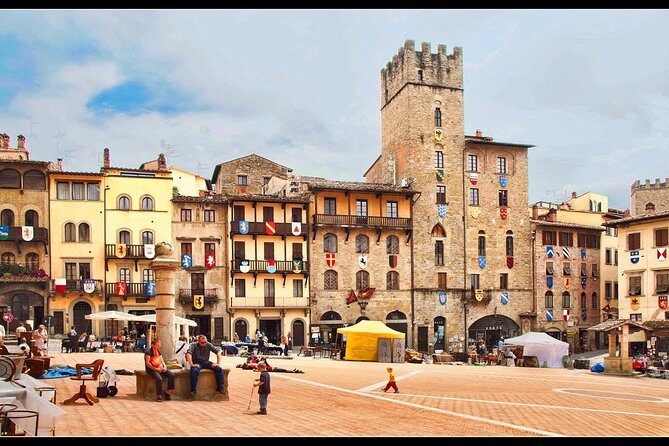
Your first Arezzo stop is Piazza Grande, the town’s heart. The piazza has that classic Tuscan look: buildings from different periods rise around a central public space, and the layout feels almost theatrical—as if the town is set up for scenes.
The fun detail here is why it looks a little unusual. Piazza Grande’s form comes from its downhill slope, which affects how the square feels and how people move through it. During the Middle Ages it served as a market location. Later, in the Renaissance, it became the center of civic life.
There’s also a practical timing note: the major antiques fair runs on the first weekend of each month (Saturday and Sunday), and it’s described as important and established in 1968. Even if you’re not there on that weekend, it’s the kind of piazza where you can imagine local routines and the flow of weekend crowds.
San Francesco: Piero della Francesca’s Legends of the True Cross
Next is the Basilica of San Francesco, a late-medieval church dedicated to St. Francis of Assisi. This stop is the core “art anchor” for Arezzo.
The big reason to care: the church houses the fresco cycle Legends of the True Cross by Piero della Francesca. If you’ve ever wondered why guides keep mentioning Piero in Tuscany, this is the kind of place that turns names into something you can see—fresco storytelling tied to a specific location, not just a museum label.
The tour info says the San Francesco admission is not included, so you should be ready for a separate entrance cost here. That’s normal for major churches, and it often saves time because you’re not stuck hunting for tickets right when you arrive.
One more practical note: this is a church visit. That means quieter tone, respectful behavior, and the kind of viewing that works best when you slow down for a few minutes instead of trying to “take it all in” while walking.
Arezzo Cathedral and Mary Magdalene Stained Glass
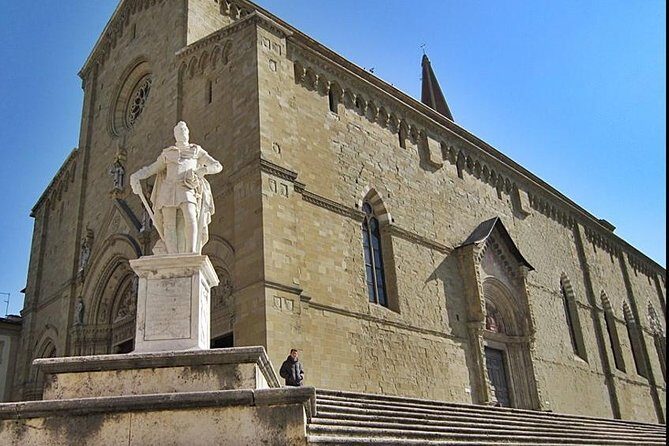
After San Francesco, you’ll continue within the Arezzo historic center to see the Arezzo cathedral, where the tour highlights stained glass and another work by Piero della Francesca: Mary Magdalene.
This is a smart pairing because it shifts your focus. You go from fresco cycles to stained-glass impact and then back to Piero’s presence in a different format. The result is a clearer picture of why Piero matters in the region—he isn’t just one famous painting; he’s connected to multiple major sites.
If your goal is art with context, this is one of the best stretches of the day. The cathedral stop helps you see how Renaissance art and religious architecture reinforce each other in the same places people still use today.
Bramasole in Cortona: The Movie Villa Stop That Needs a Quick Confirm
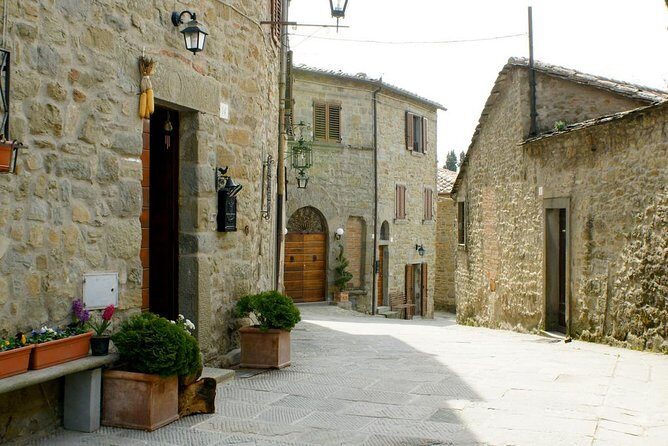
Then it’s time to head to Cortona. Before you fully settle into Cortona’s main center, there’s a dedicated stop for Bramasole, tied to Under the Tuscan Sun.
Here are the details that make Bramasole more than a photo stop:
- It was lived in by Frances Mayes, who wrote Under the Tuscan Sun (published in 1996).
- The villa was built in 1504.
- The film version was released in 2003, and the villa was used as its location.
The stop is listed for 30 minutes and says admission ticket free. That’s good news for time and money.
Still, there’s one real consideration. One low-score account pointed out the day didn’t include Bramasole even after asking. I wouldn’t assume that’s the norm, but I would treat Bramasole as a “confirm-at-the-start” priority if it matters to you. Ask directly when you get moving: Is Bramasole definitely on the schedule today, and is there a chance timing could cut it?
If Bramasole happens as planned, it’s a strong bridge between the movie story and the physical setting that inspired it.
Cortona’s Piazza Della Repubblica: The Town Center You Can Feel
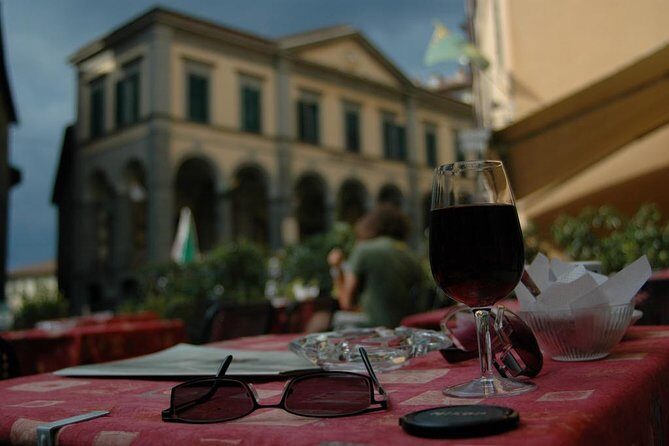
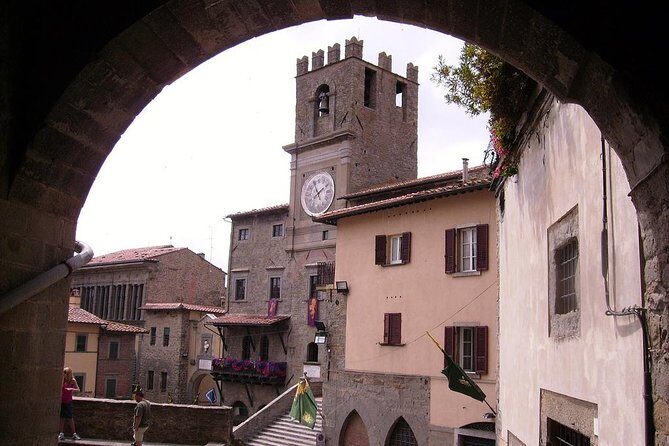
In Cortona, the tour lands at Piazza della Repubblica, the town’s heart. This place is described as central since Roman times, when a forum was located there. That kind of continuity—old civic space still functioning as a gathering point—is one reason these Tuscan centers don’t feel like theme parks.
The focal point is the Palazzo del Capitano, built in the 1200s as the seat for the city’s “captain,” meaning the political ruler. The bell tower was added in the 15th century. The building later served as a residence for a cardinal before it became the town hall.
This stop is also a reset for your day. You’ve been in churches and art-focused spaces. Here you’re back to street life—people moving through, views opening up around the square, and the sense of why Cortona feels romantic without needing makeup.
Eremo Le Celle: A Quiet Franciscan Hermitage Near Mount Sant’Egidio
One of the most atmospheric parts of the Cortona section is Eremo Le Celle, also called Le Celle. It’s about 5 kilometers from Cortona, at the feet of Mount Sant’Egidio.
This is a Franciscan hermitage, erected between 1211 and 1221. The tour info also notes it briefly housed St. Francis of Assisi during his lifetime. Even if you’re not the “cathedral person,” these places tend to hit because they’re built for stillness. You’re not just seeing old walls; you’re stepping into a historical rhythm of retreat and prayer.
It’s listed as a 30-minute stop with free admission. That makes it easy to justify even if you’re not chasing every single site.
The only caution: because it’s outside the center and connected to terrain, comfortable shoes matter more than you think. This is also where you’ll benefit from good pacing—another reason the small-group format helps.
Basilica di Santa Margherita: A Hill-Edge Church With Local Identity
Back closer to Cortona’s hilltop setting is Basilica di Santa Margherita, dedicated to Margaret of Cortona. It’s described as neo-gothic and located just outside town, at the intersection of Via delle Santucce and Via Sant Margherita, near the Fortezza Medicea.
You get 45 minutes here and free admission. This stop isn’t the same “big art moment” as Piero frescoes, but it adds local texture. It’s the kind of church that helps you understand how these towns work: not just grand centers, but also specific neighborhoods and saints tied to the place.
If you like variety—something structured but not identical to the other churches—Santa Margherita is a good final spiritual note before you head back toward Rome.
Group Size, Driver vs Guide, and What to Look For
A key promise here is “small group,” max 15 people, with a driver/guide and pickup/drop-off in central Rome. In practice, your experience quality can hinge on the person behind the wheel and the person speaking.
One positive report highlighted guide Maximilliano as prompt, professional, and very well-informed, with the day described as a highlight. That tells you what you’re aiming for: smooth logistics plus meaningful commentary that connects art and movie locations to what you’re seeing.
On the other hand, there’s also a cautionary note from a low-rating experience: the day reportedly felt more like a driver-led route than a true guided experience, with limited English, and a missed stop related to Bramasole. That doesn’t mean it always happens, but it’s enough to justify smart prep from your side.
When you meet up, ask two simple questions:
- Will we have guided commentary at each major stop, or is it mostly self-paced with directions?
- If Bramasole is on the schedule, can the guide confirm when it’s scheduled and roughly how long we’ll be there?
In a one-day itinerary, these details aren’t picky—they directly affect whether you leave feeling satisfied.
The Value of a $442.15 Cortona and Arezzo Day Trip
At $442.15 per person, this isn’t a “cheap bus ride” kind of outing. You’re paying for four things that cost money in Italy: the long drive, the small-group structure, the early pickup, and guided time in two towns that are otherwise time-consuming to reach and interpret.
Where the value becomes clearer is in the art focus. You’re going to see major Piero della Francesca connections in Arezzo and you’re getting the movie-location layer in Cortona. That combination is the difference between a generic Tuscany day trip and a tour that tries to explain why these places became famous in the first place.
You should also factor in that some stops may require separate entry—San Francesco is specifically noted as admission not included, while several other listed stops are free. So your true all-in day cost can shift a bit depending on what you want to do on your own inside churches.
If you’re traveling with limited time in Rome and you don’t want to plan logistics for a self-drive day, the price starts to look more reasonable. It’s not bargain travel; it’s “buy your time and guidance.”
Who Should Book This Tour From Rome
This tour makes sense if you:
- Want a guided day without renting a car for Tuscany’s hill towns
- Care about art and church architecture, especially Piero della Francesca
- Like seeing film locations in the real world, not just reading about them
- Prefer a small-group format that keeps the day from feeling chaotic
You might choose another option if you:
- Want lots of free hours to roam on your own for long stretches
- Are extremely photo-obsessed and need unhurried time at one single viewpoint
- Are sensitive to the possibility of timing shifts in a one-day loop
Should You Book Cortona and Arezzo From Rome?
I’d book it if your goal is a focused Tuscany highlight day that ties together two famous hill towns with names you recognize—Piero for the art side, and Under the Tuscan Sun plus Life is Beautiful for the movie side. The route is designed to keep you moving through recognizable landmarks, and the small group size improves the odds you’ll actually understand what you’re looking at.
I’d also do one smart thing before you commit: make sure the Bramasole stop and the guided commentary are important for your day. Then pick your day trip based on that. If those two pieces line up, this is the kind of tour that can genuinely make Tuscany feel personal instead of generic.
FAQ
What towns does this full-day tour visit?
The tour visits Arezzo and Cortona in Tuscany on a single day from Rome.
How long is the tour?
It runs for about 1 day.
Is hotel pickup included in Rome?
Yes. Hotel pickup and drop-off is offered if your hotel is within the Aurelian Walls. The meeting point is listed at Piazza della Repubblica (P.za della Repubblica, 48, 00184 Roma).
What time does the tour start?
The tour start time is 7:30 am.
How big is the group?
This is a small-group tour limited to a maximum of 15 travelers. The included info also describes a maximum of 14 people.
Are admissions included for the main stops?
Some listed stops are free, while San Francesco is specifically noted as admission ticket not included. Other stops listed (like Bramasole, Eremo Le Celle, Piazza Della Repubblica, and Basilica di Santa Margherita) are shown as free.
Does the tour include film locations from Under the Tuscan Sun and Life is Beautiful?
Yes. The tour includes movie-related sites, including places connected to Under the Tuscan Sun in Cortona and a set location tied to Life is Beautiful in Arezzo.
What’s the cancellation policy?
The tour offers free cancellation. You can cancel up to 24 hours in advance of the experience start time for a full refund.
Where does the tour end?
It ends back at the meeting point in Rome (the listing shows the activity concludes with drop-off at your hotel as part of the tour for central pickup areas, and the meeting point is Piazza della Repubblica).