REVIEW · MUSEUMS
Vatican Museums and St. Peter’s Basilica Private Tour Options
Book on Viator →Operated by Eyes of Rome · Bookable on Viator
Rome moves fast. This tour slows you down.
I like this experience because it tackles the Vatican the practical way: skip-the-line entry, a private rhythm, and enough structure to see real highlights without feeling like you’re speed-walking through a maze. The core value is a 3 to 4 hour guided route that keeps the art and symbols readable instead of overwhelming.
Two things I love: first, the private Blue Badge guide who can steer you toward what matters, then explain it clearly (yes, even when the building is doing its best to distract you). Second, the smart “option” choices, like adding the Raphael Rooms or climbing the Cupola, let you tailor the visit to your energy and interests. The main consideration is that St. Peter’s Basilica and the Sistine Chapel can close last-minute for ceremonies, so your exact ending can shift on the day.
In This Review
- Key highlights worth aiming for
- Skip-the-line Vatican access that actually saves your day
- Vatican Museums: from the Courtyard of the Pigna to the Gallery of Maps
- Courtyard of the Pigna and Sphere within a Sphere
- Galleria Delle Carte Geografiche (Gallery of Maps)
- Gallery of Tapestries
- Gallery of the Candelabra
- Sistine Chapel time: what you should expect and how to make it click
- Upgrade choice: Raphael Rooms, dome climb, or both
- Raphael Rooms (Stanze di Raffaello) option
- Cupola di San Pietro (dome climb) option
- St. Peter’s Basilica: Pietà, tomb of John Paul II, Bernini’s Baldachin
- Michelangelo’s Pietà
- Tomb of St. John Paul II (Karol Wojtyla)
- La Pietà and the detail most people miss
- St. Peter’s Baldachin
- St. Peter’s Square: a last look that helps it all make sense
- Price and value: what $317.54 buys you in the real world
- Who should book this Vatican and St. Peter’s private tour?
- Should you book it?
- FAQ
- What language is the tour offered in?
- Is the Vatican Museums skip-the-line ticket included?
- What’s included if I choose the Raphael Rooms upgrade?
- What’s included if I choose the Dome option?
- What’s included if I choose the St. Peter’s Basilica option?
- What should I wear to avoid being turned away?
Key highlights worth aiming for
- Skip-the-line Vatican Museums entry so your time goes into art, not queues
- Private pacing with a Blue Badge guide so questions and detours actually work
- Gallery highlights that feel connected from Pigna to maps, tapestries, and candelabra
- Sistine Chapel included with dedicated time and clear context for what you’re seeing
- Upgrades that change the whole experience: Raphael Rooms, or Cupola climb, or St. Peter’s add-ons
- St. Peter’s Basilica route focuses on major Michelangelo moments like the Pietà and Bernini’s Baldachin
Skip-the-line Vatican access that actually saves your day
The Vatican Museums are famous for one thing: lines. This tour cuts past that problem with a Vatican Museums skip-the-line ticket and a guide-led flow that helps you get inside sooner and move with purpose. It’s not just convenience. When you lose an hour to waiting, the visit shrinks and your attention scatters.
You also get a shortcut to St. Peter’s Basilica when your selected option includes it. That matters because the walk from Vatican Museums toward the basilica can feel like dead time if you don’t have a plan.
The tour runs about 3 to 4 hours, with a choice of morning or afternoon time. That flexibility is a real win in Rome, where plans can wobble due to heat, crowds, or transit delays.
One small but important reality check: you still pass security. You should plan at least 20 minutes for checks. The difference is that you’re not starting from scratch. You’re starting with momentum.
You can also read our reviews of more private tours in Rome

Vatican Museums: from the Courtyard of the Pigna to the Gallery of Maps
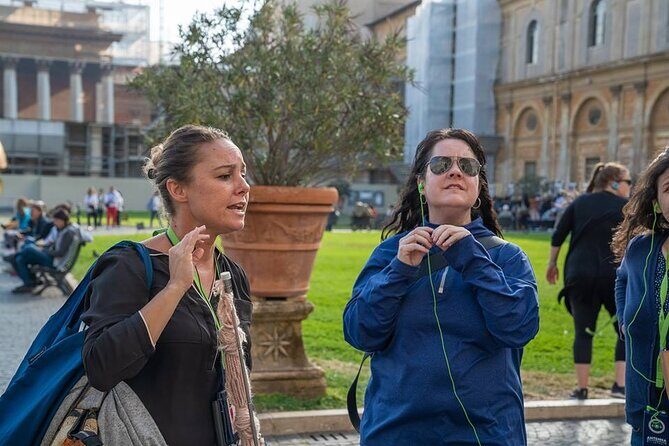
Once you’re in, the visit is arranged to give your brain an easy path through a huge complex. You begin with the Vatican Museum galleries and halls, including a guided highlight run that lasts about 40 minutes with admission included.
Courtyard of the Pigna and Sphere within a Sphere
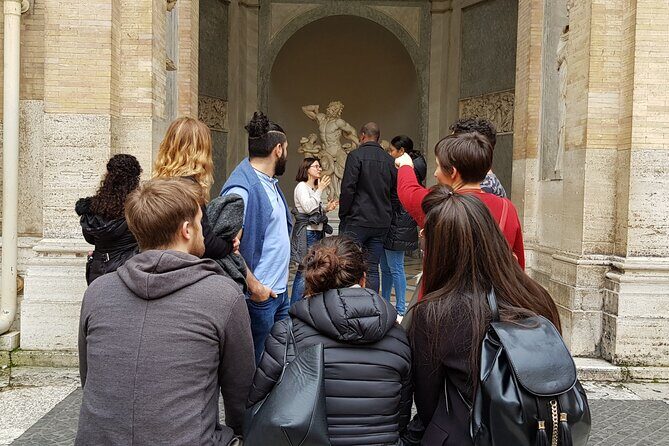
The first scene you hit is the Courtyard of the Pigna, created from the 16th-century area of the Belvedere. This courtyard is a great warm-up because you instantly see scale: the Vatican likes big gestures, and this place prepares you for that.
Then comes the striking modern work you might not expect in a Vatican context: Arnaldo Pomodoro’s Sphere within a Sphere in the Cortile della Pigna. The idea is simple and effective—an outer bronze sphere with a fractured surface that reveals a smaller sphere within. In practical terms, it gives you a visual anchor for thinking about layers, complexity, and meaning before you move into the Renaissance and religious art later.
Galleria Delle Carte Geografiche (Gallery of Maps)
Next is the Gallery of Maps, where time gets oddly satisfying. The maps are painted topographical views of Italy from the 16th century, created under Pope Gregory XIII. They stretch for about 120 meters, and the result is a long horizontal narrative you can follow without losing your place.
Even if you’re not a geography person, it works. Maps in this setting aren’t just information; they reflect how people pictured the world back when accuracy was part science and part imagination.
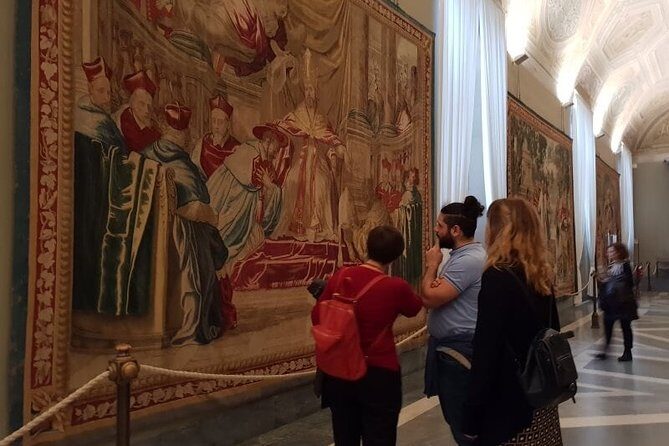
Gallery of Tapestries
Then you enter the Gallery of Tapestries, filled with 15th and 16th-century works woven with scenes from biblical and historical narratives. They’re inspired by designs from Raphael’s school, so you’re seeing the Vatican’s taste for storytelling through craft.
This stop can be a great reset if your feet are getting impatient. Tapestries are visually dense, but you can slow down and take them in piece by piece.
You can also read our reviews of more museum experiences in Rome



Gallery of the Candelabra
After that, the Gallery of the Candelabra ties together Greek and Roman sculpture, sarcophagi, and reliefs. The gallery name comes from a grand marble candelabra that divides the space into thematic sections, and the setup is late 18th century.
This is where the architecture helps your eyes do the organizing. Instead of scrolling through random rooms, you get a kind of guided sorting of themes.
Sistine Chapel time: what you should expect and how to make it click
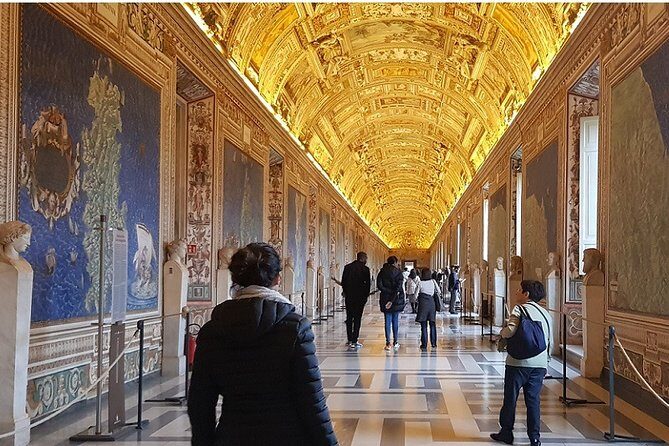
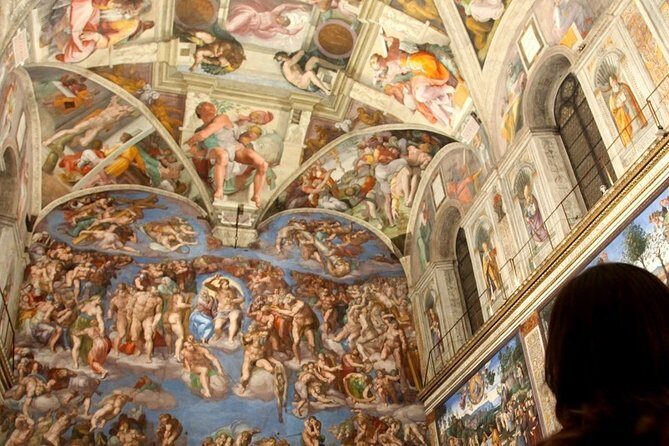
The Sistine Chapel is included, and it’s not a rushed checkmark. You get about 30 minutes dedicated time with admission included.
It helps to know what you’re walking into. The chapel’s name comes from Pope Sixtus IV, who restored the earlier Cappella Magna between 1477 and 1480. The space has long been used for official ceremonies, including papal conclaves.
Now for the art that makes people stop breathing. Michelangelo’s frescoes are the headline, but what makes them land is how the guide can point out details: compositions, gestures, and the visual logic that makes the scenes feel connected even when you’re standing far back.
If you’re visiting with teens or adults who get antsy, this stop is still worth it. It’s the one place where the Vatican becomes less about museum browsing and more about human storytelling.
Practical note: the Sistine Chapel can close for last-minute religious ceremonies. If that happens, the plan shifts to an extended Vatican Museums tour, and refunds or discounts aren’t always possible. I’d treat that as the cost of being flexible on a religious site.
Upgrade choice: Raphael Rooms, dome climb, or both
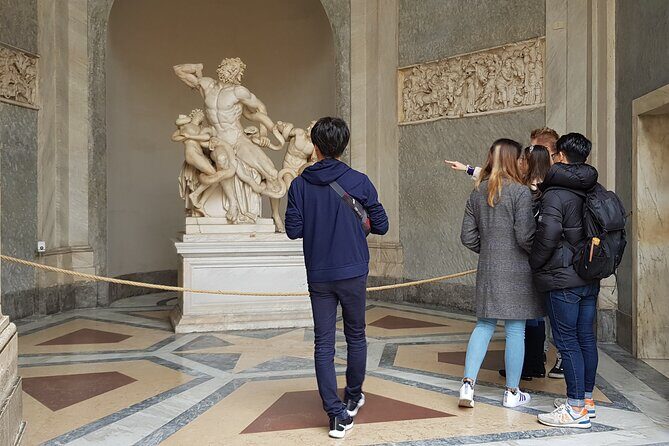
This tour is built around options, and that’s where it becomes really good value. Your base route hits the major museum highlights and the Sistine Chapel, then upgrades can add different kinds of payoff.
Raphael Rooms (Stanze di Raffaello) option
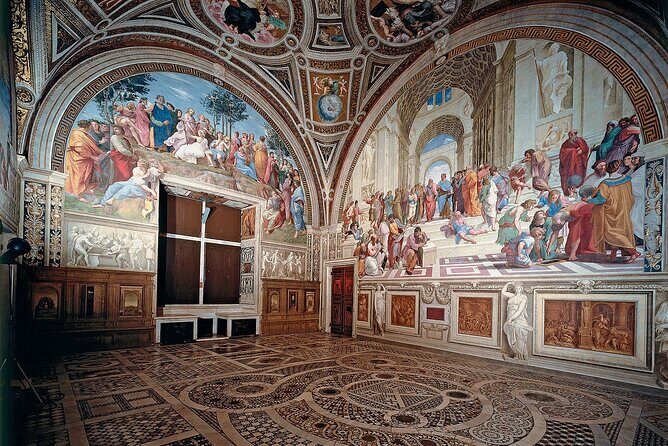
If you choose the Renaissance option, you’ll include the Rooms of Raphael. These are the places where Renaissance ideals show up as living visual arguments—harmony, intellect, faith, and history.
You’re looking at art that’s basically designed to reward a slower gaze. The guide’s job here is making connections you might miss on your own, like how the themes link across rooms and how the spaces are meant to feel like a single intellectual journey.
Cupola di San Pietro (dome climb) option
If you choose the Dome option, you can climb up the Cupola at St. Peter’s Basilica. You’ll get about 30 minutes with admission included.
Here’s the important practical part. Even with a lift taking you some of the way, you still face around 320 steps. The space can be tight in places, and it’s not recommended if you have mobility issues or if you’re claustrophobic.
If you are able, the payoff is huge: the dome is one of the most iconic symbols of the Vatican and Rome, and the view helps you understand the scale of the city and the basilica as an architectural machine.
St. Peter’s Basilica: Pietà, tomb of John Paul II, Bernini’s Baldachin
If your selected option includes St. Peter’s Basilica, the tour adds a focused route with time set aside for major moments. You get about 30 minutes in the basilica area, plus shorter stops that keep the highlight density high.
Michelangelo’s Pietà
The big one is Michelangelo’s Pietà. It’s housed in the basilica and is often the statue that makes first-time visitors suddenly feel like they’re in a live story, not just looking at artifacts.
Tomb of St. John Paul II (Karol Wojtyla)
You also stop by the venerable tomb of Saint John Paul II, whose name is Karol Wojtyla.
This part matters because it adds a present-tense feeling. You’re not just studying the past. People come here to connect with something deeply current.
La Pietà and the detail most people miss
Then there’s La Pietà, another Michelangelo sculpture included only for the basilica option. It’s in the first chapel on the right as you enter, and it’s notable because it’s the only piece Michelangelo ever signed.
If you can spot that signature with context, it changes how you see him—not just as a painter of the Sistine Chapel, but as a sculptor with personal marks and intent.
St. Peter’s Baldachin
Finally, you’ll see the Baldachin by Gian Lorenzo Bernini. It’s a bronze canopy over the high altar, designed to tower over you—over 90 feet tall.
This is one of those moments where Baroque isn’t a style word. It’s a feeling: layered, dramatic, and built to make you look up without needing to be told.
St. Peter’s Square: a last look that helps it all make sense
When your option includes St. Peter’s Basilica, the tour ends with St. Peter’s Square. You get about 15 minutes and, importantly, the square is described in concrete terms, not vague awe.
It’s an elliptical space surrounded by 284 Doric columns in four rows, measuring about 196 meters wide and 148 meters long. Bernini laid it out during the pontificates of Alexander VII and Clement IX.
That context helps. You stop seeing it as a postcard and start seeing it as an intentional stage set—designed to pull people inward and frame the basilica like a centerpiece.
If the basilica ends up closed for last-minute masses or ceremonies, the tour ends at the exit of the Vatican Museums instead. That’s the reality of visiting working religious spaces.
Price and value: what $317.54 buys you in the real world
The price is $317.54 per person, and it’s a private tour for 3 to 4 hours. That sounds steep until you compare what’s bundled: a private tour with a Blue Badge guide, Vatican Museums skip-the-line, admission included for many museum stops, Sistine Chapel entry, and a shortcut toward St. Peter’s when your option includes it.
You’re paying for two things you can’t easily buy separately:
- Time savings (skip-the-line and planned movement through key areas)
- Interpretation (how the guide connects what you see to meaning)
If your group is just two people, the private element can feel like the best bargain in Rome, because you’re not splitting the guide’s attention across a big crowd. If you’re traveling with kids, the value tends to rise even more, because a good guide can adjust explanations and pacing so no one spirals into boredom.
One thing to weigh: food and drinks aren’t included. For a 3–4 hour museum day, that’s not a dealbreaker, but it does mean you should plan a nearby coffee stop before or after. You don’t want hunger to hijack your attention span mid-tour.
Also, bookings tend to happen far in advance (on average about 68 days). If you have fixed travel dates, lock it in early.
Who should book this Vatican and St. Peter’s private tour?
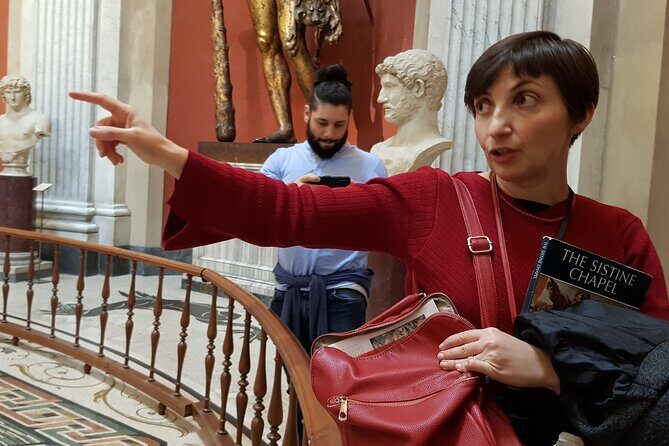
This tour fits best if you want your Vatican visit to feel guided, not random.
I’d especially recommend it if:
- you care about seeing specific masterpieces without getting lost in the museum maze
- you want the Sistine Chapel with context, not just standing under frescoes waiting for your brain to catch up
- you’re choosing between upgrades and want help deciding what matches your energy
It also works well for families, since the format is private and your guide can adapt to different attention spans and walking speeds.
If you have mobility limits or you’re claustrophobic, be careful with the Cupola climb option. The description is straightforward: you still do about 320 steps, and the space can be tight. For those cases, you’d be better off skipping the dome choice and focusing on basilica highlights instead.
Should you book it?
Yes, I’d book it if you want a Vatican day that feels organized, meaningful, and efficient. The strongest reason is the combo of skip-the-line access plus a guide who can turn rooms into a readable story. Add the right option—Raphael Rooms for art-and-ideas, or the Cupola for city views—and it becomes a tailored experience instead of a one-size museum stamp.
I’d skip or adjust expectations if your schedule depends on being inside St. Peter’s or the Sistine Chapel no matter what. Those spaces can close last-minute, and while a reworked museum route is usually offered, the exact ending isn’t guaranteed.
If you’re flexible, curious, and want to see the Vatican without spending half your day in lines, this one is a very strong match.
FAQ
What language is the tour offered in?
The tour is offered in English.
Is the Vatican Museums skip-the-line ticket included?
Yes. The Vatican Museums skip-the-line ticket is included, and there is also a shortcut to St. Peter’s Basilica for options that include it.
What’s included if I choose the Raphael Rooms upgrade?
If you select the Renaissance option, the Rooms of Raphael (Stanze di Raffaello) are included in the itinerary.
What’s included if I choose the Dome option?
If you select the Dome option, the climbing of the Cupola di San Pietro is included. The route includes a lift for part of the way, but you still need to climb about 320 steps.
What’s included if I choose the St. Peter’s Basilica option?
For options that include St. Peter’s Basilica, you’ll visit highlights such as Michelangelo’s Pietà, stops related to Saint John Paul II (Karol Wojtyla), La Pietà, Bernini’s Baldachin, and St. Peter’s Square.
What should I wear to avoid being turned away?
A dress code is required. No shorts or sleeveless tops. Knees and shoulders must be covered for both men and women, or you may risk refused entry.