REVIEW · OSTIA ANTICA
Archeological Area of Ostia Antica Entry Ticket
Book on GetYourGuide →Operated by TOURISTATION · Bookable on GetYourGuide
Ostia Antica makes the past feel close. This self-guided visit is built for people who want to wander at their own pace through one of the best-preserved Roman-era cities. I like that you get fast-track entry so your time goes to ruins, not queues.
Two big strengths stand out. First, the ruins themselves are easy to “read” because key sights like the Baths of Neptune and the main thoroughfare called Decumanus Maximus are on your path. Second, the optional add-ons (audioguide app, golf cart, and even an aperitivo) let you tailor the day to your energy level. The one thing to keep in mind is the audioguide: the smartphone app can feel light on historical context if you’re the type who wants a lot of narrative detail.
In This Review
- Key takeaways before you go
- Ostia Antica: why this Roman ruin site works for a self-paced day
- Your ticket choices: basic entry vs audioguide vs golf cart vs aperitivo
- Fast-track entry: where your time is really saved
- Pacing your visit: 2.5 to 5 hours that doesn’t feel rushed
- Baths of Neptune and Decumanus Maximus: use the anchors to orient yourself
- Mosaics and house details: what to look for beyond the obvious
- The smartphone audioguide app: helpful support, but don’t expect a textbook
- Golf cart ride and aperitivo: comfort that changes the way you see ruins
- What to bring (and what the rules will stop you from bringing)
- Who this Ostia Antica ticket is best for
- Should you book this skip-the-line Ostia Antica entry ticket?
- FAQ
- What’s included with the basic Ostia Antica entry ticket?
- How long should I plan for Ostia Antica?
- Do I need a live guide for this experience?
- Is there an audioguide, and what languages are available?
- What is the Rome City audio guide app mentioned in the offer?
- Where do I get my entry ticket?
- What should I bring to the site?
- Are there items I can’t bring into Ostia Antica?
Key takeaways before you go
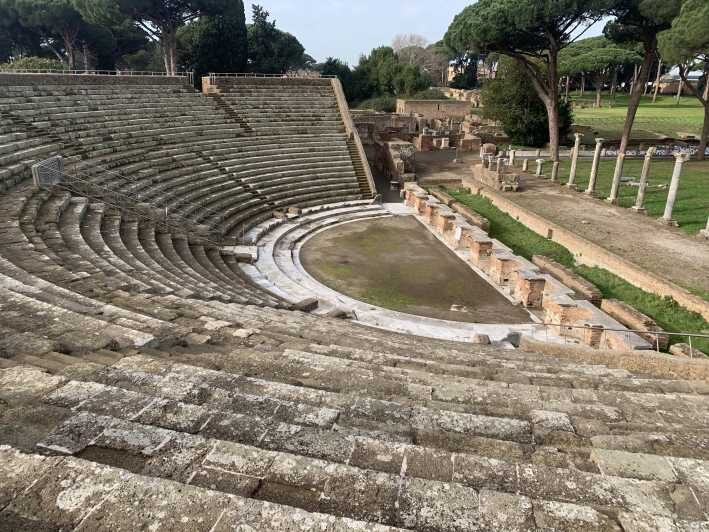
- Fast-track entry with express security check helps you start sooner
- Smartphone audio guide (more than 170 points of interest) is included when selected
- Golf cart option can reduce walking across a large site
- Aperitivo option adds a real break time inside the experience
- 2.5–5 hours gives you enough space to see highlights without rushing
Ostia Antica: why this Roman ruin site works for a self-paced day
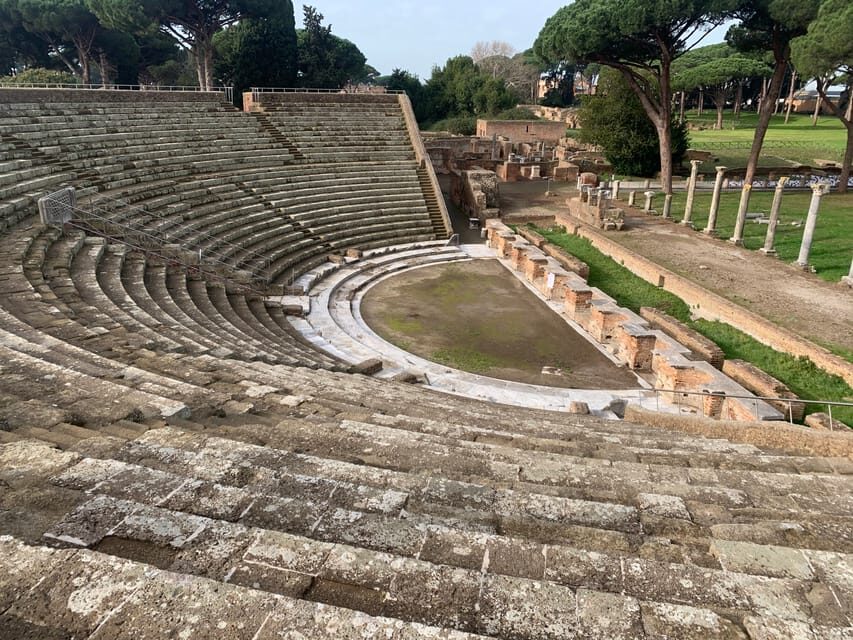
Ostia Antica is the kind of place where you can look up, look down, and keep finding details that make the city feel lived-in. The ticket setup is designed for independent exploring, so you’re not tied to a group’s pace. That matters here because some people want broad views and street-level ruins, while others slow down for flooring details and building layouts.
I also like that the highlights are clearly anchored. You’re going to encounter the areas known for mosaics, the Baths of Neptune, and the long main street area called Decumanus Maximus. Even without a live guide, those “named anchors” help you build a mental map while you walk.
One more practical note: this is a sun-and-shoes kind of place. If you wait until late afternoon to start, you’ll likely feel it in your legs and in the heat. Plan for comfortable footwear and a steady pace.
You can also read our reviews of more tours and experiences in Ostia Antica.

Your ticket choices: basic entry vs audioguide vs golf cart vs aperitivo
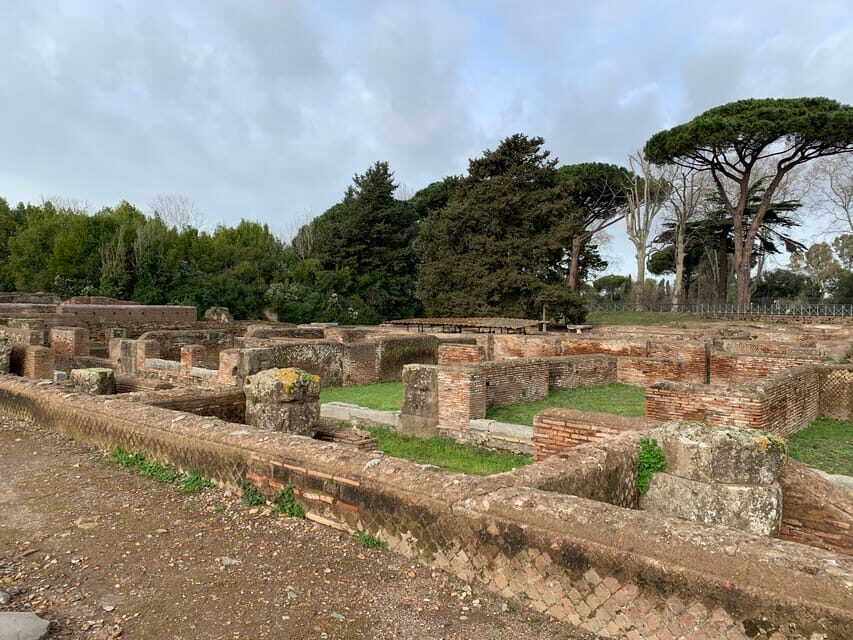
This experience offers several ways to structure your visit. The basic option is essentially a skip-the-line ticket so you can enter quickly and explore on your own. Then you can add layers depending on what you want most: background, comfort, or a break.
Here’s how the options typically change the feel of the day:
- Admission ticket (basic): Best value if you like reading signs, using your own research, and spending time wherever you personally feel pulled in.
- Admission ticket with audioguide: Better if you want on-the-spot explanations without carrying around a printed guide. The optional audio guide is available in English, Italian, French, Spanish, and German.
- Admission ticket with golf cart ride: Useful when you want to cover more ground without turning the visit into a full workout.
- Admission ticket with golf cart ride and aperitivo: This is for people who want the comfort option plus a simple sit-down moment as part of the experience.
What I like about this system is that it respects different travel styles. You can treat the ruins like a casual walking loop, or you can make it more structured with audio support and a comfort shortcut.
Fast-track entry: where your time is really saved
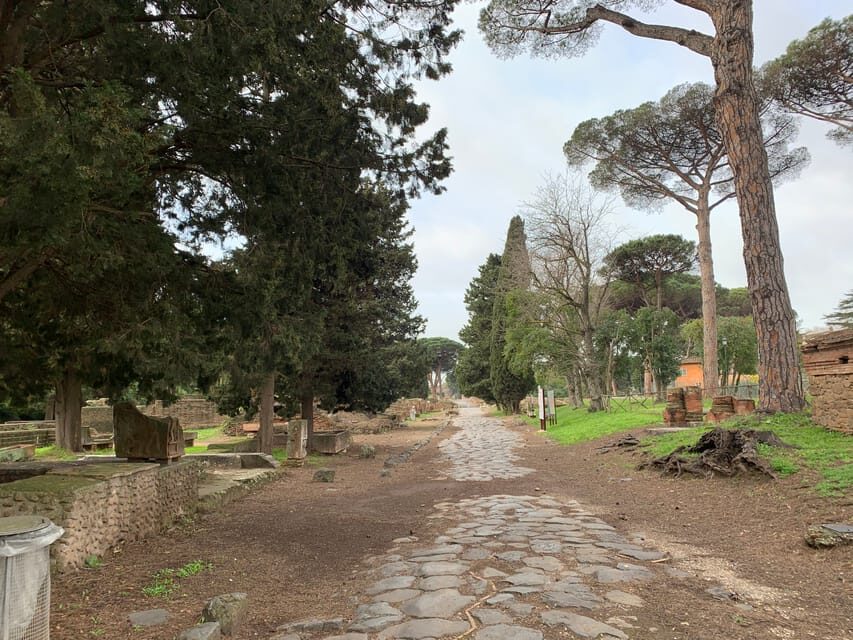
The “skip-the-line” part here isn’t just marketing. It’s tied to fast-track entry and an express security check, which can dramatically reduce the time you spend waiting before you even begin seeing anything.
Because Ostia Antica is a large archaeological area, every hour counts. When you enter efficiently, you can spend more time in the spaces that reward slow attention—mosaic floors, street-level ruins, and the bigger sightlines around major complexes.
Also note the format: your voucher isn’t the entry ticket. After you book, an operator contacts you with details to coordinate your entry. That’s a small thing, but it prevents the common frustration of arriving with the wrong document and needing to sort it out on-site.
Pacing your visit: 2.5 to 5 hours that doesn’t feel rushed
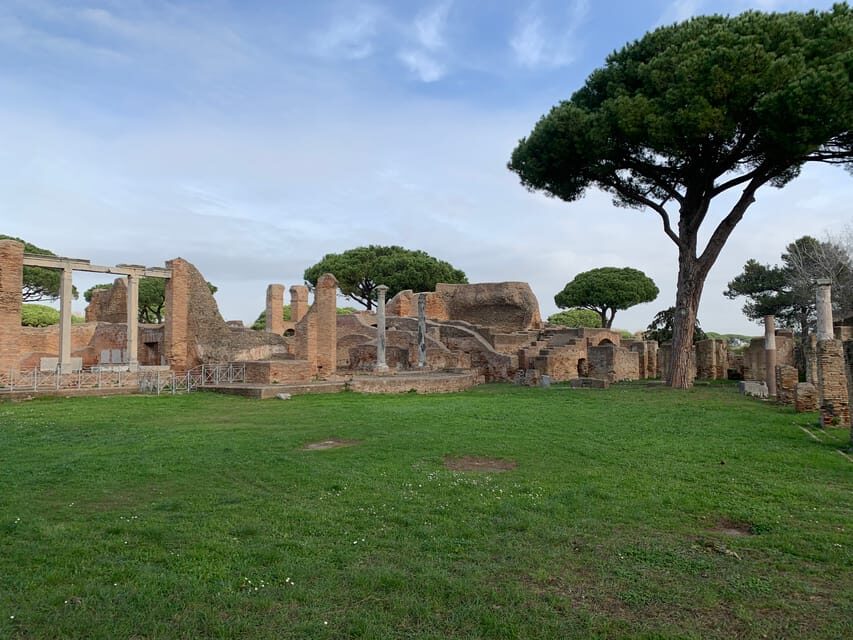
The duration range is 2.5 to 5 hours depending on starting times and how much you want to see. This range fits Ostia Antica well because you can do a focused “highlights” loop in the shorter window or stretch it out if you like lingering.
A practical approach:
- If you have 2.5–3 hours, prioritize Baths of Neptune, Decumanus Maximus, and mosaic-heavy areas where you can slow down without getting too spread out.
- If you have 4–5 hours, add more time for smaller house details and quiet corners, and let the audio guide (if selected) guide your stops.
I find self-guided ruins are best when you don’t feel pressured to cover everything. Instead, aim to understand how the site’s main areas connect. Named highlights like Decumanus Maximus help with that because they give you a spine to build your route around.
Baths of Neptune and Decumanus Maximus: use the anchors to orient yourself
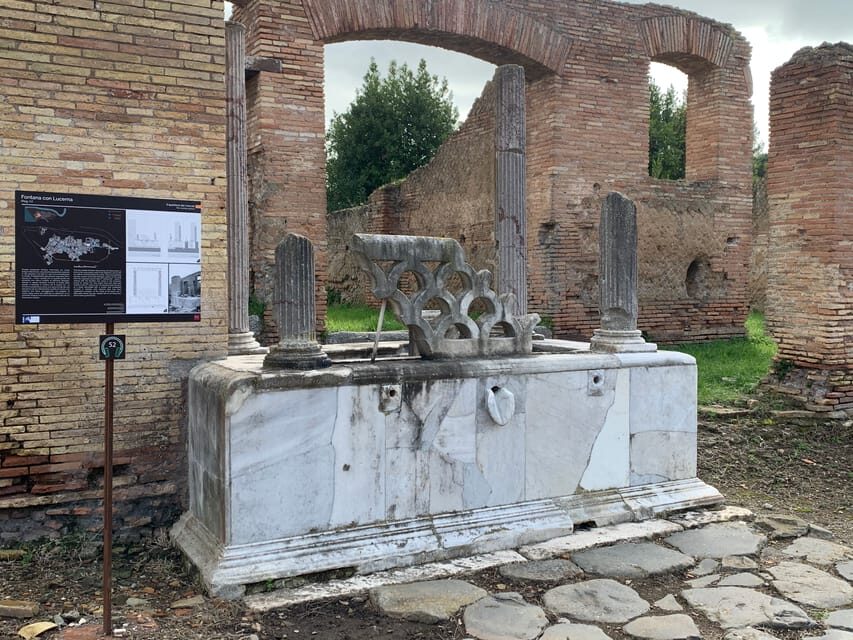
Two named highlights are worth planning for early because they act like “orientation points” for the whole visit: the Baths of Neptune and the Decumanus Maximus area.
Why these work: they’re the kind of sights that help you read the city’s layout. When you see a major complex and a main thoroughfare, you start to understand where foot traffic likely flowed and how major buildings related to everyday streets.
Even if your audio support feels minimal (more on that later), these anchors still help you avoid the feeling of wandering without purpose. You’ll likely leave with a stronger sense of “how it fit together,” not just a pile of cool stones.

Mosaics and house details: what to look for beyond the obvious
One of Ostia Antica’s biggest draws is the presence of mosaic floors and intricate household remains. The site is known for mosaic details in ancient houses, and that’s exactly where your slow-walking time pays off.
When you’re looking at mosaics, don’t just scan for pretty patterns. Look for the way floors sit within the layout of rooms, and notice how space seems organized for daily life rather than for one big public show.
Here’s a simple mindset that makes mosaics more rewarding:
- Pause, then widen your view.
- Ask yourself what the room might have been used for.
- Then check the floor again, now with the room in context.
This kind of attention is easier when you enter early and don’t feel rushed. If you go late in the day, you might still see the highlights, but you’ll lose time for the kind of close looking mosaics demand.
The smartphone audioguide app: helpful support, but don’t expect a textbook
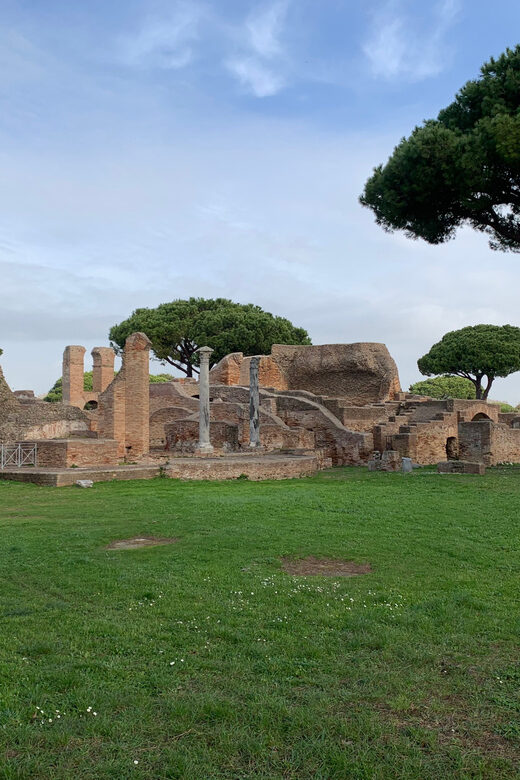
If you select the audioguide option, you’ll get access to a Rome City audio guide app downloadable on your smartphone, with more than 170 points of interest. That’s a strong setup for independent exploring because it lets you choose how much you want to hear at each stop.
Languages supported are English, Italian, French, Spanish, and German. That variety is great for mixed groups too.
One caution: if you want deep historical framing for every stop, the experience may feel a bit brief. The audio content can come across as concise, so you’ll get practical explanations but possibly not the full context you’d hope for—especially around a port or trade-style background (if that’s what you’re searching for).
My suggestion: treat the audio guide as a tool for getting your bearings and sparking curiosity. If you want deeper background, pair it with quick on-site reading. Signs and labels can fill the gaps where audio may stay short.
Golf cart ride and aperitivo: comfort that changes the way you see ruins
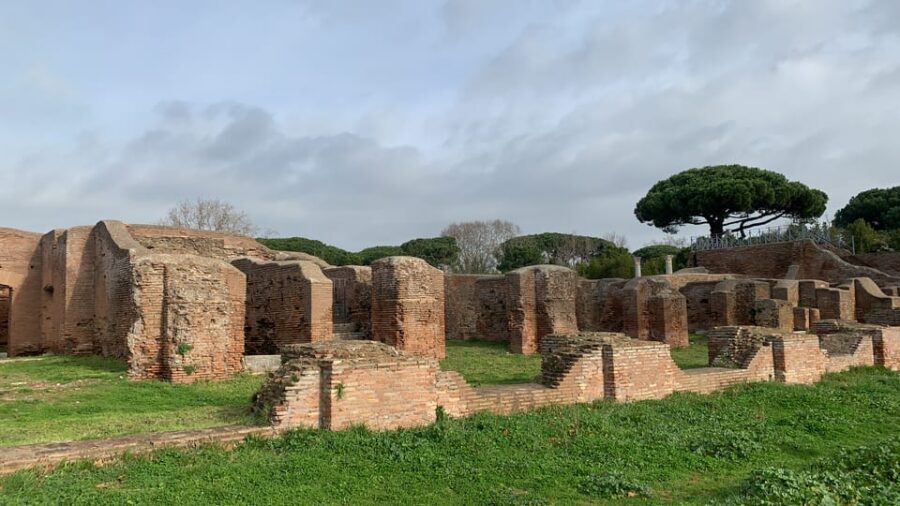
The golf cart ride option is made for people who want to cover ground with less walking. Ostia Antica is spread out, so cutting down on leg fatigue can help you actually enjoy the later parts of the route instead of powering through them.
The aperitivo add-on pairs the ride with a refreshment moment. That turns the visit into more of a “Roman day out” rather than just a long walk. If you’re planning this around another sightseeing block later, this can also help you reset before the next stop.
Tradeoff to keep in mind: when you use a cart, you may move through certain areas faster than you would on foot. That can be fine—just be intentional about stopping for the mosaics and main sights. Don’t let the convenience steal your slow-looking time.
What to bring (and what the rules will stop you from bringing)
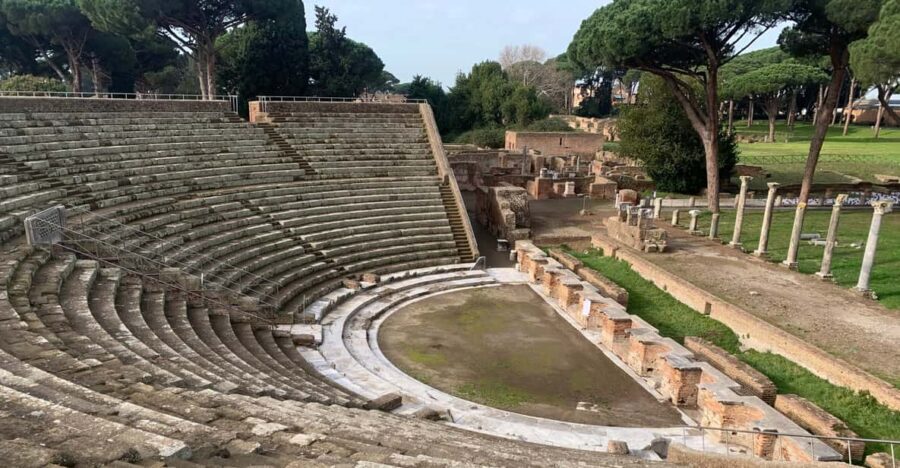
For a smooth visit, pack like you’re planning a few hours of outdoor wandering.
Bring:
- Comfortable shoes
- Sunglasses, sun hat, and sunscreen
- Water
- Passport or ID card (a copy is accepted)
Not allowed:
- Pets
- Weapons or sharp objects
- Baby strollers
- Luggage or large bags
- Drones
- Alcohol and drugs
One more practical note: if you plan to carry a bag, keep it small. Large bags and luggage are not allowed, so plan to travel light.
Who this Ostia Antica ticket is best for
This setup works especially well if you like control. You can set your own pace, spend extra time at mosaic areas, and hit major anchors like the Baths of Neptune without waiting for a group.
It also fits families or mixed-interest groups because the options let different people choose different support levels (audio, cart, or both).
That said, it is not suitable for people with mobility impairments and it’s also not for wheelchair users. The rules and the site’s nature likely make it difficult to navigate comfortably.
Should you book this skip-the-line Ostia Antica entry ticket?
I’d book it if you want a well-timed start and a flexible visit structure. The fast-track entry is the biggest practical win, especially if you’re trying to protect your sightseeing time for the rest of your day.
I’d also lean toward the audioguide option if you want help connecting the dots at key areas—just go in knowing the audio may be more concise than you expect. If you hate long walks, the golf cart option is worth serious consideration, and the aperitivo add-on is a nice touch if you want a break built into the visit.
Skip this ticket style (or plan differently) if you need a fully accessible route, or if you’re set on extremely detailed historical storytelling for every stop.
FAQ
What’s included with the basic Ostia Antica entry ticket?
The basic package includes skip-the-line entry. Audio guide, golf cart ride, and aperitivo are only included if you choose those specific options.
How long should I plan for Ostia Antica?
Plan for 2.5 to 5 hours, depending on the starting time and how much you want to see.
Do I need a live guide for this experience?
No. A live guide is not included. You explore independently.
Is there an audioguide, and what languages are available?
If you select the audioguide option, you get access to an audio guide in English, Italian, French, Spanish, and German.
What is the Rome City audio guide app mentioned in the offer?
When selected, you get a downloadable smartphone app with more than 170 points of interest.
Where do I get my entry ticket?
Your voucher is not the entry ticket. After booking, an operator contacts you with instructions for coordinating your entry.
What should I bring to the site?
Bring comfortable shoes, sunglasses, a sun hat, sunscreen, and water. Bring a passport or ID card (a copy is accepted).
Are there items I can’t bring into Ostia Antica?
Yes. Pets, weapons or sharp objects, baby strollers, luggage or large bags, drones, and alcohol and drugs are not allowed.