REVIEW · 1-DAY TOURS
From Rome to Tuscany: Discover Florence and Pisa in One Day
Book on Viator →Operated by Amigo Tours Spain · Bookable on Viator
One day, two masterpieces. This Rome-to-Tuscany trip is built for maximum sightseeing in limited time, pairing Pisa’s Piazza dei Miracoli with Florence’s biggest icons—without you needing to plan trains or private transfers. You start early, ride comfortably, and still get real time on your feet in both cities.
I especially like two parts: the Pisa stop gives you room for photos and the medieval cathedral setting around the Leaning Tower, and the Florence plan focuses on the Cathedral area plus landmarks like Ponte Vecchio and Piazza della Signoria. You’ll also get a bilingual guide on the bus, and if you choose it, an audio guide for Florence that helps you connect the dots while you walk.
The main drawback is simple: it’s a tight, high-walking day with long bus time each way (roughly 4 hours from Rome to Pisa and about the same returning from Florence). If mobility is an issue, this schedule can feel like a lot.
In This Review
- Key highlights at a glance
- Rome-to-Tuscany in One Day: What the Schedule Really Means
- Piazza dei Miracoli in Pisa: Leaning Tower Photos With Time to Enjoy Them
- Santa Maria Assunta and the Cathedral Area: What You’ll See Up Close
- The Tight Switch to Florence: How the Bus Ride Helps (and Hurts)
- Santa Croce to the Duomo Area: Florence in Big Hits, Not Slow Turns
- Ponte Vecchio and Piazza della Signoria: The Walk That Makes It Feel Real
- What the Guide Does (and Why It Shows Up in Reviews)
- Optional Audio Guide in Florence: A Smart Way to Stretch Your Time
- Price and Value: Is This One-Day Deal Worth It?
- Comfort Notes: Walking Distance and the Florence Drop-Off Pattern
- Who Should Book This One-Day Pisa and Florence Tour
- Should You Book This Tour?
- FAQ
- What time does the tour start and where does it meet?
- How long is the trip?
- What’s included in the price?
- What’s not included?
- Is an audio guide available in Florence?
- How big is the group?
Key highlights at a glance
- Pisa’s Piazza dei Miracoli: the Leaning Tower backdrop, plus cathedral views and photo time
- Florence Big-Hits route: Santa Croce area, Duomo Square, Ponte Vecchio, and Piazza della Signoria
- Guided bus commentary in English and Spanish: explanation during the ride, not just at stops
- Optional Florence audio guide: great for self-paced walking while still getting context
- Small group size (max 30): easier crowd control than big mega-buses
Rome-to-Tuscany in One Day: What the Schedule Really Means
This is a long day trip by design. You leave Rome early (7:00 am) from Piazzale della Stazione Tiburtina, and you’re on the bus for big chunks of the day. The payoff is that you get two “must-see” cities—Pisa and Florence—without having to spend a night in either place.
Think of it like this: the bus ride isn’t dead time. The tour includes bilingual guiding on the bus (English and Spanish at the same time), plus a structured set of stops so you don’t arrive, wander, and lose time figuring things out. That matters in Florence, where even a “quick” sightseeing plan can turn into wasted minutes if you don’t know where you’re headed first.
One more point that affects your comfort: there’s no hotel pickup. You’ll need to get yourself to the meeting point on your own, which is totally doable, but it means you should plan your morning transport carefully so you’re not rushing.
You can also read our reviews of more tours and experiences in Rome
Piazza dei Miracoli in Pisa: Leaning Tower Photos With Time to Enjoy Them
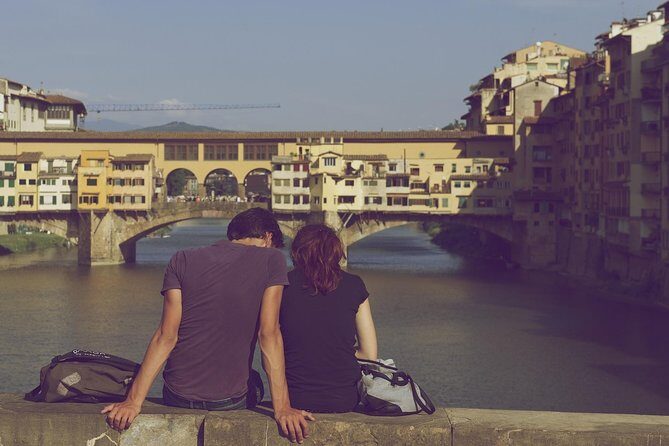
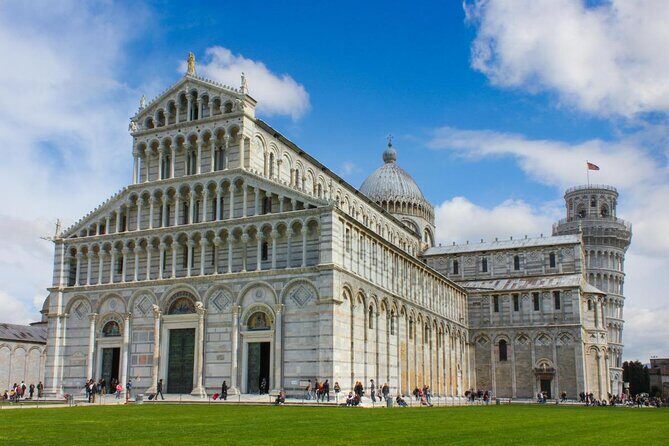
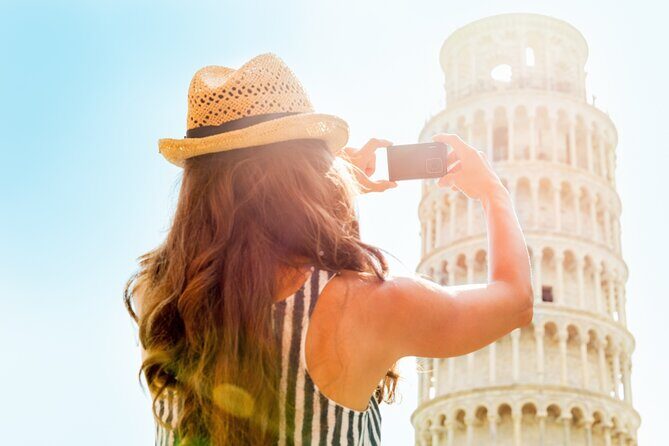
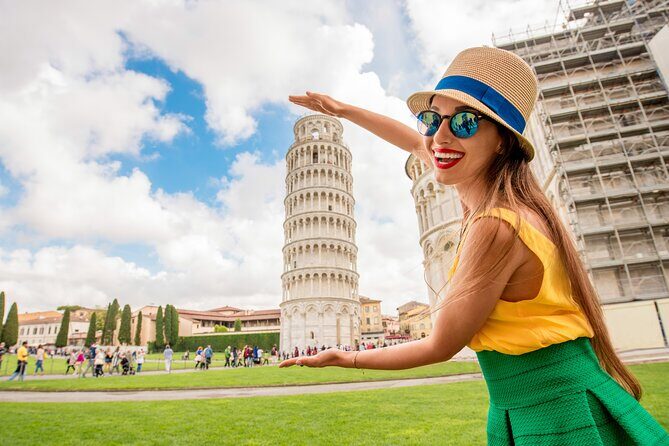
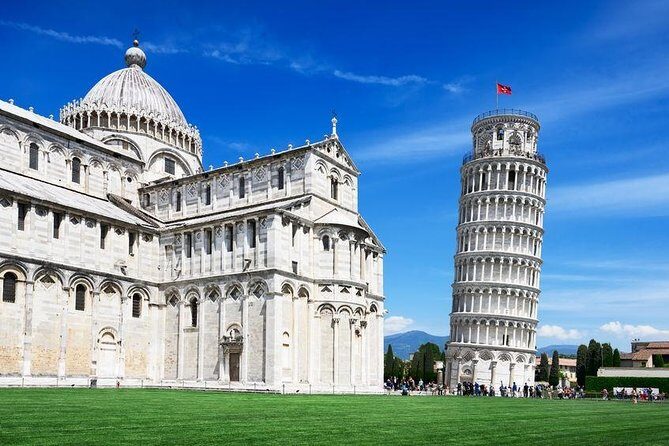
Pisa’s highlight isn’t complicated. You go straight to Piazza dei Miracoli, the famous square with green space and the dramatic cluster of monuments. This is where you’ll see the Leaning Tower framed by the cathedral—complete with the marble-banded look that makes the whole scene feel like a set piece.
You’ll also get free time right here (about an hour), which is a big deal on a day trip. The best photos happen when you’re not being herded every 3 minutes. You can step around for angles, take silly pictures, and then settle into the moment. The cathedral of Santa Maria Assunta sits in the same piazza, and it’s the episcopal seat of Pisa. Even if you don’t go inside, the marble-and-stone atmosphere around the monuments is what makes the square feel special.
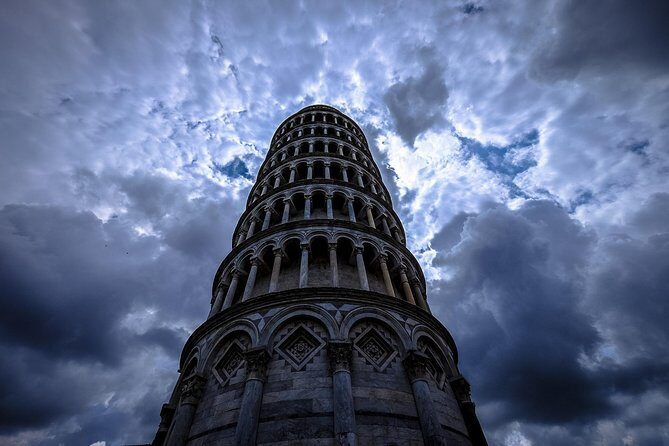
There’s also a neat bit of science-history context your guide will cover: the tower began leaning in one direction and later continued leaning in the opposite direction. That’s one of those facts that makes people look up again, even if they’ve seen photos a hundred times.
Reality check: this stop is about seeing and photographing. This isn’t positioned as a deep museum tour, so if you’re chasing a long, interior-focused cathedral experience, you may find the time short.
Santa Maria Assunta and the Cathedral Area: What You’ll See Up Close
Right in the piazza, you’ll be directed to the Cathedral of Santa Maria Assunta. This is a medieval Catholic cathedral dedicated to the Assumption of the Virgin and it anchors the whole monument complex.
Here’s what I like for practical travelers: you’re not just dropping a pin. The day plan recognizes that the cathedral is part of the “Pisa look.” The marble bands and the way the buildings relate to each other visually are what you’re trying to capture, and the timing gives you enough breathing room to move around.
If you’re the type who wants to compare the “from the outside” vibe versus “from inside,” plan around the fact that entrance details aren’t emphasized in the provided info. You’ll get the strong exterior experience for sure, and you can decide on the fly what you want to do once you’re there.
The Tight Switch to Florence: How the Bus Ride Helps (and Hurts)
After Pisa, you reboard and travel to Florence. The ride from Rome to Pisa and the return from Florence to Rome are both about 4 hours, and the tour notes that you’ll be on the bus for several hours in total.
This is the trade you’re making for doing two cities in one day. The upside is comfort: the bus is air-conditioned, and you have a guided explanation in motion. The downside is that this is not a “wander all day” plan. You’ll spend time sitting, then you’ll need to stand and walk again once you’re dropped near sights.
A small tip: bring headphones if you plan to download the optional audio guide later. The tour specifically recommends headphones, and it’s the easiest way to make the Florence portion feel more personal, even with a crowd.
Santa Croce to the Duomo Area: Florence in Big Hits, Not Slow Turns
Florence starts with Piazza di Santa Croce. The centerpiece is the Basilica di Santa Croce, one of Italy’s major Franciscan churches. It’s known for Gothic architecture, and it’s also a final resting place for some famous Italians, including Michelangelo, Galileo Galilei, Niccolò Machiavelli, and Dante Alighieri.
The time here is short (about 10 minutes), so think of it as a quick “orientation stop.” You’re not meant to become an expert on Santa Croce in this window. You’re meant to get your bearings and move on with momentum.
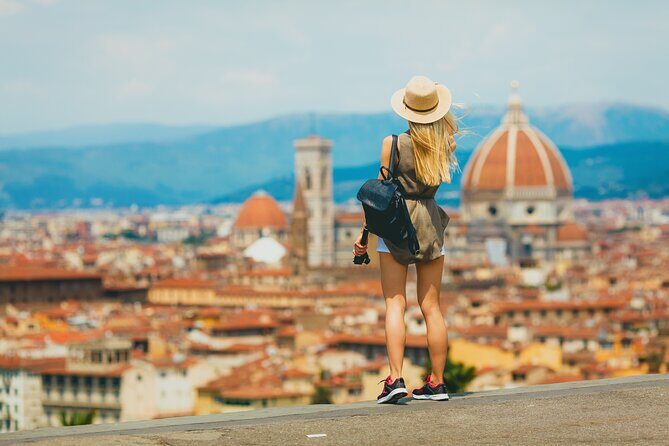
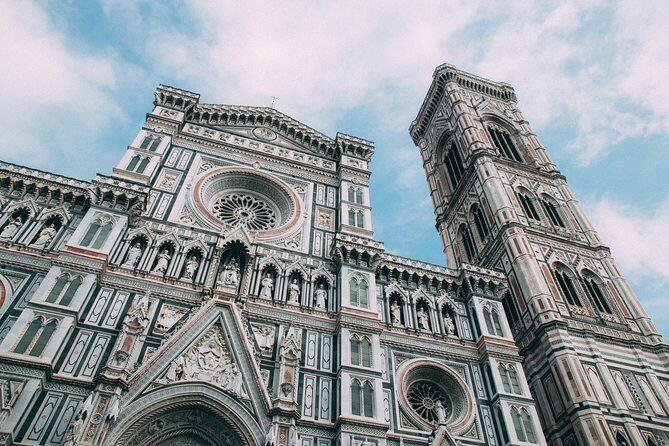
Then you head toward Piazza del Duomo, Florence’s main square area around the Cathedral of Santa Maria del Fiore. This is where the day plan pays off, because the Duomo complex is packed: you’ll see the iconic dome designed by Filippo Brunelleschi, plus the marble façade and Giotto’s bell tower.
You get free time to walk around and explore at your own pace. This matters because Florence is one of those cities where the “best moments” often happen on side streets. The plan gives you a window to do that without feeling totally unstructured.
One more Florence detail to watch for: the schedule also includes a 15th-century Dominican church with frescoes from Gothic and early Renaissance masters. The tour doesn’t spell out the name here, but it does signal that you’ll have a chance to connect religious architecture and art styles during your Duomo-area time.






Ponte Vecchio and Piazza della Signoria: The Walk That Makes It Feel Real
After the Duomo area, you’ll move toward Ponte Vecchio, and this is one of the most enjoyable stretches of the whole day.
You’ll walk over the bridge and learn why the shops matter. Ponte Vecchio is lined with merchants’ storefronts, historically used especially by jewelers and goldsmiths. The tour also notes an extra detail that helps you picture what’s going on: the tents are suspended over the river and supported by columns. That’s exactly the kind of detail you’d miss if you just rushed across.
Then comes Piazza della Signoria, the central square of Florence and a seat of civil power. It’s tied to the Old Palace and it’s described as the heart of the city’s social life. Even if you’re not spending hours here, the square’s role in Florence’s political and public life gives the day a sense of “how the city actually functioned,” not just what you can photograph.
This is also a spot where you’ll feel how big the crowds can get. The upside is that the itinerary sequence makes sense: you’re moving from monuments to public space, and it feels like a real day in Florence rather than a checklist.
What the Guide Does (and Why It Shows Up in Reviews)
Even with free time, a day trip like this is only good if someone keeps the pace honest and the group together. The tour includes a bilingual tour leader accompanying you in the cities, and bus commentary is delivered in English and Spanish simultaneously.
In reviews, guides named Tiziano, Roberto, Aaron, Sara, Silvia, Lisa, Mary Jo, and Elise were repeatedly praised for keeping things moving and managing crowds. That pattern matters for you because Florence and Pisa both get busy fast, and a “walk at your own pace” plan can quickly become a “missing the group” plan if coordination is weak.
I also like that this tour doesn’t pretend you’ll get a long guided walk inside every monument. Instead, you get context during the ride plus targeted stops. If you use that context, you’ll get more out of what you’re seeing.
Optional Audio Guide in Florence: A Smart Way to Stretch Your Time
If you select the audio guide option in Florence, the tour provides instructions to download it after booking confirmation. You’ll need a smartphone with an operating system that matches the tour requirements: Android (version 5.0 and later) or iOS, and it’s not compatible with some older devices and Windows phones.
You’ll also need internet connection to download it on the bus. This is a practical detail worth planning for. If your phone isn’t reliable in that moment, download instructions ahead of time if you can.
I like audio guides on days like this because they fit the reality of a tight schedule. You can keep walking, stop where something catches your attention, and still hear the story without waiting for a group.
The tour recommends bringing headphones, too. It’s not a luxury. It’s how you keep your focus when the group is moving.
Price and Value: Is This One-Day Deal Worth It?
At $180.19 per person for about 14 hours, you’re paying for two big things: round-trip transportation from Rome and structured sightseeing time in two cities. You’re also getting an air-conditioned bus and a bilingual guide for the journey and key stops.
What’s not included is where you should do your budgeting math:
- No lunch (you’ll need to plan food on your own in Florence and/or during breaks)
- No hotel pickup (you handle your own morning transport to Tiburtina)
- Pisa and Florence guided walking tours are not included (you’ll rely on the bus guidance plus free time)
If you’re comparing this to doing Pisa and Florence on your own, the value depends on your time and stress tolerance. Buying trains, figuring out schedules, and moving between cities takes effort—especially if you also want to see landmarks instead of getting stuck in transit.
For me, the best argument for the price is that you get a guided plan that reduces decision fatigue. In a single day, that’s worth real money.
Comfort Notes: Walking Distance and the Florence Drop-Off Pattern
This tour has a tight itinerary and the distances inside the cities are described as great. You should assume you’ll walk more than you expect.
The tour also flags that it’s not recommended for people with mobility problems. That’s not just about stairs. It’s about the combination of:
- several hours on a bus
- walking between parking and sights
- staying on a schedule in heat and crowds
One practical workaround that comes up in real-world tips: in Florence, visitors sometimes arrange short golf cart rides to cut down walking. You may see options offered near the areas you’ll be walking through, but since the tour itself doesn’t include that, treat it as a separate add-on you’d pay for yourself.
My advice: wear comfortable shoes and pack light. If you know you’re sensitive to long walking days, you may be happier choosing a slower Florence-focused trip instead of trying to compress everything.
Who Should Book This One-Day Pisa and Florence Tour
This is a strong fit if:
- you want a first taste of Florence plus the Leaning Tower photo moment
- you don’t want to plan train connections
- you like guided orientation with room to wander
- you’re comfortable with a long day and walking
It’s a weaker fit if:
- you need step-by-step assistance through crowds and distances
- you have mobility limits or fatigue issues that make long walking hard
- you’re only happy with fully guided museum-level time
Also, max group size is 30 travelers, which is nice for coordination, even though it won’t make Florence feel empty.
Should You Book This Tour?
I’d book it if you’re traveling on a tight schedule and want a practical “hit list” day that still feels like real Florence, not just a parking-lot drive-by. Pisa’s Piazza dei Miracoli gives you the correct iconic setting, and Florence gets you to the Duomo area, Ponte Vecchio, and Piazza della Signoria—three stops that shape how you remember the city.
But I’d skip it if you want slow pacing or minimal walking. This is built for checking off landmarks fast, not for long conversations with art or lounging in plazas all afternoon.
If you do book, plan for two things: snacks and water, and the reality that you’ll walk a lot. The payoff comes when you use the context from the guide—then you’re not just looking at sights, you’re understanding what you’re seeing as you move through the streets.
FAQ
What time does the tour start and where does it meet?
The tour starts at 7:00 am from Piazzale della Stazione Tiburtina, 9, 00162 Roma RM, Italy, and it ends back at the same meeting point.
How long is the trip?
The duration is listed as approximately 14 hours.
What’s included in the price?
Included features are an air-conditioned vehicle, a bilingual tour leader accompanying you in the cities, guided tour in the bus (English and Spanish at the same time), and an audio guide in Florence if you select that option.
What’s not included?
Lunch isn’t included. Pick-up in hotels isn’t included. You may take a train in Pisa depending on traffic (cost not included and is listed as 5€). Guided tours in Pisa and Florence are also not included.
Is an audio guide available in Florence?
Yes, an audio guide in Florence is available if you choose the option. You’ll need an internet connection to download it on the bus, and your smartphone must meet the stated compatibility requirements (Android 5.0+ or iOS; not compatible with Windows phones and some older Apple models).
How big is the group?
This tour has a maximum of 30 travelers.