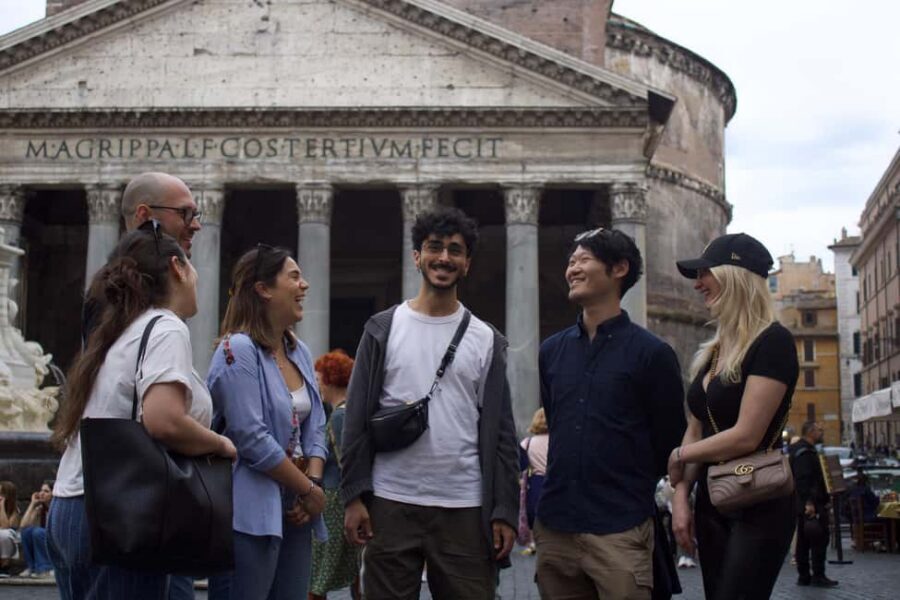
REVIEW · PANTHEON ROME
Rome: Pantheon Fast-Track Ticket and Official Audio Guide
Book on GetYourGuide →Operated by D'Uva · Bookable on GetYourGuide
The Pantheon hits you fast, even without a guide. This ticket gets you skip-the-line entry and an audio story that walks the monument from Emperor Hadrian to later reshaping as a church. I like that the visit stays self-paced for about an hour, so you can linger at the dome and not feel rushed. I also like the way the audio brings real characters into the building, from Pope Boniface IV to Raphael and Queen Margherita.
One catch: this isn’t a live guided tour. You’ll rely on the audio device, and you must plan for the deposit rules (valid ID or a credit card) if you’re borrowing the audio hardware.
In This Review
- Key takeaways before you go
- Pantheon fast-track plus a character-led audio guide
- Getting your tickets at OhMyGuide near the Pantheon
- Fast-line entry: what it helps, and what it can’t change
- Inside the Pantheon: your 1-hour self-guided loop
- The architecture moments the audio will lead you to
- Adriano (Hadrian) to the Temple of All the Gods
- Pope Bonifacio IV and the Pantheon’s church transformation
- Raphael Sanzio and the Renaissance choice to rest here
- Queen Margherita, royal Rome, and the Pentecost petals
- Mons. Daniele Micheletti’s viewpoint inside a working basilica
- The audio voice cast and the soundtrack feel
- What to do about the audio guide deposit and ID rules
- Dress code matters: Basilica rules inside the Pantheon area
- Accessibility and who this works best for
- Price and value: why $6 can make sense
- Should you book this Pantheon audio plus fast-track?
Key takeaways before you go
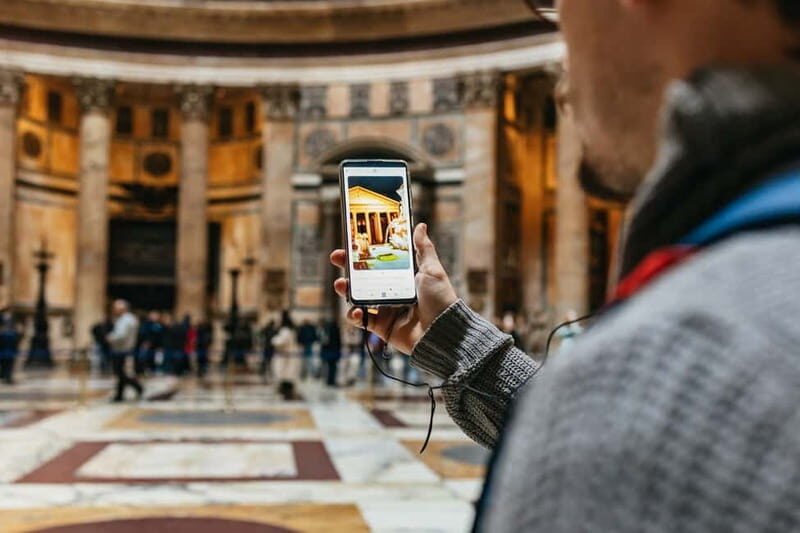
- Fast-track entry uses a separate entrance so you lose less time to crowds.
- An hour-long audio path keeps you moving through the big moments without getting stuck reading signs.
- Voices of historical figures include Adriano (Hadrian), Pope Bonifacio IV, Raphael, and Queen Margherita.
- You’ll focus on the architecture: the dome’s diameter (43.44 meters) and the oculus that turns sunlight into a sundial.
- It supports the Basilica of Santa Maria ad Martyres when you choose this experience.
Pantheon fast-track plus a character-led audio guide
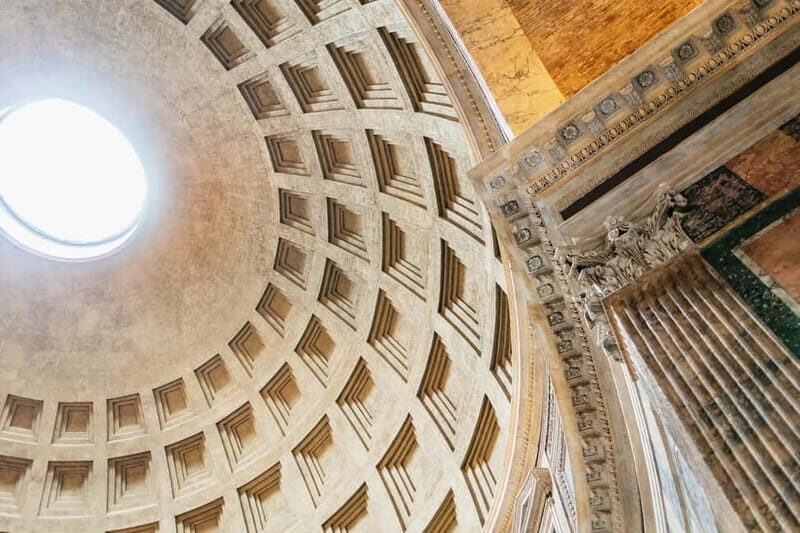
The Pantheon is famous for a reason: it still looks engineered, not ancient. With this experience, you’re not just walking around a big room—you’re listening as the story of the building changes hands and meanings over centuries.
You’ll get a Pantheon audio guide plus a fast-line entry ticket. That combo matters in Rome. The Pantheon draws constant foot traffic, so saving time on entry is real value, not a marketing line.
You can also read our reviews of more tours and experiences in Pantheon Rome.
Getting your tickets at OhMyGuide near the Pantheon
Your pickup is at OhMyGuide – Roma Museum Store, Via dei Bergamaschi 49. The hours for ticket pickup run Monday to Friday from 09:00 AM to 6:00 PM, Saturday from 09:00 AM to 3:00 PM, and Sunday from 12:00 PM to 6:00 PM.
Plan your timing around this step. You collect your ticket first, then you can go straight to the Pantheon and use the fast-track entry line.
Also note the simple rule: you should stick to your reservation time and collect your tickets at the store before you head in. If you’re late, you may have trouble matching the timing you booked.
Fast-line entry: what it helps, and what it can’t change
This is not a private entrance that means zero waiting forever. It’s a skip-the-line approach via a separate entrance, which usually helps a lot when the main lines are packed.
In practice, you’re trying to do two things: get inside with less friction, then spend your energy on the architecture and the audio content. If your goal is a smooth stop during a busy day, the fast-track part earns its keep.
One more thing to remember: the Pantheon can have anticipated closures, postponed openings, masses, concerts, or other events that may vary service time. Rome doesn’t do perfectly predictable schedules, so keep a little flexibility.
Inside the Pantheon: your 1-hour self-guided loop
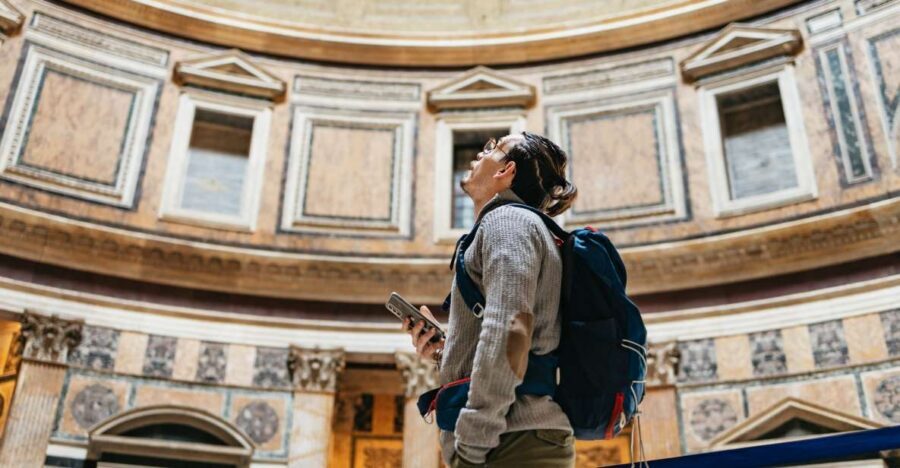
Your visit is listed as about 1 hour, and the format is self-guided. There’s no live guide accompanying you—just an audio device that cues you as you move through the main areas.
That “no live guide” setup can be a plus. You’ll control pace. You can stop for photos, drift toward the oculus view, then backtrack a little if you missed a point in the audio.
The experience is set up so you’re not stuck in one spot listening to a long talk. Instead, the audio is designed to match the building you’re standing in, and it’s built around a sequence of characters tied to the Pantheon’s life.
The architecture moments the audio will lead you to
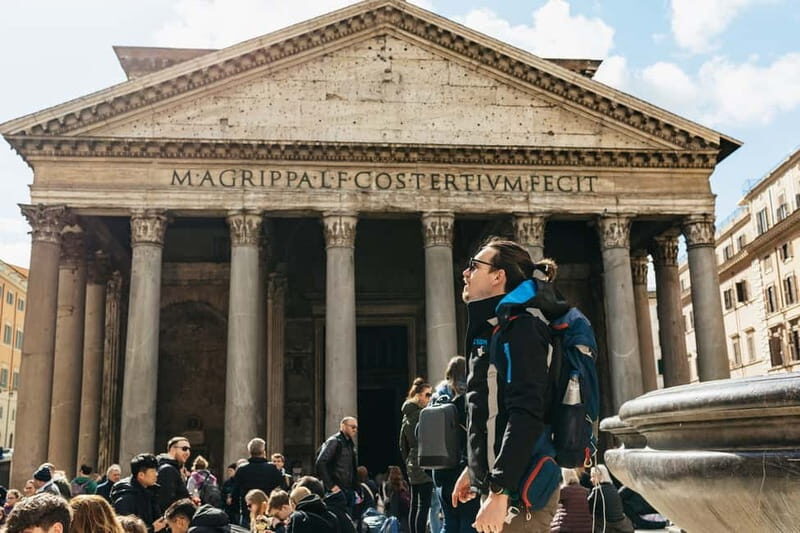
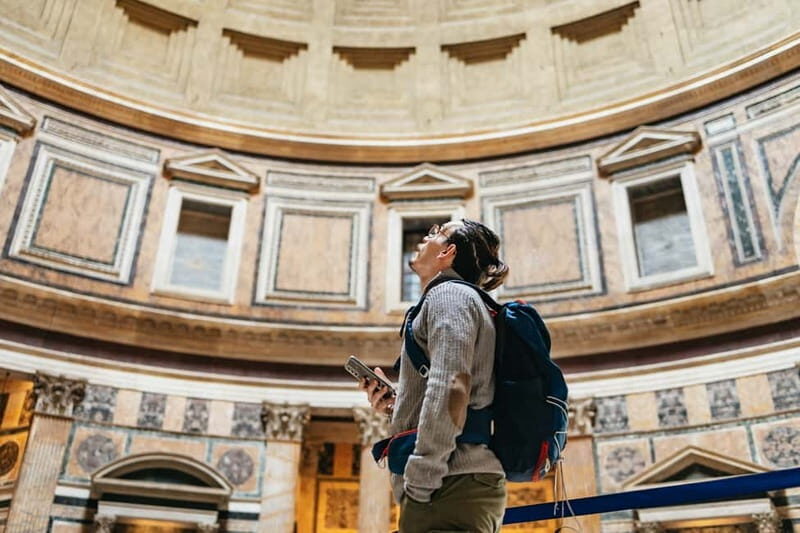
You’ll walk into a space where geometry does most of the talking. The dome is the showpiece, and the audio points out details that make it easier to understand what you’re seeing.
Here are the moments worth prioritizing as the audio guides you:
- The dome geometry: the dome diameter is 43.44 meters. Hearing that number while you look up makes it feel less like trivia and more like engineering.
- The great oculus: the opening at the top brings in sunlight, and the audio explains how the light shifts like a sundial.
- The portico columns: pay attention to the pink granite columns from Egypt. They’re visible before you fully absorb the circular space, and they help connect Rome to the wider Mediterranean world.
A practical tip: look up first. If you do the dome late, it’s easy to get “Pantheon’d” into photo mode and forget to actually study the space.
Adriano (Hadrian) to the Temple of All the Gods
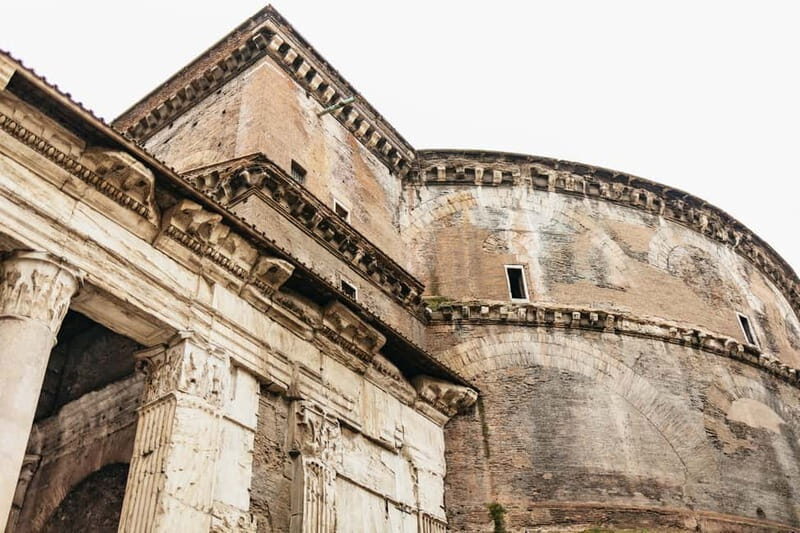
The story starts with Emperor Hadrian. The audio guide frames what you’re seeing as the Temple of all the Gods in the form we recognize today.
You’ll hear Adriano as a voice in the experience, describing his vision and the Pantheon’s place in Roman identity. That works because it changes your mindset. Instead of only thinking about religion, you also think about politics, art, and city pride.
You also get a sharper sense of why the building endured. Romans built for permanence. Even centuries later, the structure still holds its shape and scale, which is why the Pantheon works so well for audio: the space is coherent.
Pope Bonifacio IV and the Pantheon’s church transformation
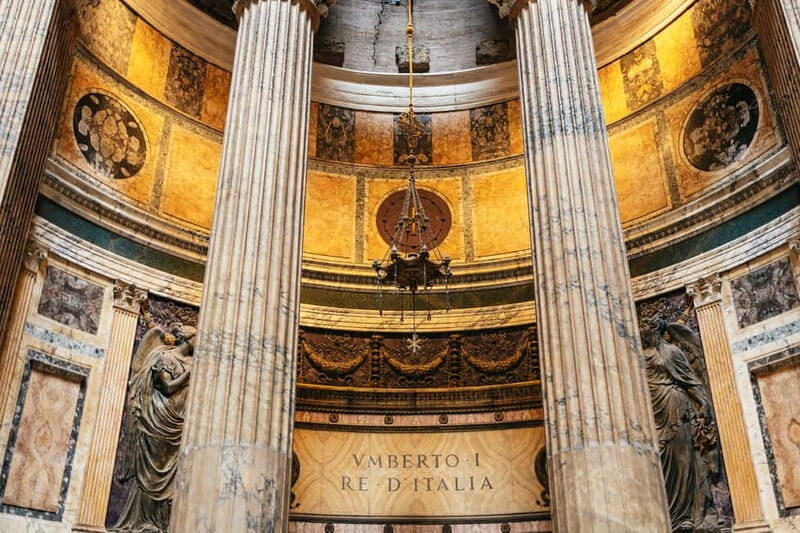
The audio then shifts to Pope Bonifacio IV and the moment in 609 AD when the temple was converted into the Basilica of Mary and all Martyrs.
This section is more than background. It helps you interpret the building as both monument and church. If you only view the Pantheon as an ancient ruin, you miss the living layer of the site.
The audio also emphasizes how this change helped protect the building from plunder and helped preserve its integrity to this day. That’s the part that makes you look around with a little more respect for how history keeps changing the purpose of physical places.
Raphael Sanzio and the Renaissance choice to rest here
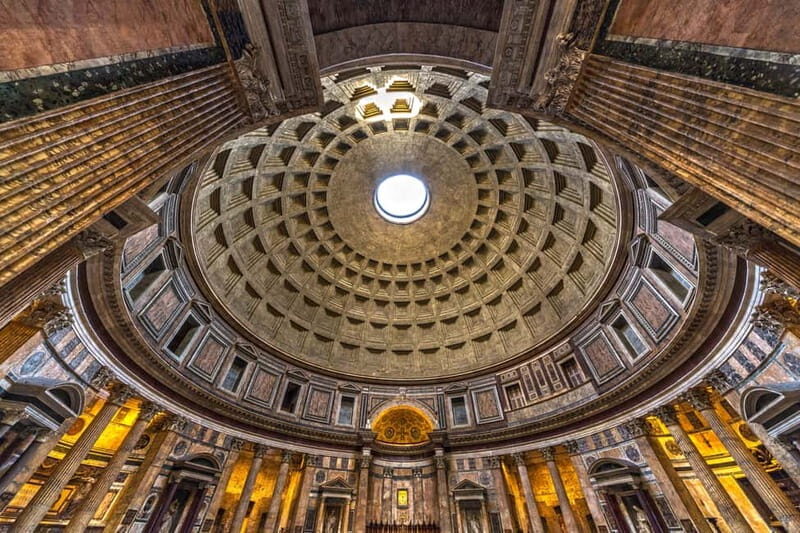
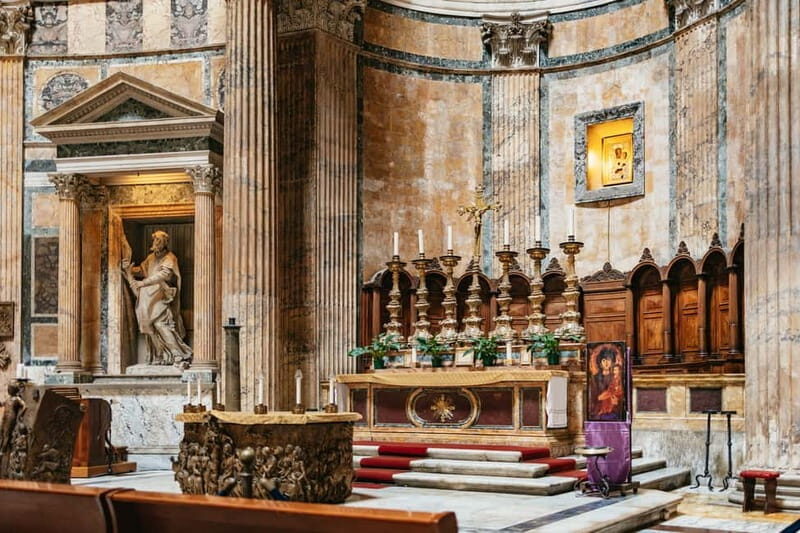
You’ll be guided through the portico and then toward Raphael Sanzio of Urbino. The audio tells you about Raphael’s connection here, including that he is buried at the Pantheon with other Renaissance artists.
This piece helps you notice something easy to miss: the Pantheon isn’t only for antiquity fans. Renaissance artists and thinkers returned to classical architecture as a model, and their presence in the building is the physical proof.
When the audio links Raphael to classical ideals, the building starts to feel like a bridge across time. You’re standing in Roman space, but you’re also in a space the Renaissance chose.
Queen Margherita, royal Rome, and the Pentecost petals
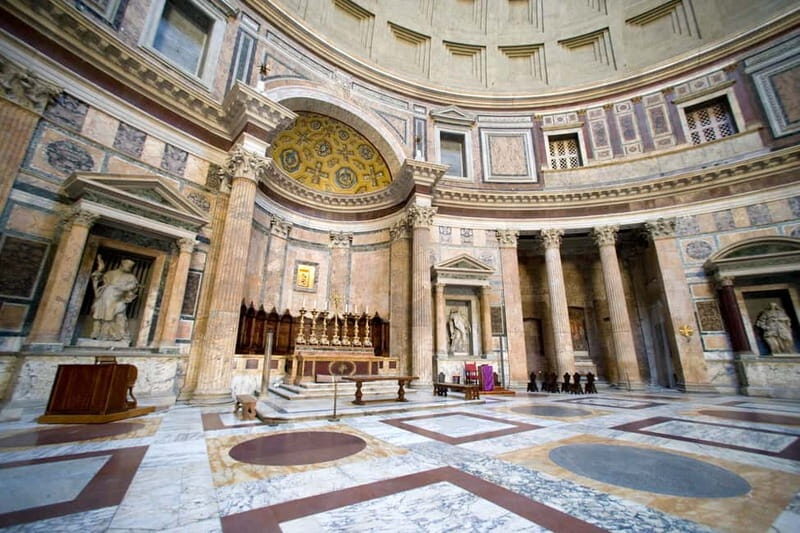
Another voice in the audio is Queen Margherita, who is resting at the Pantheon with King Umberto I and Vittorio Emanuele II of Savoy.
This royal segment is useful because it shows how Rome keeps stacking layers. You’re not just learning one chapter of the building. You’re watching successive eras make the Pantheon part of their story.
Then the audio adds a memorable religious detail tied to Pentecost: it describes a yearly commemoration connected to the oculus, including the image of a rain of red rose petals descending each year. Even if you don’t catch that event, the mention changes how you look up at the opening.
Mons. Daniele Micheletti’s viewpoint inside a working basilica
The audio also includes a church framing guided by Mons. Micheletti, described as the archpriest rector of the Pantheon in Rome.
This part matters because it signals that you’re visiting an active sacred site. The audio nudges you to observe the building with different eyes—not just as a Roman artifact.
If you’re the type who gets distracted by big monuments, this segment can bring you back. It slows you down and makes you look at the structure again, but with a new lens.
The audio voice cast and the soundtrack feel
The audio guide isn’t just text in your ear. It uses voiced performances, including actors such as Sergio Rubini, Alessandro Haber, Daniele Parisi, Giusi Cataldo, and Mons. Daniele Micheletti.
There are also original compositions by Antonio Fresa, performed with the Orchestra of Teatro La Fenice. Even if you’re not a classical music expert, this kind of soundtrack helps the story land. It turns the Pantheon from a checklist stop into something you actually follow.
Audio languages included are Chinese, English, French, German, Italian, Portuguese, Russian, Spanish, Arabic, Dutch, Korean, Polish. So most visitors should find a comfortable language without improvising.
What to do about the audio guide deposit and ID rules
Before you enter, you’ll need to plan for borrowing the audio device. The important rule is that a valid ID (passport, ID card, driver’s license) or a credit card is required as a deposit to borrow the audio guide. The instructions say photocopies, pictures on the phone, student cards, and digital IDs aren’t accepted.
This is one place where you should be practical. Bring the ID you’ll actually use. If you’re trying to avoid leaving a passport, bring a credit card that can serve as the deposit instead, if that option is accepted for borrowing the audio device at the site.
Also, be ready for the moment when you hand over the deposit and receive the device. It’s not complicated, but it does add an extra step to your arrival flow.
Dress code matters: Basilica rules inside the Pantheon area
If you want to access the Basilica part of the Pantheon, you must dress appropriately. The rules say no shorts, no short skirts, and no sleeveless shirts.
The instructions repeat that access to the Basilica is only permitted for visitors wearing suitable attire, specifically no shorts, vests, or sleeveless tops. So if you’re visiting during hot weather, wear something that won’t get you sent back outside.
This is one of those “small” details that can wreck your timing. It’s worth matching your clothing to the rules before you travel.
Accessibility and who this works best for
This experience is listed as wheelchair accessible. That’s a key detail if mobility is a factor.
As for who it suits, this is strong for:
- First-timers who want context without joining a live group.
- People who hate standing around reading signage.
- Anyone who wants to pace themselves and return to the big architectural moments.
It’s less ideal if you want hands-on storytelling from a person asking questions and tailoring content. This is an audio guide experience, not a live guide tour.
Price and value: why $6 can make sense
The price is listed as $6 per person. That’s inexpensive for a fast-track ticket paired with an audio guide and donations to the Basilica of Santa Maria ad Martyres.
Value here isn’t just the cost. It’s the combination: you’re buying less time lost in queues and more time spent understanding what you’re looking at once inside.
If you’re visiting during peak hours, fast-track entry can turn your plan from stressful to smooth. Even during quieter hours, you still get the audio guide, and the audio gives you a structured way to move through a space that’s otherwise easy to experience only as “wow, big dome.”
Should you book this Pantheon audio plus fast-track?
Book it if you want a smooth entry, an audio guide with named voices like Adriano (Hadrian), Pope Bonifacio IV, Raphael, and Queen Margherita, and a visit that stays focused on the Pantheon’s main architecture. It’s a smart choice when you’re pressed for time but still want real context.
Skip it or reconsider if you strongly prefer a live guide, or if you don’t want to deal with the deposit requirement for the audio device. Also, keep an eye on potential schedule changes due to events and closures.
If your day in Rome includes the Pantheon, this is a practical way to make that stop both faster and more meaningful.