REVIEW · COLOSSEUM TOURS
Colosseum Forum and Palatine Hill Experience
Book on Viator →Operated by Milon Tours · Bookable on Viator
Three Rome icons, one practical ticket.
This experience is built for people who want to see the big three fast: the Colosseum plus the Roman Forum and a climb up Palatine Hill for sweeping city views. I like the simple setup—one entry covering all three sites—and the included digital or printed English guidebook that connects emperors and gladiators to what you’re looking at. One thing to consider: ticket access can depend on your phone working at the site, and in at least one recent case WiFi was hard to get, so it’s smart to plan a backup before you arrive.
What you’re really buying is admissions and guidance, not a live lecture. You get entry tickets for all three stops, plus assistance at the meeting point, but there’s no live guide or audio guide included. The timing is tight (about 2 hours 30 minutes total), so you’ll want to use the guidebook as a roadmap rather than a long read. Also keep an eye out for Jubilee-related messages—some monuments may be under restoration.
In This Review
- Key points to know before you go
- Price and what $34 really buys you
- Getting tickets the easy way: phone, WhatsApp, and WiFi reality
- Entering the Colosseum with priority-style flow
- Roman Forum: where politics and daily life collide in ruins
- Palatine Hill: views, gardens, and the birthplace legend
- How to pace 2 hours 30 minutes without feeling rushed
- Who should book this Colosseum–Forum–Palatine Hill ticket
- Should you book? My straight answer
- FAQ
- What does this ticket include?
- Is there a live guide or audio guide included?
- How long does the experience take?
- What language is the guidebook?
- Do I need to use my phone to get the tickets?
- Is transportation included?
- Are food and drinks included?
- Will I be able to skip the security check line?
- What if monuments are under restoration during the Jubilee?
- What’s the cancellation policy?
- Is the experience open to most travelers?
Key points to know before you go
- One ticket, three unforgettable stops: Colosseum, Roman Forum, and Palatine Hill covered in one package
- Self-guided with an English guidebook: digital or printed, focused on emperors and gladiators
- Priority-style access at the start: helps you get into the Colosseum experience with less waiting
- Palatine Hill rewards the climb: panoramic views and the Circus Maximus line of sight
- Phone ticket access may be WiFi-dependent: plan an offline or printed backup just in case
- Jubilee restorations can affect what’s open: check messages if conditions change
Price and what $34 really buys you
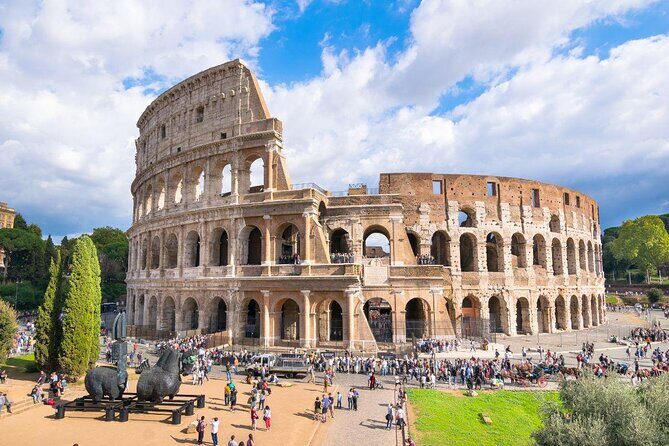
At $34 per person, this is a value play for Rome’s heaviest hitters. You’re not just paying to stand in line at one monument. You’re covering entry for three top sites—Colosseum, Roman Forum, and Palatine Hill—within a total of about 2 hours 30 minutes.
The other value piece is the guidebook. It’s provided in English only and comes as an e-book or a printed copy, so you can follow along without needing to pre-download a bunch of apps or rely on spotty signage inside every ruin. It also means you can set your own pace: stop when something catches your attention, then move on when you’re ready.
Here’s what’s not included (important for your expectations). There’s no live guide and no audio guide included, and this does not promise you’ll skip the security line. Transportation, food, and drinks aren’t part of the package either. In other words: you’re paying for admissions plus guidance materials—not a full-service guided tour with refreshments.
If you’re the kind of visitor who likes to wander with a plan, this can be a great fit. If you want someone to answer questions in real time, you may feel the lack of a live guide.
You can also read our reviews of more tours and experiences in Rome.


Getting tickets the easy way: phone, WhatsApp, and WiFi reality
This is where I’d pay attention first, because your experience can hinge on how smoothly the ticket arrives on your phone.
One recent booking worked smoothly: the confirmation arrived on WhatsApp about 15 minutes before the Colosseum time, and then the ticket access allowed a fairly quick walk-in. That’s the best-case scenario. But another review flagged a real problem: at the site, getting the tickets required WiFi and the signal was difficult to work with. That’s a classic Rome travel snag—lots of people, lots of phones, not enough reliable connectivity.
So do this before you head out:
- Make sure your confirmation is easy to find on your phone (don’t count on internet search at the curb).
- If you’re using a digital ticket, try to have it accessible without needing WiFi. Screenshot or save what you can if your ticket method allows it.
- Consider bringing a printed backup if you’re the type who panics when the network goes down.
If you want low-stress touring, treat this like a “tech check” day. Charge your phone, keep brightness up for readability, and don’t wait until the last second to confirm everything.
Also note the experience includes assistance at the meeting point. That can help if you’re unsure where to go once you arrive, especially when you’re juggling tickets on a phone screen.
Entering the Colosseum with priority-style flow
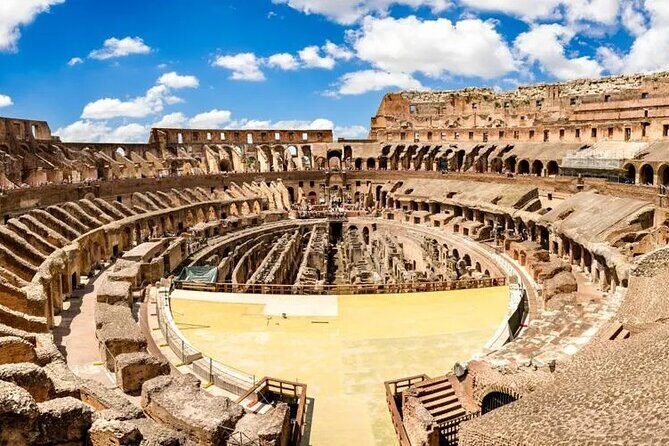
The Colosseum is where the whole story begins. You’ll spend about 1 hour 15 minutes here, and you’re entering with priority access that’s designed to reduce waiting compared with the slowest lines.
What I like about the Colosseum portion is that it’s not just a photo stop. With the included guidebook, you can connect what you see to the people who shaped the city’s politics and entertainment. The guidebook is specifically designed to walk you through tales of emperors and gladiators while you’re inside, so you’re not staring at stone and hoping it all makes sense.
What to look for (so your time feels worth it):
- Use the guidebook to pick 2–3 moments to focus on, rather than trying to read everything at once.
- Notice how the structure is arranged and think about crowds and spectacle. Even without a live narrator, the layout helps you understand why it mattered.
Reality check: while priority access helps, security processes still exist, and the Colosseum is a high-traffic site. Keep your phone ready, keep your walking shoes on, and plan to move steadily rather than stopping to reread every page mid-route.
This stop is also the best place to set your rhythm for the rest of the visit. Once you understand the scale of the Colosseum, the Forum and Palatine Hill start feeling like the same city—just viewed from different angles.
Roman Forum: where politics and daily life collide in ruins
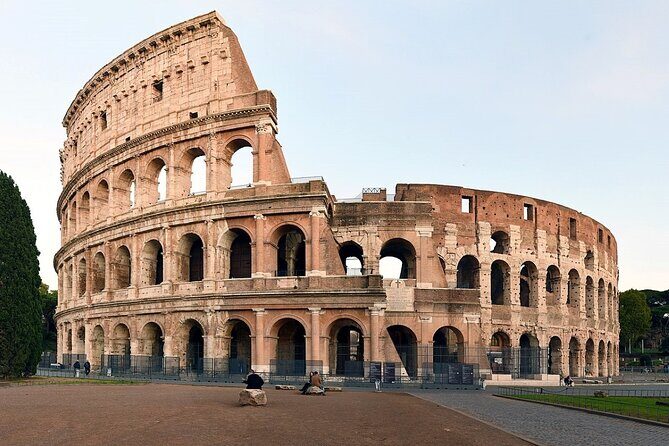
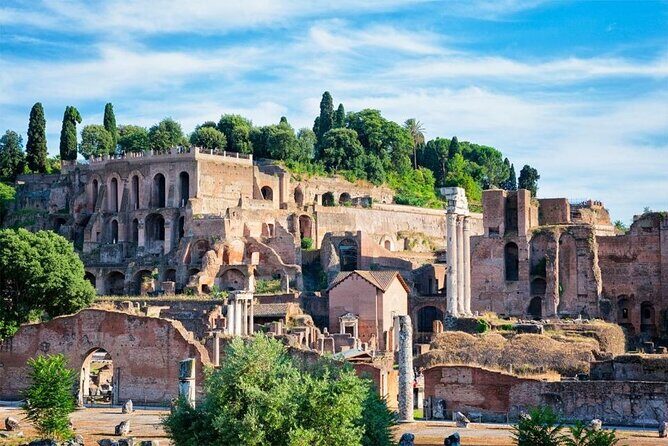
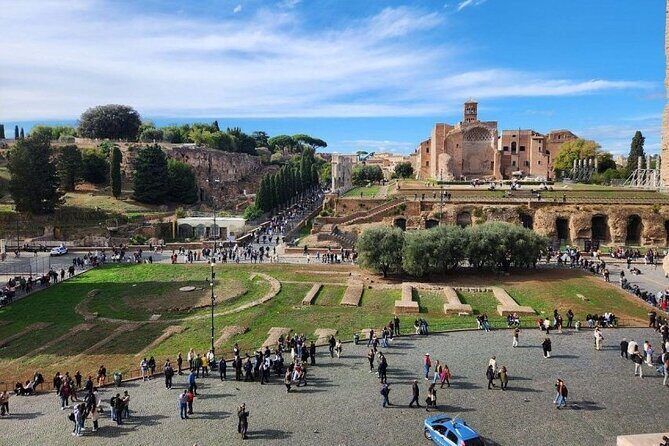
After the Colosseum, you head to the Roman Forum for about 45 minutes. This is the part that often feels like a maze of arches and foundations—until you connect it to what the Forum actually was: a center of Roman life where politics and commerce played out side by side.
The guidebook’s role matters here. Without context, the Forum can feel like scattered stone. With it, you get a sense of the hub it was: temples and basilicas that anchored public life, plus the story of emperors, senators, and everyday citizens who helped shape an empire.
How to get more from your Forum time:
- Choose one cluster of ruins and stick with it long enough to build meaning. Let your eyes follow the edges and gaps; that helps you “reconstruct” the space mentally.
- Keep an eye out for why buildings were placed where they were. The Forum’s layout is part of the story.
- Don’t try to cover everything. 45 minutes is enough for a focused route, especially if you’re reading the guidebook selectively.
Drawback to be aware of: the Forum is an active outdoor ruin area. Uneven ground and crowds can slow you down. If you rush, you’ll miss the connections the guidebook is trying to give you. If you slow down too much, you may feel pressure later on Palatine Hill.
This stop is a great reminder that Rome isn’t just monuments—it’s a whole system of public spaces that kept repeating the same big idea: power in the open air.
Palatine Hill: views, gardens, and the birthplace legend
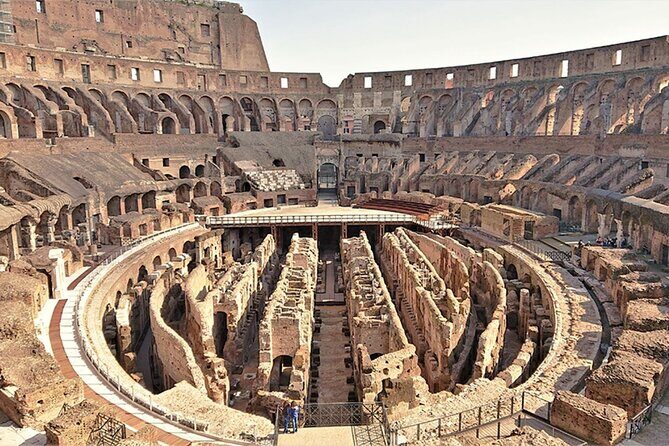
Palatine Hill is last, with about 30 minutes set aside for the climb and wander. This is a shorter stop, but it’s often the one that leaves people smiling, because the payoff is immediate once you’re up there.
You’re heading to the legendary birthplace of Rome. You’ll be able to enjoy panoramic views of the city and—when conditions allow—see toward the Circus Maximus. You’ll also move through areas that represent the luxury associated with Rome’s elite, including imperial palaces and lush gardens.
Here’s the practical value: Palatine Hill gives your brain a new perspective. The ruins of the Forum make sense more clearly once you can step back and see the city’s geography. The higher viewpoint helps you understand movement: how people would travel between spectacle, politics, and residence.
What to do on Palatine Hill:
- Build in a few breathing moments for the views. Don’t treat it like another hallway of ruins.
- Use your guidebook to understand what you’re standing near, but don’t feel forced to read every line while you’re walking up and down.
Possible consideration: it’s a hill, so expect some effort. If you’re short on energy, you’ll still get value—but you might want to move with purpose so you don’t spend the entire 30 minutes struggling to get comfortable.

How to pace 2 hours 30 minutes without feeling rushed
This package is designed to fit into a single, focused window of time. About 2 hours 30 minutes total sounds generous until you’re at the Colosseum, dealing with crowds, navigating your way between sites, and stopping to read.
So I’d pace it like this:
- At the Colosseum, aim to choose a small set of highlights and commit to them. Reading the guidebook while moving is fine, but don’t get stuck in long passages.
- At the Forum, keep it tight. 45 minutes is best used for one or two meaningful ruin areas with context attached.
- At Palatine Hill, treat it as a payoff stop: climb, check the views, then enjoy the sense of place.
Also remember: no food or drinks are included. If you wait until you’re hungry, you’ll feel rushed. A simple snack plan and water on hand can make the whole experience easier.
Since this is a self-guided style experience, your success depends on using the guidebook actively. Think of it as a set of signposts: it tells you what matters so you don’t have to guess.
Who should book this Colosseum–Forum–Palatine Hill ticket
This is a smart choice if you:
- Want to hit three major sites in one day without paying for a full guided tour
- Like learning as you walk, with an English guidebook you can reference at your pace
- Prefer independence, but still want context around emperors, gladiators, and Roman public life
- Are okay with a short, focused time on each site rather than a slow museum-style day
It may be less ideal if you:
- Want a live guide answering questions and guiding you in real time (there’s no live guide or audio guide included)
- Need very clear on-site ticket presentation with no phone dependence (one review pointed out difficulty when WiFi was required)
- Are the kind of visitor who needs long stops in every nook and cranny; this format is built for movement
And one more practical note: Jubilee-related restorations can change what’s open. If messages arrive before your visit, read them. That’s the difference between having a seamless day and arriving to find parts of the route affected.
Should you book? My straight answer
Book it if you want high value and a clean, self-guided path through Rome’s most iconic ruins. For $34, you’re getting entry coverage for three sites and a guidebook that actually supports what you’re seeing. The priority-style entry at the start helps you get moving sooner, and Palatine Hill’s views are a strong finish.
Skip it or plan differently if you absolutely need a live guide or if you don’t trust your phone to handle tickets smoothly on-site. In that case, make sure you have an offline backup strategy before you go, because at least one recent experience highlighted WiFi trouble at the event site.
If your priority is seeing the big three with context and keeping the day efficient, this ticket format is hard to beat.
FAQ

What does this ticket include?
It includes entry tickets for the Colosseum, Roman Forum, and Palatine Hill, plus an English guide ebook or a printed copy and assistance at the meeting point.
Is there a live guide or audio guide included?
No. A live guide or audio guide is not included.
How long does the experience take?
It’s approximately 2 hours 30 minutes.
What language is the guidebook?
The guidebook is provided in English only.
Do I need to use my phone to get the tickets?
You’ll receive your confirmation at booking time, and the ticket access can be phone-based. One review reported needing WiFi at the site, so it’s smart to have a backup plan.
Is transportation included?
No transportation is included.
Are food and drinks included?
No food and drinks are included.
Will I be able to skip the security check line?
No, skipping the security check line is not included.
What if monuments are under restoration during the Jubilee?
Some monuments may be under restoration. Pay attention to any messages sent about potential changes.
What’s the cancellation policy?
This experience is non-refundable and cannot be changed for any reason.
Is the experience open to most travelers?
Yes, most travelers can participate.